Rashtrapati Nilayam to get facelift

Next time when you visit Rashtrapati Nilayam in Bolarum, look forward to spend sometime in a new garden with indigenous plants and a duck pond on the sprawling premises.

In an effort to provide more enjoyment to people visiting the place, authorities are planning to develop more landscaping in an area of about four acres, opposite Herbal Garden.

Plans are afoot to develop a new garden in the Nakshatra (star) design with some rare and indigenous plants. The objective is to create awareness among people about a few rare plants that are on the verge being extinct and some indigenous plants that represent nativity, says an authority.

Presently, Rashtrapati Nilayam has fruit gardens spread over 35 acres and lawns with ornamental plants in an area of about six acres.

Bio-diversity

Besides, education to people, the move to have a garden with indigenous plants and trees would also help in preserving in the bio-diversity of the area. Unlike indigenous plants, which usually have long life, ornamental plants have short lifespan and require lot of maintenance, he explains.

“We would appeal to the higher authorities in New Delhi to approve the plan and once it is accepted, works would commence. We want to develop it by next year,” he says. The idea to develop the duck pond is to add a new amusement theme on the premises. It was operational until a few years ago and former President A.P.J Abdul Kalam liked it a lot

source: http://www.thehindu.com / National> Andhra Pradesh> Hyderabad/ January 15th, 2012

GAIL Gas in pact to build Rs 5,000-cr LNG facility in AP

GAIL India today said its subsidiary GAIL Gas has signed an agreement to set up a Rs 5,000 crore liquefied natural gas (LNG) import facility around Kakinada or Vishakapatnam in Andhra Pradesh.

“GAIL Gas, a wholly-owned subsidiary of GAIL India, yesterday signed a Memorandum of Understanding (MoU) with the government of Andhra Pradesh” for setting up the import facility, the company said in a press statement here.

The MoU was signed by GAIL Gas CEO J Wason and Andhra Pradesh Principal Secretary (Investment and Infrastructure) S Bhattacharya.

“The Floating Storage and Re-gasification Unit (FSRU)/ Liquefied Natural Gas (LNG) terminal of 3.5 to 5 million tonnes per annum will be set up around Kakinada/Vishakapatnam and is likely to be the first such facility on the east coast of the country with an estimated investment of Rs 5,000 crore,” the statement said.

The proposed facility would supply regassified-LNG, a preferred feedstock for power, industrial and other sectors to meet the growing needs of the state.

Andhra Pradesh Gas Distribution Co (APGDC), a joint venture of GAIL Gas and APGIC will execute the project with the support of GAIL and work will be completed by 2012-13.

“The company is in the process of finalising an upstream partner for project execution and LNG supplies to the proposed terminal,” it said.

As per the MoU, the Andhra Pradesh government will facilitate GAIL Gas/APGDC to obtain necessary permissions, registrations, approvals, clearances, etc from the concerned departments to set up the project.

source: http://www.Business-Standard.com / Home> Companies & Industry/ Press Trust of India, New Delhi / January 13th, 2012


‘Garam Hamam’ at Unani Hospital being revived

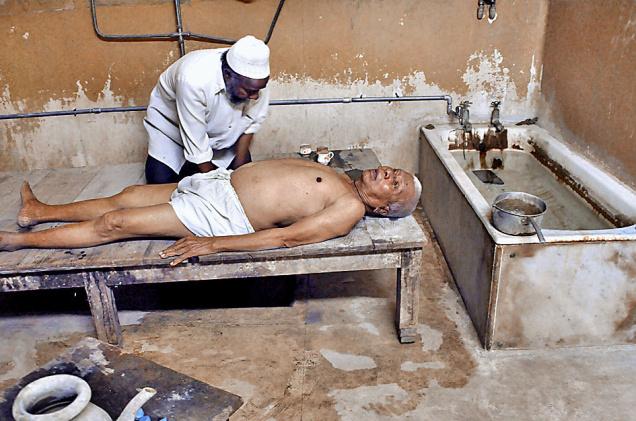
A patient being massaged before undergoing the hot water treatment at the ‘Garam Hamam’ in the Government Nizamia Unani Hospital in Charminar. The Turkish bath has been revived recently after being in disuse for several years. Photo: G. Ramakrishna

The Turkish bath facility helps cure disorders such as cervical and lumbar spondylosis

Hot bath in cold storage. That’s exactly the case with the hoary Turkish bath in the city. For more than a decade the only ‘garam hamam’ at the Government Nizamia General Hospital in Charminar is lying unused. For want of funds and initiative, patients are deprived of this ancient mode of treatment.

Hot favourite

Now serious efforts are on to revive the Turkish bath.

As part of the regimental therapy unorthodox methods like cupping, steam bath, cauterisation, emesis, diuresis and purgation are employed for treatment of various disorders like cervical and lumbar spondylosis .

The Turkish bath is another sure-fire way of curing patients affected with paralysis, obesity, rheumatism and Parkinson disease .

The ‘Garam Hamam’ used to be a hot favourite with patients. But over the years it fell in disuse for want of minor repairs.

All that it required was supply of hot and cold water, repair of the hot water tub and the steam bath chamber. But this simple matter was not attended to.

Thanks to the hospital superintendent, Dr. Mohd Rafi Ahmed’s initiative things are looking up now.

The other such Turkish bath in Hyderabad is situated at Puranapul. It is attached to the 17th century Mian Mishk mosque. This ‘Garam Hamam’ was built in tune with the Islamic principles of hygiene and purification.

But today it lies in a state of utter decay and unapproachable.

The facility at the Unani hospital is much better. The steam bath chamber still remains out of order and the ‘Garam Hamam’ can do with some renovation. The peeling plaster and the seedy look sure gives the creeps.

EFFECTIVE

The ‘hamam’ is a square chamber with a wooden cot and a shower. Using medicated oils the masseur works on the patients.

Thereafter the patients are made to lie in the rectangular hot water tub.

“The therapy sounds strange but it does wonders,” says Mohd Saleem, a lecturer at the Hospital.

Once the Turkish bath becomes fully operational, patients will have yet another effective therapy to avail.

source: http://www.TheHindu.com / News> Cities> Hyderabad / by J. S. Ifthekhar / January 14th, 2012


Mythological theme park to come up near Tirupati

Lord Venkateswara Temple in Tirupati.
Hyderabad: JAN 14:

Sri Vaishnovi Infra Ventures and Resorts Pvt Ltd has signed an agreement with the Tourism Department, Government of Andhra Pradesh, during the CII Partnership Summit to establish the Temples of India and Mythological Theme Park near Alipiri on the foothills of Tirumala.

The Rs 300-crore project will be established in 38 acres encompassing the Temples of India, Mythological Theme Park, Sri Venkateswara Museum, a three-star hotel, amphi theatre, shopping mall, cultural centre, and entertainment zone including restaurants to cater to the needs of the devotees coming to Tirumala.

The project has been designed by architect Nitish Roy.

Through the Temples of India and Mythological Theme Park, it is proposed to display mythological themes such as “Sri Venkateswara Mahatyam” and replicas of famous temples such as Puri, Annavaram, Simhachalam, Ahobilam and Guruvayoor.

According to a company statement, the theme park would provide direct employment to 2,000 people.

A memorandum of understanding was inked during the CII Partnership Summit on Friday.


source: http://www.TheHinduBusinessLine.com / Industry & Economy> Government & Policy / by V Rishi Kumar / January 14th, 2012

Treats of Sankranti

YUMMY TUMMY Try homemade goodies for Sankranti

Celebrate the first festival of this year with traditional treats

The wind is making way for the kites to soar high in the city. As kite makers and kite flyers get busy with their patangmanja and chakhri in the open, there is something traditional cooking even in the most modern kitchens. With the city boasting of residents from all regions, every household will have some special festival dish. Though most Telugus from the districts are headed to their home towns, resident Hyderabadis also enjoy varied festival flavours in their own traditional way.

Each festival is marked by at least one special dish, which may differ from one household to another, depending on the taste and preference of the family and the customs followed. But you can be sure that every home will have something made of either rice or millet, and jaggery to celebrate the harvest season.

Pournima Surve, a media consultant, waits for Sankranti to relish the bajari rotiand mixed vegetable curry. “Bajari is millet and the combo with the sabji differs with every household. The mix vegetable sabji at home has vegetables like carrot, drumstick, papdi and tomato,” explains Pournima.

On the first day of Sankranti, called Bhogi, til and gud (jaggery) is used, so gud-poli is what everyone looks forward to. In a narrow lane in Shah-ali-banda while the kids are flying kites the women are busy making a gud-pol or the puran poli. “The polis are soft as cotton and served with a generous drip of ghee, with a tangy mango pickle to go with it,” says Meenal Vyas, a research scholar. She has timed her visit from US to ensure she celebrates Sankranti with the family in their ancestral home.

Prateek Shah, a Gujarati and a consultant cum trainer says, their family is all forghar mein banaya khana, “Bajre Ki Khichdi. Actually undhhiyu (mix vegetable) is more famous as well as puri kadhi.”

If you happen to visit a city-based Bihari’s home during Sankranti, you can expect Chura, Gur laddoo, sweets made of til such as Tilkut, Tilwa, Maska, etc. “It is convenient to make these anywhere as the ingredients are easily available,” says homemaker Dipti Verma.

Sankranti is also the best time to visit a Tamilian household and eat the variety they cook — Pongal with new harvest rice, kozhambu and the seven curry kootuare not to be missed.

A typical Assamese household in the city misses kath-alu. “Breakfast consists ofkoni-pitha (fried dumplings made of rice flour and eggs), kath alu fry and the traditional pithas made from sticky rice and til and jaggery. It is absolutely difficult to find the ingredients here, so the best option is to get some couriered,” says Dr David Bordoloi.

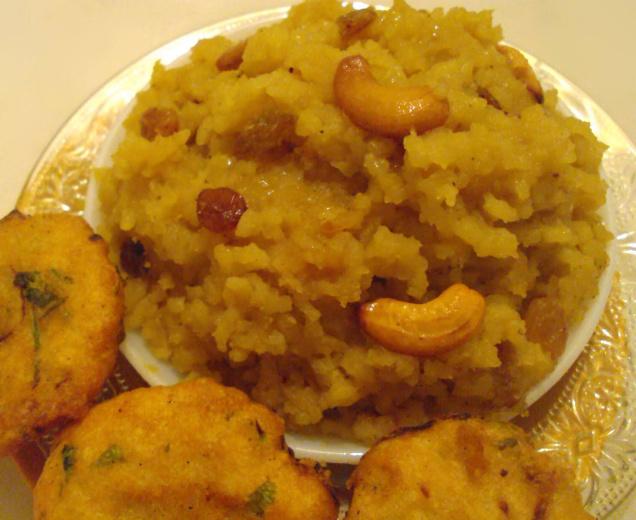
Those who miss their families and crave for festive food will receive a warm welcome in most native Telugu homes. Want to know what really cooks in a traditional Telugu household? Traditional Pongali, a sweet rice and jaggery, and Gummadikaya koora (pumpkin curry) are a must. The feast is usually elaborate. “We will have Ravva LadooBellam Pulusu, Pulihora, Avadalu(Andhra version of dahi vada), Garelu and Gutti Vankaya koora for lunch. We cook the new rice of the year for the first time on this day, and offer it asnaivedyam (offering to God),” says Nalini Vidmahe, a retired government official.

However, to make life and celebrations easier shops are also making a special Sankranti sweet box which comes with a baby kite and a kite wheel. So come Sankranti, the city will be abuzz with fun, frolic, films and festive food.

source: http://www.TheHindu.com / Life&Style> Food / by Prabalika M. Borah / January 12th, 2012


Cassettes and CDs

Masterworks NCPA archives: Balamuralikrishna

A treasure trove

The digitally mastered CD has vintage Mangalampalli Balamuralikrishna in his heyday.

The inimitable genius has a voice to match his masterstrokes! And the ten pieces on this CD which runs for an hour plus, mirror his style of rendition and are like a treasure trove for Balamurali fans. Right from the varnam in Nattai (Nata ragam) Ee naadamu… to his trademark tillana in Kuntalavarali, the tone and tenor are a steady flow of the classical, the Balamurali way. More than the traditional kritis in ragas Ananda Bhairavi, Hindolam and Sri, it is the Punnagavarali, Chenchuruti and Chandrajyoti that stand out in melody, rhythm with tilting cadence inherent in the raga itself. It is such ragas that get an exceptional treatment by Dr. Balamurali and bear out his brand of rendition. So too the Madhyamavathi Nagumomu gala vaani…which is associated with many a concert of his. The improvisations and alapana (prefacing) are far and few and hardly allow us a glimpse into his creative output. That is, if the listener is also a learner! The brief on each raga in the jacket of this CD by Mahadevan R is like a ready-reckoner to the uninitiated. The attempt to capsulate a cross section of ragas that were treated by this maestro by Sony Music is laudable. The output is clarity personified with the nuances of the mridangam by legendary late Dandamudi and violin by Annavarapu Ramaswami, also a maestro in his field, well captured. Kudos to NCPA for bringing out the archives collection with latest technology. The CD is priced at a reasonable Rs. 199.

source: http://www.TheHindu.com / Arts> Music / January 12th, 2012


After GM title Babu aims to become world champion

Hyderabad:


Having achieved the Grandmaster title at the age of 19, M R Lalith Babu is now aiming to improve his ranking and be a world chess champion.

Babu, who earned his third GM norm at the Hastings International Chess Congress in London last week, became the 26th Grandmaster from India and fourth from Andhra Pradesh.

Interestingly, the other GMs from the state – Koneru Humpy, P Harikrishna and D Harika — also belong to Vijayawada, the coastal Andhra city.

Crediting both his mother for spotting the talent in him and striving hard to make him the player he is, as well as coach Murali Krishna for sharpening his skills, Babu said, “It was definitely not a cakewalk for me. We need to work hard to be GM. My mother and my coach encouraged me a lot.”

“My goal is to improve my world ranking, to be a super Grandmaster and to prepare for World Championship,” Babu said.

The teenager came into reckoning with a win at the 46th AP State Chess Championship held at Nellore when he was 15. The prodigy also went on to win the National Under-17 Championship at Calicut in 2007.

He subsequently secured the International Master title after winning a silver medal at the Asian Junior Championship in Chennai.

Babu emerged as the strongest player at the Leiden Championship in the Netherlands, overcoming some of the big names like GMs Van den Doel and Savchenko during the tournament.

He got his first GM and final IM norm in 2009 in Spain and the second GM norm at the Chennai Open in 2010.

The journey of Babu getting his Grandmaster title was not easy as it also involved securing funds, Babu`s mother Padma said.

“Though we faced rejections at times for sponsorships, we took it in a positive way. We thought we should work more to be eligible for securing sponsorships. After all, there was no compulsion for someone to sponsor us.

“Lalith Babu had three IM and three GM norms. He never drew with anyone for a draw. Instead of drawing the game, he always wanted to win the game and obtain the norm. It is a matter of pride for me,” she said.

Padma also said that some well-wishers in Vijayawada and the Andhra Cricket Association (ACA) helped her with finances to send Babu for foreign events.

“We cannot relax now. I feel his life actually starts now. I want him to reach the level of Viswanathan Anand. We need to plan his career in a different way. I hope some sponsors or the government would help us. He need to play foreign events now,” she said.

source: http://www.ZeeNews.India.com / Wednesday, January 11th, 2012

Union Finance Minister, Shri Pranab Mukherjee’s Speech at Sri Venkateshwara Medical College at Tirupati

“I am very glad to be here in Tirupati on the occasion of the inaugural of the Historic Arch at Sri Venkateshwara Medical College and Hospital. I had the privilege of laying the foundation stone of the Hospital in 2007 and I am happy to be a part of today’s function. I am told that Sri Venkateshwara Medical College celebrated its Golden Jubilee last year and has produced 5000 doctors so far. Our needs are large; we need to travel further on this path, creating better health care facilities for people through well equipped medical institutions and good quality education.

The last decade saw the Indian economy grow at a fast pace. Between 2005 and 2008, the economy grew at about 9.5 per cent per annum. The global financial crisis brought the growth down to 6.8 per cent in 2008-09. This was followed by a strong recovery in the subsequent two years with the economy registering a GDP growth of over 8 per cent. In the current year, I must admit to some disappointment at the slowdown in our growth performance. In the first half of this year India grew at 7.3 per cent. Even with this figure India remains a growth leader in the world. We hope to recover some of the loss in growth momentum in the coming months. It is important that with higher growth, we were able to mobilize greater resources for the inclusive agenda which was the main theme of the Eleventh Plan that concludes this year, and continues to be the focus area for the Twelfth Plan. While we have achieved significant improvement in terms of economic indicators, our human development indicators, though improving over time, are still very low in international comparisons.

Our ability to deepen and broad-base the inclusion of the marginalized and vulnerable segments of our society in the economic mainstream, hinges crucially on sustaining high growth path and maintaining buoyancy in our resource mobilization. It is also important that more of this growth takes place in the backward areas of our country. There is already evidence that some of the slow growing states in the past have improved their performance in the recent years. This trend needs further reinforcement.

The focus of my recent Budgets has been to fund higher levels of resources for flagship programmes so that the critical objectives of the inclusive agenda under the Eleventh Plan are realized in full. Addressing the development challenge in India requires moving to higher levels of HDI in the States that are presently not doing well on HDI attainments and simultaneously strengthening economic indicators in those states that have so far lagged behind. Paradoxically there are certain States, which have done well on economic indicators particularly higher GDP growth rates and incomes, but have lower rank in terms of social indicators. It should be possible for these States to improve their HDI by focusing more on social indicators.

Eleventh Plan had envisaged that the public sector allocation for the health sector would be at least 2 per cent of the GDP, the actual expenditure was around 1 per cent and this has not changed significantly between the initial year of the plan and the terminal year. The total expenditure on health accounts for nearly 4.5 per cent of GDP and around four-fifths of this is accounted for by the private sector. Within private sector, out of pocket expenses of the individuals form the largest share.

The main thrust area of the Eleventh Five Year Plan was greater attention to health infrastructure and human resources particularly in the rural areas, to be achieved through the National Rural Health Mission. The country witnessed improved access to health infrastructure and human resources in the health sector at the grass-root level. Consequently the infant mortality rate declined from 58 in 2005 to 50 in 2009. There has been a reduction in total fertility rate from 2.9 in 2005 to 2.6 in 2009. Maternal mortality has also registered a significant decline. The Approach paper to the Twelfth Plan has rightly emphasized that the plan allocation for health the sector should be 2.5 to 3 percent of the GDP.

Greater attention is being paid to the secondary and tertiary health care. Under the Pradhan Mantri Swasthya Suraksha Yojana (PMSSY), construction of 6 AIIMS like institutes and upgradation of 13 medical colleges has been initiated in Phase-I and bulk of the work relating to these will be completed by the time Eleventh Plan period comes to an end. Several government hospitals are also being upgraded.

A number of steps have been taken to address the existing unmet need of specialists and the prospective demand for faculty for the new medical colleges. Besides, the teacher-student ratio has been revised from 1:1 to 1:2 These steps, along with the up-gradation of Medical Colleges under the Pradhan Mantri Swasthya Suraksha Yojana, have increased the number of seats at post-graduate level from about 13,500 a year ago, to around 24,000 by the end of the Plan period.

The achievement of good human development outcomes, particularly those related to education and health is critically dependent on the development and empowerment of women and girls in the country. Gender Budgeting is a initiative which encompasses incorporating a gender perspective and sensitivity at all levels and stages of developmental planning and implementation, and is a means for translating gender commitments into budgetary commitments to meet women’s specific needs.

Financial inclusion is another initiative which aims to provide facilities of formal financial system to the masses. It will enable banks to broaden their base by empowering the people who have been bypassed. It would provide the Indian banks with small savings and generate the demand for banking products and services. It is an effective tool to an inclusive development of the economy. However, out of 6 lakh habitations in the country, only 30,000 have a commercial branch comprising 5 per cent of the total. Thus, it is not possible to cover the entire population, and bring the benefits of financial services to the poor people without appropriate technological innovations. RBI has already allowed financial inclusion on Business Correspondence model, use of biometric smart card, telephone based hand held devices for small- ticket savings/loans particularly in areas where brick and mortar branches are not found economically feasible.

Thus the space between banks and traditional money lenders has been filled by self-help groups (SHGs) and micro finance institutions (MFIs). Both SHGs and MFIs are closely associated with the banking system. The credit flow to microfinance from the banking sector is higher than that from the MFIs. The SHG – Bank linkage model accounts for about 58 per cent of the outstanding loan portfolio; the Non-Banking Finance Companies (NBFCs) account for 34 per cent and balance 8 per cent is others including trusts/societies. In the Budget for 2011-12, I had announced a ‘Women’s SHG’s Development Fund” with a corpus of Rs.500 crore towards empowerment of women and promote their Self-Help Groups (SHGs).

The commitment of Government of India to the concerns of ordinary citizens in general and poor in particular is reflected in the approach adopted to create entitlements backed by legal statutes. Thus we have brought the Right to Information, Right to Education, and Right employment by way of the Mahatma Gandhi National Rural Employment Guarantee. The right to Food is in the process of being enacted. I am aware that Andhra Pradesh has taken a lead already in this regard by providing rice to the poor at Re1/kg.

I am also informed that about Rs.18 crore has been earmarked for Sri Venkateswara Medical College as a part of the initiative to create a super specialty hospital. Under the leadership of Shri Kiran Kumar Reddy, CM of Andhra Pradesh a number of initiatives at the State level have been taken and for women there is a new “Stree Shakti” – a bank with Rs.1000 crore capital that would finance women SHGs with interest at 3 per cent. In the times to come with greater availability of resources for priority areas, we could help accelerate the inclusive development in India.

Let me conclude by wishing you all the very best in all your endeavours.”

SNC:CP:finance 1 (6.1.2011)
(Release ID :79406)

source: http://www.Vadvert.co.uk / VAdvert Press Center / by Sophia Jenson/ January 01st, 2012
 

New hub for edible oils

The Krishnapatnam Port region is slowly becoming a hub for edible oil refineries with eight firms setting up refineries at Pantapalem in Muthukur mandal, close to the port. Half a dozen more units have expressed interest to follow suit near the port.

The Krishnapatnam Port region is slowly becoming a hub for edible oil refineries with eight firms setting up refineries at Pantapalem in Muthukur mandal, close to the port. Half a dozen more units have expressed interest to follow suit near the port.

The port has laid a pipeline to the area where the units are located, to unload crude palm oil directly from the ships. Proximity of the port to Tamil Nadu and Karnataka and availability of land in the area has been attracting industrialists to set up their units in the region.

According to general manager of industries, M. Murali Mohan, Gemini Edible Oils, Saraiwala Industries Pvt Ltd, Krishnapatnam Oil and Fats Pvt Ltd, Emami Biotech Pvt Ltd and South India Fats and Oils Pvt Ltd have started operations among eight units established already at Pantapalem.

The other three units are expected to start operations this year.

Chief executive officer of Krishnapatnam Port Anil Yendluri told this newspaper that half-a-dozen more industrialists have visited the port in the recent past and expressed interest to set up refineries in the Krishnapatnam region.

He said that they had created necessary infrastructure at the port for unloading ships carrying edible oils without any waiting time.

In addition, assistance was also being extended to industries to set up their units in the region, he added.

President of the AP Edible Oil Dealers Welfare Association Sannapa-reddy Penchal Reddy said that both traders and consumers are benefited because of the refineries coming up near Krishnapatnam port which is close to Nellore town.

“Since the units are nearby, there is no need for us to maintain storage points unlike in the past when we were procuring edible oils from Kakinada port. We used to spend at least Rs 2 per kg of oil for transportation from Kakinada and this was passed on to the consumer. Irrespective of price variations in the market, consumers have been paying Rs 2 less per kg after we started lifting stocks from refineries located close to Krishnapatnam port,” Mr Penchal Reddy told this newspaper.

source: http://www.DeccanChronicle.com / Home> Channels> Cities> Region> Nellore / by DC Correspondent, Nellore / January 12th, 2012

Aakash tablets: 14 lakh booked in 14 days

New Delhi:
The new year may be a year of low-cost computing in India. Sales bookings for the world’s cheapest tablet, Aakash, have soared to 14 lakh units just two weeks after it was put up for sale online for Rs 2,500 a piece. 

To cater to the ‘unexpected’ demand, UK-based vendor Datawind, the maker of the $35 tablet, has decided to establish three new factories – in Cochin, Noida and Hyderabad – in the first half of 2012 to assemble the tablet. Datawind currently has only one factory in Hyderabad, with its vendor Quad, which makes the LCD panel for the tablet.

“We never expected such a high response from both corporate and individual buyers. We plan to supply 70,000-75,000 units per day once the factories are in place by April,” Suneet Singh Tuli, CEO, Datawind told ET from Panama, where he was invited to advise its government on its low-cost computing project.

“Around two weeks ago, we received a call from India’s computer emergency response team that our website was probably suffering from a large cyber attack. We had to inform them we had just opened sale through our website,” Tuli said. Datawind, which put out a limited 30,000 tablets for sale online with e-commerce provider Ncarry.com, has already exhausted the first lot.

A spokesman for Ncarry.com, said that the website is catering to orders across India, with delivery in 5-7 working days. Ncarry is a subsidiary of Netherlands-based Nimbuzz, which makes instant messaging applications. The Nimbuzz IM comes pre-installed on Aakash.

Pre-sales bookings for the Aakash tablet (about 400,000 in October) had surpassed the Indian tablet market which grossed about 250,000-300,000 tablets till last year.

Even with a resistive touch and slow processor, Aakash has received about 1 lakh orders a day since online launch last month. In comparison, Apple sold about 10 lakh iPads in 28 days and 30 lakh in 80 days of its launch in April 2010. Currently, the cheapest model of iPad at Rs 29,500, is about 12 times costlier than Aakash.

Aakash’s maker Datawind is, however, strangulated with supply constraints, compared to Apple which managed smooth deliveries of the iPad. “We are not accepting cash for bookings currently, as we want to sort out supply issues,” Tuli added.

Datawind plans to put on sale online the next version of Aakash-Ubislate 7, priced at Rs 2999, by mid-January. The newer version will come with a slot for insertion of a SIM card, for access of internet by GPRS or 2G connection. The current version of the tablet can access internet via Wi-Fi access.

Besides, the newer version will be twice as fast with a 700 Mhz processorcompared to a 366 Mhz processor in the current tablet. In another development, the government has extended the letter of credit to Datawind to supply the next lot of 90,000 tablets, even though IIT Rajasthan is yet to provide the test specifications for the next version, which it wants to procure for supply to students. The delay from the government’s end is likely to land Aakash in the hands of commercial buyers before students for whom the low-cost tablet was meant for in the first place.

source: http://www.timesofindia.indiatimes.com / Home> Tech> News / ET Bureau/  by Harsimran Julka / January 03rd, 2012