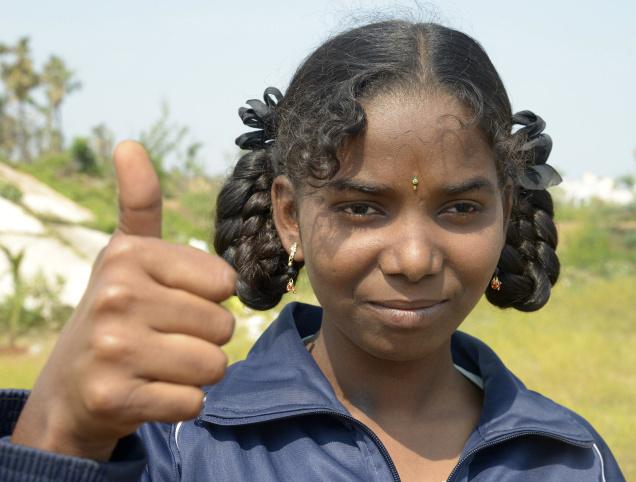
The frail looking class VII student, M. Satyavathi, bagged bronze in Snatch and Clean and Jerk in the recently conducted AP Women’s Weightlifting Championship.
A student of Government Residential School for Visually Challenged Girls at Sagar Nagar, she competed with regular weightlifters and bested them with a bronze.
“It was very nice getting a medal, there were many competitors and they were helpful too. They congratulated me on my medal,” Satyavathi said. She is a very committed performer and with a little encouragement she can win a medal at the Paralympics, school principal Nimton Babu said. Her parents are fisherfolk who can barely make both ends meet and as a result Satyavathi is what she is a frail 13-year-old who does not seem capable of the feat.
“If someone can help her with a proper protein diet, she can beat everyone else in any championship,” the principal added. The students have trained without proper sports equipment. “The principal believes that the students are capable of achieving great heights and the teachers too are very cooperative and this has helped the students train for competitions,” their physical education teacher said.
source: http://www.thehindu.com / The Hindu / Home> News>Visakhapatnam / by Special Correspondent / Visakhapatnam – November 25th, 2014
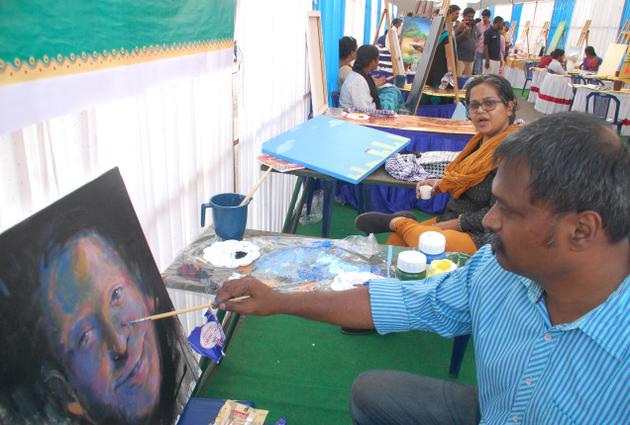
Artists working on their idea of the City of Visakhapatnam emerging from the devastation caused by Cyclone Hudhud at a two-day Art Camp in Visakhapatnam on Sunday. Photo: C.V. Subrahmanyam / The Hindu
It was a classroom kind of atmosphere with everyone working and sharing tips, chatting away and looking at one another’s works in a critical appraisal as 60 upcoming and established artists grappled with their emotions in trying to portray their experiences of the very severe cyclonic storm Hudhud that tore through the city a month ago.
The wounds are too fresh to be forget or heal. The artists were trying hard to express vividly with acrylic on canvas on Sunday, the first day of the two-day art camp jointly organised by the AP Tourism Development Corporation and the Andhra University Department of Fine Arts on the Beach Road.
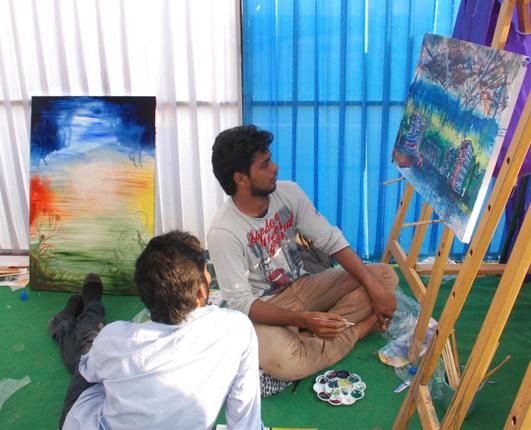
An artist working on his idea of the City of Visakhapatnam emerging from the devastation caused by Cyclone Hudhud at a two-day Art Camp in Visakhapatnam on Sunday. Photo: C.V. Subrahmanyam / The Hindu
The art camp conducted as part of Rejuvenating Vizag carnival being organised by the APTDC to celebrate the resilience of people of the city in bouncing back in quick time had many students of the Department of Fine Arts and also some self-taught and trained professionals, professor in AU Department of Fine Arts Ravi Shankar Patnaik said. This is a good platform for artists to come together, share and learn, he said, appreciating the effort of Special Chief Secretary (Tourism) Chandana Khan for having APTDC conduct the camp.
“It has been a long time since we had such a camp to work together,” city-based artist Abraham said, pointing out that it was a good learning experience looking at others work.
Chief Minister N Chandrababu Naidu is scheduled to inaugurate the exhibition of paintings done in the two-day Art Camp on the Beach Road. The exhibition of paintings on the same location would continue on Tuesday.
Noting the absence of a proper art gallery in the city, Special Chief Secretary (Tourism) Chandana Khan has asked the APTDC to build an art gallery on the Ramakrishna Beach where any artist would be able to display his or her works.
Further, the proposed art gallery would be the venue for permanent display of the paintings produced by city artists at the two-day Art Camp, sources said.
source: http://www.thehindu.com / The Hindu / Home> News> Cities> Visakhapatnam / by Special Correspondent / Visakhapatnam – November 17th, 2014
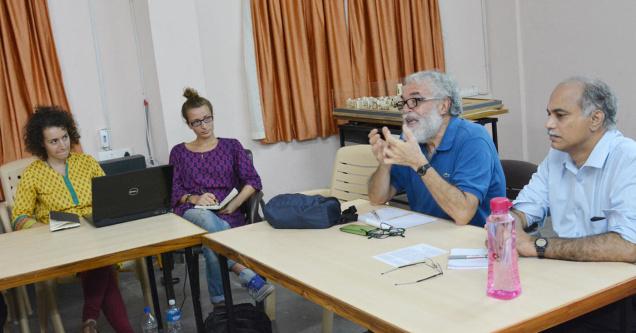
VIJAYAWADA ANDHARA PRADESH, 17/11/2014: Prof. Raffaele Paloscia (second from right) of University of Florence addressing a seminar at School of Planning and Architecture near Vijayawada on Monday. Photo. HANDOUT_E_MAIL
Raffaele Paloscia, Professor of Urban and Regional Planning at the University of Florence (UoF) expressed his university’s keenness in collaborating with the School of Planning and Architecture in the fields of design, planning and architecture and sending students regularly for taking up joint student exercises and faculty exchange programmes.
Addressing a seminar on ‘village transformation in the peri-urban setting of Vijayawada metropolitan area’ at SPA at Nidamanuru near here on Monday, Mr. Paloscia said the UoF was working with SPA in developing new design, conservation practices and planning as being practiced in Italy and looked forward to greater interaction between faculty and students of both the institutions.
Italian students Sylvia and Roberta gave a presentation on the transformation of Nidamanuru village, the way it was dependent on Vijayawada and how land use changes were taking place.
Anna Krammer from University of Cologne spoke about the evolving peri-urban environment of Kondapalli along with Michelle and Archana, master’s degree students in urban and regional planning. They also pointed out the adverse impact of ‘invasion of the city’ and the thermal power plant on livelihoods of makers of the famous Kondapalli toys and need to conserve the dying art.
SPA Director N. Sridharan outlined the exchange programmes between various universities abroad and how they were enriching the knowledge of his students. He also informed about the study of the traditional hand block printing at Machilipatnam and Pedana by 30 German students with the support of their counterparts in SPA.
source: http://www.thehindu.com / The Hindu / Home> News> National> Andhra Pradesh / by Staff Reporter / Vijayawada – November 17th, 2014
Timeless are the crafts from different states of our country and so is Andhra Pradesh’s Kalamkari work. Decades ago it was practised by many villages in the state but now it is restricted to only a few.
The art, therefore, is surviving because of those few artisans who practised the age-old craft technique. Paying tribute to all those artisans Bina Rao, trustee of Creative Bee Foundation in collaboration with Delhi Crafts Council has curated special collection of Kalamkari, at the ‘Tree of Life’ exhibition.
Intricate works in colourful shades on muslin silk pieces put on display are the original which were produced in the late 18th and 19th century, in Srikakahasti, Andhra Pradesh. Each piece is based on the concept of ‘Tree of Life’ which has been used in science, religion, philosophy and mythology. A common motif in various world theologies, mythologies and philosophies, it alludes to the interconnection of all life on our planet and serves as a metaphor for common descent in the evolutionary sense.
In her note Rao has said, “The name Kalamkari comes from the word kalam which means pen, as the instrument used to paint on the fabric. Though it resembles a pen, it is made of bamboo or tree bark on which an ink pad comprising a piece of cloth or cotton wool is tied. The ‘ink pad’ is dipped in colour and free hand illustrations are made on the hand-woven soft muslin cloth which is pre treated with cow milk.”
Interestingly, cow’s milk has certain natural chemicals which can bleach the cloth and prevent the colours from spreading and blotting.
Giving an insight into this age-old art practice, the note reads, “ Through the 18th and 19th centuries India exported textiles – Palampore and chintz as they were known then. The industrial revolution in the mid-19th century permanently altered the nature of this trade, particularly between India and Europe.
The hand-printed kalam-kari textiles were replaced by block and machine-printed ones produced in Europe. Within the next few decades, hand skills were completely lost from the villages in and around Machlipatnam and the entire region. The only exception was in Srikakahasti, where the artisans had fortunately retained the same hand skills and knowledge of natural dyeing, till today.”
The exhibition is on view till November 23, Art Gallery, Kamladevi Complex, India International Centre, Lodhi Estate from 11 am to 7 pm.
source: http://www.deccanherald.com / Deccan Herald / Home> MetroLife / by Archana Mishra, New Delhi / DHNS – November 18th, 2014
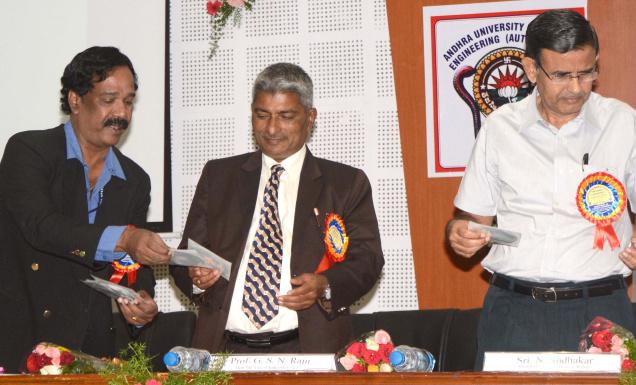
Vice-Chancellor of Andhra Unviersity recieving the conference CD from Chief General Manager of APEPDCL Ramesh Prasad at the inaugural of the two-day seminar Con-CON 2014. General Manager (elec) of RINL M. Sudhakar is also seen. Photo: C.V. Subrahmanyam / The Hindu
Andhra University College of Engineering organises ‘ConCon’-2014. Principal of AUCE P.S. Avadhani, in his address pointed out that to learn more about control systems, scientists are trying to emulate genetic algorithm into artificial intelligence.
“There is no system in the world without a control system or control mechanism. Control system technology is the future,” said Vice-Chancellor of Andhra University G.S.N. Raju.
He was delivering the inaugural address at the two-day national conference on Contemporary Controls titled as ‘ConCon- 2014’, here on Thursday. The conference is being organised by the Department of Electrical Engineering, Andhra University College of Engineering (AUCE).
Highlighting the use of control system, Prof. Raju said that the most complicated and complex control system in the world is the human body. “Scientists across the globe have been trying to learn about this system, as the ultimate goal is to create a human body,” he said.
Principal of AUCE P.S. Avadhani, in his address pointed out that to learn more about control systems, scientists are trying to emulate genetic algorithm into artificial intelligence.
Over 35 papers by research scholars will be submitted during the two –day conference, which is being attended by a number of scholars, faculty members and students from various colleges across the country.
Delivering a technical talk in the inaugural session, Director of Sankhya Technologies, Mangalapalli Kalyan said that modelling and simulation system that are embedded with a number of control system, form the base of any research product, be it a car or a spacecraft.
N. Sudhakar, General Manger of RINL, B. Ramesh Prasad, Chief General Manager of APEPDCL, Prof. K. Vaisakh HoD of the department, Prof. M. Gopi Chand Naik, Convener of the conference and Prof. Mallikarjuna Rao, Co-Convener, spoke.
source: http://www.thehindu.com / The Hindu / Home> News> Cities> Visakhapatnam / by Special Correspondent / Visakhapatnam – November 21st, 2014
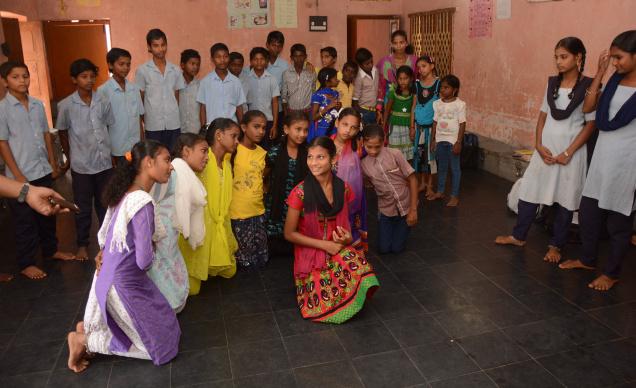
Schoolchildren from various municipal schools in celebration mode at Urban Residential Hostel, Arilova in Visakhapatnam. — photo: C.V.Subrahmanyam / The Hindu
Students of municipal schools win several prizes in VUDA contest
More than a dozen pairs of feet follow the rhythm of ‘dhimsa’ tunes, elbowing one another and swaying in different variations. It was time to rejoice and commemorate for the students from various municipal schools as they secured several prizes in the recent Children’s Day competition organised by VUDA under various heads — western dance, folk dance, and drawing.
This year, 50 students from four schools – Urban Residential Hostel (Arilova), Andhra University High School, GVMC Primary School (Peda Jalaripeta) and Zilla Parishad High School (Thotagaruvu) teamed up to present their creativity at the annual event.
While for most of them it was first time to perform on the stage, a few of them explored the platform for the second time. “Last year, we could not win in folk dance contest. This year, we were determined to give it our best shot,” says Tulasi, a Class VIII student of AU High School as her team grabbed the first prize in folk dance category.
More than securing prizes, what appears to be the encouraging fact is the cultural exchange that the students look forward to. “The challenging part is that our dancing skills should be on par with the ones from corporate schools. We were able to learn a lot from them while they made us feel comfortable during the contest,” says Chinna Lakshmi, a Class VII student.
Those who belong to the neighbouring villages of Araku Valley had an added advantage. “We were able to choreograph ourselves effortlessly as we have grown up watching ‘dhimsa’ dance all through our childhood. This helped us gain an edge over others,” says Uday Kiran, a team member.
Advantage of camps
Sharing their happy moments, founder member of Andhra University Evergreen Engineers Trinadha Rao Sabbi, who facilitated summer camps for these teams, says: “Our mission to equip these children with creative skills proves to be fruitful. After a couple of summer camps, they are independent enough to train others. Moreover, seeing their expertise, a couple of organisers invited them to participate in their programmes.”
source: http://www.thehindu.com / The Hindu / Home> News> Cities> Visakhapatnam / by Rani Devalla / Visakhapatnam – November 21st, 2014
Ashwin Hebbar has given people of Nellore a reason to rejoice
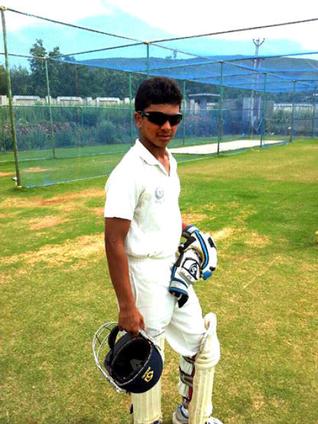
His 250 against Haryana and 175 against Jharkhand in the Cooch Behar fixtures made the selectors come to an agreement to blood him in first class circuit. Nineteen-year-old Ashwin Hebbar found a place in Mohammad Kaif-led Andhra Ranji team for the season thus bolstering the team’s middle-order.
Nellore turned jubilant when after a long gap, a player from the district was picked for the Ranji team. “The last man to earn the cap was all rounder Fayaq Ahmed,” recollects Andhra Cricket Association statistician G. Phani. Ashwin is a product of ACA’s academy concept which took shape in 2010. The sprucing up of three academies at Mangalagiri, Kapada and Vizianagaram for three age groups has done a world of good to junior cricket.
“Players like Ashwin Hebbar, Naren Reddy, Ricky Bhui, MUB Sriram and Karan Shinde are the products of these academies,” says a proud Prasad. For an introvert, who is an avid reader, this season will be an important one for he will aim to cement his place if opportunities are given by the management to perform.
“He has been performing consistently in the junior grade and it is imperative to promote him to keep his morale high. He is also a good fielder in the point-cover region and he is good team man who bowls at gentle medium pace,” says Srinivas Reddy, an ACA coach.
Many administrators and coaches rate Ashwin high when it came to patience. “He has loads of it and he loves to play a waiting game. He has all the strokes but he plays according to situation,” says Prasad. Ashwin had a dream run in the junior grade by slamming more than 500 runs in many seasons and he led Andhra team to win the South Zone under-16 honours.
Many feel that lack of flamboyance like Karan Shinde and Ricky Bhui was the main reason for Ashwin efforts going unnoticed. “He is a quiet bloke. He minds his business and he is not the noisy type to draw the attention,” says a coach.
A darling of coaches, Ashwin always places his team before self. “He is a quintessential middle order batsman but when team demanded, he opened the innings for team and scored big runs. But when it came to national selections he could not match the performance of the regular openers of the rival teams,” says Prasad.
Andhra begins its Ranji voyage from December 7 at Vizag against Hyderabad and will wind up in early February (2015) after playing seven matches and Ashwin certainly has his work cut out for him.
source: http://www.thehindu.com / The Hindu / Home> Features> MetroPlus / by J.R. Sridharan / November 21st, 2014
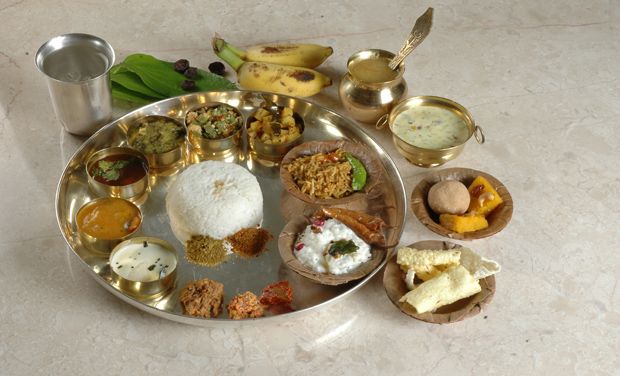
Ninety per cent of the population of the village Indupalli in Krishna district has a single profession — cooking.
About 100 years ago, Chowdary Babu, a famous barrister in Machilipatnam and Vijayawada, lived in Indupalli.
His family used to travel a lot, making it difficult to have home-cooked food all the time.
Chowdary’s wife thus selected Vaddanapu Koteswara Rao, a boy who was a domestic help in the house, and instructed him in the art of cooking.
When Koteswara Rao grew up, he was appointed as a peon in the local school. His art of cooking got publicity when he helped a teacher in his daughter’s wedding.
From then, all the teachers demanded his services.
Indupalli and the surrounding villages of Nandamuru, Manikonda and Chikinala soon got a taste of his dishes and in no time he was the most sought after cook in the area.
Over the years, celebrities and politicians like Rajiv Gandhi, Buta Singh, Jalagam Vengala Rao, Anjaiah, etc. heard about his prowess.
Koteswara Rao later became the personal cook for NTR and Sobhan Babu on outdoor shootings and toured almost the entire country with them. Koteswara Rao passed on his culinary skills to 110 masons from all castes and religions in the village during his lifetime.
The second generation of cooks from the village trained another 20 each.
Over the years, some of the Indupalli cooks have settled in Vijayawada, Hyderabad, Visakhapatnam, Chennai, Bellary, Bengaluru, Mumbai and Delhi.
They are the chief chefs of conclaves like TANA (Telugu Association of North America) meetings, Telugu Desam’s Mahanadu, the Congress and the Communist parties’ plenary meetings
They prepare food for guests numbering anywhere from 1,000 to 1 lakh and guarantee satisfaction of all.
M. Bhaskara Rao, a disciple of Koteswara Rao said, “We started working with him for half a rupee. We were just teenagers then. He taught us how to select ingredients, how to balance the salt and mirchi powder. With the art he has bestowed upon us, we are now leading a decent life.”
After the first generation of Koteswara Rao’s disciples spread over the region, Indupalli changed a lot.
There are no huts in the village. Everyone has bought two-three acres of land and earns an average of Rs 5,00,000 a year.
Some of the cooks even have children settled in the US, Canada and Australia.
The fourth generation of cooks from the village has even taught in multi-cuisine restaurants abroad. Arepalli Vasantha Rao is one of them. He was in Libya for one year.
“We have Indians everywhere. To satisfy their taste buds, the companies employing us. I worked on a contract in a production house and taught them,” he said.
Wielding the ladle with flair are the cooks from Indupalli.
There is a saying that once we taste the food made by Indupalli cooks, we can easily identify it the second time. The cook may be different, but the taste is the same.
What could be the special ingredients they possess to work the magic? Bhaskara Rao says, “The devotion and dedication towards work is the special ingredient in our pockets. We are satisfied with what we get, and have no greed to take another order and being busy on the same day. We are all booked for events nearly six months before the day. On December 7, it is the marriage of the son of minister Pattipati Pulla Rao. His aides booked someone from the village for it. Recently, a man close to Mr Alapati Rajendra Prasad contacted us for booking on the same day, December 7, for the marriage of the MLA’s d-ughter. We had to regret we couldn’t accommodate him. We turned down the order from minister Kamineni Srinivas for his daughter’s marriage on December 17. We couldn’t agree as we had already accepted another order.”
The integrity and goodness possibly is the special ingredient of cooks from Indupalli.
The 500 cooks and helpers of Indupalli are busy on almost all the auspicious dates on the calendar.
Another cook said that due to increasing demand for the Indupalli cooks, some persons are impersonating them.
He added, “We caught a guy in Hyderabad last month. He pleaded guilty and begged for forgiveness. We beat him up and warned him not to damage the reputation of cooks from our village because no one else knows our distinctive style of cooking.”
Due to the increased demand and travel expenses, Indupalli cooks prefer to live in cities like Mumbai, Bengaluru, Chennai and Delhi, with a considerable population of Telugu-speaking people.
To ensure they share and spend some quality time together, the villagers devised a tradition of reunion.
Fourteen years ago, the cooks in the village founded a trust and constructed a Saibaba temple whose anniversary falls on January 29.
All villagers settled outside are expected to visit their village on that day. The first year, 4,000 members, including family members, gathered in Indupalli.
This year, about 20,000 people visited the village. In 2015, a similar number of people are expected.
Mr Vasantha Rao said, “Villagers living anywhere in the country come home for that single event. We arrange VIP level meals and round the clock cultural programmes through the day and night. All houses in the village will be full of relatives and family members.”
Mr Bhaskara Rao, a board member of the temple said, “We have scheduled the event to January 18 this year, as the January 28 and January 29 are full of auspicious muhurtams after a long time. We don’t want to deprive them of their earnings. For January 18, we are making preparations for 20,000 members at a cost of `14 lakh. All the cooks in the village prepare dishes on the day and we serve them at four locations in the village for the convenience of the people.”
source: http://www.deccanchronicle.com / Deccan Chronicle / Home> Nation> Current Affairs / DC / Naresh Nandam / November 22nd, 2014
In a move that will gladden the hearts of women, the AP government on Saturday appointed women district medical and health officers (DM&HO) in 11 out of 13 districts in the state.
This is perhaps for the first time that so many women have been appointed DMHOs at one stroke. Health minister Kamineni Srinivas interviewed all the new contenders and the existing DMHOs before going for the sweeping change. He followed the rule book and performance of officials before finalizing the candidates for top medical jobs in districts.
Women officials will head the health department in all districts except Kadapa and Anantapur. At least six DMHOs were removed from their posts and shunted to ‘loopline’ positions. The DMHO in the minister Srinivas’s home district – Krishna — Dr Sarasijakshi too faced the axe. She was appointed principal of women training centre in Guntur.
While Guntur in-charge DMHO Nagamalleswari was brought to Krishna, Dr Padmaja Rani was given charge of crucial Guntur district. While Dr R Syamala is Srikakulam DMHO, Dr J Sarojini will take charge of Vizianagaram district.
Similarly, U Swarajya Lakshmi will take the reins of Visakhapatnam, Dr M Savitramma and Dr K Sunanda will be DMHOs of East and West Godavari districts respectively. Dr J Yasmin, working at GGH, Guntur, was posted as DMHO at Ongole in place of Dr K Chandraiah.
Chandraiah has been shifted to fever hospital as chief medical officer. Dr Bharathi Reddy has been appointed DMHO in Nellore and K Koteswari in Chittoor and B Nirmala in Kurnool.
Dr S Prabhudas (Anantapur) and Dr R Narayana Naik (Kadapa) are the only two male DMHOs in the state. DMHOs are supervisory officers of all primary health centres and they are chiefly responsible for taking health programmes of the government to the doorsteps of the poor.
source: http://www.timesofindia.indiatimes.com / The Times of India / Home> City> Hyderabad / TNN / November 23rd, 2014
Have you ever tracked the status of letter written to your loved ones? Have you heard that the Global Positioning System (GPS) in your android phones will give your speed-post status? Then you have to appreciate India Posts, which has introduced the new technology to track the postal mail status.
A unique bar code is printed on the reverse of the door of the letter box to capture the details. It helps to know the location of the letter box, date and time of clearance, number of letters and also the details of the person who has delivered the letter. The public can also go to the website www.appost.in/nanyatha and type the location of the letter box in the text box.
India Posts has launched the new system ‘Nanyatha’ at the Gandhinagar post office in the city Friday. Speaking on the occasion, chief postmaster general, Hyderabad, B V Sudhakar, said, “The people can know the status of their post cards or other items posted. We have introduced this real time website service which can be used to know the status of the postal mails.”
In Vijayawada, the GPS technology is used in 173 of the total 183 boxes to get updates on speed post, till the dispatch of the parcels or items.
“We are trying to cover the entire state with this service grid by the month of Feb, 2015. The grid has been started between Hyderabad and Chennai, Hyderabad and Bangalore, Hyderabad and Visakhapatnam, Hyderabad and Adilabad, and soon it will cover Andhra Pradesh, Tamil Nadu and Karnataka to form a ‘mini southern grid’,” Sudhakar explained.
He further said that the turnover of India Posts has increased to `29,280 crore in 2013-14 from `28,425 crore in 2012-13 and the department will take measures to reduce the revenue gap of `265 crore by 2015.
source: http://www.newindianexpress.com / The New Indian Express / Home> States> Andhra Pradesh / by Express News Service / November 22nd, 2014