The 1.2-km Kotilingala Ghat — one of the 23 ghats being developed for the pilgrims to take a holy dip in river Godavari during the forthcoming Godavari Pushkarams — is set to emerge as the country’s largest riverine bathing ghat, according to sources in the endowments department.
Giving an idea of the enormity of the Kotilingala Ghat, they told Express here on Saturday that one lakh pilgrims could take a holy dip there at a time.
They further said that the district administration had divided the 23 bathing ghats – 15 of which are in the urban area and 8 in the rural area – into ‘A’ and ‘B’ Grade ghats for the convenience of the pilgrims.
In the urban area (Rajahmundry city), 12 ghats would be notified as ‘A’ grade ghats and the remaining three as B grade ghats, he said. The ‘A’ Grade ghats were Gayatri Ghat, Gowthami Ghat, New VIP Ghat (Saraswati Ghat), Padmavati Ghat, Sraddananda Ghat, Markandeya Ghat, TTD Ghat, Pushakar Ghat, Sankara Ghat, Lakshmi Ganapathi Ghat, PMK Ghat and Kotilingala Ghat. The ‘B’ Grade ghats would be Subbayamma Temple Ghat, Dobhi Ghat and Kanaka Durga Ghat, they said.
According to the sources, in the rural area, there will be one ‘A’ Grade ghat – Ramapadala Ghat at Dowleswaram — and seven ‘B’ Grade ghats — Boat Office Ghat, Padmavathi Ghat, Kancharladine Ghat, Gayatri Ghat, CERP Ghat, Chintalamma Ghat and Sunnamnbatti Ghat. The sources said that common pilgrims would be permitted to have a holy dip in the river at the VIP Ghat whenever VIP pilgrims were not present there.
Meanwhile, as per the directions of chief minister Nara Chandrababu Naidu, the endowments department was constructing platforms at various ghats to enable the pilgrims to perform Pinda Pradanam and Tirdha Vidhulu, the sources said and added that at some places, sheds were also being constructed.
They said that construction of all the ghats, including the VIP Ghat at Gopada Kshetram, near Kovvur, in West Godavari district, would be completed by June 30 as per the directions of the chief minister. They added that Naidu would again review the progress of all the Pushkaram-related works on July 1.
source: http://www.newindianexpress.com / The New Indian Express / Home> States> Andhra Pradesh / by S S Chary / June 28th, 2015
The first AP State-Ranking Table Tennis Tournament (APSRTTT) began on a grand note with a large number of sports enthusiasts from across the state taking part in the competitions at Srinivasa Sports Complex (SSC) here Friday.
Being one of the prestigious events and first state-level table tennis competition in truncated AP, the APSRTTT gained a lot of importance in the contemporary sports world. The debut tournament, to be conducted for three days, was almost a big hit, as more than 200 candidates from both coastal Andhra and Rayalaseema regions registered their names. These 200 sportspersons will compete at five levels i.e, cadets (Under-12), sub-juniors (U-14), juniors (U-17), youth (up to 21 years) and men and women (above 21 years). Every candidate will compete in an 11-point game in men and women’s category, separately.
On the first day, quarter finals comprising seven rounds for all the age groups and semi-finals for the contestants belonging to cadets’ category was conducted. The winners will get a cash prize of `1 lakh, said APSRTTT tournament director Venkat Malapaka.
For the first time ever in the history of table tennis tournament, eco-friendly balls were used in the game, promoting the importance of environment. “We used 40+ non-celluloid plastic white balls in the game. This will disseminate and help recognise the importance of environment in the present global warming conditions. Meanwhile, the cash prize announced can add more contestants to the game, making them more competitive to participate at global level sports,” he felt.
In the semi-final round, R Adi Lakshmi from Vijayawada won against her opponent Soumya from Visakhapatnam with 11-9, 8-11, 11-6 and 11-7. “Since morning, I was very much excited to step into the ground and hit the ball. The ambience of the tournament had built a competitive spirit in me. Though the competition with my opponent was not so tough in the beginning, the later rounds were like tug-of-war. However, it feels great to win,” 11-year-old Lakshmi told Express.
In the inaugural ceremony, TTD chairman C Krishna Murthy said that the divided Andhra Pradesh had the capability to host the international and national level sports competitions, towards which government was making all elaborate measures keeping this in view.
source: http://www.newindianexpress.com / The New Indian Express / Home> States> Andhra Pradesh / by Express News Service / June 27th, 2015
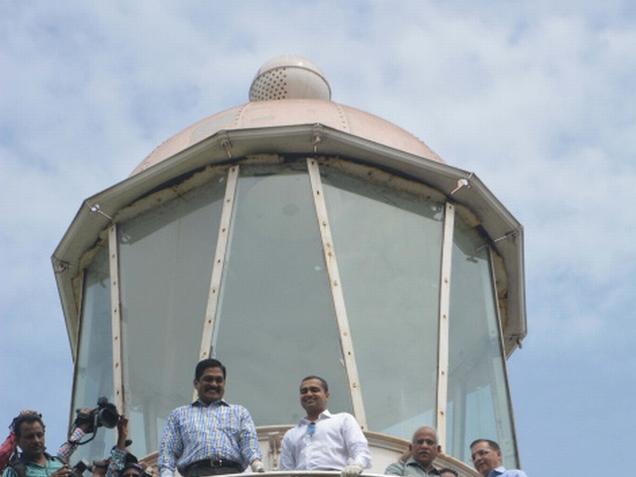
The old Light House has been restored and thrown open for public. Photo:C.V.Subrahmanyam
The iconic structure was established in 1903 to guide ships.
Setting a new benchmark in restoration of heritage structures in the city the Visakhapatnam Port Trust and the Visakha Container Terminal Pvt Ltd restored the old Lighthouse at Flagstaff on the Beach Road and the iconic building was thrown open to public on Friday.
The iconic structure which was a source of inspiration for the seafarers is a landmark that is the pride of the Port City standing testimony to the rich marine traditions of the region. This would probably be the first historical monument whose restoration has been taken up in a proper manner. “It is the first text-book restoration work in the city,” convenor INTACH PV Prasad said thanking the Port and the VCTPL for taking keen interest in the restoration work.
“We are proud to be associated with the proper restoration of a genuinely historical monument,” VCTPL managing director Vir Kotak said. We have taken up the work and gladly spent the amounts required for the restoration, he added.
Monuments and their architecture reflect the culture of the earlier generations and any work to preserve our heritage is praiseworthy, Chairman Visakhapatnam Port Trust M T Krishna Babu said lauding the efforts of the VCTPL in restoring the landmark building.
The 59-foot masonry tower was a transit line lighthouse. It was established in 1903 in the present location to help guide the ships into one of the safest natural harbours in the world – the Visakhapatnam Harbour. The dome and lantern of the lighthouse were from the lighthouse at Chantilly or Chintappali some 18 km from Bheemunipatnam. The light house had a gas-fired white diopter light of the 2 order with brightness levels of 45000 candles. It flashed every 20 seconds and was visible from 12 miles in clear weather. During World War II there were two anti-aircraft guns set up next to the lighthouse.
The lighthouse went into disuse in 1962 and after that the building itself went into disrepair. VCT persuaded VPT management to hand it over for restoration and revival. Chairman of VCT and JM Baxi Group of Companies Krishna B. Kotak, an ardent restorationist, brought onboard Mumbai’s conservation architect Vikas Dilawari to oversee the project which began in 2012.
Adding value
VCTPL has made a request to Navy for providing two surface-to-air guns to be installed on the cemented pedestals which were originally made for the purpose.
VCTPL proposes to request GVMC to take up the periodical maintenance and upkeep of the area outside the boundary.
Quotes
We have to thank Krishna Kotak for taking such keen interest in the conservation project.
MT Krishna Babu, Chairman VPT
We have to preserve our past to learn from it and build a strong future.
C Rajendiran, Principal Commissioner of Customs
As a Vizagiite we are proud that the restoration of this monument has been taken up
Monish Row, vice president, Vizagpatnam Chamber of Commerce and Industry
source: http://www.thehindu.com / The Hindu / Home> News> Cities> Visakhapatnam / by G.S. Subrahmanyam / Special Correspondent – / Visakhapatnam – June 27th, 2015
Some passionate ‘foodpreneurs’ in Vizag talk about their love for food and recipe for success.
There is something about food that lures people from different career backgrounds to become food entrepreneurs or foodpreneurs. The city has seen a mushrooming of standalone cafes, concept eating-out joints and e-commerce food startups, seeking to grab a share of the growing Indian food industry pegged at Rs 3 lakh crore . The start may be modest, but for the entrepreneurs getting even a fraction of this market could mean a business worth in crores. To that end they are focusing on local cuisine, affordable price points, an amalgamation of varied concepts and convenience of delivery.Metroplus chats with some passionate foodpreneurs who are discovering their recipes for success.
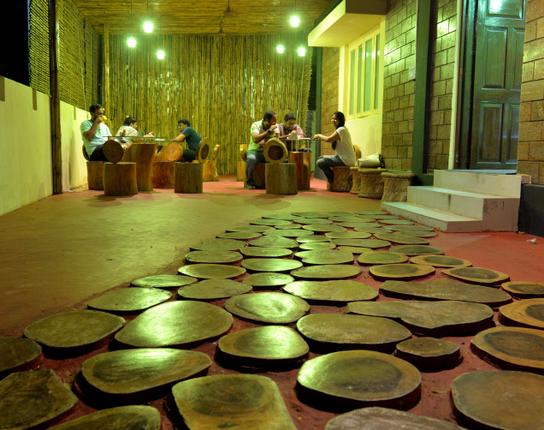
Visitors enjoying an evening at the newly-opened cafe ‘Tvam’. / Photo: K.R. Deepak
‘Tvam’
The woody, earthy interiors of ‘Tvam’ are as inviting as the wafting smell of baked goodies from its cosy space located at a small lane of Pandurangapuram. Derived from the Sanskrit word ‘Tvam’ meaning ‘That You Are’, what makes the place different is its unique concept of bringing two elements together – a patisserie and a boutique. Started by Preeti Agarwal, a lot of thought has gone into designing the interiors and the logo of the place, which reflects Preeti’s fascination for the Buddhist culture and her artistic sensibilities. “My concept was to create a place which fuses the concepts of a boutique and a patisserie. The idea of relaxing is different for different individuals. While some prefer relaxing over a cup of coffee or food, shopping and dressing up well are also a form of relaxation for many others. By bringing these two concepts together, I wanted to create a space where different walks of people can come and relax,” says Preeti, who is an MBA graduate with a diploma course in ethnic apparel designing and has also completed two levels in baking course. Tvam’s patisserie offers a variety of options of desserts and breads. But Preeti says the specialty of the place will be its English desserts like lemon and fruit tarts, red velvet cake with cream cheese toppings and low fat sponge cakes (made on order). The interior decors are done up well with recycled products. For instance, the show lights in the café that are made from recycled bottles. Tvam’s boutique features a blend of Indian and Indo-Western wear sourced from designers from across the country, priced at affordable rates.
Specialty: English desserts
Timings: 11.30 a.m. to 9.30 p.m.
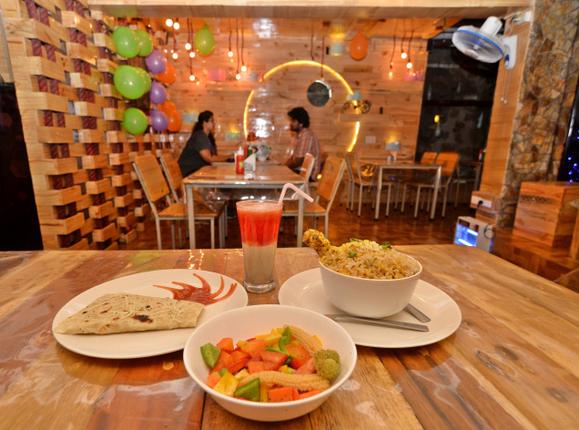
Health-friendly dishes dished out at Kaloreez. / Photo: K.R. Deepak
‘Kaloreez’
When Robert Rejoice, a marketing head of a leading shopping chain, decided to chuck his corporate job and become a food entrepreneur, serving ‘health’ food is what he had in mind. That’s how ‘Kaloreez’ was born. He prefers to let his food do the talking and shies away from posing for a photograph. “Apart from my close friends and my family, nobody knows that I am running this food joint. And I prefer to keep it that way,” says Robert with a chuckle. The MBA-graduate-turned-food entrepreneur started the joint last year but faced a few hiccups along the way. “We had to shut down the first ‘Kaloreez’ joint at Kirlampudi Layout few months after it started due to some unavoidable circumstances. It took me nearly six months to finalise another suitable place for the relaunch at Daspalla Hills,” says Robert. Right from the rustic décor to the selection of a revised menu, Robert ensured that he perfected each and every element of the concept he had in mind for ‘Kaloreez’. “The dream to start a health food joint was something I had cherished since 2009,” he says. The passionate food entrepreneur’s day starts from as early as 5 a.m. and ends after wrapping up the last order of the day. Apart from a variety of health friendly and low calorie food platter with salads and sandwiches, the new menu includes brown rice biryani, lemon bubble drink, the Kaloreez special drink and Robert’s own creation of honey gazed chicken salad.
Specialty: Low calorie menu
Timings: 6 a.m. to 10 p.m.
Native Taste
Food tech is the latest buzz in the startup community. After technology startups have made their mark in the e-commerce segment, the ever-hungry Indian entrepreneurs are looking to satiate the appetite of others. Tapping into this space and bringing a unique concept before food lovers across the country is the team of the Native Taste, a Vizag-based ecommerce food startup. Founded by Raja Sekhar Pentakota, Bhyrava Murthy Mutnuri and Gowthami Kanumuru in January this year, the portal nativetaste.in whips up a mindboggling variety of traditional sweets and snacks from various parts of India. So you can sit in a remote corner of Andhra Pradesh and enjoy Agra’s famous petha, order Kakinada’s kaja from Rajasthan or relish Pune’s Bhakarwadi by placing an order from Kerala. “When I used to travel across the country, I and Bhyrava would often wonder why we needed to travel so far to taste the specialty of the place. That’s how we stumbled upon the idea to connect all the regions under a platform for food lovers to enjoy the regional specialties from anywhere in India,” says Raja Sekhar. The portal has more than 30 varieties of traditional sweets and snacks which are procured from the place of origin. “We identified vendors and families that have been making the delicacies for past several decades. For instance, the Madugula halwa is procured from a vendor whose family has been in the business of making the delicacy from the past 190 years,” explains Raja Sekhar. The team is currently working in collaboration with a Bangalore-based food packaging firm for a temperature-controlled food packaging to increase the shelf life of the products. They will soon be starting international orders from July to cater to requests pouring in from countries like Australia, the US and UK.
Specialty: Traditional sweets and snacks
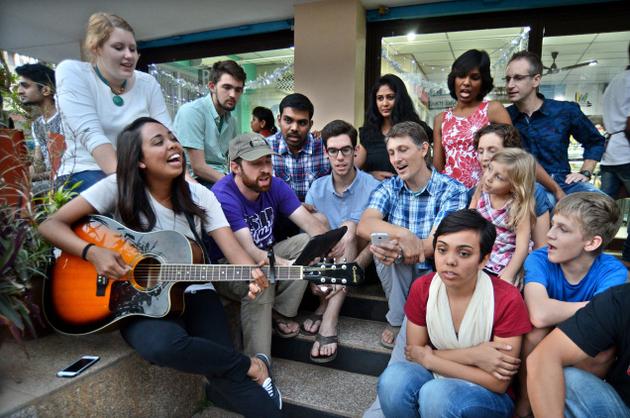
People enjoying an evening at Bean Board./ Photo: K.R. Deepak
Bean Board
During the past one year, Bean Board has become synonymous with friendly bonding. Founded by Isaac Jeremiah, David DeLaughter and Tyler Julliard, the uniqueness of Bean Board comes from the fact that it gives a representation to the surfing community of the city, promoting a community-based café concept where friends come and share quality time together. It is no wonder then that the place is a “strictly no-wifi zone”. “We never wanted wifi in our café since the entire idea was to create a space where people forget their gadgets and enjoy some good conversations,” says Isaac. Bean Board has seen many small groups blossom into big cheerful gatherings over a cup of coffee. Here, you find surfing boards of different shapes and sizes perched up the walls of the place, the proud possession of one of its founders David, who is a passionate surfer himself. As the café turns one on July 1, it will be celebrated with a uniform special pricing of all its products and live performances by local rock band Kairoz and guitarist Abhishek on July 1 and 2. One of the USPs of the café is its over 90 flavours of ice teas and its concept of small jar coffee, priced at Rs 100, that promotes the concept of sharing among four friends. This apart, its latest addition ‘marble mocha’ was an instant hit with its blend of dark and white chocolate, caramel and coco powder flavours. The menu also includes seasonal specials like red velvet cake and ‘birthday cake’.
Specialty: Seasonal specials and ice teas
Timings: 10 a.m. to 10 p.m. (Mon-Sat) and 5 p.m. to 10 p.m. (Sun)
source: http://www.thehindu.com / The Hindu / Home> Features> MetroPlus> Food / by Nivedita Ganguly / June 26th, 2015
The resored lighthouse on the beach road in Visakhapatnam.PHOTO: C.V. SUBRAHMANYAM
Restored harbour lighthouse sans lantern to be inaugurated tomorrow
The Visakhapatnam Port Trust has taken the lead in restoring the structure of its iconic harbour lighthouse and the restored landmark is set to be inaugurated on Friday.
The restoration of the lighthouse signals the importance the State government is giving to maritime trade. The Government is looking at logistics to play a catalytic role in bringing about double digit growth to the State economy as part of which Visakhapatnam Port plays a key role as a gateway to the East. Under the guidance of well-known conservation architect Vikas Dilawari, the 59-foot round tower with gallery and lantern has been given a makeover. However, the port has not been able to get a lantern and the restored structure would be without a lantern.
The iconic building that was a transit line lighthouse directing the ships into the harbour channel went out of service in 1962. The building was plastered over and the stairs inside had collapsed. The yard had become a garbage dump for the neighbourhood.
Original glory
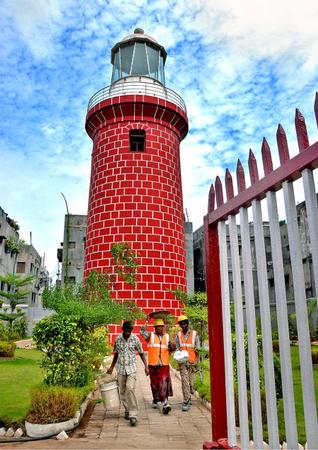
The Visakha Container Terminal Private Limited took the responsibility of restoring the structure to its original glory and after some painstaking work over the last two years has made it stand out. It has a shining new dome and the gallery is complete with a proper parapet. The structure itself is brick red reflecting its historical value. The yard has been converted into a well-maintained garden.
The restored icon is scheduled to be inaugurated by Visakhapatnam Port Trust Chairman M.T. Krishna Babu.
source: http://www.thehindu.com / The Hindu / Home> News> Cities> Visakhapatnam / by G. S. Subrahmanyam / Visakhapatnam – June 25th, 2015
Red sanders, the prized wood that thrives in the Seshachalam forests in Chittoor-Kadapa-Nellore region of Andhra Pradesh, has been found to possess a plethora of medicinal properties to fight several diseases and disorders including gastroenteritis, ulcers and diabetes.
A joint study by researchers from four prominent educational institutions revealed that the leaves, wood and roots of red sanders tree contain many chemical molecules that have curative properties.
Red sanders, its high demand in the international market notwithstanding, has always remained an enigma as for as its real end use is concerned. There have been several myths attached to the red sanders in the absence of concerted efforts to study the pharmaceutical and other benefits of this rare and endemic tree.
In fact, the AP forest department has instituted a research study to find out what the buyers would actually do with the red sanders. The study is currently underway.
Meanwhile, researchers from MS Ramaiah University of Applied Sciences, Karnataka, Prist University, Tamil Nadu, Sebha University, Libya, and Mother Theresa Postgraduate and Research Institute of Health Science, Pondicherry, have validated a few of the medicinal properties of red sanders.
The tree has anti-bacterial properties with clear action against harmful bacteria like Enterobacter aerogenes, Escherichia coli, Pseudomonas aeruginosa and Staphylococcus aureus. Some of these bacteria are found in hospital environment with resistance to certain antibiotics.
Red sanders is also capable of fighting eye diseases, inducing vomiting and giving relief from mental issues.
“The heartwood is known to possess molecules which help in fighting diabetes, intestinal worms, high body temperatures, body swellings, diarrhea, and internal bleeding. Many more pharmacological activities, claimed by traditional practitioners, are yet to be explored,” the study published in the World Journal of Pharmaceutical Research said.
The research team comprised S Kavimani, Mohammad Azamthulla and R Balasubramanian.
Some of the claims, which still need scientific revalidation, are the ability of the red sanders oil to cure skin diseases, piles, wounds, bone fracture, psoriasis and leprosy, they said adding that “research interest to evaluate its therapeutic potential has developed recently perhaps on realization that the tree may contain novel chemicals, which exhibit a wide range of pharmacological effects”.
Times View
Red sanders is an enigma and this explains why there is such a high demand for this wood in the international market. Some believe it is an aphrodisiac. Others argue that it is an antidote for snakebites and scorpion stings. As long as the myth associated with red sanders is not busted, smuggling of the prized wood continues. The AP forest department should involve as many research bodies as possible to decode the red sanders and protect this rare tree from being axed by smugglers.
source: http://www.timesofindia.indiatimes.com / The Times of India / Home> City> Hyderabad / by Syed Akbar, TNN / June 25th, 2015
B. Mounika Akshaya won three medals at the 16th ASEAN age group chess tournament in Singapore.— File Photo: T. Vijaya Kumar
Guntur’s Bommini Mounika Akshaya continued her dream run at the 16th ASEAN age group chess championship that concluded in Singapore on Tuesday by winning a bronze medal in the under-12 rapid girls segment by hauling five points out of seven rounds.
She lost to Tan Huynh Thanh of Vietnam and drew with fellow Indian Swarna Braganza and Bach Duong of Vietnam to make it to the podium. She finished ninth in the blitz category.
However, she was part of the Indian team that won the gold in the blitz and silver in the rapid segments.
The other team members were Salonika Saina and Swarna Braganza. Earlier, young Mounika, who is trained by Ponnur-based Murali, won two gold medals in the U-12 standard segment.
source: http://www.thehindu.com / The Hindu / Home> News> Cities> Vijayawada / by Special Correspondent / Vijayawada – June 17th, 2015
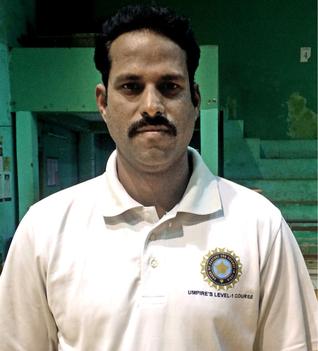
Mr. Prabhakara Rao is the tenth umpire from Andhra to qualify as the BCCI panel umpire.
Guntur-based K. Prabhakar Rao has been qualified as Board of Control for Cricket in India (BCCI) panel umpire, according to a release from the Andhra Cricket Association here on Friday.
Tenth umpire
Mr. Prabhakara Rao is the tenth umpire from Andhra to qualify as the BCCI panel umpire. The others being Late M.S. Siva Sankaraiah, V. Srinivasan, B. M. Subbu Swamy, B.V.S. L.N. Sastry, G.A. Pratap Kumar (all retired), P. Bhanu Prakash, S. Rama Krishna, M. Ramesh Kumar and Ch. Ravikanth Reddy.
A former cricketer, Mr. Rao is presently working as a physical education teacher in Zilla Parishad High School, Vejendla, Chebrolu Taluk in Guntur Dist. ACA members led by secretary Gokaraju Gangaraju congratulated the feat of Mr. Rao.
source: http://www.thehindu.com / The Hindu / Home> News> Cities> Vijayawada / by Special Correspondent / Vijayawada – June 20th, 2015
As agricultural production in Andhra Pradesh is being increasingly impacted by adverse weather, farmers are searching for ways to mitigate the loss. Lost in desperation, they are not realising that there is a widely available tree which enriches the soil fertility multifold with little human intervention and negligible investments.
Commonly known as ‘fencing plant’, it is known for many generations but the farming community has almost forgotten it under the belief that chemical fertilizers are a sure-shot solution to the problem poor soil quality. Scientifically known asGliricidia Sepium, these trees add valuable nutrients such nitrogen, potassium and phosphorous to the soil thereby increasing its fertility many times more than any other nutrient can do.
It is a multipurpose legume tree that increases soil productivity and yields in addition to reducing soil erosion and control pollution associated with the use of chemical fertilizers.
The biggest advantage is sustainable agricultural productivity that Gliricidia brings. Natural Organic Farmers’ Association treasurer Ch. R.K. Prasad told The Hindu that Gliricidia was a boon for farmers and the International Crops Research Institute for the Semi-Arid Tropics (ICRISAT) recommends it time and again to farmers for achieving higher yields and contribute to environment but emphasis was more on use of chemical fertilizers, which was the trend in many countries.
Farm bunds
As the economy of Andhra Pradesh is heavily dependent on agriculture in the changed circumstances, the NOFA requested the government to motivate farmers and facilitate the growing of Gliricidia trees on farm bunds and borders of agricultural fields.
The results can be seen in a few months as the soil fertility goes up and no chemical fertilizer is a match to Gliricidia.
Also called ‘live fencing tree’, a Gliricidia tree grows anywhere. Farmers have to grow it to see its immense benefits as the ICRISAT had demonstrated.
The Agriculture Department is being asked to take necessary action so that the farmers can herald a potential revolution.
Commonly known as ‘fencing plant’, these trees add valuable nutrients such nitrogen, potassium and phosphorous to the soil
source: http://www.thehindu.com / The Hindu / Home> News> Cities> Vijayawada / by Staff Reporter / Vijayawada – June 18th, 2015
It is without doubt one of the largest and most imposing colonial buildings not just in the Port City but also Andhra Pradesh and was built in 1910-13 when the British Raj was at its height and Vizag was the headquarters of the largest district in British India. Obviously, the imposing collectorate structure was built to reflect this power and glory of the Raj.
The E-shaped, five-winged castle like stone structure bears a strong Gothic influence and consists of large halls in each wing, with verandas on either side on both the ground floor as well as the first floor. The structure has an impressive porch with an internal spiral staircase leading to a watch tower and base pavilions on either side of the front facade.
Built by the district engineering board, the rubble structure has a tiled roof on the first floor, while the ground floor is Madras terraced, with long steel beams imported from England supporting the roof. Built to inspire awe and yet strictly functional, the stone castle spread over roughly 33,000 sq ft, which till date houses the collectorate of Visakhapatnam district, is by far one of the most beautiful colonial structures built in Andhra Pradesh.
While nobody knows who the actual architect of the impressive building is, Prof VK Giduthuri, associate professor, department of architecture, Andhra University, said the structure combines a blend of the Indian and European styles of architecture. “The arches and the high vaulted ceilings are typically European features. However, the Madras terrace and the open courtyards are clearly indicative of the Indian style of design.”
“It is unique in the sense that the proportions are no doubt grand, but the material used, with the exception of the steel beams, were all locally available. The interiors, though large and airy, are stark and functional,” he added.
Edward Paul, an expert on colonial structures in Visakhapatnam, said the scale and size of the district collectorate of Visakhapatnam was in direct proportion to the size of the then Vizagapatam district. “The old Vizag district was the largest in colonial India and comprised of the modern day districts of Visakhapatnam, Vizianagaram, Srikakulam, Koraput (including Damanjodi), Nowrangpur as well as Rayagada.”
Regarding the misconception that the building took a long time in the making and was constructed between 1865 and 1914, Paul said, “It is clearly mentioned in the Presidency archives records that this was not the case.”
Elaborating on the location of the district collectorate and the layout of the town, Giduthuri said that Sir Patrick Geddes, a noted botanist and amateur town planner and architect, had pointed out that Vizag was quite similar to New Amsterdam in terms of layout. “The administrative centre was located just outside the town overlooking the surf-ridden sea to ensure that things could be conducted away from the madding crowds.”
Fondly recollecting his young days when they would run down the dunes from the collectorate all the way to Beach Road, DN Sinha, an old timer, said: “The entire area between the collectorate and RK Beach in the early 1930s barely had a dozen garden bungalows and we used to run down the dunes all the way to the beach.”
For some not so old timers, the spacious collectorate courtyard was a great place to play cricket. P Krishna, a software engineer based in Bangalore, said, “We used to play cricket inside the courtyard during the summer holidays. It’s a pity that some of the collectors, who came in post 1997, did not take to us too kindly.”
source: http://www.timesofindia.indiatimes.com / The Times of India / Home> City> Visakhapatnam / TNN / June 18th, 2015