Young Visakhapatnam cyclist tops mountain biking race

Visakhapatnam :

It’s just a little more than a year that 14-year-old city boy Tarang Nagar started taking cycling seriously as a sport and participated in road and mountain biking. But he kept winning laurels in almost every attempt in all terrains.

Tarang’s latest achievement is securing the first position in the student category in mountain terrain biking (MTB) event held in Nainital between April 21 and 23. He was also the youngest cyclist who successfully completed the Shimla MTB held in mid-April.

Speaking about the events, the class X student of a city school said, “At Nainital, I completed (85 + 35 kilometres) in nine hours, while for Shimla MTB, I covered 36+38 kilometres in six-and-a-half hours. In MTB Nainital, where I stood first, there were only 12 finishers out of 35 and in MTB Shimla, where there were 115 participants including 16 in student category, I was the youngest rider and finished fifth.”

Apart from mountain biking, Tarang has also been a regular participant in the BRMs held in AP from time to time. BRMs are rides of fixed distances meant to be completed within specified time limits. These are considered a gateway to qualifying in international cycling events or Randonneurs. Between October 2015 and February 2016, Tarang has participated and successfully completed BRMs of 200, 300 and 600 kilometres.

“Though I like both types of cycling (mountain biking and road biking) for the fun and thrill that they offer, mountain biking is even more challenging than road riding. The long distance BRMs test your endurance, while mountain terrain biking is all about power cycling,” quipped Tarang.

Son of navy officer Commander Animesh Nagar, Tarang is also a good swimmer and has qualified to compete in state level competitions, which will be held soon. “I’m also looking forward to MTB Himalayas – a week-long racing event in September – where I would be cycling from Shimla to Leh,” Tarang averred.

source: http://www.newindianexpress.com / The New Indian Express / News Home> City> Visakhapatnam / Sulogna Mehta / TNN / April 27th, 2016
Visakha Museum in need of conservation

Visakhapatnam:

Soda bottles manufactured in 1907 being showcased with early 20th century radio or television sets or wooden palkis (yesteryear’s mode of transport) on display with the model of a modern five-star hotel, violins with pocket watches and colonial era typewriters would surely confuse anyone who visits the heritage blocks of the Visakha Museum.

That’s not all. A life-sized statue of Sachin Tendulkar is being kept with models of tribal people, while modern portraits are kept with paintings of maharajas. Over 90% of artefacts and paintings in the museum are kept in a haphazard way without any proper legends or display boards mentioning the dates, description of the item, era or historical significance. As a result, visitors to the museum are clueless about the origin of any of the items.

Moreover, huge portraits of the royalty (again unidentified maharajas) are in a bad shape and almost non-decipherable.In the armoury section, a teenager was found asking his father about the guns, swords, spears and armours, but the parent had no answer about their history or chronology.

Nafisa Khatoon, a tourist from Kolkata, remarked, “The museum has such an awesome collection of artefacts spanning at least 10-12 centuries. But the display is so haphazard. I don’t understand the logic behind putting war helmets next to imported crockery, a Chinese or Japanese pagoda with astronomical instruments or models of industrial cranes in the same showcase as that of three autographed cricket bats.”

Pointing to the portraits of maharajas, another visitor Asmita Khanduri said, “It’s sad to see there’s no conservation at all. One can directly touch the portraits or paint as there’s no protective lamination or covering on them. I have been to the Baroda Museum and every artefact there is so beautifully arranged and identified as well as conserved.”

Even though the maritime block of the museum on the ground floor is well-maintained and the models of ships, submarines or aircraft have been identified with detailed maritime history, the generator is non-functional for the last three months and visitors have to go back in case of a power cut.

A visitor from Hyderabad, Suresh Jain complained, “I came with my family especially to view the maritime section as my children are interested in defence-related subjects. But there was a power cut when we were about to enter and were asked to go back or wait till power is restored. We came to know their generator is not working. The souvenir shop of the museum was also closed.”

When asked, museum curator MNA Patrudu conceded that conservation is urgently required, but dearth of funds is the main hindering factor. But quite naturally, civic issues and not the museum is in the priority list of the GVMC. “We require at least Rs 50 lakh for conservation of the paintings and artefacts. We have contacted the conservation unit of Intach (Indian National Trust for Art and Cultural Heritage), Bhubaneswar, who are to do the restoration works. We have also sent the proposal to the government regarding this and the file is under process. We are trying to tap funding from GVMC and other sources.”

As for maintaining display boards and legends, the curator said the process is on and a fortnight may be needed to get them ready. “We need proper research and professional help for the authentic details. Some of the donors are not alive and their families may not have the required information. We are doing our best to get the boards in the heritage block ready. The generator is also non-functional for the last three months. Files keep moving slowly in government setups. However, if funds arrive, conservation of paintings and artefacts will be done followed by installation of a lift and CCTV cameras,” Patrudu added.

source: http:/www.timesofindia.indiatimes.com/ The Times of India /News Home> Visakhapatnam / Sulogna Mehta / TNN / April 19th, 2016

A jewel in the crown

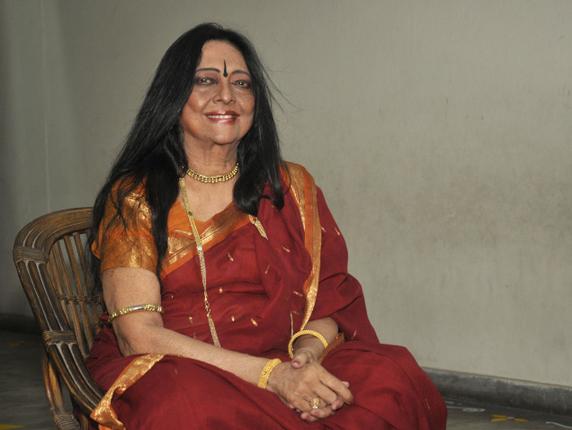
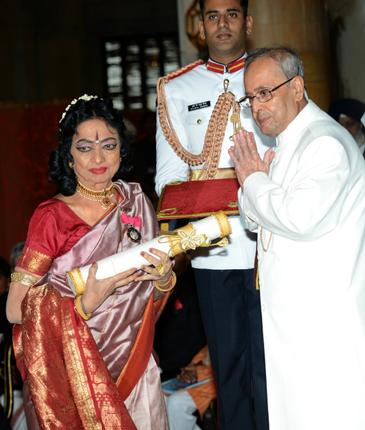
Yamini Krishnamurti Photo V.V. Krishnan

Padma Vibhushan Yamini Krishnamurti says that she is planning a production that speaks through rhythm alone.

In an era that lacks icons there is often enough a marked debate around the conferment of the Padma awards, by which the Government of India recognises the achievements of eminent civilians in any field. But Yamini Krishnamurti is a rare icon in this world. So the great classical dancer being conferred with the Padma Vibhushan, the country’s second highest civilian honour, can hardly give rise to a dissenting opinion.

Yamini Krishnamurti receiving the award from President Pranab Mukherjee. Photo Sandeep Saxena

She received the award, announced in January, from the President this week. Yamini exemplifies a person immersed in the practice, development and contemplation of her art. Such immersion leaves scant room for pretence. Art may be described as an imitation or a reflection of life, but at the heart of true replication is an unquenchable, childlike honesty. Thus her joy at being named among the Padma Vibhushan recipients of the country is palpable.

“Bharatastu yashovaham,” she quotes in Sanskrit, “The glory of Bharat (India) is our culture.” The veteran explains, “It was said, when talented people are recognised the country will prosper.”

Talented artists have been many over the decades since independence. What marks out Yamini as a unique performer is that she made each dance form she essayed her personal expression. In the process she gained mastery over Bharatanatyam, Kuchipudi and Odissi. She was considered not merely a brilliant performer of Bharatanatyam, but also largely responsible for putting Kuchipudi on the world map.

Yamini has performed through the decades across the continents. Her combination of dancing energy and mythological richness has won her admirers everywhere. She was a young, fiery dancer in the early decades after independence, when India’s educated elite took pride in rediscovering the country’s indigenous traditions, philosophies and arts.

It was back in 1960 that she performed in Pakistan. The decade also saw her tour Afghanistan and Iran. Why these countries come especially to mind in today’s polluted climate is that the classical arts are often sought to be hemmed into a closed definition circumscribed by fundamentalist views.

On what is the place of classical dance in such a scenario, the maestro emphasises, “The dance has nothing to do with religion. Beauty is the most powerful thing for all human beings. Other things are not essential.” She continues, “This is my religion. When I see a beautiful tree, a beautiful lady, I go gaga! Beauty is the most essential thing.”

It is the opportunity to create and contemplate beauty that makes her particularly happy to teach dance. “I am making a lot of youngsters dance,” she notes, describing the joy of seeing that “a person who doesn’t even know how to walk, walks out beautifully like a swan.”

Apart from the precision of her postures, the heady speed of her compositions and the variety of themes she presented, learning from her gurus and guided by the intellectual inputs of her father Krishnamurti, she is known for her brilliance in grasping the mathematics of rhythm.

Today the unparalleled dancer takes the stage relatively seldom. However, she remains in her cosmos of light and rhythm through classes and workshops.

The nature of a performing career makes it understandable if not palatable that even the greatest of artists are easily ignored once they leave centre stage. Not so for this veteran. “I see this recognition as essential for further creative inspiration of art. So I am very thankful I got this award, and it gives me great pleasure to continue my work,” she says.

If life depends on breathing, says Yamini that is the quintessential rhythm. Thus, on her plans, she says, she looks forward to creating a production that speaks through rhythm alone. “That’s my inspiration,” she says. “I’m waiting for that.”

source: http://www.thehindu.com / The Hindu / Home> Features> Friday Review / Anjana Rajan / March 31st 2016

The Deccan’s ‘precious nine’ shine on like the Kohinoor

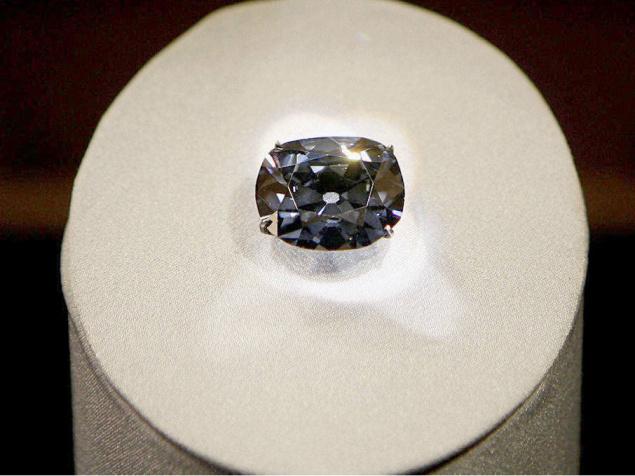
File photo of the 45.52-carat Hope Diamond at the Smithsonian's National Museum of Natural History in Washington. / Reuters
File photo of the 45.52-carat Hope Diamond at the Smithsonian’s National Museum of Natural History in Washington.
/ Reuters

Legendary diamonds mined by the Qutub Shahis are on display in Washington, Paris and Moscow.

It is not just Kohinoor; nine other famous diamonds left the shores of India and these are now displayed in museums in Washington, Moscow, Paris and Istanbul, besides forming a part of the Iranian crown jewels.

The precious nine, all categorised as legendary diamonds and mined by the Qutub Shahis of the Deccan, are the Hope Diamond, Hortensia, Darya-i-Noor, Noor-ul-Ain, Orlov (also called Orlof), Regent, Sancy, Shah Diamond and Spoonmaker’s, says V. Madhavan, who worked as a Professor of Geology in the Kakatiya University.

While the 45.5 carat Hope diamond is currently on display at the Smithsonian in Washington DC, the 190 carat Orlov diamond, a bluish-green gem, is now part of Moscow’s Diamond Treasury.

On the other hand, the 140.6 carat Regent, 55.2 carat Sancy and 20 carat Hortensia are now at the Louvre museum in Paris.

Two pink diamonds, the 182 carat Darya-i-Noor and 60 carat Noor-ul-Ain are part of the Iranian crown jewels while the 88.7 carat Shah Diamond and 86 carat Spoonmaker’s are housed in the Diamond Fund of the Kremlin and Topkapi Palace in Istanbul respectively.

Origins a mystery

Prof. Madhavan, who has studied diamond mining for nearly six decades, says that by all historical accounts, the Kohinoor was mined by the Kakatiyas when Rani Rudrama Devi headed the kingdom, its headquarters in present day Warangal.

Kohinoor’s exact vintage, right from its discovery, continues to be a mystery. However, “There is a general consensus among historians that it was found at Kolluru in the late 13th century in present day Guntur district of Andhra Pradesh,” he said adding that Kolluru was part of the Kakatiya kingdom.

Former Professor of History at the University of Hyderabad, V. Ramakrishna, said the Manual of “Kistna District in the Presidency of Madras”, written by Gordon Mackenzie and published in 1883, also indicated that the Kohinoor was found in Kolluru, then part of Krishna district.

Pages 244-247 refer to diamond mining in the district in general and the Kohinoor in particular. The manual however, says that the gem was mined by Qutub Shahis and not the Kakatiyas.

Another book, A Study of the History and Culture of Andhras, by noted historian K. Satyanarayana and published in 1982, also speaks of the Kohinoor being found in Kolluru.

According to Prof. Madhavan, India was the only producer of diamonds in the world till 1725 AD when they were mined in Brazil. Later in 1870, diamonds were explored in South Africa. Marco Polo, who visited India in the 13th century, talks in his travelogue of an inland kingdom ruled by a queen (Rudrama Devi)… “which produced all the diamonds in the world”.

At the time of its discovery, the Kohinoor was the largest diamond in the world. But no longer. In 1905, workmen at the Premier Mines in South Africa unearthed the 3106 carats (621 grams) Cullinan diamond, which remains the largest so far. It was named after Sir Thomas Cullinan, the founder of Premier Mines.

The original weight of Kohinoor was stated to be 793 carats (158.6 gm). In the 17th Century, emperor Aurangazeb wanted to reduce its size to add to its lustre.

He tasked Horenso Borgia, a Venetian lapidary with the job, but he cut the diamond down to just 186 carats and invited a heavy fine.

At present, the weight of Kohinoor, meaning mountain of light, is 105.6 carats.

source: http://www.thehindu.com / The Hindu / Home> News> Cities> Hyderabad / Prashanth Chintala / Hyderabad – April 23rd, 2016

Inter Topper Felicitated

Varanasi Roshini
Varanasi Roshini

Vizianagaram :

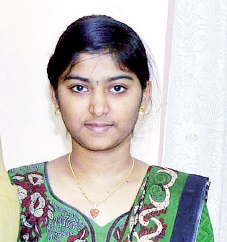
Collector MM Naik congratulated the state topper of Intermediate examinations Varanasi Roshini, who scored 992 out of 1,000.

Roshini, a native of Vizianagaram district, met Naik on Thursday.

On the occasion, the collector suggested to her to pursue further studies with an action plan.

Roshini’s parents and principal of Narayana College, where she studied, P Sridhar accompanied her.

source: http://www.newindianexpress.com / The New Indian Express / Home> States> Andhra Pradesh / by Express News Service / April 22nd, 2016

Piramal Group launches mobile health project in Andhra

Vijayawada :

A mobile health project to provide medical services to the poor in villages of Andhra Pradesh was today launched.

“Chandranna Sanchar Chikitsa”, started by Piramal Swasthya and supported by the state Government, was launched by Chief Minister N Chandrababu Naidu at a function here.

Naidu flagged off 275 mobile medical units, provided by the trust, equipped with basic medical equipment and also teams of healthcare professionals.

These mobile units will travel to villages in the state everyday to provide health services to the poor who are unable to get qualitative medical aid, Piramal Swasthya said in a statement.

The project will focus on maternal health, medical issues related to neonatal, infants, reproductive health and contraceptive services and management of chronic communicable diseases. Basic OPD, management of common non-communicable diseases & mental illness, dental & eye care and geriatric care, among others, too will be covered, it said.

More than 300 doctors and 900 paramedics, trained in clinical domain and IT, have been drafted for the project to deliver the services in villages, the statement said.

Anand Piramal, Executive Director, Piramal Group and member of Governing Board of Piramal Swasthya, said, “Only 30 per cent Indians have access to modern healthcare. Our foundation’s vision is to deliver healthcare using technology, healthcare workers and with Government support.

“We are privileged to partner with the government of Andhra Pradesh to provide high quality healthcare at significant scale to the people of the State.” COR RSY DBS

source: http://www.timesofindia.indiatimes.com / The Times of India / News Home / PTI / April 20th, 2016

Kohinoor controversy stirs British media

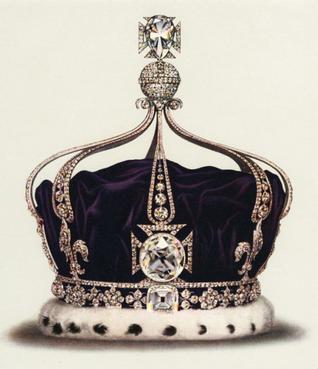
Vintage illustration of the State Crown of Queen Mary, Consort of George V, part of the Crown Jewels of England (chromolithograph), 1919. The crown contains 2,200 diamonds, including the famous Koh-i-Noor, Cullinan III and Cullinan IV gems. / Getty Images

British press pick up Indian Solicitor General’s submission before the SC that the heirs of Maharaja Ranjit Singh gave the gem as “voluntary compensation.”

New claims over the Koh-i-Noor diamond make their periodic appearance in the United Kingdom. Most of them flounder and finally sink as they make their way through the law courts — or indeed the court of public opinion, getting a day or two of media light at best. However, the relinquishment of a claim to the much-contested gem is a different matter and a cause for interest, as we just saw.

The Indian Solicitor General’s submission before the Supreme Court that the heirs of Maharaja Ranjit Singh gave the diamond to the British as “voluntary compensation” for the expenses incurred in the Anglo-Sikh wars was widely picked up by the British press, with the leading British parliamentarian of Indian-origin, Keith Vaz, even issuing a statement in support of the Government of India’s “stand.”

A gem of a debate again

The government’s subsequent clarification dissociating itself from the view of its Solicitor General brings the debate over the 106-carat symbol of British colonialism, which at present glints harshly from the crown once worn by the former Queen Mother, back to where it was.

Questions about ownership, authorship, theft and possession in the context of colonialism and today were raised at a recent exhibition at Tate Britain, Artist and Empire, which brought together a vast and unexpected array of works from collections across Britain.

Says Javed Majeed, a historian at King’s College, “The current Koh-i-Noor diamond controversy [comes] at a point in history when the terms “Indian”, “English” and “British” are in crisis again. In India we have a strong Hindu nationalist government which has re-defined what “Indian” means and thrown secularism into disarray. Claims have also been filed in Pakistan to return the diamond to Punjab there, from where it was gifted or taken [depending on your point of view]. In 2000, even the Taliban in Afghanistan asked the Queen to return the gem because of its brief association with that region at one point in time.”

Brexit and monarchy angst

In an era of economic and political uncertainties — in Britain associated with Brexit and what it portends — “anxieties about the future of the monarchy have intensified, and not surprisingly the focus of this worry is the crown itself as an actual object as well as an institution,” Dr. Majeed argues.

“Moreover, Britain’s imperial past surfaces in obvious and sometimes surreptitious ways in all these current debates, from the question of who owns the diamond to ideas of British power in the world should it leave the EU.”

Legacy control and mistrust

Legacy-control and legacy-mistrust can happen on both sides. A senior curator at a prominent British national collection in London told The Hindu that the authorities of the Victoria Memorial Museum in Kolkata refuse to lend their works from their collections to British museums.

The collection includes works by Johan Zoffany, William Hodges and Thomas and William Daniell. “Britain put in several requests to borrow art but they have all been turned down,” the senior curator, who did not wish to be named, said.

Correction

This story has been corrected for a factual error. Changed “Anglo-Maratha” war into “Anglo-Sikh” war

source: http://www.thehindu.com / The Hindu / Home> International / by Parvathi Menon / London – April 20th, 2016

Now, Lunch Box@your work place

Green's The Lunch Box owner Y. Sarat Chandra with hot packs. —PHOTO: V. RAJU
Green’s The Lunch Box owner Y. Sarat Chandra with hot packs. —PHOTO: V. RAJU

It is a boon for the working woman. For bachelors it offers the luxury of timely lunch in the comfort of their office dining hall instead of a crowded restaurant. The Green’s Lunch Box is being launched on April 25. The modern Dabbawala will service the meal in a hot pack with four compartments for Rs 75. The contents are standard — three phulkas (or two chappatis), curry, flavoured rice and curd rice.

Woman entrepreneur Srilakshmi Yadvalli who is launching the service said ‘The Lunch Box’ was meant for executives who do not have the time and the elderly and others who do not relish hotel food.

“The Lunch Box with homely hot lunch will be delivered at your office table at 1 p.m. and the empty hot pack will be collected at around 3 p.m.,” she said. The curry and flavoured rice would be changed from time to time.

Those interested in taking the lunch box will have to order in advance. The marketing staff say as an introductory offer lunch would be served even if the order was given the same morning (before 10 a.m.).

But gradually the customers will be given coupons for a minimum of 15 days. If for some reason the person does not attend office on a day the service provider should be informed in advance.

Those taking The Lunch Box regularly can order for their friends. “The friends of those who are getting Lunch Box regularly can use these coupons and enjoy the service,” explained Sarat Chandra, partner and husband of Ms Srilakshmi.

The meals will be served only against coupons purchased in advance. This kind of service was being provided for the first time in the Telugu states, he claimed.

LIC employee N Y V Vijayalakhmi says Lunch Box will be particularly convenient for working women. “Preparing lunch in the morning, carrying the box and then carrying the box back can be avoided if we order The Lunch Box,” she says.

Those interested can also place an order on email –greenslunchbox@gmail.com or by calling 7382256666.

source: http://www.thehindu.com / The Hindu / Home> News> Cities> Vijayawada / Special Correspondent / Vijayawada – April 20th, 2016

Nagireddypalle , a legally literate village

Nagireddypalle, a nondescript village in Prakasam district has set a record of sorts with the State Legal Services Authority(SLSA) declaring it as a litigation-free village.

The people of the sleepy village in Konakanamitla(K.K.Mitla) mandal, where agriculture is the main occupation, are worth emulating by their counterparts elsewhere in the country where lakhs of cases are pending in courts at different levels, costing time and money for the litigants.

The village elders including Gram Sarpanch B.Acheswaramma sit on the village square(Rachabanda) and hear the grievances of the public periodically in a cordial atmosphere in the village with a population of over 1000 people. “Shedding ego, we settle minor disputes including those relating to sharing of water, land boundaries and other matters in a spirit of give-and-take,” Mandal Praja Parishad member Udumala Ramanarayana Reddy told The Hindu.

No criminal case had been registered in the village in the last five years, K.K.Mitla Sub-Inspector Brahma Naidu said.

“As per revenue records, not a single revenue-related case is pending in the village,” K.K.Mitla Mandal Revenue Officer M. Jwala Narasimham said. No civil cases are pending too, he added.

The villagers efforts gave an impetus to the Alternative Dispute Resolution (ADR) method articulated by the SLSA to help people settle their differences amicably, observed District Legal Services Authoritiy Chairman and Principal District Judge K.V.Vijaykumar.

Shedding ego, we settle disputes in a spirit of give-and-take.

Udumala Ramanarayana Reddy ,Mandal Praja Parishad member

source: http://www.thehindu.com / The Hindu / Home> National> Andhra Pradesh / Staff Reporter / Ongole – April 18th, 2016