Flurys to serve tea, pastries beyond Bengal

Kolkata :

Flurys, the city’s iconic tea room that has been serving exotic cakes, creamy pastries and rich puddings for nearly 90 years, is now ready to spread the platter across the country. After launching its first restaurant outside Bengal at a mall in Hyderabad earlier this month, the Apeejay group company is now ready to put up its unmistakable pink signboard in other major cities.

The response to the store at Hyderabad’s GVK One Mall has been overwhelming, both from expatriates from Kolkata as well as local residents, a Flurys official told TOI.

“Since a culture of baking and pastry consumption exists in the city, we had expected to do well but the way in which Hyderabadis have taken to the brand as their own is a pleasant surprise. Those who hail from Kolkata and now reside in Hyderabad have become sentimental about Flurys coming to town. It just goes to show the enormous opportunity for the brand across the country,” the official said.

In the next two years, the Apeejay group is eyeing at least 20 stores outside Bengal, 13 of them outside the state. Delhi, Mumbai and Chennai are next on the list, followed by Pune, Jaipur and Goa. “Initially, we will expand in cities with ‘The Park’ hotels  because these locations will offer logistics support in terms of bakery. Later, the brand can expand to nearby towns and cities,” he explained. In Bengal, Durgapur and Howrah are among the chosen cities.

While 70% of the products will be the same as the ones available in the flagship store on Park Street – including rum ball, baba cake , chicken patty and horse shoe – they will be subtly tweaked to suit local palate. In addition, more contemporary pastries will be added to the menu.

“City centric menu optimization will happen. Since Hyderabad has a large IT and ITeS population, there is huge potential for quick sandwiches and rolls. We will introduce them in the days ahead,” the official said, adding that home and office delivery services are also in the pipeline. “Now that Flurys is in a business expansion mode, we will do whatever it takes to grow.” A franchisee model may also be adopted to supplement the company-owned, company-operated outlets, he added. Flurys has identified three formats for growth outside Kolkata – flagship stores (1,500-2,000 sq ft), quick service restaurant (250-500 sq ft) and kiosks (150-200 sq ft). Incubics Consultants has designed the stores that will have a uniform look and feel across the country.

source: http://www.articles.timesofindia.indiatimes.com / Home> City> Kolkata / by Subhro Niyogi, TNN / March 13th 2013

Herbs hold key to tribal medicare

TulsiHF13mar2013

Visakhapatnam:

Andhra University researchers, who did an ethno-medicinal study on the use of medicinal plants by the tribals of Kotia Hills on the Andhra-Odisha border, Vizianagaram district, found that they were treating a range of illnesses — from rheumatoid arthritis and fractures to asthma, diabetes and malaria — with 62 such species.

The researchers observed that the usage was appropriate for curing the disease and that they had inherited the knowledge of traditional medicines over successive generations.

“The knowledge they have is precious and needs to be recorded. The studies done have also to be substantiated by phytochemical analysis and pharmacological screening for their active principles,” said Prof. M. Venkaiah, department of Botany of the univesity.

The tribals of these areas belong mainly to the Mannedora, Kondadora, Jatapu and Savara communities and the most cited plant family they used was the Lamiaceae or mint, with its widely used culinary herbs, such as basil (tulsi), mint (pudina), rosemary (kumkuma puvvu), sage and others. They used plants growing on the ground, rather than below, for medicinal purposes, the study found. They were also combining this with small quantities of milk, ghee or honey to make the taste palatable.

Another survey shows that more than 80 per cent of tribal populations maintain their animals’ health too through traditional medicines largely of plant origin.
A total of 108 plant species belonging to 99 genera and 51 families have been identified as a potential source for treating 47 types of ailments.

Eight species calling under the Solanaceae family are the most in use followed by Caesalpiniaceae with seven. The first consists of plants such as mirapa, ummettha, tomato, pogaku and others.
Medicinal plants have been playing an important role in the survival and wellness of the ethnic communities who live in remote villages in the Agency areas.

source: http://www.DeccanChronicle.com / Home> News> Current Affairs / DC /by P. V. Prasad / March 11th, 2013

School notes from Hyderabad

GlendaleHF13mar2013

Glendale Edufun

Jain Toddlers play school chain celebrated its fourth Graduation Day for all its five branches at the NIFT Auditorium, HITEC City. Dr. Kedareshwari, Keeper and Head – Education, Training and PR, Salar Jung Museum, was the chief guest and the guest of honour was Micheal Latham, Regional Director South Asia – CFBT Educational Trust. COO of Jain Group Schools Mr. Chandrashekar and Academic Director Mrs. Lakshmi Rao were present.

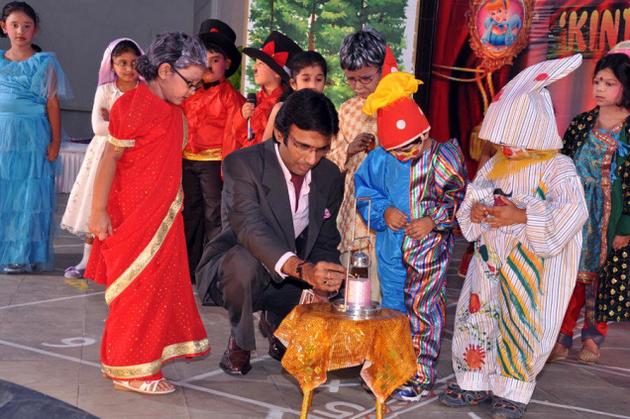
Kinder Wonder”, a musical extravaganza by pre-primary and Std. I marked the Graduation Ceremony held at Glendale Edufun. The theme this year was “Tell Tales”. The event began with the lighting of the “Story Candle” by the chief guest, theatre personality Mohammad Ali Baig. A cultural programme followed. The show culminated with the graduation of the UKG – Class of 2011-2012.

Global Techno School celebrated its first annual day. Feroz Khan, Congress Party leader, was the chief guest. The children from play group section of school presented the introductory speech. A cultural programme followed.

source: http://www.TheHindu.com / Home> Features> Young World / April 16th, 2012

Lifetime achievement award for Guntur doctor

DoctorPhaniendraHF12mar2013

A Guntur-based phonosurgeon V. Phaniendra Kumar has been presented the Lifetime Achievement Award for his services to the speciality in medicine.

At the 9 National Conference of the Association of Phonosurgeons of India ‘PHONOCON – 2013’ organised at Pinnamaneni Siddhardha Medical College, Vijayawada, he was given away the award, Dr. Phanineindra said in a release on Monday.

Phonosurgery is voice restorative surgery for victims of voice disorder.

The origin of the speciality in India is from Guntur. The national conference was organised on March 8, 9 and 10. Registrar of Dr. NTR University of Health Sciences S. Babulal, chief guest of the inaugural function, gave away the award.

About 100 ENT surgeons from different parts of the country attended as delegates.

International faculty members from the USA and New Zealand, national experts from the State, Kerala, Mumbai and New Delhi conducted technical sessions.

Dr. Phaniendra is the founder of the APSI and developed it over the years.

source: http://www.TheHindu.com / Home> News> Cities> Vijayawada /by Special Correspondent / March 12th, 2013

Chenchus open the door to development

ChenchusHF12mar2013

Tribal people perform a traditional dance to express their joy after receiving new clothes at Garapentachenupalem near Pullacheruvu in Prakasam district. /  Photo: Kommuri Srinivas / The Hindu

IRCS offers them an opportunity to rear hybrid Ongole cattle

The Chenchus once used to rush to climb a tree on seeing strangers in their locality.

But now, they are socialising with people from the other areas as well, thanks to sustained efforts of the Indian Red Cross Society (IRCS) and the Integrated Tribal Development Agency to empower them. “It has taken us a lot of time to gain their confidence,” explains IRCS district secretary Ch. Chalamaiah while talking to The Hindu.

The septuagenarian ophthalmologist distributed dhoties and saris to the community people in the remote Garapentachennupalem tribal hamlet as a confidence-building measure before introducing them to the Indian Red Cross Society’s latest livelihood support programme — to rear hybrid Ongole cattle — to improve their income.

The girijans jumped in joy and performed a traditional dance before a joint team of the IRCS and ITDA personnel.

“’We will henceforth wear dhoties for social occasions,” said an elder of the community Mandala Nagamma while accepting the gift with gratitude.

Traditionally, they had been guides to kings in moving through the dense forests down the ages. They acted as guides for the British too during which time that got used to wearing half pants, ITDA Special Officer K.V. Ramakrishna Prasad added.

With the Centre recognising the rights of forest dwellers, they had taken to cultivation of rain-fed crops such as redgram and millets, Mr. Ramakrishna Prasad said.

“We have already tasted the fruits of development and want to increase our levels of income to lead a better life,” added another tribal woman Bumani Ankamma.

Dr. Chalamaiah explained to them that by rearing the Ongole breed of cattle, the most sought-after breed the world over, they could easily earn up to Rs. 1 lakh a year.

They immediately grabbed the opportunity and agreed to the proposal. “Initially, we are going to distribute 100 milch cattle to the tribal people in association with the Go Samrakshana Sangham,” Dr. Chalamaiah added.

Dr. Chalamaiah medically examined every member of the over 50 families living there and gave them medicines to improve their general health. He also advised them on general hygiene for women.

Change in attitude

“I can see a change in their attitude. They have an urge to come up in life,” he said, with a sense of satisfaction.

The inhabitants of the remote area, the northern most tip of Prakasam district, were open to the piece of advice given by Dr. Chalamaiah to educate their children for a better future for themselves. He also asked them to shun consumption of liquor and spend the amount thus saved on buying nutritious food.

source: http://www.TheHindu.com / Home> News> Cities> Vijayawada / by Staff Reporter / Pullelacheruvu (Prakasam Dist) / August 06th, 2012

Dr Sripada Pinakapani dies at age 100

SripadaHF12mar2013

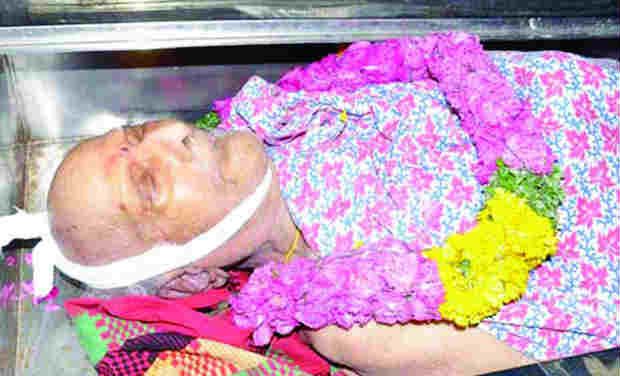
Sripada Pinakapani.

Kurnool:

Dr Sreepada Pinakapani, noted Carnatic classical exponent, guru to well-known musicians, and professor of medicine, died at a hospital in Kurnool on Monday evening. He had been ailing for some time.

Dr Pinakapani, 100, is survived by three sons and three daughters. A medical doctor, Dr Pinakapani was also an administrator and professor in medicine, and a Carnatic musician of note.

Dr Pinakapani performed at major festivals and concerts, and also wrote several books on Carnatic music. His Gaanakalasarvasvamu ran into multiple volumes and contains minute details of the krithis.
Dr Pinkapani was born at Priya Agraharam in Srikakulam district on August 3, 1913. His mother Jogamma and father Kameswara Rao, a Carnatic musician, encouraged their son to learn classical music. He spent three months in the school run by violin maestro Dwaram Venkataswamy Naidu.

He did his MBBS from the Andhra Medical College, Visakhapatnam, and graduated in April 1938. He completed his MD in general medicine in December 1945, from the same college. He also honed his skills in music simultaneously and attended concerts of leading musicians of the time.

He taught medicine at the Madras Medical College and at his alma mater, Andhra Medical College. He shifted to the Kurnool Medical College in 1957, from where he retired as professor.
Dr Pinakapani received many awards and honours for his services to Carnatic music. He was awarded the Padma Bhushan in 1984 by then President Giani Zail Singh. He was awarded the Gana Vidya Vardhi by the Tirumala Tirupati Devasthanams on August 3, 2012, on the occasion of his 99th birthday.

He also received the title of Sangeetha Kalanidhi. He was honoured with the Sangeet Natak Akademi Award in 1977. Andhra University honoured him with the title of Kala Prapoorna in 1978.
Following news of his death, Ram Prasad, principal of the Kurnool Medical College, local political leaders and many others paid floral tributes to the doctor-musician at his residence in Kurnool. He has a stage named after him.

Anantapur Tyagaraya Gana Sabha paid homage to the vocalist for his service to society. Sabha secretary K. Gnaneswara Rao recalled that Dr Pinakapani presided over concerts by musical giants such as Ustad Bismillah Khan and Pandit Ravi Shankar, in Anantapur. The concert stage at the Sabha is named after Dr Pinakapani after he performed there in 1975.

He trained Dr Nukala Satyanarayana, IAS officer Jayanthi Natarajan, Oleti Venkatesam, Srirangam Gopalaratnam, Nedunuri, Vasudhara Devi and the Malladi brothers, all of whom have made a mark in the world of Carnatic music.

source: http://www.DeccanChronicle.com / Home> News> Current Affairs / DC / March 12th, 2013

Success down the generations

suranasHF11mar2013

This is a story of a man whose dislike for his father’s trade and his inability to lie transformed him into one of the early entrepreneurs of Hyderabad. Sixty years down the line G. Mangilal Surana presides over one of the oldest business houses in Hyderabad, the Surana Group, a major player in copper, automotive and solar panels.

“My father, Gulab Chand Surana, was a wholesale food grain trader at Monda Market in Secunderabad, in the early 1940s. He was a supplier to the British Army. As I was not interested in it, I set up dal mills at Lucknow and Kanpur. This started my business career,” recalls the 83-year-old Surana, who played an active political role, first as a Youth Congress member in Hyderabad and later as a confidant of several national Congress leaders.

How did the miller become an industrialist? “I had a great working relationship with Lal Bahadur Shastri and also Pandit Jawaharlal Nehru. Shastri Ji, the then Union industries minister, told me to open a small scale industry in Hyderabad. Upon his advice, I founded a nail factory in 1959,” said the patriarch of the Surana Group, who has seen Hyderabad grow from the capital of a princely state to India’s major technology hub.

He studied law at Osmania University Law College, in the Urdu Medium, but did not take up the practice as he could not argue a case if he knew that his client was wrong.

His sons Narender and Devender entered the business in 1982 and 1988 respectively. The group now claims an annual turnover of `500 crore with a fixed asset base of `400 crore. Also the group’s 100-acre land bank in and around Hyderabad at current market prices would roughly be worth over `1,000 crore.

Narender, 52, heads the group’s solar, cables and real estate businesses while his younger brother Devendra takes care of the group’s flagship firm Bhagyanagar India, which manufactures copper-based industrial products.

Surana Ventures has the capacity to install 140 megawatt solar panels. Half of this came from its acquisition of a production line from German solar maker Schiff Solar. “While other solar companies are making losses, we can compete with anybody, including Chinese companies,” says a confident Narender.

Meanwhile 47-year-old Devendra Surana, a mechanical engineer and an IIM-Bangalore alumnus, heads the group’s flagship company Bhagyanagar India Ltd, which makes copper-based industrial products such as copper rods, copper sheets, copper foils. “Almost every vehicle on the road will have our copper foils, which we supply to all automobile companies,” says Devendra, who is also the president of Federation of Andhra Pradesh Chamber of Commerce and Industry (Fapcci).

“We expect a steady growth of 10 to 15 per cent in tune with the industry’s trajectory,” says the soft-spoken Devendra, who loves to play badminton at Secunderabad Club.

Narender, meanwhile, loves tennis and watching comedy and action movies. “Once a week, I watch a movie with my family. But I am not the type of person, who can sit through the serious movies. I mostly prefer comedy or action movies,” he reveals.

This Marwari-Jain family is still a closely-knit unit with G.M. Surana at the head. Though living separately, the decisions about the group companies are made collectively.

“All male members of the family meet every day for half an hour from 8 am to 8.30 am to review what happened the day before and discuss the future course of action. So it’s a kind of board meeting every day,” says G.M. Surana, who feels that the days of joint family are over.

“My father used to head a family of 50 members including his family and his four brothers. His word was always final. But times have changed; we can’t expect such behaviour now. In all traditional business families, the second generation may be ready to work around the differences but the problems begin with the third generation, when cousins don’t get along,” says G.M. Surana.

Narender’s son, Manish, joined the group in 2008. A management graduate from Icfai and an alumnus of Harvard Business School, the 26-year-old Surana scion looks after the production of solar panels and EPC business. He is also into brand building and promotion of the group’s solar vertical.

Vinita, Narender’s elder daughter, is studying business management at Wharton Business School in the United States while younger daughter Shresha is studying at St. Francis College, and is the college’s chess captain.

Among Devendra’s children, elder daughter Nivriti is married and the other three, Rahul, 20, Mitali, 17, and Advait, 17, are completing their education.

Meanwhile, the women of the Surana family, Chand Kanwar, G.M. Surana’s wife, Sunita, Narender’s wife, and Namrata, Devendra’s wife, are all homemakers.

Chand Kanwar has been active in the Jain women’s wing while sisters Sunita and Namrata spend their time in household activities, reading, and meditation among others.

source: http://www.DeccanChronicle.com / Home> Lifestyle> Offbeat / DC / by S. Umamaheshwar / March 10th, 2013

Promoting heroism

GopichandHF11mar2013

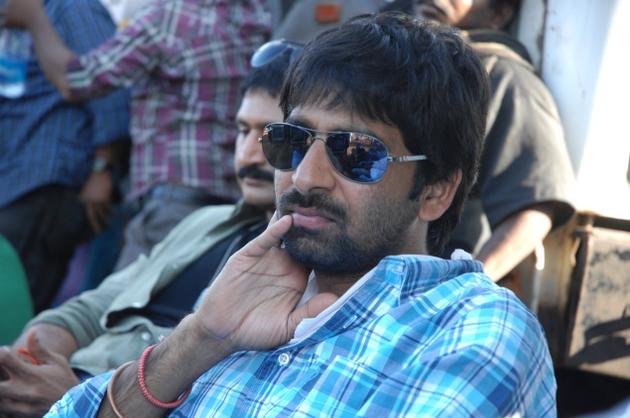
 Director Gopichand on the sets

Director Gopichand’s movies are rooted in an image of a larger than life hero

It’s been a fortnight since director Gopichand got married, and after a brief holiday he’s back on the sets to resume the shoot of Balupu. The shy and soft spoken director hails from Ongole and has directed Don Seenu and Bodyguard.Gopichand left his studies while he was in college and pursued a career in movies. He remembers spending long hours discussing films with his friends. “I would narrate the story, analyse the pros and cons and unconsciously the interest turned into a passion. Now watching my scripts unfold on screen gives me a real kick, says the director who had worked with Sreenu Vytla, EVV Satyanarayana and Murugadoss. He admits to having traces of their influence on him.

Any particular reason for the fascination with Ravi Teja? He says he Don Seenu likes Ravi Teja for his comic timing and unmistakeable energy. He adds, “I always write stories that have characters brimming with energy. The second film with Ravi Teja is not a coincidence, I always weave stories with him in mind and they tend to suit every star. These days all actors are choosing roles that have energy.Balupu has plenty of fun, it is about the arrogance in the character. The story is fresh, it has an emotional point and a love angle as well.”

Though his favourite directors are EVV and Vytla, the director says he attempts to create a brand of his own. He always aims to show the hero in a sublime position. He says, “For me the hero is ultimate. If he has a ‘star image’ it works very well, because there will be a sense of believability and span. Nenu ye script chesina hero ni ala oohinchikune chestaWhen I was young I enjoyed watching the hero knock down dozens of baddies, say mesmerising dialogues, dance etc. He would look the ultimate. Even now it is the same, heroism always remains the same in movies, it’s just the stories and the backdrop that change.”

Balupu with Ravi Teja, Sruthi Hassan and Anjali is scheduled to release this summer.

source: http://www.TheHindu.com / Home> Features> Cinema Plus / by Y Sunita Chowdhary / March 09th, 2013

Agri-business mela in Hyderabad on March 11

An agri-business mela will be held at the ICRISAT complex at Patancheru, Hyderabad on March 11.

Sources said here on Friday that the mela will be open from 9 a.m. to 3 p.m. It will enable entrepreneurs to explore opportunities in agri-business and innovators to present their work and business ideas for incubation support.

Select entrepreneurs and innovators would be provided incubation support under ABI-ICRISAT. For participation, contact the Agri-Business Incubator at ICRISAT, or call 040-30713452/30713417 or 09951353051, ormail s.vemu@cgiar.org.

source: http://www.TheHindu.com / Home> News> National> Karnataka / by Special Correspondent / Gulbarga, Monday 09th, 2013

Saina Nehwal credits parents for her success

Saina Nehwal has been a role model to young women over the last few years. Her popularity quotient went several notches higher after her Olympic feat in London last year, when she became India’s first shuttler to win a medal at the quadrennial event.

Saina’s parents have made huge sacrifices to give her the best. Saina said, “Thanks to my parents who simply followed the actions directed by the almighty, I’ve got all the fame in badminton. Why they moved from Hisar to Hyderabad, only God knows. I did not know what hardship meant as I worked on the instructions of my coaches with full discipline.”

She spoke about her early days in the sport. So what obstacles she encountered on the way? It was her family, Saina said, that faced a lot of difficulties. They let her concentrate on her game. “I was excellent in studies but my parents thought I could try a bit of sports. So, it was badminton and I landed up at the (SM) Arif sir’s academy and subsequently had stints with Goverdhan Reddy sir and finally joined Gopi sir.”

She said that she did not face discrimination in her early days.

source: http://www.dnaindia.com / DNA / Home> Sport> Report /by G.Krishnan / Place:Mumbai, Agency:DNA / Friday, March 08th, 2013