Small victories over cancer

With two new simple technologies, testing for cancer within minutes could soon become a reality

 A team of researchers from the  Massachusetts Institute of Technology, or MIT,  has taken a significant step towards developing a method that can help detect cancer within minutes through a simple urine test. Far away in Hyderabad, a startup company has arrived at another uncomplicated and quick technique for diagnosis. It has developed a kit to detect breast cancer through a simple blood test. The finding is crucial, considering that breast cancer is the most common cancer in Indian women, killing one out of every two cancer patients.

The two researches, coming within a span of less than a month, are being watched closely by oncologists in India where cancer has become one of the ten topmost causes of death. The World Cancer Report 2014, published by World Health Organisation’s cancer agency, the International Agency for Research on Cancer, indicates that globally the number of cancer cases will increase by a startling 70 per cent over the next 20 years. Developing countries will be the most hit. Already about 70 per cent of the world’s cancer deaths take place in Africa, Asia, and Central and South America.

Which is why early detection, which can be made possible by the two tests, is critical.

The technology developed by MIT professor and Howard Hughes Medical Institute investigator Sangeeta Bhatia is like the pregnancy paper test. Through a urine sample test, it can reveal within minutes whether a person has cancer or not. Graduate student Andrew D Warren, the lead author of a paper on the technique published in scientific journal Proceedings of the National Academy of Sciences and co-authored by Bhatia, explains how the test works. “The test uses the intravenously injected nanoparticles called ‘synthetic biomarkers’. These nanoparticles are designed to passively hone onto sites of the disease and interact with proteases (the enzyme needed to digest protein). When disease-associated proteases cut pieces off the nanoparticles, the cut pieces (called ‘reporters’) are small enough to filter into the urine, where we can easily detect them with our low-cost paper test.” Higher concentrations of ‘reporters’ in the urine indicates the presence of the disease.

Conventional diagnostic tools for cancer such as colonoscopy or magnetic resonance imaging (MRI) are costly and require highly trained physicians and expensive equipment. The paper test is, in comparison, low cost and doesn’t require expensive equipment or training to use. The researchers who have run the paper test on mice with human-like tumours have found it to be quite accurate. “The test is 90 per cent sensitive (the likelihood that the results will be abnormal in people with the disease) and 80 per cent specific (the likelihood that results will be normal in people without the disease),” says Warren.

The research around the paper strip test, which started in the beginning of 2012, is in the early stage yet and uses mice. “There are still many difficult clinical studies necessary before our test could be used in people,” says Warren. So at this point, while it is impossible to guess the final cost of the test on humans, the researchers are determined to design it so that it is as inexpensive as possible.

As of now, the test focuses on the detection of colorectal cancer. But with slight changes in the synthetic biomarkers, it will be suitable for detecting several other kinds of cancers, the researcher adds.

The blood test for breast cancer, which claimed 70,218 lives in India in 2012, is, meanwhile, expected to be available commercially in five years from now. Developed by Hyderabad-based startup, Fournira Optime Diagnostics, the blood test would be about ten times cheaper than the currently available tests such as mammography, MRI and ultrasound. And its results would be available within an hour.

Early, accurate and affordable diagnoses are the three key factors that this test hopes to cover. A routine breast check, during which a woman might detect a suspicious lump, is what often leads to the first visit to the doctor. But it is often at a later stage that that evident symptom of breast cancer develops. The blood test makes an earlier diagnosis possible. The technology detects the cancerous biomarkers, if they are present in the blood, by lighting them up.

MAGIC BULLETS
Several laboratories in different parts of the world are also engaged in developing molecules that target the cancer cells specifically and in certain cases, serve as an alternative to chemotherapy. The doctors call them ‘magic bullets’. “The ‘magic bullet’ is nothing but target therapy,” says Ullas Batra, consultant, medical oncology, Rajiv Gandhi Cancer Institute and Research Centre. “In 20 to 30 per cent of the cancers, a single gene gets mutated. If we are able to identify and target that gene, then it is very effective.”

So while chemotherapy is like a bomb, which destroys everything around it, the ‘magic bullet’ is like a missile that hits a specific target, he explains. “Every year, two or three molecules are coming up for cancer that we call ‘magic bullets’. Many of these are for lymphoma, lung and liver cancer.”

The ‘magic bullet’ is usually used in Stage IV of the cancer and can be used in place of chemotherapy or in addition to chemotherapy. “In 20 to 25 per cent of lung cancer cases, especially in women and non-smokers, the ‘magic bullet’ is used upfront,” says Batra. Oncologists say it is found to be doubly effective than chemotherapy. It can control the disease with very good quality of life, doctors say.  “If chemotherapy gives the person another eight months to live, the ‘magic bullet’ keeps him going for another two to two-and-a-half years,” says Batra. it requires no hospitalisation and unlike chemotherapy, causes no hair loss or loss of appetite. “It is simply an oral tablet to be taken every day,” says Batra. A month’s dose can cost between Rs 1,800 to Rs 5,000.

CANCER VACCINES
The World Cancer Report points out that the population in developing countries, which have high prevalence of cancers such as those of the cervix, hardly believes in regular screening, such as going in for the pap smear test, for commonly found cancers. And, there is little focus on cancer vaccines — the Human Papilloma Virus (HPV) vaccine.

“Gardasil and Cervarix, the vaccines for cervical cancer , have been around for at least four years,” says Jai Gopal Sharma, head of the preventive oncology department at Rajiv Gandhi Cancer Institute and Research Centre. With time, these are gradually becoming popular. In India, while no data has been published to assess the effectiveness of the vaccines, clinical trials have shown a decrease in the development of HPV associated with some diseases after the vaccine, he adds.

The overall consensus is that while nine to 26 is the ideal and most effective age, “the vaccine can be given to a woman of any age before she attains menopause,” says Sharma. Vineet Talwar, senior consultant, oncology, Rajiv Gandhi Cancer Institute and Research Centre, adds that HPV strains 16 and 18 have been found to be the most prevalent strains that cause the cancer. “When a person is infected with HPV, it takes about 18 to 20 years to develop cervical cancer. And then too, all people do not develop cancer,” adds Talwar.


QUICK FACTS

  • Vaccine: Cervarix from GlaxoSmithKline and Gardasil from Merck & Co
  • Meant for: Cervical cancer
  • Cost: Cervarix, Rs 2,000 per dosage and Gardasil, Rs 2,800 per dosage
  • Dosage: Three doses within six months
  • Age group: 9 to 26 years or till the woman is not sexually active
  • Availability: Easily available in every hospital
Note: Gardasil protects against four HPV types or strains (6, 11, 16, and 18) and Cervarix targets HPV types 16 and 18. Gardasil is more recommended.
_____________________________________________________________________________________
source: http://www.business-standard.com / Business Standard / Home> Beyond Business> Features / by Veenu Sandhu / March 14th, 2014

Drought-fruit Seema Chinta tastes sweet success

Visakhapatnam :

A native of Central America and Northern South America, which was till recently looked down upon as a poor drought substitute of mango and cashew, Madras Thorn has suddenly been catapulted to the top of the popularity charts in fruit markets of Andhra Pradesh.

Commonly known as Sweet Tamarind, the fruit has grown so popular over the past few summers that it now fetches anywhere from Rs 150 to Rs 300 per kg, depending on the packaging, in cities like Visakhapatnam, Hyderabad and Vijayawada. K J Madhavi, an ardent fan of this pulpy fruit, said, “Most of the stuff we buy is at supermarkets where a kg goes for Rs 500 as it is claimed to be of export quality.”

Madras Thorn was first introduced by the Portuguese in India, albeit accidentally. The sweet tasting pod pulp of the fruit, which is rich in anti-oxidants, was stacked by sailors on long voyages and later became popular in India as drought food during summers. The tree thrives in most parts of peninsular India, except the wetter regions, and in Andhra is popularly referred to as Seema Chinta.

The fruit’s rising popularity has taken many by surprise. “This tree was found in most gardens and backyards even in big towns, and in villages was found scattered on fields with many farmers using the fruit pulp as part of the diet for their cattle. However, in the drought prone agriculturally poorer parts this fruit acted as a major food substitute. Just like Mahua in some areas of Central India, Madras Thorn was considered highly useful as the pulp was used to make dye, qualified as a food substitute and even the tender green leaves were used to prepare a kind of rasam,” said horticulturist R N S Sarma.

Old-timers from Visakhapatnam too pointed out rather cheekily that it was hard to believe that a fruit they used to consume as a substitute for mango during the summers, had now become so pricey.

Many vendors believe that the demand is on the rise for various reasons. K Narasimhulu, who sells the fruit near the RTC complex at Visakhapatnam, said, “It has become a major competitor during the mango season primarily due to rising mango prices as well as fears of indiscriminate use of pesticide in mangoes, something that is not a concern with the Madras Thorn.”

Narasimhulu further pointed out that unlike small town and rural customers, the buyers in big cities no longer discriminate between popular fruit and drought food. “A large number of people are now looking at the medicinal value of the food they consume and the health benefits they gain.”

“The bark of the tree can also be used to make a soup to treat stomach ailments and infections, apart from fever,” said G Bullayya, a naturalist and native herbal medicine specialist residing in Addatigala of East Godavari. He, however, lamented the fact that Seema Chinta was yet another example of how the government had failed to realize the potential of an extremely useful tree. “The fruit that was once sold at Rs 5 a kg (in the early 80s) now sells for more than Rs 200 even in places like Rajahmundry. It is tragic that the government has failed to identify and tap the potential of our forest yield to the maximum extent possible,” he said.

Sources in the state horticulture department admitted that so far no concrete efforts had been made to make the extremely useful tree an essential part of mainstream horticulture. They did, however, admit that a tree that could prosper even in desert-like conditions could have a major role to play in improving the economy of arid regions.

source: http://www.timesofindia.indiatimes.com / The Times of India / Home> City> Visakhapatnam / by Venkatesh Bayya, TNN / March 14th, 2014

Abdul Hai takes a trip down memory lane


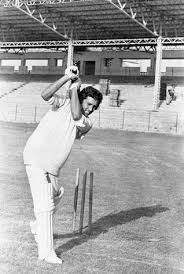
PIONEERING FEAT: Mohammed Abdul Hai entered the record books in 1973-74 as the first century-make in Deodhar Trophy. / The Hindu Photo Archives

Mohammed Abdul Hai became the country’s first century-maker in the earliest avatar of abridged cricket, introduced through the Deodhar Trophy in 1973-74.

“The first doctor to play for India was my dream, but that was not to be,” the general physician settled in Michigan sighed wistfully, when reminiscing with The Hindu.

“There was a fairly large turnout at the M.A. Chidambaram Stadium for the 1974-75 quarterfinal in Chennai,” continued Hai. For taking on North Zone was a star-studded South, led by S. Venkatraghavan.

Legends lined up were M.A.K. Pataudi, G.R. Viswanath, Abid Ali, Jayantilal Kenia and E.A.S. Prasanna, all of them Test players, three of whom were Hai’s Hyderabad Ranji teammates.

A consistent scorer in the event’s opening edition a year before and having played for Brondesbury CC alongside Mike Gatting in the Middlesex league, Hai felt equipped for the 60-overs-a-side challenge. With one opener gone for no score, the stylish southpaw walked in and began scoring at a brisk pace.

“Raj Singh Dungarpur’s eyes widened with amazement at what was then an astonishing rate — four runs an over — as also on South ‘amassing’ 248 for nine,” Hai recalled, his endeavour ending at 101, castled by Madan Lal.

Hai also played in Prof. D.B. Deodhar’s benefit match in Pune, the patriarch’s hometown.

He was offered an opportunity to play in/for Pakistan by Asif Iqbal, a senior at Hyderabad’s Nizam College.

The college’s alumni includes two India captains — Ghulam Ahmed and Mohd. Azharuddin — Test players M.L. Jaisimha, Abbas Ali Baig and Jayantilal Kenia besides Habeeb Ahmed, who led the Indian Starlets to the aforementioned nation.

“A decade after the Deodhar Trophy began, India clinched the Prudential World Cup in 1983, thus making the nation a cricket super power,” noted Prof. A. Prasanna Kumar, a Fulbright Fellow, sports columnist and author.

“If the sport’s reign was divided into eras, the 1970s belonged to Sunil Gavaskar, the ’80s to Kapil Dev, the ’90s to Sachin Tendulkar and thereon to M.S. Dhoni. Much credit is due to the limited-over version named after the Grand Old Man,” added Prasanna Kumar, who was a commentator during Visakhapatnam’s first One-Day International between New Zealand and India in 1988.

source: http://www.thehindu.com / The Hindu / Home> Sports / by A. Joseph / Visakhapatnam – March 22nd, 2014

Suven Life grants Taro Pharma rights to market Malathion Lotion in US, Canada, Mexico

Hyderabad :

Suven Life Sciences Ltd, a biopharmaceutical and contract research and manufacturing company, today announced that it has granted an exclusive licence and right to distribute and market its Malathion Lotion USP 0.5% to Taro Pharmaceuticals, North America.

The Hyderabad-based company said it has a US Patent and Abbreviated New Drug Application (ANDA) for it in US, Canada and Mexico.

Taro Pharmaceuticals North America, is a subsidiary of Taro Pharmaceutical Industries Ltd.

Malathion lotion is indicated for patients infected with Pediculus humanus capitis (head lice and their ova) of the scalp hair. In consideration for the exclusive licence and right to distribute and market the lotion Taro will pay Suven a royalty and the arrangement is effective until April 2028 unless otherwise terminated, a company release said without revealing financial details in a press release.

source: http://www.thehindubusinessline.com / Business Line / Home> Companies / The Hindu Bureau / Hyderabad – March 04th, 2014

IICT, German Varsity Sign Pact on Cancer Research

IICT natural products division head S. Chandrasekhar, CNRS research director Rene Gree, IICT director M Lakshmi Kantam, GVK Biosciences Discovery general manager KV Sharasrikar and professor Goverdhan Mehta of University of Hyderabad at a symposium in Hyderabad on Monday | A RADHAKRISHNA

CSIR-Indian Institute of Chemical Technology (IICT) and Dortmund University, Germany, have signed a Memorandum of Understanding (MoU) for taking up research work for cancer screening.

Speaking to reporters here on Monday, head of the natural products chemistry division of the IICT, S Chandrasekhar said that the objective of the collaboration is to find drugs for cancer therapy which develop resistance. ‘’If we develop a new chemical for cancer therapy we will share with Dortmund University and if they come across new drug they would share with us,’’ he said.

He said that all the tests will be done at Max Planck Institutes, Germany.

IICT is working on Alzheimer’s disease and was trying to find a better and more effective chemical than Galantamine. Chandrasekhar said.

Galantamine belongs to the family of  cholinesterase inhibitors and is used to treat Alzheimer’s disease, he said.

Chandrasekar said that the IICT and Mayo Clinic, USA, had developed four new chemicals through neem plant for treating renal cancer. “We have found that the new chemical can kill renal cancer cells 100 percent,” he informed.

He said that as part of 70th year celebrations, CSIR-IICT is organising a four-day international symposium on ‘Nature inspired initiatives in chemical trends.’ The symposium was inaugurated on Monday by University of Hyderabad professor Goverdhan Mehta. About 600 delegates from various countries including US, France, Germany, Switzerland, Japan, China and South Korea are participating in the conference.

source: http://www.newindianexpress.com / The New Indian Express / Home> Cities> Hyderabad / by Express News Service – Hyderabad / March 04th, 2014

Hyd Metro, Bicycling Club to Hold Women’s Cycling Event Today

In connection with the International Women’s Day on Saturday, Hyderabad Metro Rail Ltd (HMR) and Hyderabad Bicycling Club (HBC) would jointly organise an exclusive women’s cycling event.

The event will start from Gachibowli Bike station (opp Bio-diversity Park) at 7 a.m. on Saturday and will be flagged off by former chief secretary and member, Central Administrative Tribunal, Minnie Mathew.

Stating that women empowerment is an important part of the social agenda of the Hyderabad Metro Rail project, HMR managing director NVS Reddy said that HMR would organise many more awareness campaigns to sensitise the city towards gender equality.

Further, to encourage parents from poorer sections to send their girl children to schools and colleges; and to enable girl students, women employees and housewives to travel to their educational institutions, work places and other destinations without fear of eve teasing and other anti-social activities, HMR has incorporated several security features in the Metro Rail project design to provide safe, comfortable, secure and hassle-free travel for women.

They include deployment of police personnel with women police in coaches and station areas; CCTV cameras, continuous monitoring of happenings, remote policing; bright illumination of coaches and station areas; provision of feeder buses with security arrangements for women to safely reach home and work place from metro stations; protecting women from harassment by drunken men and anti-social elements especially during night time; extension of Metro skywalks to nearby schools, colleges and shopping areas and provision of rest rooms and emergency medical facilities for women.

source: http://www.newindianexpress.com / The New Indian Express / Home> Cities> Hyderabad / by Express News Service – Hyderabad / March 08th, 2014

It is all of women and for women

Women leaders from various walks of life celebrating International Women's Day by cutting a cake in Vijayawada on Saturday. (Right) Students of Samana Institute for Design Studies walk the ramp showcasing their work. / Photos: V. Raju / The Hindu
Women leaders from various walks of life celebrating International Women’s Day by cutting a cake in Vijayawada on Saturday. (Right) Students of Samana Institute for Design Studies walk the ramp showcasing their work. / Photos: V. Raju / The Hindu

The Hindu, in association with SIDS, creates a platform to felicitate women achievers

A strong woman isn’t afraid of anything but a woman of strength shows courage in the midst of her fear.

A select group of women present at the auditorium of Samana Institute for Design Studies (SIDS) on Saturday was an enchanting mix of the two. Women from various walks of life gathered, greeted and celebrated a day that belonged to them — International Women’s Day.

The city reverberated with slogans of women’s empowerment as leading women from different fields took centre stage voicing concern over the abuse heaped on the fairer sex, raising their voice against perennial injustice to their less privileged sisters and inspiring scores of others to bring to the fore their inner strength to achieve success in life.

The Hindu, in association with SIDS, created a platform to felicitate women achievers on the occasion.

Addressing the gathering, Assistant Director of All-India Radio, Vijayawada, M. Krishna Kumari, underscored the need for women to inculcate resilience and fighting spirit to overcome the hazards lurking around every nook and cranny.

She evoked ‘true fighters’ like Malala Yousafzai, the Pakistani school girl who stood up to the Taliban and defended her right to education, Laxmi, the acid attack victim who won the International Women of Courage award for successfully leading the campaign against acid attacks on women in India and the 2012 Delhi gang rape victim Nirbhaya and said the trio had inspired women suffering abuse in silence, across the world.

Woman entrepreneur Jogulamba said women were internally very strong besides being good multi-taskers.

Bhakti Manihara of SKCV Trust said girls must draw inspiration from Jhansi Lakshmi Bai who never gave up her fight despite a series of defeats.

Radha Rani of RR Sports urged women to form a collective force to reckon with. Former Mayor Mallika Begum mooted an all-women’s ‘Mahila Party’ to fight the coming elections.

Other speakers urged the students to work hard to scale great heights in life but without drifting from their rich culture. The felicitations were sprinkled with intermittent rounds of ramp walk by SIDS students who showcased their designs.

There was unanimity on the contention that the strength of women comes from the fact that psychology cannot explain. “Men can be analysed, women merely adored,” a speaker said amidst loud round of applause. SIDS Managing Partner and CEO Samana Moosavi said gifted with both beauty and brains, a woman could achieve success in any given field provided she is determined to.

source: http://www.thehindu.com / The Hindu / Home> News> Cities / by Special Correspondent / Vijayawada – March 09th, 2104

Bajaj Electronics to expand retail chain

Hyderabad :

Bajaj Electronics has opened its 13th electronics showroom in the twin cities of Hyderabad and Secunderabad and hinted at its plans to roll out more stores in other parts of Andhra Pradesh.

The large format electronics store is located in Secunderabad and fits into the company’s philosophy of offering sales close to their homes.

The three-storey store was inaugurated by B.D.Park. President and CEO, South west Asia, Samsung Electronics, in the presence of actresses Madhu Shalini and Shillpi Sharma.

Speaking to newspersons, Park said that Samsung sees India emerging as the top market for Samsung globally by 2020.

source: http://www.thehindubusinessline.com / Business Line / Home> Companies / by The Hindu Bureau / February 26th, 2014

Medical Facilities-A Remarkable Service by Koneru Prasad Charitable Trust

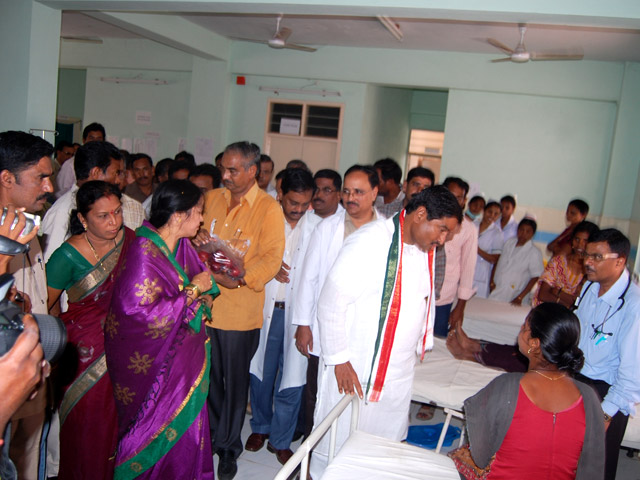
Trimex Sands Pvt Ltd gives utmost priority for providing medical facilities which can instill confidence among the patients of poor families. The Company’s CSR initiatives through Koneru Prasad Charitable Trust were lauded by Several VIPs including Union Minister of State for Communication and Technology KilliKruparani, former minister DharmanaPrasada Rao and Srikakulam Collector Saurabh Gaur and others. Locals of Srikakulam district are also appreciating the initiatives of Koneru Prasad Charitable Trust saying that it did commendable job with the improvement of medical facilities and establishment of hospitalsand dialysis unit which has become a boon for hundreds of kidney patients of Uddanam region.

It has spent around Rs.1.5 crore for setting up of a dialysis unit in Tekkali area hospital. It has become a big boon for patients as well as attends who were earlier forced to go eitherVisakhapatnam or Srikakulam for dialysis facility. Tedious and expensive problems are over with availability of dialysis unit Tekkli. No need to say that hundreds of people in Uddanam region have been suffering from kidney problems. Several studies couldn’t find the exact reasons for the spread of kidney diseases in the district. The Trust planned to take up studies in future with the help of government to extract reasons apart from providing immediately medical support in the form of dialysis for the poor patients.

Support to RIMS:

The Trust provided beds and medical equipment to the Rajiv Gandhi Institute of Medical Sciences- helping poor patients to get better treatment facility in the hospital. It is also helping RIMS to improve greenery in its premises by providing saplings and tree guards. Fully grown trees would help patients to have natural oxygen apart from providing shade for the attendants who spend more time in the premises. RIMS administration and senior doctors apart from patients lauded the initiatives of the Trust.

KoneruHF18mar2014

Hospital with State of Art Technology:  

It has also established a poly clinic with State of Art technology in Vatsavalasa where Trimex Sands Pvt Ltd has its unit. It has spent around Rs.25 lakh for establishment of the hospital. Two doctors and four staff members work to provide round the clock medical facility. Earlier, the villagers were forced to go all the way to government hospital in Srikakulam even in the time of emergency. Thank God, the Trust’s clinic relieved all their tensions providing medical facilities round the clock. There is no charge even for costly tests and medicines, helping poor patients to get best medical support in their vicinity.TSPL allocates Rs.2 lakh every month for supply of medicines andsalaries of the staff. A 30 bed facility will be a reality very soon with steps being taken for upgradation of the hospital. The company has also provided an ambulance to the Vatsavalasa poly clinic apart from Ampolu sub-jail, helping the authorities to send sick prisoners to the hospital immediately whenever it is necessary. People of around 10 villages got benefitted with the hospital and other facilities.

Medical-Fecilities-Eye-Camp-298x223

Medical Camps:

The Trust is helping old persons to have proper vision by conducting medical camps to identify eye problems. It helped hundreds of patients for cataract operations and post care. Around 1000patients got benefited with medical camps conducted in association with Shankar Foundation. The senior citizens can lead happy life while seeing the changed life style of next generation with the rapid progress in Gara and Srikakulammandals. The Trust has also been organizing blood donation camps in several parts and helping Blood Bank being operated by Red Cross Society.

source: htp://www.groundreport.com / Ground Report / Home> LifeStyle> Non-Profit / by Koneru Prasad / February 26th, 2014

The hunt continues

Triumphs of Indian women cricketers inspires Abdul Bari Wahab to work with renewed zeal.

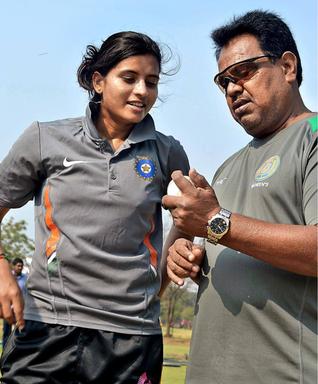
tips from the proSravanthi Naidu with her coach Abdul Bari Wahab / Photo: V.V. Subrahmanyam / The Hindu

Far away from the madding crowds, for him the hunt continues — the unbridled passion to look for genuine talent in women’s cricket, groom it into performing individuals. Well, this has been the story of Abdul Bari Wahab, coach to the women’s cricket team of Hyderabad since 2009.

“For me, helping these girls is a passion. And, I am really happy with the way they have performing in the last few years,” says a visibly content Wahab even as he basks in the wonderful achievement of his trainee and left-arm spinner Sravanthi Naidu, who took four for nine against Bangladesh in the T-20 international in Dhaka a couple of days ago.

“Sravanthi has the talent but it was difficult for me to get her motivated given the fact that she is making her third comeback into the Indian team after her Test debut in 2005, and that too at the age of 27,” explains Wahab, who was himself a cricketer of repute. Interestingly, the Indian team now in Bangladesh has six members from the city in different capacities – captain Mithali Raj, coach Purnima Rau, spinners Gouher Sultana and Sravanthi Naidu, manager Nandlal Vidya Yadav and video analyst Aarti Nalge.

“Cricket has changed a lot though the basics remain the same. There was an aura when we played and perhaps it was because of the fact that the best of Indian cricketers made it a point to play in all important domestic events including Moin-ud-Dowla Gold Cup, which was invariably the season opener,” feels Wahab. He has a special place in the Moin-ud-Dowla history for taking the first hat-trick in its history when he sent back the likes of Ajit Wadekar, Hanumanth Singh and Amber Roy.

“That is history. Right now, I am more focussed on helping women’s cricketers. Yes, it is a bit painful that there are no regular tournaments in the city. Yet the fact that we continue to produce winning performances at the zonal and the national level is a tribute to the grit, talent and determination of these girls,” insists the untiring coach.

What keep you going? “I can’t stay away from the nets even for a single day. Somehow, I have this passion which motivates me on and on. Yes, there were times when I pondered whether it was worth putting all these efforts. But, every time the girls come back with honours, I work with rejuvenated zeal,” says Wahab, who owes a lot of his cricketing career to former Test star and now BCCI vice-president N. Shivlal Yadav.

Significantly, Wahab is more or less confined to coaching the State team and never gets the opportunity to work with the Indian team despite all his experience and proven expertise. “I don’t want to comment on things on which I don’t have any control. I am ready to accept any challenge and work with all sincerity. Right now, I am entrusted the job of Hyderabad women’s cricket and I am happy playing my bit in this regard,: he says with his typical no-nonsense attitude.

Not surprisingly, Wahab is hoping for Indian team to pull off a special performance in the T-20 World Cup in Bangladesh to give women’s cricket the much desired fillip in the days to come.

V. V. SUBRAHMANYAM

source: http://www.thehindu.com / The Hindu / Home> Features> MetroPlus / by V. V. Subrahmanyam / March 17th, 2014