19
Passion for pigeons brings a windfall for him
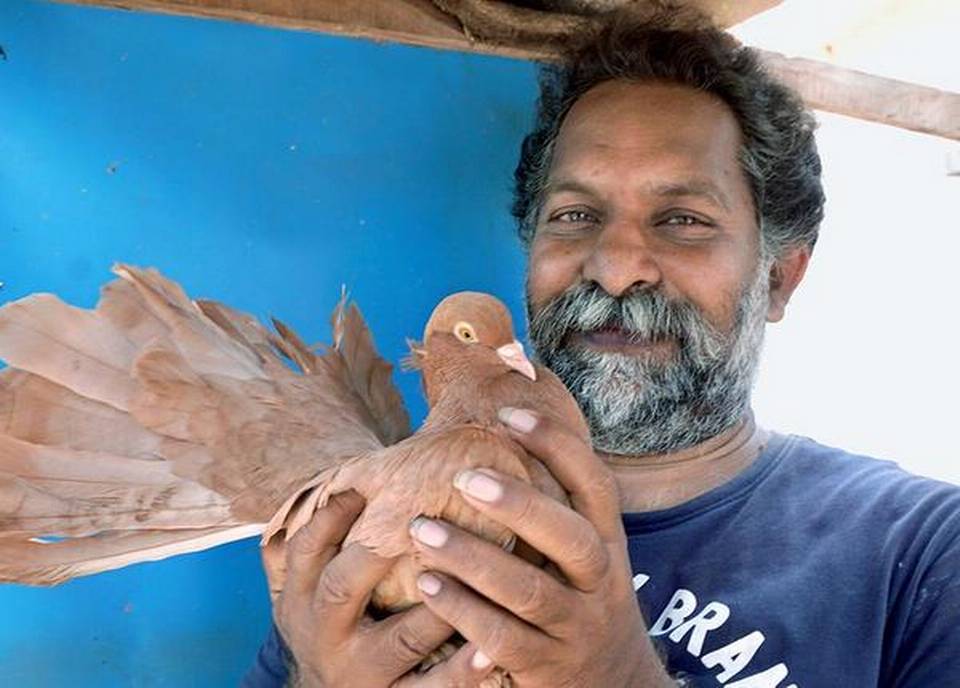
Venkatapathy Raju makes ₹11,000 per exotic breed
His 150-year-old ancestral house at Revidi village of Padmanabham mandal in Visakhapatnam district gives a look of an aviary. On the terrace, piegons, rosters and hens flock together, pecking at grains of maize. A stairway that leads to the terrace is almost taken over by another flock, cooing. Some pairs cosy up in their enclosures while the others are busy taking short flights, flapping their wings.
Meet Bhupatiraju Visweswara Rama Venkatapathy Raju who has taken up his childhood penchant for birds as his profession. Now, he owns around 200 pigeons, many of them are exotic breeds, apart from a good number of exotic fowls.
“My ancestors used to collect taxes for the Vizianagaram royals. After my Intermediate and degree education from Bheemunipatnam Government College and post graduation from Andhra University, I got a job in a private firm, only to relise that my calling was somewhere else. I called it quits, returned to my native village and started rearing the birds,” Mr. Venkatapathy Raju says.
And the passion for birds it seems is paying him well.
Thriving trade
“Some of the exotic birds command a price of ₹10,000 or more. The American Shield in black and brown colours sells at ₹11,000 each,” Mr. Venkatapathy Raju says, while showing around the other breeds including Beauty Homer, Jacobin, Spanish Carora, Chinese Howl, Indian Fantail, Bokaro, King, Rant and Indian Homer.
But, the birds go about their activities, oblivious to the approaching footsteps of his owner.
These pigeons do not need any specialised feed, Mr. Venkatapathy Raju says. “They eat the regular ‘gantelu’ and maize grains like the country fowls. However, I make it a point that the brids are supplied enough feed at least twice a day and the water bowls are not overturned,” he explains.
Summer care
Referring to the birds, he says some of the breed may face problems such as neck twisting in the summer. When they suffer from this problem, they need to be hand-fed. There is no special treatment or medicine for this as it subsides automatically, Mr. Venkatapathy Raju says.
source: http://www.thehindu.com / The Hindu / Home> News> States> Andhra Pradesh / by B. Madhu Gopal / Revidi (Visakhapatnam District) , April 16th, 2019
17
Dhanush gun enters the scene with a bang
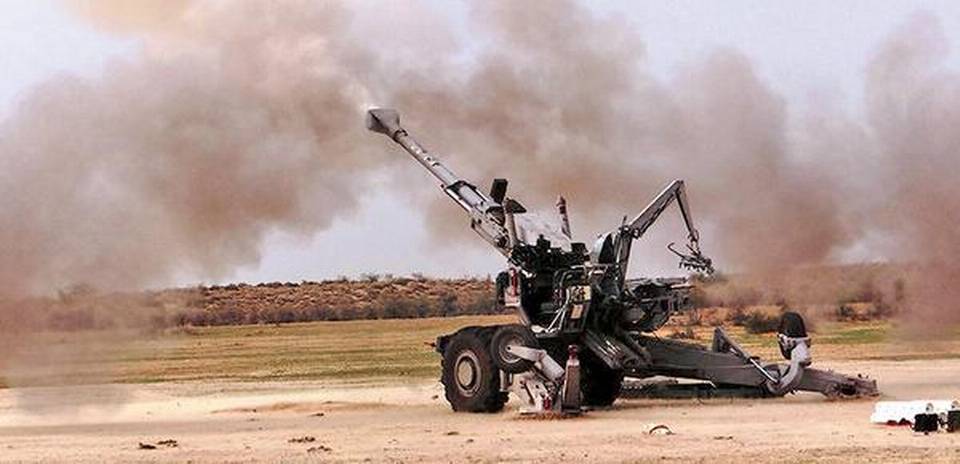
Vizag-based research centre facilitates patenting of Bofors’ ‘desi version’
A premier research establishment located in Visakhapatnam has facilitated patenting and trademarking of India’s first home-made long-range howitzer gun Dhanush, which was formally inducted into the Indian Army recently after trials in the desert regions, and glaciers of the Himalayas.
Termed ‘desi version of the Bofors gun,’ the patent facilitation was made by experts of the National Research Development Corporation (NRDC) Intellectual Property Facilitation Centre and UN-WIPO Technology Support Centre located at Innovation Valley here.
“We feel proud because of our association with the innovation made by the Indian Ordnance Factory, Jabalpur (Madhya Pradesh). We also feel that due to thrust on indigenisation in defence production, which is key to global competitiveness, a system should be evolved for recognising and protecting the IPs,” NRDC Chairman and Managing Director H. Purushottam, told The Hindu on Wednesday.
Fully loaded
Dhanush has inertial navigation-based sighting system, onboard ballistic computation and most advanced any time firing system. The ordnance factory, also known as gun carriage factory, has successfully passed through accuracy, quality, speed, timing and other rigorous tests during the trial phase.
The design was made on the lines of Bofors Haubits fh77 of the 1980s.
Production started in 2019 after development trials during last year. Sources said the Army had ordered for 114 guns, which could go up to 414 for phase-wise supply.
The new weapon, which will give a fillip to the Army’s firepower, will replace 105mm Indian field gun, Russian 122-mm gun and 105mm light field gun.
This is the third type of artillery gun manufactured in the country after K-9 Vajra and M-777 ultra light howitzers.
“We are very happy that we have facilitated the IP and trademark for Dhanush howitzer gun. So far we have made IPs for 19 products from our Visakhapatnam-based office. We are keen to create awareness on IPs and help researchers to patent all their innovations,” B.K. Sahu, head of NRDC’s IPFC in the city, pointed out.
source: http://www.thehindu.com / The Hindu / Home> News> States> Andhra Pradesh / by Santosh Patnaik / Visakhapatnam – April 17th, 2019
15
14
13
12
Behind Araku Valley coffee’s GI Tag
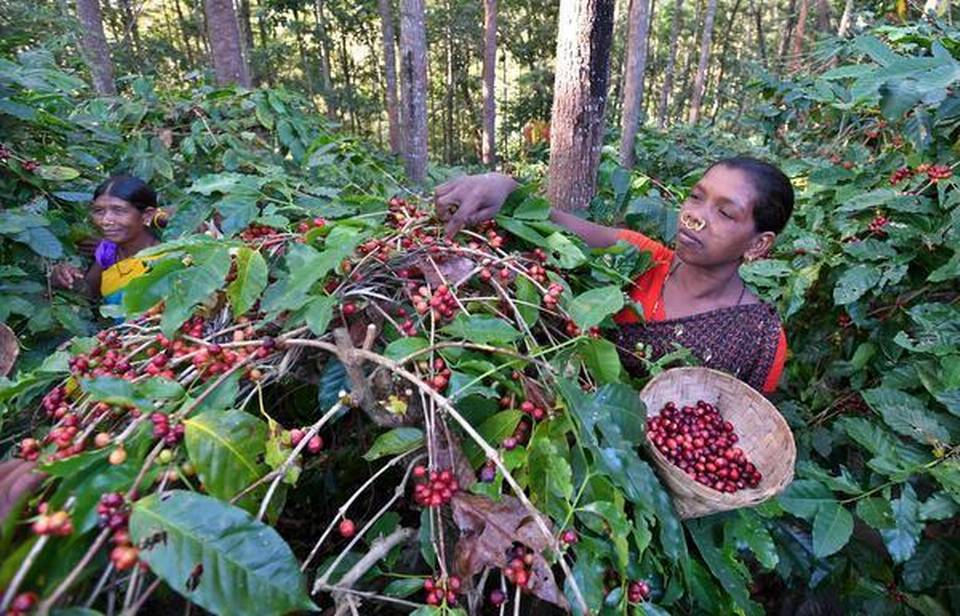
It might have been around for a century, but Araku’s Arabica coffee didn’t get the tag that easily
Araku Valley, the highlands of the Eastern Ghats mountain range overlooking the Bay of Bengal, is brewing one of the best coffees in the world and its aroma just got headier with the Geographical Indication (GI) tag it was recently awarded.
Located 2,985 feet above sea level, coffee plantations here are spread across hilly terrain growing under the shade of towering silver oaks. What makes this coffee unique is that it is organic and cultivated by Adivasi farmers in 10 mandals of the region. The peculiar mix of climate in Araku — hot days and cool nights — coupled with naturally iron-rich soil lends the Araku coffee body, intensity and a rich aroma. No wonder it has fans across France, Sweden, Dubai and Switzerland as well.
Interestingly, the Girijan Cooperative Corporation (GCC), which has been promoting Araku coffee for three years now, had applied for the GI tag at the Chennai-GI registry in 2016. However, its claims at that time were dismissed by the Coffee Board of India, an organisation managed by the Ministry of Commerce and Industry.
___________________
Coffee Statistics
- In India, coffee is cultivated on approximately 4.54 lakh hectares
- There are nearly 3.66 lakh coffee farmers (according to government figures, 98 % are small farmers)
- In 2018-19 Coffee production in India is estimated to be 3,19,500 tonnes (according to Coffee Board).
- There has been a rise of 13.26 % in the first two months of this year, totalling to to 48,330 tonnes
___________________
Things changed, however, when the Coffee Board itself applied this year; the Chennai-based GI registry awarded the GI tag to Araku, along with four others (Coorg Arabica coffee from Karnataka, Wayanad Robusta coffee from Kerala, Chikmagalur Arabica from Karnataka and Bababudangiris Arabica coffee also from Karnataka).
“The GI tag will help Indian coffee varieties be specifically identified with their unique flavour and also increase their popularity. The adivasis of Araku will now get a better price for their produce,” says T Baburao Naidu, GCC vice-chairman and managing director. The GCC is expanding its footprint across the State and the country by setting up outlets selling Araku coffee.
Coffee cultivation in the Araku region began around the early 1900s. But it came into the limelight only a few years ago after a couple of players like GCC and Naandi Foundation (an organisation working in the social sector) entered the fray to help the adivasis grow quality beans and market their produce on the global platform.
_________________
What it means
- A GI is a name or sign used on products which belong to a specific geographical location or origin and is a certification that the product possesses certain qualities that are unique to that locality.
________________
Manoj Kumar, CEO of Naandi Foundation, says, “When I started working in the area as part of Naandi Foundation 20 years ago, people told us this is was a ‘non-traditional’ coffee region! We have come a long way since then, with a strong cooperative of 10,000 adivasi farmers and a central processing unit. We opened a flagship store in Paris, and won the Gold Medal for the best coffee pod at the Prix Epicures OR 2018 Award. The GI tag is a safety net and a recognition that this region’s coffee has a unique identity.”
A loyal Araku coffee fan, Vidya Raghu, says, “It is different. There is an exhilarating aroma, golden-brown froth and a lingering, slightly sharp after-taste that envelopes your senses. I haven’t experienced this kind of refreshing flavour with any other coffee I’ve had.”
source: http://www.thehindu.com / The Hindu / Home> Life & Style>Food / by Nivedita Ganguly / April 11th, 2019