Anantapur, Andhra Pradesh new fruit bowl

Picture used for representational purpose. (Photo: DC)

Anantapur:

Despite severe drought and failure of the groundnut crop, Anantapur district has emerged as the fruit bowl of Andhra Pradesh, becoming the biggest producer of varieties of fruits and vegetables, with a turnover of more than Rs 3,500 crore. Failure of monsoons, erratic and scanty rainfall in the district, where groundnut is cultivated in 10 lakh hectares, has resulted in crop loss. Yet, Anantapur, following the success stories of Israel in horticulture, is now producing sweet orange, sapota, pomegranate, mango, banana, papaya, guava, melon and vegetables. It has flourished with the launch of National Horticulture Mission (NHM) in 2005-06 and rejuvenation of old orchards though micro irrigation project.

Tati Reddy of Taticherla village, popularly  known as ‘Bush Reddy’ after he met American President George W. Bush on his visit to India, produces papaya and other fruits on a large scale with help of drip irrigation. The total area covered under horticulture in the district now stands at 1.12 lakh hectares as against 82,937 in 2008-09 including the coverage of non-traditional horticulture crops and fruits, flowers and grapes on 5,184 hectares. Presently, sweet orange is grown in 50,000 hectares, banana on  12,200 hectares, mango in 8,000 hectares and papaya in 4,500 hectares in the district.

Assistant director of horticulture K. Ramana said it was possible only due to the high receptivity of farmers to fight drought.

“There is high potential to develop horticulture orchards in another 40,000 hectares in the next few years because the government’s top priority is zero-drought in the district,” he observed. At least 11.0 lakh metric tonnes of various varieties of fruits were produced in 2009-10, increasing tremendously in 2013-14, from  6.70 lakh metric tonnes until 2004-05. Farmers of Anantapur have spread their produce across the country and abroad. While a papaya fruit costs just Rs 10 in local market, it costs nearly Rs 60 in Delhi. Kadirampalle farmers in Kundurpi mandal travel by air to New Delhi to sell their produce in the market instead of selling it locally. Farmers K. Venugopal Reddy and K. Shiva Reddy say they send their produce by road transport to Delhi to get attractive prices. Civil supplies minister Paritala Sunitha, APCC president N. Raghuveera Reddy may be busy politicians but are deeply involved in horticulture. Anantapur marketing general manager Srikanth Reddy said an average of 50 lorries of sweet orange is sold at Anantapur market. “Traders from all parts of the country come here to buy sweet orange,” he said.

source: http://www.deccanchronicle.com / Deccan Chronicle / Home> Nation> Current Affairs / by DC Correspondent / September 09th, 2014

‘Golconda diamonds a misnomer’

Branding the Krishna valley diamonds as Golconda diamonds resulted in depriving the Guntur-Vijayawada area the credit of being the land of the legendary diamonds. (Photo: DC/File)

Hyderabad: 

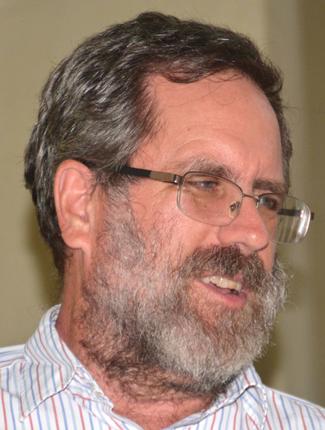
Guntur and Vijayawada lost their diamond hub status due to the rise of Golconda under Qutub Shahi rule, says Prof. Madhavan. Emphasising that the 350-km NH 9 connecting Hyderabad and Bandar via Vijayawada as the ideal model of a corridor, Prof. Madhavan, a renowned geologist and academic, said that it qualifies to be called the diamond corridor.

Guntur and Vijayawada occupy a unique position in the world of diamonds. The geologist said that branding the Krishna valley diamonds as Golconda diamonds resulted in depriving the Guntur-Vijayawada area the credit of being the land of the legendary diamonds, and in glorifying Golconda which was about 300 km away from the mining scene. The world now has a wrong impression that diamonds were found near Golconda which is far from the truth.

He said that Guntur-Vijayawada and the corridor connecting Bandar and Hyderabad should be given heritage status.

source: http://www.deccanchronicle.com / Deccan Chronicle / Home> Nation> Current Affairs / by DC Correspondent / September 07th, 2014

The vanishing edifices of Bheemunipatnam

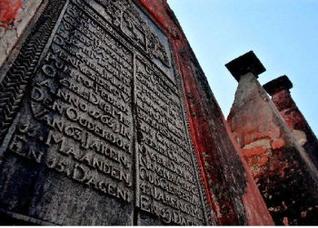
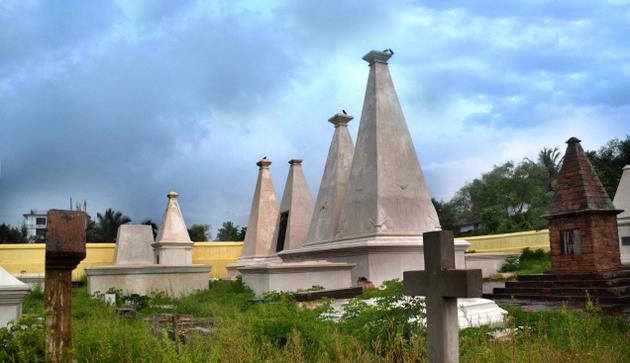
A view of the 17th century Dutch Cemetry at Bheemunipatnam. - Photo:C.V.Subrahmanyam / The Hindu
A view of the 17th century Dutch Cemetry at Bheemunipatnam. – Photo:C.V.Subrahmanyam / The Hindu

The town of Bheemunipatnam, 20 km. from here, is not only the second oldest municipality in the country, but has a rich heritage of both Buddhist and Colonial period. Historians say that the town was a trading centre during the 2 century Buddhist era and the colonial period and was an early settlement both for the Dutch and the British.

Though there are no remnants of the Buddhist period in the town , the excavated Buddhist settlement on the hills near to the town such as Pavuralakonda, Thotlakonda and Bavikonda suggest a link.

But there is still ample evidence of the early Dutch and English settlement. And it is only a few years from now, even that will be erased from the face of the town, thanks to the rampant destruction of the historic edifices.

Robert Schick archaeologist from American Center of Oriental Research who is documenting the antiquity of Bheemunipatnam. Photo: C.V. Subrahmanyam / The Hindu

According to Robert Schick, an archaeologist affiliated with the American Centre of Oriental Research in Amman, Jordan, a 1995 study documented the presence of about 40 buildings belonging to the 17 to early 19 century Dutch and English settlement.

Dr. Schick who is on his third visit to the port town along with his colleague and fellow archaeologist Micaela Sinibaldi, to document the latest status on behalf of INTACH, informed The Hindu, at present only 20 are left. “A couple of them are still standing, though in dilapidated condition, the rest are totally rundown and a few have been replaced by modern concrete structures,” he said.

Notable among the ones that have been razed to ground are the magnificent sea-facing bungalow of 116 doors, the Governor’s House and the Gali Medha or the round building.

The archaeologist, expressed surprise on the gross ‘lack of will’ to preserve the structures. “It is not the same in the west. In Europe, many a town have been retained to preserve the core medieval flavour for posterity. Historic buildings are not mere sites, but are laboratories with a wealth of information and they define the character of the town or city,” said Dr. Schick.

The coordinator of INTACH’s Buddhist sites in AP, Rani Sarma, pointed out that with every passing day, the situation is worsening and the land is being encroached upon.

source: http://www.thehindu.com / The Hindu / Home> News > National> Andhra Pradesh / by Sumit Bhattacharjee / Visakhapatnam – September 01st, 2014

The Dutch Connection

Bheemunipatnam still continues to attract tourists, but something has to be done for the upkeep of the ageing structures

Nestled by the bay about 18 km. from Visakhapatnam, this sleepy fishing town was the hub of activity on the eastern coast a few centuries ago. Bheemunipatnam which got its name from the mythological hero Bhima (the second among the five Pandava brothers), has the record of being the second municipal town in India (after Surat) and was once a flourishing Dutch Colony on the east coast. Though its neighbour Visakhapatnam has out beaten it in the course of time to become a sprawling metropolis, Bheemunipatnam continues to bask in its past glories. History points out that when Bheemunipatnam was a flourishing Dutch colony and a major port for import and exports the town of Visakhapatnam was considered to be its subsidiary.

From the past Inscriptions in Dutch on a tombstone at the 18th century flagstaff cemetery in Bheemunipatnam, at left Gaali Meda (The round building) / The Hindu

History

The Dutch moved to this coastal town some time in the mid of the 17th century, when the local areas were under the control of the Golconda kings. Initially the Dutch used the port to export rice and later switched to jute. Two jute mills also sprang up in the vicinity of the town in the mid 19th century. One was called as Chittivalsah Jute Mills and the other was known as Nellimarla Jute Mills, both are operational till date.

The town was besieged and ransacked on several occasions. The marauding Marathas ransacked and burnt the town in 1754, it was again destroyed in the Anglo-Dutch wars of 1781 and 1795 and it was finally handed over to the British in 1825 following a treaty in 1824. Subsequently, it became a peaceful Anglo-Dutch settlement.

Remnants of the past

Though many old buildings have been demolished to accommodate newer structures and a few have just withered away with the passage of time for lack of maintenance, a few moss-stained edifices continue to stand firmly to give testimony of the glorious past.

The oldest among such structures is the cemetery at Kummaripalem, a small hamlet on the northwest side of the town. The oldest grave is that of one Frederick Kesslerus and it dates back to 1661. It is the oldest surviving Christian grave in this part of India. The second oldest cemetery is the Flagstaff Cemetery where the tombstones still stand like monuments against the blue waters of the bay. This cemetery has virtually become the landmark of Bheemunipatnam.

Both the cemeteries would have been lost in the annals of time but for the initiative taken by 73-year-old Roberts, a former officer of Chittivalsah Jute Mills. His timely intimation to the London-based British Association for Cemeteries in South Asia (BACSA) saved the day. The association responded in time with some funds for renovation and restoration. Today the cemeteries are under the Government of AP’s Archaeology and Museum Department and have once again become the subject of neglect.

St. Peter’s Church

The church was consecrated on March 17, 1864 by Bishop Gell, in honour of St. Peter.

The design was made with the help of the draughtsman of the 38 Madras Infantry and it was estimated to cost Rs.4,528 with an additional Rs.2,206 for the tower. Gothic in style and architecture, the church has a unique stained glass painting depicting Christ’s baptism and crucifixion just behind the altar. This piece was specially ordered and imported from London for an additional cost of Rs.1,000 in those days. Every aspect was taken care of, right from the arches to the granite altar and from the handsomely carved teak furnishing to the floor.

Gaali Meda

This was another landmark of Bheemunipatnam till a few years ago. This round shaped building was popularly known as the ‘Gali Meda’ (Tower of air). This building was part of the Dutch Governor’s Bungalow, from where a constant vigil was kept on the sea to determine the likely weather, spot approaching ships and to watch for enemy movements. This building also featured in a few hit films like ‘Maro Charitra’ and its Hindi version ‘Ek Dhuje ke liye’. This 24-feet diameter building was demolished a few years ago.

The town still continues to attract many tourists, but something has to be done for the upkeep of the heritage structures. Otherwise they will soon fade away into oblivion.

SUMIT BHATTACHARJEE

source: http://www.thehindu.com / The Hindu / Home> Features> MetroPlus  / by Sumit Bhattacharjee / August 18th, 2007

GVMC to run Sivaji Park in PPP mode

Visakhapatnam :

Greater Visakhapatnam Municipal Corporation (GVMC) has mooted a proposal to hand over the Sivaji Park at Sivajipalem and MVP Road to a private company on a public private partnership (PPP) venture. On Saturday, two companies expressed interest in maintaining the park through open tenders.

Confirming this, GVMC commissioner MV Satyanarayana said that one of the companies was keen to offer Rs 20 lakh to the GVMC per annum in accordance to run the park spread over 16.52 acres. However, it would take some time to take a final decision on handing over the running of the park to a private party.

source: http://www.timesofindia.indiatimes.com / The Times of India / TNN / September 07th, 2014

Capital in Vijayawada silver lining for WG

WestGodavariANDHRA06sept2014

The district has been lagging behind in development so far. Tadepalligudem, which is centrally located in the district, hogs the limelight now with the proposed airport, NIT and horticulture research station in its kitty.

The establishment of the State Capital Region (SCR) in its immediate neighbourhood provides a silver lining to West Godavari, which is basically an agrarian district that has been lagging behind in development.

Going by the Chief Minister’s announcement on the Floor of the House on Thursday, the district is expected to get a National Institute of Technology (NIT), Institute of Fine Arts and Commerce, Airport, ceramic industry, Horticulture Research Station, coconut-based coir industries and 100 per cent drip irrigation in oil palm.

An airport is all set to come up on an abandoned airstrip, which was built during World War-II by the British at Tadepalligudem. Forest lands are available for setting up the NIT, the first of its kind in the residuary State, and a horticulture research station adjoining Andhra Pradesh Horticulture University at V.R. Gudem, a stone’s throw away from Tadepalligudem. While ceramic industry has been proposed at Bhimadole, a port will come up at Narsapur.

The Gannavaram airport, proposed to be upgraded into an international airport, is just 35 km away from Eluru city.

Hailing the proposal for a metro connectivity between Guntur and Hanuman Junction via Vijayawada, Aikya Vedika, a forum for the development of Eluru, seeks to extend the connectivity up to Eluru for a stretch of 18 km in the south. “Eluru will be emotionally and physically connected to the SCR only when it is included in the Metro Rail project”, says forum convener and industrialist Brijgopal Lunani.

Tadepalligudem, which is centrally located in the district, hogs the limelight now with the proposed airport, NIT and horticulture research station in its kitty.

Air connectivity with a cargo facility is expected to give a big push to aqua and marine exports from the region. Similarly, a port at Narsapur, with landing facility for mechanised boats and marketing facility for seafood, is likely to bring in a turnaround in the lives of more than 50,000 fishermen from Narsapur and Mogaltur mandals, besides helping them do business without middlemen.

source: http://www.thehindu.com / The Hindu / Home> News> National> Andhra Pradesh / by G. Nagaraja / Eluru – September 06th, 2014

Man who brought television to India passes away

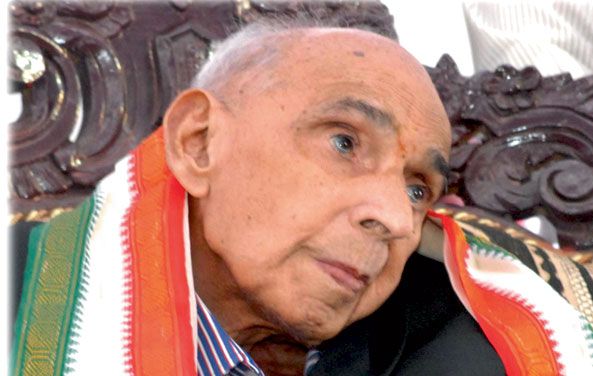
Mallipudi Srirama Sanjeeva Rao

Kakinada:

Several politicians expressed their condolences at the passing away of former Union minister Mallipudi Srirama Sanjeeva Rao, 86, on Wednesday afternoon at his residence in Kakinada.

He is best known as the man who brought TV telecast to India, when the Asian Games were held in 1982. He is the father of former Union minister M.M. Pallam Raju and son of former PCC president and freedom fighter late Mangipudi Pallam Raju.

The second generation Congress leader had been suffering from cerebral paralysis for the past two decades. He is survived by two sons, former Union minister M.M. Pallam Raju and businessman M. Anand. His wife Raja Rajeswari passed away 35 years ago.

His family had close political relations with the Nehru family for several decades. His father Mallipudi Pallam Raju had participated in freedom movement along with Pandit Jawaharlal Nehru.

Sanjeeva Rao studied BE in Gundy Engineering College at Madras and Imperial College of Science and Technology at London. He also worked as a research scientist in AII Research Laboratory in London and developed a sophisticated secrecy system for the Army.

He was elected as an MLA in 1970 from Ramachadrapuram constituency and later he was elected as member of Lok Sabha from Kakinada constituency thrice from 1971 to 1984. He held the post of Union minister for electronics and communication. Television in India was first introduced during Mr Rao’s regime and he inaugurated the first TV tower at Kakinada.

source: http://www.deccanchronicle.com / Deccan Chronicle / Home> Nation> Current Affairs / DC Correspondent / September 04th, 2014

Students Go on Historic Trip at Stamp Expo

Visakhapatnam :

Hundreds of school students visited the philately and numismatic exhibition at the Andhra University Platinum Jubilee Guest House here Wednesday. The exhibition featured a rare collection of postage stamps, covers, coins and currency notes by city-based philatelist Commander (Retd) G Rama Rao.

Chief postmaster general of Andhra Pradesh circle BV Sudhakar inaugurated the exhibition which was organised under the aegis of the Visakhapatnam region of the Postal Department. Teachers and parents too paid a visit to the exhibition to have a glance at the rare stamps which date to the 1940’s.

Commander Rama Rao explained to the enthusiastic students about the importance of each and every item on display.

PhilatelyANDHRA06SEPT2014

Premchand of NRI Indian Springs School said that he was enthralled by the rare collection of stamps and coins. He also said that the exhibition had provided him a good insight into the number of stamps released in the world.

Under the theme of music, around 4,000 stamps, covers, coins and currency notes were on display. “At a time when the people are not showing any interest in philately as a hobby, exhibitions such as this can go a long way in inspiring students to cultivate the habit of stamp collection,” says K Bhanu Chander, a parent who visited the exhibition.

The stamps on Michael Jackson released in 2011 by the US government and an Austrian stamp bearing the portrait of a football player scoring the goal attracted the visitors most.

Commander Rama Rao expressed his happiness over a large number of students visiting his exhibition. He said that he would continue to collect stamps and write a book on stamp collection.

source: http://www.newindianexpress.com / The New Indian Express / Home> States> Andhra Pradesh / by Express News Service / September 04th, 2014

A successful man learns lifelong, says Krish Dhanam

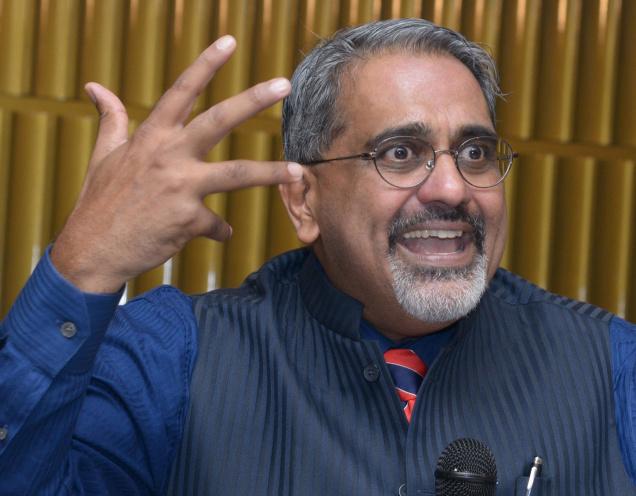
Krish Dhanam / The Hindu

When he migrated to the United States in 1986, he just had few dollars in his wallet. But his success in becoming an acclaimed public speaker helped him become a global ambassador for Ziglar Group of Companies and co-founder of Krish Dhanam Training Intl.

A renowned motivational speaker groomed by famed American author, speaker and salesperson Zig Ziglar, Krish Dhanam who hails from Visakhapatnam, says he is proud of his birthplace and its affectionate people. “This is the biggest city of Andhra Pradesh and it has a bright future. Whenever I come here, I turn nostalgic,” he says in a voice choked with emotion. Giving credit to his success as corporate trainer and philosopher and recognition as a specialist in human engineering to Zig Ziglar, he says nothing comes free.

“I have to do my homework before fulfilling my assignment – be it Europe, Zimbabwe or India,” he remarks.

He has some plans to set up an institute in India though he declines to elaborate on his plan.

Having studied at Visakha Valley School and L.B. Bullayya College, he says wherever he is asked to perform a task – be it off the shelf for a motley crowd of people, customised or private label, he does some spadework. “There is no shortcut to success and preparation and studying the requirement of the target audience will always make the task easy,” he says.

Author of “American Dream from an Indian Heart,” he discloses that his MBA degree from Delhi, telemarketing career and frequent interaction with the customers for 17 years under the guidance of Zig Ziglar helped him gain expertise in soft skills and market psyche.

Everyone in life is a learner.

“We learn lessons from experience. I have a lot to learn ahead to improve my skills,” he sums up, showcasing his simplicity and down to earth nature.

source: http://www.thehindu.com / The Hindu / Home> News> Cities> Visakhapatnam / by Santosh Patnaik / Visakhapatnam – August 31st, 2014

From glorified village to capital city

VillageANDHRA05sept2015

From a glorified village to the capital city of Andhra Pradesh, Vijayawada region has come of age and it is time it changed its profile, according Rajesh Berry, hotelier and vice-president of Hotel DV Manor.

Speaking to The Hindu on Thursday, he said the city should prepare to welcome people from all parts of the country with open arms. “More number of corporates will come and more number of professionals will prefer to make the city their second home. It is time the locals changed their attitude and lifestyle,” Mr. Berry says.

However, K. Pattabhi Ram, president of Vijayawada Hotel Owners Association, felt the social life would remain the same as the region was surrounded by villages. “Vijayawada and Guntur, will witness spurt in hospitality sector as several projects are in the pipeline. Though number of star hotels will come up it will take some time for pub and discotheque culture to make its way in the region.”

He said Vijayawada region, unlike Hyderabad, was known for its restrained behaviour and gave more importance to customs and traditions. “Rural background dominates the ethos of the region.”

Race course

The region also yearns for a new race course. “The Hyderabad Race Club tote centre at Yalamanchalli complex is getting many enquiries about the possible new race course. We need at least Rs.100 crore for a full-fledged one. We need to have space for 18 to 24 horses to run in tandem in the circle. Provisions like swimming pool for the horses, veterinary hospital, jockey training centre, administrative block, cash counters, galleries with VIP boxes and cafeteria are a must. Race course maintenance is an expensive affair,” said Phani Babu, tote in-charge.

Golf course

There is also a need have a golf club for an emerging capital city. “With the city expected to attract foreigners and tourists in the days to come, the need go have a golf club is must,” said K.P. Rao, Krishna District Olympic Association. “We need around 100 acres to establish a full-fledged 18-hole course with all facilities,” said G. J. J. Raju, a member of century-old East Point Gold Club at Visakhapatnam.

source: http://www.thehindu.com / The Hindu / Home> News> Cities> Vijayawada / by J R Sridharaan / Vijayawada – September 05th, 2014