N. Balakrishna with Speaker K. Siva Prasada Rao at the inauguration of BIACH’s clinic on Sunday. | Photo Credit: CH_VIJAYA BHASKAR
‘Hospital will come up in Amaravati in three phases’
Hindupur MLA and Basavatarakam Indo-American Cancer Hospital and Research Institute (BIACH & RI) Chairman Nandamuri Balakrishna inaugurated the hospital’s information centre and clinic at Governorpet here on Sunday.
Mr. Balakrishna said that the institute would construct a cancer hospital at Amaravati in three phases. The State government has allotted 15 acres land at Amaravati for the hospital, which is being run on no-profit, no-loss basis. The hospital was offering concessions and free medical care depending upon the financial capabilities of the patients. The institute, doctors and staff work with a motto that the patients should be treated as guests, and instil confidence among them, he said.
According to a rough estimate, of the 10 lakh people diagnosed with cancer every year in India, 7 lakh people die. People tend lose hope as soon as they come to know about their condition. The patients would have to fight for their right to live.
‘Treatment within the reach of the poor’
A wrong impression had gained ground that the poor cannot afford cancer treatment as it was a costly affair. Many philanthropists were supporting the institute in providing medical care to the needy patients. Recently, the Telangana government also waived off the fee collected by GHMC from the institute, he added.
AP Assembly Speaker and former chairman of the institute Kodela Siva Prasada Rao said the hospital set up 18 years ago, has become one of the biggest institutes. The cancer hospital would come up at Amaravati in the next two years, he said.
Water Resources Minister Devineni Umamaheswara Rao, Vijayawada MP Kesineni Srinivas (Nani), Vijayawada (Central) MLA Bonda Umamaheswara Rao, BIACH & RI Board Trustee J.S.R. Prasad, Medical Director Subrahmanyeswara Rao, and CEO Prabhakar Rao spoke.
source: http://www.thehindu.com / The Hindu / Home> News> States> Andhra Pradesh / by Staff Reporter / Vijayawada – July 02nd, 2018
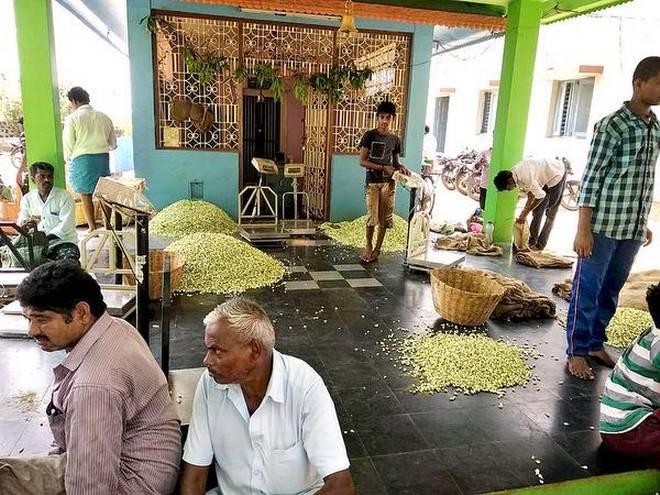
The point where jasmine is traded at Chandragudem of Mylavaram mandal in Krishna district. | Photo Credit: BYARRANGEMENT
It’s big business with turnover touching IRs. 20 crore every year in Mylavaram mandal of Krishna district
The delicate and elegant flower of blissful fragrance from the tiny mandal of Mylavaram in Krishna district is spreading its scent in faraway places.
Jasmine (jasminum sambac or Bondu Malle in Telugu), and Andhra Pradesh State’s official flower, has become the centre-piece of the agri-economy bouquet of this small mandal as its exports are blooming.
Consider this. According to estimates, the jasmine business exceeds a whopping ₹20 crore during the season – January to September. “Jasmines contribute a significant share in the agriculture economy in Mylavaram mandal, where over 1,000 farmers are directly engaged in its cultivation. Annual turnover has crossed ₹20 crore, given the extent of land under cultivation,” Suresh Vesam told The Hindu.
Mr. Vesam is Director of Nestham, an NGO working on jasmine cultivation and marketing facilities in rural Krishna district.
According to estimates, over 200 acres in the mandal are under its cultivation.
Blooming grace
Realizing the huge demand for this small and graceful flower of fragrance, local farmers have been growing jasmines in big land parcels – up to four to five acres – basketing large quantities in key villages such as Pulluru, Chandragudem and Kothagudem.
On the land, “A majority of the farmers are going for the drip irrigation method which results in a bumper yield. Mylavaram farmers have learnt the technique from Tamil Nadu farmers by adopting best farming techniques,” Horticulture Department Assistant Director N. Sujatha told The Hindu.
“We want our farmers to take every opportunity that is available in the market. We are now witnessing that many traders in Hyderabad would wait for the arrival of jasmines from Mylavaram,” added Ms. Sujatha. Hyderabad is the prime market destination of the Mylavaram farmers, who transport their produce daily by road.
Going places
Looking beyond neighbouring Hyderabad,
“Plans are afoot to export jasmines directly to Singapore from next year through farmers producers’ associations from the Mylavaram area.
“Being Andhra Pradesh State’s official flower will help to tap marketing prospects in other states and abroad,” said Mr. Suersh Vesam.
source: http://www.thehindu.com / The Hindu / Home> News> States> Andhra Pradesh / by T. Appala Naidu / Machilipatnam – July 02nd, 2018
Scientists believe that the plastic tiles could be commercially viable as they are unbreakable and water-proof.
Visakhapatnam:
For the first time in South India, plastic waste will be recycled to manufacture tiles in Vizag. The National Research Development Corporation’s Intellectual Property Facilitation Centre at Visakhapatnam and National Physical Laboratory of New Delhi has transferred the technology to the Vizag-based Vyzag Bio-Energy Fuel Private Limited, according to the centre’s Vizag head B.K Sahu.
Scientists believe that the plastic tiles could be commercially viable as they are unbreakable and water-proof. Promoting them would help combat the threat posed by plastic waste. The technology was developed by scientist S.K. Dhawan and his team at the NPL, The technology was selected in the Smart Fifty innovations by the department of science and technology and IIM-Kolkata. Speaking to this newspaper, Mr Dhawan said: “The idea was to evolve a solution to the huge threat looming on the environment due to plastic waste. Only 20 per cent of plastic waste is recycled and the rest is dumped, causing a huge impact all over including marine life. There is a huge scope to recycle these wastes.”
About 600 plastic bags are used to manufacture one tile and 42,000 plastic bags for a slab measuring seven foot by four foot. The plastic tiles cost Rs 50-60 per sq feet and could be used for pavements, jogger paths. Tiles are being manufactured with different designs and are commercially viable. “When plastic wastes are being recycled to lay roads, why we should not use them for tiles,” Mr Dhawan asked. “Plastic recycling is growing in India and the market is huge. We should focus more on how to get wealth from wastes,” said the scientist.
Waste plastic bags and bottles are shredded into small pieces. This is mixed with fillers and moulded into water-proof decorative colourful tiles. 600 plastic bags are used to make one standard size tile 42,000 plastic bags are used for a slab measuring seven foot by four foot. Plastic tiles cost Rs 50-60 per sq feet and could be used for pavements, jogger paths.
Hand-woven beauty: Weavers Kandula Rama Krishna and his wife Siva Parvathi displaying a sari at Rayavaram village in Krishna district. | Photo Credit: T_APPALANAIDU
Barely 100 weavers left now as meagre returns, bleak prospects force many to quit ancestral profession
Rayavaram in Guduru mandal of Krishna district has become a mute witness to the dwindling number of handloom weavers. From nearly 400 a decade ago, there are barely a 100 now. The improvisation by some progressive weavers by incorporating Pochampally flower motifs in saris and weaving fabric meant for shirting and women’s dress material has not helped the cause much, as the income prospects, which still remain meagre, have kept the young generation away from the art of weaving.
According to the Rayavaram panchayat authorities, a majority of the over 2,500 people from the weavers’ community were associated directly or indirectly with the craft, but poor access to market and low returns had reportedly forced most of them to quit the ancestral profession and go in search of other employment avenues. “It’s disheartening to see many of our fellow weavers turn into agricultural and construction workers to eke out a livelihood. Even my two children [boys] do not wish to learn our art,” Kandula Rama Krishna, a weaver, told The Hindu. In his 40s, Mr. Rama Krishna and his wife Siva Parvathi are still dependent on the art, which they have inherited from their parents.
Paltry wages
The couple manage to weave a pack of six saris a week, earning barely ₹2,000 in a system in which an investor provides yarn and other input cost. The same pack with Pochampally flower motif fetches ₹3,000 in a weavers’ co-operative society. “Neither of the two marketing systems, the master weaving and the co-operative society, offers an income that compensates the labour which goes into weaving a sari,” says Ms. Siva Parvathi.
With falling incomes and standards of living, sarpanch T. Srinivas sees no hope of a revival of the art. He had brought the plight of the weavers to the notice of a high-level State government team which visited the village during May-end.
“Our field visit to Rayavaram is a humble beginning to connect them to a better marketing chain apart from bringing in more innovation in product and skill development through the State and Central government wings,” says A.P. Bhavan Resident Commissioner Arja Srikanth.
source: http://www.thehindu.com / The Hindu / Home> News> States> Andhra Pradesh / by T. Appala Naidu / Rayavaram (Krishna) – June 04th, 2018
At a time when the who’s who among Indian designers are returning to the grassroots and trying to revive traditional weaves and ancient weaving techniques, a youngster from the city is working hard to promote Andhra and Telangana weaves and put Visakhapatnam on the fashion map.
Aaron Borthwick (18) designs clothes using local weaves, using material from villages such as Bobbili, Mangalagiri, Chirala and others.
Some of his designs have been used by actors in the film industry of Kerala and Tamil Nadu. Aaron, with his own team of traditional weavers, is trying to infuse a contemporary charm to the traditional designs.
Son of a merchant navy officer Captain Richard Borthwick and mother Supraja, who works for the terminally-ill patients at St Joseph’s Hospice, Aaron competed his schooling from Visakha Valley School last year and aspires to pursue fashion designing.
But Aaron did not set out to be a designer. He said, “It was not a planned career move. I was supposed to pursue International Business in Barcelona. With a few months to go, I started designing clothes using the local weaves from Bobbili, Uppada, Mangalagiri, Narayanpet, Pochampally and Chirala. My interest in travelling took me to villages where I started picking up handloom material for my clothing brand. I try to bring a contemporary charm to traditional handloom material. I find it encouraging to be able to take the traditional weaves to exhibitions in other states,” said Aaron.
It was during one such exhibition in Chennai in December 2017, when Tamil actor Aathmika, notices Aaron’s work and shared it with other actors on social media. Now, Aaron’s designs are worn by the likes of Manjima Mohan, Janani Iyer, Aahana Krishnan, Mehreen Kaur from Malayalam, Telugu and Tamil film industries.
source: http://www.timesofindia.indiatimes.com / The Times of India / Home> News> City News> Visakhapatnam News / by Sulogna Mehta / May 15th, 2018
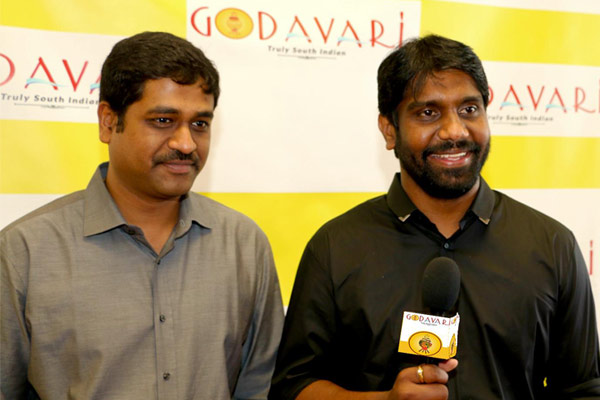
When Kaushik Koganti and Teja Chekuri began the first branch of the now renowned chain of restaurants, Godavari, in the US, little did they imagine that just like the river Godavari, their growth would be a full flow, moving ahead making massive strides cutting across various places. What else could be said about such a humongous growth for a food chain started by two Indians with the only dream to give South Indian food a global identity?
Having started off in May 2015, when they setup their first restaurant in Boston, Massachusetts, little did the duo think they’d move to such a strength so soon and would establish 25 in total, in a period of fewer than three years. In a major development and milestone of sorts, they are celebrating the opening of their 25th story at Houston.
Kaushik, 31, recalls how it all began.
“When I had come to the US to pursue my masters degree in 2008, I obviously craved Indian food. However, I realized that there was a limitation in terms of flavours and that everyone compromised on spices in a bid to westernize the food. I always was keen on the dining business and I thought there was no better way than this,”
he shares. Interestingly, he also realized how the food of Andhra (and now Telangana too) was majorly limited to “Hyderabadi biryani”. “It sure is amazing food. But there’s a lot more to the flavours here and we wanted to bring that to the fore,” he tells us. In fact, the reason they chose the name Godavari was to Stay away from traditional names which are found at several places in the US.
In fact, even though the fathers of both Kaushik and Teja (35), who hail from Vijayawada, are friends, the duo didn’t quite know each other well at all till they landed in the US. “I liked his enterprising nature and discussed with him soon after the idea cropped up in my head. We had no second thoughts and had to jump in soon after,” shares Kaushik, adding, “I left my IT job overnight to pursue this dream, and today, I cannot be happier about that decision because the biggest pleasure comes every day when we hear of how over 10,000 people have dined at our restaurants almost on an everyday basis. There’s nothing more beautiful than giving the pleasure of good food to someone.” Today, Teja has moved back to India, while Kaushik handles the operations in the US. However, he tells us that Teja is at the helm and handles most financial matters. “He has been in the business for long (he owns the well-known brewery Prost that has branches in Bangalore and Hyderabad,North face real estate, Iron Hill brewery amongst other enterprises) and has massive experience which is a boon,” Kaushik says.
Though they are at a very important brink at the moment, when they started off, they didn’t expect such a massive growth. “Yes, we always wanted to go global. Godavari isn’t just for people in the US. In fact, our next branch is going to open in Muscat. We want to take authentic South Indian flavours global. We have realized that when there’s talk of food from the south of India, the menu is quite limited but we wanted to go far and beyond. But we didn’t think the growth would happen so quick,” he states.
But the journey here, though rosy at the outset, wasn’t quite easy. “The major challenge was finding skilled labour. It’s not easy to find people who can make this kind of food in the US. It has been quite a task that way. However, we were clear about one thing, we bring our customers the best of local food, something they’d get on the bandis on streets in India but with high quality. Flavours of the underdog and quality of the five-star hotels was our aim,” shares Kaushik.
However, when franchises come into the picture, it can get tough to maintain quality. “I agree. And that’s why when we decided to start off with franchises, the first thing we did was make things more structured. The chefs are trained in Boston beforehand and we want a uniformity in the way food tastes at every place. We take criticism seriously, and any feedback is discussed with the branch. Owners of our franchises have been very supportive in this journey,” he avers, elaborating that their aim was to always appeal to the westerner as much as the Indians.
“Indians would eat the food, no doubt. But we wanted others to taste our food in its authentic tastes. Indian food is spicy, and we do not want to subtle down flavours, just to suit them. Authenticity is our USP,” he says.
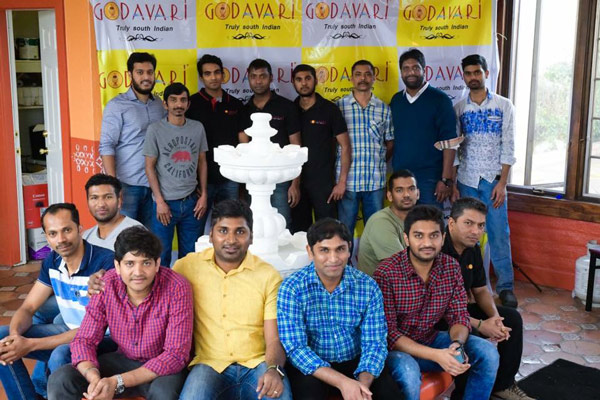
Meanwhile, the team of Godavari pride themselves on being “youngsters with a vision”. Kaushik elaborates, “We understand the importance of marketing and have gone all out in that area because that’s how we’d be able to reach out to people. Being savvy has helped us come up with innovative ways to tell people what we do. Jaswanth Reddy, Varun Madisetty, Sivam Shankar and Uday Gummakonda have all been major players in our growth and what we have managed to do today wouldn’t be possible today without their support.”
source: http://www.telugu360.c0m / Telugu360.com / Home> NRI Life> Diaspora / by Pranita Jonnalagedda / April 27th, 2018
Innovators to get incubation support through licensing
In what could be a boost to startups, MSMEs and innovators, experts in intellectual property rights will set up Novel IPR Academy in Visakhapatnam on Thursday, marking the World IP Day.
With low awareness level on IP remaining an issue, the academy aims at spreading awareness as part of its education and a collaborative platform.
IP owners will be benefited by commercialising their inventions, says Novel Patent Services MD Atti Hima Bindu.
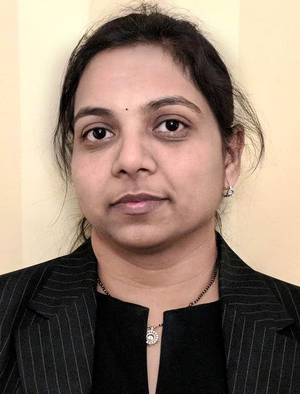
“We are happy to launch the academy as Visakhapatnam is transforming into a major knowledge hub in the country,” Novel Patent Services Managing Director Atti Hima Bindu told The Hindu.
Ms. Hima Bindu was honoured with ‘Exceptional Women of Excellence’ award by the Women Economic Forum at Hague, Netherlands in connection with International Women’s Day celebrations on March 8 this year.
IPR cells
She said the academy, as part of its education vertical, would benefit a wide range of diversified sectors such as students, career aspirants, startups, private and public sector enterprises.
“Educational institutes will be encouraged to open IPR cells to nurture intellectual capabilities of students and promote the creative thinking at all levels. The IP collaborative platform will offer a virtual unison of three verticals viz. research, industry and investments and also provide IP incubation support that will promote IP through licensing or commercialisation aspect and fuel IP-based startups,” she said. Further, the collaborative platform would help researchers understand the needs of industry and focus on industry-relevant studies.
Collaborative platform
“It will enable IP owners to gain benefit from inventions by either commercialising them or licensing inventions or by supporting them to establish their own firm based on the IP,” she said.
Founder and director of Novel Patent Services, a city-headquartered decade-old firm with clients in various countries, Pattabhi Muralikrishna said diligent and intelligent IP strategy was one of the key aspects for startups as well as for others in a highly competitive world.
“We have decided to inaugurate the academy on World IP Day as it is aimed at celebrating creativity and contributions made by creators and innovators to the development of knowledge societies all over the world,” he said and regretted that many, despite launching of products, were not aware of patenting and trade-marking.
source: http://www.thehindu.com / The Hindu / Home> News> Cities> Visakhapatnam / by Santosh Patnaik / Visakhapatnam – April 26th, 2018
Aims to create up to 5,000 technology jobs in the city in next two years
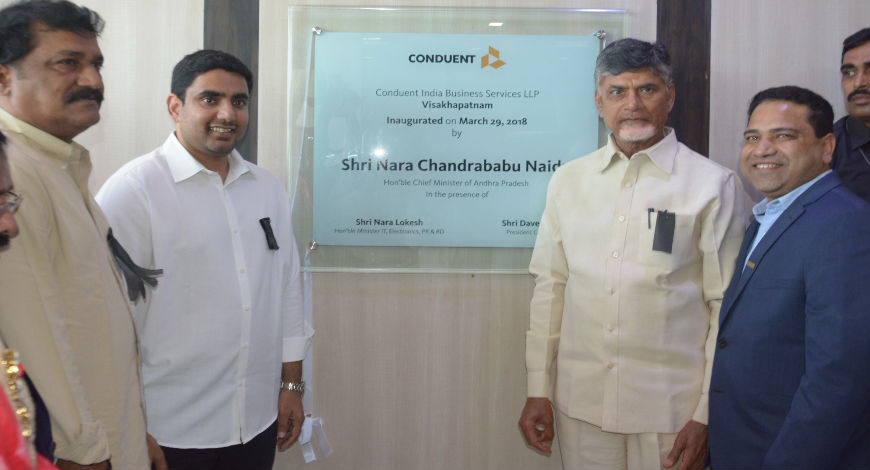
Conduent Incorporated (NYSE: CNDT), a global leader in digital interactions with operations in 35 countries, expanded its presence in India and started its new location in Visakhapatnam, Andhra Pradesh. This became the company’s ninth location in the country and is poised to create up to 5,000 jobs in the city over the next two years.
The launch comes less than six months after announcing a three-year timeline for setting up a development centre in Visakhapatnam’s Fintech Valley. The new site will become a key business location in India and will help Conduent India globally deliver innovation in technology, transportation, healthcare, public safety, human resources, process automation and operational excellence.
“My Government has proactively worked towards building the talent and providing an eco-system to attract global organisations into Visakhapatnam. The entry of global businesses like Conduent to the city is a sign of the success of these initiatives and city’s growing stature as a business hub. It is yet another example of how investing in a highly-skilled, educated workforce boosts the local economy, creates jobs for the youth and strengthens the State,” said Shri. N. Chandrababu Naidu, Hon’ble Chief Minster, Andhra Pradesh. “I congratulate Conduent on starting their operations and extend full support of my Government to their growth plans in Andhra Pradesh.”
Today, Conduent India employs almost 12,000 people across nine cities. The new office in Visakhapatnam demonstrates Conduent’s focus on India as a priority market and underlines the importance of the region in the company’s overall growth strategy.
“India is a strategic growth region for Conduent and we are convinced about the potential that the country offers. As a digital interactions business that serves Fortune 500 companies and government entities around the world, being a part of this dynamic geography is the right move for our clients and our people,” said Dave Amoriell – President, Conduent Inc. “Visakhapatnam provides access to a new professional labor market focused on technology, innovation and research. We are honored to have the support of Government and the Hon’ble Chief Minster Shri N. Chandrababu Naidu to bring even more future-looking jobs to the great state of Andhra Pradesh.”
Visakhapatnam is on track to becoming the technology, science, and knowledge hub in India,” said Shri Nara Lokesh, Hon’ble Minister – IT, Electronics, PR & RD Andhra Pradesh. “The state government is committed to support technology companies in establishing their centres in Vizag. Conduent is a perfect example as they have commenced their operations in less than 6 months and invested in the great future of the state. It is a matter of great pride for me, my team and the state to welcome Conduent to Visakhapatnam.”
“We are confident that our Visakhapatnam centre will deliver great benefits to our customers,” said Lokesh Prasad – Conduent India CEO. “Our investment in the region – with its highly skilled talent, supportive government and global business partners – strengthens our ability to succeed in continuing to develop and deliver innovative solutions for the global market.”
source: http://www.bwdisrupt.businessworld.in / BW Disrupt / Home / by BW Online Bureau / March 29th, 2018
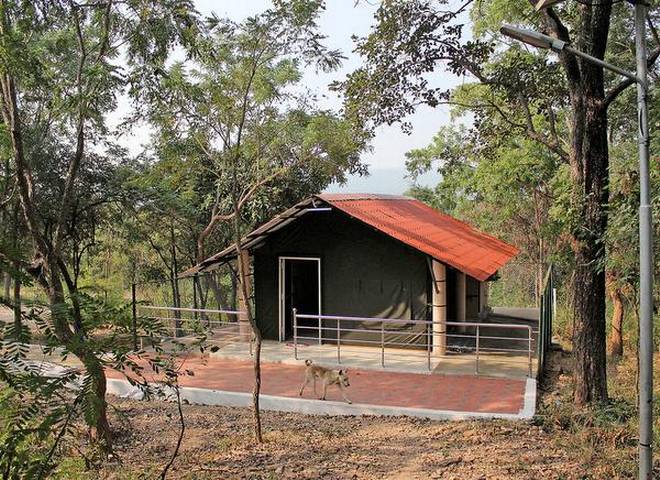
The newly built tent accommodations at Community Based Eco-Tourism project site in Mamandur. | Photo Credit: B_VenkatSandeep
Tent rooms with all basic amenities set up to woo visitors
Beyond a rustic dilapidated arch on the Chennai-Kadapa highway, a serpentine dirt trail leads to one of the most picturesque Forest Department bungalows in the thick of the Seshachalam forests. Perched atop a hillock at Mamandur village, the colonial-era structure built in 1920 stares down the vast expanse of the entire property.
Surrounded by the accommodation developed by the Forest Department as part of the Community Based Eco-Tourism (CBET) project, the location offers an ideal getaway from the regular humdrum of the urban life.
To enrich the experience of staying in a forest retreat, the officials have introduced ‘tent rooms’, much to the delight of the visitors. Unlike the regular ones, the tent accommodations introduced at the CBET, Mamandur have minor reinforcements. The rooms are extended from a brick and mortar bathroom, sloping roofs and is enveloped by a regular tent cloth.
“Owing to the rise in demand from visitors, particularly those hailing from neighbouring Tamil Nadu and Karnataka, we have set up three tented rooms, in addition to the existing ten-bed dormitory and two regular rooms,” Divisional Forest Officer D. Phani Kumar Naidu tells The Hindu.
Mr. Naidu said they have focused on all basic amenities including air conditioning facility, and have strengthened the restaurant section by employing the services of the locals, especially the Yanadi tribes.
Traditional cuisines
“As the area is located on the fringes of the temple city of Tirupati, we want the visitors to have a good access to proper food— a taste of local cuisines at the modern canteen. We are also planning to train the locals in hospitality so that they can offer better services to the visitors. We have also set up a meeting hall which can be used for both as corporate and family retreats,” he said.
Further, canopy walks, guided birdwatching trails, medicinal plantations, boating, trekking routes and much more are in the pipeline. Facilities at Talakona, among the popular getaways near Tirupati, have also received a major boost.
Animal lovers’ paradise
With a flourish of saucer pits at the entrance of the CBET, Mamandur, one can see animals, such as Spotted Deer, Sambar Deer and etc. moving in the area at the dawn and dusk, with the expected occasional sighting of Black-naped Hares or Wild Dogs along the fire lines originating from the property. The bird lovers can spot the typical scrub habitat birds and the nocturnal Indian Nightjar.
“The views from the tents were splendid as we could spot animals basking in the setting sun at the surrounding courtyard near the rooms. We also trekked along the Bavikadu Line,” said Ch. Naresh, a visitor from Visakhapatnam.
Kenneth Anderson connect
For those familiar with the works of Kenneth Anderson, an Indian-born British writer and hunter on his jungle adventures, especially his stories — The striped terror of Chamala Valley, The Mamandur man-eater, The evil one of Umbalmeru and etc, all stories originating from various regions of Seshachalam forests—the location is a treat as one can connect with the books well. Mr. Anderson is said to have spent some time at the bungalow while hunting a man-eater in the area.
As a mark of his remembrance, a dog-eared copy of his book ‘Man-eaters and jungle killers’ accompanied by his monochrome picture with his pets (including a hyena), rests in a display box at the bungalow.
source: http://www.thehindu.com / The Hindu / Home> News> States> Andhra Pradesh / by B. Venkat SandeepTirupati / April 17th, 2018
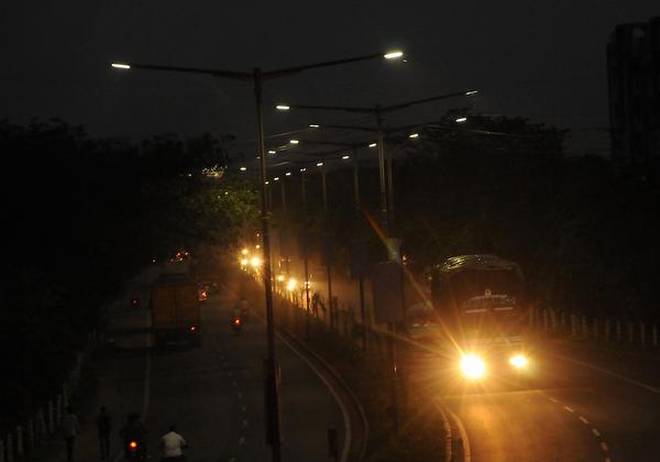
Shining example: Chief Minister says it will now be replicated in other districts of the State. | Photo Credit: CH_VIJAYA BHASKAR
CM to declare it the first district with 100% LED street lights in country
East Godavari district of the State has achieved the milestone of being the first LED street lighting district in the country.
Chief Minister N. Chandrababu Naidu will declare it tentatively on April 24 on the occasion of Panchayat Raj Divas. By installing around 3.1 lakh LED street lights in the rural areas of the district, around 34 Million Units (MUs) of energy could be saved annually.
Andhra Pradesh has been identified as the best State in the country in implementation of energy efficiency and conservation programmes by the World Bank.
Role model
In a tele-conference with Minister for IT and Panchayat Raj Nara Lokesh and Principal Secretary Jawahar Reddy, Mr. Naidu said the State’s quest to enhance people’s quality of life in cities as well as villages had made it a role model for others.
‘Happy lives’
Mr. Naidu appreciated the Minister’s efforts with the support of the Energy Efficiency Services Limited (EESL) in completing the street-lighting project in a record period of over five months and said it will now be replicated in other districts across the State by installing 28 lakh to 30 lakh LED lights which would save around 333 MUs of energy annually.
“My idea is to pay equal attention to basic amenities for the people in urban as well as rural segments like water, roads, housing and street-lighting. I want people of the State to lead happy lives,” he said.
Mr. Lokesh said of the total number of 50 lakh LED street lights installed across the country, Andhra Pradesh’s share was 11.61 lakh street lights, covering 20 % of the total number, leaving behind big States like Maharashtra, Rajasthan and Tamil Nadu. He said coordination between many wings of the government had resulted in the achievement.
He asked Mr. Jawahar Reddy to prepare a comprehensive report on the overall impact of LED street lighting programme in East Godavari comparing it with other rural areas across the globe.
source: http://www.thehindu.com / The Hindu / Home> News> States> Andhra Pradesh / by Special Correspondent / Vijayawada – April 16th, 2018