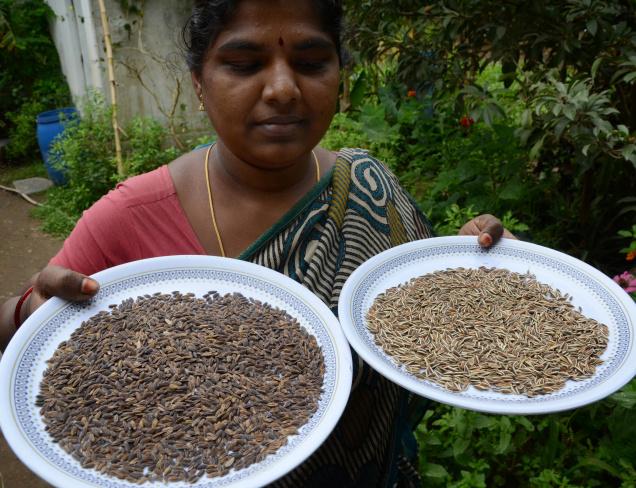
Susheela, wife of a farmer, Vishnuvardhan Rao, displaying the medicinal varieties of paddy cultivated in their fields, at Arisepalli village in Krishna district./ Photo: V. Raju / The Hindu
Here is some good news for patients suffering from joint pains, heart-related ailments and other chronic diseases. There is no need to run around hospitals if medicinal rice is consumed, says Panchakarla Vishnuvardhan Rao.
A farmer and Gopala Mithra member, Mr. Rao, is raising ‘medicinal varieties of paddy’ in the village in Krishna district. People are prone to diseases due to consumption of foodgrains that lack these values, said the farmer, who completed BZC in National College, at Machilipatnam.
Many people in their youth suffer from chronic diseases and take injections and gulp pills. The farmer’s idea is to give medicines along with food grains and keep the people away from diseases, Mr. Vishnuvardhan Rao told The Hindu.
In the ‘Navarai’ variety he has raised he claims it is good for gastro and knee patients, Dodda Beer Nallu is good for anaemic patients and adolescent girls, Rami Gali has high protein-content, Rohas Panjar and Kadam are other medicinal varieties of paddy.
“Farmers are cultivating medicinal paddy in Kerala, Tamil Nadu and Karnataka, which is good for pregnant women and patients suffering with other diseases. Medicinal crop varieties are not suitable for growing in saline soil and research should be done to cultivate the varieties in coastal areas”, said Mr. Vishnuvardhan.
Adopted from USA
He took the sample grains from a researcher, Sabarmatee, in Pasadena University, California in the US. She was raising 370 varieties of foodgrains in two acres in Orissa, as part of investigations.
The duration of the crop was 135 days and medicinal paddy contains high B Complex value and disease-resistance capability, he added.
It is better, if the crop is raised by using ‘go mutram’ (cow urine) and dung, said the farmer.
“My wife, Susheela, is encouraging me in raising different varieties of paddy. I allotted some land for cultivating medicinal varieties in my five and half acre paddy fields.
Farmers can give relief to the patients, if medicinal paddy is cultivated” Mr. Vishnuvardhan Rao opined.
source: http://www.thehindu.com / The Hindu / Home> News> Cities> Vijayawada / by Rajulapudi Srinivas / Arisepalli (Krishna Dist), May 12th, 2013
Machilipatnam Agricultural Research Station scientists T. Anuradha and K. Nagendra Rao displaying new paddy seed varieties./ Photo: T. Appala Naidu / The Hindu
Two scientists of Acharya N.G. Ranga Agricultural University Research Station (ARS) here have developed two paddy seed varieties, MCM 100 and MCM 101, which can grow in saline soil. The 12-year research of the experts in developing these seed varieties has revived the hopes of farmers having saline soils.
In 2011, the Directorate of Rice Research, Hyderabad, tagged MCM-101, a rabi season seed, as the second best variety among the 33 paddy seed varieties developed by the other scientists in India, ARS Principal Scientist T. Anuradha told The Hindu. As a part of testing for the second consecutive year, the seed with 125-day duration (MCM-101 variety) was sown in five locations in Andhra Pradesh in saline fields.
“We noticed that the fine quality variety withstood the ‘blast’ disease and reported better quality yield than MTU-1010, a leading rabi seed variety in Andhra Pradesh”, said Ms. Anuradha. The kharif seed MCM-100 was tested in ten locations including West Godavari, Krishna and East Godavari, in 2012 kharif. When compared with the leading MTU kharif variety seed, the MCM-100 yield was five per cent higher.
“About 6,075 kg yield per hectare was recorded from this variety as against 5,850 kg for MTU variety. The average yield of our seed in all the ten locations was 5,539 kg as against 5,269 kg of MTU,” said Ms. Anuradha. The crop duration was 140-145 days.
“The response from the farmers, who are growing and have tested the mini kits of the seed, is the real certification for our work and a Himalayan achievement,” said scientist K. Nagendra Rao, another scientist in the research on ‘Development of Saline-Tolerant Rice Varieties for Coastal Andhra Pradesh.’
The MCM-100 and 101 seed varieties are exclusive seeds that were developed for saline soil, which is plentiful in the State and is not suitable for existing paddy varieties.
“The scientists aimed at developing seeds meant for saline soils, but these two varieties will also give yield much higher than present leading varieties – MTU 1061 and BPT 5201 – if farmers grow in normal soils,” claims the scientist duo.
source: http://www.thehindu.com / The Hindu / Home> News> Cities> Vijayawada / by T. Appala Naidu / Machilipatnam (A.P.) – May 10th, 2013
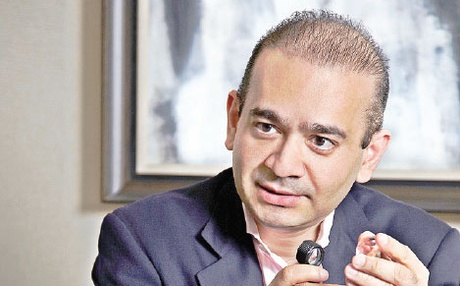
Springing forth in million dollar style, Nirav Modi comes from a lineage of old world cutters, starting at the young age of 19. Displaying a fine crafty eye for detail, his designs have dressed many a beautiful woman with an elegant sparkle. But his own inspiration comes from an elegant source – his mother.
“My mother is an interior designer and I grew up in Europe where she would take us to art museums in Rome, Paris and Vienna whenever possible. I cultivated a penchant for aesthetics and design; it has been such an integral part of what I experienced while growing up,” says Modi.
While visiting these intuitively artistic homes to some of the world’s greatest creativity, jewellery making already ran in the family.
“My grandfather was a diamantaire and my father is still an active diamantaire in Antwerp. I had absorbed a lot of diamond knowledge from them but the world of jewellery was somewhat foreign to me.”
The transition from uncut diamonds to fine jewellery happened quite unexpectedly though, when a friend asked him to design a piece. “Many years ago, a friend asked me to craft a pair of earrings for herself and a latent passion was ignited,” he shares.
So what makes Nirav Modi a brand that stands out? He explains it’s quite a simple matter of numbers.
“Traditional jewellers design a piece, then buy the diamonds and give it to local contractors for making it. From this traditional method, we have transcended to sourcing the rough stone and polishing it in our own factories in Russia. Thereby our diamond costs 15-20 per cent lower than traditional jewellers due to removing middle men. We then take the highest quality diamonds from our production and use them for creating a Nirav Modi jewel in our own workshop, ensuring exquisite craftsmanship.” Having worked on wide variety of jewellery lines, Nirav is now going simpler for his next project. “I am working on some beautiful solitaire rings which can be worn daily as well on special occasions,” he reveals.
Light for the wearer
He is glad his collection is not viewed in the ethnic segment, he wants his creations to be worn across time and space. “Our clients are a part of the international cognoscenti and have a taste for the finest. When working on jewels, I think about the woman and her comfort. This is the reason that all the jewellery has been specially crafted so that it has minimal metal, making it light for the wearer,” says Modi.
Tingle of excitement
For Modi, it isn’t just coming up with the designs, the inherent pleasure in supervising his pieces from start to finish is what really keeps him going. “I like overseeing the whole process, from sourcing and polishing the diamonds in Russia to designing and crafting the final jewel; it allows me to meticulously control quality and ensure that there is no compromise in any jewel,” says the diamond merchant.
Describing his looks and aesthetic, Modi says, “I would only use one word to describe the aesthetic: timeless. My dream is to wake up 100 years from now and see my clients’ grandchildren wearing Nirav Modi jewels. So everything that I craft is made to be a timeless heirloom.”
The Golconda Lotus necklace
The jewellery world was in for quite a surprise when Nirav Modi’s now famed Lotus necklace went for a whopping $3 million. But Modi himself couldn’t have been more surprised. “Somehow Christie’s had heard that we had this legendary Golconda diamond and asked me what we were planning with it. They saw the sketches and semi-finished necklace and immediately asked if they could have it for the cover of the next fine jewellery auction. They had not even seen the final piece,” he says. But the piece wasn’t precious just for the diamond.
“Apart from the 12 carat Golconda, the necklace also has one of the highest collection of Argyle pink diamonds ever found in a single jewellery piece and our patented Ainra Cut diamond links which replace the metal links traditionally found in jewellery,” says Modi, whose his inspiration comes “from almost everything around”.
Upcoming Hyderabad show
When Modi says everything around, he literally means it. “Inspiration for my collections comes from a variety of sources; from mythology and nature to art and children’s toys. The Scheherezade Collection has been inspired by Queen Scheherezade who told the tales of 1001 Arabian Nights, the Fluire Collection has a floral theme while a diamond cuff is an interpretation of a painting by the tribal artist Jangarh Singh Shyam,” says Modi.
Talking about the upcoming exhibition, he says, “It is almost impossible for me to choose one piece. I spend months on every single piece from sourcing the finest diamonds to perfecting the design. The Diamond Embrace Bangles are unique in that they were inspired from my daughters’ toy bangles. They came home one day with elastic bangles that stretched to embrace any wrist size. So I decided to create the same thing in gold and diamonds. Each Diamond Embrace Bangle has more than 700 moving parts which expand. We have them in yellow, white and rose gold.”
The Nirav Modi exhibition will be on display at the Taj Krishna on May 11, 12 and 13.
source: http://www.newindianexpress.com / The New Indian Express / Home> Cities> Hyderabad / by Swathi Sharma – Hyderabad / May 10th, 2013
Hyderabad has emerged as the largest retail hub in south India, according to a latest study by leading retail IT solutions provider Ginesys.
The study, titled “Indian Retail Footprint – 2013” says that Hyderabad witnessed 33.04 percent more retail penetration than Bangalore, despite a lower population.
At the macro-level, south India sees higher retail density than north and west India.
The report also found that tier-II cities such as Gwalior, Dhanbad, Vijayawada, Vizag, Surat, Pune and Chandigarh witnessed high penetration of retailers.
“Rise in discretionary/per capita income has given a boost to retail consumption in tier II cities and towns. At the same time, these towns and cities have witnessed rapid improvements in infrastructure and logistics enabling retailers to set up outlets to cater to the demand,” Ginesys CEO Prashant Lohia said in a statement.
In the south, cities like Vizag and Vijaywada, have become centres for heavy machine industries, in addition to traditional sea trade. This heavy commercialization can be considered a key factor responsible for high retail density.
The report also states that retail penetration is skewed towards the metros in north India comprising of the Delhi-NCR region, Haryana and Uttar Pradesh.
Visakha Dairy plant, which is under construction at Rangampeta in East Godavari district, will be ready by August-September, according to Chairman, A. Tulasi Rao.
He was speaking to reporters at the Visakha Dairy plant here on Sunday after releasing a new product — 100-ml toned milk in tetra pak at Rs 5.
He said the dairy was selling 75,000 litres of high quality milk per day with varying fat content in toned, double toned, skimmed and standard milk variants. The dairy aims at a target of 1 lakh litres per day by the end of the year.
The 100-ml Visakha Tetra Pak is aimed at the lower-end consumer, combining the twin features of affordability and single use. The product would be sold in Andhra Pradesh, Chhattisgarh and Orissa.
He said that the plant could process 6 lakh litres per day. Visakha Dairy is procuring milk from Srikakulam, Vizianagaram, Visakhapatnam and the two Godavari districts.
“We are setting up the Rangampeta processing plant at a cost of Rs 20 crore with a capacity of 2.5 lakh litres to 3 lakh litres, as it is becoming increasing difficult to bring milk all the way from the two Godavari districts. We have to cut down on the transport costs. We tried to acquire the sick Godavari Dairy and turn it around, but the Government was not very keen on it. Therefore, we decided to put up a plant on our own,’’ he said.
Rao said that Visakha Dairy is procuring milk from more than 2 lakh farmers in the five districts, covering 2,800 villages.
“Our primary objective is to provide quality milk and milk products to consumers and at the same time do justice to our farmers by paying them a remunerative price. Of course, a balance has to be struck between the two aims. We have set up a hospital with excellent facilities here for the sake of the farmers and staff and we also try to provide educational facilities to the children of the farmers,’’he said.
source: http://www.thehindubusinessline.com / Business Line / Home> Companies / by Ch. R. S. Sarma sarma.rs@thehindu.co.in / Visakhapatnam – May 05th, 2013
Kollur, a tiny village in the outskirts of Hyderabad, is slowly carving out as a satellite hamlet for fast developing Cyberabad. Located about 13 kms from Financial District, Kollur is easily accessible from Gachibowli, Kokapet and Narsingi and it is the second village along the Outer Ring Road (ORR), after Kokapet.
Interestingly, the village is under the restricted zone under government order banning organised residential and commercial development in order to protect the Osman Sagar and Himayat Sagar lakes. Thus the village has turned as home for several high end villa projects costing between Rs 2 to 3.5 crore.
A drive from Kokapet, the new buzzing location for corporate and commercial activity, would lead to villages – Vattinagulapalli, Khanapur, Janwada, Mirjaguda etc. on the Mumbai highway. On northern side of ORR there is Tallapur village. Apart from Kollur, the villages like Velimala, Edulunagulapalli, Padi, all facing the ORR, command similar opportunity and lands are available for medium to long term investments.
Apart from Financial District and Kokapet, these under-dog villages have easy and quick access to Gachibowli signal, Nanakramguda, Narsingi etc, some of the fast developing locations on ORR.
Here, the land is generally flat and offers vegetation, thus extends clean and pollution free environment. On the connectivity side, besides the ORR, the village is also connected with railway line. About two kilometers from Kollur, there is Edulunagulapalli Railway Station on Hyderabad-Mumbai line. And with MMTS being extended up to Shankarpalli village, Edulunagulapalli station will have access to MMTS.
While driving from airport, we can get on to service road at Puppalguda intersection and drive to Kollur past Kokapet. The intersection at Kollur (called Edulunagaluapalli intersection), gives access to the ORR itself, instead of using service road.
Besides, the village has excellent education facilities set up by industry majors like NCC runs Samsthi International School and Open Minds established by Birlas. Having just 15 minutes access from Gachibowli Financial District, the parents, who are working here can reach their wards very quickly.
Further, being close to Gachibowli, the villages have attracted new-age development by providing comfortable residential location for high-end IT employees in the Cyberabad.
Several residential developers are working on various villa projects in Kollur and neighbouring villages like Edulunagulapalli, Velimala and Pati. With the presence of over 50,000 employees working in the Financial District area, and many more are expected to join, the location has high potential for property investment, as the prices are now at low.
source: http://www.thehansindia.com / The Hans India / Home> Headlines / May 04th, 2013
Homegrown pharma player Aurobindo Pharma Limited on Saturday informed the bourses that the company had received USFDA’s (United States Food and Drug Administration) final nod to manufacture and market tamsulosin hydrochloride capsules and clindamycin palmitate hyderochloride for oral solution in the US market.
The Hyderabad-headquartered company did not disclose the timeline but said that the products would be launched soon.
Tamsulosin hydrochloride capsule is the generic version of Boehringer Ingelheim Pharmaceuticals’ Flomax capsules and is indicated for the treatment of symptoms of enlarged prostate in men. According to industry estimates, the market size of the product is estimated to be $244 million for the twelve months ending September 2012.
Clindamycin Palmitate Hydrochloride for oral solution is the copycat version of Pharmacia & Upjohn’s Cleocin Pediatric for oral solution and is indicated for the treatment of serious infections caused by susceptible anaerobic bacteria in infants.
Industry estimates state that the market size of the product is $57 million for the twelve months ending September 2012.
According to the company, Aurobindo now has a total of 190 Abbreviated New Drug Application (ANDA) approvals from the US regulator USFDA .
source: http://www.timesofindia.indiatimes.com / The Times of India / Home> Business> India Business / TNN / May 04th, 2013
Urban agriculture is the new culture that is catching up in the city. More than 4000 households in the outskirts of the city currently are self reliant for the vegetable needs of the family. This time Horticulture department for a change is giving subsidy directly to the citizens instead of farmers who want to grow of complete nutrients set of vegetables.
Officials say according to the Food and Agriculture Organisation (FAO) estimates, by 2050, global food demand will grow by 70 per cent to cater to the needs of the global population of 9.3 billion. As the natural resource to feed this population is going to be difficult task urban agriculture is seen as big solution to the problem.
Speaking to TOI horticulture department director K Devamuni Reddy said that the initiative as part of urban farming is met with good response since it was initiated two months back. “We give the citizens who are ready to grow a cluster of vegetables at their home a subsidy of Rs 360 and they have to spend another Rs 1200 from their pockets” he added.
This subsidy kit involves four silatin round beds, red earth, farmyard manures, 14 bags and other essential things to grow a garden at home. Officials said though the citizens have to spend additional Rs 400 to 500 for transporting ,response has been more than good. Mostly people in Uppal, Dilsukhnagar, LB nagar, Vanastalipuram who have own houses have shown good interest with more than 4000 subsidy kits being distributed so far. Officials plan to increase this number to another 1000 in next few months.
The growers will be able to get Ladies finger, Tomato, Brinjal, Pallak, coriander, Amarathis, Ridge guard, Bottle guard, Beans, cucumber, and Cluster beans. The subsidised kit will have the required seeds and the kit will be sufficient for two seasons to grow. “The programme is designed in a way that Indian Council of Medical Research ( ICMR) recommendation for nutritional needs are fulfilled. With each kit there would be a yield of 450 KG yield which would be covered in a span for three to four months” K Devamuni Reddy said. It would cover nearly one hand half KGs a day for a family of four members.
Official sources said that in Hyderabad, it was found that households that produce vegetables saved 20 per cent of their total food expenditures by retaining part of the produce for household consumption. “I find this programme interesting because we can get the guidance from them directly. Costs can be brought down too” V Venkatalakshmi of LB Nagar said. Soon the officials are planning to do visits of as many as households possible and monitor their practices.
source: http://www.articles.timesofindia.indiatimes.com / The Times of India / Home> City> Hyderabad> Vegetables / by Sribaala Vadlapatla, TNN / May 04th, 2013
National Fisheries Development Board (NFDB) has sanctioned Asian Seabass seed production unit — the first in Andhra Pradesh — in Krishna District. With brackish water aquaculture activity gaining ground in the district, demand for huge quantity of Asian Seabass (Lates Calcarifer) species has also gone up.
Brackish water aquaculture is taken up in more than 5,000 acres across the district, but the farmers depend only on Seabass seed provided by Central Institute of Brackish water Aquaculture (CIBA), Tamil Nadu. The CIBA officials said that the variety survives in freshwater aquaculture ponds also, hence very popular.
The yield of Asian Seabass is much higher compared to other species. This led to the demand increasing manifold. Getting entire requirement from Tamil Nadu is turning out to be a Herculean task.
Many farmers had to withdraw their plan of growing the variety due to non-availability of seed in the district. “The NFDB has sanctioned a seed production unit worth Rs.72 lakh, which is proposed at Urlagonditippa village. It will be set up by T. Sankara Rao, a farmer,” Fisheries Deputy Director T. Kalyanam told The Hindu.
source: http://www.thehindu.com / The Hindu / Home> News> Cities> Vijayawada / by T. Appala Naidu / Machilipatnam – May 05th, 2013
To preserve and protect lakes, the Hyderabad Metropolitan Development Authority (HMDA) Lake Protection Committee has come with a unique scheme, ‘Adopt a Lake.’
With an objective of involving all stakeholders like individuals/corporates/institutions in lake protection, a Memorandum of Understanding (MoU) for lake adoption would be finalised by the Lake Protection Committee soon. Interested individuals/corporates/institutions have to maintain constant vigil by employing suitable watch and ward team to monitor the encroachments, debris dumping, constructions or tampering of ‘full tank level'(FTL) boundaries. They also have to maintain vigil at all inlets and outlets to keep the lake pollution free.
The interested parties have to submit a detailed proposal to HMDA’s Lake Protection Committee on how the lake could be maintained and upgraded to make it environment-friendly with proper bio-diversity. The HMDA would soon invite Expression Of Interest (EOI) from the different stakeholders to finalise the terms and conditions. of the draft MoU.
source: http://www.articles.timesofindia.indiatimes.com / The Times of India / Home> City> Hyderabad / TNN / May 02nd, 2013

 This article was distributed through the NewsCred Smartwire. Original article © IANS / Daily News 2013