Realising the commercial value of duck farming and its impact on improving the socio-economic condition and economic empowerment of the rural poor, the state government has decided to promote it on a large scale and train duck farmers scientifically to improve egg and meat production in the state.
Since duck farming in Andhra Pradesh is in a primitive stage, which is mainly in the hands of nomadic, illiterate and Scheduled Tribe communities, the government has decided to train duck farmers in scientific rearing and healthcare system.
Ducks occupy an important position next to chicken farming in the state. They form about 10 per cent of the total poultry population and contribute about 6-7 per cent of the total number of eggs produced in the state.
However, though AP is one of the leading states in the production of duck eggs and meat in the country, there is very little demand in the domestic market and most of them are exported to West Bengal and other states where there is demand for duck eggs and meat. As the rearing practices being followed by AP duck farmers are unscientific and traditional, the production is not reaching the desired level. Hence the decision to provide scientific training to them, a top official of the animal husbandry department.
“They will be given proper training so that they could improve the production of duck eggs and meat. We will train them in best practices available in the country. We are even planning to invite leading duck farmers of the country to share their experiences with our farmers,” the official added. Duck rearing is prevalent among weaker sections of rural population which provides them supplementary and steady income on daily basis besides providing them nutrition duck eggs for family consumption and generates rural employment.
Therefore, the government is trying to involve many people belonging to these sections in duck farming by offering them incentives, the official said. “Duck farming can also be a stable employment source. Young unemployed educated people can enter into this business,” he said.
source: http://www.newindianexpress.com / The New Indian Express / Home> States> Andhra Pradesh / by Express News Service / July 09th, 2016
The shifting of the Andhra Pradesh administration to Amaravati crossed a major milestone on Monday with the opening of 14 departments in and around Vijayawada.
The offices of Directors and Commissioners and more than 1,000 employees have shifted from Hyderabad.
These are now located in Vijayawada and Guntur and a handful in Mangalagiri.
The new offices wore a festive look, with Ministers and officials opening them formally to the chanting of mantras and playing of nagaswaram.
Employees decorated their new offices with rangolis, and officials signed files with a smile. Staff already here welcomed their colleagues from Hyderabad with bouquets.
The head offices inaugurated in Vijayawada on Monday include: Anti-Corruption Bureau, Beverages Corporation, Rural Water Supply, Stamps and Registration, Panchayat Raj, Archaeology and Museums, Economics and Statistics, Higher (Collegiate) Education, Prohibition and Excise, Tribal Welfare and Women’s Empowerment Corporation, Planning Board and Sports Authority of Andhra Pradesh.
SC Finance Corporation was inaugurated in Guntur.
Officials enquired with the staff about the facilities being provided for the employees. Some officials were actively competing to meet the deadline set by the Chief Minister.
The government initially set June 15 as the deadline for the shifting and later pushed it to June 27. As the search for rented buildings took longer than anticipated, the government has allowed the process to take place by August.
Construction of the Interim Secretariat Complex (ISC) at Velagapudi in Guntur district gained pace after Chief Minister N. Chandrababu Naidu wanted the government to fully function from there.
source: http://www.thehindu.com / The Hindu / Home> National> Andhra Pradesh / by Rajulapudi Srinivas V. Raghavendra / Vijayawada – June 28th, 2016
Launch of hybrid car in India next month, says group Vice-President (Asia Pacific)
Here is another landmark for Vijayawada, the base capital of Andhra Pradesh. Swedish luxury carmaker Volvo opened its biggest car showroom-cum-service centre on the outskirts of the city on Monday.
The 26,000-sq. ft three-storey iconic building with Scandinavian ambience assumes significance as it was opened on the day when 15 government departments were shifted from Hyderabad to Vijayawada as part of the bifurcation exercise. The current growth and prospects in the region will work well for the company, according to Volvo officials.
Speaking after launching the showroom here, Volvo Cars Group Vice-President, Asia Pacific, Jari Kohonen, said the company was doing extremely well in India and looking at 20 to 25 per cent growth in sales this fiscal. “While continuing the existing models, we plan to launch the hybrid plug-in car next month in India. We also have plans to display the XS 90 hybrid car in Vijayawada soon,” Mr. Jari said.
Among the variety of Volvo models, luxury SUVs are the most-sought-after cars in India, according to Tom Von Bonsdorff, Managing Director, Volvo Auto India.
“Luxury SUVs would largely help us in achieving our targets here. They are most popular,” said Mr. Tom. The company claims to have 20 per cent market share in the cars segment in the State.
Prospective customers from Amaravati
While the brand has good patronage, especially from customers in Visakhapatnam, Rajamahendravaram, Kakinada and other places, new enquiries are coming from Vijayawada and Amaravati, says Manoj Krishna, dealer principal, Volvo Vijayawada. “There is a lot of interest visible in Vijayawada and surrounds, especially from the Amaravati capital region where a lot of disposable incomes are seen. We are currently selling 100 cars per annum and we expect to double the number in the coming two years,” Mr. Manoj said.
source: http://www.thehindu.com / The Hindu / Home> News> Cities> Vijayawada / by Special Correspondent / Vijayawada – June 28th, 2016
Andhra Pragathi Grameena Bank has received SKOCH Order of Merit as well as Inclusive India Finance India Award during 2015-16, bank chairman D. Sampath Kumar Chary said on Friday.
The bank received SKOCH Order of Merit for successfully implementing financial inclusion and covering 1,899 villages allotted to it and bagged the Inclusive Finance India Award for use and implementation of information technology in spreading financial inclusion
Releasing the financial results for 2015-16 to the media at Kadapa, Mr. Sampath Kumar Chary said APGB transacted a total business of Rs.17,838 crore as on March 31, 2016, with a quantum jump of Rs. 2,703 crore over the corresponding period last year.
Deposit level
The deposit level reached Rs. 9,595 crore, a quantum jump of Rs. 1,782 crore over the previous year, registering a growth rate of 22.80 per cent.
source: http://www.thehindu.com / The Hindu / Home> National> Andhra Pradesh / by Special Correspondent / Kurnool – June 18th, 2016
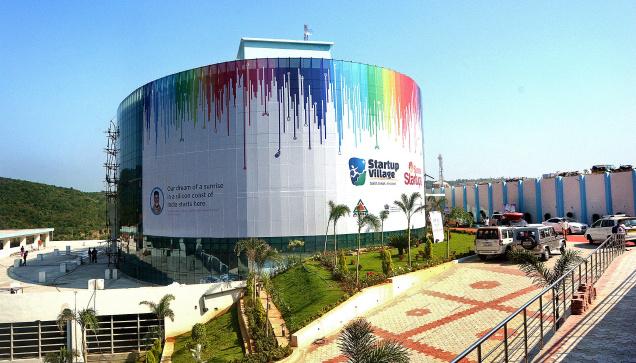
The Sunrise Startup Village on Rushikonda Hill No 3 in Visakhapatnam.
MobMe to focus on technical side, create 1,000 student startups
In a significant development, Innovation Society, an autonomous body formed by the Andhra Pradesh Government to spread culture of innovation, will take the physical possession of Sunrise Startup Village here, the first one started in Visakhapatnam about one-and-a-half years ago.
Enquiries by The Hindu revealed that MobMe Wireless Solutions of Kochi Startup Village, which was entrusted with the job of incubating startups at Visakhapatnam on the model of technology incubators of the Silicon Valley following an MoU at the CEOs’ Conclave here on September 29, 2014, has agreed to reorient its strategies.
Sources said Innovation Society CEO Nikhil Agarwal, who is based at Tirupati, will visit the city shortly. The village housed in Technology, Research and Incubator Park (TRIP) built by the APIIC at sea-facing Rushikonda virtually took a leap in January 2015 with the organising of bootcamps for students.
Kochi Startup Village Chairman and MobMe Wireless Solutions co-founder, Sanjay Vijayakumar, denied they were exiting the Sunrise Startup Village. He told The Hindu , in an email interview, that the MoU signed with the AP Government was valid for five years to help build 1,000 student startups.
“What we are doing is changing our role from managing the physical infrastructure to going deeper into the school and college education system to build a culture of entrepreneurship. After a year of operations, we realised that the technical and entrepreneurial depth of teams is weak and needs to be strengthened from the college side to create strong founders,” he said.
Tie-up with JNTU
Mr. Vijayakumar said that to achieve it they had been working with JNTU-Anantapur and Kakinada to roll out “minors in entrepreneurship” programme for college students.
“This is exactly the same what we are doing in Kerala and Gujarat with the State technical universities here,” he claimed.
He disclosed that the Department of Science and Technology Government of India last week approved their plans to align with Startup India Action Plan and build Startup Village into a digital incubator platform (www.sv.co) for scaling up.
Physical infrastructure has limitations as students cannot come every day from all parts of Andhra Pradesh. Currently, 28 teams are in the pilot programme, including six student teams from the State. “Instead of exiting, we are going to scale this up now to 100 teams this academic year together with the two universities in AP,” he pointed out. When MobMe entered AP, the AP Innovation Society was not formed as well but now a CEO had taken charge and things had stabilised.
This allows for the Society to manage the physical infrastructure which is similar to how the physical infrastructure is managed by the Kerala Startup Mission in Kochi, Mr. Vijayakumar averred.
source: http://www.thehindu.com / The Hindu / Home> News> Cities> Visakhapatnam / by Santosh Patnaik / Visakhapatnam – June 07th, 2016
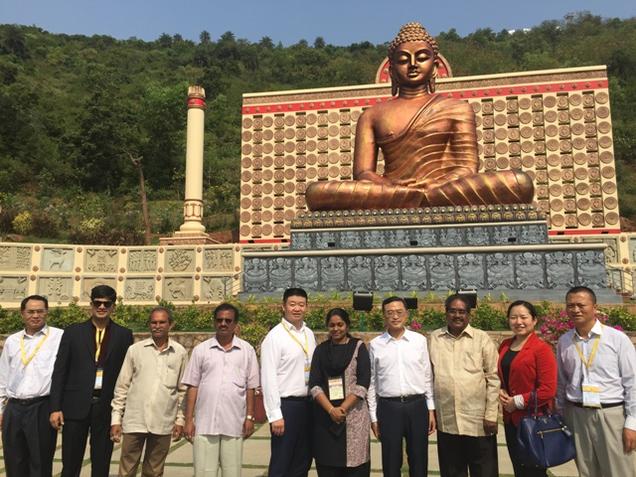
Photo shows the Guizhou International Investment Corporation team in Visakhapatnam. Photo: Special Arrangement
“Love Indian culture more than Indians do. Do not impose, but align with the flow. Change only what you can.”
An infra company based in the southwest province of Guizhou — known for its role in Mao Zedong’s Long March — has emerged as one of the prime investors in Andhra Pradesh, showcasing the role of Chinese provinces and Indian States in driving a new phase of India-China ties.
The Guizhou International Investment Corporation (GIIC) is undertaking the Detailed Master Plan for infrastructure in Amaravati, Andhra’s new capital, and Chief Minister Chandrababu Naidu’s pet project.
Geography has played a major role in turning GIIC into an infra heavyweight. Extensive tunnelling, bridge construction and power generation was required for lifting development in coal-rich Guizhou — a province mostly known for its hills and hollows. The company became well known for building a tunnel that established Guizhou’s new link with the famed Stilwell road, which once routed military supplies to Chongqing from India during World War II. The Stilwell road is now the backbone of the proposed Bangladesh-China-India-Myanmar (BCIM) economic corridor.
In a freewheeling conversation with The Hindu, Zhang Zhao, vice-chairman of the GIIC explained how Chinese companies were teaming up for a deeper economic engagement with India. “A symbiotic relationship has indeed emerged between China and India. Chinese companies have developed capacities, out of their own reform experience, which India requires,” says the GIIC’s Chief Executive Officer (CEO). But, Mr. Zhang stressed that understanding and appreciating each other’s distinct business cultures is also an equally formidable barrier.
As a result his message to his employees and Chinese partners is to engage India with humility and respect, rooted in Confucian principles. “Love Indian culture more than Indians do. Do not impose, but align with the flow. Change only what you can,” Mr. Zhang observed. Consequently, the company and its partners are consciously aligning with New Delhi’s flagship Make-in-India campaign to channel investment flows.
Like many others in Guizhou’s business circles, Mr. Zhao draws inspiration from Wang Yangmin. The fifteenth century philosopher and practitioner stretched the Confucian tradition to emphasise that theoretical knowledge was useless without its application to resolve real-life problems. Another revered figure is Deng Xiaoping, the architect of reforms, who guided China out of the trauma of Mao’s Cultural Revolution.
The GIIC’s forays in Andhra have triggered a “collegiate approach” among Chinese businesses, wanting to invest in India. “We cannot do everything ourselves. For example we need partners in the development of ports, which Andhra requires, or real estate, which has not been our expertise. So we looked for allies within and outside Guizhou, and our effort to build teams have yielded satisfactory results,” observes Binod Singh, a senior advisor to GIIC.
The synergetic approach, pursued by local Chinese enterprises, is already making headway in India. Negotiations have reached an advanced stage between the Guizhou Kailin Group and India’s Coromandel International Limited for establishing a $1 billion fertilizer plant in the Kakinada Special Economic Zone.
Real estate investment in India could ride on the model of Garland City, a massive undertaking of “affordable housing” in Guiyang, where four lakh people reside in a dense, but neatly planned cluster of vertical structures. “This is the scale of operations that India needs and we are ready for it,” says Mr. Zhao, scanning the area, with considerable pride, from the rooftop of a 72 floor building that towers over the City. The project is the result of a partnership between the Guizhou Architecture Institute, and the China State Construction Engineering Corporation (CSCEC), the state-owned civil engineering giant.
The Chinese consortium approach could also work in the development of a building-material park in the Vijayawada airport area, which could cater to the bulk of Andhra’s construction material needs, says Mr. Singh.
Analysts point out that growing tie between Guizhou and Andhra Pradesh demonstrate the rise of Chinese provinces and Indian states as the core drivers of Sino-Indian ties. Earlier in a conversation with The Hindu, former Indian ambassador to China Ashok Kantha acknowledged that New Delhi-Beijing ties were being rapidly decentralised. “Chief Ministers are taking ownership of the relationship with China. New projects are coming up, and specific initiatives are being taken,” he observed.
source: http://www.thehindu.com / The Hindu / Home> National / by Atul Aneja / Guiyang (SouthWest China) – June 05th, 2016
Andhra Pradesh Non-Resident Telugu Society (APNRT Society) CEO Ravikumar Vemuri who was kick-started his 25-day tour from Texas, US, to promote Andhra Pradesh as an apt place for investment, said Telugu people from all fields took part in the campaign.
So far Houston, Dallas in Texas and Georgia in Atlanta were covered. He said a large number of Telugu people from IT, medical fields, including CEOs of companies, are being addressed during the campaign.
The campaign will be held in all 21 cities of the United States.
source: http://www.thehindu.com / The Hindu / Home> News> Cities> Vijayawada / by Staff Reporter / Vijayawada – June 03rd, 2016
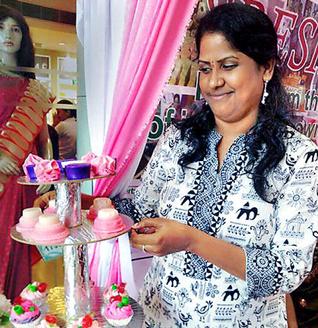
Asha Gunapati, a woman entrepreneur, who makes handcrafted organic soaps under her enterprise ‘Sreshta Skin Essentials’ in Visakhapatnam.
Asha Gunapati’s products are based on her belief that “what goes into your mouth should go on your skin”.
Her range of soaps is natural and handcrafted with subtle fragrances. But they stand apart in their incredible designs making them look deliciously tempting. Cupcakes, jelly bars and whipped creams, so enticingly designed are the soaps that she literally had to keep a disclaimer — ‘Do not eat. It’s a soap’ — at her recently held exhibition at a mall in the city.
An HR professional, who quit her corporate job to be with family, Asha started making handcrafted organic soaps as a hobby in 2013, and it was only last year that she decided to dive into an entrepreneurship venture to start her own line of products called ‘Sreshta Skin Essentials’. Now, she also provides employment to a team of eight underprivileged women who help her in making the organic soaps.
Asha says her soaps are devoid of chemicals as she uses natural ingredients such as essential oils like lavender, tea tree, cedar wood and rose and carrier oils like olive oil, coconut oil and almond oil to make the soaps. Before starting her venture, she did a thorough market research on handmade soap brands in India and found that most of these soaps were very expensive.
“I felt there was a big untapped market for natural organic soaps in the affordable segment. But if I had to make my products stand out, I knew I had to give equal emphasis to quality and design,” says the creative entrepreneur. With an initial investment of Rs. 6 lakh, Asha set up her home-based enterprise and started reaching out to customers through the e-commerce route.
Her soaps come in a range of flavours like lavender mint cupcake, raspberry bar, rainbow soaps and chocolate cupcake and can be ordered from the websitewww.feminineindia.comor her Facebook page ‘Sreshta Skin Essentials’.
“Initially, we were in losses since the manufacturing cost was way too high. The raw material cost itself was over Rs. 2 lakh, most of which are procured from Noida and Bengaluru. We use imported almond oil from France and Kojic acid, a natural whitening agent, from Japan,” adds Asha. She uses two methods in making the soaps — the cold process which takes about 30 to 45 days to make a batch of soap and the glycerine soaps that can be used instantly.
Describing her entrepreneurial journey so far, Asha says: “It has been a roller coaster ride. I started the enterprise when my father passed away and I had to support my mother. It was the toughest phase of my life. But it was this business of making handcrafted soaps that helped me come over it. I put in all my creative energy into it. Sometimes it is great and sometimes it is tiring and backbreaking. My day starts off with me collecting online orders, processing them, checking the stock, packing and shipping them. If the item is out of stock, I make it. Amidst all this, I also like to experiment with new things and update my product list.” To reach out to more people, Asha showcases her work at various exhibitions. Her next exhibitions will be in Vijayawada and Bengaluru.
source: http://www.thehindu.com / The Hindu / Home> News> Cities> Visakhapatnam / Nivedita Ganguly / Visakhapatnam – June 01st, 2016
Nations like Egypt and Oman, who are the world’s biggest buffalo meat importers, are all set to buy beef from the modern abattoir in the port city.
A team of representatives from the two countries recently visited the modern abattoir and after inspecting the conditions, approved the import of beef under the aegis of the Agricultural and Processed Food Products Export Development Authority (APEDA). The export of meat would start soon after the official inauguration of the abattoir by the state government next month.
This apart, other countries like United Arab Emirates (UAE), Iraq, Iran, China, Vietnam and Russia are also likely to import the meat from the city.
Vizag Foods Private Limited (VFPL) director Mohammed Naziruddin confirmed that both Egypt and Oman have in principle agreed to import beef from Vizag. “The modern abattoir, which will be the third biggest in the country, will maintain a blast freezer on the lines of the ones in European countries. The meat will be frozen at -40 degree Celsius under the blast freezing system. Everything is mechanised except the Halal (cutting the throat of the animal). The animal will be left alone for nearly 20 to 30 minutes after the slaughter before the subsequent processing is taken up,” he said.
“If everything goes according to plans including the inauguration of the abattoir, we will start business from August this year. We will start procuring the buffaloes soon after the inauguration,” Naziruddin said, adding that the farmers will no longer need to take the animals to Hyderabad for the same purpose.
The abattoir has a capacity of generating a maximum of 90 tonnes of bovine meat in a day. About 600 buffaloes are required to generate 90 tonnes of meat. Similarly, it has a capacity of slaughtering 2,000 sheep in a day. “While the buffalo meat will be exported, the sheep meat will be for the local market,” Naziruddin said, adding that Visakhapatnam Port Trust will be the channel for exporting the meat to foreign ports including the Port of El Iskandariya in Egypt.
The male bovines will be procured from neighbouring Odisha, West Bengal and also from north coastal districts like Srikakulam and Vizianagaram. The VFPL will give special incentives and advances to the farmers to market the animals to the abattoir which has a dedicated area of nearly 1 acre to keep the animals.
According to sources from the APEDA, April to October is the best season for the export of the bovine meat from the country. There is high demand for India’s buffalo meat in China as it is the only country that imports the buffalo offal such as buffalo liver, heart and tongue and other internal organs. India exports nearly 8 lakh to 10 lakh tonnes of buffalo meat every year worth Rs 16,000 crore to Rs 20,000 crore, of which 50 per cent is exported to China.
source: http://www.timesofindia.indiatimes.com / The Times of India / News Home> City> Visakhapatnam / by V. Kamalakara Rao, TNN / May 27th, 2016
Fashion designer Rebecca Williams showcasing her first line of creation at the Annual Design Awards of JD Institute of Fashion Technology in Visakhapatnam. Photo: C.V.Subrahmanyam
Social media platforms , online fashion destinations are giving a big fillip to them
The advent of technology in the fashion industry has changed things dramatically for aspiring fashion designers, especially in tier-2 cities. Competition has increased, yes, but at the same time the industry has also become more accessible for young fashion professionals. And giving this new crop of designers a big fillip are social media platforms and online fashion destinations such as Jabong and LimeRoad, with concepts like online fashion shows. Similarly, opening up of fashion boutiques in the city is gradually bringing about a change in the fashion perspective and giving an impetus to these fashion designers to showcase their creations.
At the recently held annual design awards show of JD Institute of Fashion Technology (JDIFT), aspiring fashion designers of the city talked about their design philosophy and the changing dynamics of the fashion industry.
Take for example, 19-year-old fashion designer Soundarya Mishra, who graduated from JD Institute of Fashion Technology this year. In a short span of time, she has created an online custom designed garment brand – Avatar and a Facebook page called ‘Avatar You’ where she showcases her designs. “In the two months since I started my brand, the online platform and social media have helped me to reach out to potential customers. Last month, four of my designer garments were booked through my Facebook page. It is a big boost for budding fashion designers like me,” says Soundarya, who takes her inspiration from international designer Zuhair Murad.
Her new collection showcased at JD Institute’s annual design awards show highlighted the hidden emotions of a human being through layers of fabric in five creations of western ethnic designs. The young designer used leather belts, hanging dolls and artistic prints in her collection to convey this theme in Bhagalpuri silk fabric.
“Vizag is not an easy city for budding fashion designers. It is still at a nascent stage when it comes to fashion consciousness. Having said that, online platforms and entrepreneurship trends among youngsters have changed the scenario for budding talents. They need a bit initial mentoring and get to a flying start. Many of our students have opened their own boutiques and also become fashion stylists at leading brands,” says Sangita Daga, the Head of Department of JDIFT.
An alumnus of the institute, Sai Prasanna works as a fashion stylist at Kankatala’s The Fabric Store.
source: http://www.thehindu.com / The Hindu / Home> News> Cities> Visakhapatnam / by Nivedita Ganguly / Visakhapatnam – May 23rd, 2016