Category Archives: Arts, Culture & Entertainment

M.F. Husain to be remembered on death anniversary

New Delhi, June 2

Close friends, fans and fellow artists will remember Maqbool Fida Husain, one of India’s greatest contemporary artists, on his first death anniversary June 9 with a commemorative programme, ‘Remembering Husain’, at the India International Centre (IIC) in the capital.

The artist died in exile in London. He was 96.

The tribute will bring to light another lesser known art of Husain – calligraphy – that he had mastered. While painting mythological compositions from the epics Ramayana and the Mahabharata at the home of art connoisseur Badrivishal Pitti in Hyderabad, he penned his thoughts and all that he felt in an elaborate painted calligraphic diary which he named, ‘Harf va Naksh’.

‘It was published by Pitti in Hyderabad. Times were different and it was not meant for mass production. Somehow, we rediscovered it. It is an important discovery because it is another aspect of Husain,’ artist Manish Pushkale, who spotted the book in writer Krishna Baldev Vaid’s collection, told IANS.

Vaid owned the book for 40 years.

Artist Krishen Khanna, who was a member of the Progressive Artists’ Group in Mumbai that Husain was associated with briefly – will read excerpts from the book in English, Vaid in Urdu and art critic Prayag Shukla in Hindi at the memorial service.

The service will be hosted by the Raza Foundation, a non-profit arts and culture promotion body, set up by the oldest of the surviving progressive artists, S.H. Raza.

Historians say Husain learnt the art of calligraphy early in life and practised the ‘Kulfic Khat’, a form of stylised calligraphy with its geometric form. He learnt to write poetry in a madrassa in Baroda, where he stayed with his uncle. Poetry stayed with him all through his life.

The book contains jottings in English, Urdu and Hindi calligraphy and drawings.

The Safdar Hashmi Memorial Trust (SAHMAT), a progressive cultural organisation in the capital which was working with the artist to preserve his legacy, is planning a ‘mount a street van exhibition of reproductions of Husain’s work, along with the lanterns and umbrellas – Husian’s aesthetic icons’, said Ram Rahman, a senior functionary of the organisation.

‘SAHMAT had made several lanterns and umbrellas last year as Husain souvenirs. The mobile exhibition would be like a bioscope complete with Husain’s films, but on a large scale,’ Rahman told IANS.

The Tao Art Gallery in Mumbai will open a tribute exhibition, ‘Imagining A Legend’, June 9 exhibiting photographs of Husain shot by leading lensmen of his time.

The exhibition has been curated by Nitayee Shinde and Fazwan Husain.

‘It feels pretty much the same as it felt a year ago. There is a sense of regret that he had to live outside the country, died outside and was buried outside India,’ Rahman said remembering his old friend at whose home Rahman was a frequent visitor.

Husain’s family will also remember the ‘patriarch’ with a private memorial ceremony.

IANS

source: http://www.india.nydailynews.com / Home> News> Desi / Saturday, June 02nd, 2012
Research on an epoch maker

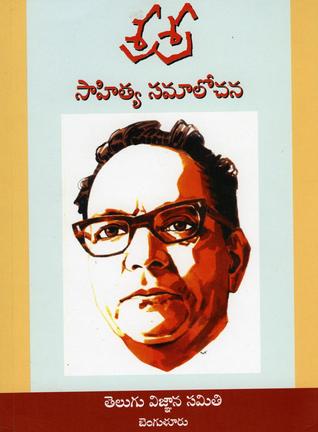
Sri Sri Sahitya Samalochana, Edited by Dr. Diwakarla Rajeswari, Ambika Ananth.

Like other Indian languages, Telugu too has been imbibing, from time to time, various trends and ideologies emanating from across the world, particularly in relation to European countries.

Dissemination of English language during the British rule facilitated easy access in this. A section of young poets looked for new modes to give vent to their poetic spirit in the altered context.

In the post-war period Impressionism, Dadaism, Imagism, Cubism, Symbolism, Futurism, Realism, Surrealism and the like fascinated them. Developments in Russia and the International Labour Movement expounding the cause of working class operated as a source of major inspiration for them . Further, Marxist philosophy attracted them . They started writing poetry with a new outlook called Progressivism, relegating Romanticism to the background.

Srirangam Srinivasa Rao, popularly known as Sri Sri, was the pioneer in this direction and was acclaimed as an epoch maker. Sri Sri- Sahitya Samalochana is a compilation of 20 research papers presented by noted scholars, at the National Seminar conducted under the joint auspices of Telugu Vignana Samithi, Bangalore and Central Sahitya Akademi, New Delhi in December 2009, to mark Sri Sri’s birth centenary.

Four more articles are included in a booklet as an appendage. As the title indicates, the writers deliberate on the works of Sri Sri with much diligence and comprehension. Addepalli Ramamohana Rao gives an enlightening analysis of Sri Sri’s Magnum Opus ‘Mahaprasthanam, with particular reference to the element of reality perceived from different angles. S.V. Satyanarayana aptly calls the work a progressive epic, which, he says, is a poetic interpretation of Marxism.

In his article on ‘Prabhava’, Kasala Nagabhushanam traces in detail Sri Sri’s transformation into a progressive poet, with ample quotations. Dwa.Na.Sastry, while assessing Sri Sri’s ‘Siprali’ dwells on the humorous ingredient of the poems and attributes of his parodies.

Unique features of Sri Sri’s radio plays are well presented by C.Mrinalini. Ambika Ananth in her appraisal of ‘Three Cheers for Man’ cites, inter alia, Sri Sri’s English translation of some of his own poems and makes a prudent suggestion that a translation workshop may be organised for translating his works. Kopparthi Venkataramana Murty observes that ‘Anantham’ though penned as a sort of novel, embedding autobiography, reflects the ‘soul’ of history of his period. Diwakarla Rajeswari states that Sri Sri’s essays are in a way innovative writings exploiting prose to the optimum extent. Sri Sri’s original and translated stories demonstrate his command over the genre, contends Ampasayya Naveen. ‘Khadga Srushti’ is replete with thematic diversity keeping the common man at the centre stage.

Yet another aspect of Sri Sri’s writing — his film lyrics — are surveyed by Rasaraju, who avers that every piece carries his stamp. G. S. Mohan writing on Sri Sri’s prefaces and reviews reveals that they are quite spirited, thoughtful and analytical.

In her paper on Sri Sri’s letters, K. Asajyothi proves how they are embellished with discussions on literature. Channapragada Jayalakshmi feels that Sri Sri’s ‘Pra-Ja’ (Questions and Answers) amply bears out his inscrutable nature. Markudapuram Srinivasa shares his experiences during the course of his Kannada translation of ‘Maha Prasthanam’. The other articles are equally educative. Inclusion of selectpoems of Sri Sri to the book is a welcome addition.

By all counts, this is a work of immense interest to innumerable admirers of Sri Sri. The publishers should have paid greater attention to its format, as it highly deserves a proper structure of a well bound treatise, rather than an adhoc souvenir that it seems now. A chronogical list of Sri Sri’s work would also be a useful annexureif and when the book goes into a reprint.

Sri Sri Sahitya Samalochana

Edited by Dr. Diwakarla Rajeswari, Ambika Ananth.

For copies: Visalandhra Book House

Price: Rs.200.

source: http://www.TheHindu.com / Home> Arts> Books / by Govindaraju RamaKrishna Rao / May 31st, 2012

Delightful and romantic

PUTTING DANCE INTO GITANJALI   Kuchipudi dancers performing Rabindranath’s Gitanjali through Kuchipudi.  Photo: K Ramesh Babu/ The Hindu

The ‘Telugu Vennela’ poetry fest showcased romantic poetry at its best.

Gurudev Rabindranath Tagore’s Gitanjali has been translated into Telugu by many poets. The one by Rallabandi Kavitha Prasad is romantic poetry at its best — with a visual flow that got reflected in a dance (Kuchipudi) presentation. Following the Kuchipudi tradition to a certain extent, choreographer/nattuvanaar and guru Usha Gayatri Maddali, made use of group sutradhars for narration and a solo dancer to communicate the philosophy of Tagore’s verses. The Telugu version of the verses was lucid, lyrical and lofty all at once. Vempati Srivalli Sarma’s vocals enriched the bhava of these verses with the stresses rightly laid out. The artistic handling of a profound philosophy was indeed laudable as it stuck to the original in word and deed. The quest of the atma for its origin, that is the Paramatma or Brahman forms the crux of these verses. The poetic romanticism lies in personifying the atma or inner self as a woman and that too a dancer who is in search of her spotlessly pure beloved.

The group of six, an auspicious number in Hindu philosophy, dressed in symbolic white costume (not the traditional Kuchipudi one) with a hairdo to match, commenced the show with a salutation to our national flag through dance with minimal footwork. As such, the flow of the song was more through mime and gestures (natyabhinaya) than dance. But to the credit of the choreographer, she tried her best to ensure some elemental footwork at least in the form of jatis, to underline the structure of Kuchipudi.

The verses of in Telugu were undertaken in solo (by Abhirami) who was able to portray pangs of lost love, reminiscences of good times with her beloved and then the pursuit of her inner self for everlasting happiness with him. The linesNenoka chiru venuvunai… are all about nature and the joy it bestows on a yearning soul. The physical has to be interpreted in terms of the metaphysical which is manifested as rain, sunshine, blossoms, lively rivulets, unending ocean, etc. The digitalised screening of the moon and later the sun, gave the desired effect. Abhirami’s moves and expressions for paadamani koraga… were aesthetic. The crisp jati to swaram gave the apt impetus though it could have extended a little longer for an impact. The soliloquy (through recitation and not song) wherein she hears the un-manifested divinity questioning her search when He is within herself (in atma), was a piece of rich, meaningful poetry.

The muktaimpu was however rather flippant. The bonds that have shackled the dancer (the self) have to be torn asunder if the union with the Parabrahman is desired-this is the crux of Gitanjali as we saw it on stage. This freedom from the world leads to ultimate reality and that is the truth. The dancer was able to convey this to the audience with clarity despite some unwarranted preening around in the name of Kuchipudi which of late, seems to be the order of the day. The conclusion was a well-drawn thanksgiving to the universe after an understanding of the ultimate reality. The voice-overs (Baladitya and Usha Gayatri) for the vaachikabhinayam were an added attraction.

Venkatesh on the flute made his presence felt while Anil Kolanka on the violin, Sridharacharya on the mridangam, Srikanth on the tabla and Raju on the keyboard made for a creditable orchestra. The ballet was part of the three-day ‘Telugu Vennela’ poetry fest organised under the aegis of Kinnera Arts at Ravindra Bharathi.

source: http://www.TheHindu.com / Home> Arts> Dance / by Ranee Kumar / May 31st, 2012

Radio studio visit has kids on song

Hyderabad:

Sophisticated equipment, cool microphones and headphones, soundproof cabins and the trademark eye-catching ‘On air’ signs left the young participants of the Radio Mirchi studio visit fascinated. The event, a part of TOI’s Hyderabad for Kids campaign, was held on Tuesday at the Radio Mirchi office in Begumpet. It gave 75 kids the rare opportunity to step inside a radio station office and witness its inner workings.

From five-year-olds to 18-year-olds, the participants were so eager to see the studio and meet the radio jockeys and professionals that many of them turned up before time at the venue. After the names of all the participants were registered, they were divided into four batches and taken into the studios one batch at a time. Once inside, the kids couldn’t help but stare wide-eyed in amazement at all the studio equipment and the heavy soundproof doors as their guide B Bharathi, a radio jockey (RJ), explained them about what exactly happens there. They were first taken into the live studio from where all the live shows were aired. The participants’ excitement levels soared when they realised that they were actually walking into the studio while a show was being aired. RJ Dheeraja, who was in the middle of her show, welcomed the kids into the studio when a song was being played.

They were shown the screen on which the detailed log of songs, advertisements and jock talk, i.e. when the RJ speaks, was displayed, the switches that control the volume, the phone used to take listeners’ calls and the signature headphones worn by the RJ. Kids were even allowed to stay in the studio while the RJ went live on air and took a couple of calls from listeners. Many captured the RJ speaking into the microphone live on their phone cameras, vowing to show it to their friends back home.

The group was then shown the back-up studio wherein all the recorded shows and segments were recorded and edited. They even took turns saying a couple of lines into the mike, including the popular tagline of the station. Just when they thought they had seen it all, the participants interacted with R Kiran Kumar, a sound engineer and the man behind the popular comic character named ‘Breaking news Baburao’ and Yashwanth Nag, music composer of the Telugu film Neeku Naaku Dash Dash.

Talking about his experience at the event, eight-year-old Vedant A said, “I was so excited when I came to know that I will get to visit a radio station. The entire experience was mind blowing. I will boast about this to all my friends and tell my teacher too about it.” The RJs also said they had a great time with the enthusiastic children. B Bharathi said, “It’s nice as the young kids were so enthusiastic to know about the functioning of a radio station. Many of them had very microphone-friendly voices and a distinct style. I cleared their misconceptions about a radio station having only RJs and told them about the various career opportunities here. Such events give them a good exposure to these fields; it is a great initiative.”

source: http://www.articles.timesofindia.indiatimes.com / Home> City> Hyderabad> Collections / TNN, May 30th, 2012

Final abode of Mohd. Quli Qutb Shah and six others

Mera shahr logon so mamoor kar

Rakhya joon tu darya main man ya samee

(Fill this my city with people as thou hast filled the ocean with fish O Lord)

Few know or remember this impassioned prayer made by Mohammed Quli Qutb Shah when he founded Hyderabad. Today his final abode along with the cluster of six other Qutb Shahi tombs is a popular tourist spot.

The royal necropolis spread over 130 acres is also home to 150 other graceful structures.

However, the single dome mausoleums, mosques, heritage fountains modelled on the Indo-Islamic style of architecture are crying for attention.

source: http://www.thehindu.com / Home> News> Cities> Hyderabad / May 31st, 2012

Raymond’s tomb languishes in neglect

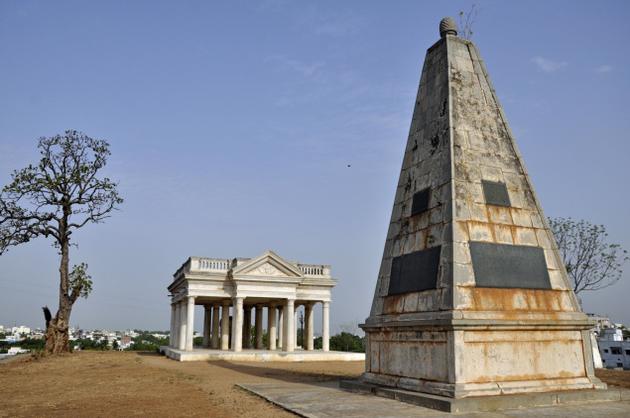
The obelisk, built in memory of French general in Nizam’s army, Monsieur Raymond (1755-1798) and the pavilion atop a hillock east of Hyderabad, now in utter neglect, is being restored by State Archaeology Department. Photo: G.Ramakrishna / The Hindu

Authorities,wake up

The city has added yet another feather to its cap by being chosen to host the prestigious 11 Conference of Parties to the United Nations convention on biological diversity. Authorities are upbeat and justifiably so for the city being chosen over other metros to hold the mega event. Of course, it speaks volumes about the logistics and infrastructure availability in Hyderabad to conduct the event.

Delegates from 194 countries, including some Prime Ministers, are expected to participate in the convention. A good opportunity to showcase the heritage of Hyderabad. But the monuments being shortlisted for the visit of delegates woefully lack amenities and upkeep. Will the authorities take corrective steps between now and October when the international convention is scheduled?

He was the ‘Musa Rahim-Ram’ to people

Michael Joachim Marie Raymond popularly known as Monsieur Raymond was a French general in the Nizam’s military. Son of a merchant, he travelled to Pondicherry in 1775 to set up a merchant shop but instead landed himself the exciting career of a soldier.

In 1796 he was appointed the Controller of Ordnance. Monsieur Raymond set up many cannon ball factories. Top ka Sancha in Urdu for Gunfoundry is the well known foundry in Hyderabad.

In high esteem

Monsieur Raymond was held in high esteem by the Nizam and he also endeared himself to the locals.

To Muslims he was Musa Rahim and to the Hindus – Musa Ram.

Nowadays, testing one’s athletic skills is the only way to have a glimpse of Monsieur Raymond’s tomb at Asmangadh. Visit any time of the day, this monument jointly maintained by the Tourism and Archaeology Departments would be found inside the locked gates. Visitors often jump over the iron gates or the spiked compound wall to get a better view of the obelisk erected in memory of the most loved French General in Nizam’s military during 18 Century.

Never mind that General Michel Joachim Marie Raymond lent his Indianised name Moosaram to the locality. Never mind that the ammunition factory he set up has become a landmark with the name Gun Foundry. He remains an orphan posthumously, with not even his immediate neighbours aware of the importance of the site. No information about the General is provided for visitors who, if not already aware of its history, will leave clueless about the significance of the place.

The only plaque here with any inscription is the one informing about inauguration of the renovation works in 2009, followed by a list of dignitaries on the occasion. The obelisk has four plaques on all four sides, with nothing inscribed on them. Tree stumps surround the pavilion nearby, indicating the unchecked ravaging of greenery.

The compound wall displays a big hole leading to the adjacent slum Bhoolakshmi Colony from where slum dwellers find their way into the complex for a variety of purposes including defecation, consumption of liquor, and playing cricket. Incidentally the watchman from the same colony who is supposed to guard the structure is always absent along with the key.

Glass pieces and construction debris are strewn all around the other two tombstones, one erected in memory of the General’s pets, another for one of his family members. Encroaching into the premises are two temples of varying sizes.

“A month ago, a group of people arrived, chopped off the huge trees inside the compound wall, and carried them away in a truck. When we complained about the large pits they left behind, they returned with construction debris and dumped it in them,” informed a neighbour.

No signage is kept on the main road to indicate the presence of the tomb, though an obscure display is present at the end of the lane leading into the premises.

The very steep approach road is full of pot holes and stones, making it difficult even to walk up.

Nevertheless, the place has visitors, some times foreigners. Unable to find the watchman, they often jump over the gates to have a better view of the tomb, neighbours say. Perhaps the delegates to the ‘Conference of Parties to the Convention on Biological Diversity’ too must prepare their limb joints for the forced exercise!

source: http://www.TheHindu.com / Home> News > National> Cities> Hyderabad / by Swathi V / May 30th, 2012

Shuffle to take Hyderabad places

The city saw a one of its kind event this weekend that dared to step away from the tried and tested cultural events. Hyderabad Shuffle, which yoked together Jazz music and contemporary dance, held a lot of promise.

Hyderabad Shuffle’s aim was to provide a platform to performers with an edge. “Usually we see newbies opening for established performers. But in Hyderabad Shuffle, we reversed it to give more emphasis to the newcomers,” said Rumana Sinha Sehgal, the producer. Rumana, a techie, got into events first through her son’s school programmes. As she gradually started attending more events, what struck her was the cultural scene in Hyderabad was monotonous. She was disheartened.

“We need to break the stereotypes of how Hyderabad just fosters classical artistes. We also need to create awareness to break the image that Hyderabad lags behind Bengaluru and Mumbai in terms of young experimental artforms,” she added.

The idea behind Hyderabad Shuffle was to provide support to newer forms. “In Hyderabad, there is an audience, but venues are lacking. There are right people if you want to put across a show like this,” Rumana pointed out. Rumana now plans to take Hyderabad Shuffle to other cities while retaining the same name. This means that there would be a Hyderabad Shuffle across India featuring different art forms with new talent. “I would love to take Hyderabad Shuffle to the popular Kala Ghoda festival in Mumbai,” she enthused while speaking about future plans.

source: http://www.DeccanChronicle.com / Home> Tabloid> Potpurri / by Samyuktha K. / May 21st, 2012

Hospitality industry booming’

Speakers at a function marking the South India Hospitality Awards 2012 here on Sunday evening said the sector was booming across all parameters, including the financials involved and its employment potential.

Establishments in the sector based in the State capital walked away with a majority of the awards, including 5-star hotels Taj Krishna and Marriott Hotel & Convention Centre, apart from Manasarovar – The Fern bagging the Best Ecotel Hotel award and KVK Event Management, represented by its MD, Murali Koneru, getting recognised in hosting events. In all Hyderabad-based facilities got awards in 22 different categories.

The awards are organised by Epicurus Hospitality Consultants, represented by its MD Nagaraju, who said that from the next year on, they would give away All India Hospitality Awards. A portal, www.telugubhasha.in was also launched on the occasion.

Former MLA Mandali Buddha Prasad, Telugu lyric writer Suddala Ashok Teja, NRI Kuchibotla Anand and representatives of Hotels Association were present.

source: http://www.TheHindu.com / News> States> Andhra Pradesh / by Special Correspondent / Hyderabad, May 21st, 2012


APTDC’s economy south package

Hyderabad:

The Andhra Pradesh Tourism Development Corporation has decided to introduce a South India tour by non-Air Conditioned coach to lure the not-so-affluent sections of society.

At present, the corporation is offering a package of journey by a Volvo climatizer coach and AC accommodation at destinations across south India.

The 14-day tour, organised twice a month on demand from Hyderabad, on 1st and 16th of every month, covers Bengaluru, Srirangapatanam, Mysore, Sravanabelagola, Halebidu, Belur, Guruvayoor, Kochi, Thiruvanantapuram, Suchindram, Kanyakumari, Madurai, Rameswaram, Tiruchi Srirangam, Tanjavur, Kumbakonam, Puducherry, Mahabalipuram, Kanchi, Star temple, Tiruttani and Tirupati.

“This is a very successful package and we have been receiving requests for opening an economy package in the same tour. So we have plans to start the same tour in non-AC segment too,” said a  spokesman.

And when quizzed about the rising temperatures and the inconvenience that might be caused to the travellers, he said, “the summer is almost over and rains are expected by the first week of June. This should not be a concern.”

Further information can be obtained over phone 09848007028/ 040 23450444, 23455999.

source: http://www.expressbuzz.com / Home> States> Andhra Pradesh / Express News Service / May 15th, 2012


Collector’s haven

It’s easy to mistake Dr Y.K. Swapna for an artist.

For her home at Nishath Bagh, Begumpet, makes you believe just that, even as the gynaecologist clears the air about her profession.

Decked with tribal paintings, antique knick-knacks and artifacts picked up during her official trips around the world, her three-storey residence is nothing short of a collector’s haven.

Interestingly, there is no corner in the house – inhabited by her doctor parents, her doctor husband and their two children — that is free of accessories; not even the flight of spiral staircase and the small indoor garden of shrubs.

Built in an eco-friendly way and partly topped by skylights, the house lets in a lot of sunlight during the day. While the fountain next to the staircase lets out a jet of moisture, the shaft running to the top lifts up the cooler air and circulates it. There is also a centralised cooler duct on the top floor housing the guest room, study and kitchen.

The top floor also has over 30 idols of Lord Ganesha in different forms. Dr Swapna, who runs the Swapna Nursing Home nearby along with her mother Dr Y. Savitha Devi, has a fetish for Buddha as well. “I have acquired these artifacts over the years; from street stalls and amateur artists. Many have been passed down by my grandmother, who was a house-proud woman herself,” she says.

Though the walls are largely white, colours have been added through an array of accessories and upholstery. Adding a contemporary touch to the home are tulip downlights in the drawing room, lotus-fretwork on cupboard handles and textured walls and futons in the media room where the family gets together.

source: http://www.DeccanChronicle.com / Home> Tablokd> DC Estate / by Barkha Kumari / DC, Hyderabad / May 12th, 2012