Category Archives: Arts, Culture & Entertainment

Now, Camera Cat to help low vision students

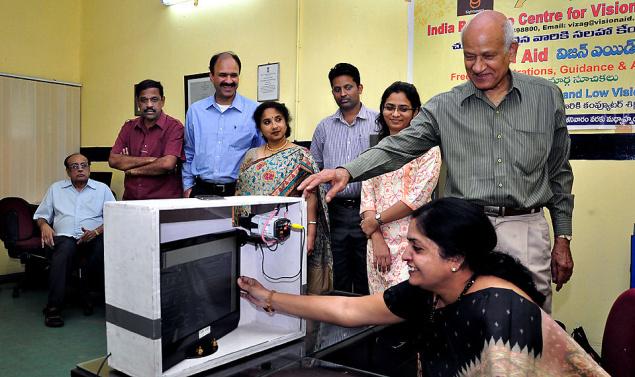
A. Usha Rani, president of Rotary Club of Waltair, observing the working of  ‘Camera Cat’ classroom device for low vision students, after inaugurating it in Visakhapatnam on Saturday. /  Photo: A.Manikanta Kumar / The Hindu .

The portable equipment will cost Rs. 18,000, says Vision-Aid president

Eight years after introducing Camera Mouse, a device that helps low vision persons to read a book or newspaper with small print, Vision-Aid came up with Camera Cat for the sake of students not able to clearly see the teacher and the blackboard in the classroom.

Camera Cat consists of a LED screen to which is attached a camera with a high definition lens that can be focussed on the blackboard. Camera Cat is portable and all its parts are Indian made and it would cost Rs. 18,000 per equipment, compared to Rs. 5 lakh one has to spend to get similar equipment made in the US which is a wireless one, Vision-Aid India president M.S. Raju said. The cost was expected to come down in future, he said.

The Camera Cat was launched by president of Rotary Club, Waltair A. Sudharani at the Vision-Aid Resource Centre located on the premises of GVP Junior College in Dwakaranagar here on Saturday. She also promised to look into the possibility of providing a Camera Cat at a school before March 2013. A low vision student was not able to see the blackboard and would copy the notes from the student sitting next to him. Mr. Raju expected Camera Cat to become popular like the Camera Mouse. So far 700 pieces of Camera Mouse are in use and there was no single complaint, he said.

Book released

Also on the occasion a book, ‘Enabling the Vision Disabled’, was released. This was meant to help the NGOs and others helping the low vision people. The book consists of four monographs on sight evaluation and sight enhancement of vision impaired; computer training for vision impaired; educating and resourcing on assistive devices for vision impaired and orientation and mobility training for vision impaired. It was based on the research findings of the Rockefeller Foundation.

Founder of Vision Aid Inc. USA M. Ramaraju, co-founder Revathi Ramakrishna, senior executives of Royal Commonwealth Society of UK Pooja Sanghvi and Akbar Mehfuz, vice-president of Vision-Aid A. Srinivas, coordinator A.V. Ramesh Kumar and others were present.

Mr. Ramaraju appreciated the efforts being made by Vision-Aid here and the way two visually impaired teachers Ravi Krishna and Surya Krishna could learn to use computer with the help of training provided by the Vision Aid Resource Centre.

Vision Aid Inc. USA was raising funds by organising programmes in the US to help the visually handicapped persons here. Sightsavers organisation and the Royal Commonwealth Society are helping the programmes of Vision-Aid.

source: http://www.TheHindu.com / Home> News> Cities / by Special Correspondent / Visakhapatnam, December 30th, 2012

WTC closes with high hopes on Telugu renaissance

Chief Minister N. Kiran Kumar Reddy greets Union Tourism Minister K. Chiranjeevi in Tirupati on Saturday. / Photo: Nagara Gopal / The Hindu

The Telugu carnival — 4th World Telugu Conference — came to a close here on Saturday night after three days of festivities and literary/cultural programmes, with the response remaining overwhelming till the last minute.

In the end, a sea of humanity thronged the main and all the remaining 10 sub-venues of the WTC in the Veterinary University campus in spite of rain in Tirupati and its vicinity throughout the day, which left the ground slushy.

Whether this was indicative of a new awareness and love for the mother tongue and its culture/heritage, promising a renaissance at least in the near future, will be known in the next few years.

The end result was that more sammelans or avadhanams by poets could be held along with as many mini-conferences on various measures required to ensure the Telugu survival in the face of daily onslaught on it in the Internet age. More than 200 books were released on the occasion and exposure of the language and culture was ensured to the present generation for the first time in the recent years.

At the concluding function, a weaver from Sircilla in Karimnagar district, Nalla Vijay, pulled out a six-metre long decca muslin sari, an age-old weaving art in the State, from a match-box, much to the delight of the vast audience.

The function was delayed by over three hours as Tamil Nadu Governor K. Rosaiah had to reach the city by road from Chennai. Messages sent by Vice-President Hamid Ansari and Prime Minister Manmohan Singh were read out and representatives from countries — US to Nigeria — said they were overjoyed at the turnout which was “unseen and unheard of” for a language-based conference.

Resolutions were adopted to compliment Chief Minister N. Kiran Kumar Reddy for the successful conduct of the WTC, hold the event every five years, organise one in the US in 2017, implement Telugu down to village level, bring academies and Telugu NRI problems under a separate ministry and supply free textbooks to their children.

The Chief Minister complimented all his predecessors, including NTR and Y.S. Rajasekhara Reddy, for efforts they made for the promotion of Telugu. The WTC would be organised down till the mandal level for one year and international convention centres provided to Visakhapatnam and other cities.

Mr. Rosaiah asked Telugus to speak their mother tongue at home and outside, emulating Tamils. Mr. Reddy announced that an AP Bhavan would be built in Chennai on 26 cents of land just allotted for the purpose by the Tamil Nadu government. Union Minister of State for Tourism K. Chiranjeevi appealed to Telugus to replace “mummy-daddy culture” by that of “amma naana”.

Present on the dais were Union HR Minister M. Pallam Raju and a number of Ministers, including Galla Aruna, Vatti Vasanth Kumar, K. Parthasarathy and S. Shailajanath.

source: http://www.TheHindu.com / Home> News> States> Andhra Pradesh  / by M. Malleswara Rao / Tirupati, December 30th, 2012

Pranab Mukherjee inaugurates World Telugu Conference

Stating that languages “reflect the roots” of society, President Pranab Mukherjee today emphasised on the need to create platforms to provide Indian languages greater exposure across the globe.

“There is no dearth of creativity and talent in Indian languages. While Indian writing in English has excited the world, we need to create platforms to provide greater exposure to Indian languages so that the creativity embedded in Indian literature is spread across the world,” he said during the inauguration of the three-day World Telugu Conference here.

Languages are not merely a means of communication, they along with literature are our heritage, he said.

“They define and reflect the roots of our society,” he said.

Government support alone was not enough for promotion of literature and all stakeholders should contribute meaningfully towards preserving and promoting these and Indian languages.

Tracing the evolution of Telugu, which has been declared a classical language in 2008, he said it was important that its antiquity and civilisation must be further explored.

“It is our responsibility to make every effort for its healthy growth and development so that posterity can benefit from the vast knowledge and ideas that rest within this language,” the President said.

Emphasising the need for concrete plans for creating awareness about Telugu language and literature among the youth, he said steps must be taken to consolidate all research works on Telugu history and to identify and encourage new research projects.

Mukherjee said the present conference was an opportunity for eminent personalities, poets, writers, intellectuals and artists to give a new dimension and vision to the language.

Earlier, he laid the foundation stone for an International Convention Centre at the conference site here.

Andhra Pradesh Governor E S L Narasimhan and Chief Minister N Kirankumar Reddy were among those present on the occasion.

source: http://www.Business-Standard.com / Home> General News / by Press Trust of India / Tirupati, December 27th, 2012

Meet the Mark Twain of Urdu humour

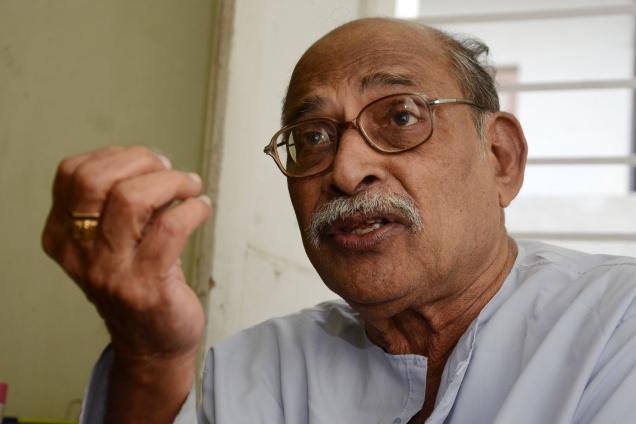
Mujtaba Hussain’s satirical writings in Urdu have regaled readers across the world. / The Hindu

His book ‘Japan Chalo, Japan Chalo’ is considered a unique addition to Indian fiction for its originality and beauty in the travelogue genre

Humour is serious business and humorists by and large are dour-faced souls. Mujtaba Hussain, however, begs to differ. Though he has a stiff upper lip, as one engages in conversation with him his sense of humour comes across. And as the conversation progresses one gets into splits at his tête-à-tête interoperated with a generous dose of pun, repartee and one-liners.

Tickling the funny bone is no child’s play. But Mr. Hussain is doing it for the last half a century. His satirical writings in Urdu have regaled readers across the world so much so that his works have been translated into Oriya, Kanada, Hindi, English, Russian and Japanese languages.

Livelier Sundays

On August 12 he completed 50 years of humour writing. Though age has caught up with him slowing down his movements, there is no let-up in his writing. Even at 76 he serves up essays which are sharp, witty and hilarious. No wonder his hugely popular column in Siasat daily is eagerly looked forward to. In fact it makes Sundays even livelier.

Dubbed as the Mark Twain of Urdu humour, Mr. Hussain doesn’t believe in sitting on laurels even after 25 books, 13 awards, including the coveted Padma Shri. He works tirelessly rather effortlessly to give his best.

From the mundane to the celestial, he has waxed eloquent on every topic under the sun. Neil Armstrong, who died the other day, was also a subject of his column when he landed on the moon. “Chand ki barbadi hogaee, budhiya gayab hogayee…”, he wrote referring to the lore of an old woman working the ‘charkha’.

Trendsetter

His book ‘Japan Chalo, Japan Chalo’ is considered a unique addition to Indian fiction for its originality and beauty in the travelogue genre – something unheard of in Urdu literature.

What is unique about this ‘Qutb Minar’ of Urdu humour is the freshness he brings to his writings. His exuberant style, scintillating humour and cryptic satire makes his works unputdownable. In fact, many persond have learnt Urdu just to read his books.

It was the sudden death of Shahid Siddiqui, a humour writer, in 1962, that gave birth to the writer in Mujtaba Hussain. He was asked to continue the column ‘sheesha-teesha’ written by Siddiqui. “I thought it was a one-day affair. But I got stuck with it and today humour has become my bread and butter”, says Mr. Hussain.

Ceaseless commitment

His commitment to work is so much that even after the death of his daughter in 1963 he came straight to the office from the graveyard and penned the next day’s humorous piece.

His sense of humour seems to have rubbed off on his wife too. After he was conferred Padma Shri in 2007 his phone never stopped ringing. Mr. Hussain was naturally tired answering the congratulatory calls and asked his wife to take them. When the next call came, his wife picked up the phone and the voice on the other end enquired who she was. Mrs. Hussain shot back “mai Padma Shri ki shrimati bol rahi hoon.”

source: http://www.thehindu.com / Home> News> Cities> Hyderabad / by J.S. Ifthekhar / August 31st, 2012

Diamond-studded pen a big draw at Hyderabad book fair

Hyderabad :

One of the world’s costliest pen at Rs 75 lakh along with books on motivation, religion and fiction drew hundreds of Hyderabadis to the annual book fair in the city, with some even buying the white gold and 650 diamond-encrusted pen as gifts to mark the Christmas.

Organisers said the 27th Hyderabad book fair  was bigger compared to last year with 288 stalls and 40 more stalls erected due to high demand. The The 12-day fair came to an end on Christmas day with thousands swarming in to buy books and gifts on the concluding day.

“There were book launches almost everyday, especially local language books and poem collections, and they were a big hit,” said R Hanmanth Rao, president of the Hyderabad Book Fair Society.

Incidentally, the fair also had other attractions beside books. There were educational toys, scientific aids and pens and for the first time in Hyderabad, Emonte Pens Private Limited introduced a Ripple HRH, a fountain pen which was worth Rs 75 lakh, organisers said. The white gold and diamond-encrusted pen has only 39 pieces worldwide and has been a great crowd-puller here. There were a few buyers who bought this precious pen.

“But we cannot disclose the names of the buyers due to our company policy,” said Swapnil Kennedy, regional manager, South India. “It’s not just elite sections alone, but we have special pens for even the common man. The price range starts at Rs 75 and go up to 75 lakhs.”

One ivory fountain pen, worth Rs 2 lakh was also sought after by people at the fair. The modestly priced pens with magnetic caps make them a favourite with many enthusiasts. “The price range of fountain pens starts from Rs 2,000 and buyers mostly want pens in the range of Rs 500 to Rs 1000,” said Kennedy.

“I am coming here for the second time to show the pen to my grandchildren,” said Komala Valli, a retired government employee.

Major publishers like Harper Collins, Cambridge University Press, Oxford University and Pearson were among those present and people were seen ambling across the fair carrying books in hand.

Interestingly, one of the most popular books in the fair being Tirumala Tirupati Devastanams’ (TTD) 15-volume Mahabharata. Priced at Rs 2,315, the book was bought by many history lovers and retired people.

source: http://www.timesofindia.indiatimes.com / Home> City> Hyderabad / TNN / December 26th, 2012

Hyderabad girl, Panipat guy win Internet-based talent hunt


Hyderabad girl Pragya Patra and Rohit Sehgal from Panipat won MOBisur, a mobile and Internet-based singing talent hunt launched by composer-signer Shankar Mahadevan.

The winners received a cash prize of Rs5 lakh and will get an opportunity to record an album with Shankar, which will be released by T-Series and Hungama.

There were six finalists and final decision was taken by the jury members — Shankar and singers Soumini Paul and Tulsi Kumar.

“It has been an incredible and challenging experience to filter and select the best of what India’s rich talent pool has to offer. I am extremely happy that we have successfully selected the right winners,” Shankar said in a statement.

The motive behind launching MOBisur was to gather musical talent from every corner of India through the power of digital medium.

“We received an overwhelming response in the first edition, which has reaffirmed our faith in the digital talent hunt,” he added.

Launched in July, “MOBisur” gave participants the chance to engage in a unique audition format, which required them to either dial in and record a song or perform and upload a video online.

source: http://www.dnaindia.com / Daily News & Analysis / Home> Entertainment> Report / Place: New Delhi, Agency: DNA / December 24th, 2012

Coping with the royal order

John Burton, a Scottish tailor, delivered 60 overcoats and an equal number of shirts and trousers in less than six hours to the seventh Nizam, who attended the midnight mass at St. John’s Cathedral, Gunfoundry on December 24, 1950

There is utter bedlam. Expensive cloth is scattered all over. Scores of tailors are at work — frantically cutting cloth with trouser and shirt pieces lying in various stages of stitching.

Amid all this disarray, a suited gentleman, pipe in hand, is hollering around.

The shop in Secunderabad is busier than a beehive. Is there a meaning to this madness?

Yes, if you only know who the tailor is and the job at hand. Put the clock back by 62 years and the pieces of jigsaw puzzle fall in place.

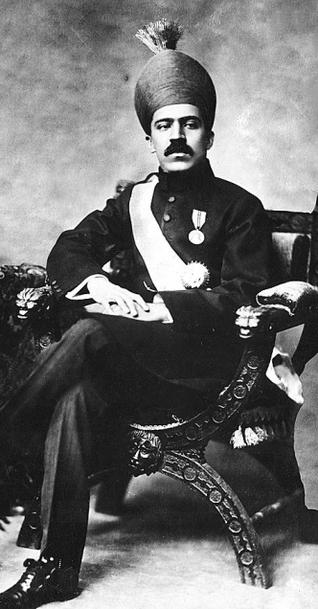
Mir Osman Ali Khan, the Seventh Nizam of Hyderabad. / The Hindu /

December 24, 1950. The time is 6 p.m. John Burton has just had an audience with the seventh Nizam, Mir Osman Ali Khan.

And he is faced with the million dollar question — how to cope with the ‘shahi hukum’ (royal order).

Tall order

It’s a tall order indeed. Sixty overcoats and an equal number of trousers and shirts to be stitched and delivered in less than six hours – just in time for the midnight mass.

“That explains the mortal hurry,” says M.A. Qaiyum, former assistant director, Archaeology and Museums Department, recalling the event.

A difficult command no doubt, but not altogether impossible.

Especially for John Burton, the Scottish tailor par excellence.

Did he rise to the occasion? Yes, he certainly did.

Tailors summoned

It only meant summoning all the tailors in the town and working like mad.

When appointed as the royal outfitter, Burton knew that none could say ‘no’ to the Nizam. Schedules had to be kept and eccentric demands met – even at short notices.

Donning a black suit, the Nizam trooped into the St. Joseph’s Cathedral at Gunfoundry along with 60 courtiers in time for the midnight mass. Osman Ali Khan was a frequent visitor to this church and often attended the mass.

The clock on the tower, the European oil painting of the Blessed Mother and Christ as a child and the chandeliers were gifted by him in February 17, 1953.

The man who called Hindus and Muslims his two eyes, was generous with donations, though he was personally frugal.

Recipients of his munificence included mosques, temples, churches and gurdwaras. The Nizam even penned a Christmas poem in Persian. Its English translation by Sir Nizamath Jung reads thus:

What was Jesus’ mission, Osman?

Ask them whom He came to guide

Gave His life for their redemption

For His flock he gladly died!

source: http://www.TheHindu.com / Home> News> Cities> Hyderabad / by J. S. Ifthekhar / December 25th, 2012

The ‘sultan’ of kababs

The kababs have been given historic names to redefine the great hospitality of Hyderabad, says M.A. Basith

You have seen the historic Charminar. But have you ever relished the Kabab-e-Charminar? One sure has set eyes on the Golconda fort. But none ever sampled the Golconda Pahadi kabab. The same goes with Falaknuma and Chowmahalla too.

For the first time, one can sink teeth into succulent kababs named after the bewitching palaces and monuments of Hyderabad. And sure enough they live up to the mighty names they carry and taste as well.

One don’t have to go down to the old city to savour these mouth-watering delicacies. The shahi spread is available bang in the Eat Street on Necklace Road.

Sultans Biryani and Kababs, which opened here recently, has become the toast of the town. The Hyderabadi cuisine was something missing here and Sultans has filled this space.

A young techie, M.A. Basith, is behind this venture. Apparently, there is no connection between the world of software and haute cuisine.

But since the discovery of a new dish does more to human happiness than the discovery of a new star, Mr. Basith has chosen to put his software skills to tickle the taste buds.

Why the historic names? “I want to redefine the great hospitality of Hyderabad and what better way than to name the dishes after the erstwhile rulers,” he says.

So you have Asaf Jahi kababs, Qutb Shahi kababs, Falaknuma kababs to name a few. Other exotic names go like this: Murgh Shahana, Pathar Gosht, Tunday Galauti kabab.

Well, Hyderabad is known for its biryani. But Mr. Basith plans to promote the luscious kababs as a brand.

Of course he also serves the Sultan ki Biryani. Soon he proposes to come out with Handi-ki-Biryani, an authentic biryani which is cooked in the earthen ‘handi’ only.

Given its strategic location, Eat Street attracts not just the tourists, yuppies but also the commoners from both Hyderabad and Secunderabad.

“Delicious kababs are something one would like to enjoy while savouring the picturesque Husainsagar,” says Ramesh, a tourist.

Sultans has a live kitchen where one can see the dish of his choice being cooked. Kababs apart from the Sultani Sheermal, Ajwain Naan and Chironjee Naan are something to look forward to.

With a view to promote the rich culture and hospitality of Hyderabad, Sultans plans to hold a quiz competition on a regular basis. The winners will get free meals and free boat rides in the Hussainsagar. Howzatt!

source: http://www.TheHindu.com / Home> News> Cities> Hyderabad / by J. S. Ifthekhar / december 25th, 2012

Sahitya Akademi Award for writer Subbaramaiah

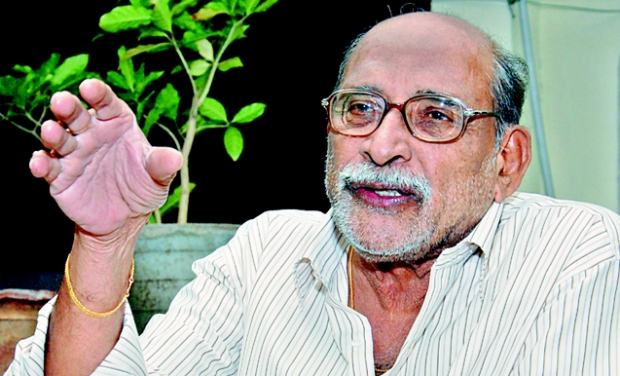
Peddibhotla Subbaramaiah

He has lived here for five and half decades. For four decades he taught Special Telugu in the Andhra Loyola College (ALC). The talent of Peddibhotla Subbaramaiah as short-story writer was recognised only recently. The Central Sahitya Akademi conferred on him its prestigious ‘puraskar’ (award).

A few days earlier he was selected for the prestigious Appajosyula Vishnubhotla Kandalam Foundation Award. A rack full of plaques of different materials and types welcomes visitors to the veranda of his house in Hanumanpet. There were many more, but he lost them during the several times he changed his house. Somebody was kind enough to give the rack to put the different plaques and mementoes given to him, he told The Hindu.

It is very evident that Mr. Subbaramaiah is the sensitive and shy types. When the Rotary Club wanted to felicitate him he declined. He asked the club to organise a meeting of writers instead. When they tried to felicitate him at the meeting he refused and narrated a bizarre story.

Mr. Subbaramaiah told the audience that he did not want to be felicitated because of the red chair (red throne like chairs were used at that time for felicitation) because he saw a group of people trying to photograph a dead body after decorating it on such a chair. It is such sensitivity that made him a short-story writer.

The death of a migrant (from Tamil Nadu) factory worker was the inspiration for a story. One day he saw a woman weeping by the body of a man. “People are so indifferent to such scenes, but I stopped and enquired about the couple. I was told that they are from Tamil Nadu. They fell in love and eloped when their families did not agree to their marriage. Their search for a livelihood brought them to Vijayawada. The man became sick here and died leaving the woman behind,” Mr. Subbaramaiah said.

The story he wrote is about a tea shop owner helping the woman, who lost her husband, has no friends and does not even know Telugu. Others attribute motives to this act of kindness and even ostracise the tea shop owner, but the man continues to take care of the woman until people come for her.

The observations made by another migrant worker, this time from the water-parched Rayalaseema became the inspiration for his short-story “Neellu”. “This man was amazed by the high level of water in the wells here. One day we went to see the Krishna river which was in spate. The man said that he never saw so much water in his life. This became the inspiration for a story,” Mr. Subbaramaiah said.

“The plight, anguish, frustrations and the jealousies of middle class people were the raw material of my stories,” he added. He thanks his teachers for his achievements and awards.

Son of a Railway Station Master, Mr. Subbaramaiah did his schooling in Ongole. But for his college he came to Vijayawada and became a student of none other than Viswanatha Satyanaryana, the author of “Veyyi padagalu”, and a lecturer of SRR and CVR College.

source: http://www.TheHindu.com / Home> News> Cities / by G. Venkataramana Rao / Vijayawada, December 25th, 2012

Peddibhotla gets sahitya award for short story

Peddibhotla Subbaramaiah.

New Delhi/Vijayawada:

Peddibhotla Subbaramaiah’s short story collection Peddibhotia Subbaramaiah Kathalu (Vol. 1) has been selected for a Sahitya Akademi Award.

Expressing happiness about the award, the writer observed that the recognition would be good for other authors.

A recipient of many awards including the Ravi Sastry Smaraka Sahitya Nidhi, Gopichand Memorial, Appajyosyula Puraskar etc., Subbaramaiah’s two volumes have 80 stories that reflect the common man’s lives.

Subbaramaiah started writing in 1959

Peddibhotla Subbaramaiah, who has been selected for a Sahitya Akademi Award, started writing in 1959.

His first story Chakranemi was published in the weekly Andhra Patrika. He later wrote several stories and two novels for Bharati magazine.

Subbaramaiah served as a lecturer in Andhra Loyola College for 40 years and retired in December 1996.

The author, who has written more than 200 stories, believes that childhood education leaves an impact on the development of any person.

Sitting in the veranda of his house on Thursday, the writer expressed concern over the sprouting of concrete jungles in cities and lamented that people were missing an opportunity to enjoy nature and think freely in their busy lives.

Booker-nominated Jeet Thayil and Bengali novelist Subrata Mukhopadhyaya were among the 24 authors selected for this year’s Sahitya Akademi Awards, which was dominated by poets.
Twelve of the 24 awards went to works of poets, which included K. Sachitandandan (Malayalam — Marannu Vacha Vazhikal), late Bal Krishna “Bhaura” (Dogri — Tim-Tim Karde Tare) and Makhan Lal Kanwal (Kashmiri — Yath Aangnaz Manz).

Thayil, whose novel Narcopolis was shortlisted for a Booker, was selected for his poetry collection These Errors are Correct in the English category.

Twelve books of poetry, six short story collections, four novels and one each of autobiography and criticism were selected for the awards this year, two of them posthumously.

The awards were given to books first published between January 2008 and December 2010. It carries Rs 1 lakh cash, an engraved copper plaque and a shawl.

Among the poets, other winners are Guneswar Musahary (Bodo — Boro Khonthai), Chandrakant Devtale (Hindi — Pathar Fenk Raha Hoon), H.S. Shivaprakash (Kannada — Mabbina Haage Kabniveyassi), Kashinath Shamba Lolienkar (Konkani — Kavyasutra) and Darsan Buttar (Punjabi — Maha Kambani).

Aaidan Singh Bhatti (Rajasthani — Aankh Hinye Ra Hariyal Sapana), Ramji Thakkura (Sanskrit — Laghupadhyaprhbandhatrayi) and Krishna Kumar Toor (Urdu — Ghurfa-i-Ghalib) were the other poets who were selected for the award.

Assamese writer Chandana Goswami was selected for her novel Patkair Loare More Desh while Mukhopadhyaya was selected for his fiction Birasan. Other novelists were Jodha C. Sanasam (Manipuri — Mathou Kanba DNA) and D. Selvaraj (Tamil — Thol).

In Gujarati, Chandrakant Topiwala’s critical study, Gujarati Sakshibhasya, was selected for the award while in Maithili, Shefalika Verma’s autobiography Kist-Kist Jeewan won the award.

Apart from Subbaramaiah, works of five others won for short story collections. They were Jayant Pawar’s Marathi collection Phoenixchya Rakhetun Uthala Mor, Uday Thulung’s Ekantvas (Nepali), Gourahari Das’s Kanta O’ Anyanya Galpa (Odia), Gangadhar Hansda’s Banchaw Akan Goj Hor (Santali) and Late Indra Vaswani’s Miteea Khaan Miteea Taaeen (Sindi).

source: http://www.DeccanChronicle.com / Home> News> Current Affairs / DC,  December 21st, 2012