Category Archives: Arts, Culture & Entertainment

The palace that saw history unfold

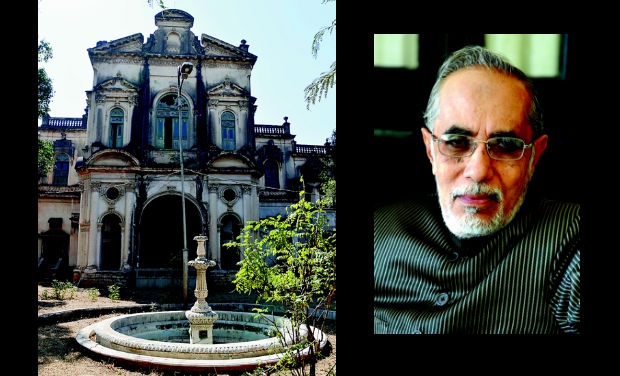
Nazri Bagh is the palace that has seen history unfold in Hyderabad. It’s the palace of the king — the Nizam VII, Mir Osman Ali Khan. It was the seat of power and the development of modern Hyderabad is linked to the decisions taken in this palace.

The Nizam VII was born on April 6, 1886 at Purani Haveli and spent his childhood there. Subsequently, he shifted to Eden Garden. Facing Eden Garden was a great deodi or palace known as Kamal Khan Ki deodi. It is said that Nawab Kamal Khan invited Nizam VII to his deodi to attend a function. Nizam VII saw the Kamal Khan Ki Deodi and liked it. Maharaja Kishen Prasad tried to persuade Nizam VI to purchase that deodi for his sixteen year old heir-apparent, but failed.

Subsequently, the Maharaja successfully persuaded the Nizam VI to purchase it. When Nizam VI sent word to Kamal Khan to sell it to Nizam VI, it is said that he gifted the Deodi, which is now known as King Kothi.

When Nizam VII was staying at Osman Mansion, King Kothi was used as a banquet hall. At that point in time, it is said that two sisters in white sarees called on the Nizam VII and presented a piece of land measuring five acres. In other words this presentation is also called the oblation. Nizam VII accepted it and the two ladies left India for Damascus. On this piece of land, a new palace was constructed between 1907-1909 and the Nizam VII shifted to that palace which is popularly called as Nazri Bagh.

It was the centre of all activities till 1948. The Nizam ruled the state from this historical palace. Nazri Bagh is one among the many monuments protected by the efforts of Princess Esra Jah.

The administrator of Nizam’s Private Estate, Dr Ameenuddin Khan, a well known HR consultant, is looking after this palace now. The Nizam used to enter the palace, which has six steps presumably in the memory of six Nizams, and sit everyday on the sixth step and rub the step. The step has changed its shape and looks like a polished stone because of the rubbing daily for almost six decades by the Nizam.

On the left side of the sixth step, he used to write on a pillar which was a black board for him. He used to write orders, poems etc. on the pillar. The pillar has been protected. A telephone used to be kept on the pedestal, which had a number 001.

There is another verandah which was used by the Nizam daily at 4 pm to have his evening tea there.

The writer is an author, researcher, advocate and secretary of the Mukarram Jah Trust

source: http://www.DeccanChronicle.com / Home> News> Lifestyle> Travel / DC, by Mir Kamaluddin Ali Khan / Januaryn20th, 2013
‘Happy with outcome’

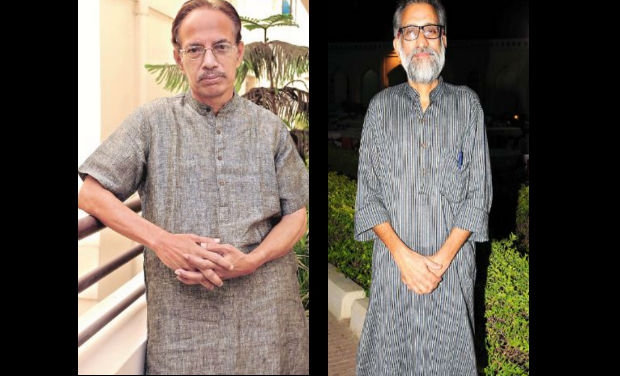
As the Hyderabad Literary Fest concluded at Taramati Baradari on Sunday, all that organiser G. Surya Prakash Rao wanted to do was “unwind.” While G.S.P., as he is fondly called, unwinds at home, his partner T. Vijay Kumar had to drag himself to the Osmania University where he teaches English the next day.

But like all things, there were some regrets despite the fest’s success in its third edition. For instance, big names like Javed Akhtar, Shabana Azmi, Girish Karnad and Jhumpa Lahiri could not be roped in because of their busy schedule (which some pronounced as a failure of the fest).

G.S.P., who is the editor of the online magazine Muse India, defends. “Writer Mushirul Hasan got stuck in China. Pakistani writer Dr Nukhbah Langah got entangled in visa formalities. Linguistic expert Prof. Ganesh N. Devy intimated his unavailability just a night before his session. We can try, and have tried, to get the best on board but not everything is in our hands. Also, our focus is to get new writers every time.”

Kumar was more forthcoming when asked why the audience turn out was low. “We are not as big as the Jaipur Fest. We have just started. We did not have the money or the corporate backing to grab eyeballs. Yes, we could not afford celebrity writers. In fact, most of the help came not in form of cash, but in kind. While many writers came on their own, some were sponsored by their publishers, and others by our sponsors. For cash, we had to really scrape the bottom.”

The two also accept a centrally located venue instead of Maulana Azad National University would have got more footfall. But G.S.P. reasons, “We needed a venue that can have auditoriums, lecture halls and guest houses. State tourism opened Taramati Baradari for our writers. Where else is such a venue available in the city?” Despite the “misses”, they achieved what they envisioned.

“We want Hyderabad to recognise the fest as its own, not just ours. Hyderabad stands for multi culturalism and multi lingualism and so did our fest. We are happy with the outcome,” said Kumar

source: http://www.DeccanChronicle.com / Home> News>  LifeStyle> Books/Art / DC, by Barkha Kumari / January 22nd, 2013

India unfolds through maps

Hyderabad :

A compelling narrative of ‘Hindustan’ through maps, followed by enticing tales from the days of Nizami rule in Hyderabad is what sums up the ‘flavour’ of the session, ‘Charting History: with ManosiLahiri and Narendra Luther,’ that unfolded on Day 2 of the Hyderabad Literary Festival at Manuu on Saturday.

Lahiri who has recently authored ‘Mapping India’ took the audience through her compilation, which is a collection of maps created by the many foreign ‘forces’ that ruled India at one point in time. From the Portuguese to the Dutch to the French and later to the British, everybody ‘mapped’ India according to their trading interests in the country, the book documents. Predictably, these maps, noticeably different from the once drawn in modern times show pockets rich in spices, indigo, opium and also textiles.

“These were made by traders,” Lahiri explained while moving from one period in history to the other. What seemed to catch the fancy of many was a 1773 map that showed all the factories established along India’s coast by the foreign invaders.

Also interesting was a map dating back to the Mughal period that depicted Aurangabad complete with its famous Ajanta Caves and the sculptures it houses. “This shows that these maps, when drawn, were not just about places but also depicted what life in India was all about,” the author said.

Noted city historian, Luther, known for his unmatched knowledge of Hyderabad gave the gathering a quick sneak peak into his forthcoming work ‘Legendotes’ that he said were legendary anecdotes (pertaining to the city and its rulers) that were factually correct.

His many tales about Hyderabad’s Nizams, especially the sixth Nizam, Mir Mahboob Ali Khan, made the session not just informative but also very gripping. Be it the story about the Nizam’s ‘style quotient’ and his 224-feet-long wardrobe, or the revelation about Hyderabad being built in the design of the ‘Islamic heaven’, Luther’s narratives ensured that the gathering remained glued to their seats.

“I first went to see the wardrobe (in Purani Haveli) in 1991. There was just a pair of shoes and some other accessories. Interestingly, the manufacturer’s label on the shoes was still clearly visible,” Luther said while talking about the Nizam who never wore a piece of clothing twice. His half-hour-long talk also upheld the blend of cultures that existed in Hyderabad until the ‘new age’ set in.

source: http://www.articles.timesofindia.indiatimes.com / Home> City> Hyderabad / TNN / January 20th, 2013

Photo exhibition on thoughts opened

Vijayawada:

Thoughts — a thought-provoking photographs exhibition was inaugurated at Kaladarshini in Andhra Loyola College here on Saturday.

Over 125 photographs of life’s moments were exhibited. Thoughts Volume II, with 125 photographs accompanied with comments was released on the occasion.

Speaking to this newspaper, the artist and photographer Madhu Smitha Pothineni said that her five-year-old son Akhil is an inspiration for her to develop the hobby.

When asked about her efforts to capture the moments of life, she said that she never took pains. Majority of the photographs were captured in Hyderabad, Vijayawada and some villages of Krishna district including, Challapalli, Avanigadda and Kuchipudi during routine family visits.

She said that she is interested in capturing old memories. Whenever she goes out with family members she carries her camera and takes the photographs.

She said that her love for colours brought her close to photography and she revealed her expression through the photo captions. The artist said that she released her first book Thoughts Vol I — a 250-page collection of photographs in Hyderabad last year. Now, her grand-parents Ravi Chalapati Rao and Radha released her second book Thoughts Vol II here on Saturday. The exhibition will be open for public till January 27.

source: http://www.DeccanChronicle.com / Home> News> Current Affairs / Vijayawada, DC, January 20th, 2013

1,000 pillar temple is 850 years old

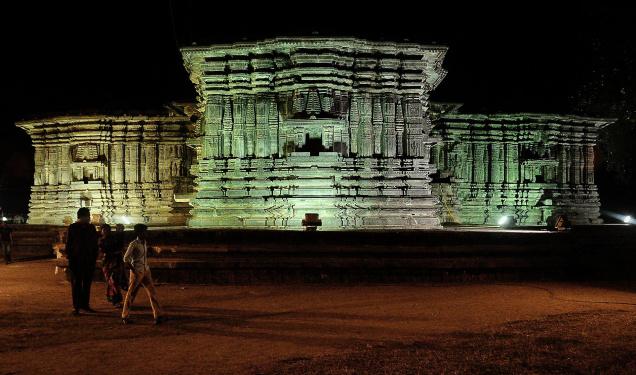
Majestic: The historic Thousand Pillar temple was illuminated on completion of 850 years in Hanamkonda of Warangal district on Saturday. /  Photo: M. Murali / The Hindu

The temple was built by Kakatiya king Rudradeva and the deity is Rudreshwara Swamy, a personification of Lord Shiva

The historic Thousand Pillar temple in the Hanamkonda town, the great legacy of Kakatiya kings, completed 850 years of existence luring tourists from across the globe.

Until few years ago, it was in bad shape with fallen columns, roof and broken statues and abandoned. It was a concerned citizen Gangu Upendra Sharma who took the initiative and turned it around. Since he started daily pujas, people began visiting the temple.

Three years ago, the Government of India sanctioned Rs. 3 crore for restoration of Kalayana Mandapam in 2005 which is being executed.

Speaking to The Hindu, Mr. Gangu Upendra Sharma said “This was built on ‘Magha Shudda Trayodashi (Thursday)’ of Chitrabanu year of Shalivahanashakam which according to the Gregorian calendar is January 19 of 1163.”

The temple was built by Kakatiya king Rudradeva. The temple deity is Rudreshwara Swamy, a personification of Lord Shiva since the Kakatiya kings had a special devotion for Shiva.

The historians opined that the temple deity has actually been named after the king Rudradeva in line with the traditions of that time hence the name Sri Rudreshwara Swamy Temple.

According to retired Telugu professor Hari Siva Kumar, the temple came to be known as Thousand Pillar because there were about 300 pillars or shapes of pillars both small and big that make the temple complete.

The sculptural beauty of the temple is a reminiscent of the rich cultural of heritage of Kakatiya Kingdom.

The intricate designs and carvings at the temple have always been a riddle to common public visiting the temple from different parts of the country and the world.

Mr. Sharma laments that there was no adequate publicity given to this majestic structure.

“The Archaeological Survey of India should publish photographs and bring out a monograph for the benefit of tourists visiting this place,” he says.

He also wanted the State and Central governments to ensure early completion of ongoing restoration works on the Kalyana Mandapam.

soource: http://www.TheHindu.com / Home> News> States> Andhra Pradesh / by Special Correspondent / Warangal, January 20th, 2013

Cupping therapy gains momentum in Hyderabad

Cupping therapy, an ancient Chinese therapy also known as hijama in Arabic, draw 500 – 800 patients in the City every day, doctors say.

According to experts, this unconventional therapy, which combines acupressure and acupuncture, is used for curing various diseases, both chronic and mild.

Though this is known to the world as traditional Chinese medicine, several Unani doctors in Hyderabad claim this is a science from West Asia. Most of the cupping therapy centres are located in Medhipatnam and surrounding areas.

This therapy is part of a major branch of medicine known as ‘regimental therapy,’ taught in Unani medicine. Dr Md Ahsan Farooqui, assistant professor at the postgraduate department of medicine, Government Unani College, was the first documented person to perform hijama in India.

Having been reduced to theory rather than practice until recent years, this doctor thought of reviving the therapy in India and performed the first trial in 2008. He said one of the reasons this is gaining acceptance among traditional Muslim families is due to the reference of this therapy as pain reliever in the ‘discourses of Muhammed’ (Hadith).

Claiming to attend to about 15,000 cases in various parts of country, Dr Farooqui demonstrated the therapy to medical students and postgraduates in Delhi, Kolkata and Kozhikode.

With the increasing acceptance from various sections of the society, these therapy centres are burgeoning in areas like Tolichowki and parts of Old City. According to the doctor, the number of patients visiting these centres every day is around 500-800. Though there are about 50 centres giving this therapy, those that are considered to be of good standards, with well qualified therapists, are few.

Each session stretches to an average of four weeks, with four sittings per week. Private clinics charge between `2,000 and `2,600. Obesity, thyroid, skin diseases, back pain, cervical spondylitis, liver diseases, varicose veins, brain tumour and paralysis are some of the diseases that can be treated with cupping therapy. With the success percentage comparatively higher than acupuncture and acupressure, doctors predict a bright future for it.

N Arun Kumar, acupuncturist and hypnotherapist based in Secunderabad, combines acupuncture with cupping therapy. “I learned this from my visits to the far-East, where it is widely practiced,” he said.

Some doctors like Musab Hashmi, who recently developed a love for this therapy, are following the lunar calendar, and arranging special camps for patients. “As it is mentioned in some hadiths (sayings of prophet), there are few important dates on which this could be done. Interestingly, I am getting good results when I perform hijama on these days.”

source: http://www.postnoon.com / Home> City / by Md. Nizamuddin / January 20th, 2013

“The West has looked little beyond Sanskrit works”

Noted poet and literary personality K. Satchidanandan felt the West’s interest in Indian writing in English could be of mere anthropological significance and not genuinely literary. Its expectations of the Indian literature are informed by Eurocentricism, even when it comes to English translations of Indian language works, he noted.

Mr. Satchidanandan, who writes in both English and Malayalam, spoke in a panel discussion on the topic ‘Indian Writing — At Home in the World?’ at the ongoing Hyderabad Literary Festival in the Maulana Azad National Urdu University (MANUU) here on Saturday.

Calling the idea of Indian literature as ‘Orientalist construct’, he drew instances from the various histories of Indian literature chronicled by western scholars such as Albert Weber, Max Mueller, and Robert Fraser, which mostly focussed on works in Sanskrit language.

Despite having 2,000 years of known history, Tamil found no mention in their chronicles, nor did the works from Bhakti movement or Sufi tradition, he noted.

“Several texts, even in Sanskrit, were ignored. Only those of high tradition were chosen, which later became material for cultural nationalism,” he said. Wondering if the interest in post-colonial literature was only ‘imperial nostalgia’, Mr. Satchidanandan said Indian writing should not be understood only as the literature produced in English.

However, renowned literary critic and theorist Bill Ashcroft had a good word for ‘linguistic felicity’ of Indian writers, while another panellist Tabish Khair noted that writings in metropolitan settings have more visibility than the small town settings.

Earlier in the day, geographer Manosi Lahiri gave a brief introduction to her work ‘Mapping India’, which traced the mapping tools used since ancient times, till modern maps drawn to the scale evolved. “,” she added.

Author Narendra Luther recounted historical anecdotes specific to Hyderabad.

Attendance on the second day dwindled when compared with the first day of the festival, and more than three-fourths of the gallery was empty during morning sessions.

However, delegates began arriving later in the day, and post-noon sessions had reasonable audience.

Reading sessions continued on the second day too, while a workshop in Haiku writing was conducted by Gabriel Rosenstock and Kala Ramesh. The three-day festival will continue and conclude on Sunday.

source: http://www.thehindu.com / Home> News> Cities> Hyderabad / January 20th, 2013

15 more buildings get heritage tag

Hyderabad :

Fifteen more structures have been declared ‘heritage buildings’ by the municipal administration and urban development (MA&UD) department on the recommendations of the Heritage Conservation Committee  (HCC) of the Hyderabad Metropolitan Development Authority (HMDA).

According to a government order (GO) issued by the MA&UD department on Thursday, Shamshabad police station (old), Shamshabad; Maniyar Patt Masjid, Kutbiguda; Daira Kaman, Zamistanpur; Gate portion of Monda Market; St Sebastian Church, Regimental Bazar; Past Office of Nizam’s government at RTC Crossroads; Madigonda Shankeraiah Mutt, main road Kavadiguda; Ammapally Sita Ramachandra Swamy temple, Ammapally near Shamshabad; Mahalaka Chanda step-well, Eflu, Tarnaka; Islamiah High School, Monda Market; Vivek Vardhini School, Jambagh Road; Sudhir Naik Residence, Gowliguda; Rahat Manzil at Saidabad; Aziz Bagh, Noorkhan Bazaar and State Bank of India  building, Koti, have been declared heritage buildings.

Though the Heritage Conservation Committee had also recommended Moosi Maternity and General Hospital , New Malakpet; as a heritage building, it was not considered by the state government as it is hidden by constructions.

According to the GO, HCC had listed out these buildings at its 112, 115 and 121 meetings and asked the HMDA  to issue a notification inviting objections and suggestions from the public in May 2011. Fourteen suggestions and two objections were received to the notification. The two objections pertained to SBI, Koti; and Moosi Maternity Hospital. The MA&UD department considered the objection on declaring Moosi Maternity Hospital as a heritage building and deleted it from the list.

As of now, 151 buildings and 30 heritage precincts have been declared as heritage buildings by the HMDA and with the inclusion of 15, the number of heritage buildings rose to 166.

source: http://www.timesofindia.indiatimes.com / Home> City / TNN / January 18th, 2013

Punjab da swaad in Hyderabad

Novotel Hyderabad Convention Centre (NHCC) is hosting the ‘Asli Punjab Da’ food festival at The Square till January 20.


The ongoing food fest has brought to the city the glorious flavors from the land of Punjab. The festival will also mark the celebrations of Lohri and Sankranti with specialty guest chef, Sweety Singh enticing the palates of Hyderabadi foodies with his culinary treats.

During the festival, NHCC will serve mouth-watering, aromatic and delicious Punjabi delicacies. Chef Singh will use authentic ingredients and techniques to dish out fare like murg tikka anari, ghost ka saag, makki di roti, sarson da saag, doodhi halwa and many more.

Commenting on this initiative, Shyam Sunder, manager F&B, Novotel Hyderabad Convention Centre, says, “The Asli Punjab Da festival aims to offer the quintessential taste of authentic Punjabi dishes to our customers. Our specialty chef has blended spices to give a moderntouch to the cuisine. The guests can treat their taste buds to some spicy flavors and indulge in mouth-watering fare this season at Novotel”

Upcoming events

Spoil yourself Silly: The Berry Berry Delicious Strawberry Fest is back. Till January 17 at Le Cafe

Republic Day Lunch: January 26, 12 pm onwards at The Square

Full Moon Dine: Dine with your loved ones under the magical aura every full moon (pournima) with a special thali. January 27, 7.30pm onwards, at La Cantina

Snack like a King: A delicious variety of snacks enjoyed best with your favorite beverages. Till January 31, 9 pm onwards, at La Cantina

source: http://www.timesofindia.indiatimes.com / Home> Life & Style> Food> Food Festivals / TNN /  January 16th, 2013

Hyd literary fete to focus on Telugu

A three-day Hyderabad Literary Festival (HLF) is all set to begin on January 18 at Moulana Azad National Urdu University here.

The festival, organised by Muse India, a literary e-journal, will include literary discussions, cultural evenings and a new segment called “Language in Focus.”

“Since Telugu is the language of our state, we have chosen Telugu as this year’s language in focus, however other programmes include conversations with authors, readings, panel discussions, workshops, book launches, cultural programmes,” said professor T Vijay Kumar, member of organising committee. This year’s HLF will present France as the guest nation.

This segment will bring in six participants from France including French author Kenize Mourad and Vaiju Naravane, a senior journalist.  This  year of HLF will have a special discussions on endangered languages and cultural traditions. The Goethe-Zentrum as a part of the finale of the German year in India will present Theresa Hahl slam-poet from Germany, Mangala Bhat Kathak dancer and Pianist Daniel Gomez.

The dates of HLF 2013 and Jaipur Literary Festival 2013 will not clash and are perfectly placed.

“HLF 2013 concludes on January 20 and JLF 2013 begins on January 25, making it convenient for participants to attend this fest and then go on to Jaipur,” he said.

source: http://www.DeccanHerald.com / Home> National / Hyderabad,  DHNS / January 13th, 2013