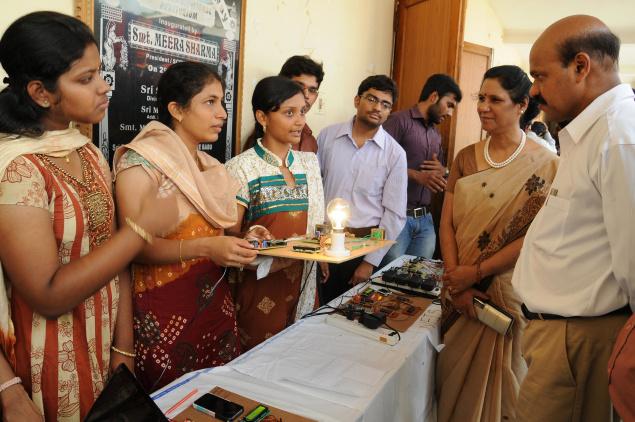


About 100 students designed projects on safety in railways including automatic coach guidance, signal control system and submitted a thesis to the South Central Railway (SCR) authorities.
The engineering students who designed the circuits and software programmes displayed them before the Vijayawada Division Railway officials at Railway Auditorium on Friday. The projects would be useful both for the railways and passengers, said the students.
Vijayawada Additional Divisional Railway Manager S. Subba Rao, SCR Women’s Welfare Organisation president Priti Awasthi and heads of various departments visited the software products exhibition. Ms. Awasthi praised the budding engineers for designing the projects with innovative ideas.
Alerts for driver
Four students of Electronics and Communication Engineering of Vignan University – Vamshi Krishna, Aravind, Siddhartha and Vara Prasad – prepared a circuit on Signal Control System, which would prevent accidents and provide safety for the passengers.
“In Signal Control System, we placed a monitoring device on the signal pole and receiver in the engine. The train drivers can know the signal position (from each pole) through the receiver at some distance. Signal Control System will be useful particularly during winter seasons when there is heavy fog,” said Mr. Vamshi Krishna.
If the train crosses the red signal, the system would automatically slow down the train and prevent any possible mishap. The device was prepared after discussing the problem with loco drivers, said Mr. Siddhartha.
The GPS on Fire Detecting System would alert the railway authorities, if there was any fire in the coaches. Likewise, the Rail Tracking System, designed by four students – T. Bhavya, D. Kavya, Ch. Kranthi and K. Srujana — of K.L. University, can alert the station master or superintendent of the next station through satellite system on the position of the tracks, location of train and at what time it was expected to arrive at the station. “We travelled in the train from Vijayawada to Visakhapatnam and studied on implementation of Rail Tracking System, which can help reduce manpower and give accurate position of the train on tracks”, Ms. Srujana told The Hindu. Students also designed projects on digital caution order, power line failure, wireless energy meter, vigilance control device, and a digital eye for coach guidance automation.
source: http://www.thehindu.com / The Hindu / Home> News> Cities> Vijayawada / by Rajulauadi Srinivas / May 18th, 2013

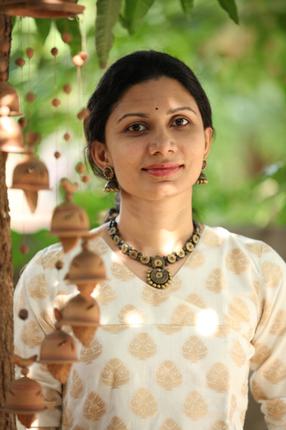
“It took me a long time to develop this line,” says Harini Rao of Hearth Treasures, referring to terracotta jewellery pieces she designed for weddings, inspired by temple jewellery. You read it right. We are taking about terracotta and not gold, diamond or platinum. Hyderabad’s burgeoning appetite for luxury is unquestionable. The number of jewellery stores stands testimony to that. But there’s also a sizeable, growing segment of people experimenting with statement jewellery pieces in terracotta, silver and silver plated with gold.
Invitees and family members of brides in particular, are picking up these jewellery options for smaller functions associated with weddings. Occasionally, there are orders for gold-plated silver jewellery for weddings as well. These pieces come in handy for destination weddings, when one doesn’t want to risk travelling with precious jewellery. “I’ve designed for a few weddings, where orders were placed for gold plated silver jewellery — vankis, vadiyanam, neck pieces, earrings, bangles and pendants. Any jewellery piece that exists in gold can be done in silver too and it would work out much cheaper,” says Sumisha of Treasure Chest. Sumisha has also designed children’s jewellery and says, “With children, the sizes keep changing as they grow. I’ve had many parents who don’t want to buy gold and prefer silver for children.”
Elders don’t really frown upon terracotta or silver jewellery making it to the ‘it list’ of the bridal trousseau any more, say these jewellery designers. Bhargavi Sameeran of Sangama, who gets her line of silver and brass alloy jewellery pieces designed by karigars in Kolkata and Mumbai, agrees: “People are experimenting with neck pieces and earrings. Most of these designs are inspired by traditional kundan and temple jewellery. The paisley motif is an all-time favourite. Kundan and meenakari work are popular,” she says.

Harini recently designed a haram with a string of gold-coloured paisleys in terracotta.
“I encourage people to pick up colours like dull gold, red and green that will go with many South Indian outfits,” she says. Mangoes, elephants, peacocks, Durga and Ganesha often find representation in her jewellery.
Often, jewellery designers double up as stylists, helping their customers match their jewellery with their outfits. “When women come to me with heavy saris, I suggest they wear lighter neckpieces. Long chains in Bengali style, like what Madhuri Dixit and Aishwarya Rai wore in Devdas, are ideal for heavy outfits,” says Bhargavi.
As Harini sums up, “There’s no point in keeping your jewellery in lockers forever. You need to have a few easy-to-use pieces. Alternative jewellery also allows you to have customised pieces to match different outfits.”
source: http://www.thehindu.com / The Hindu / Home> Features> MetroPlus> Fashion / by Sangeetha Devi Dundoo / Hyderabad – May 14th, 2013
The Marathwada region in Maharashtra, not long ago, was part of the erstwhile princely state of Hyderabad. Aurangabad in Marathwada and Hyderabad in Telangana region of Andhra Pradesh have a long shared history and culture. Truck-loads of the records of Mughal administration, particularly of the period of Shahjahan and Aurangzeb found in forts and palaces of Aurangabad were shifted to Hyderabad during the time of the last Nizam Mir Osman Ali Khan as it was the capital of the state. Now, they form part of the State Archives and Research Institute. Similarly, the eye sketches of the splendid paintings of Ajanta caves done by a team headed by Syed Ahmed were brought to Hyderabad on the orders of the Nizam.
Ajanta caves and the paintings therein are considered a landmark in the history of art in India. They represent a distinct dimension of Buddhism. Paintings in the first set of caves are about 2,200 years old and the second set came into being some 1,500 years ago. The caves because of their unique place in the history of religion and art were declared a World Heritage Site in 1983.
There are altogether 30 caves on a range of hillocks close to Waghora river. They are divided into sanctuaries and a monastic complex.
According to Unesco, the wall paintings, profuse and sensitive, constitute the most striking artistic achievement of Ajanta. The caves are generally decorated with painted or sculpted figures of supple form and classic balance. The refined lightness of the decoration, equilibrium of the compositions, marvelous beauty of the feminine figures place the paintings in the rank of masterpieces of universal pictorial art.
The striking beauty of the caves, the paintings there and their collective importance did not escape the eyes of Ghulam Yazdani, the first director of the department of archaeology. He persuaded the Nizam to allow him to document the cave paintings. Yazdani assigned artist Syed Ahmed and his team to make the canvas copies of the paintings as many of them were being damaged by the vagaries of time.
Some 3,000 paintings were drawn. The next move for Yazdani was to get them published. They were published in four volumes from Britain somewhere in the 1930s.
Now, the sad part the story: half of the 3,000 paintings drawn by Syed Ahmed, Mohammed Jalaluddin and a few others have been on display at the state museum at Public Gardens for over four decades. But a close look reveals that they lack in upkeep. The other half are lying, mostly rolled up and uncared in the stores of the museum for decades.
The museum officials say that in spite of their repeated requests, the government has not given any money for the restoration and conservation of the paintings. Instead, some time ago, they were forced to part with several paintings which have been taken away to Buddha Vanam Museum that is coming up in Nagarjunakonda. They have been told to prepare the remaining paintings for shifting to Kalchakra Museum in Amravathi soon.
The unilateral government decision has given rise to speculation that it is planning to close down Ajanta Art Gallery in the museum by taking away the entire collection. The State Museum or to be precise Hyderabad will be made poorer of its artefacts under government supervision.
The questions which are being asked are: Why the government is not taking necessary interest in saving the collective heritage of Hyderabad? If the government wishes to save the Ajanta Art collection in the museum by taking it to some other place, why it is not doing so by keeping it in the State Museum? If the government, as it claims, wishes to take away only the paintings which have been lying unattended in stores, and not those which are on display, is it not splitting the collection?
source: http://www.articles.timesofindia.indiatimes.com / The Times of India / Home> City> Hyderabad / by Mir Ayoob Ali Khan / May 11th, 2013

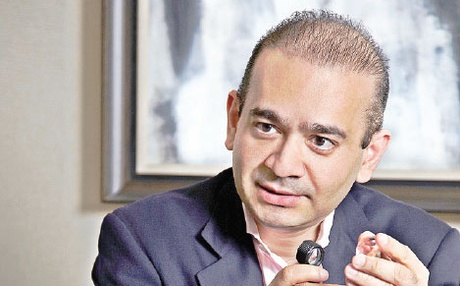
Springing forth in million dollar style, Nirav Modi comes from a lineage of old world cutters, starting at the young age of 19. Displaying a fine crafty eye for detail, his designs have dressed many a beautiful woman with an elegant sparkle. But his own inspiration comes from an elegant source – his mother.
“My mother is an interior designer and I grew up in Europe where she would take us to art museums in Rome, Paris and Vienna whenever possible. I cultivated a penchant for aesthetics and design; it has been such an integral part of what I experienced while growing up,” says Modi.
While visiting these intuitively artistic homes to some of the world’s greatest creativity, jewellery making already ran in the family.
“My grandfather was a diamantaire and my father is still an active diamantaire in Antwerp. I had absorbed a lot of diamond knowledge from them but the world of jewellery was somewhat foreign to me.”
The transition from uncut diamonds to fine jewellery happened quite unexpectedly though, when a friend asked him to design a piece. “Many years ago, a friend asked me to craft a pair of earrings for herself and a latent passion was ignited,” he shares.
So what makes Nirav Modi a brand that stands out? He explains it’s quite a simple matter of numbers.
“Traditional jewellers design a piece, then buy the diamonds and give it to local contractors for making it. From this traditional method, we have transcended to sourcing the rough stone and polishing it in our own factories in Russia. Thereby our diamond costs 15-20 per cent lower than traditional jewellers due to removing middle men. We then take the highest quality diamonds from our production and use them for creating a Nirav Modi jewel in our own workshop, ensuring exquisite craftsmanship.” Having worked on wide variety of jewellery lines, Nirav is now going simpler for his next project. “I am working on some beautiful solitaire rings which can be worn daily as well on special occasions,” he reveals.
Light for the wearer
He is glad his collection is not viewed in the ethnic segment, he wants his creations to be worn across time and space. “Our clients are a part of the international cognoscenti and have a taste for the finest. When working on jewels, I think about the woman and her comfort. This is the reason that all the jewellery has been specially crafted so that it has minimal metal, making it light for the wearer,” says Modi.
Tingle of excitement
For Modi, it isn’t just coming up with the designs, the inherent pleasure in supervising his pieces from start to finish is what really keeps him going. “I like overseeing the whole process, from sourcing and polishing the diamonds in Russia to designing and crafting the final jewel; it allows me to meticulously control quality and ensure that there is no compromise in any jewel,” says the diamond merchant.
Describing his looks and aesthetic, Modi says, “I would only use one word to describe the aesthetic: timeless. My dream is to wake up 100 years from now and see my clients’ grandchildren wearing Nirav Modi jewels. So everything that I craft is made to be a timeless heirloom.”
The Golconda Lotus necklace
The jewellery world was in for quite a surprise when Nirav Modi’s now famed Lotus necklace went for a whopping $3 million. But Modi himself couldn’t have been more surprised. “Somehow Christie’s had heard that we had this legendary Golconda diamond and asked me what we were planning with it. They saw the sketches and semi-finished necklace and immediately asked if they could have it for the cover of the next fine jewellery auction. They had not even seen the final piece,” he says. But the piece wasn’t precious just for the diamond.
“Apart from the 12 carat Golconda, the necklace also has one of the highest collection of Argyle pink diamonds ever found in a single jewellery piece and our patented Ainra Cut diamond links which replace the metal links traditionally found in jewellery,” says Modi, whose his inspiration comes “from almost everything around”.
Upcoming Hyderabad show
When Modi says everything around, he literally means it. “Inspiration for my collections comes from a variety of sources; from mythology and nature to art and children’s toys. The Scheherezade Collection has been inspired by Queen Scheherezade who told the tales of 1001 Arabian Nights, the Fluire Collection has a floral theme while a diamond cuff is an interpretation of a painting by the tribal artist Jangarh Singh Shyam,” says Modi.
Talking about the upcoming exhibition, he says, “It is almost impossible for me to choose one piece. I spend months on every single piece from sourcing the finest diamonds to perfecting the design. The Diamond Embrace Bangles are unique in that they were inspired from my daughters’ toy bangles. They came home one day with elastic bangles that stretched to embrace any wrist size. So I decided to create the same thing in gold and diamonds. Each Diamond Embrace Bangle has more than 700 moving parts which expand. We have them in yellow, white and rose gold.”
The Nirav Modi exhibition will be on display at the Taj Krishna on May 11, 12 and 13.
source: http://www.newindianexpress.com / The New Indian Express / Home> Cities> Hyderabad / by Swathi Sharma – Hyderabad / May 10th, 2013

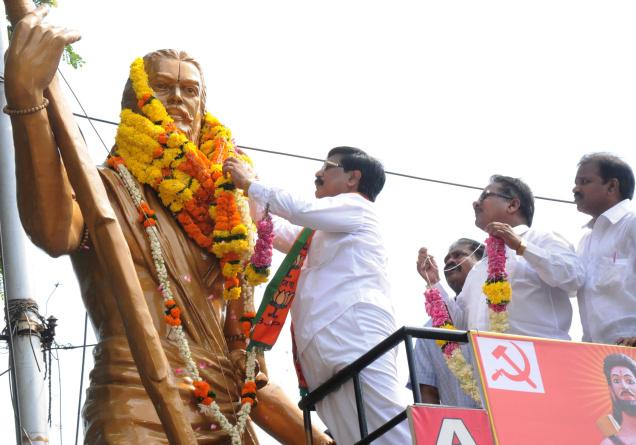
Meetings, garlanding of statues and blood donation camps marked the 89th death anniversary of revolutionary freedom fighter Alluri Seetharama Raju organised at various places in the city on Tuesday.
At a programmes organised by the Alluri Walkers Association, Municipal Commissioner M.V. Satyanarayana, who participated as chief guest, said that it was a matter of pride for the people of Visakhapatnam as the revolutionary leader was born in Visakhapatnam and had studied at Mrs. AVN College in the city. He said that Alluri had sown the seeds for the freedom struggle in the region by creating terror in the minds of the British rulers. Responding to the plea for renaming of Visakhapatnam district as Alluri district, he said that it was a matter which could be considered by the State government and the district administration.
Earlier, he garlanded the statue of Alluri Seetharama Raju at Seethammadhara.
Walkers Association president M. Suresh presided. Earlier, association secretary Venkatesh welcomed the gathering.
CPI-M district committee secretary Ch. Narasinga Rao, GVMC chief engineer B. Jayaram Reddy, Chief Medical Officer P.V. Ramana Murthy and association members participated.
A blood donation camp was organised under the aegis of the All India Trade Union Council, All India Students Federation (AISF) and All India Youth Federation (AIYF). Kshatriya Seva Samithi president Ch. Venkatapathi Raju, CPI district council secretary J.V. Satyanarayana Murthy, CPI City council assistant secretary K. Satyanjaneya, AITUC State council members Padala Ramana, G. Vamana Murthy and Sarvani Varma participated.
Mr. Satyanarayana Murthy called upon the participants to emulate Alluri, who had fought for the rights of the tribals besides participating in the freedom struggle.
Leaders of various political parties garlanded statues of Alluri to mark the occasion.
source: http://www.thehindu.com / The Hindu / Home> News> Cities> Visakhapatnam / by Staff Reporter / May 08th, 2013
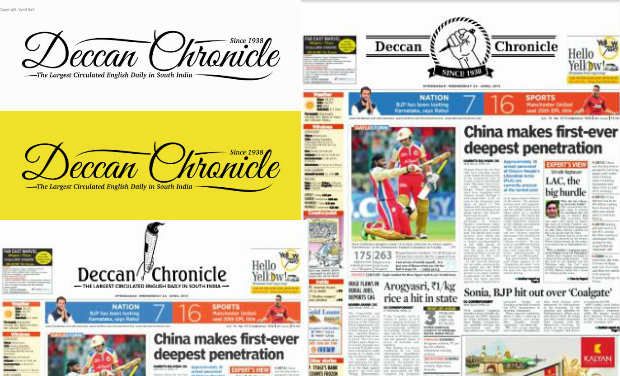
‘There are signs everywhere’ is one of those cryptic pieces of advice we have all heard. For 23-year-old Syed Saif, all the important signs in life were in the Deccan Chronicle. So, it was as though our ad, asking readers to send in their entries for new logo designs, spoke to him directly.
“My earliest memories of the newspaper go back to my school days, when I would draw comic strips from the supplement in a scrapbook all day,” he recalls.
It was also an ad in the newspaper for an animation school that triggered off the idea in Syed’s mother that her artistic son could make a career out of his skills, especially since he had started working immediately after his schooling.
Now, a creative designer at an advertising firm, Syed says, “My work shows up in DC all the time. I have designed print ads for Meena Jewellers, Fusion 9 and Liquids, so when I read the paper, I see my work as well!”
Designing the masthead was difficult, he admits. “I wasn’t able to make any aesthetic connections with the name ‘Deccan Chronicle’ itself. So I went online and researched the work DC has done in the past and its achievements. Then, my thoughts became clearer and the ideas came through.”
Syed sent in four impressive designs; including emphatic symbols of a torch and a pen to more creative works, using typography. Explaining the logic behind each design, he says, “From a visual aspect, a torch in the shape of newspaper depicts DC’s journey of enlightening readers with the truth since 1938. A hand holding a pen shows strength and confidence in the reporting the truth and being the largest and most circulated English daily in South India. My third design is a simple typographic logo that says ‘Since 1938’, along with a tagline. The fourth option is a trendy look with a simple font in black and white.” Designing is such an integral part of Syed’s life that he also uses his talent to give back to society. “I also work with an NGO called Aikrathya, which is involved in financially supporting poor children to holding blood donation camps for blood cancer patients. I design for them for free,” he shares.
source: http://www.deccanchronicle.com / Deccan Chronicle / Home> Lifestyle> Offbeat / by Samyuktha K, DC / April 27th, 2013
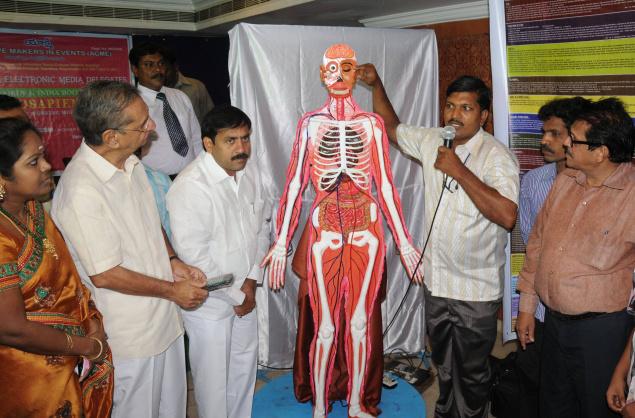
MLA Malla Vijay Prasad and film personality Gollapudi Maruti Rao being shown the working model of a human being at a function in Visakhapatnam on Tuesday. / Photo: C.V. Subrahmanyam. / The Hindu
What started off as a hobby, five years ago, has now earned fame for Pentakota Rajesh who continues to work as a television mechanic. A six-foot homo sapien, created by him, hopes to enter Guinness Book of World Records soon. The clay craft combined with rubber mould represents how each and every part of human body functions with inbuilt electronic and electrical mechanism.
Rajesh had created many clay moulds under the name of ‘wonder toys’ that blinks, speaks and plays cricket. His creations ‘Ayyappa makara jyothi’ and ‘cricket Ganesha’ have already entered Limca Book of Records, India Book of Records and Book of State Records. Spending almost two years understanding the mechanism of Homo sapien, he now intends to enter Guinness Book of World of Records. “I did a lot of research to design the concept. After working for almost two years, I was able to create a homo sapien. I hope my work not only helps me get recognition worldwide but also helps schoolchildren,” he said. Appreciating the creative thoughts of Rajesh, founder president of Creative Makers in Events Vincent Pratap Kumar said:
“Rajesh works hard for his living and his innovative thoughts made him design 56 toys so far using printed circuits, and electronic and electrical mechanism. With his latest invention, he hopes to reach schoolchildren and help them understand the structure of human body.”
Dedication, hard work and perseverance can make a man achieve greater heights, MLA Malla Vijaya Prasad said. “Being a commerce student and working as a television mechanic, Rajesh has created wonders in the world of science. His creations are innovative and has a message to deliver,” he said.
Actor and writer Gollapudi Maruti Rao appreciated Rajesh and added that his designs should not be just restricted to entering a record books but should reach a generation.
source: http://www.thehindu.com / The Hindu / Home> News> Cities> Visakhapatnam / by Staff Reporter / May 01st, 2013

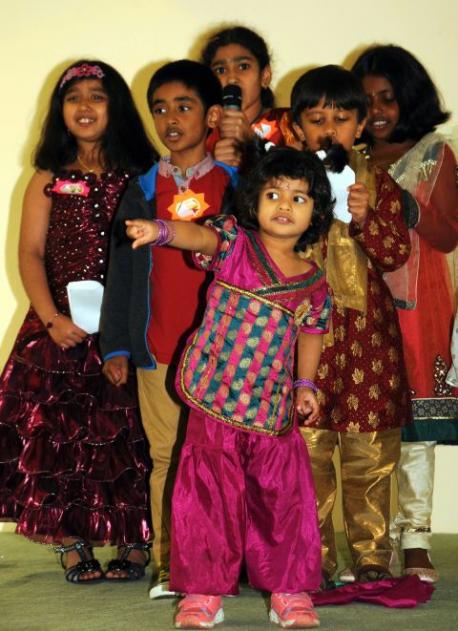
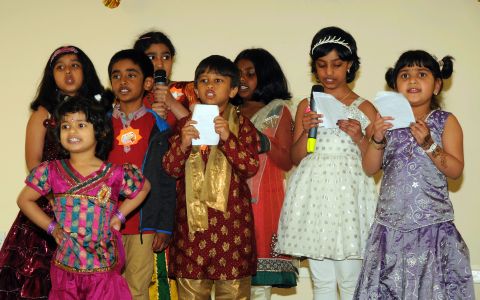
AN INDIAN New Year festival was celebrated in Basingstoke.
Organised by the Telugu Association of Basingstoke (TAB-UK), which represents those from South India living in the town, the event at Carnival Hall included dancing, singing and games to entertain the children.
A Ugadi tradition was performed at the event, when the yearly horoscopes were read out for each of the 12 lunar signs.
Children from the Telugu School, run by volunteers from TAB-UK at Carnival Hall, sang to the audience.
Those attending the celebration also enjoyed a traditional Indian meal as well as a special dish consisting of six different tastes which symbolise the different elements of life – sadness, happiness, anger, fear, disgust and surprise.
Sreeni Vavilala, a committee member for TAB-UK, said: “Around 150 people attended the event – not only from Basingstoke but also from the Midlands and London.
“All the people who attended the event had great fun. This event gave a chance for members of the South Indian community to celebrate the biggest festival in the calendar as a community event.”
source: http://www.basingstokegazette.co.uk / Basingstoke Gazette / Home> News / by Emily Robert, Chief Reporter / May 02nd, 2013
Visakhapatnam :
The centenary celebrations of Andhra Mahasabha – the cultural organization that indirectly kickstarted the movement for a separate Andhra state is around the corner. But there isn’t any plan to celebrate the centenary in a big way in the city. What’s more, not many denizens are aware that it was a native of Visakhapatnam, Sir B N Sarma, who presided over the first Andhra Mahasabha conference in Bapatla on May 26, 1913.
Sir B N Sarma, twice the municipal chairman of Visakhapatnam, rose to become a member of the Imperial Legislative Council and president of the Council of State, was a visionary who envisaged along with stalwarts such as Sir Mocherla Rama Chandra Rao, Nyapathi Subba Rao Panthulu, Desabhaktha Kondavenkatappayya and Bhogaraju Pattabhi Seetharamayya, a Federal India with linguistic provinces.
Prasanna Kumar, former rector of Andhra University, says: “The Andhra Mahasabha was as much a socio-cultural forum as it was political. The founders of Andhra Mahasabha envisaged a pan-Indian federalism, based on linguistic and cultural identity.” Though the idea of Linguistic provinces was brought out in the open in 1917 and a Bill for separate Linguistic provinces introduced in the Imperial Legislative Council by Sir Sarma, it was opposed on the grounds that it would encourage separatist tendencies.
B Sudhakar Reddy, who teaches history at the Andhra University says, “The fact that it was the Telugu political leadership of yesteryears which debated upon the idea of federalism based on linguistic identity is not given due recognition. In fact, the Andhra University was one of the results of this federal movement.”
Analysts say that present day leaders of the region fight shy of acknowledging this face. They point out that the problem with Visakhapatnam was a peculiar one as most of the residents and the politicians are settlers, adding that it was only natural that the top political bosses from Vizag showed no interest in promoting the erstwhile leaders of and from the region.
D N Sinha, a native of Visakhapatnam, observed that the phrase, “A sleepy fishing hamlet barely a 100 years ago,” is often used by people who seem to be unaware of the fact that Vizag was the headquarters of the largest district in British India since 1803 and the de-facto socio-cultural and political centre of entire south Odisha and all of the North Coastal AP. He says, “It is unfortunate that many both wittingly and unwittingly try to paint Visakhapatnam as a city that virtually came out of nothing. More importantly, the efforts of those who made it the City of Destiny have been completely ignored and their names forgotten.”
source: http://www.articles.timesofindia.indiatimes.com / The Times of India / Home> City> Visakhapatnam / TNN / May 02nd, 2013