Category Archives: About Seemandhra / Andhra Pradesh

Telengana Nights : India’s newest state has more people than Canada and more Microsoft IT employees than anywhere but Redmond

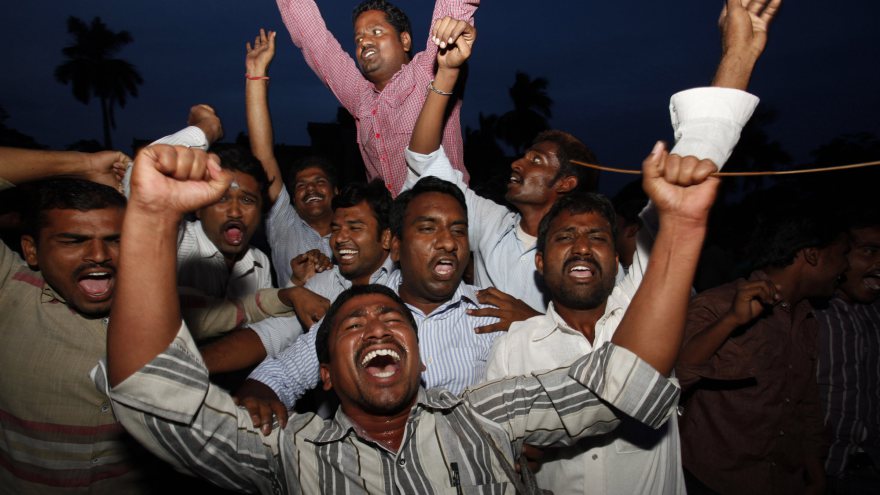
Students of Osmania University celebrate after India's ruling coalition endorsed the creation of the new state. AP Photo/Mahesh Kumar A.
Students of Osmania University celebrate after India’s ruling coalition endorsed the creation of the new state. AP Photo/Mahesh Kumar A.

The creation of India’s newest state, Telangana, marks the end of a decades-long quest for self-governance in the country’s south, and was greeted with celebration on the streets of Hyderabad, the state’s new capital city.

But the ruling Congress party’s vote to approve the state’s creation Tuesday night may also usher in an era of uncertainty for dozens of multinational companies with major operations in Hyderabad.

If it was a stand-alone country, Telangana, with a population estimated at 36 million people, would be more populous than Canada, Saudi Arabia, Taiwan or Australia. At 44,300 square miles, Telangana will be about the same size as the US state of Kentucky.

Most importantly for global business, Telangana will share Hyderabad, the south Indian information technology metropolis, with Andhra Pradesh, the state is it separating from, for the next ten years. After that, the city will go to Telangana, whose leaders may have scant business experience, particularly with global corporations.

The city houses the information technology operations of some of the world’s biggest companies, including the largest Microsoft IT center outside of its Redmond, Wash. headquarters. Microsoft’s website  calls the Hyderabad center the “backbone” of the company’s IT operations, and says it handles IT for more than 1.3 million devices and 194,000 end-users in over 108 countries, as well as managing Microsoft’s global data centers and corporate network.

Thousands of employees from other multinational companies including Accenture, Bank of America, Dell, Novartis, JP Morgan, Google and Facebook also work in Hyderabad’s sprawling business parks.

The Times of India reported that Wednesday “ Brand Hyderabad ” is set to shine once more and brighter at that,” with the Telangana decision made. But Telangana’s independence movement has been tainted by violence, and Tuesday night’s announcement does not seem to have put an end to that. Businesses, schools and public transportation were shut  Wednesday as rock-throwing protestors vented their anger over the decision to give Hyderabad to the new state.

source: http://www.qz.com / Quartz / Home> Telangana Nights / by Heather Timmons / July 31st, 2013

Hyderabad to add another chapter to its history

Hyderabad is all set to add another chapter to its 422-year-old history by becoming the joint capital of Telangana and Andhra Pradesh for 10 years.

Located in the heart of Telangana, the city will also serve as the capital of Andhra Pradesh, the name which the non-Telangana region called Seemandhra (Rayalaseema and Andhra) is likely to retain.

Under the formula worked out by Congress, Hyderabad will serve as joint capital for 10 years and during this period, Andhra Pradesh will build its own capital.

Hyderabad does not share a contiguous boundary with Seemandhra or future Andhra Pradesh. Anybody coming from that state will cover a distance of at least 200 km to reach the capital.

Though Chandigarh is a joint capital of Haryana and Punjab, it shares boundaries with both the states. When news states were carved out of Uttar Pradesh, Madhya Pradesh and Bihar, they built their own capitals.

However, it was not easy for the central government to ask Seemandhra to immediately give up Hyderabad, a city in whose development over the last 56 years they claim to have played a major part.

A decision on the state’s division was delayed as Hyderabad was the bone of contention.

Since Hyderabad is historically and geographically a part of Telangana, its leaders were not ready for a state without this city, which also contributes bulk of the state’s revenues. Seemandhra leaders were demanding union territory or special status to Hyderabad to protect their interests.

The industrialists and businessmen from Andhra are estimated to have invested Rs.50,000 crore in Hyderabad. The bulk of this investment came since 1995 when the city emerged as an IT hub, triggering an infrastructure boom with unprecedented increase in real estate prices.

Hyderabad has a population of about seven million and an estimated 30 percent of them are from Seemandhra. They include government employees, students and businessmen. The city is also the hub of the Telugu film industry, dominated by actors from Andhra.

The Congress has promised to take care of their concerns by asking the government to take steps for the safety and security of all residents.

The Congress also requested the government to take legal and administrative measures to ensure that both state governments can function from the common capital for 10 years.

Andhra Pradesh may not have to build separate buildings for assembly and secretariat as the existing buildings can accommodate them. Congress leader Digvijaya Singh has already indicated this.

The Telangana Rashtra Samithi (TRS), which had once given a slogan of ‘Telangana wale Jago, Andhra wale bhago’, has assured people of Seemandhra living in Hyderabad that they need not have any apprehensions.

Only 50 percent of Hyderabad’s population comprise of native residents and people from other parts of Telangana.

“When people from other states and of many nationalities can come and settle here, why our Telugu-speaking brothers should have any problems?” said Deputy Chief Minister Damodar Rajanarasimha.

The cosmopolitan character of Hyderabad existed since the times of Qutub Shahis and Asaf Jahis (Nizams) when people from Iran, Yemen and Arab countries made Hyderabad their home.

Known for its long history of multi-linguistic, religious and cultural heritage, it is the fifth largest city in India. A key destination for IT and ITeS companies, it is home to giants like Microsoft, Google, Facebook, IBM, Oracle, Dell, Motorola, HSBC and Deloitte.

It is also known as the bulk drug and pharma capital of India and is home to a large number of central public sector undertakings, scientific research institutes and defence establishments.

source: http://www.newindianexpress.com / The New Indian Express / Home> Cities> Hyderabad / by IANS – Hyderabad / July 31st, 2013

Warangal gets best Heritage City award

Warangal was awarded the best Heritage City  by the Union tourism ministry on Thursday. Though an official announcement is awaited, sources in the ministry confirmed the news. “Nomination was sent for best heritage city award about two months ago. Officials in Delhi have informed us about our selection. Official announcement would be made soon,” said a senior official at the Andhra Pradesh Tourism Development Corporation (APTDC) in Hyderabad.

Warangal-Hanamkonda- Kazipet tri-junction city is the fifth largest city in the state, located 157 km from the state capital and about 870 ft above mid sea level. The city is well connected by bus and train network. Warangal Fort is positioned just around 12 km from Hanamkonda which was ruled for more than 200 years by the Kakatiya rulers in the 12th century.

Bhadrakali temple, Padmakshamma temple and thousand-pillar temple are the other attractions of this historical city.

Moreover it is an important cultural centre in the Telangana region.

source: http://www.newindianexpress.com / Home> States> Andhra Pradesh / by Express News Service – Warangal / March 01st, 2013

Mahabubnagar MLA interacts with Chenchus

Mahabubnagar MLA Yennam Srinivas Reddy stayed with the Chenchu tribes in a bid to get acquainted with their problems, on Wednesday night.

Dachakaplly Chenchu Penta is located in dense reserve forest 18 kms from district headquarters town in Hanwada mandal. The MLA started his journey to Chenchu Penta on Wednesday evening and reached Dachakapally village in his vehicle, from there he went by foot to the Chenchu Penta – about 2 kms from the village in dense reserve forest. The BJP MLA recently sanctioned funds from his MLA local development fund for setting up solar streetlights in Chenchu Penta, which is deprived of electricity since Independence. He interacted with the tribals and found out the problems being faced by them and also had dinner with them. He stayed for the night in the small school building of Chenchu Penta.

Earlier, while interacting with Mr. Reddy, the Chenchus told him their problems and sought pucca houses in place of huts, besides pensions. They also asked safe drinking water, road connectivity, teacher to their school and Anganwadi centre in their habitation. In reply, Mr. Reddy promised that he would put all his efforts in solving their problems.

source: http://www.TheHindu.com / Home> National> Andhra Pradesh / by Correspondent /Mahbubnagar, February 08th, 2013

Bureaucrat on the burning deck

The erstwhile Hyderabad State ruled by the Nizams and its accession to the Indian Union are a fascinating part of the making of this nation. At one end were the nationalists represented by the Congress and other players in the freedom struggle, including the Hindu Mahasabha, advocating the integration of Hyderabad with the Indian Union. At another end was the defiant Nizam, who wanted to exercise the choice of staying independent and negotiate aspects on which Hyderabad would like to cooperate (such as defence and currency) with the Indian Union. Added flavour comes from a supplementary angle that brought in the people’s movement in Telangana against the oppression of landlords, orzamindars; a ragtag army of Razakars trying to fight, hand and glove with the Nizam, in order to retain autonomy. Another fact that adds more variety is: about 80 per cent of the population was Hindu, spoke three different tongues, had been under Islamic rule for centuries, adopting an alien language for official and court dealings.

There is a strand of literature that examines aspects on whether Hyderabad should have been integrated with the Indian Union; whether the military action (though given a civilian term: police action) should have indeed occurred; and an associated strand on whether the state should have been trifurcated on a linguistic basis. A fascinating book calledHyderabad: After the Fall (edited by Omar Khalidi) brings out the diverse arguments that were drowned out under the nationalist rhetoric.

With October Coup, then, it was expected that the book would bring out some interesting aspects of how an administrator (in this case, a Taluqdar of Osmanabad District) would have looked at, and dealt with, such issues. These expectations, stemming from the sub-title of the book (“A Memoir of the Struggle for Hyderabad”), were unwarranted. While the context of the book is around the struggle for independence, it is a tragic personal story of a civil servant who faced persecution by the new administration.

This book is Kafka’s delight. The author, Mohammed Hyder, is picked up soon after the Indian forces occupy Hyderabad and is put in prison without much of an explanation. Almost like the re-enactment of Kafka’s Trial, charges are framed much later, he is shifted from one prison to another, documents are withheld for flimsy reasons, even a death penalty is ordered and then the cases are withdrawn even as the persecution outside the courtroom continues. The book deals with Hyder’s trial and incarceration and what comes out of the process. It is the story of a passive struggle by a civil servant, within the confines of civility, to restore his honour and position. The first part of the book is neatly narrated. The second part has extensive reproductions of legal documents, affidavits, counter-affidavits and judgments.

It is interesting to have glimpses of the administration of Hyderabad State from Hyder’s perspective. Judging from his account, Hyder probably did not have a strong position on either accession or otherwise. He comes across as an earnest civil servant keen to maintain law and order and provide senior officers with information on the situation in the district under his control. He does not seem to have a soft corner for Quasim Rizvi, the leader of the Razakars. At the same time, he is willing to engage with him.

Quasim Rizvi, generally painted as the villain of the episode that involved the Razakars, appears very reasonable in all his encounters with Hyder. It is also evident from the book that while the Nizam took the line that “India is a geographical notion. Hyderabad is a political reality” (page 13), the preparation for resistance was based on false ground-level assurances and a notion of external support. While reading Hyder one gets the impression that acceding to India was, for them, a forgone conclusion and any resistance at best was a symbolic one, based more on pomp and ego than on data.

The way Hyder has constructed the book is slightly disappointing. It could have been a great piece of literature — a personal account of the incarceration, a conspiracy hatched and a persecution carried out with clinical precision. It could have been a piece of history retold, about the pressures of being loyal to a losing employer, a tragic story of losing friends and allies who were mostly moving away to Pakistan, a story of Muslim rule in a Hindu state which converts into a majority (Hindu) rule in a state that was predominantly ruled by Muslims. It could have brought out the marginalisation of Muslims, particularly in the post-accession regime in which the erstwhile rulers became minorities. The potential was immense. However, Hyder restricts his story to a dispassionate personal tale, where conspiracies are played down, villains are played up, and everybody is shown to be reasonable. October Coup suffers from decency. It is too decent a book to be set in a tumultuous period.

The reviewer is visiting professor, Indian Institute of Management, Bangalore

OCTOBER COUP: A MEMOIR OF THE STRUGGLE FOR HYDERABAD
Mohammed Hyder
Roli Books (Lotus Collection)
228 pages; Rs 295

source: http://www.business-standard.com / Home> Life & Leisure / by M S Sriram / June 15th, 2012

Bitten by the B’lore bug

LEGENDARY CONNECTION
It was in Bangalore that Ronald Ross first became interested in mosquitoes. Ross would go on to make the crucial discovery of plasmodium, the malarial parasite, in a mosquito, and win the Nobel too. Bangaloreans can truthfully say that the seeds of that great discovery were sown in our City, writes Meera Iyer

In September 1883, a British doctor named Ronald Ross was appointed the Acting Garrison Surgeon in the Bangalore Civil and Military Station. The doctor initially stayed in a bungalow close to today’s MG Road. He records in his memoirs that this was when he first became interested in mosquitoes. “They devoured me,” he writes, “until I discovered that they were breeding in a tub just outside my window.” Ross got rid of the wee beasties by the simple expedient of tipping the tub. So began a series of experiments and observations on mosquitoes that eventually led to a Nobel Prize for Physiology and Medicine in 1902.

Ronald Ross was born in Almora, Uttarakhand, on May 13, 1857, three days after the Indian Mutiny or the First War of Independence began. He grew up in Almora, Nainital and Benares and was sent to England for his education when he was eight.

The future scientist and Nobel Prize winner displayed no interest whatsoever in science but took wholeheartedly to painting, literature and the arts. He wrote poetry while still at school and at 17, decided he wanted to be a writer. But his father wanted him to join the Indian Medical Service, and so Ross resignedly joined St Bartholomew’s Hospital Medical School in London to study medicine. Ross wrote more poetry and even some short plays while at St Bartholomew’s but remained quite indifferent to medicine. He failed a qualifying exam for the Indian Medical Service, cleared it a year later on his second attempt, and then joined the Service. Ross came to India in 1882, stayed in Madras briefly and then had the first of many stints in Bangalore when he was given medical charge of a unit of the Madras Infantry for a few weeks.

Like many others before and after him, Ross loved Bangalore. He describes how he used to go for long walks every day among “rocky crests of mountains, fir woods, dells with beautiful little trickles of streamlets”. The sun and the breeze, he says, “were those not of earth but of heaven.” In a complaint that sounds all too familiar to us today, Ross says that when he looked for these same places ten years later, he found they had all been swallowed by development.

Over the next few years, Ross returned to Bangalore several times and also served in Quetta, Burma and the Andamans. He churned out more plays, novels and dramas, became very interested in mathematics, played a lot of tennis, whist and golf, but remained a completely ordinary doctor. It was only when he was on leave in England in 1888 that something ignited a spark in him: “I determined now to interest myself much more in my profession,” he writes, and he returned to India with renewed vigour.

Back to Bangalore

Ross was posted in Bangalore once again in 1890, as Staff Surgeon of the Civil and Military Station. Now married, he and his family lived in High Grounds, “in a delightful house facing the golf ground, called Uplands”. (Incidentally, this very house was where Sir M Visvesvaraya stayed for a time after his retirement in 1908). According to his Nobel lecture, it was during this 1890-1893 period in Bangalore that Ross made his first studies of malaria.

He also wrote his first research papers on the disease, including some that rejected the ‘bad air’ theory but speculated (wrongly, of course) that malaria might have an intestinal cause.

In the 1890s, scientists had begun to realise that parasites in blood caused malaria, but no one had any idea how these parasites moved from sick people to healthy people. In 1894, while on leave in England, Ross sought out Patrick Manson, a tropical disease expert who had recently discovered that mosquitoes spread the disease filariasis.

Manson told Ross he believed mosquitoes also spread malaria. This was the beginning of a long association between the two scientists.

Ross returned to India, and plunged into research, determined to prove Manson’s ‘Grand Induction’ as he called it.

Within a few months, Ross became an expert on dissecting mosquitoes, identifying parasites and diagnosing malaria. In his memoirs, Ross states that from April 1895 to February 1899, he wrote 110 letters to Manson about his research, “containing almost exactly 1,000 words each, or about one word to every ten people killed by malaria in India alone every year.”

At West End

But another disease also killed hundreds in India in those days. In 1895, Ross was called to Bangalore on special sanitary duty to contain the frequent cholera outbreaks here, especially in Shivajinagar, Ulsoor and parts of the pete.

Ross took up residence in a tent on the grounds of the (now Taj) West End Hotel. Over the next two years, he organised an overhaul of refuse-cleaning systems, suggested improvements in drainage, mapped the locations of wells and had them disinfected, and posted hospital assistants at stations to detect cases. He also frequently accompanied scavengers in their early morning work. “These experiences are not easily forgotten,” he writes.

Of the scavengers, “the poor men themselves, the last pariahs and outcasts of society, toiling while others slept,” says Ross, “None shall know of your labour, no one shall thank you, you shall die forgotten,” and yet, “the civilisation of the thronged cities was based upon their labour.” Though occupied by his sanitary work, Ross still eked out time for malaria. Until then, both he and Manson had thought that when malarial mosquitoes died, they somehow infected the water they bred in, which when ingested, caused malaria in humans. It was in Bangalore that Ross came up with another hypothesis that later proved correct: In May 1896, he wrote to Manson, “…the belief is growing on me that the disease is communicated by the bite of the mosquito. She always injects a small quantity of fluid with her bite — what if the parasites get into the system in this manner.”

Ross set out to test this hypothesis by the decidedly questionable method of getting mosquitoes to bite volunteers, mostly ‘natives’ of course, including the Assistant Surgeon of the Bowring Civil Hospital.

But as Ross had yet to discover that only the Anopheles mosquito carried the malarial parasite, his results remained negative. It wasn’t until 20 August 1897 (now commemorated as World Mosquito Day), when Ross was posted in Secunderabad, that he made the crucial discovery of a Plasmodium, the malarial parasite, in a mosquito. He came back to Bangalore on short leave a month later, staying at the West End once again (in a room this time, and not a tent!), and wrote up his exciting discovery. The paper, “On some Peculiar Pigmented Cells found in two Mosquitoes fed on Malarial Blood,” appeared in the British Medical Journal in December 1897.

In Secunderabad, the building where Ronald Ross made his landmark discovery is now called the Sir Ronald Ross Institute, and bears a plaque in appreciation of Ross’s work. But Bangaloreans can truthfully say that the seeds of that great discovery were sown in our City.

ROSS, THE POET

* Ronald Ross was known to be a poet, novelist and painter.
* His collection of poems include: ‘psychologies’, ‘Poems’, and ‘Fables and Satires’. He composed this verse about his first impressions of malaria that killed millions:

In this, O Nature, yield I pray to me.I pace and pace, and think and think, and takeThe fever’d hands, and note down all I see,That some dim distant light may haply break.The painful faces ask, can we not cure?We answer, No, not yet; we seek the laws.O God, reveal thro’ all this thing obscureThe unseen, small, but million-murdering cause.

(Courtesy: malariasite.com)

source: http://www.DeccanHerald.com / Home> Supplements> Spectrum / by Meera Iyer / May 07th, 2012
 

Intach heritage awards: 6 monuments bag honours

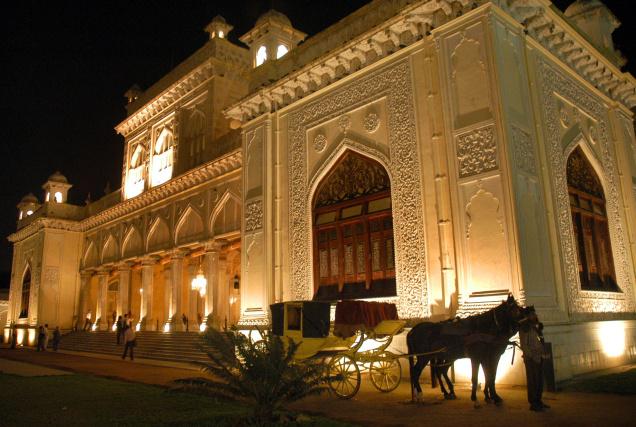
Six monuments in the city — Rashtrapati Nilayam (Bolarum), Dargah Moosa Quadri (Purana Pul), Saif Gulshan (Asifnagar), Ashurkhana Hussaini Alam, Chiran Mosque (Jubilee Hills) and Osman Sagar (Gandipet) — have bagged the Intach Heritage Award 2012.

A citation was awarded to the Tomb of Salar Jungs, Daira Mir Momin. The Intach Award Screen Committee received 150 entries, out of which, 24 were recommended for inspection by a jury. Guidelines had been prepared in consultation with experts in fields of architecture, archaeology, urban history and conservation.

The primary objective of the heritage awards is to highlight the importance of protecting and conserving the city’s natural and built heritage, said Sajjad Shahid, convenor, Award Screen Committee. “It is aimed at creating awareness in favour of conservation and adaptive re-use of the city’s heritage,’’ Mr Shahid

source: http://www.DeccanChronicle.com / Home> Channels> Cities> Hyderabad / DC , April 19th, 2012

Raising a toast to mana heritage

Chowmohalla Palace.    Photo: Satish. H.

Hyderabad gears up to celebrate Heritage Week after winning the ‘Best Heritage City’ title

Hyderabad was crowned as the Best Heritage City of the country a couple of months back. And the celebrations are underway halluhallu. After wining the prestigious title from Union Tourism Ministry and receiving the award from the President of the country, the celebrations took some time in order to make it a remarkable one.

In keeping with its image, the city of Charminar, tombs, pearls and biryani, is coming up with both tangible and intangible ways to celebrate . “A whole lot of events are lined up. From culture to food to sight seeing, this city offers tourists everything. Tourists don’t come to the city only for sight seeing, the city is to be experienced in all ways. And what better way to celebrate the Heritage Week than with cultural programmes in the lap of heritage,” says G. Kishan Rao, director, Chowmahalla Palace.

The Chowmahalla Palace will host a whole lot of cultural shows and events. The event kickstarted on Wednesday with a jugalbandi with music maestro Mangalampalli Balamurali Krishna and Pt.Vishwa Mohan Bhatt. Over the week, connoisseurs of music will be treated to scintillating sessions of music, poetry, qawwali, mushaira and traditional dances. “The cultural shows are lined up to highlight the rich cultural heritage of the city. The shows are a mix of music and dance and theatre . The attempt is also to make people aware of what we have as a city. On the final day, there is a Kathak performance by Pandit Birju Maharaj,” confirms Kishan Rao.

This is not all, G. Kishan Rao says there are different programmes and cultural shows which are being hosted at Qutub Shahi Tombs and Taramati Baradari as well.

To mark the World Heritage Week, INTACH gave awards to several heritage buildings and structures in and around the city. Describing their search and attempt as a deepone, Anuradha Reddy of INTACH said, “Lots of heritage structures have been destroyed and neglected but there is still much more that can be preserved, if we make an attempt. This time we looked at various aspects of heritage. The search made us look at heritage that is part of people’s lifestyle and habit. The search showed up areas where heritage is intact. Secunderabad’s rich heritage and buildings talk of the influence of various communities in their architecture and material. One building highlighted modern architecture in traditional use and that discovery is a very interesting one.”

If this is one part of the celebration, there is more for everyone at the ‘entry-free-for-all’ event at Shilparamam. To highlight the intangible aspect of heritage and culture in the city, food is being highlighted through cooking competitions and food stalls being set up. Venkateshwarlu, administrative officer at Shilparamam says, “The event begins with a festival of Mughlai dishes and goes on to show the different cooking styles of various regions as well. The event also has a cooking competition for men and a biryani festival. Besides food stalls, there will be cultural shows as well.”

So let’s rediscover and raise a toast to our city.

source: http://www.TheHindu.com / Life & Style> Metroplus / by Prabalika M. Borah / April 18th, 2012


Rashtrapati Nilayam to get facelift

Next time when you visit Rashtrapati Nilayam in Bolarum, look forward to spend sometime in a new garden with indigenous plants and a duck pond on the sprawling premises.

In an effort to provide more enjoyment to people visiting the place, authorities are planning to develop more landscaping in an area of about four acres, opposite Herbal Garden.

Plans are afoot to develop a new garden in the Nakshatra (star) design with some rare and indigenous plants. The objective is to create awareness among people about a few rare plants that are on the verge being extinct and some indigenous plants that represent nativity, says an authority.

Presently, Rashtrapati Nilayam has fruit gardens spread over 35 acres and lawns with ornamental plants in an area of about six acres.

Bio-diversity

Besides, education to people, the move to have a garden with indigenous plants and trees would also help in preserving in the bio-diversity of the area. Unlike indigenous plants, which usually have long life, ornamental plants have short lifespan and require lot of maintenance, he explains.

“We would appeal to the higher authorities in New Delhi to approve the plan and once it is accepted, works would commence. We want to develop it by next year,” he says. The idea to develop the duck pond is to add a new amusement theme on the premises. It was operational until a few years ago and former President A.P.J Abdul Kalam liked it a lot

source: http://www.thehindu.com / National> Andhra Pradesh> Hyderabad/ January 15th, 2012

Happening Hyderabad: The diamond city where hotels are palaces and glitz abounds

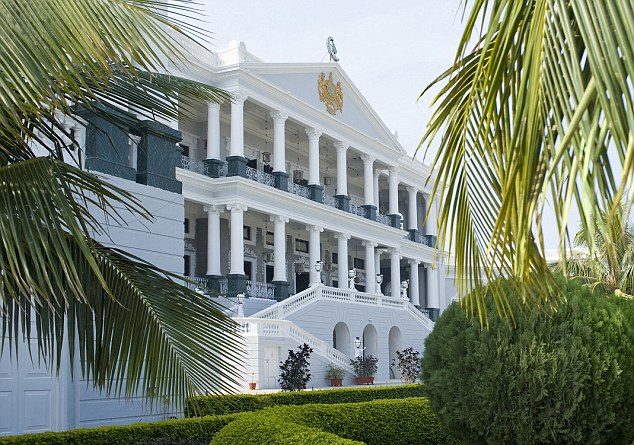
Partying is a pastime in India. On my first evening at Falaknuma palace in Hyderabad, I ask the waiter what the drum beating is all about – the city is twinkling, flashing, jingling, rattling away below. ‘A wedding,’ he says, ‘there’s always a wedding. But we celebrate everything in India. Thirty members of the family will wave off a nephew at the airport.’ Perhaps that’s why you can’t enter Hyderabad’s terminal without a ticket (it’s one of the smartest airports in the world) – they’d be inundated. This ancient city, built on the Musi River, has an optimistic outlook. On a tour of old Hyderabad we pass school children from St Mary’s Brilliant School and some from the School of Success. That, and their neatly starched uniforms, must surely inspire good grades.

Living the high life: Grand Falaknuma offers guests the chance to live like a king

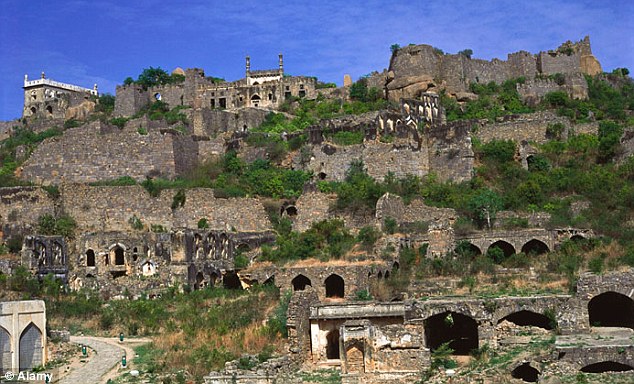
At Golconda Fort, which dates from 11th century, a sign post points The Way to Up. When you reach Up, the city spans out beneath you, smoking quietly away (they burn rubbish here). Hyderabad is characterised by the rocky outcrops of Central India’s Deccan Plateau, which you can see from the top of Golconda. There’s a campaign (Society to Save Rocks) to protect the rocks because people kept chipping away at them for materials to build their homes. There is plenty of rock left, though, to render the landscape biblical. The fort itself hints at what the city once was – elegant, spacious and green. Golconda was sacked and destroyed by Mughals in 17th century. Now it’s full of bubbly school parties and courting couples. The Qutub Shahi King’s burial ground, which you can see from Up, has a carefree feel too – with impromptu games of cricket being played on the lawns. This strange park is filled with domed tombs, beneath which the Kings and Queens of Golconda and their dancers lie. Voices echo inside, and there’s a coffin draped with fraying sari fabric in the middle of an otherwise empty space. The domes used to be covered in mosaic, which has all but gone. Large crows decorate the roofs instead.

Fort with a view: Golconda, built in the 11th century, affords views right across the city

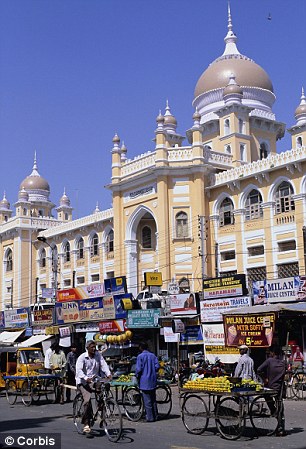
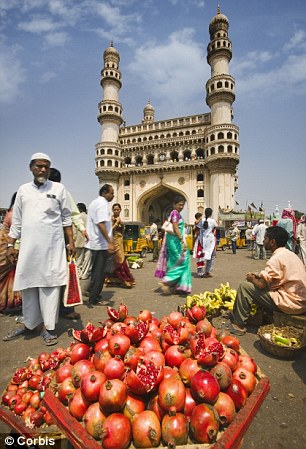
It’s business as usual on the streets of the old town, where life is in full noisy flow. Pomegranates are piled on rickety carts, discarded veg litter the street, sellers proffer orange segments from filthy fingers. But Hyderabad is famous for glitz. Not only for Tollywood – Bollywood movies are filmed here – but for glittery lacquer bracelets and pearls, which are strung and sold. Laad Bazaar is like London’s Oxford Street on Christmas Eve – but stickier.


The city became rich on diamonds – it’s home to 21 diamond mines – and Nizam VI (Royal ruler of Hyderabad from 1869-1911) owned one so large – the Jacob Diamond – he used it as a paper weight. This was a man who never wore the same pair of socks twice. The hefty jewel is now in a bank vault. The Nizams have five palaces in Hyderabad. Falaknuma, where I am staying, overlooks the city and has recently emerged from a ten-year restorationprogramme with Taj hotels.


Colour explosion: From the high life to street life, the vibrancy of Hyderabad can be felt everywhere

Falaknuma means mirror of the sky in Telugu (the lyrical sounding language of this state) and the hotel is painted to reflect Hyderabad’s skyline. Princess Esra Jah worked with Taj on the project and was so exacting, when it came to the shade of the walls, they painted the exterior over 30 times. It was worth it. The gentle grey melds with the pink hazy sky. The palace was originally built by a former Prime Minister of Hyderabad – Nawab Vikar-al-Umra. We share a star sign. I am a Scorpio too. The PM decreed that Falaknuma be built in the shape of the snappy arachnid, so the two northerly wings represent the sting. Such was the extravagance, he was bankrupted. Thankfully, Nizam VI was able to foot the bill. He paid 6.8 million rupees for it and, in 1897, Falaknuma became a royal palace and residence. If Prince Charles goes ahead with his idea to turn Buckingham Palace into a hotel, he should visit.

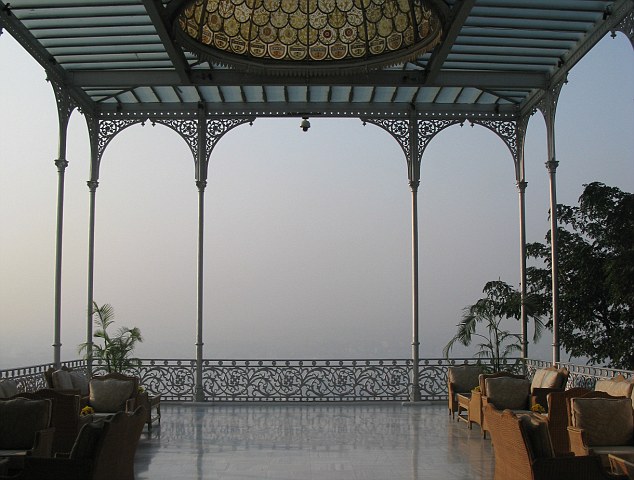
Retreat: Away from the city, the hotel’s terrace offers peace and seclusion

Read more: http://www.dailymail.co.uk/travel/article-2075204/India-tours-Happening-Hyderabad-diamond-city-hotels-palaces-glitz-abounds.html#ixzz1h8owob79

Not only has the palace hosted countless Royals and dignitaries – Queen Mary and King George were here in 1906 and the Aga Khan’s signature is in the guestbook. Every visitor is a guest of the Princess. The staff are ridiculously attentive (you really do feel like a Nizam). And staying here is like being allowed behind the ropes at Chatsworth House. You can stay in the Royal Suite (if you can afford to splash out $10,000 a night), recline in the Queen’s artful gossip room, take afternoon tea in the Jade room and even use the Nizam’s snooker cues. It’s a spoiling experience in sublime surroundings. For me, a jasmine martini on the elegant balcony, with Hyderabad sparkling and rumbling away below, is the gold dusting on the richest of cakes. Perhaps because I am a fellow Scorpio, I feel thoroughly at home.

Travel Facts

Cox & Kings arrange luxury tours to India (0845 154 8941 www.coxandkings.co.uk). A six-night / eight-day private tour to Mumbai and Hyderabad is priced from £2,495 per person. Price includes three nights at The Taj Mahal Palace Mumbai (Luxury Grand Sea View room in Palace Wing) and three nights at the Taj Falaknuma Palace (Palace room), international and domestic flights, airport transfers and accommodation with breakfast daily.

Read more: http://www.dailymail.co.uk/travel/article-2075204/India-tours-Happening-Hyderabad-diamond-city-hotels-palaces-glitz-abounds.html#ixzz1h8fSp0d0

source://www.dailymail.co.uk / Daily Mail Online / TRAVEL MAIL / Home> Travel/ by Jenny Wad / December 20th, 2011