Category Archives: Science & Technology

State-made drones set to make their bow soon

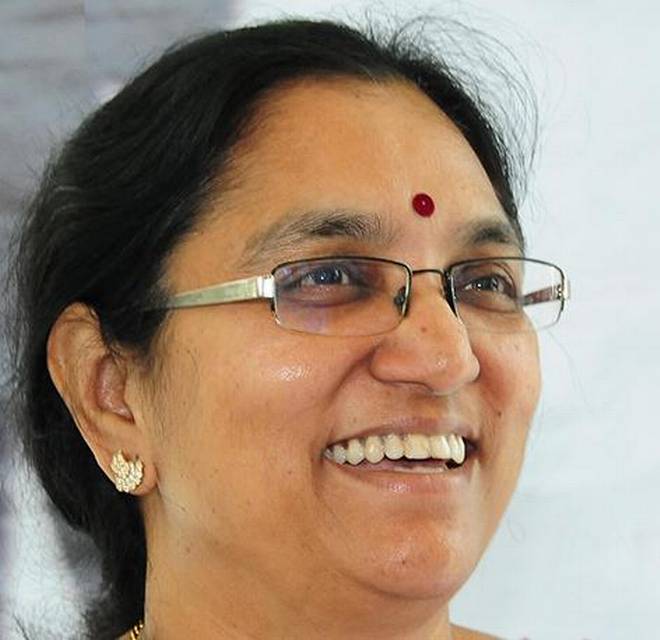
CEO of AP Innovation Society Valli Kumari Vatsavayi

Soft launch in January, says innovation society CEO

After starting its office at the Sunrise Incubation Hub here recently for its ambitious unit, the AP Innovation Society is planning to roll out the first drone manufactured in the State from New Year.

“We have decided to undertake a soft launch in January as a prelude to the commercial launch in March,” APIS CEO Valli Kumari Vatsavayi told The Hindu on Wednesday. She said there was tremendous response to the drone manufacturing facility being developed in the city with patronage from the State government.

An investment of ₹1 crore would be made in the project during the first year of operation. The centre will produce drones costing ₹1 lakh depending on its configuration like lens, accessories and range of its operation.

Price advantage

Ms. Valli Kumari said they would manufacture 25 drones per month from March once the facility turned fully operational. “The drones produced here under the Make in Andhra Pradesh programme will cost less than the private manufacturers. We can make a normal drone for ₹1 lakh which costs ₹4 lakh to ₹5 lakh if sourced from a private manufacturer,” she said. As part of its resolve to promote innovation culture among youngsters, they would also have a R&D lab and reverse engineering lab. The prototypes would be put to commercial use through research by startups and innovators at the facility started at the Sunrise Incubation Hub.

Network of mentors

A network of mentors, including IITs and foreign institutes, had been developed to partner in the project. The government would procure the drones for land registry, soil mapping, police surveillance through various departments, she said.

source: http://www.thehindu.com / The Hindu / Home> News> States> Andhra Pradesh / by Santosh Patnaik / Visakhapatnam – October 19th, 2017
Smart city women’s hackathon kicks off

Visakhapatnam :

Women entrepreneurs should be encouraged to use technology solutions and drive the nation forward, said YS Chowdary, minister of state for science and technology and Earth sciences, while speaking at the inaugural function of ‘She Builds Tech – Smart City Hackathon’ here on Saturday

The hackathon is being organised by Girls in Tech Foundation in association with Andhra Pradesh State Council of Higher Education (APSCHE), department of youth services and US Consulate General, Hyderabad, supported by IBM and Wavelabs.

“This is the first event with an exclusive focus on women developers that gives them an opportunity to come up with sustainable solutions by leveraging technology,” said Sree Divya Vadlapudi, chairman of Girls in Tech Foundation.

“The hackathon will focus on the areas of collaborative governance, improved accessibility to physical infrastructure, eco- friendly solutions for smart city and empowering women. Our Foundation is a non-profit NGO focused on women in STEM (science, technology, engineering and mathematics) and entrepreneurship,” she added.

Speaking on the use of technology to build smart cities, Harsha Avvari, chief technology officer of Wavelabs, pointed out that latest advancements in technology like artificial intelligence and internet of things enable developers to build smarter applications in a rapid manner. Women were also encouraged to avail schemes being given by the governments like for Startup India.

Students from some of the top universities of AP took part in the event. The participants were motivated to build solutions with inputs from their mentors. The teams assisted by mentors will present their work to a panel of judges for final judgement on Sunday.

source: http://www.timesofindia.indiatimes.com / The Times of India / News> City News> Visakhapatnam News / TOI / August 20th, 2017

Breakthrough in mass scale seed production of Indian pompano

It is a first of its kind in the world, says CMFRI scientist

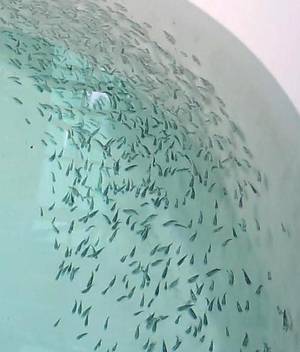
Redefining mariculture: Seed of Indian pompano at the CMFRI nursery in Visakhapatnam. | Photo Credit: arranged

The regional centre of ICAR-Central Marine Fisheries Research Institute here has made a major breakthrough by undertaking mass scale seed production of Indian pompano for the first time in the world.

Indian pompano (trachinotus mookalee) is a marine fish belonging to the family Carangidae. It is low in landing from the wild. It contains Omega 3 and 6 fatty acids. It is sold in the domestic market at ₹200 to ₹300 per kg.

The species is distributed in the Indo-West Pacific region and present in 15 countries of the Asian continent. In India, it is reported from both the west and east coasts.

It has sporadic occurrences in bays and lagoons, and the adult fish prefers shallow coastal waters with rocky areas.

Senior scientist in charge of the regional centre Subhadeep Ghosh told The Hindu that the fish was considered to be a good candidate species for aquaculture due to its fast growth rate, easy adaptability to culture conditions, quick acceptance of artificial feed, pleasant appearance, good meat quality, and high consumer preference. In addition, it can be successfully cultured in tanks, ponds and cages.

Broodstock collection

In a bid to diversify Indian mariculture, breeding and seed production of the species was initiated at the regional centre with broodstock collection in 2011.

Initial success in seed production on a small scale was achieved in early 2014. However, seed could not be produced consistently due to loss of broodstock maintained in the cage by the effect of the catastrophic Hudhud cyclone that hit the Visakhapatnam coast that year.

Broodstock collection was initiated again in 2015 and the fishes were stocked in the land-based Re-circulating Aquaculture System (RAS) for development and maturation.

“With manipulation of water quality and feeding protocols, fishes were induced to spawn in the RAS and mass scale seed production was achieved in early 2017,” Dr. Ghosh said.

Metamorphosis from larvae to fry started on the 17th day post-hatch and was completed by the 22nd day. After 30 days of rearing, the survival rate was around 17.2% and the fry reached an average size of 2.9 cm in length and 1.27 gm in weight. A few thousand fry were transferred to the Veraval Regional Centre of CMFRI in Gujarat and are being nursery-reared for stocking in cages.

Another few thousand fry were transferred to Nagayalanka in Krishna district of Andhra Pradesh and are being nursed prior to release in the pond. The remaining fry, again a few thousands, are being nursery-reared at the Visakhapatnam Regional Centre of CMFRI.

He said the seed would be stocked in open sea floating cages for grow-out very soon.

This was the first case of successful mass scale seed production of Indian pompano under confinement anywhere in the world.

The success raised hopes for culture of the fish using hatchery produced seed in India and will present enormous scope for aquaculture business opportunity in the near future for Indian fish farmers through species diversification.

source: http://www.thehindu.com / The Hindu / Home> News> Cities> Visakhapatnam / by Santosh Patnaik / Visakhapatnam – July 04th, 2017

On-site work on aircraft museum to begin soon

A file picture of the TU 142 aircraft. | Photo Credit: C_V_Subrahmanyam

‘Transporting disassembled parts of TU 142 to the site will be completed by weekend’

Work on assembling the decommissioned TU 142 fighter aircraft to convert it into a museum is expected to begin soon at the site earmarked for it on the Beach Road, to inaugurate it by August 15.

The inauguration was planned to coincide with the official Independence Day function of the state government proposed in the city.

However, the Independence Day function is now being planned elsewhere, and the TU 142 inauguration is likely to take place ahead of it, it is learnt.

Retired aircraft engineers and other personnel worked for nearly four weeks at the naval airbase, INS Dega, disassembling the aircraft. An internationally reputed agency had been awarded the work on the aircraft museum. The disassembling itself was said to have cost ₹3.5 crore.

The aircraft, after its decommissioning, flew to Visakhapatnam after the Andhra Pradesh Government evinced interest in converting it into a museum. Chief Minister N. Chandrababu Naidu received it at a special function from the Naval authorities.

“Only formal inauguration will take place and the remaining work will continue,” VUDA vice-chairman P. Basanth Kumar told The Hindu.

“Transporting the disassembled parts to the site will be completed by this week-end after which assembling them will be taken up,” Mr. Basant Kumar said.

After the formal inauguration, it would take another two to three months to complete the work.

Escalator and aerobridge

“We are planning to set up an escalator and an aerobridge for entry of visitors to the aircraft as it would be difficult to climb up to the elevation, and exit by a staircase,” he said.

All the spares of TU 145 such as propellers and wings would be put on exhibition with an audio-visual show explaining it, he said.

A souvenir shop, coffee shop, and video games would also be opened outside the aircraft.

The museum is being set up by the Tourism Department at an estimated cost of ₹10 crore. VUDA has been assigned the supervising responsibilities.

source: http://www.thehindu.com / The Hindu / Home> News> Cities> Visakhapatnam / by G.V. Prasada Sarma / Visakhapatnam – July 12th, 2017

First emergency medicine department in Andhra to be set up at KGH

Visakhapatnam :

King George Hospital (KGH) is soon going to start an emergency medicine department  (EMD), the first among the government hospitals in the state. It would help bring down mortality in trauma and accident cases by speeding up treatment .

In this regard, a meeting was also held in KGH-AMC this week. Plans are on to house EMD in the new casualty building, which is nearing completion. It’s likely to start functioning in July or August.

The EMD would have different specialists working together under one roof headed by a general physician or intensivist. It should also have an anaesthetist, orthopaedic doctor, a neurosurgeon, a general surgeon, a plastic surgeon, pulmonary medicine specialist and cardio-thorasic surgeon acting as one unit.

They would be all trained in advanced life support (ALS). There would also be ALS trained personnel and paramedics to stabilise the patients on the spot of accident before taking the patient to the nearest hospital. This unit of specialists can take maximum care in minimum time lapse so as to prevent deaths due to loss of time.

Usually victims of poisoning, drowning, animal and reptile bites, burns, road accidents, heart attacks, gunshots or weapon wounds, victims of natural calamities all come under emergency and would be treated in the EMD, say doctors.

For the upcoming EMD, doctors from Amcana (Andhra Medical College Alumni of North America) would also come forward to help with software and technical support by helping to set up an electronic medical records system and by training doctors, medical officers, nurses and paramedics on EMD protocols. They can also help with the equipment as and when required, pointed out AMC principal Dr P V Sudhakar.

source: http://www.timesofindia.indiatimes.com / The Times of India / News> City News> Visakhapatnam News / by Sulogna Mehta / TNN / May 03rd, 2017

APNRT helps get eight IT firms to Vijayawada

They will operate from a plug-and-play facility in Autonagar

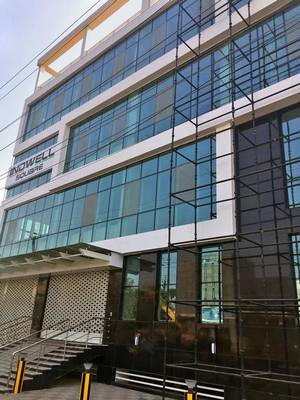
The building in Vijayawada from where IT companies will start functioning shortly.

Vijayawada:

The capital city of Amaravati is all set to take its baby steps in attracting IT industry with eight small and midsize software companies deciding to kick-start their operations from a four-storeyed plug and play building at Autonagar in Vijayawada shortly.

The building will be inaugurated by Chief Minister N. Chandrababu Naidu soon. The companies are MSRCosmos, Adept IT Solutions, Horizon IT, Advance Software, Intellisoft, Intelli Asia, Timesquare IT and Accel IT. They could hire about 500 IT professionals and some of them could be fresh engineering graduates.

“Öur relentless efforts in creating a proper IT ecosystem through innovative policy initiatives and providing best of accommodation is bearing fruits now,” Dr. Ravi Kumar Vemuru, Advisor to AP Government, Non-Resident Telugu Affairs and Investments and CEO, AP Non-Resident Telugus Society (APNRT), told The Hindu on Tuesday. Ït could be treated as a prelude to the arrival of more such companies to Amaravati where space has been earmarked for a 27-storeyed IT Tower. Not just small and medium companies but big ones like Microsoft and HCL have shown interest, thanks to some aggressive promotion by the Chief Minister. “The head count when more companies are set up could go upto 5000 and this could happen by this year-end.”

The Andhra Pradesh Government’s two initiatives have been well received by the NRTs — 50% of rent for three years and subsidy of ₹1 lakh for every job created till 2020, he said. “We want to develop Visakhapatnam, Amaravati and Tirupati as IT hubs. It is not an easy task getting these companies to a place that is starting from the scratch unlike the well-established Hyderabad or Bengaluru.”

With more and more NRT and other companies willing to set up shop here, “we are now concentrating on making more and more engineering students employable by honing the right kind of skills and developing communication abilities in them,” Dr. Ravi said.

A Bengaluru-based training institute has been roped in to develop the communication abilities of the final year students.

As part of these efforts, the APNRT has taken up a massive awareness programme along with the engineering colleges in each district, where representatives of the IT and other companies spell out their requirements to help the colleges inculcate the right skills among the students. “The need for personnel is not just IT but the health and automobile sectors.” The awareness programme held at Ibahrimpatnam for Krishna district on Tuesday is among the first where 3000 students have attended.

The APNRT has been set up by the government to bring global investments and companies into the State and enthuse NRTs to be part of Andhra Pradesh’s growth story. The organisation is facilitating village development under the Smart Village Smart Ward programme while developing partnerships with foreign universities. It also provides services for NRTs like facilitating temple visits and assisting them in government documentations or procedures, legal help and migration issues.

source: http://www.thehindu.com / The Hindu / Home> News> Cities> Vijayawada / K. Venkateshwarlu / February 15th, 2017

Andhra medical college research on antibiotics shows promise

Visakhapatnam :

The superbug or multi-drug resistant (MDR) bacteria has become a challenge for doctors and curse for patients worldwide. As a result of misuse or over-usage of antibiotics to kill bacteria, certain bacteria became resistant to many drugs or antibiotics, and cannot be destroyed by antibiotic medicines even with combination of two or more drugs administered by doctors. Therefore, research is now focussed on evaluating the efficacy of non-antibiotics to treat MDR bacteria.

In this regard, the microbiology department of Andhra Medical College (AMC) has undertaken an interesting and much-needed research on non-antibiotics to counter threats from superbugs and thereby reverse the antibiotic resistance.

In a research titled ‘Reversal of Methicillin Resistance in MRSA by Thioridazine’ (MRSA is the name of the bacteria Methicillin Resistant Staphylococcus Aureus while Thioridazine is the name of the non-antibiotic drug) undertaken by researcher Dr Ramakrishna Reddi under the guidance of Dr Professor N Lakshmi, drugs such as Thioridazine and other non-antibiotics are showing promising results against MRSA superbug and can also be effective for treatment of MDR Tuberculosis after further research and clinical trials.

“Bacteria multiply very rapidly. For example, 100 E Coli bacteria can become one million within six hours or so. Antibiotics are used as medicines to kill the disease causing bacteria but if in the million new bacteria, one or two mutates or changes, then these may not get killed by the antibiotics or drugs prescribed by doctors and develop into drug resistant bacteria. Sometimes, to counter drug resistance, the doctor treats the patient using combination of two or more antibiotics. But even then, the drug resistant bacteria may become resistant to the combination drugs and treatment would fail. Such bacteria, which develops resistance against combination drugs, are called MDR bacteria or superbugs,” explained researcher Dr Ramakrishna Reddi.

When the bacteria become resistant to antibiotics, treatment fails (as the bacteria doesn’t get killed by the medicines). But with reversal of antibiotic resistance, these bacteria lose their resistance and become sensitive to antibiotics again and thus treatment would be successful (the bacteria would successfully get killed by the medicines).

Elaborating on the research, Dr Reddi said, “When the antibiotics stop responding or fail to kill the bacteria causing the disease, then lab research indicates that non-antibiotic drugs like Thioridazine used along with the antibiotics can enhance the performance of antibiotics. However, clinical trials are still due for this though the research is promising. In itself, Thioridazine is an anti-psychotic medication, which has its own side effects. But isomers of Thioridazine (compounds with same chemical composition but different structure) has less side effects and significant antibiotic profile or properties and pain killers like diclofenac too has anti-biotic profile. With the rapid evaluation of drug designing software, these non-antibiotics, which show antibiotic properties can be tweaked in their structure using computer programmes and can be designed such that they can help in the fight against drug resistance or MDR evolving in bacteria and the cures.”

After one year of lab research, which has been quite promising, Dr Ramakrishna said, he is going for the next level that is structural alteration or designing level. “The structure of the drug compounds can be altered to see what new medicinal properties emerge with respect to anti-psychotic effects and microbial effects and accordingly, we will minimise the side effects and maximise its reversal of drug resistance properties,” added the doctor.

source: http://www.timesofindia.indiatimes.com / The Times of India / News> City News> Visakhapatnam News / by Sulogna Mehta / TNN / February 16th, 2017

ISRO launches 104 satellites in one go, creates history

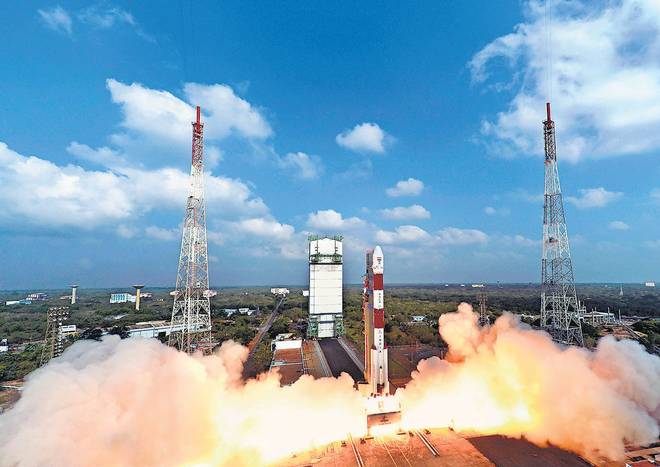
RECORD HAUL: The PSLV-C37 blasting off from the Satish Dhawan Space Centre in Sriharikota with 104 satellites on Wednesday.   | Photo Credit: PTI
RECORD HAUL: The PSLV-C37 blasting off from the Satish Dhawan Space Centre in Sriharikota with 104 satellites on Wednesday. | Photo Credit: PTI

These include the country’s earth observation satellite Cartosat-2 series.

India, a one-rocket fledgling in space transportation compared to its European and U.S. counterparts, created launch history on Wednesday by placing a record 104 spacecraft in their desired orbits.

The feat was performed on the old reliable launch vehicle, the PSLV, numbered C-37, which took off from the first launch pad at the Satish Dhawan Space Centre, Sriharikota, at 9.28 a.m.

Precise launch

C-37 was a largely commercial flight as all but three passenger satellites, small nanosats, belonged to six other countries. The 29-minute launch went off precisely as planned; it took just 11 minutes from the release of the primary Cartosat-2 series spacecraft to the last launch of a client satellite, ISRO said after the mega-payload launch.

The PSLV, in the category of launch vehicles that can lift relatively light loads to space, now marks 38 successful missions in a row out of a total of 39 flights.

This time, it took to space a total of 1,378 kg, of which the primary satellite was 714 kg.

The latest Cartosat is the fifth in the series of six Cartosat-2 spacecraft, starting from Cartosat 2 in 2007 and followed by what were earlier marked A, B, C, D and E. The last one is due.

“After a flight of 16 minutes and 48 seconds, the satellites achieved a polar Sun synchronous orbit of 506 km inclined at an angle of 97.46 degrees to the equator — very close to the intended orbit. In the next 12 minutes, all 104 satellites successfully separated from the PSLV fourth stage in a predetermined sequence, beginning with the Cartosat-2 series, INS-1 and INS-2,” an official communique said.

ISRO’s workhorse lives up to its billing

The PSLV, which created launch history on Wednesday by placing a record 104 spacecraft in their desired orbits, has totally launched 46 Indian spacecraft, most of them Indian Remote Sensing (IRS) satellites.

As many as 180 small satellites of foreign customers contracted by ISRO’s commercial company Antrix Corporation have also reached space on this vehicle.

This time, it took to space a total of 1,378 kg, of which the primary satellite was 714 kg.

The latest Cartosat is the fifth in the series of six Cartosat-2 spacecraft, starting from Cartosat 2 in 2007 and followed by what were earlier marked A, B, C, D and E. The last one is due.

“After a flight of 16 minutes and 48 seconds, the satellites achieved a polar Sun synchronous orbit of 506 km inclined at an angle of 97.46 degrees to the equator — very close to the intended orbit. In the next 12 minutes, all 104 satellites successfully separated from the PSLV fourth stage in a predetermined sequence, beginning with the Cartosat-2 series, INS-1 and INS-2,” an official communique said.

The PSLV, 39 flights old since 1993, also launched the Indian Moon mission Chandrayaan-1 in 2008; and is set to launch a private lunar mission for Bengaluru start-up Team Indus in late December this year.

“It is confirmed that all 104 satellites have been successfully deployed in the orbit,” PTI quoted PSLV Project Director B. Jayakumar at the Vikram Sarabhai Space Centre (VSSC) as saying.

“After separation, the two solar arrays of Cartosat-2 series satellite were deployed automatically and ISRO Telemetry, Tracking and Command Network (ISTRAC) at Bengaluru took over the control of the satellite,” the space agency said.

In the coming days, the satellite will be brought to its final operational configuration.

source: http://www.thehindu.com / The Hindu / Home> News> National / by Special Correpondent / Bengaluru – February 15th, 2017

Three Andhra University students develop mobile app to cut down waiting time in queues

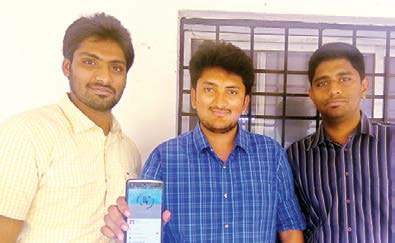
The three students of Andhra university who came up with a mobile app for avoiding long queues | express

Visakhapatnam  :

A team of three students ­— P Arvind, A Abhishek and E Anirudh ­— from the Computer Science department of Andhra University have come up with a mobile application ‘Waltz’, to bring down waiting in long queues at grocery stores and shopping malls.

Finding a way to showcase their idea at IIT Kharagpur Techno Fest which was held recently, they stood as the only team from AP in top five among the 20 best ideas selected.

“There were a couple of ideas which crossed  our mind. From our personal experiences, when my mother asked me to get something and I had to stand in long queue to get only one product at a grocery shop. I could see many walking away leaving the product.

Then we thought why can’t we come up with a mobile app and now with everything going cashless, we thought this would definitely attract the public,” said P Aravind, the first year CSC student. Through this app, one can scan the barcode and add to cart.

Once the shopping is done, they can pay the total bill online, instead of standing in long queues. They can show the e-bill in their phone and leave.

“We have also conducted mock tests for a month in a few shopping malls, where we could get good response.

For printing every bill, it costs `30 paise per customer. This can also be saved. Titled Waltz which means dancing to rhythmic sounds, every customer can just buy and pay bills while dancing round the mall,” said E Anirudh, second year CSc student.

“Our parents are very confident with the ideas we have proposed because they too know how tough it is sometimes standing in long queues. They completely supported us,” he added.

While the team will be given one year training and three months exposure to real market under the fellowship by C-Mint company of Bengaluru, these engineers are in plans to go for self-investment which costs `4 lakh.

source: http://www.newindianexpress.com / The New Indian Express / Home> States> Andhra Pradesh / by Express News Service / February 08th, 2017

Visakhapatnam doctor creates virtual patients in psychiatry

Visakhapatnam :

In an interesting development related to studies in mental health, virtual patients in psychiatry has been shaped as a new tool for teaching medical students as well as training MBBS doctors who are sent to serve in primary health centres.

City-based doctor and professor of psychiatry Dr C Radhakant has developed this innovative teaching technique through creation of virtual patients using computer graphics. The patients have typical characteristics of schizophrenia and mania and can be used as a teaching tool for identification and understanding of the symptoms and behaviour of such patients. This concept would be useful in training PHC doctors under national mental health programmes as well as medicos in psychiatry in medical colleges.

The research paper ‘Virtual Patients in Psychiatry – Mania and Schizophrenia,’ was published in the International Organization of Scientific Research (IOSR) Journal of Dental and Medical Sciences about a week ago. This study, using computer graphics- based virtual patients of mania and schizophrenia, is the first of its kind in psychiatry in India. Even across the world, there are just a couple of studies on the use of Virtual patients in Psychiatry for post-traumatic stress disorder and bipolar suicidal patient.

Speaking about  the methodology and his creation of the virtual characters, Dr Radhakanth said, “It took me several weeks. Characters created on Poser software were imported into 3d studio max software and animated, created into scenes with backgrounds and merging videos, rendered with lighting. Variables into .avi files were then laid out on a video editor software and music track was added. The product is of DVD quality which can be seen on computer, TV or multimedia projector.”

As per the research paper, in Psychiatry, virtual patients instead of live patients offer many advantages in cases of violence, suicide, complex phenomenology and where typical cases are fewer. Virtual patients have been used to teach clinical interviewing skills, bioethics, basic patient communication, history taking and clinical decision-making skills for medical students. Virtual patients offer many advantages to medical schools including: efficiency, standardization, easy accessibility, interactivity, decreased instructor workload, exposure to rare but critical cases, personalized learning, immediate and personalized instruction and feedback, efficacy, improvement of clinical skills in a non-threatening experimental environment.

Computer animation and graphics also have clear cut advantages. The idea is to develop universal norms irrespective of socio economic backgrounds, ethnic or language or regional issues especially in mania and schizophrenia, which were shown to have more or less similar manifestations and prevalence across the world. Hence these two conditions were chosen for exploring virtual patients as a teaching tool.

Of the virtual patients, manic patient called Ravi was portrayed as a fairly well-built young man who is dynamic, hyperactive, elated, confident, brash young man who is shown trying to show his prowess by taming a wild horse to ride but ultimately falling, racing by running against a Formula One racing car, displaying a style of walking and sitting grandiosely and sporting a smile when taking up challenges and showing irritability when failing in them. His lack of judgement is shown in scenes like trying to jump over a racing car and fighting with the horse.

“The study aims to study the feasibility of using computer graphics-based virtual patients as a teaching tool for medical students posted to psychiatry, to evaluate the duration of exposure to basics of psychiatry theory before exposure to virtual patients and to assess the predominantly visual models vis a vis the heavily verbalized mode of psychiatric diagnostic procedures,” averred Dr Radhakanth.

source: http://www.timesofindia.indiatimes.com / The Times of India / News> City News> Visakhapatnam News / by Sulogna Mehta / TNN / December 13th, 2016