Category Archives: Science & Technology

‘Utilise garbage to generate electricity’

APJKalamHF29mar2014

A.P.J. Abdul Kalam asks people to take pledge to protect at least one water body in their lifetime

The enormous quantities of conventional waste generated in the country like garbage and fly ash, which is the result of India’s rapid growth story, should be utilised to restore environment rather than deteriorate it, observed former President of India A.P.J. Abdul Kalam.

“Effluents are released from millions of households; mounting garbage is a rich source of energy as the municipal waste can be used to generate electricity. The TIFAC (Technology Information Forecasting and Assessment Council) could convert garbage to fuel. India needs thousands of such power plants in small towns to generate electricity from garbage,” he said.

Mr. Kalam was addressing a gathering on Friday at a two-day national seminar on “100 years of Activated Sludge Process and its application to industrial wastewaters and CETP’s in India”. The seminar is being organised by Jeedimetla Effluent Treatment limited (JETL) in collaboration with Indian Environment Association on the occasion of silver jubilee of JETL.

No toxics in fly ash

Elaborating on the usage of fly ash, he said, “The dumping of fly ash should be avoided and there should be 100 per cent utilisation. Toxicology reports have said there is no toxic in the fly ash, but only nutrients.

Fly ash can be used in green building materials and this can also create employment. It can also be used as manure by the farmers.”

He appealed to each one of the audience to take a pledge to protect at least one water body in their lifetime.

He also appreciated the efforts of the JETL in effectively treating effluent waste.

source: http://www.thehindu.com / The Hindu / Home> News> Cities> Hyderabad / by Staff Reporter / Hyderabad – March 29th, 2014

A shoe to help do away with the white stick

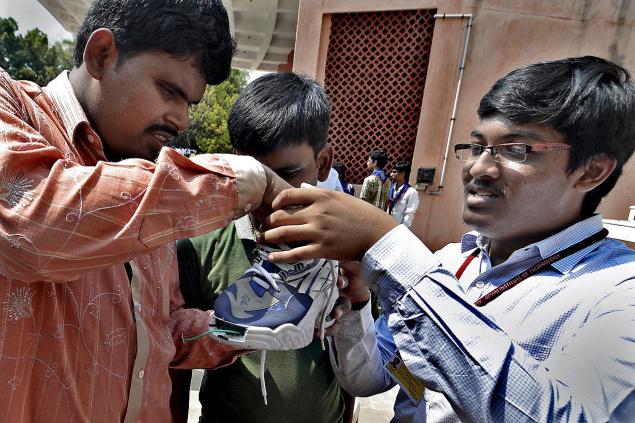
Visakhapatnam: 15/03/2014: I. Krishna Sai, a student of third year Industrial Engineering of GITAM University, explaining about his innovation of a shoe with sensors to visually challenged people in Visakhapatnam on Saturday, March 15, 2014. ---/ The Hindu
Visakhapatnam: 15/03/2014: I. Krishna Sai, a student of third year Industrial Engineering of GITAM University, explaining about his innovation of a shoe with sensors to visually challenged people in Visakhapatnam on Saturday, March 15, 2014. —/ The Hindu

Visually challenged individuals may soon be able to enjoy a free-spirited walk without having to rely on the white stick if a young inventor’s patent for a shoe with sensors gets accepted. Krishna Sai Inkoolu, third year student of Industrial Engineering at GITAM University, has designed a shoe which has a sensor range of 2 cm to 3.5 m. The sensor detects presence of any obstacle in front of the shoe and alerts the user by giving a tap. “The sensor is placed at the weld point of the shoe, which identifies the obstacle and gives a tap on the arch of the shoe,” says Sai, who worked on the project for two years before applying for patent at Controller General of Patents Designs and Trademarks.

First of its kind

A similar concept was designed by Secunderabad-based Ducere Technologies called ‘Lechal’, a brand of interactive footwear, that uses a smartphone GPS (global positional system) app. But Sai claims that the use of micro-electronics and sensors in designing a shoe is a first of its kind.

With the help of micro-electronics, the entire circuit is placed in the shoe socket, which has a connection with the weld point where the sensor is placed. The shoe works on a rechargeable battery and in this case, there is no need to use a smartphone. But while a white stick can seldom go wrong, what if the sensor fails? How will the visually challenged individual cope in such a situation? Sai has an answer to that. “No product is 100 per cent fool proof. And in this case it is particularly critical to know if the shoe sensor has stopped working. I have embedded a mistake-proofing device in the shoe to detect any errors. If the sensor fails, it will give alarm sounds to alert the wearer,” says Sai.

The idea to design a shoe for the visually challenged first occurred to Sai during his first year engineering course while he was working on a project on a shoe that converts mechanical energy to electrical energy and has a capacity to recharge cell phones while walking. “After working on the technical part for six months, I realised that a shoe can be designed with simple modifications using the same principles,” he adds.

source: http://www.thehindu.com / The Hindu / Home> News> Cities> Visakhapatnam / Nivedita Ganguly / Visakhapatnam – March 17th, 2014

Aerobatics show keeps spectators spellbound

Hyderabad :

It was a role play that Hyderabad is unlikely to forget soon. With the sky as the stage and Mark Jefferies’ mean machines as actors, the aerobatic show on Day 1 of the India Aviation-2014, which opened to business delegates on Wednesday, was a runaway hit. So was the special appearance made by the glamorous Airbus A380 from the Emirates’ fleet. Together, the two ensured that the five-day event took off to a magnificent start.

Though the tension among the spectators on ground was palpable all through the 15-minute display, during which the two pilots swirled and somersaulted their aircraft in mid-air, the crowd broke into a thunderous applause soon after the curtains came down on the matinee. The reactions were much the same during the repeat telecast later in the day. “It was breathtaking,” said one of the spectators, echoing the common sentiment among the gathering which stared awe-struck at the sky, which the two pilots turned into their playground. The Jefferies’ pilots are scheduled to display this act twice a day till the end of the event.

As for the gorgeous double-decker A380 – standing over 24 metres high with a wing span of nearly 80 metres – it had onlookers at hello. Right from the time the huge ‘bird’ made its royal landing at the Begumpet airport, every participant was overheard discussing the red and white beauty. More so after taking a tour of its interiors that reeked of opulence, comfort and class. Even the sprawling economy class of the 517-seater, that has 14 extra-luxurious first class suites, appeared to be in a league way ahead of its competitors. “We are glad that the A380 has been authorized for flying in India. It is great news both for airline operators and travellers in the country,” said an Airbus spokesperson, while leading a group of delegates through the aircraft, which also has two lavish shower spas for its ‘high-flying’ clients.

“Our customers in India are eager to try the A380 services and we have worked closely with the Indian authorities to make this possible. We will be reviewing our existing operations and look forward to serving Indian travellers with our flagship aircraft in the near future,” said Majid Al Mualla, divisional senior vice president, commercial operations – centre, Emirates.

Meanwhile, the mood among business delegates, who converged at the venue on Wednesday, seemed to be upbeat with many hoping to strike a few deals by the end of the event. “The aviation industry has been down in the dumps over the past two-three years. Now, things are starting to look up again. The Boeing-SpiceJet deal is an example of that. So we are optimistic,” said a participant at the exhibition hall, which like the last time had a corner dedicated to the history of aviation.

source: http://www.timesofindia.indiatimes.com / The Times of India / Home> City> Hyderabad / TNN / March 13th, 2014

Indian scientist gets Order of Merit from German government

Hyderabad :

Eminent Indian scientist Prof Seyed E Hasnain has bagged the Cross of the Order of Merit of the Republic of Germany. He served as the founder-director of Centre for DNA Fingerprinting and Diagnostics (CDFD) and vice-chancellor of University of Hyderabad.

The award has conferred on Prof Hasnain in recognition of his contribution to Indo-German relations. The Order of Merit of the Federal Republic of Germany was instituted in 1951 by Federal President Theodor Heuss. It is the only honour that is awarded in all fields of endeavour and is the highest tribute the Federal Republic of Germany can pay to individuals for services to the nation.

German Ambassador to India, H E Michael Steiner, conferred the prestigious ‘Bundesverdienstkreuz’ on Prof. Seyed Hasnain at the German Embassy in India, says a statement from the University of Hyderabad on Thursday. Prof. Hasnain is a renowned microbiologist especially acclaimed for his path-breaking research on tuberculosis. He paved the way for the office of the German Research Foundation in India, which is one of the key forums for scientific cooperation between Germany and India. During his stay at the Robert Koch-Institute in Berlin and the University of Wurzburg, he produced remarkable research results in microbiology.

Prof. Hasnain has almost all major Indian Science Awards to his credit: GD Birla Award, Shanti Swarup Bhatnagar Prize, FICCI Award, J.C. Bose National Fellow Award, Ranbaxy Research Award, Goyal Award, Bhasin Award and several others. He is the first Indian elected member of the German National Academy of Sciences Leopoldina and one of the youngest to be elected Fellow of TWAS, Trieste, Italy. Internationally, Prof. Hasnain is a recipient of the prestigious Humboldt Research Prize, awarded by the Alexander-von-Humboldt Foundation, Germany; as well as the very exclusive Robert Koch Fellowship, of the Robert Koch Institute, Berlin.

source: http://www.timesofindia.indiatimes.com / The Times of India / Home> City> Hyderabad / by Syed Akbar, TNN / March 13th, 2014

Amplifon India launches advanced hearing care clinic at Vijayawada in AP

Hearing care solution provider ‘Amplifon India’ has launched state-of-the-art hearing care clinic at Vijayawada city in Andhra Pradesh.

Spread over an area of approximately 650 square feet the newly launched clinic at Vijayawada is equipped with advanced diagnostics infrastructure which constitutes a furnished setup for all types of audiology tests, sound proof hearing test, patient counselling, hearing aid trial and fitting services. Along with this it also offers sufficient space and all the departments are monitored by CCTV cameras round the clock.  Apart from this the clinic also offers pure tone audiometry test, impedance audiometry, special tests, Oto acoustic emission test, hearing aid trial, speech therapy and free hearing screening.

The testing lab is laden with the latest equipment capable of performing multiple tests for speech and hearing. The testing lab also accommodates a bed for testing ‘Audiometry Brain-stem Responses’ in infants and instruments for middle ear analyzing for all age groups.

Established in the year 2010, Amplifon India is renowned for its international quality standards in hearing care solutions. In addition to this new facility in Vijayawada, Amplifon clinics are spread in 26 cities across India.

So far Amplifon has established 94 clinics in different states including Chhattisgarh, Gujarat, Haryana, Karnataka, Kerala, Maharashtra, Uttarakhand, Punjab, Rajasthan, Tamil Nadu, Uttar Pradesh, West Bengal and Delhi.

At present Amplifon has set up 3 centres one each in Hyderabad, Visakhapatnam and now in Vijayawada.

Hearing loss is the third leading chronic disability following arthritis and hypertension. 9 out of every 10 children who are born deaf are born to parents who can hear. About 1 in 800 babies is born deaf, often because of genetic factors.  According to WHO 50 per cent of the factors that lead to hearing loss can be prevented.

Approximately one-third of the people over 65 years of age are affected by disabling hearing loss in India. With this new launch Amplifon India is all set to bridge the gap of healthcare in the hearing loss segment.

source: http://www.pharmabiz.com / PharmaBiz.com / Home> News> Hospitals & Clinics  / by Pharmabiz Bureau , Hyderabad / Friday – March 14th, 2014

How to go Natural this Holi

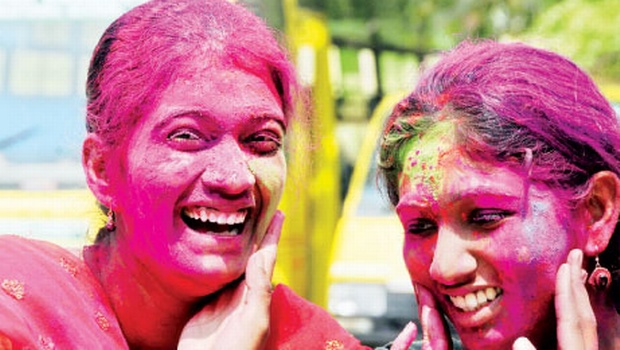
HoliHF25mar2014

Who can turn away an opportunity to frolic with colours and make a day out of it? However, it’s becoming more and more important to also be eco-conscious, not just for the environment’s sake, but also for your own. This Holi, break the chain and play with organic colours instead.

Sure, they won’t be as bright or attractive, but they will save you some major headache when it comes to washing them off and also in protecting your skin.

Why choose organic over chemical colours?

Well, the answer is obvious; all things natural are any day safer and better than chemically treated things. Chemical based colours can not only damage your skin, eyes and hair but can also be carcinogenic and cause serious health disorders. When colours containing harmful chemicals such as lead oxide, oxidized metals, industrial dyes and other toxic chemicals get into the water table, they also cause water and soil pollution, risking the lives of myriad life forms through the food chain, including our own.

The alternatives

Natural colours are very easy to source. While the market has been catering to an increasing demand for herbal colour, it’s fairly easy to make your own colours at home as well.

For instance, soaking beetroot in water overnight turns the liquid red. You can also mix sandalwood paste to get a vibrant red or even try rose powder. For yellow colour, you can mix turmeric with besan powder or even use dried marigold to create a shade of yellow.

For green, powdered henna leaves are best. You can also add some mint leaves for a cooling effect.

Brown isn’t a very popular colour, but if you’re looking for a slightly gothic tinge, try coffee powder. For coffee lovers, the aroma will make up for half the fun.

Many flowers dried and powdered can also be used, from hibiscus (red) to indigo and jacaranda (blue) and teshu/Flame of the Forest (orange).

If you don’t have the patience or the time to prepare your own, the city also has a few options.

Hyderabad Goes Green in association with Aurora Business School is selling five colours (blue, pink, orange, green and yellow) in packs of 100 gms each for `200. Besides selling at their store in Banjara Hills and Gachibowli, you can pick up the colours from Almond House (Himayath Nagar), Our Sacred Space (Secunderabad), Emerald Sweet House (Lower Tank bund) and N Convention Centre (Hi-tech city). Contact 74167 90905 / 90103 89994 / 98858 66918 for more details.

Daram is selling a box of five colours as well in packs of 50 gms each from the Rang Dular range at their outlet in Begumpet. Contact 040 2776 5503.

source: http://www.newindianexpress.com / The New Indian Express / Home> Cities> Hyderabad / by Express Features – Hyderabad / March 15th, 2014

Biogas plants gaining acceptance in Krishna district

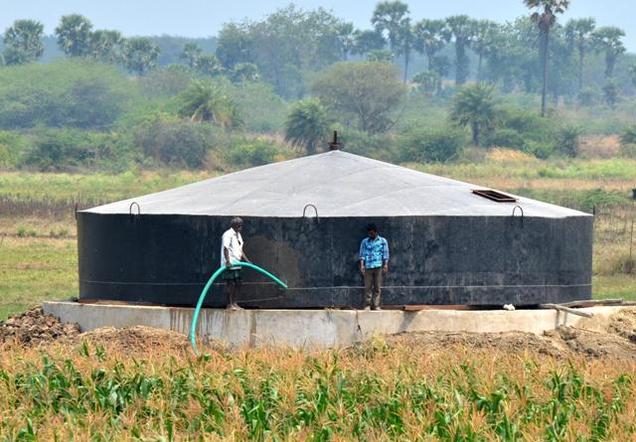
Works at a swift pace at the 200-cubic metre biogas plant being built by NREDCAP at a dairy farm in Lakshmipuram in Veerulapadu mandal of Krishna district./ Photo: V. Raju / The Hindu

An increasing number of innovative farmers in Krishna district are embracing biogas to cater to their energy needs.

Generation of biogas from animal dung has been in practice for long, but the new concept is to generate electricity from the gas, an effective way to end the woes of inflated power bills.

The Union Ministry of Non-Conventional Energy Sources, through the New and Renewable Energy Development Corporation of Andhra Pradesh (NREDCAP), is promoting bio-gas plants in a big way by offering a 40 per cent subsidy on the unit cost. A unit holder, who is usually a farmer or a dairy owner, gets back the invested money within two years of the commencement of operations at the plant.

The Corporation is building one such 200-cubic metre- plant at Lakshmipuram village under Veerulapadu mandal of Krishna district for Healthy Farm Products Ltd., a newly-developed dairy farm project gearing up to launch operations very soon.

“The Rs. 20 lakh-biogas plant can generate 300 units power per day. The Corporation has extended a 40 per cent subsidy (Rs. 8 lakh) while the remaining cost of the project is borne by the dairy owners. With the 20 kw. of power generated, the dairy can save nearly Rs. 3,000 per day, which translates roughly into Rs. 90,000 per month,” says NREDP District Manager Srinivasa Rao.

Pointing to the digester, he says water and cow dung is mixed in 1:1 ratio and pumped into the plant and biogas results from anaerobic fermentation of organic materials. He goes on to explain about the preparation of the input material, the fermentation and methanogenesis, followed by conversion of the biogas to renewable electricity and useful heat with cogeneration/combined heat and power.

“This energy release allows biogas to be used in a gas engine to convert the energy in the gas into electricity and heat,” explain Chennupati Vazeer and V. Madhav, owners of the dairy farm. The plant at Lakshmipuram is likely to commence operation by this month-end another one is fully operational at Veeranki Lockulu, informs Mr. Srinivasa Rao. The Corporation is upbeat about the increasing size of patronage for this innovative mode of fuel. “We are working on five more similar plants at different places in the district. We want apartment-dwellers also to opt for small-size digesters as an answer for their electricity needs and other energy sources,” says Mr. Srinivasa Rao.

source: http://www.thehindu.com / The Hindu / Home> News> Cities> Vijayawada / by P. Sujatha / Vijayawada – March 12th, 2014

Small victories over cancer

With two new simple technologies, testing for cancer within minutes could soon become a reality

 A team of researchers from the  Massachusetts Institute of Technology, or MIT,  has taken a significant step towards developing a method that can help detect cancer within minutes through a simple urine test. Far away in Hyderabad, a startup company has arrived at another uncomplicated and quick technique for diagnosis. It has developed a kit to detect breast cancer through a simple blood test. The finding is crucial, considering that breast cancer is the most common cancer in Indian women, killing one out of every two cancer patients.

The two researches, coming within a span of less than a month, are being watched closely by oncologists in India where cancer has become one of the ten topmost causes of death. The World Cancer Report 2014, published by World Health Organisation’s cancer agency, the International Agency for Research on Cancer, indicates that globally the number of cancer cases will increase by a startling 70 per cent over the next 20 years. Developing countries will be the most hit. Already about 70 per cent of the world’s cancer deaths take place in Africa, Asia, and Central and South America.

Which is why early detection, which can be made possible by the two tests, is critical.

The technology developed by MIT professor and Howard Hughes Medical Institute investigator Sangeeta Bhatia is like the pregnancy paper test. Through a urine sample test, it can reveal within minutes whether a person has cancer or not. Graduate student Andrew D Warren, the lead author of a paper on the technique published in scientific journal Proceedings of the National Academy of Sciences and co-authored by Bhatia, explains how the test works. “The test uses the intravenously injected nanoparticles called ‘synthetic biomarkers’. These nanoparticles are designed to passively hone onto sites of the disease and interact with proteases (the enzyme needed to digest protein). When disease-associated proteases cut pieces off the nanoparticles, the cut pieces (called ‘reporters’) are small enough to filter into the urine, where we can easily detect them with our low-cost paper test.” Higher concentrations of ‘reporters’ in the urine indicates the presence of the disease.

Conventional diagnostic tools for cancer such as colonoscopy or magnetic resonance imaging (MRI) are costly and require highly trained physicians and expensive equipment. The paper test is, in comparison, low cost and doesn’t require expensive equipment or training to use. The researchers who have run the paper test on mice with human-like tumours have found it to be quite accurate. “The test is 90 per cent sensitive (the likelihood that the results will be abnormal in people with the disease) and 80 per cent specific (the likelihood that results will be normal in people without the disease),” says Warren.

The research around the paper strip test, which started in the beginning of 2012, is in the early stage yet and uses mice. “There are still many difficult clinical studies necessary before our test could be used in people,” says Warren. So at this point, while it is impossible to guess the final cost of the test on humans, the researchers are determined to design it so that it is as inexpensive as possible.

As of now, the test focuses on the detection of colorectal cancer. But with slight changes in the synthetic biomarkers, it will be suitable for detecting several other kinds of cancers, the researcher adds.

The blood test for breast cancer, which claimed 70,218 lives in India in 2012, is, meanwhile, expected to be available commercially in five years from now. Developed by Hyderabad-based startup, Fournira Optime Diagnostics, the blood test would be about ten times cheaper than the currently available tests such as mammography, MRI and ultrasound. And its results would be available within an hour.

Early, accurate and affordable diagnoses are the three key factors that this test hopes to cover. A routine breast check, during which a woman might detect a suspicious lump, is what often leads to the first visit to the doctor. But it is often at a later stage that that evident symptom of breast cancer develops. The blood test makes an earlier diagnosis possible. The technology detects the cancerous biomarkers, if they are present in the blood, by lighting them up.

MAGIC BULLETS
Several laboratories in different parts of the world are also engaged in developing molecules that target the cancer cells specifically and in certain cases, serve as an alternative to chemotherapy. The doctors call them ‘magic bullets’. “The ‘magic bullet’ is nothing but target therapy,” says Ullas Batra, consultant, medical oncology, Rajiv Gandhi Cancer Institute and Research Centre. “In 20 to 30 per cent of the cancers, a single gene gets mutated. If we are able to identify and target that gene, then it is very effective.”

So while chemotherapy is like a bomb, which destroys everything around it, the ‘magic bullet’ is like a missile that hits a specific target, he explains. “Every year, two or three molecules are coming up for cancer that we call ‘magic bullets’. Many of these are for lymphoma, lung and liver cancer.”

The ‘magic bullet’ is usually used in Stage IV of the cancer and can be used in place of chemotherapy or in addition to chemotherapy. “In 20 to 25 per cent of lung cancer cases, especially in women and non-smokers, the ‘magic bullet’ is used upfront,” says Batra. Oncologists say it is found to be doubly effective than chemotherapy. It can control the disease with very good quality of life, doctors say.  “If chemotherapy gives the person another eight months to live, the ‘magic bullet’ keeps him going for another two to two-and-a-half years,” says Batra. it requires no hospitalisation and unlike chemotherapy, causes no hair loss or loss of appetite. “It is simply an oral tablet to be taken every day,” says Batra. A month’s dose can cost between Rs 1,800 to Rs 5,000.

CANCER VACCINES
The World Cancer Report points out that the population in developing countries, which have high prevalence of cancers such as those of the cervix, hardly believes in regular screening, such as going in for the pap smear test, for commonly found cancers. And, there is little focus on cancer vaccines — the Human Papilloma Virus (HPV) vaccine.

“Gardasil and Cervarix, the vaccines for cervical cancer , have been around for at least four years,” says Jai Gopal Sharma, head of the preventive oncology department at Rajiv Gandhi Cancer Institute and Research Centre. With time, these are gradually becoming popular. In India, while no data has been published to assess the effectiveness of the vaccines, clinical trials have shown a decrease in the development of HPV associated with some diseases after the vaccine, he adds.

The overall consensus is that while nine to 26 is the ideal and most effective age, “the vaccine can be given to a woman of any age before she attains menopause,” says Sharma. Vineet Talwar, senior consultant, oncology, Rajiv Gandhi Cancer Institute and Research Centre, adds that HPV strains 16 and 18 have been found to be the most prevalent strains that cause the cancer. “When a person is infected with HPV, it takes about 18 to 20 years to develop cervical cancer. And then too, all people do not develop cancer,” adds Talwar.


QUICK FACTS

  • Vaccine: Cervarix from GlaxoSmithKline and Gardasil from Merck & Co
  • Meant for: Cervical cancer
  • Cost: Cervarix, Rs 2,000 per dosage and Gardasil, Rs 2,800 per dosage
  • Dosage: Three doses within six months
  • Age group: 9 to 26 years or till the woman is not sexually active
  • Availability: Easily available in every hospital
Note: Gardasil protects against four HPV types or strains (6, 11, 16, and 18) and Cervarix targets HPV types 16 and 18. Gardasil is more recommended.
_____________________________________________________________________________________
source: http://www.business-standard.com / Business Standard / Home> Beyond Business> Features / by Veenu Sandhu / March 14th, 2014

Suven Life grants Taro Pharma rights to market Malathion Lotion in US, Canada, Mexico

Hyderabad :

Suven Life Sciences Ltd, a biopharmaceutical and contract research and manufacturing company, today announced that it has granted an exclusive licence and right to distribute and market its Malathion Lotion USP 0.5% to Taro Pharmaceuticals, North America.

The Hyderabad-based company said it has a US Patent and Abbreviated New Drug Application (ANDA) for it in US, Canada and Mexico.

Taro Pharmaceuticals North America, is a subsidiary of Taro Pharmaceutical Industries Ltd.

Malathion lotion is indicated for patients infected with Pediculus humanus capitis (head lice and their ova) of the scalp hair. In consideration for the exclusive licence and right to distribute and market the lotion Taro will pay Suven a royalty and the arrangement is effective until April 2028 unless otherwise terminated, a company release said without revealing financial details in a press release.

source: http://www.thehindubusinessline.com / Business Line / Home> Companies / The Hindu Bureau / Hyderabad – March 04th, 2014

IICT, German Varsity Sign Pact on Cancer Research

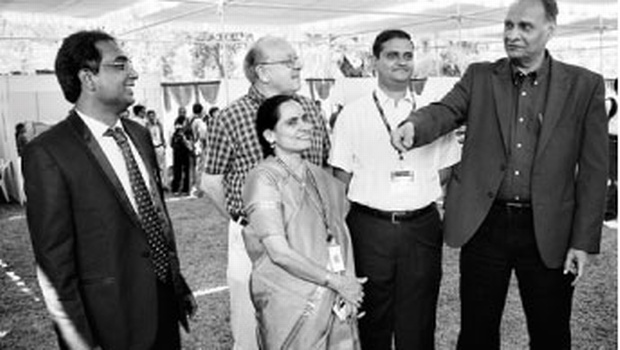
IICT natural products division head S. Chandrasekhar, CNRS research director Rene Gree, IICT director M Lakshmi Kantam, GVK Biosciences Discovery general manager KV Sharasrikar and professor Goverdhan Mehta of University of Hyderabad at a symposium in Hyderabad on Monday | A RADHAKRISHNA

CSIR-Indian Institute of Chemical Technology (IICT) and Dortmund University, Germany, have signed a Memorandum of Understanding (MoU) for taking up research work for cancer screening.

Speaking to reporters here on Monday, head of the natural products chemistry division of the IICT, S Chandrasekhar said that the objective of the collaboration is to find drugs for cancer therapy which develop resistance. ‘’If we develop a new chemical for cancer therapy we will share with Dortmund University and if they come across new drug they would share with us,’’ he said.

He said that all the tests will be done at Max Planck Institutes, Germany.

IICT is working on Alzheimer’s disease and was trying to find a better and more effective chemical than Galantamine. Chandrasekhar said.

Galantamine belongs to the family of  cholinesterase inhibitors and is used to treat Alzheimer’s disease, he said.

Chandrasekar said that the IICT and Mayo Clinic, USA, had developed four new chemicals through neem plant for treating renal cancer. “We have found that the new chemical can kill renal cancer cells 100 percent,” he informed.

He said that as part of 70th year celebrations, CSIR-IICT is organising a four-day international symposium on ‘Nature inspired initiatives in chemical trends.’ The symposium was inaugurated on Monday by University of Hyderabad professor Goverdhan Mehta. About 600 delegates from various countries including US, France, Germany, Switzerland, Japan, China and South Korea are participating in the conference.

source: http://www.newindianexpress.com / The New Indian Express / Home> Cities> Hyderabad / by Express News Service – Hyderabad / March 04th, 2014