Monthly Archives: February 2014

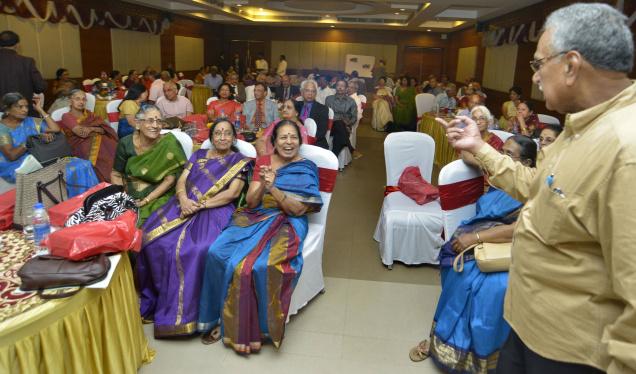
Celebs at Trendz expo at Taj Krishna in Hyderabad

CelebritiesHF04feb2014

Where there’s a designer exhibition, there are our P3Ps. And mana socialites didn’t disappoint, when they turned up in large numbers at a designer exhibition held at a hotel recently.

Dressed in their stylish and elegant attires, these ladies turned heads as they posed for shutterbugs. All wore a look of happiness and contentment after indulging in retail therapy.

source: http://www.articles.timesofindia.inditimes.com / The Times of India / Home> Entertainment> Events> Hyderabad> Celebs / TNN / January 23rd, 2014

Punching her way to Rio Olympics

India sat up and took notice when this 17-year-old girl from small-town Nizamabad punched her way to the gold medal at the Third Nations Cup International Boxing Tournament in Serbia earlier this month. Meet Nikhat Zareen, who is being hailed as the next Mary Kom for the striking similarities in their sparring styles and has won four medals in just four years of taking up the sport, including gold in the Women’s Junior and Youth World Championship in Turkey in 2011 and silver medals in Bulgaria and Serbia in 2013. The third child of a family of four girls from an orthodox Muslim family, Nikhat tells Siva G of TOI, about the trials and tribulations of taking up a traditionally male-dominated sport and how her goal is to grab a gold in the 2016 Rio Olympics, for which she has changed her weight category from 54 kgs to 51 kgs and is focusing on 2014 championships to make the cut.

How and why did you take up boxing, considered a masculine sport?

Even before taking up boxing, I was an athlete. I won six medals in different athletic events at the school level and also the best sports person award in sixth standard. I decided to switch to boxing after I found that nobody was taking it up in school. When I asked my father why girls don’t participate in boxing, he said girls do not have the strength to fight. That’s when I decided to take up boxing and show the world that girls too can spar just like boys. I started boxing in 2009 and won the best boxer award at the national level the very next year. So far, I have won two gold and silver medals each in international championships. I have now changed my weight category from 54 kgs to 51 kgs, because only three weight categories for women are allowed in the 2016 Olympics.

Did you face any resistance from your family and community?

I am the third of four girl children. My father Jameel Ahmed, a real estate businessman, is my strength. He used to take me for practice on his moped and always stayed behind for practice. My mother, Parveen Sultana, was very upset as she felt that if I received any injuries on my nose, ears or head, nobody will marry me. I told her that if I get name and fame, everything will come to my doorstep and even marriage will not be a problem. She used to cry on seeing my face bleed during practice sessions with boys because there were no girls to fight with. Relatives from my father’s side too raised objections as they felt girls should not join a sport like boxing due to the danger of facial injuries. But nothing has happened to me so far. We wear protective gear while fighting.

Did your decision to take up boxing cause any problems in school or college?

My school friends at Nirmal Hriday used to tease me, saying don’t crack jokes against Nikhat, she will beat you to pulp. I told them that I am a boxer, not a street fighter as I box only in the ring and not on the streets. It was only after I started winning medals in national and international tournaments that they started to appreciate my talent and the fact that a girl from a small place like Nizamabad had made it big. Seeing my success, my relatives and people of Nizamabad are now encouraging girls to take up male dominated sports like boxing. A majority of people in my home town belong to the Muslim community but are now ready to let their daughters take up sports. Unfortunately, we don’t have any facilities in the district to nurture talent. If we have good stadiums with better equipment, girls will shine in sports.

How important is it for girls to learn sports like boxing and karate given the rise in crimes against women? What will you do if somebody tries to tease or molest you on the road?

I will teach them a lesson by beating them black and blue. I won’t spare anybody trying to take advantage of women. Girls face such experiences on the roads every other day, which is why I feel they should learn self-defence techniques or a sport like boxing or karate to develop self confidence and fitness to fight their attackers. Women should be alert on the roads and have the courage to face the odds. The government should also make self-defence compulsory in school and college.

What are your strong and weak points in the game?

Frankly speaking, I don’t know. My coach, Dronacharya awardee I Venkateswara Rao feels I am ready to take any risk in the ring. He feels I am very good at throwing a combination of punches and have a good sense of the game. He tells me that I am a technical boxer but need to improve my strength. I have never been afraid of my opponents. Once I step into the ring, my only aim is to defeat them. I got a chance to improve my game under coach Rao after joining the Sport Authority of India (SAI) hostel in Visakhapatnam in 2012.

Seniors see in you another Mary Kom thanks to your style of boxing. Comments

There may be a few similarities between us but there is a lot that is different too. She is a very experienced boxer, while I am still learning. Her willpower and technique are far greater than mine. She has strived hard for years to reach the top and I wish to reach that position by winning medals for the country. So, please don’t compare with me with Mary Kom at this point.

What is the biggest challenge you are facing now?

In the Serbia championship recently, I fought in the 51kg category for the first time. The quarterfinals and finals were tough as I was up against tough Russian opponents. Losing weight reduced some of the power in my punches but I made up for it with speed and technique. Now, my main focus is on honing my punching power, as competition is tougher in the new weight category. We are training to take on opponents from Russia, China, Bulgaria and Kazakhstan.

What is your next goal?

I wish to bring home a gold medal in the 2016 Olympics. To bag a place in the Indian Olympic team, I am concentrating on the World Championship in Sofia in Bulgaria and Youth Olympics to be held in China this year. This year is very crucial as it is my performance in these two events that will decide whether I get a place in the Indian team.

source: http://www.articles.timesofindia.indiatimes.com / The Times of India / Home> Sports> Boxing / TNN / January 20th, 2014

IVRCL bags orders worth Rs 550 crore

Power division wins orders worth Rs 395 crore, building segment Rs 84 cr

Hyderabad-based IVRCL Limited on Monday said the company’s power, building and transport divisions have collectively bagged orders worth Rs 550.56 crore.

Segment wise, the  company’s power division secured contractual works worth Rs 394.36 from the Madyanchal Vidyut Vitran Nigam Limited, for the supply of equipment and materials for rural electrification and associated 33 KV works in the unelectrified habitations in Unnao district of Uttar Pradesh. The completion period is 24 months.
The building division bagged Rs 83.85 crore worth of works from the Airports Authority of India, Calicut international airport, for the construction of a new international arrival block, internal modification of existing interanational passenger terminal building and associated works at the airport. The work is expected to be completed in 20 months.
The company also secured a Rs 72.35 crore contract for the construction of major bridge between Indiranagar and Surbarai in connection with doubling of Viramgam Samakhlai BG section of Western Railway, and the completion period is 18 months, IVRCL informed the Bombay Stock Exchange (BSE).
source: http://www.business-standard.com / Business Standard / Home> Companies> News / by N. Madhav / Hyderabad – January 20th, 2014

A reunion to cherish

Graduates of Andhra Medical College’s 1959-64 batch recollecting their college days at a reunion in the city on Saturday. / Photo: K. R. Deepak / The Hindu

The 1959 batch of doctors of AMC has a gala time

They are all in their mid-seventies and have held important positions which earned them fame and name. Now most of them are enjoying their retired life. Some of them are still active, practising their profession and providing consultation when needed.

They belong to the 1959 batch of MBBS of Andhra Medical College and are meeting up with their old buddies at a reunion at a star hotel in the city on Saturday. It brought back memories of golden days of college life. The whole day they laughed and generally enjoyed the get-together. They called each other by first names and recalled the fun and happiness they enjoyed during college days.

Spade work

The reunion was planned and organised by Vyakaranam Atchuta Rama Rao, a retired consultant psychiatrist who has settled in the UK some 40 years ago, Prayaga M.M. Krishna, who settled in the city after working in Norway for 25 years as consultant anaesthetist, a leading medical practitioner of Anakapalle and former governor of Lions Club G. Subhram, and others. There were 120 students in that class and 35 of them had passed away. Among the rest, 60 attended the reunion, 40 of them with spouses. One of them N. Gajananda Rao, has done computer-aided medicine course in AIIMS after doing general medicine, and established the Indian Association for Medical Informatics. “We are all feeling happy to meet again. Actually this is the third reunion. We had the first one in 2000. We are recollecting the mischief we have done during our college days, the boys teasing girls and vice-versa,” said the 75-year-old doctor. “We are thoroughly enjoying the reunion. We are not sure of meeting again,” said former HoD of Microbiology of AMC Leela Kumari. Her classmate K. Kamamma came from Sompeta for the programme. A general physician of the city G.V. Krishna Rao said the reunion was a golden opportunity to meet everyone in the class. The former students felicitated their teachers who were in their nineties or thereabouts, such as neurosurgeon S. Bala Parameswara Rao, Prof. K. Somasundaram (physiology), Prof. A.V.S.S. Rama Rao (biochemistry), Prof. Nirmala Kumari (pharmacology), and Dr. S. Srinivasa Reddy (paediatric surgery).

source: http://www. thehindu.com / The Hindu / Home> News> Cities> Visakhapatnam / by Special Correspondent / Visakhapatnam – January 19th, 2014

Hyderabad-based Meraevents.com eyeing Rs 50Cr in revenues in FY14, looking at global expansion

MeraeventsHF03feb2014

Launched as an event listing, promotion and ticketing platform, Hyderabad-based Meraevents.com is now connecting organisers, delegates, and service providers in its endeavour to become a one-point solution for the events and trade fair industry. Besides introduction of new features and services, the company saw multifold growth in terms of people buying tickets and the number of listings on the website in 2013.

“While in 2012 we saw about 1,000 people buying tickets from our website, this number doubled in the last year. In fact, we had sold Rs 1.4 crore worth of tickets for the ‘new year’ itself with 200 listed events,” said Naidu Darapaneni, founder and CEO of Versant Online Solutions Pvt Ltd, the company behind Meraevents.com .

How is it faring?

It has sold over 10,000 tickets in the last two years, which translated to about Rs 3.6 crore in revenues. Last year, the company launched MoozUpLite, which replaced the event paper agenda with a detailed mobile application. It also launched MoozUp, a web app that enables every attendee to interact, share and access event information before, during and after the event. The application also offers features like meeting scheduler, messaging, calendar, photo, video and document sharing.

The company has also developed Venues.meraevents.com  help people in finding the right venue in their preferred city and location. While the section is live with data of 3,000 venues as of now, the company is planning a proper launch in April 2013 with 10,000 venues. In addition, it is launching ‘DigiBroc’, a digital brochure for the exhibition and trade fair industry, which will enable visitors at exhibition stalls to scan QR codes and access an electronic copy of the brochure, rather than picking up a physical copy.

Fundraising and global expansion

A mostly bootstrapped company—except a seed capital of $200,000 it had raised from friends and family in the US in 2009—Meraevents.com is raising venture capital between $2 and $5 million to take its event promotion and ticket-selling platform to global markets. “We are looking to expand in the Middle East and eventually the entire Asia,” says Naidu.

With a team size of 80 employees, Meraevent.com is now looking to do Rs 50 crore in revenues in FY2014. “The event industry is worth Rs 5,000 crore. Presently, we are looking at a business of 1 per cent of the entire events market in the country in this year,” said Naidu. He wants Meraevents.com  to be largely-recognised all over the country, and for a company that is less than point one per cent of the market as of now, that is definitely a bold claim – but not an impossible one.

Explara.com , another event ticketing and discovery site run by Pune-based Signature Technologies Pvt Ltd, is also close to raising its first round of VC funding in the range of $2-3 million, VC Circle had earlier reported . Started in 2009, Explara has in place a cloud-hosted event solutions platform and focuses on four service areas—event ticketing/registration, payment processing (online, retail and cash on delivery), event marketing and logistics. The company has operations in Pune, Mumbai, Bangalore and Delhi and has served event organisers from India, the US, the UK, South Africa, Singapore and Philippines.

(Edited by Joby Puthuparampil Johnson)

source: http://www.techcircle.vccircle.com / TechCircle.in / Home> Feature / by Nikita Peer / January 21st, 2014
Lecturer develops low-cost defluoridation of drinking water

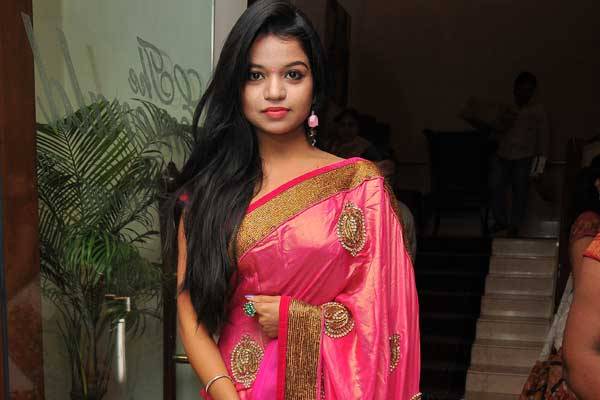
Andhra Loyola College chemistry senior grade lecturer Y.Hanumantha Rao / The Hindu

Could this be the answer to the problem of excess fluorine in drinking water? The method developed by Andhra Loyola College (ALC) chemistry senior grade lecturer Y.Hanumantha Rao has worked very effectively at the laboratory-level and is comparatively low cost. But he felt more research should be done to translate the work he has done in the laboratory to the field. He has been teaching at the ALC for over two decades and decided to do some research to help people.

Mr Hanumantha Rao said that he had analysed drinking water from 24 villages in Kandukur mandal of Prakasam district. While the range of fluorine in potable water should be between 0.05 parts per million (ppm) and 1.50 ppm, the level of fluorine in these villages was between 1.50 ppm and 4 ppm.

Using three kinds of “bio-waste” available locally — sorakaya (snake gourd), Tummakaya (prosopis) and Jammu (thick grass) — for developing activated carbon that removes 90 per cent of the fluorine by the process of adsorption, a process that is different from absorption. The fluorine gets physically and chemically bonded to the activated carbon and the water becomes potable.

The bio-waste had to be incinerated in a muffle furnace to 700º centigrade until it was reduced to powder. The powder was then washed with concentrated Nitric Acid to be “activated”. This was comparatively cheaper then the activated alumina that was being used for defluoridation, he said. The activated carbon had to be washed with an alkaline solution to reactivate it from time to time, Mr Hanumantha Rao said.

When he submitted his research work to the Acharya Nagarjuna University for review he was granted a Ph.D., Mr Hanumantha Rao said.

source: http://www.thehindu.com / The Hindu / Home> News> Cities> Vijayawada / by Special Correspondent / Vijayawada – January 19th, 2014

Torch bearers for millet seed security

The National Biodiversity Authority has recognised 30 villages in Zaheerabad of Medak district of Andhra Pradesh that grow traditional and fast-disappearing millets as Agricultural Biodiversity Heritage Site (ABHS).   
 The Andhra Pradesh State Biodiversity Board (APSBB), which finally gave green signal for the rare recognition, has sent its recommendation to the National Biodiversity Board, which has approved the proposal making these villages to become first villages in India to be recognized as ABHS.“The file is now with the agricultural department. By the end of January we will announce these villages as ABHS with or without their opinion,” a determined APSBB Chairman Dr R Hampaiah says. Thus, the dryland villages in four mandals and the 5,000-strong women farmers of the Deccan Development Society (DDS) that grow only “forgotten millets” without fertilisers or pesticides will join the list of 27 such other sites around that world by February.

“Nowhere in the world 60 different varieties are cultivated in 30,000 acres and the seeds are distributed among women farmers, assuring food safety and saving the environment,” says Dr SN Jadhav, Member Secretary, APSBB.

The 500-year-old banyan tree in Pillamarri tree spread on three acres of land in Mahbubnagar district and the rare forest on Tirumala hills are the other two sites in Andhra Pradesh that have such special recognition.

In fact, a few months ago, three members from the Board—Anisetty Murthy, Ashok Kumar and Hampaiah– had visited the farms to see the amazing agricultural biodiversity that was being conserved and propagated by the women of DDS.

The announcement added vigour to the 15th edition of biodiversity festival in Algole, a small village in Zaheerabad mandal in Medak district, from where a month-long bullock cart caravan yatra begins and tours 70 villages in all the four mandals of the heritage site, encouraging people to adopt forgotten crops.

“We are now trying introduce the concept in 18 other states in the country. The DDS even had its impact in Africa, where women  are trying to take back farming from the hands of commercial organisations,” added DDS Director PV Sateesh.

While agriculture in other parts of the country was in doldrums, the sangham farmers were completely self-reliant as far as food, seeds and farming are concerned. When farmers elsewhere were facing the indignity of having to stand in long queues to access government supplied seeds, women of the DDS were staking their claim to the elusive mantle of food sovereignty.

Women of the DDS also succeeded in drawing the attention of the government to the need for including millets in government food programmes like PDS, the mid-day meal scheme and so on; the spate of orders asking for the inclusion of millets in these schemes is a testimony to the extent of success of the women of the DDS.

Some women farmers of the DDS also can handle the latest version of digital camera, the daily narrow cast of the Sangham FM radio and help save bio-diversity by cultivating forgotten millet crops with equal élan. Women camera operators of the Community Media Trust (CMT), probably the only such media house in the country, can handle, shoot, edit and produce short films without any outside help.

The initial toil and success of women was then presented to the outside world through photos and then videos. Then came the launch of the CMT, which has been winning several laurels for its amazing media work over the last decade.

The CMT runs a women’s video collective (WVC) and the first-ever community radio of India called Sangham Radio. While the WVC has been functioning since 1996, the Sangham Radio took up Narrowcasting since 1998 and has been on the air since October 2008,  broadcasting two hours every day. Both these outfits are managed entirely by women from farming communities.

Chinna Narsamma, a small farmer who made a film “Community Conquers Hunger”, said that the sanghams were the first group in India to have started 100 days of employment for the poor, which preceded MGNREGA by 20 years.

Summer employment    

Through this employment programme which they called summer employment, they brought over 5,000 acres of near fallow lands under cultivation, produced more than a million days of employment in 30 villages in 10 years and started producing over 20 million kg food every year. This was the first step in abandoning hunger in their sanghams.

Zaheerabad Punyamma added that the sanghams started leasing lands and launched collective farming groups on these leased lands and produced additional food for their families.

In two decades, the sanghams have leased more than 1,000 acres of land and produced over half a million kg of food for their groups. Dandu Swaroopamma, a community filmmaker and a member of the DDS Food Sovereignty Trust said that the sanghams have brought over 4,500 acres of cultivable fallows under cultivation and produce nearly a million kg or more food every year.

They have done poverty mapping of their villages and identified over 10,000 families as recipients of their jowar-based millet rations.  Each family has received a ration card through which they can draw between 10-25 kg of jowar every month depending on their poverty status. The jowar is sold at 25 per cent of the market price to the identified poor.

Begari Laxmamma, a community filmmaker and a community seed keeper, pointed out that all these villages have their own community seed banks from which any farmer can borrow nearly 50-80 seed varieties.   Thousands of women in these villages have their own household seed banks and never depend upon outside seeds. Thus these villages have become seed sovereign.

Thammali Manjula, filmmaker and a coordinator of the Community Food Sovereignty programme, says “Our films have nothing dramatic but depict our lives and it’s about how we conquered hunger.”

J B S Umanadh in Hyderabad

source: http://www.deccanherald.com / Deccan Herald / Home> Special Features / by JBS Umanadh in Hyderabad / January 19th, 2014