Category Archives: Historical Links, Pre-Independence

Lion-headed legacy

TOUCH OF CLASS:Artisans at work at the Craft Development Centre in Gollapalli.Photo: K.R. Deepak / The Hindu

As the sombre strains of the Bobbili veena fade into the sunset, Sumit Bhattacharjee takes a look at the indigenous instrument’s storied history and sad present.

Pedda Rayudu, the 15th descendant of the Rajah of Venkatgiri and the founder of the town and the kingdom of Bobbili, was a connoisseur of the arts. The royal instrument was the veena and it was the men of Bobbili who played the instrument in court. The veenas, then, were imported from Thanjavur. They were, in other words, Thanjavur veenas.

The Bobbili veena came much later, during the 19th century, and its birth is believed to hark back to a concert at the royal court, after which the king showered compliments on his highly regarded master craftsman Sarvasidhi Achanna, saying that he had the ability to create anything. This prompted a challenge from Ch. Musanana, a maker of veenas from the Vizianagaram kingdom. Would Achanna be able to craft a veena? Within two months, Achanna responded with an instrument that came to be known as the Bobbili veena.

The story now shifts to the present day, to the Sarvasidhi family in Gollapalli village, near Bobbili in Andhra Pradesh. Forty families, all from the Sarvasidhi clan, make a living by manufacturing the musical instrument. Sarvasidhi Achutanarayana, the great grandson of Achanna, says, “There is no formal training involved. The children get drawn towards it, as they grow up watching the elders carve and create the masterpieces. As in the guru-sishya tradition, each child is put under the tutelage of one senior member. The induction normally happens when they are five years old. They pick up the art by making small wooden toys, initially. There is no compulsion or restrictions. Even girls learn the art.” This is how it has been for seven generations.

Bobbili veenas are made from jackfruit wood, and a full-size veena stands out from the ones made at Thanjavur, Mysore, Kerala or Nuzvid because of the lion’s head carved at one end. The frets of Bobbili veenas are made of bell metal, while other veenas use brass. Earlier, the Bobbili veenas were known as “ekanda veena”, as they were made or carved out of one single piece of wood. But due to the paucity of good jackfruit wood, the veenas now have two joints. The other veenas have two or more joints.

Veena exponent Jayanthi Kumaresh says, “Bobbili veena is known for its quality of wood. Other veenas like the ones manufactured in Mysore are made of rose wood. I buy veenas from a maker in Bangalore who owns a jackfruit farm.”

Jackfruit wood

Achutanarayana agrees that wood is the most important ingredient. “The wood has to come from a jackfruit tree which is at least 20 years old. It should be seasoned and it should have the required kind of grain to suit the manufacturing.” For the Sarvasidhi family, procuring good jackfruit wood has become a problem and the government does not encourage jackfruit farming. “That’s the reason why we have stopped manufacturing the Ekanda veena.”

The Bobbili veena also stands out from other veenas because it is smaller in size. Jayanthi says, “The casing is much thinner compared to the others and the sound is shriller and more aristocratic. The treble is more in Bobbili veenas when compared to the others, where the bass is more. But now, many professionals tend to customise their instruments. They pick up the best from each variety and tailor-make veenas to suit their need.”

It was Chitti Babu Challapally and Dr. Emani Sankara Sastry from Andhra who gave the Bobbili veena international recognition. Jayanthi says, “The Andhra style of playing on Bobbili veena is considered attractive. The technique is different and the speed is more.”

Declining fortunes

Achutanarayana echoes the strain of concern found in older practitioners of other arts and crafts, who fear that their traditions might vanish. “The present generation is not very keen on taking up the craft. They are well educated and they intend to take up jobs in cities. Unless the government finds a way to make the trade lucrative, it will be difficult to hold them back,” says Achutanarayana.

The trade has never been lucrative. To keep the home fires burning and to save the art from sinking into oblivion, these veena makers started their own co-operative, the Sharada Veena Society, in 1959. But the orders were still dwindling, due to the declining patronage of the wealthy. Finally, with the intervention of the state government, a Craft Development Centre (CDC) was set up in 1994 at the Bobbili Fort, and it was later shifted to its present building at Gollapalli village.

Veena exponent and teacher Ramavarapu Vijaylakshmi feels that the demand is shrinking as the love and passion for classical music is dwindling. “Earlier, parents would send their children, especially the girls, to learn some form of music, be it instrumental or vocal. But today, they would like to see their children as dancers, cricketers and academic scholars. This confuses children, who are already bombarded with pop music and dance through the television.” The drop can be attributed to other reasons like academic pressure, says veena exponent Pappu Padmavathi. “Also, the veena is one of the most difficult instruments to learn. It takes at least 10 to 12 years to reach the first level of professional playing.”

At a time the craftsmen were finding it difficult, T.V.K. Sastry of Bharat Cultural Integration Committee came to their rescue. He placed orders for miniature veenas, which the Madras Telugu Academy started presenting as mementos during its cultural shows and festivals. “The tradition of gifting the instrument was initiated by the kings of Bobbili,” says Achutanarayana. “The veena was the royal gift to visitors from neighbouring states and the United Kingdom.”

Today, there are more orders for miniature veenas than for the full-size ones. The CDC manufactures 200 to 300 miniatures a month and earns to the tune of Rs. 1 lakh. The craftsmen make them in four sizes — 9 inches, 13 inches, 18 inches and 24 inches long — and the veenas are marketed by the AP Handicrafts Development Corporation (Lepakshi).

But this isn’t enough. To sustain this great tradition at Gollapalli, the Government needs to look into jackfruit plantations and add value to the CDC. More veena schools need to be started in order to increase patronage. But who, and how will you tell youngsters to take up the profession?

LionsheadANDHRA04oct2014

a full-size veena stands out because of the lion’s head carved at one end.

source: http://www.thehindu.com / The Hindu / Home> Features> Sunday Magazine / by Sumit Bhattacharjee / April 29th, 2012
On 152nd Gurajada Birth Anniv, Memorial Still a Pipe Dream

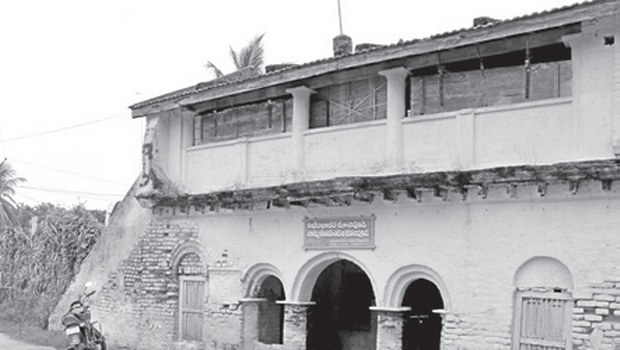
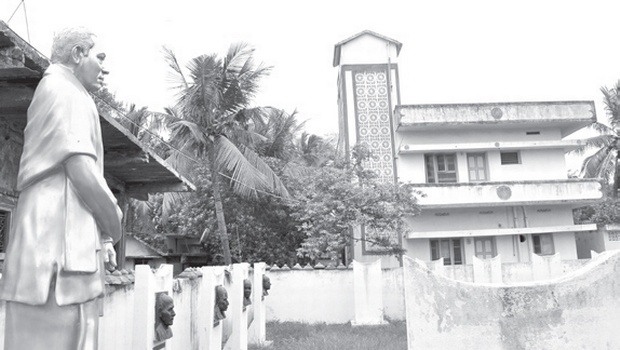
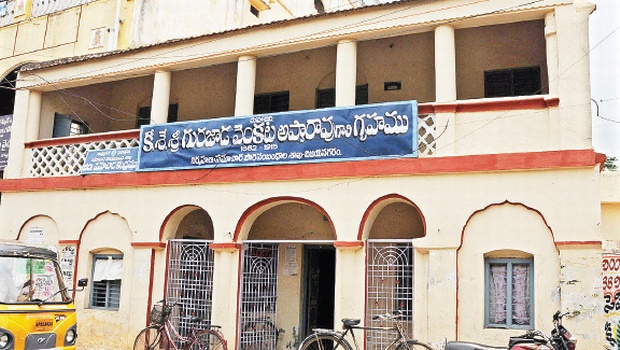
Mahakavi Gurajada Samarka bhavan building in Vizianagaram | Express Photo

Vizianagaram :

The erstwhile Congress government, led by former chief minister N Kiran Kumar Reddy, had announced `2 crore for the Mahakavi Gurajada Venkata Appa Rao Memorial project in 2012 at Vizianagaram. However, it still hangs fire after the Telugu Desam Party (TDP) has come to power.

The district administration has made arrangements to celebrate Mahakavi’s 152nd birthday celebration on September 21 this year. Noticing the abnormal delay in getting the funds from the government, the collector requested the Tourism and Cultural Department to release the funds. But the officials of the department reportedly informed the collector that it had sent the proposal to the government and was waiting for the approval. According to sources in Hyderabad, the file went missing. Gurajada Appa Rao, who authored his greatest ever first Telugu play Kanyasulkam and the sensational patriotic hit song “Desamunu Premimchumann-Manchi Annadi Penchumanna, Desamnte Mattikadoy Deamante Manushuloi” spent most of his life in Vizianagaram. He served the Maharaja families of Vizianagaram. He constructed his residential building in Vizianagaram town in 1914 and passed away in the following year.

In the 1980’s, the government took away the building assuring the family members that the residence would be develop as a heritage structure. Later, the building was converted into a memorial.

On the occasion of the 150th birth anniversary of Gurajada Appa Rao in 2012, the then minister for tourism and culture Vatti Vasantha Kumar assured the opposition that the government had allotted `5 crore for construction of two Gurajada memorial auditoriums – one at Vizianagaram and another at Hyderabad each at Rs two crore.

The same was also announced by the then minister for transport Botcha Satyanarayana. Later, during the 2012 celebrations, the incharge minister, MPs and others promised to develop the Gurajada Appa Rao Memorial into a museum and a library.

During his recent visit, deputy chairman of Andhra Pradesh Legislative Assembly Mandali Buddha Prasad also assured that the TDP government was ready to develop the memorial in a big way.

The proposals have been sent to the principal secretary, Ministry of Tourism and Culture, according to deputy director, Department of Culture, Hyderabad, R Vasantha Rao.

“The department has informed the same to the district collector, Vizianagaram. Since 2012, on several occasions, the officials asked the ministers to sanction the funds but in vain. When I raised the issue twice, a minister was angry with me,” a senior official told Express.

source: http://www.newindianexpress.com / The New Indian Express / Home> States> Andhra Pradesh / by VKL Gayatri / September 21st, 2014

Buddhist artefacts discovered in Chebrolu

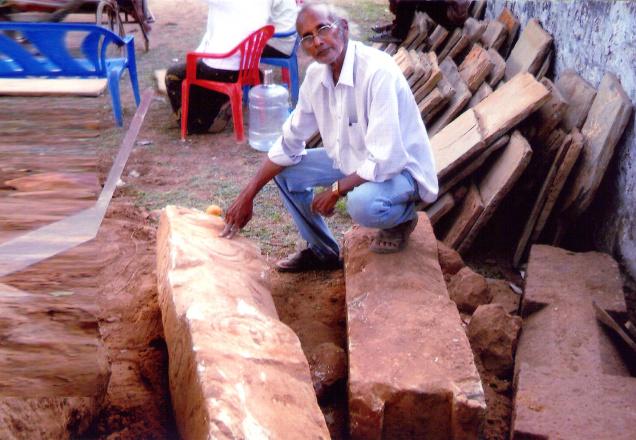
Archaeologist K. K. Venkateswaralu examines a 'thoranam', discovered near Bheemeswara Swamy Temple at Chebrolu in Guntur District./  Photo: By Arrangement / The Hindu
Archaeologist K. K. Venkateswaralu examines a ‘thoranam’, discovered near Bheemeswara Swamy Temple at Chebrolu in Guntur District./ Photo: By Arrangement / The Hindu

The discovery of thoranam, placed in front of the Maha Stupa, and the earlier discovery of several Buddhist artefacts point to the fact that the Maha Stupa at Chebrolu could have been a major Buddhist site of the Satavahana and Ikvakshu times

A unique Buddhist ‘thoranam’ was unearthed during excavations at Bheemeswara Swamy temple here. The architrave panel, measuring 4.2 inches in length and 11 inches in thickness, was unearthed by freelance archaeologist and former ASI Documentation Officer K. Venkateswaralu.

“The discovery of the thoranam, placed in front of the Maha Stupa, and the earlier discovery of several Buddhist artefacts such as white marble pillars, ‘Harmika’, and bases indicate that the Maha Stupa at Chebrolu could have been a major Buddhist site of the Satavahana and Ikvakshu times,” Mr. Rao said.

The architraves were also found to be sculpted with ‘Jatakas’ and scenes from the life of the Buddha.

Mr. Rao had earlier discovered a number of huge light green marble pillars sculpted with half-lotus medallion designs with various animal motives indicating the existence of a congregation hall constructed for Buddhist monks during religious gatherings.

According to him, the artefacts found on the temple premises indicate that the Buddhist site could have extended from the southern side of the temple.

“I have also discovered a number of conical bowls, black and red pot shreds, giving credence to historical references to the existence of a Maha Stupa near the temple,” Mr. Rao said.

Chebrolu, a village with a hoary past, is being promoted as a major tourist destination. The village, once a thriving Buddhist centre next only to Amaravathi and Nagarjuna Sagar, was known as Tambrapuri during the Satavahatana period.

source: http://www.thehindu.com / The Hindu / Home> News> Cities> Vijayawada / by P. Samuel Jonathan / Chebrolu – September 27th, 2014

Tradition and a Legacy

Office of Akhila Bharatha Kuchipudi Natya Kalamandali at Kuchipudi

Despite having no or less financial benefits, the   traditional Bhagavathula families of Kuchupudi are sticking to their age-old art of dance  wholeheartedly. While nearly 40 such families are living in the village, each member of a family is pursuing the traditional path of learn, perform, teach, propagate and keep the tradition alive.

Akhila Bharata Kuchipudi Natya Kalamandali (ABKNKM) founder-secretary P Kesava Prasad says, “Dance is on our blood. We are continuing our tradition and making all efforts to keep it intact.

At least one member of each family are learning the dance here. Several dancers from this village are running dance institutions in cities like Chennai, Hyderabad, Vizag and Vijayawada.”

The statue of Vempati China Satyam and his house at Kuchipudi

Several students are now pursing the courses at Siddhendra Yogi Kuchipudi Kalapeetham of Potti Sriramulu Telugu University and some seniors are working as the faculty there.

Chinta Ravi Balakrishna, a PhD scholar in Kuchipudi, says that they are continuing their tradition to pursue the dance though what they can earn very less comparing to other professions.

He, however, urges the government to create dance teacher posts in the important government schools including municipal on line of music or drawing teacher as it would encourage other to learn the dance and  also provides secured employment to the people who are learning the dance now.

Students from other States are also coming to Kuchipudi village to learn the dance in its ‘true or old form’.

Sreelaksmi Goverdhanan, a well known Kuchipudi dance performer in Kerala,  has come all the way to Kuchipudi from Thrissur. She is pursuing her MA in dance.

Sreelaksmhi, a postgraduate in Psychological Counselling and Hypnotherapy, has become a disciple  of Pasumarthy Rattaiah Sarma at Kuchipudi. “By coming down to Kuchipudi, one can learn a lot. Here I am feeling so better,” she says.

source: http://www.newindianexpress.com / The New Indian Express / Home> States> Andhra Pradesh / by P. Laxma Reddy  / September 21st, 2014

History literally comes back to life

The government has sent enough feelers that the Vijayawada, Guntur, Tenali and Mangalagiri (VGTM) region on the banks of the Krishna will be a suitable location for capital. / The Hindu

Banks of Krishna river back in news after 2,300 years. Later, the separatist Telugu movement by the legendary Potti Sriramulu and Tenguturi Prakasam Pantulu led to the first Andhra state on linguistic basis with Kurnool as capital in 1953.

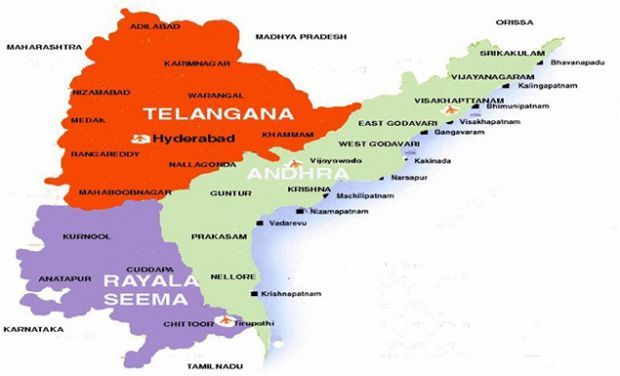
Call it coincidence or design, river Krishna is back to some historical significance. Andhras built Amaravati, on its banks, as capital city way back in 3 Century BC and now with the report on Sivaramakrishnan Committee on capital is out, the government has sent enough feelers that the Vijayawada, Guntur, Tenali and Mangalagiri (VGTM) region will be a suitable location for capital.

Incidentally, VGTM, if decided, probably happens to be the 13 capital location of Andhras who had their first capital here centuries ago. Andhras were never at peace as far as the capital city is concerned. As per known history referred in the ancient Sanskrit Indian text Aitareya Brahmana (800 BC), the journey of the Telugu speaking people that began with Assaka Maha-Janapada settlement between Godavari and Manjeera rivers in southern India served as the first capital of Andhras.

The capital was then shifted to Dharanikota (present Amaravati) during 2 century BC to 2 century AD under Satavahana rulers who ruled most of the country from here. It was then shifted by Ikshvaku dynasty to Vijayapuri (Nagarjunakonda) on the banks of Krishna in the same century. The capital was again shifted to Kanchipuram in Tamil Nadu during Pallava rule from 4 to 6 century. Later, it was Kodur, Kapotapuram, Vengi and Vinukonda which served as capital cities during the rule of Bhihatpalayanas, Anandagotrikas, Salankayanas and Vishnukundins.

The seventh capital took shape at Warangal during the rule of Kakatiya and Chola dynasties for a robust 600 years. Then was the golden era of Srikrishnadevaraya’s Vijayanagara empire with Hampi in Karnataka as capital during which period Telugu was regarded as the best of the languages in the country. However, the capital for Andhras was torn between Hampi and Golconda/ Hyderabad followed by Madras Presidency under the British till Independence.

Later, the separatist Telugu movement by the legendary Potti Sriramulu and Tenguturi Prakasam Pantulu led to the first Andhra state on linguistic basis with Kurnool as capital in 1953. Later, the same was merged with Hyderabad after the Nizam dynasty gave in to the Indian government in 1956. While Hyderabad remained as the capital city of Telangana post division of the Andhra Pradesh in February, 2014, the rest of the region which retains the original name is scouting for the capital city.

However, historians opine that selection of VGTM for capital is more of the political convenience than a historical significance. “Historically Andhras or Telugu people had many capitals under several dynasties. The region near Amaravati is just a political decision and no historical perspective to it,” said Professor of History V. Ramakrishna of Hyderabad Central University.

source: http://www.thehindu.com / The Hindu / Home> News National> Andhra Pradesh / by Appaji Reddem / Vijayawada – September 03rd, 2014

Vijayawada has a history to be proud of

Picture for representational purpose

Vijayawada: 

Vijayawada city, which was declared the state capital, has an history of over 2,000 years, it being a trade centre, logistics hub and an education centre. As per inscriptions of 927-933 of second Yuddamallu, Vijayawada ganed prominence as Rajendracholapuram. The city was known as Bezwada, Hechavada and Vijayavatika and at last came to be called Vijayawada. The city has a great history since Satavahana period.

Chalukyas developed it and constructed Siva, Durgamalleswara and Kartikeya temples. The city is noted for its Buddhist culture too. Vijayawada became famous during Vishnu-kundinis rule. They developed Undavalli, Seetanagaram, Mogalr-ajpuram and Indrakeel-adri caves. An anicut was constructed across Krishna River in 1855 and Prakasam Barrage constructed in 1953.

Vijayawada, though not the district headquarters, emerged as an important junction connecting both North and South India due to its railway junction.With a population of over 10 lakh people, the city is an education hub attracting thousands of students from all over AP, Telangana and other neighbouring states.The city’s most famous landmark is the Kanakadurga temple atop Indrakeeladri, which thousands of devotees visit daily.

source: http://www.deccanchronicle.com / Deccan Chronicle / Home> Nation> Current Affairs / by DC Correspondent / September 05th, 2014

‘Golconda diamonds a misnomer’

Branding the Krishna valley diamonds as Golconda diamonds resulted in depriving the Guntur-Vijayawada area the credit of being the land of the legendary diamonds. (Photo: DC/File)

Hyderabad: 

Guntur and Vijayawada lost their diamond hub status due to the rise of Golconda under Qutub Shahi rule, says Prof. Madhavan. Emphasising that the 350-km NH 9 connecting Hyderabad and Bandar via Vijayawada as the ideal model of a corridor, Prof. Madhavan, a renowned geologist and academic, said that it qualifies to be called the diamond corridor.

Guntur and Vijayawada occupy a unique position in the world of diamonds. The geologist said that branding the Krishna valley diamonds as Golconda diamonds resulted in depriving the Guntur-Vijayawada area the credit of being the land of the legendary diamonds, and in glorifying Golconda which was about 300 km away from the mining scene. The world now has a wrong impression that diamonds were found near Golconda which is far from the truth.

He said that Guntur-Vijayawada and the corridor connecting Bandar and Hyderabad should be given heritage status.

source: http://www.deccanchronicle.com / Deccan Chronicle / Home> Nation> Current Affairs / by DC Correspondent / September 07th, 2014

The vanishing edifices of Bheemunipatnam

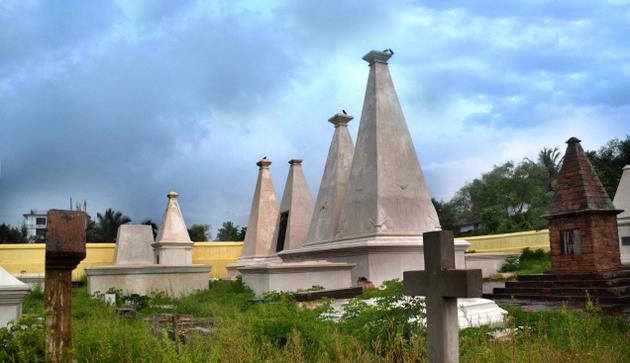
A view of the 17th century Dutch Cemetry at Bheemunipatnam. - Photo:C.V.Subrahmanyam / The Hindu
A view of the 17th century Dutch Cemetry at Bheemunipatnam. – Photo:C.V.Subrahmanyam / The Hindu

The town of Bheemunipatnam, 20 km. from here, is not only the second oldest municipality in the country, but has a rich heritage of both Buddhist and Colonial period. Historians say that the town was a trading centre during the 2 century Buddhist era and the colonial period and was an early settlement both for the Dutch and the British.

Though there are no remnants of the Buddhist period in the town , the excavated Buddhist settlement on the hills near to the town such as Pavuralakonda, Thotlakonda and Bavikonda suggest a link.

But there is still ample evidence of the early Dutch and English settlement. And it is only a few years from now, even that will be erased from the face of the town, thanks to the rampant destruction of the historic edifices.

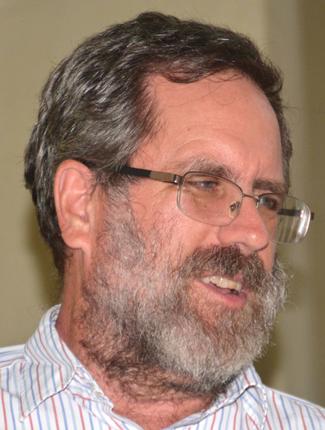
Robert Schick archaeologist from American Center of Oriental Research who is documenting the antiquity of Bheemunipatnam. Photo: C.V. Subrahmanyam / The Hindu

According to Robert Schick, an archaeologist affiliated with the American Centre of Oriental Research in Amman, Jordan, a 1995 study documented the presence of about 40 buildings belonging to the 17 to early 19 century Dutch and English settlement.

Dr. Schick who is on his third visit to the port town along with his colleague and fellow archaeologist Micaela Sinibaldi, to document the latest status on behalf of INTACH, informed The Hindu, at present only 20 are left. “A couple of them are still standing, though in dilapidated condition, the rest are totally rundown and a few have been replaced by modern concrete structures,” he said.

Notable among the ones that have been razed to ground are the magnificent sea-facing bungalow of 116 doors, the Governor’s House and the Gali Medha or the round building.

The archaeologist, expressed surprise on the gross ‘lack of will’ to preserve the structures. “It is not the same in the west. In Europe, many a town have been retained to preserve the core medieval flavour for posterity. Historic buildings are not mere sites, but are laboratories with a wealth of information and they define the character of the town or city,” said Dr. Schick.

The coordinator of INTACH’s Buddhist sites in AP, Rani Sarma, pointed out that with every passing day, the situation is worsening and the land is being encroached upon.

source: http://www.thehindu.com / The Hindu / Home> News > National> Andhra Pradesh / by Sumit Bhattacharjee / Visakhapatnam – September 01st, 2014

The Dutch Connection

Bheemunipatnam still continues to attract tourists, but something has to be done for the upkeep of the ageing structures

Nestled by the bay about 18 km. from Visakhapatnam, this sleepy fishing town was the hub of activity on the eastern coast a few centuries ago. Bheemunipatnam which got its name from the mythological hero Bhima (the second among the five Pandava brothers), has the record of being the second municipal town in India (after Surat) and was once a flourishing Dutch Colony on the east coast. Though its neighbour Visakhapatnam has out beaten it in the course of time to become a sprawling metropolis, Bheemunipatnam continues to bask in its past glories. History points out that when Bheemunipatnam was a flourishing Dutch colony and a major port for import and exports the town of Visakhapatnam was considered to be its subsidiary.

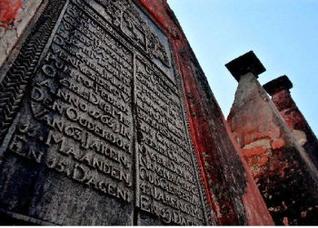
From the past Inscriptions in Dutch on a tombstone at the 18th century flagstaff cemetery in Bheemunipatnam, at left Gaali Meda (The round building) / The Hindu

History

The Dutch moved to this coastal town some time in the mid of the 17th century, when the local areas were under the control of the Golconda kings. Initially the Dutch used the port to export rice and later switched to jute. Two jute mills also sprang up in the vicinity of the town in the mid 19th century. One was called as Chittivalsah Jute Mills and the other was known as Nellimarla Jute Mills, both are operational till date.

The town was besieged and ransacked on several occasions. The marauding Marathas ransacked and burnt the town in 1754, it was again destroyed in the Anglo-Dutch wars of 1781 and 1795 and it was finally handed over to the British in 1825 following a treaty in 1824. Subsequently, it became a peaceful Anglo-Dutch settlement.

Remnants of the past

Though many old buildings have been demolished to accommodate newer structures and a few have just withered away with the passage of time for lack of maintenance, a few moss-stained edifices continue to stand firmly to give testimony of the glorious past.

The oldest among such structures is the cemetery at Kummaripalem, a small hamlet on the northwest side of the town. The oldest grave is that of one Frederick Kesslerus and it dates back to 1661. It is the oldest surviving Christian grave in this part of India. The second oldest cemetery is the Flagstaff Cemetery where the tombstones still stand like monuments against the blue waters of the bay. This cemetery has virtually become the landmark of Bheemunipatnam.

Both the cemeteries would have been lost in the annals of time but for the initiative taken by 73-year-old Roberts, a former officer of Chittivalsah Jute Mills. His timely intimation to the London-based British Association for Cemeteries in South Asia (BACSA) saved the day. The association responded in time with some funds for renovation and restoration. Today the cemeteries are under the Government of AP’s Archaeology and Museum Department and have once again become the subject of neglect.

St. Peter’s Church

The church was consecrated on March 17, 1864 by Bishop Gell, in honour of St. Peter.

The design was made with the help of the draughtsman of the 38 Madras Infantry and it was estimated to cost Rs.4,528 with an additional Rs.2,206 for the tower. Gothic in style and architecture, the church has a unique stained glass painting depicting Christ’s baptism and crucifixion just behind the altar. This piece was specially ordered and imported from London for an additional cost of Rs.1,000 in those days. Every aspect was taken care of, right from the arches to the granite altar and from the handsomely carved teak furnishing to the floor.

Gaali Meda

This was another landmark of Bheemunipatnam till a few years ago. This round shaped building was popularly known as the ‘Gali Meda’ (Tower of air). This building was part of the Dutch Governor’s Bungalow, from where a constant vigil was kept on the sea to determine the likely weather, spot approaching ships and to watch for enemy movements. This building also featured in a few hit films like ‘Maro Charitra’ and its Hindi version ‘Ek Dhuje ke liye’. This 24-feet diameter building was demolished a few years ago.

The town still continues to attract many tourists, but something has to be done for the upkeep of the heritage structures. Otherwise they will soon fade away into oblivion.

SUMIT BHATTACHARJEE

source: http://www.thehindu.com / The Hindu / Home> Features> MetroPlus  / by Sumit Bhattacharjee / August 18th, 2007

Man who brought television to India passes away

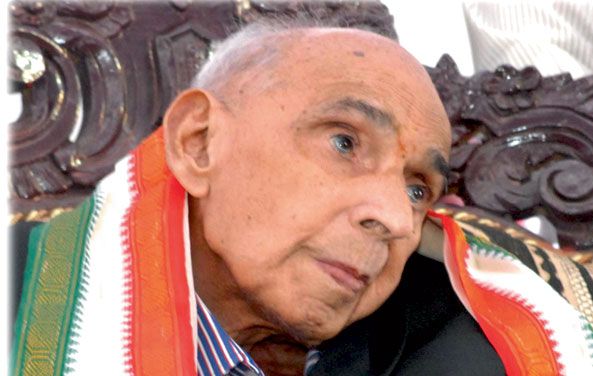
Mallipudi Srirama Sanjeeva Rao

Kakinada:

Several politicians expressed their condolences at the passing away of former Union minister Mallipudi Srirama Sanjeeva Rao, 86, on Wednesday afternoon at his residence in Kakinada.

He is best known as the man who brought TV telecast to India, when the Asian Games were held in 1982. He is the father of former Union minister M.M. Pallam Raju and son of former PCC president and freedom fighter late Mangipudi Pallam Raju.

The second generation Congress leader had been suffering from cerebral paralysis for the past two decades. He is survived by two sons, former Union minister M.M. Pallam Raju and businessman M. Anand. His wife Raja Rajeswari passed away 35 years ago.

His family had close political relations with the Nehru family for several decades. His father Mallipudi Pallam Raju had participated in freedom movement along with Pandit Jawaharlal Nehru.

Sanjeeva Rao studied BE in Gundy Engineering College at Madras and Imperial College of Science and Technology at London. He also worked as a research scientist in AII Research Laboratory in London and developed a sophisticated secrecy system for the Army.

He was elected as an MLA in 1970 from Ramachadrapuram constituency and later he was elected as member of Lok Sabha from Kakinada constituency thrice from 1971 to 1984. He held the post of Union minister for electronics and communication. Television in India was first introduced during Mr Rao’s regime and he inaugurated the first TV tower at Kakinada.

source: http://www.deccanchronicle.com / Deccan Chronicle / Home> Nation> Current Affairs / DC Correspondent / September 04th, 2014