Category Archives: Business & Economy

‘Efficient distribution network vital for pharmaceutical market’

“Medical Detailing, Force Effectiveness and Automation will be the key in exploiting the expanding pharmaceutical market in Sri Lanka, said K. ShivKumar, Managing Director, Eisai Pharmaceuticals India.

Developing excellent Medical Detailing Force, Effectiveness and Automation strategies will help in identifying the right customers by answering key questions like – which markets, which target audience, why and how, how often and with the right message.

Alembic Pharmaceuticals, Supply Chain International Business, Vice President Himanshu Saxena said, “Supply chain and distribution is the most important aspect of the pharmaceutical business to ensure that drugs are delivered to the end patient quickly and in a safe condition”.

Local pharma industry should implement convenient and implementable technologies designed to manage the supply chain to efficiently maintain adequate stocks and meet ever-changing demand cycles. This would help reduce the pressure on the overall pharma business and ensure that sales are not affected”.

“Even if the manufacturing and production of drugs is done using GMP norms, the products remain unfit for consumption if the safety of the drugs is compromised en route to the end patient.

Also, since pharmaceutical organisations in Sri Lanka are custodians of the products, it is imperative that they ensure an efficient distribution network so that patients can consume quality drugs in time.

Emerging countries like Sri Lanka can draw learnings from new and innovative strategies adopted by countries like India who have passed this stage despite dealing with similar infrastructure challenges.”

According to Sri Lanka Export Development Board sources Sri Lanka is expected to increase the value of the local pharmaceutical manufacture market share from Rs 4 billion to Rs 18 billion within another 4-5 years time.

source: http://www.dailynews.lk / Daily News, Sri Lanka / by Indunil Hewage / Wednesday, October 23rd, 2012

Shilparamam laps up Conference of Parties windfall

Hyderabad:

The biggest beneficiary of the recently concluded Conference of Parties (CoP-11) could have been Shilparamam, the traditional crafts village located at a stone’s throw away from the event’s venue in  Hitex. According to officials, the place saw an increase in footfall during the event which ended on October 19. Records reveal that around 3,000 foreign delegates had visited the crafts park in the last two weeks.

In view of the biodiversity meet, which lasted 19 days, more than 400 additional stalls were set up in the bazaar and stall-owners reported almost a 20% jump in business. “Some of the stall-owners have made profits ranging anywhere between Rs 1 lakh and Rs 5 lakhs, thanks to the various delegates of the biodiversity meet,” said a Shilparamam official.

The night bazaar at Shilparamam, which had received a lukewarm response ever since it was inaugurated in February this year, also came alive with several delegates thronging the stalls after the daily wrap up. The bazaar was kept open till 1am during CoP-11. Various programmes organised on the eve of the biodiversity meet also helped draw local visitors to the village, officials said. To the officials’ surprise, around 14,000 visitors made it to the bazaar over the last weekend.

GS Rao, Officer on Special Duty (OSD), Shilparamam, said, “In connection with CoP-11, we had organised close to 44 cultural programmes at the bazaar. That apart, we had also planted 24,700 plants. We had in fact, set up close to 50 stalls highlighting the importance of the biodiversity of the region.”

Officials said that, thanks to the meet, the infrastructure at the bazaar had been improved. “We have also added a cultural centre at the bazaar,” Rao said. Authorities have decided to continue the cultural programmes and plan to run the additional stalls till December.

source: http://www.timesofindia.indiatimes.com / Home> City> Hyderabad / TNN / October 22nd, 2012

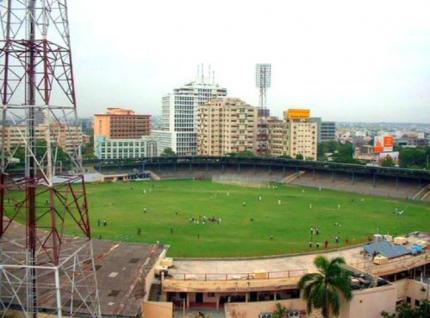
294 stadiums in Andhra Pradesh to have malls

It pays to have a sports-loving Chief Minister. N. Kiran Kumar Reddy, a cricket enthusiast, has approved a mega sports infrastructure development scheme for the state costing Rs. 200 crore.

The government will build sports stadiums in each of the 294 Assembly constituencies in a phased manner to give a fillip to all forms of sport. Shops will be built within the complex and given on lease/rent on the lines of the Lal Bahadur Stadium in Hyderabad.

New stadia will boost all sports

The state government has sanctioned Rs. 200 crore for construction of the sports stadiums subject to government land being provided for the purpose to the Sports Authority of AP.

Each of the indoor and outdoor stadiums will cost Rs. 2.10 crore and Rs. 2.42 crore respectively.

Keen to develop sports ever since he took over the reins of the state, Chief Minister N. Kiran Kumar Reddy recently announced the formation of sports authorities at village and mandal level.

“Government, in a step towards development of sports, has taken a policy decision to go for construction of a sports stadium in each of its Assembly constituencies in a phased manner,” said secretary youth advancement, tourism and culture (sports) secretary Luv Agarwal.

The government’s approval came after the SAAP MD submitted a detailed proposal with an action plan, estimates and design of the sports infrastructure to be developed by the SAAP in the state.
All the popular major outdoor and indoor sports / games will be accommodated.

The outdoor stadiums will have facilities for athletics (200-metre track), cricket, basketball, football, volleyball, tennis, kabaddi and kho-kho.

The indoor stadiums will be for badminton, table tennis, carom, chess, and gymnastics with a multipurpose gym.

In order to provide a source of revenue to the stadiums to meet their maintenance costs, shops will be constructed within the complex and given on lease/rent on the lines of the Lal Bahadur Stadium in Hyderabad.

source: http://www.asianage.com / Home> Metros> Hyderabad /by C.R. Gowri Shanker, DC, Hyderabad / October 2oth, 2012

Thread BARE


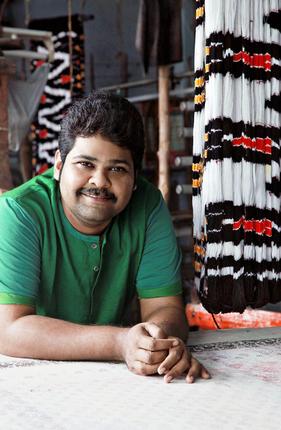
Gaurang Shah

Gaurang Shah was lured by the weft and the warp long before the fashion industry turned its spotlight on handlooms

Revival is a word one often comes across in the fashion industry, in the context of ancient crafts, techniques and weaves. “It’s an overrated term,” laughs Gaurang Shah, the man who has been working with weavers for a decade. “When my brother and I were growing up, we didn’t know big words like ‘revival’. We grew up seeing our mom wearing the best of handlooms — Kanchi cottons, Bengal saris with kantha work, khadi and Uppada — and were drawn to textures born from the loom. Nine years ago when I thought of sourcing and selling saris, I could only think of handlooms,” he explains. Gaurang today liaises with weavers in 200 looms he established in villages in the outskirts of the city.

A day before he left for Dubai to participate in Numaish 2012 with his line Ardhangini featuring Kalamkari on Kanjeevarams, Gaurang says, “I’ve always been doing this — egging on my weavers to develop new and intricate patterns and challenging them with new textures. Now that I’ve participated in Lakme Fashion Week twice and the Lavera section of Berlin Fashion Week, people notice me more.”

A 30-second video shot by artist Laxman Aelay gives us a glimpse of the process of Jamdhani work on khadi. Gaurang is excited about showing this video and his line Ardhangini in Dubai. “Prominent Indian designers like Masaba Gupta and duo Shivan and Narresh are taking part in Numaish 2012. And I am told the audience predominantly consist of Indians, which is why I am confident of Ardhangini,” says Gaurang.

The designer has slightly tweaked the Ardhangini collection he showed early this year at Lakme Fashion Week to include Kota ghagras teamed with bandhini dupattas, garments with straight cuts with kalamkari work and saris. Gaurang is relatively a late bloomer in fashion week circuits, but he’s been in the field of handlooms for 13 years. The business that comes from his family store Indian Emporium remains his core strength while fashion weeks give him the added spotlight. “I’ve had loyal clientele for years. Some people have a tendency to go to designers in the spot light. Even they have returned to me after these fashion weeks. I guess the glamour quotient helps,” he laughs.

In 1962, his father established the store at Basheerbagh. “My brother and I used to go to the store after school and help dad with the stocks and manage the store. We got used to looking at fabrics, colours and textures. Apart from saris, we became famous as a matching centre for blouses. Those days, you didn’t have too many fabrics — only two by two and cotton,” he says.

Years later, when they moved to Begumpet and Gaurang and his brother joined the business, Gaurang introduced hand woven saris. “After my graduation, I studied interior designing for a couple of years. So I didn’t have formal training in fashion. I was interested in handlooms and didn’t know where to start,” he confesses.

He remembered the enviable collection of saris his mom had and set out to source the best. “I liked the Kanchi cotton saris with silk borders stocked at Usha’s store in Chennai, bought some of the saris and stocked a limited collection in our store,” he says. One thing led to another, as Gaurang got introduced to weavers who deal with Uppada, Kota and khadi through some of his loyal customers and friends. “I persuaded the weavers to give me something different. For example, I like the Mughal buttis of Agra and asked one of the weavers to replicate the pattern. I began drawing and sketching patterns for weavers, went to the looms and learnt the limitations under which they work and why they are reluctant to change,” he says. Gaurang could work around limitations but not the reluctance to change. “I don’t work with weavers who refuse to change with the times. There are occasions when a few weavers have sold off my designs elsewhere and I got to know later through my clients. At one point, in the fag end of 2009, I thought of closing down all this sari business,” he recalls.

Around that time, he met up with his friends in Mumbai. “One of my friends focussed on Maheshwari and another on printed Tussars in Pune and so on. As a group we used to hold annual exhibitions of woven saris in Mumbai and Delhi. We were bored with these exhibitions and the tedious process of carrying the load from one city to another. We thought of opening a permanent store for handlooms. We established Vaya (which means weaver) and Mumbai has been a receptive market for handlooms,” says Gaurang.

This made Gaurang reconsider his decision to stop working with weavers. “I had sold all my pending stock and wanted new designs and weaves,” he says. With the help of his master weaver, he reached out to more weavers and established looms. Apart from sourcing from weavers in different parts of the country, Gaurang helped set up 200 looms in the outskirts of Hyderabad, in which Uppadas, khadi, Banaras and Kota saris are woven.

Gaurang feels Hyderabad is the best place to be for a designer. “Customers always want something new, so you are on your toes trying to innovate with the weaves,” he says.

The saris from these looms had the edge over others with the weavers willing to do intricate Jamdhani work on khadi and Kota. Gaurang felt the need to broaden his base and applied to the Lakme Fashion Week, only to be rejected twice. “Handlooms are what I believe in and I wasn’t willing to budge. The third time, I got a slot for a small show. The second time around, it was a larger show where I featured Ardhangini and I managed to get Kirron Kher as the showstopper,” he says.

Kirron Kher displays a creation by Gaurang Shah. Photo:PTI

If the first collection for Lakme was dominated by tones of white, he explored the other end of the spectrum with bright vermillion and yellow hues in Ardhangini. “The collection was a hit. Even today people call and ask for the sari worn by Kirron Kher,” says Gaurang. The designer has no qualms in accepting that lobbying is an integral part of fashion weeks. He was awarded the best designer for Indian textiles and also participated in Lavera section of Berlin Fashion Week. “This posed new challenges. I had to design western silhouettes. We designed jump suits, off-shoulder dresses and anarkalis in khadi with Jamdhani work in floral patterns,” he says.

After creating high-end khadi saris with Jamdhani, he is now focusing on Jamdhani on Kota saris. “You get six yards of fabric and the possibilities are limitless,” he smiles.

source: http://www.TheHindu.com / Home> Life & Style> Fashion / by Sangeetha Devi Dundoo /  Hyderabad, October 19th, 2012

US FDA may inspect Dr Reddy’s Mexico facility this month

Hyderabad:

American drug regulator US FDA, which issued an import alert on products made in the Mexico unit of India’s Dr Reddy’s Laboratories, may visit the facility for an inspection later this month, the company said.

In a statement to the Securities and Exchange Commission of USA, DRL said it believes that the Detention without Physical Examination (DWPE) alert issued by USFDA is of a temporary nature and that it is not expected to have a material long term effect on the company’s Mexican operations.

“The company is working collaboratively with the USFDA to resolve the matters contained in the warning letter, and has been informed of an inspection by the USFDA of its Mexico facility during the last week of March 2012,” the SEC filing said.

“Nonetheless, the company cannot be assured that satisfying the USFDA’s concerns will not take longer than currently anticipated or that the USFDA will not request additional corrective actions that would result in the DWPE remaining in effect longer than currently anticipated,” the filing added.

In November 2010, USFDA inspected the company’s Mexican facility and issued audit observations relating to the process for manufacture of Active Pharma Ingredients (API) and steroids, to which DRL responded by agreeing to implement certain corrective actions.

On June 3 last year, the company received a warning letter from the US regulator seeking further clarifications and corrective actions on some of the prior audit observations to which the company had previously responded.

On June 28, USFDA posted an import alert, or DWPE, on its Web site for certain specified products made at the facility.

The Mexico facility produces intermediates, API and steroids.

It is thus unable to export some API and steroids to its US customers.

source: http://www.TheHinduBusinessLine.com / Home> Companies / by PTI / Hyderabad, March 20th, 2012

World Egg Day celebrated

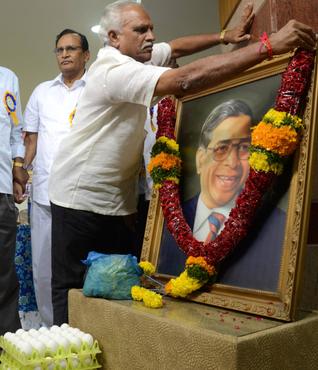
Gannavaram MLA Dasarai Balavardhana Rao garlands the portrait of B.V. Rao, founder of the National Egg Co-ordination Committee (NECC), at World Egg Day celebrations at Enikepadu in Vijayawada on Friday. /  Photo: V. Raju / The Hindu

A special poster which states that egg is vegetarian was released on the occasion

Eggs are the cheapest food item available but yet provide all the nutrients a person needs, said Vijayawada Poultry Farmers Welfare Association President Mulpuri Lakshmana Swami.

Speaking at a special programme organised to celebrate World Egg Day by the association, he feigned ignorance at such a special day existing for promoting consumption of eggs, but opined that egg must be made a staple in everybody’s diet. “Everyone should eat at least two eggs per day for a healthy body”, he added.

Eating one egg per day from childhood will enable your body to protect itself from all the harmful changes in the environment said Gannavaram MLA D.V. Balavardhana Rao, while formally inaugurating the programme. All the essential vitamins like A, D, K, I and especially the most important one, proteins are present in eggs, he said. Eating one egg a day is a healthier option than taking all the artificial dietary supplements available in the market, he observed.

Further awareness was created on how eating eggs would protect people from mental stress, reduction of cholesterol, prevention of Cancer, Alzheimer’s, Parkinson’s and Heart problems at the celebrations through the various speeches and presentations. A special poster which states that egg is vegetarian was released on the occasion.

National Egg Co-ordination Committee (NECC) President and Advisor Bala Swami, Animal Husbandry Joint Director Damodar Naidu, NECC Zonal Chairman K. Prem Kumar, Broiler Association President G. Buccha Rao, Srinivas Hatcheries Joint Director K. Somi Reddy and Technical Director T. Krishna Reddy also participated in these celebrations.

source: http://www.TheHindu.com / Home> News> Cities> Vijayawada / by Staff Reporter / October 13th, 2012

Milagrow HumanTech dedicates RedHawk robot to Saina Nehwal

Plans to give 5% of sales proceeds from the special edition product to Saina and 1% to Gopichand’s badminton academy

Milagrow HumanTech, a Gurgaon-based provider of TabTop PCs and domestic robots, has dedicated its domestic robot ‘RedHawk’ in the name of Saina Nehwal, who won the bronze medal for badminton at the recently-concluded London Olympics.

The Milagrow Redhawk, classified as a robotic vacuum cleaner, performs multiple tasks to ensure that its owner’s home is clean by the time he or she gets back from work. The bag-less model has a one-litre dust bin to store the dirt it collects. This battery-operated robot uses six different modes to clean effectively with minimal noise.

“Saina is the cause of national cheer and pride. Her story must inspire millions. We are also honouring Pullela Gopichand for his yeoman service to Indian badminton,” said Rajeev Karwal, founder and chief executive (business and knowledge solutions), Milagrow.

Milagrow plans to give 5% of the sales proceeds from the special edition product to Saina Nehwal and 1% to Gopichand’s badminton academy.

“We decided on launching the special edition products before the Olympics started, for all the medal winners and once they were back we met them to finalise the details of the special edition launches. You will hear the launches in the names of other winners soon. We are not looking for any endorsement from them but honoring them. They will inspire a billion. We feel that this initiative is a way of encouraging the athletes to give their 100% not only during Olympics but also in the future whenever they are competing,” Karwal added

source: http://www.Business-Standard.com / Home> Economy & Policy / by K Rajani Kanth / Hyderabad, October 09th, 2012

The biodiversity bargain

What will it cost to save the world’s forests and boost the life prospects of its seven billion people? From October 8-19, India is hosting a meeting in Hyderabad of the United Nations Convention on Biological Diversity. The assembled countries will consider how to raise the resources necessary to achieve the ambitious Aichi Biodiversity Targets, adopted two years ago at the last such meeting in Japan.

The Aichi targets call for cutting by half the rate of loss of the planet’s natural habitats, including forests, by 2020. In Hyderabad, governments will be presented with the likely costs of scaling up efforts to achieve that goal.

One assessment estimates that about $40 billion a year will be needed to halve rates of deforestation and ensure sustainable management of forests in developing countries by the target date. The cost may seem significant in a world of rising unemployment rates, with many countries still struggling with ongoing financial and economic crises, and others staring bankruptcy in the face.

But the cost of preserving the world’s biodiversity needs to be contrasted with the enormous economic and social value of forests in terms of the benefits that they provide locally and globally. Forests ensure water supplies, counter soil erosion, and safeguard an abundance of genetic resources that will become increasingly important in developing the new products, pharmaceuticals, and crop strains needed to support the lives and livelihoods of more than nine billion people by 2050. Moreover, investing in forest conservation and sustainable land use is one of the most cost-effective means of mitigating climate change.

The potential returns from targeted investments in forests are immense. Restoring just 15 percent of degraded forest landscapes worldwide could generate up to $85 billion worth of ecosystem services every year, mostly benefiting rural and underprivileged communities. Estimates of the value of the Mau forest complex to the Kenyan economy, for example, are $1.5 billion a year. Similar estimates are underway in Brazil, Colombia, India, and elsewhere.

The cost of inaction would be considerably higher than the required investment. The annual cost of adapting to climate change has now passed the $40 billion mark, and is expected to rise every year unless we can significantly reduce greenhouse-gas emissions.

Some countries are already stepping up to the challenge. Norway is investing $3 billion to support national and international initiatives, including the UN-REDD (Reducing Emissions from Deforestation and Forest Degradation) Program, a joint effort of three UN agencies to support developing countries’ efforts to save, sustainably manage, and restore tropical forests (a range of activities known as REDD+).

Brazil has reduced deforestation rates in the Amazon by roughly 80 percent since 2005, and Norway’s pledge of $1 billion is helping to achieve further reductions. Brazil’s efforts have led to perhaps the biggest emission reduction of any country in the world – at a time when deforestation accounts for around 15 percent of global greenhouse-gas emissions.

The UN-REDD Program, launched in 2008, currently supports 44 developing countries, with 16 countries receiving direct financial and technical support.

The funding is preparing them, for example, to develop monitoring systems and build support and awareness among local communities and indigenous peoples for a fresh start to forest management.

Some are already seizing the funding opportunities under what is essentially a climate-change initiative to pursue broader sustainability goals. For example, Indonesia is seeking to establish a Green Corridor in Kalimantan (the Indonesian portion of the island of Borneo), where deforestation is not only fueling greenhouse-gas emissions, but also diminishing river flows, making it difficult in some months to transport goods by barge. Given that transportation by barge costs about $10 a ton, compared to close to $60 a ton by road, REDD+ offers a chance to hold down greenhouse-gas emissions while preserving an economically important sector.

While Norway has made the biggest commitment to UN-REDD and other initiatives to date, other donors – including the European Commission, Denmark, Japan, and Spain – are also contributing. Enlightened businesses, which will be key to meeting the 2020 funding goals, are also investing in sustainable forest management.

Countering deforestation is not without its challenges. Governance and land-tenure systems must be improved in many countries, and the risk of corruption must be addressed rigorously. In Hyderabad, countries and experts will consider how safeguards can ensure that both people and nature benefit from REDD+ activities.

Nevertheless the challenges should not mask or deflect attention from the opportunities. The UN-REDD Program is just four years old, and the best is yet to come. Whether to combat climate change or to realize wider environmental benefits, the need for enhanced financing of forests can no longer be ignored.

And there is a final imperative: 1.4 billion people currently depend for their livelihoods on forests. Annual investments of $40 billion per year could generate five million new jobs globally.

The world is struggling to fight climate change, sustain a growing global population, and find decent jobs for millions of young people. Investing in forests and biodiversity represents a root-and-branch response to these challenges. But it requires more ambitious and wider public- and private-sector support. With a price tag of around $40 billion per year, the cost of that support is, to be frank, a bargain.

source: http://www.BusinessDayOnline.com / Home / by Achim Steiner  & Braulio Dias / Wednesday, October 10th, 2012
 

A sweet tale of how neem trees yield money

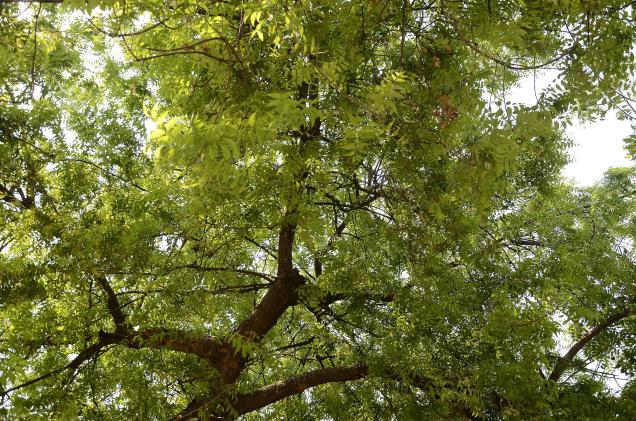
The agreed procurement price of neem leaves is Rs.100 per kg for the top quality leaf. / Photo: K.V.Srinivasan / The Hindu

Implementation of National Biodiversity Act enables people in two villages in Andhra to earn additional revenue

Some hundred neem trees have changed the lives of people in two villages, Amarchintha in Mahabubnagar district and Revalli in Nalgonda, both in the Telangana region of Andhra Pradesh.

They have helped them earn additional revenue of few thousand rupees, thanks to the implementation of access and benefit sharing (ABS) mandated under the National Biodiversity Act 2002.

SUCCESS STORY

Sharing this success story with The Hindu, Sriram Gangadhar of Bio-India Biological Corporation (BIB), Hyderabad, said that a couple of years ago, a Japanese company approached him for developing a food ingredient from neem to be mixed with water.

Generally, Japanese do not drink plain water. Instead, they prefer green tea water, energy water or medicated water. It is because of this habit that he received a proposal from the Japanese firm for developing neem-based water, which can be easily soluble and which gives a typical taste with its medicinal benefits.

Based on the Japanese inputs, BIB decided to work with local communities for collecting the neem leaves without involving any middle men, brokers or traders and under the National Biodiversity Act principles.

The company has identified two Neem rich villages and entered into an agreement with local communities, providing them five per cent on procurement price of leaves.

It is the Biodiversity Monitoring Committee in the Andhra Pradesh State Biodiversity Board that takes care of processes including signing pacts with local communities and collecting leaves.

Mr. Gangadhar says the agreed procurement price is Rs. 100 per kg for the top quality leaf. The National Biodiversity Authority (NBA), which has concluded an agreement with the BIB, gets a royalty of five per cent on the sale of the leaves.

About 2,100 kg of leaf was, so far, exported to Japan. The Indian company is keen on working with many communities on sustainable harvesting methods to meet bulk needs of Japanese firms which are for increasing the quantity of production and expanding the project to a bigger scale with a lot of investment and research.

Similarly, the Neem water has proved to be good for overall health and it is a hit. “This is one of the successful case studies on ABS,” Mr. Gangadhar says, adding that the proceeds of revenue, meant for the villagers, are immediately passed on to them.

DIFFERENT FORMS

Balakrishna Pisupati, NBA Chairman, said that in order to implement the ABS system, there are four different types of forms: Form I — application for access to biological resources and/or Associated Traditional Knowledge; Form II — transferring the results of research to foreign nationals, companies, Non-resident Indian for commercial purposes or otherwise; Form III — intellectual property rights and Form IV — third party transfer of the accessed biological resources and associated traditional knowledge.

The NBA, which till now received over 600 applications, has cleared around 100 applications, Dr. Pisupati said, adding the maximum number of applications, coming under Form III, relate to prior approval for patents.

In respect of the third party transfer of biological resources accessed and associated knowledge, the Authority has signed agreements with 17 applicants.

source: http://www.TheHindu.com / Home> News> States> Andhra Pradesh / by P. Oppili / Chennai, October 08th, 2012

Livelihoods Camp to begin today

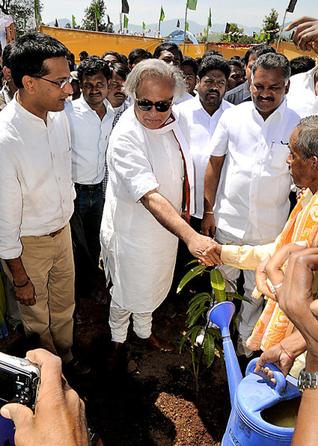
Union Minister Jairam Ramesh greeting a tribal farmer at Konthili village in Visakhapatnam district on Sunday after planting the 2 millionth fruit tree. State Minister P. Balaraju and CEO, Naandi Foundation, Manoj Kumar, are seen.  / Photo: C.V. Subrahmanyam / The Hindu

Indigenous practitioners from across the world to take part

The Naandi Foundation and Global Livelihoods Network is organising a three-day Livelihoods Camp at Araku Valley from Monday.

The camp is being organised to bring together indigenous practitioners of sustainable livelihood from across the world to learn from the experience of the tribal farmers of the Paderu Agency area. The tribal farmers here have taken up an afforestation programme in 6,000 ha in the region under which 60 lakh saplings belonging to 14 fruit and timber species will be planted under the guidance of the Naandi Foundation and Global Livelihoods Network and Mahindra & Mahindra, explains CEO, Kallam Anji Reddy Chair of Naandi Foundation, Manoj Kumar. Earlier, the network had helped the tribal farmers take up cultivation of coffee in seven mandals.

Noting that this was a monoculture, the network took up the challenge thrown by Union Rural Development Minister Jairam Ramesh to encourage biodiversity and launched the Hariyali — 60 lakh fruit tree plantation programme — in the area three years ago.

Last year, the farmers planted 10 lakh trees. This year, the number has gone up to 20 lakh saplings. In the next two years, the network is confident of achieving the target of planting 60 lakh fruit and timber saplings.

The three-day camp would enable the livelihood practitioners to participate in discussions on livelihoods themes such as carbon rhythms, agricultural sustainability, ensuring fair price for the produce, and evolving sustainable community well-being and nutritional security, president of Global Livelihood Bernard Giraud said while addressing a meeting organised to mark the plantation of the 2 millionth fruit tree as part of the Hariyali programme at Konthili village in Hukumpeta mandal of the district on Sunday.

Mr. Jairam Ramesh, Tribal Welfare Minister P. Balaraju, Paderu ITDA Project Officer Srikant Prabhakar, members of the network, and tribal farmers from the region were present.

source: http://www.TheHindu.com / Home> News> Cities> Visakhapatnam (Paderu), Visakhapatnam District / by Special Corrrespondent / October 08th, 2012