Category Archives: World Opinion

Dutch building to be made into tourist attraction

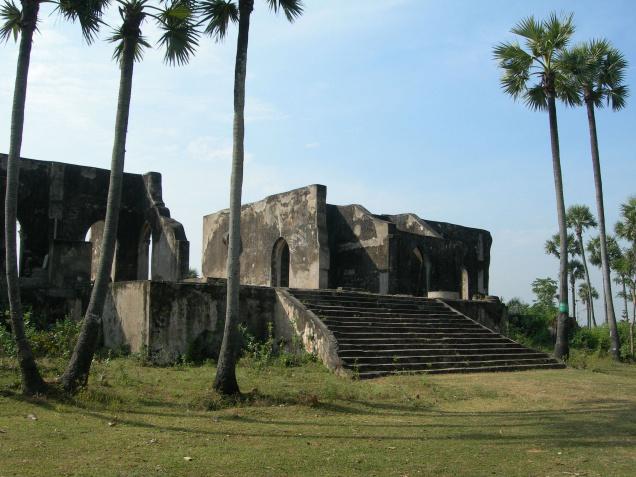
Dutch building, one of the heritage structure in Srikakulam is going to be made tourist attraction. / Photo: BASHEER / The Hindu

The elegant building was constructed about 300 years ago on the banks of the Nagavali

A Dutch building near Srikakulam Collectorate is being converted into a tourist attraction, thanks to the initiative of heritage lovers who had asked the district administration to allocate funds for its renovation. Around Rs.20 lakh will be spent for the protection of the monument. Srikakulam Collector Saurabh Gaur directed officials a few days ago to protect the monument and take suggestions from archaeological experts while renovating the structure.

The elegant building was constructed about 300 years ago on the banks of the Nagavali. Though a major portion of the building collapsed, the remaining structure reminds the viewers about the European’s dominance in semi-urban areas too in those days.

According to historians, the Dutch had a brief stay in India like the French and Portuguese. They established trading stations in several parts of Andhra Pradesh, apart from Malabar on the East Coast. Some remains of Dutch settlements can be found in Bhimili also. Though the exact history of the Dutch building of Srikakulam is not available, officials believe that the Dutch businessmen could have constructed the structure for trading and collection of taxes since many of them used to travel to Odisha via Srikakulam town.

Walls intact

The existing structure could have been used as a guesthouse too as many Dutch officials used to come to Srikakulam from Kalingapatnam port, which is some 20 km away from here. Though the roof of the structure has collapsed long ago, the walls and other structures remain intact till now.

The Indian National Trust for Art and Cultural Heritage has formulated proposals for restoration of the building. Convener of INTACH Dusi Dharmana Rao said that the restoration work should be taken without destroying the original beauty of the Dutch building. Interestingly, the existing Collector’s camp office was also constructed by Dutch rulers. However, a major portion was renovated while protecting a few structures.

source: http://www.thehindu.com / The Hindu / Home> News> National> Andhra Pradesh / by Staff Reporter / Srikakulam – March 24th, 2014

NATS vows to nurture Telugu children in US into world leaders

North America Telugu Society president Gangadhar Desu talking to The Hindu in Vijayawada on Tuesday. / Photo. Ch. Vijaya Bhaskar / The Hindu

We are bringing out a series of books in English on Telugu people, culture, says its president

There is no dearth of role models for them. Telugu children living in North America have success stories like Microsoft CEO Satya Nadella, Global coordinator of Lead India 2020 Hari Krishna Eppanapally, elected representatives like Upendra J.Chivukula, deputy speaker of New Jersey Assembly and Katragadda Aruna Miller, member of the Maryland House of Delegates, to look up to.

And lucky for them there is the North America Telugu Society (NATS) to nurture them into ‘world leaders’. The society has taken up career assistance programmes for Telugu youth.

NATS is now inviting not only successful Telugus, but successful Indians, to deliver talks. The society is also bringing out a series of books in English on Telugu people, their culture and history to take the initiative forward.

The person behind the initiative is none other than the Vijayawada-born Gangadhar Desu, the CEO of Neighbour Care chain of pharmacy stores who has been elected president of NATS for the next two years. Mr. Gangadhar did his schooling in SKPPV Hindu High School, One Town, and intermediate in K.B.N.College. He did his B.Pharma in Manipal College of Pharmacy and M.Pharma in Long Island, New York. “Satya Nadella is a couple of years senior to me,” he said recalling life on the campus.

Starting his career as a pharmacist Mr. Gangadhar, with a licence to work in any of the North Eastern States of the United States became the head of the Mergers and Acquisitions of Eckerds pharmacy in a short time. He then quit and started his own chain of pharmacy stores.

Diverse cultures

“The Telugu children here are exposed to diverse cultures, but it will be difficult for them to be world leaders unless they learn about their own roots,” Mr. Gangadhar said. The society took over 400 teachers from Andhra Pradesh to the United States to train children in various performance arts last year.

Mr. Gangadhar has high hopes for the Indian children of North America. “Five per cent of the Fortune 500 companies are run by Indians today. This will increase to 10 per cent by 2020. Indians were doing extremely well in politics too.

The Hindu Indians are being wooed by both the Republicans and the Democrats. Tulasi Gabbard of Samoan origin made news when she took oath on the Bhagvad Gita. Tulasi, who grew up in a multi-cultural, multi-religious household is a practising Hindu and yet another role model for the children, Mr. Gangadhar said.

source: http://www.thehindu.com / The Hindu / Home> News> Cities> Vijayawada / by Special Correspondent / Vijayawada – March 13th, 2014

Small victories over cancer

With two new simple technologies, testing for cancer within minutes could soon become a reality

 A team of researchers from the  Massachusetts Institute of Technology, or MIT,  has taken a significant step towards developing a method that can help detect cancer within minutes through a simple urine test. Far away in Hyderabad, a startup company has arrived at another uncomplicated and quick technique for diagnosis. It has developed a kit to detect breast cancer through a simple blood test. The finding is crucial, considering that breast cancer is the most common cancer in Indian women, killing one out of every two cancer patients.

The two researches, coming within a span of less than a month, are being watched closely by oncologists in India where cancer has become one of the ten topmost causes of death. The World Cancer Report 2014, published by World Health Organisation’s cancer agency, the International Agency for Research on Cancer, indicates that globally the number of cancer cases will increase by a startling 70 per cent over the next 20 years. Developing countries will be the most hit. Already about 70 per cent of the world’s cancer deaths take place in Africa, Asia, and Central and South America.

Which is why early detection, which can be made possible by the two tests, is critical.

The technology developed by MIT professor and Howard Hughes Medical Institute investigator Sangeeta Bhatia is like the pregnancy paper test. Through a urine sample test, it can reveal within minutes whether a person has cancer or not. Graduate student Andrew D Warren, the lead author of a paper on the technique published in scientific journal Proceedings of the National Academy of Sciences and co-authored by Bhatia, explains how the test works. “The test uses the intravenously injected nanoparticles called ‘synthetic biomarkers’. These nanoparticles are designed to passively hone onto sites of the disease and interact with proteases (the enzyme needed to digest protein). When disease-associated proteases cut pieces off the nanoparticles, the cut pieces (called ‘reporters’) are small enough to filter into the urine, where we can easily detect them with our low-cost paper test.” Higher concentrations of ‘reporters’ in the urine indicates the presence of the disease.

Conventional diagnostic tools for cancer such as colonoscopy or magnetic resonance imaging (MRI) are costly and require highly trained physicians and expensive equipment. The paper test is, in comparison, low cost and doesn’t require expensive equipment or training to use. The researchers who have run the paper test on mice with human-like tumours have found it to be quite accurate. “The test is 90 per cent sensitive (the likelihood that the results will be abnormal in people with the disease) and 80 per cent specific (the likelihood that results will be normal in people without the disease),” says Warren.

The research around the paper strip test, which started in the beginning of 2012, is in the early stage yet and uses mice. “There are still many difficult clinical studies necessary before our test could be used in people,” says Warren. So at this point, while it is impossible to guess the final cost of the test on humans, the researchers are determined to design it so that it is as inexpensive as possible.

As of now, the test focuses on the detection of colorectal cancer. But with slight changes in the synthetic biomarkers, it will be suitable for detecting several other kinds of cancers, the researcher adds.

The blood test for breast cancer, which claimed 70,218 lives in India in 2012, is, meanwhile, expected to be available commercially in five years from now. Developed by Hyderabad-based startup, Fournira Optime Diagnostics, the blood test would be about ten times cheaper than the currently available tests such as mammography, MRI and ultrasound. And its results would be available within an hour.

Early, accurate and affordable diagnoses are the three key factors that this test hopes to cover. A routine breast check, during which a woman might detect a suspicious lump, is what often leads to the first visit to the doctor. But it is often at a later stage that that evident symptom of breast cancer develops. The blood test makes an earlier diagnosis possible. The technology detects the cancerous biomarkers, if they are present in the blood, by lighting them up.

MAGIC BULLETS
Several laboratories in different parts of the world are also engaged in developing molecules that target the cancer cells specifically and in certain cases, serve as an alternative to chemotherapy. The doctors call them ‘magic bullets’. “The ‘magic bullet’ is nothing but target therapy,” says Ullas Batra, consultant, medical oncology, Rajiv Gandhi Cancer Institute and Research Centre. “In 20 to 30 per cent of the cancers, a single gene gets mutated. If we are able to identify and target that gene, then it is very effective.”

So while chemotherapy is like a bomb, which destroys everything around it, the ‘magic bullet’ is like a missile that hits a specific target, he explains. “Every year, two or three molecules are coming up for cancer that we call ‘magic bullets’. Many of these are for lymphoma, lung and liver cancer.”

The ‘magic bullet’ is usually used in Stage IV of the cancer and can be used in place of chemotherapy or in addition to chemotherapy. “In 20 to 25 per cent of lung cancer cases, especially in women and non-smokers, the ‘magic bullet’ is used upfront,” says Batra. Oncologists say it is found to be doubly effective than chemotherapy. It can control the disease with very good quality of life, doctors say.  “If chemotherapy gives the person another eight months to live, the ‘magic bullet’ keeps him going for another two to two-and-a-half years,” says Batra. it requires no hospitalisation and unlike chemotherapy, causes no hair loss or loss of appetite. “It is simply an oral tablet to be taken every day,” says Batra. A month’s dose can cost between Rs 1,800 to Rs 5,000.

CANCER VACCINES
The World Cancer Report points out that the population in developing countries, which have high prevalence of cancers such as those of the cervix, hardly believes in regular screening, such as going in for the pap smear test, for commonly found cancers. And, there is little focus on cancer vaccines — the Human Papilloma Virus (HPV) vaccine.

“Gardasil and Cervarix, the vaccines for cervical cancer , have been around for at least four years,” says Jai Gopal Sharma, head of the preventive oncology department at Rajiv Gandhi Cancer Institute and Research Centre. With time, these are gradually becoming popular. In India, while no data has been published to assess the effectiveness of the vaccines, clinical trials have shown a decrease in the development of HPV associated with some diseases after the vaccine, he adds.

The overall consensus is that while nine to 26 is the ideal and most effective age, “the vaccine can be given to a woman of any age before she attains menopause,” says Sharma. Vineet Talwar, senior consultant, oncology, Rajiv Gandhi Cancer Institute and Research Centre, adds that HPV strains 16 and 18 have been found to be the most prevalent strains that cause the cancer. “When a person is infected with HPV, it takes about 18 to 20 years to develop cervical cancer. And then too, all people do not develop cancer,” adds Talwar.


QUICK FACTS

  • Vaccine: Cervarix from GlaxoSmithKline and Gardasil from Merck & Co
  • Meant for: Cervical cancer
  • Cost: Cervarix, Rs 2,000 per dosage and Gardasil, Rs 2,800 per dosage
  • Dosage: Three doses within six months
  • Age group: 9 to 26 years or till the woman is not sexually active
  • Availability: Easily available in every hospital
Note: Gardasil protects against four HPV types or strains (6, 11, 16, and 18) and Cervarix targets HPV types 16 and 18. Gardasil is more recommended.
_____________________________________________________________________________________
source: http://www.business-standard.com / Business Standard / Home> Beyond Business> Features / by Veenu Sandhu / March 14th, 2014
Suven Life grants Taro Pharma rights to market Malathion Lotion in US, Canada, Mexico

Hyderabad :

Suven Life Sciences Ltd, a biopharmaceutical and contract research and manufacturing company, today announced that it has granted an exclusive licence and right to distribute and market its Malathion Lotion USP 0.5% to Taro Pharmaceuticals, North America.

The Hyderabad-based company said it has a US Patent and Abbreviated New Drug Application (ANDA) for it in US, Canada and Mexico.

Taro Pharmaceuticals North America, is a subsidiary of Taro Pharmaceutical Industries Ltd.

Malathion lotion is indicated for patients infected with Pediculus humanus capitis (head lice and their ova) of the scalp hair. In consideration for the exclusive licence and right to distribute and market the lotion Taro will pay Suven a royalty and the arrangement is effective until April 2028 unless otherwise terminated, a company release said without revealing financial details in a press release.

source: http://www.thehindubusinessline.com / Business Line / Home> Companies / The Hindu Bureau / Hyderabad – March 04th, 2014

IICT, German Varsity Sign Pact on Cancer Research

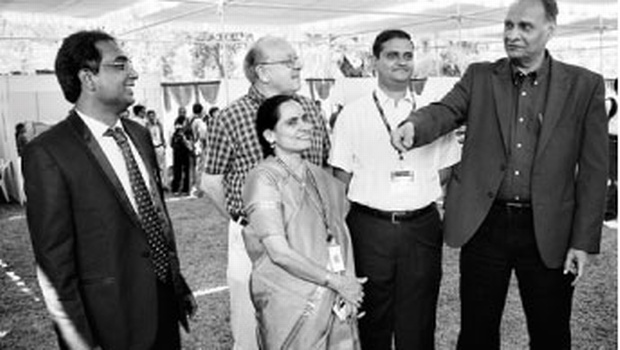
IICT natural products division head S. Chandrasekhar, CNRS research director Rene Gree, IICT director M Lakshmi Kantam, GVK Biosciences Discovery general manager KV Sharasrikar and professor Goverdhan Mehta of University of Hyderabad at a symposium in Hyderabad on Monday | A RADHAKRISHNA

CSIR-Indian Institute of Chemical Technology (IICT) and Dortmund University, Germany, have signed a Memorandum of Understanding (MoU) for taking up research work for cancer screening.

Speaking to reporters here on Monday, head of the natural products chemistry division of the IICT, S Chandrasekhar said that the objective of the collaboration is to find drugs for cancer therapy which develop resistance. ‘’If we develop a new chemical for cancer therapy we will share with Dortmund University and if they come across new drug they would share with us,’’ he said.

He said that all the tests will be done at Max Planck Institutes, Germany.

IICT is working on Alzheimer’s disease and was trying to find a better and more effective chemical than Galantamine. Chandrasekhar said.

Galantamine belongs to the family of  cholinesterase inhibitors and is used to treat Alzheimer’s disease, he said.

Chandrasekar said that the IICT and Mayo Clinic, USA, had developed four new chemicals through neem plant for treating renal cancer. “We have found that the new chemical can kill renal cancer cells 100 percent,” he informed.

He said that as part of 70th year celebrations, CSIR-IICT is organising a four-day international symposium on ‘Nature inspired initiatives in chemical trends.’ The symposium was inaugurated on Monday by University of Hyderabad professor Goverdhan Mehta. About 600 delegates from various countries including US, France, Germany, Switzerland, Japan, China and South Korea are participating in the conference.

source: http://www.newindianexpress.com / The New Indian Express / Home> Cities> Hyderabad / by Express News Service – Hyderabad / March 04th, 2014

Nizam’s Erstwhile Relic, Telangana’s Pride?

Nizam’s Lost Glory ?

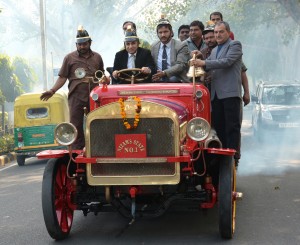
Railway Board Chairman Arunendra Kumar is on the test drive of John MorrisFire Engine, one of the priceless possessions of Indian Railways maintained at the National Rail Museum, before its participation in the 38th Statesman Vintage and Classic Car Rally to be held in New Delhi on 2nd March, 2014.

NizamsVintageHF13mar2014

This vintage FireEngine which was built by the famous Fire engineers M/S John Morris and Sons Ltd., Salfor, Manchester in 1914, completed 100 years of its existence this year (2014), coinciding the formation of Telangana, erstwhile Nizam’s state.

Will  Telangana also fight for its vintage and priceless proud possession, now that the new state is born?

(PIB)

source: http://www.microfinancemonitor.com / MF Monitor / Home / Thursday – March 13th, 2014

I don’t serve, I offer

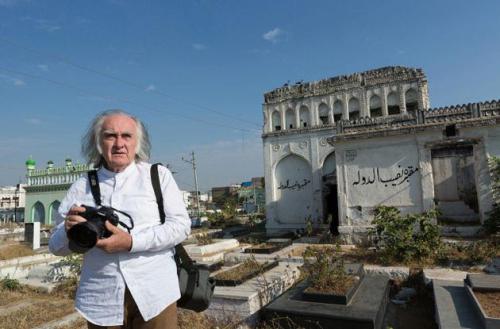
No man’s land: German photographer Thomas Luttge has been chronicling Hyderabad since 1975./ Image: Sanjay Borra / The Hindu

Following German photographer Thomas Luttge as he tramps through graveyards, in Hyderabad, looking for that munching goat and other unusual juxtapositions

“You cannot turn the cow,” says Thomas Luttge firmly. I am at an exhibition of his photographs at the Goethe Zentrum in Hyderabad. Even talented Western photographers have met their Waterloo in India. I’d asked him about his images, quite different from the usual cliché-ridden scenes. “Europeans come and look for the cows. Where are they cows? Oh here is a cow. And then they —”. Luttge shakes his head. “And there are photographers who do all kinds of tricks so the cow might turn and you can get the beautiful lines and the shape of the cow. I would never do that. I would say if the cow is like this, I have to accept it.”

Luttge, who bears an uncanny resemblance to Jeremy Bentham, moves with a spryness belying his seven decades. He has been coming to India since the 1960s. How does he avoid getting swamped by curious onlookers, I ask. “As a photographer, you are like an actor on the stage. So you have to develop something, you guide people and make them do what you want. I have trained myself in this way.”

We decide that I can tag along on one of his photographic explorations to Mir Momin ka Daira (a cemetery located in the old city).

Graveyard shift

Around us crowd thousands upon thousands of gravestones, islands in an ocean of death. At the heart lies Mir Momin Istrabadi’s tomb, who was a Persian and the original architect of Hyderabad. Luttge has been cataloguing the fate of Mir Momin’s city from his first visit here in 1975, believing that in Hyderabad the “tension of time stays open”. Like all photographers he is a scholar of the sun, a savant of the light. He approves of the morning glow around us. At this hour the necropolis is quiet. Some graves have fresh flower petals on them, the spoor of mourners.

A goat skips along munching on the flower petals, now on this grave, now on that, like a finicky guest at a buffet. Luttge, carrying both a digital camera and a medium-format camera with black-and-white film, immediately crouches down to try and frame the creature amidst a stone canopy that covers a grave. The goat suddenly grows self-conscious and leaps, even as he shoots. A quick glance at the screen. A shake of the head. “Too late,” he says. I point to more ruminants headed this way. He is not interested. Once a quarry escapes him, it escapes him forever.

Later we return to the Goethe-Zentrum. The exhibition is a distillation of half a century of work. The photographs span the globe — Morocco, China, Germany, New York. Some of the compositions are pervaded by a sense of dry humour. Humans are placed ironically. An empty Cola bottle is all that we see of humanity in a photo of a dense façade of Manhattan. Unusual juxtapositions of people and objects are a recurring motif in his work. “Life comes out of contradictions, life doesn’t come out of harmony,” says Luttge.

I examine the cityscapes — under louring skies, they seem like a photograph of a memory of a place rather than the place itself. They are in border zones between decay and growth, a kind of transitional space that reflects the semantic No Man’s Land that Luttge favours. This contrarian approach sometimes catches the viewer on the wrong foot. I pick up a catalogue and we leaf through his work. A nude pregnant woman on a beach. A souk in Morocco divided by brilliant shadows. A mist-shrouded river in Bangladesh. “I am asking something from the viewer. And, of course, for some viewers, this is also too much. They don’t want to be asked. They want to be served. The image should serve their feelings. Should serve their expectations. Should serve their dreams. And then they are happy. I don’t serve. I just offer.”

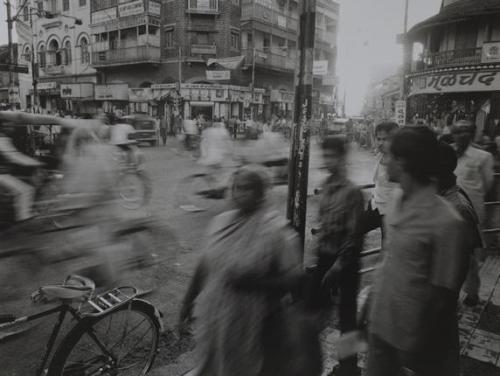
Savant of the light: Jesus Saves, Pune,1986 / Image: Thomas Luttge / The Hindu

Luttge picked up his first camera at age 12, shooting images of his garden in the family house outside Munich. Fifty years on he is still at it. The journey hasn’t been easy. “I sit at home and write hundreds of emails,” he says, looking for funders, looking for exhibition space. Ninety-eight per cent of them lead to nothing. Working in his darkroom, he can at most make one to three prints a day. “These are all originals,” he says. “They are all made in my own darkroom. I did them with all these chemicals, the same way as I did, 50 years ago. And here you get this quality which you can never get elsewhere.” Now even the photographic paper that he prints his work on is going extinct. “This is my life, there is never any guarantee,” he says. Now he is busy compiling his latest images of Hyderabad to be exhibited in Berlin later this year.

Savant of the light: Souk at noon, Marrakesh, 1966. / Image: Thomas Luttge / The Hindu

To Luttge, whenever you pick up the camera, as much as you turn it outwards, you are also turning it inward into the shadowy recesses of the self. The landscapes of the interior are as mysterious as those that can be found in the outer world.

Jaideep Unudurti is a writer and the founder of the Hyderabad Graphic Novel project 

source: http://www.thehindubusinessline.com / Business Line / Home> Features> Blink / by Jaideep Unudurti

Satya Nadella’s story to inspire youngsters with humble backgrounds

Hyderabad-born Satya Nadella’s elevation as the CEO of Microsoft has not only made Indians, especially Telugus, proud but it will definitely inspire many youngsters with humble backgrounds, industry leaders feel.

An average student of Hyderabad Public School (HPS) here Nadella did not study at IITs or any top management school, which is often perceived as a must to make it to the top bracket.

The Microsoft board Tuesday named the 46-year-old Nadella as its CEO, the global software giant’s third after Bill Gates and Steve Ballmer.

While the families of both Nadella and his wife Anupama have refused to share their thoughts citing privacy, Nadella’s friends, the alumni of HPS and others said they were thrilled at an Indian making it to the top.

“He is very down-to-earth and humble person who never shows off his position or his knowledge of technology,” J.A. Chowdary, founder director of Software Technology Park of India-Hyderabad told IANS.

Chowdary recalled his meetings with Nadella when the latter was at Sun Microsystem Inc. and also after he joined Microsoft in 1992. “He is always a learner of new things from every individual he meets. As he never shows off, people who meet him also freely share their thoughts with him,” said Chowdary.

“I admire his technology vision. With a man like him at the helm, Microsoft will reach greater heights,” he added. Chowdary is also thrilled that like him, Nadella also hails from Anantapur, a drought-prone district in the backward Rayalaseema region of Andhra Pradesh.

He did his BE in electrical and electronics from Manipal Institute of Technology, masters in computer science from the University of Wisconsin-Milwaukee and MBA from the University of Chicago’s Booth School of Business.

“This will encourage to young boys and girls with humble beginnings both educationally and financially. They can come up in life with sheer hard work and dedication,” Harish Chandra Prasad, a leading industrialist told IANS.

Prasad pointed out that Nadella studied at second-rung colleges. “He did not study at Stanford or Harvard. There is general thinking that the elite club comes from these top schools,” said Prasad, past chairman of the Andhra Pradesh chapter of the Confederation of Indian Industry (CII).

He believed Nadella is one more example of Telugus doing well. Padmasree Warrior, the Chief Technology & Strategy Officer (CTO) of Cisco Systems and the former CTO of Motorola, Inc. and Kirthiga Reddy, who heads India operations of Facebook, are from Andhra Pradesh.

Son of Indian Administrative Service (IAS) officer B.N. Yugandar, Nadella studied at HPS, Begumpet between 1978 and 1984. According to school authorities, he was not an out-standing student.

“Nadella has made every Indian, every IT professional, every Hyderabadi and every alumnus of HPS proud,” K. Vishweshwar Reddy, MD, Citadel Research, told IANS.

Vishweshwar Reddy, Nadella’s senior at HPS, said Nadella’s elevation was another example of average students doing well. He said Wipro CEO T.K. Kurien, also an HPS alumnus, was also not a top student.

Other famous HPS alumni include Karan Bilimoria, chairman of Cobra Beer; Prem Watsa, chairman, Fairfax Financial Holdings, Canada; Shailesh Jejurikar, vice president of Procter & Gamble’s North American homecare portfolio and Shantanu Narayen, CEO, Adobe Systems.

Andhra Pradesh Chief Minister N. Kiran Kumar Reddy and Union HRD Minister Pallam Raju also studied at the HPS.

“HPS had some magic ingredient. It was the culture and the interaction with students coming from different backgrounds. There were students from rich, middle-class and poor families and there were students from north India and south India,” said Vishhweshwar Reddy, who earlier headed Wipro HCIT and GE MSIT.

He recalled that HPS had very few toppers. “We had the opportunity to play sports and this helped a lot. This shows that it is not just technical skills and academic skills that take you to top,” he said.

Cricket was a passion for Nadella at HPS. “He was a member of the team. He was more of a batsman,” K. Hariprasad, CEO, Central, Apollo Hospitals told IANS.

A senior to Nadella by two years, Hariprasad was captain of the team. “It was a well-knit school. Somebody who has passed from the HPS and is from Hyderabad becoming CEO of one of the largest corporates of the world is a proud thing,” added Hariprasad.

(Mohammed Shafeeq can be contacted at m.shafeeq@ians.in)

source: http://www.business-standard.com / Business Standard / Home> News-IANS> Diaspora / IANS / Hyderabad – February 05th, 2014

Hussain proves yet again he has a nose for the keyboard

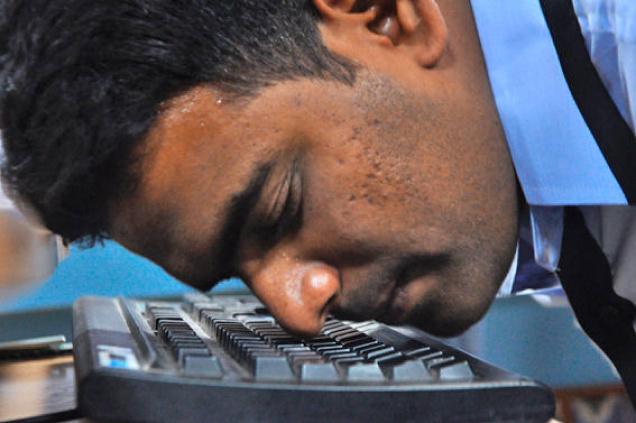
Mohammed Khurshid Hussain currently holds the world record for typing A to Z on a keyboard in 3.43 seconds. - Photo: G. Ramakrishna / The Hindu
Mohammed Khurshid Hussain currently holds the world record for typing A to Z on a keyboard in 3.43 seconds. – Photo: G. Ramakrishna / The Hindu

The youngster types a sentence using his nose in 47.44 seconds, more than half-a-minute faster than the current world record

Mohammed Khurshid Hussain, who holds the Guinness World Records for typing the English language alphabet in 3.43 seconds on a keyboard, attempted to break the record for typing a 103-word sentence in the shortest time, with his nose, here on Thursday.

It was Mr. Hussain’s second attempt to break the world record for typing the sentence ‘Guinness World Records have challenged me to type this sentence using my nose in the fastest time’ with his nose.

According to the Guinness website, the current record holder is an Indian named Neeta, who achieved the feat in one minute and 33 seconds at Guinness World Records Pavilion in Global Village, Dubai, UAE, on November 16, 2008.

Mr. Hussain’s clock stopped at 47.44 seconds when he finished typing the sentence with his nose, more than half-a-minute faster than the current world record.

“This is my second attempt to break the record. A few months ago, I typed the sentence with my nose in 54 seconds, for which I am yet to receive the certificate,” he said.

Mr. Hussain currently holds the world record for typing A to Z on a keyboard in 3.43 seconds.

The feat was achieved on February 2, 2012, according to the Guinness website. He performed the feat in the presence of S. M. Arif, Padmashree and Dronacharya awardee; Mohteshyam Ali, silver medallist at the Mr. World body building championship; Naina Jaiswal, an international table tennis player; and Iftekhar Shareef, who acted as witnesses for the record-breaking attempt.

source: http://www.thehindu.com / The Hindu / Home> News> Cities> Hyderabad / by Staff Reporter / Hyderabad – February 27th, 2014

Message in the Music

Amy Ziff, Alyson Palmer and Elizabeth Ziff of Betty

Saturday morning turned out to be a sunny morning but students of Hyderabad Public School were all charged up as band Betty gave out an electric performance.

Organised by the US Consulate General, the New York-based all woman trio were in the city to perform their brand of music with a message.

Known for using the arts to counter and raise a voice against gender-based violence, Betty, which features Elizabeth and Amy Ziff on the guitar and cello respectively and Alyson Palmer on the bass, has been a unique initiative in the States since 1986.

As they took to the stage, at least a 1,000 students cheered them on. Getting right down to business, the ladies launched into a pop number that got people’s feet tapping. However, singing an underlying message about determination and perseverance, the own compositions told the tale of a sailor which was followed by Elizabeth stressing on the importance of passion.

“Be passionate no matter what it is. No matter what situation you are in, never give up and lose your passion. Spread love and hate none.”

Following this pattern of song and sermon, the morning had messages on bullying, empowerment of the woman and equal rights, peace and love for all.

Playing own compositions, the band garnered much enthusiasm from the crowd with their rock sound, even head-banging to a few numbers. Elizabeth Ziff also had the kids doing a few robotic dance moves, keeping them engaged.

Explaining why they were in India, Alyson said, “We want to build bridges but not walls between New York and India. There shouldn’t be any difference between one and another.”

With issues like equal rights and bullying at the top of their list, the band tried to reach out to students through their music to push their point forward.

“One’s dignity can never be taken away unless it is surrendered. I believe that the students here are the future leaders not only of India but of the world,” said Amy, who appealed to students to not  bully their peers.

At the end of the hour-long concert-with-a-message, students were clamouring for more and called for an encore, which the band willingly obliged to.

While students wished to speak to the artists, the band made a quick exit, leaving their music to the talking for them.

source: http://www.newindianexpress.com / The New Indian Express / Home> Cities> Hyderabad / by Jiby Varghese – Hyderabad / February 10th, 2014