Five skaters from AP have been selected for the Indian squad that would take part in the Malaysian Open Figure Skating Competition from April 14 to 17. The skaters, including three from the city, will also attend a training camp to be held in Kuala Lumpur from April 6 to 14.
Out of the five skaters, Priyam Tated, Pratham Tated and M Vishal Anand are all from Timpany School based in the city. The other two skaters B Jaswanth Kumar and Riya Saboo are from Vijayawada. All the five skaters are medal winners in various formats at the national level. The group of five will be accompanied by P Satyanarayana, the coach of the India team.
source: http://www.timesofindia.indiatimes.com / The Times of India / News Home> City> Visakhapatnam / TNN / April 05th, 2016
For many people, push-up is a way of punishment and for a few it is a noting but a physical exercise. But for Haridasu Ramesh Kumar, a youngster from Chollangi, on the outskirts of Kakinada, push-ups provided the platform to achieve a good number of records.
Ramesh Kumar’s specialisation is in Hindu push-ups, also known as Hanuman push-ups, Judo push-ups or Dive Bomber push-ups, which he learnt from his father Govindaraju in the childhood and practises every day without fail.
Ramesh Kumar got his first national record from the Unique World Records in 2014 for doing 100 Hindu push-ups in two minutes and 19 seconds.
It was the beginning of his quest for records, which made him attend the competitions conducted by different organisations.
Merit certificates
After achieving a good number of merit certificates and awards, including a couple of honours from the Incredible Book of Records, in doing 60 Hindu push-ups in 64 seconds and in doing 102 Hindu push-ups in two minutes and six seconds, he has now shifted his focus towards achieving the Guinness Book of World Records and manifold the daily practice of push-ups.
Physical exercise
“I have started the push-ups for the sake of physical exercise in my childhood. As I grew up, I have found myself closely associated with this form of exercise and decided to achieve something in this field,” says 34-year-old Ramesh Kumar, who finished his masters in science and is preparing for competitive examinations.
“There is no need of playground or equipment to practise Hindu push-ups, as one can do it in the sit-out or in the hall. This exercise keeps us fit both physically and mentally,” he says.
I have started the push-ups for the sake of physical exercise in my childhood. As I grew up, I have found myself closely associated with this form of exercise and decided to achieve something in this field
Haridasu Ramesh Kumar
source: http://www.thehindu.com / The Hindu / Home> National> Andhra Pradesh / K.N.Murali Sankar / Kakinada – April 06th, 2016
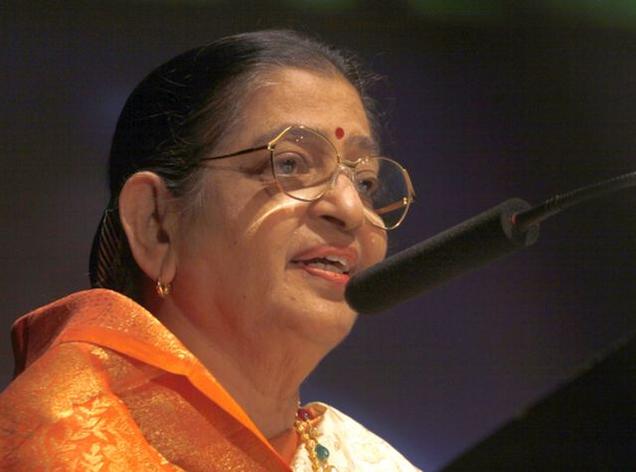
Veteran playback singer P. Susheela. File photo: Thulasi Kakkat / The Hindu
‘The queen of melodies’ has been officially credited by Guinness Book of Records for singing 17, 695 songs in 12 Indian languages.
Renowned playback singer P. Susheela Mohan, who has won many awards and earned accolades in a career spanning five decades, has added two more to her awards cabinet.
She has now been recognised by both the Guinness Book of World Records and Asia Book of Records for singing most number of songs in Indian languages. The usually reticent singer met journalists in Chennai on Tuesday to celebrate her new award.
While Guinness Book of Records has officially credited her for singing 17, 695 songs (solo, duet and chorus backed songs) in twelve Indian languages, Asia Book of Records has recognised her for singing close to 17, 330 songs.
Speaking about the awards, P. Susheela reminded everyone present that the adjudicators had only considered songs she had song from 1960s. “Please remember that I started singing from 1951,” she said.
None of this would have been possible without the work of her fans, who, by setting up psusheela.org, painstakingly catalogued the songs that she has sung over the last few decades and sent it to the adjudicators of the award.
Reflecting on the recognition, the singer said that she views it as an acknowledgement of her hard work. “There is a lot of hard work that has gone behind this achievement. Today, with so many television channels and newspapers, a talented singer can shine through quickly. But when I was singing, it was very slow and I had work my way up , step by step,” she said.
Crediting her husband for her success, she said that her husband, a doctor, was a corner stone in her life. “He fell in love with my voice and sacrificed his life so that I have a great career in playback singing,” she said.
She was candid in her response when asked why she had never considered a career in acting. “I was offered a chance to act by several directors, but I refused saying that I wouldn’t want to act even if I was paid a crore,” she said, adding, “My heart was in music.”
When asked why she is not singing anymore, the singer said that she would love to sing in movies if someone offered a good song. When she was nudged by journalists to sing her favourite song, she ended the press conference by singing Ennai pada sonnal, enna paada thondrum from Pudhiya Paravai, a hit song of 1964.
source: http://www.thehindu.com / The Hindu / Home> Entertainment / by Udhav Naig / Chennai – March 29th, 2016
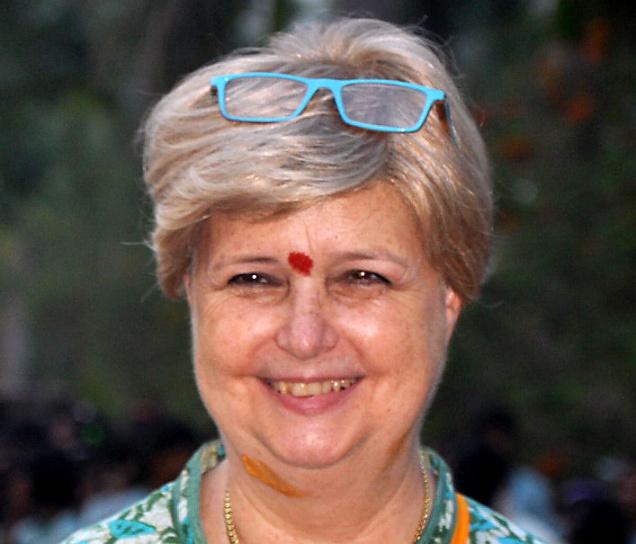
Carol Linda Faison, founder of Care & Share Charitable Trust, Vijayawada, passed away at Daddy’s Home in Gannavaram on Saturday afternoon.
In a statement, the organisation president Noel Harper said the funeral will take place on Monday evening.
An American living in Venice, Italy, Ms. Faison visited Vijayawada in 1995 and discovered the harsh reality of the street children and the plight of the handicapped here. She began to focus her efforts on helping the less fortunate children and raised funds for a laboratory for production of callipers, artificial limbs and crutches and started a special home for the handicapped.
She also built an elementary school in Manginapudi. Later, she constructed two partially self-sustainable villages — Daddy’s Home and Butterfly Hill — with a dispensary and school for destitute children.
In 1997, she founded the Care & Share Charitable Trust in India to manage all the programmes for the children here. In 2000, she also established Care & Share Italia Onlus in Italy to raise funds for the trust here.
source: http://www.thehindu.com / The Hindu / Home> News> Cities> Vijayawada / Special Correspondent / February 28th, 2016
K. Ramachnadra Rao, Lecturer in Physics and Research Director for Crystal growth and Nano-science Research Centre, Government College (Autonomous), Rajamahendravaram, was selected for the prestigious Raman fellowship for Post-Doctoral Research in the US by the University Grants Commission to carry out research on Development of Renewable Energy Recourses.
Under the fellowship, Dr. Ramachandra Rao will work at the University of Louisville under the guidance of Prof. Jessica Jesanski for a year.
According to Mr. Rao, the project is aimed at developing mechanically flexible and robust polymer films for fabrication of economic polymer-based solar cells for various applications.
Congratulating Dr. Rao, Government Arts College Principal Ch. Mastaniah said the fellowship had brought international recognition to the college.
source: http://www.thehindu.com / The Hindu / Home> National> Andhra Pradesh / by Special Correspondent / Rajamahendravaram – February 20th, 2016
Fifty girl students from Vignans University have bagged a job in Schneider Electric, said dean (training & placements) N. Usha Rani.
She said this was the first time that the company representatives had visited a University in the two states of Andhra Pradesh and Telangana to absorb students of this region into their company.
She said the selection was meant exclusively for girl students.
A total 221 girls attended the preliminary round, 99 qualified for the interview round while 50 of them bagged the job opportunity.
source: http://www.thehindu.com / The Hindu / Home> News> Vijayawada / by Special Correspondent / Vijayawada – February 03rd, 2016
Around 1,000 outstation delegates (both Indian and foreigners), who are set to make the City of Destiny their ‘home’ during the International Fleet Review (IFR) slated to be held from February 4 to 8, would be put up at around a dozen hotels in the city.
The delegates would also be treated to traditional Indian dishes wherever the Indian Navy hosts official banquets. They would also get a taste of international cuisines in the star hotels.
According to highly-placed sources in the Indian Navy, almost all star hotels (three-star and above) have been booked for the IFR delegates. All the senior naval officers of the admiral and vice-admiral ranks would be accommodated in the five-star hotels, especially those dotting the Beach Road while other delegates would be kept in three and four star hotels.
As for the cuisine, traditional Indian food from different states would be served during the official banquets including the opening and closing ceremonies as well as presidential and prime ministerial banquets. “Hyderabadi biryani, nawabi and Punjabi dishes, besides Andhra and other South Indian food are on the menu. Some of the Indian cuisines would be available at IFR villages too,” said the source, adding that Araku coffee and ‘khadi’ as a traditional fabric would also be promoted during the mega event.
A district tourism official also revealed that a special traditional lunch would be dished out to 300 delegates at an APTDC resort while they tour the tribal belt at Tyda-Ananthagiri and Borra Caves. Tribal dance would also be showcased to them at lunch time.
As of now, more than 50 countries would be participating and more than 25 chief of naval operations (CNOs) would be arriving in the city for IFR. The International Maritime Conference would have more than 85 delegates while more than 25 foreign ships are also arriving. Delegates from all major nations such as UK, USA, Australia, New Zealand, Russia, China and Japan, besides all neighbouring countries (except Pakistan) are participating in the event.
source: http://www.timesofindia.indiatimes.com / The Times of India / News Home> City> Visakhapatnam / by Sulogna Mehta, TNN / January 31st, 2016
A Scientist from the Central Institute of Brackishwater Aquaculture, Chennai, holding an Asian Seabass at Nagayalanka in Krishna district.- Photo: T. Appala Naidu
Private enterprises to be allowed to import the rare fish seed
The Ministry of Agriculture and Farmers’ Welfare has issued its final guidelines, allowing private entrepreneurs and enterprises to import Asian Seabass fish (Lates Calcarifer) seed and fingerlings.
The Union government has so far been not entertaining requests from Andhra Pradesh-based aqua enterprises to import the fish variety, fearing diseases and possible loss of native species. Primarily, aqua enterprises are keen on importing Asian Seabass from Australia, a leading country that has developed fifth generation seed of the fish. In Australia, the fish is known as ‘Barramundi’.
The guidelines are expected to bring in rapid changes in terms of fish production and economic activity.
Scarcity of seed
The supply of Asian Seabass seed by the Tamil Nadu-based Central Institute of Brackishwater Aquaculture (CIBA) and the Rajiv Gandhi Centre for Aquaculture was insufficient, given the demand for the fish in Andhra Pradesh.
“The guidelines to import Asian Seabass seed and fingerlings will enable interested aqua farmers and enterprises in Andhra Pradesh. So far, farmers in Krishna district and hatchery operators have been collecting wild Asian Seabass seed from mangrove forests and coastal belts for cultivation,” said T. Raghu Sekhar, an aqua farmer.
“Asian Seabass is arguably an alternative to shrimp cultivation in Andhra Pradesh. Allowing import of the fish seed will improve fish production. Given the high market value of the fish, farmers in the State will immediately shift from shrimp to Asian Seabass cultivation,” an expert in brackishwater aquaculture at CIBA told The Hindu .
The natural seed of Asian Seabass is found in coastal areas and brackishwater sources in Krishna district, where local communities collect it to supply to hatcheries. Asian Seabass is one of the fish species which survives in pond, river and sea.
The guidelines issued recently by the Department of Animal Husbandry, Dairying and Fisheries under the Ministry of Agriculture and Farmers’ Welfare provide for responsible fisheries with due consideration of necessary biological, technical, economical, social, environmental and commercial aspects.
The guidelines also made it mandatory that hatchery / fish farms intending to breed Asian Seabass should be registered with the Coastal Aquaculture Authority (CAA). Cultivation will be allowed based on the recommendations of the CAA. However, direct sale of imported fingerlings should not be allowed for domestic or international market.
source: http://www.thehindu.com / The Hindu / Home> National> Andhra Pradesh / by T. Appala Naidu / Machilipatnam – January 23rd, 2016
The Eastern Naval Command (ENC) is gearing up for the International Fleet Review (IFR) scheduled for February 2016. About 100 vessels from 50 countries will participate in the IFR.
In fact, the ENC has gained prominence after the Indian government focused on strengthening strategic ties with other countries as part of its ‘Look East’ policy. The defence ministry is also keen on strengthening ENC’s presence on the Eastern Sea Board.
The mega event is likely to catapult the ENC to an envious position in the Naval world. The ENC had come a long way from a small outpost in 1939 to playing a key role in the liberation of Bangladesh in 1971. It is spread across the longest geographical area amongst all the commands of the Indian armed forces. It is also the only one capable of operating nuclear-propelled submarines and plays a major role in providing security to offshore assets in the east coast.
The ENC came into existence on March 1, 1968. The ENC has been safeguarding India’s interests on the eastern sea board. Many vice-admirals of the ENC later served as the chief of Indian Navy.
“Out of 13 major ports in India, seven are located along the east coast. Around one lakh ships cross the Indian Ocean every year and around 70% of petroleum product movement of the world also crosses the Indian Ocean,” Eastern Naval Command chief vice-admiral Satish Soni told TOI.
The command that started with a small fleet now has a strong flotilla, submarine fleet and a powerful air arm, besides a well equipped naval dockyard and other units.
The Eastern Naval Command’s significance has increased after it acquired P8I, the long range maritime patrol aircraft, Advanced Jet Trainers (AJTs) and also the nuclear platform. It is the only command in the Indian Navy that has all these assets. It is also the only command with a facility for submariner training and shipwright school. The command has a strong air arm and three air stations – INS Dega at Visakhapatnam, INS Rajali at Arakkonam and INS Parandu in Tamil Nadu.
The ENC, which had 30 warships in 2005, increased its total fleet strength to 52 vessels by 2012. Among its capabilities, it has the INS Jalashwa, an amphibious transport dock, Rajput class destroyers, Kora class corvettes, Godavari class frigates, Shivalik class frigates, Sindhughosh class submarines and the Akula-class submarine INS Chakra. Naval aviation is provided by Sea King Helicopters. Another ship of Khamorta class – the INS Kadmatt – will be commissioned next month, sources said.
The ENC also played a major role in naval operations during the Indo-Pak War in 1971 and in Operation Pawan, which was undertaken by the Indian Peace Keeping Force (IPKF) to take control of Jaffna from the Liberation Tigers of Tamil Eelam (LTTE).
source: http://www.timesofindia.indiatimes.com / The Times of India / News Home> City> Visakhapatnam / by Siva G, TNN / December 28th, 2015
‘Pulasa’ is very special for connoisseurs of food in the Godavari region. This fish variety is available only when the Godavari is in spate but food lovers wait for the monsoon season and don’t mind spending a huge amount on the fish variety.Pulasa Chepa Pulusu is the most sought after delicacy for those who relish seafood; the dish is sent as a gift to many places by the natives of this region.
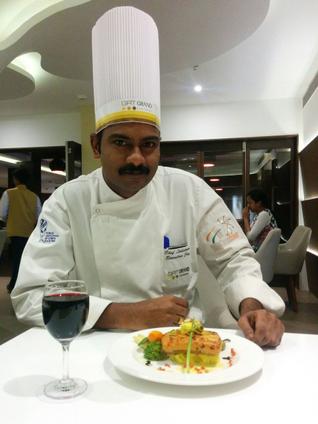
A chef with grilled Salmon dish at a hotel in Kakinada. Photo: K.N. Murali Sankar
In taste and texture, there can be no substitute to ‘pulasa’ but a city hotel is making an attempt to win hearts by serving something that tastes close to the rare fish variety. It is serving ‘salmon,’ a Norwegian version of this anadromous fish imported from Norwegian countries in frozen condition. The exotic fish variety has foodies compare its flavour with that of ‘pulasa.’ Weighing about 2.5 kg to 3 kg each, salmon is chopped into slices and grilled in Italian style before it is served to the guests.
“We use citrus risotto, unsalted butter, virgin olive oil and Italian rice to make ‘grilled salmon.’ Since it is an exotic dish, we retain the flavour and serve it to the guests with wine,” says Ch. Laxman, executive chef at the GRT Grand.
Both salmon and ‘pulasa’ are anadromous fish that are born in the sea and swim against the current to reach the freshwater source for breeding. While salmon lost its life in the process of breeding, pulasa can swim back to the sea, provided it is not caught in the fishing net.
“The lifecycle remains more or less the same for pulasa and salmon, but ‘pulasa’ has a unique taste when compared to salmon. We also find similarities between salmon and our Himalayan Trout, a fish variety available only in the Himalayan region,” says T. Rajyalakshmi, senior scientist and former director of the Central Institute for Brackish Water Aquaculture.
“Some of our guests recalled the taste of ‘pulasa’, while tasting the salmon. In fact, salmon is not suitable for gravy, whereas we cannot imagine ‘pulasa’ without gravy,” observes Mr. Laxman. Not just the foreigners who often check into the hotel, the local foodies also taste the salmon served in grilled and sauté form. “Response to the exotic fish variety salmon is quite good here and we are serving 12-15 orders a week,” says M. Uma Maheswari, general manger of the hotel.
source: http://www.thehindu.com / The Hindu / Home> National> Andhra Pradesh / by K.N. Murali Sankar / Kakinada – December 16th, 2015