Category Archives: World Opinion

This Telugu man wants to make madison as no.1 small city in America

HanuANDHRA31may2016

Hyderabad  :

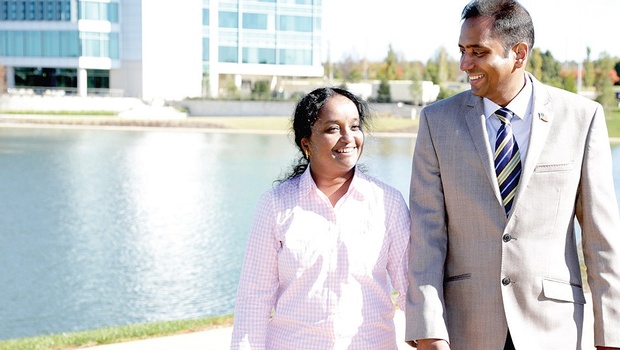
From Karlapalem to Madison, his journey as a leader is awe inspiring. Whether it is at college or job or business or now in American leadership, Hanu has always been in the forefront and proved that integrity and honesty pay off. As Hanu Karlapalem gets busy with his work for the upcoming polls, he gets talking.

“Madison, Alabama is my home. I have been living here for more than 16 years, the longest I ever lived in any city. This city gave me so much. Now it is my turn to give back”, says Hanu who clarifies his intentions to not politicise his leadership.

“I am not a politician, but I am a visionary and a leader.  I do not want any political affiliations for now.  So, my choice is to be the CEO of the city and work towards its betterment. Thus, I decided to run for the office of Mayor and serve the people of Madison, Alabama to create positive long term sustainable results”, says Hanu, who hails from a Karlapalem, Guntur district.

“Karlapalem is my last name too. We are six siblings and our parents made sure we had quality education. My father was well respected as a principal, mathematics teacher, farmer and investor”, he adds.

Hanu is a graduate of Delhi College of Engineering and pursued MS in University of Alabama, Hunstville. After his graduation and before moving to the USA, Hanu established a business in air ionisation and air purification systems, industrial and commercial lighting and oil reclamation in Hyderabad during early 90s. “I lived in Hyderabad until I moved to the USA. I had branches of my business in Visakhapatnam too. But I had to wind up everything as my wife and I decided to move to the USA”.

“Even before I moved to the US, one of my dreams was to study at a university in the US and receive a Master’s degree. I can happily say that I achieved that dream through my wife, Vidya’s support.

“We have been married for 21 years. We have no children, but we devote as much time as possible in supporting many causes that help under-privileged children. She works for a global company and is my pillar in this journey”.

Currently he is busy with informal personal meetings. “We attend Yard sales, events and interact with the public and tell them about my campaigns. People have started recognising me and often tell me that they see my signboards. We also have social media activities where we interact with the citizens. I have campaign staff who work for me,” he adds.

When asked about his motivation to become a leader, “In my fifth grade, I stood first in my class. My father appreciated me. But he said something that still motivates me. He told me that, I am a topper in just Karlapalem. Once, I step out of this village, I will see more competition and more responsibility. Winning outside is also essential. These words still remind me the high standards that my father set for my life,” he reminisces.

About his political journey, Hanu agrees that it is not easy for an Indian American to run for office and be at the forefront of the US politics. “I must say, I have been getting a lot of support and encouragement from people of Madison. That is my driving force”, he adds.

Hanu’s vision for Madison is to become the ‘Number one Small City in America’ that boasts vibrant economy, fosters small businesses and innovation, creates business and job opportunities, and provides high quality education. “My plan is to provide VALUE (Vision, Accountability, Leadership, Unity, and Ethics) and put the city on the path to become number one Small City in America. I am proposing Start Up Madison (SUM),  transparency portal with open data policy for open government, Vision Board, Veterans Support Board etc,” shares Hanu.

“More than me, I think Vidya is sacrificing a lot to support me in the election process. I have to sacrifice my business income, but if I am elected I will receive salary as the Mayor who is considered as a full time CEO of the city,” he adds. Hanu is confident that if he is elected, he will be a proactive, communicative, innovative and inclusive Mayor that people will appreciate.

source: http://www.newindianexpress.com / The New Indian Express / Home> Cities> Hyderabad / by Swathi Sririam / May 31st, 2016
City orchestra performs in Malaysia

A city orchestra team, Supreme, has performed in Malaysia recently and enthralled the Telugu audience there.

The orchestra has gone to Malaysia at the invitation of the Malaysia Telugu Cultural and Welfare Association (PKKTM) of Kuala Lumpur to perform in the Mother’s Day celebrations.

It has also presented Ghantasala Gaanamaala and during the function, son of Ghantasala, Ratnakumar was felicitated and he had also sang a few songs rendered by his father, informed Sekhar, head of the orchestra, at a press conference here. Badamgir Sai, a cultural promoter and others also spoke.

The programmes were conducted by the Telugu Welfare and Cultural Association president Jagadeeswara Rao, District Councellor of Gobank district Letchumunan, association’s vice-president Krishna Murthy, other members A. Appanna, Appala Naidu and S.B. Letchu, president of Telugu Foundation Datto R. Kantha Rao, Akku Naidu, former president of Malaysia medical association A. Krishnamurthy Appala Naidu, president of Telugu Intellectuals Association Prakasa Rao while Raman Rao hosted the team.

The orchestra consisted of singers Sekhar, Madhu, Rani and Nandita, instrumentalists Someswara Rao, D. Rajesh, Kalki Sreenu, Kannaji, Karuna Prasad, Vicky and Shyam.

source: http://www.thehindu.com / The Hindu / Home> News> Cities> Visakhapatanam / by Special Correspondent / Visakhapatnam – May 30th, 2016

Egypt and Oman to import Vizag’s bovine meat

Visakhapatnam:

Nations like Egypt and Oman, who are the world’s biggest buffalo meat importers, are all set to buy beef from the modern abattoir in the port city.

A team of representatives from the two countries recently visited the modern abattoir and after inspecting the conditions, approved the import of beef under the aegis of the Agricultural and Processed Food Products Export Development Authority (APEDA). The export of meat would start soon after the official inauguration of the abattoir by the state government next month.

This apart, other countries like United Arab Emirates (UAE), Iraq, Iran, China, Vietnam and Russia are also likely to import the meat from the city.

Vizag Foods Private Limited (VFPL) director Mohammed Naziruddin confirmed that both Egypt and Oman have in principle agreed to import beef from Vizag. “The modern abattoir, which will be the third biggest in the country, will maintain a blast freezer on the lines of the ones in European countries. The meat will be frozen at -40 degree Celsius under the blast freezing system. Everything is mechanised except the Halal (cutting the throat of the animal). The animal will be left alone for nearly 20 to 30 minutes after the slaughter before the subsequent processing is taken up,” he said.

“If everything goes according to plans including the inauguration of the abattoir, we will start business from August this year. We will start procuring the buffaloes soon after the inauguration,” Naziruddin said, adding that the farmers will no longer need to take the animals to Hyderabad for the same purpose.

The abattoir has a capacity of generating a maximum of 90 tonnes of bovine meat in a day. About 600 buffaloes are required to generate 90 tonnes of meat. Similarly, it has a capacity of slaughtering 2,000 sheep in a day. “While the buffalo meat will be exported, the sheep meat will be for the local market,” Naziruddin said, adding that Visakhapatnam Port Trust will be the channel for exporting the meat to foreign ports including the Port of El Iskandariya in Egypt.

The male bovines will be procured from neighbouring Odisha, West Bengal and also from north coastal districts like Srikakulam and Vizianagaram. The VFPL will give special incentives and advances to the farmers to market the animals to the abattoir which has a dedicated area of nearly 1 acre to keep the animals.

According to sources from the APEDA, April to October is the best season for the export of the bovine meat from the country. There is high demand for India’s buffalo meat in China as it is the only country that imports the buffalo offal such as buffalo liver, heart and tongue and other internal organs. India exports nearly 8 lakh to 10 lakh tonnes of buffalo meat every year worth Rs 16,000 crore to Rs 20,000 crore, of which 50 per cent is exported to China.

source: http://www.timesofindia.indiatimes.com / The Times of India / News Home> City> Visakhapatnam / by V. Kamalakara Rao, TNN / May 27th, 2016

Rich tributes paid to Sir Arthur Cotton

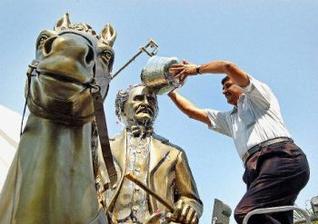
IN REMEMBRANCE: Lieutenant Murthy Jasti of River Bay Resorts performing Abhishekam to the statue of Sir Arthur Cotton on the occasion of his birth anniversary in Rajahmundry on Friday.

Felicitations to former chief engineer and others mark his 206th birth anniversary

His contributions to the irrigation recalled

Documentary on Sir Arthur Cotton sought

Kakinada:

Rich tributes were paid to Sir Arthur Cotton at JNTU-Kakinada on Friday on the occasion of his 206th birth anniversary by Vice-Chancellor Allam Appa Rao and retired engineers of the Irrigation Department. Prof. Rao also felicitated former chief engineer (irrigation) A. Rameswara Rao and others who made valuable contributions to the irrigation engineering.

Relentless efforts

Addressing the gathering, Prof. Rao said India would not have witnessed the green revolution but for the relentless efforts of Sir Arthur Cotton to realise the full potential of the arable lands by building a network of canals and drains in major river basins. Unfortunately, Sir Arthur Cotton was identified with only the Godavari canal system and Dowleswaram barrage whereas he had played an instrumental role in the construction of the Ganges canal.

He had also envisaged the Gannavaram aqueduct and several other projects that helped farmers increase productivity by leaps and bounds.

Sir Arthur Cotton was basically a military man who had the penchant for engineering which eventually led him to design and execute some of the world’s best irrigation schemes in India. However, he did not get the due recognition in spite of his great accomplishments though his memories were relived every year on his birth and death days.

Prof. Rao suggested to the Civil Engineering Department to make out a documentary on Sir Arthur Cotton and make it an integral part of the irrigation engineering course planned to be offered in the varsity.

The innovative concepts of Sir Cotton have to be studied in detail and scrupulously followed upon to find new ways of augmenting the potential of India’s irrigation systems.

source: http://www.thehindu.com / The Hindu / Home> Andhra Pradesh / by Staff Reporter / May 16th, 2016

Andhra Pradesh Agriculture Project Wins International Information Prize

United Nations :

An Andhra Pradesh project to collect very specific climate data from farms and give farmers personalised information through SMS has won the World Summit on the Information Society (WSIS) 2016 prize in the e-Agriculture category.

International Telecommunications Union (ITU) Secretary-General Houlin Zhao announced the prize Tuesday in Geneva.

The Centre for Development of Advanced Computing (CDAC) in Hyderabad developed the project, which is having a pilot run in Anantpur district. WSIS said the organisation had an e-strategy for implementing it at the national level.

“The WSIS Prizes recognize all players in the effort to improve global connectivity, from governments and global ICT (information communication technology) companies to grassroots NGOs leading innovative ICT-oriented projects at the local level.” Zhao said.

A total of 18 prizes were awarded in categories ranging from international cooperation to information ethics. The prize in the e-Agriculture category was the only one won by an Indian organisation.

The project, Harmonized Information of Agriculture, Revenue and Irrigation for a Transformation Agenda- Precision Technology for Agriculture or HARITA-PRIYA, uses wireless sensor networks (WSN) to collect micro-climate information from farms, according to WSIS.

This data is used to create advisories and alerts on irrigation schedules and pests and plant disease. Based on them state agriculture officers send out personalised crop advisories in Telugu to farmers by SMS.

The Andhra Pradesh government, the Central Research Institute for Dryland Agriculture (CRIDA), the Indian Council of Agricultural Research (ICAR) station and the Acharya N G Ranga Agricultural University in Anantapur partnered in the project.

source: http://www.newindianexpress.com / The New Indian Express / Home> States> Andhra Pradesh / by IANS / May 04th, 2016

The Deccan’s ‘precious nine’ shine on like the Kohinoor

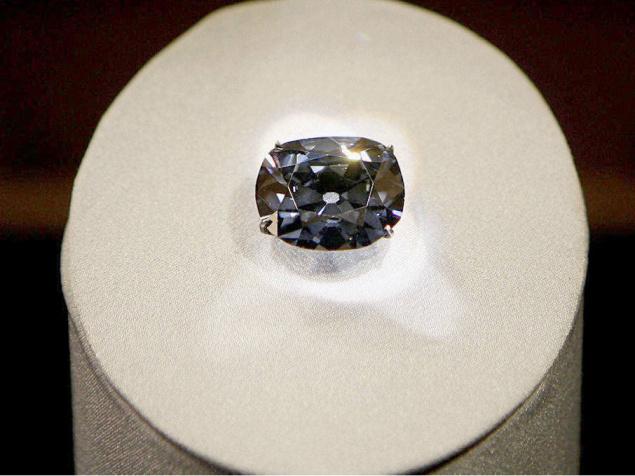
File photo of the 45.52-carat Hope Diamond at the Smithsonian's National Museum of Natural History in Washington. / Reuters
File photo of the 45.52-carat Hope Diamond at the Smithsonian’s National Museum of Natural History in Washington.
/ Reuters

Legendary diamonds mined by the Qutub Shahis are on display in Washington, Paris and Moscow.

It is not just Kohinoor; nine other famous diamonds left the shores of India and these are now displayed in museums in Washington, Moscow, Paris and Istanbul, besides forming a part of the Iranian crown jewels.

The precious nine, all categorised as legendary diamonds and mined by the Qutub Shahis of the Deccan, are the Hope Diamond, Hortensia, Darya-i-Noor, Noor-ul-Ain, Orlov (also called Orlof), Regent, Sancy, Shah Diamond and Spoonmaker’s, says V. Madhavan, who worked as a Professor of Geology in the Kakatiya University.

While the 45.5 carat Hope diamond is currently on display at the Smithsonian in Washington DC, the 190 carat Orlov diamond, a bluish-green gem, is now part of Moscow’s Diamond Treasury.

On the other hand, the 140.6 carat Regent, 55.2 carat Sancy and 20 carat Hortensia are now at the Louvre museum in Paris.

Two pink diamonds, the 182 carat Darya-i-Noor and 60 carat Noor-ul-Ain are part of the Iranian crown jewels while the 88.7 carat Shah Diamond and 86 carat Spoonmaker’s are housed in the Diamond Fund of the Kremlin and Topkapi Palace in Istanbul respectively.

Origins a mystery

Prof. Madhavan, who has studied diamond mining for nearly six decades, says that by all historical accounts, the Kohinoor was mined by the Kakatiyas when Rani Rudrama Devi headed the kingdom, its headquarters in present day Warangal.

Kohinoor’s exact vintage, right from its discovery, continues to be a mystery. However, “There is a general consensus among historians that it was found at Kolluru in the late 13th century in present day Guntur district of Andhra Pradesh,” he said adding that Kolluru was part of the Kakatiya kingdom.

Former Professor of History at the University of Hyderabad, V. Ramakrishna, said the Manual of “Kistna District in the Presidency of Madras”, written by Gordon Mackenzie and published in 1883, also indicated that the Kohinoor was found in Kolluru, then part of Krishna district.

Pages 244-247 refer to diamond mining in the district in general and the Kohinoor in particular. The manual however, says that the gem was mined by Qutub Shahis and not the Kakatiyas.

Another book, A Study of the History and Culture of Andhras, by noted historian K. Satyanarayana and published in 1982, also speaks of the Kohinoor being found in Kolluru.

According to Prof. Madhavan, India was the only producer of diamonds in the world till 1725 AD when they were mined in Brazil. Later in 1870, diamonds were explored in South Africa. Marco Polo, who visited India in the 13th century, talks in his travelogue of an inland kingdom ruled by a queen (Rudrama Devi)… “which produced all the diamonds in the world”.

At the time of its discovery, the Kohinoor was the largest diamond in the world. But no longer. In 1905, workmen at the Premier Mines in South Africa unearthed the 3106 carats (621 grams) Cullinan diamond, which remains the largest so far. It was named after Sir Thomas Cullinan, the founder of Premier Mines.

The original weight of Kohinoor was stated to be 793 carats (158.6 gm). In the 17th Century, emperor Aurangazeb wanted to reduce its size to add to its lustre.

He tasked Horenso Borgia, a Venetian lapidary with the job, but he cut the diamond down to just 186 carats and invited a heavy fine.

At present, the weight of Kohinoor, meaning mountain of light, is 105.6 carats.

source: http://www.thehindu.com / The Hindu / Home> News> Cities> Hyderabad / Prashanth Chintala / Hyderabad – April 23rd, 2016

Kohinoor controversy stirs British media

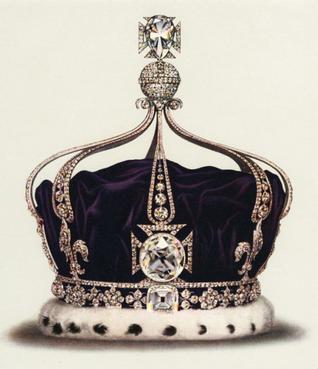
Vintage illustration of the State Crown of Queen Mary, Consort of George V, part of the Crown Jewels of England (chromolithograph), 1919. The crown contains 2,200 diamonds, including the famous Koh-i-Noor, Cullinan III and Cullinan IV gems. / Getty Images

British press pick up Indian Solicitor General’s submission before the SC that the heirs of Maharaja Ranjit Singh gave the gem as “voluntary compensation.”

New claims over the Koh-i-Noor diamond make their periodic appearance in the United Kingdom. Most of them flounder and finally sink as they make their way through the law courts — or indeed the court of public opinion, getting a day or two of media light at best. However, the relinquishment of a claim to the much-contested gem is a different matter and a cause for interest, as we just saw.

The Indian Solicitor General’s submission before the Supreme Court that the heirs of Maharaja Ranjit Singh gave the diamond to the British as “voluntary compensation” for the expenses incurred in the Anglo-Sikh wars was widely picked up by the British press, with the leading British parliamentarian of Indian-origin, Keith Vaz, even issuing a statement in support of the Government of India’s “stand.”

A gem of a debate again

The government’s subsequent clarification dissociating itself from the view of its Solicitor General brings the debate over the 106-carat symbol of British colonialism, which at present glints harshly from the crown once worn by the former Queen Mother, back to where it was.

Questions about ownership, authorship, theft and possession in the context of colonialism and today were raised at a recent exhibition at Tate Britain, Artist and Empire, which brought together a vast and unexpected array of works from collections across Britain.

Says Javed Majeed, a historian at King’s College, “The current Koh-i-Noor diamond controversy [comes] at a point in history when the terms “Indian”, “English” and “British” are in crisis again. In India we have a strong Hindu nationalist government which has re-defined what “Indian” means and thrown secularism into disarray. Claims have also been filed in Pakistan to return the diamond to Punjab there, from where it was gifted or taken [depending on your point of view]. In 2000, even the Taliban in Afghanistan asked the Queen to return the gem because of its brief association with that region at one point in time.”

Brexit and monarchy angst

In an era of economic and political uncertainties — in Britain associated with Brexit and what it portends — “anxieties about the future of the monarchy have intensified, and not surprisingly the focus of this worry is the crown itself as an actual object as well as an institution,” Dr. Majeed argues.

“Moreover, Britain’s imperial past surfaces in obvious and sometimes surreptitious ways in all these current debates, from the question of who owns the diamond to ideas of British power in the world should it leave the EU.”

Legacy control and mistrust

Legacy-control and legacy-mistrust can happen on both sides. A senior curator at a prominent British national collection in London told The Hindu that the authorities of the Victoria Memorial Museum in Kolkata refuse to lend their works from their collections to British museums.

The collection includes works by Johan Zoffany, William Hodges and Thomas and William Daniell. “Britain put in several requests to borrow art but they have all been turned down,” the senior curator, who did not wish to be named, said.

Correction

This story has been corrected for a factual error. Changed “Anglo-Maratha” war into “Anglo-Sikh” war

source: http://www.thehindu.com / The Hindu / Home> International / by Parvathi Menon / London – April 20th, 2016

Harshitha wins two silver medals in Mongolia

G. Harshitha
G. Harshitha

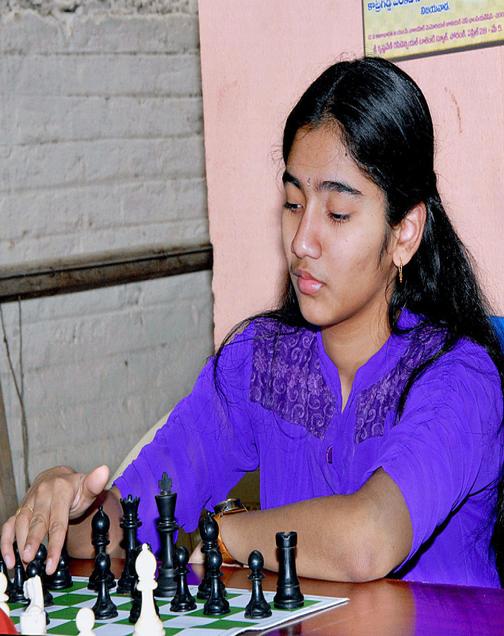
Young Rajahmundry teenager Guddanti Harshitha overcame biting cold weather and bouts of fever to add two international medals to her kitty by winning silver medals in the Asian youth chess championship that concluded in Mongolia on Thursday.

She scored seven points out of nine by winning seven and losing two to finish second in the standard under-16 girls’ category, and later she won silver in the rapid segment as well. “She finished fifth in the blitz segment,” says Andhra Pradesh Chess Association secretary D. Srihari.

“She lost the two crucial rounds owing to fever as the weather was unbearable for several youngsters,” says Harshitha’s mother Sridevi.

Harshitha, a Class X student of TRIPS International School, started playing chess six years ago. After learning the basics, she is now being trained by Grandmaster Arun Prasad of Chennai online since 2014.

Before major tournaments Harshitha visits Chennai for intensive training for 10 days with Mr. Arun Prasad. Harshitha won Asian youth silver in Korea, Commonwealth under-16 bronze, National Juniors Bronze Medal in 2015.

“Harshitha’s aim is to become a championship player like Grandmaster Koneru Humpy and Dronavalli Harika and play for the country in the premier international tournaments,” says her mother.

Harshitha wants to go aboard to train under the best of coaches and also play more competitive tourneys but the major hurdle she faces is the lack of sponsors. “We are looking are sponsors to support Harshitha‘s dream of becoming a Grandmaster. It is getting increasingly expensive to travel for training and play in fixtures,” says Dr. Sridevi.

A class X student, she finished fifth in the blitz segment, says APCA secretary D. Srihari

source: http://www.thehindu.com / The Hindu / Home> News> Cities> Vijayawada / Special Correspondent / Vijayawada – April 16th, 2016

Asian blitz bronze for Supreetha

Potluri Supreetha
Potluri Supreetha

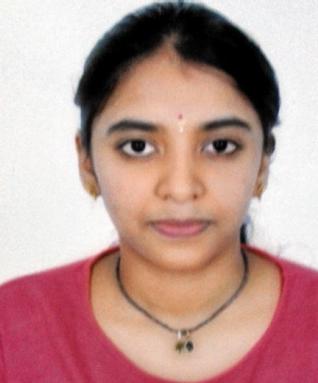
The city’s chess fraternity went gaga over the medal winning performance of Women Fide Master (WFM) Potluri Supreetha, who won a bronze medal in the Asian youth blitz (u-18 girls) championship that concluded in Mongolia on Saturday. The Nuzvid–born youngster hauled five points out of seven rounds to win her eighth international medal.

“Playing blitz, along with classic and rapid, increases the speed in a player and helps take quick decisions. Supreetha is playing all three formats – classic, rapid and blitz – to emerge as a overall player,” Mr. Bobba said.

The Class IX student of Viswa Bharathi Vidya Niketan, defeated players like Erdenehulug Batsaikha, Batsaikhna Ganchimeg, U. Uurtsaikh (all Mongolia), V. Toshali, V. Varshini (both India), Yakubbaeva Nilufar (Uzbekistan) and Nguyen Than Thuy Tien (Vietnam) to make it to the podium.

She will play 2 tournaments in May

Supreetha, the 14-year-old trainee of Mustabada Sports and Educational Society, will play two tournaments next month – Asian junior chess championship in New Delhi from May 2 to 12 and a Grandmaster Open tournament at Chicago (U.S.A.) from May 25 to enhance her international rating. Chess is not in the family background of Supreetha and her father takes care of agriculture in Nuzvid. What started off as a hobby went on to become an obsession for the young girl.

source: http://www.thehindu.com / The Hindu> Home> News> Cities> Vijayawada / Special Correspondent / Vijayawada – April 10th, 2016

Making Erra Matti Dibbalu global

Of the many natural assets that Visakhapatnam is blessed with, the most valuable and unique are the Erra Matti Dibbalu (EMDs).

EMDs of Bhimunipatnam were first reported by William King, deputy superintendent of Geological Survey of India in the year 1886.

King called the stretch of 24 miles, between Visakhapatnam and Bhimunipatnam ‘badlands,’ representing great sand banks, in a dry terrain, where sedimentary soils were extensively eroded by wind and water.

Scientists tell us that the EMD illustrate earth’s evolutionary history, including the climatic conditions that once existed at the site. Typically, such terrain has a multilayered colouring, which is both fascinating and attractive. Moreover, there are vestiges of the prehistoric man having lived in the area.

Visakhapatnam’s Red Sand Dunes are invaluable inheritance, that need to be conserved through a conscious effort, both for their scientific as well as aesthetic significance. Conservation and protection of such marvels of nature is vital for the posterity, because once lost they can never be retrieved again.

Citizen/heritage bodies of the city have worked hard to get the Geological Survey of India to recognise the EMDs as a Geo heritage site, which is no mean achievement. We must now go a step further.

Even though when William King reported them in 1886, the entire stretch of 24 miles were marked with coastal red sand mounds, over a period of time most of them have been leveled, except for a small segment, which happens to be the most spectacular part, has survived.

The beauty of the EMDs is such that tourists have been flocking to the place to admire them.

Come Karthika masam, families gather there for kartheeka vanabhojanalu. While it is good that people enjoy the beauty of the sand dunes, unbridled unregulated footfall harmed the sand dunes. Even more harmful would have been the intervention of the department of tourism had it been allowed.

Building a facility centre at the mouth of the seasonal stream that drains through the fragile eco system, a proposal for night tourism using beach buggies and camel rides are some of the spectacularly shortsited projects, which, mercifully were opposed by the heritage activists of the city. If those were allowed, EMDs would have been levelled with a year or two.

EMDs are made up of loosely stacked sand, which is easily disturbed. Any harsh activity like indiscriminate clambering up the sand dunes or using vibration-generating vehicles in their middle will disturb them and hasten the process of deterioration.

Unregulated tourist flow is neither in the interest of the tourists nor of the EMDs. As one goes deeper into the sand formations, the gully formation transforms into a veritable maze, the height of the mounds grows and if one is not careful, it is easy to lose one’s way.

A greater threat to the EMDs is the mindless digging of the dunes for laying a four lane road and building a cement mixing plant right in the middle of the sand dunes, which was brought to light by the ever vigilant public view. The latest threat appears to be a housing society.

Taking advantage of the momentum generated by Visakhapatnam’s ‘smart and clean city’ tags, we must elevate our tourism too to a global level.

We must start working towards getting UNESCO’s recognition for EMDs.

True, it would take a bit of leg work. But the benefits that will accrue make it worthwhile. To achieve that status, all the short sited and unsustainable tourist interventions proposed by the government in the EMDs must be given up forthwith, immediately. The district authorities, the state government and the heritage conservationists must work together and seriously. When the people and their governments come together, the synergy generated makes many things possible. Vizag can take a lead in the matter.

There are the four fundamental features, which are an absolute prerequisite for an area to become a member of a UNESCO Global Park and on the face of it we fulfill all the requirements.

Firstly, the area under consideration must have geological heritage of international value, which is assessed by scientific professionals, and is peer reviewed by an UNESCO Global Geopark Evaluation Team.

Do we fulfill that requirement? Certainly.

Geologists tell us that there are just three such formations in South Asia, of which we have one.

Visakhaptnam is fortunate to have one such stunningly beautiful formation so close to the city.

Earth scientists of the country and particularly of Andhra University have studied EMDs extensively and tell us that EMDs are of national as well as international value.

Scholars have used them as a living laboratory, to explain to the students the evolution of the earth’s crust. Much literature has been written about it.

The second requirement is that an aspiring Geopark must be managed by a body, which is created by a central Act.

This takes political will of the people’s representatives. It is not the first time that such an Act was passed to protect an institution of national importance.

Salarjung Museum was created by a central Act specially passed for that very purpose.

The institution thus entrusted with the task of managing EMDs must involve the local communities and the other stake holders in its management plan. In the case of EMDs the local stake holders would be the villagers of Nerellavalasa and the local fishermen, who have a direct interest in the EMDs.

For, in the year 1970 some 20 families of Nerrellavalasa were given pattas within the sand dunes by the Government of Andhra Pradesh.

The villagers planted cashew trees along the slopes of the dunes, which not only enhanced the beauty of the dunes but also helped in the prevention of soil erosion, as the root systems hold the soil together.

So, the management plan must have a two-pronged strategy of protecting the site along with the interest of those that depend on it.

The tourism interventions of the government so far have been aimed at evicting the pattadars of the EMDs and opening the EMD for the exclusive benefit of the tourists. Such interventions are violative of the United Nations’ principles of heritage conservation.

Equally important is maintaining the sanctity of the dunes and stopping all intrusive activity which disturbs their pristine integrity. The landscape includes the ravines, streams, foliage, gullies, coast line and all the other natural in features in the area, in toto.

No more building of roads in the immediate neighbourhood of the EMDs, no cement processing plants nor a housing colony in the mounds.

Then the third requirement to get UNESCO Global Geopark is a total visibility to the world. This stipulation had to be put in place as at times some geological formations might be controlled by private bodies, which might restrict entry to the public.

EMDs does not have that problem since they are located within a stretch held by the government.

What, needs to be done to make EMDs more visible is to create a dedicated website, print leaflets, publish a detailed map of the area and make available information which is required for international tourists.

Lastly, a UNESCO Global Geopark is not only about cooperation with the local people living in the UNESCO Global Geopark area, but also about cooperating with other UNESCO Global Geoparks through the Global Network. It must work together with the other global partners, across borders.

It is high time the authorities in charge of tourism and the district administration take charge of the conservation of the EMDs seriously, and plan for the overall conservation of the area, once and for all.

Getting the recognition of UNESCO will place the site on the global tourist map and bring international tourists.

At present there are 120 UNESCO Global Geoparks in 33 countries. It would be a proud moment for Vizag, if we can join that network.

(The writer is a heritage and environmental activist. She can be reached at ranisarma2010@gmail.com)

source: http://www.timesofindia.indiatimes.com / The Times of India /News Home> City> Visakhapatnam / by Rani Sarma / April 10th, 2016