As many as four students from the Jawaharlal Nehru Technological University Kakinada (JNTUK) were among the 169 students being shortlisted by the Stanford University’s Hasso Plattner Institute of Design for the University Innovation Fellowship for the year 2016.
The students were being shortlisted by the prestigious institution from 449 institutions of higher education all over the world. Under this programme, the Fellows advocate for lasting institutional change and create opportunities for students to engage with innovation, entrepreneurship, design thinking and creativity at their school.
Colleges concerned will have to fund the students to go through six weeks of online training and travel to the annual UIF Silicon Valley meet up.
Vice-Chancellor of the JNTUK V.S.S. Kumar on Wednesday congratulated M.Srilekha, N.Likitha, B.Sandhya, S.Lakshmi Bhargavi – all from the CSE third year – who have been selected for the prestigious programme.
source: http://www.thehindu.com / The Hindu / Home> National> Andhra Pradesh / Staff Reporter / Kakinada – October 27th, 2016
Mahatma Gandhi Memorial (MGM) Hospital has bagged the National Neo-natal Forum (NNF) accreditation to become the only such hospital in South India to have a neo-natal unit attached to a teaching hospital to achieve NNF level accreditation.
The hospital’s neo-natal wing is attached to Kakatiya Medical College. Unicef deputy representative James Gitau, chief of field office Ruth Leano and Unicef consultant from the state Dr Sri Krishna visited MGM hospital SNCU (special newborn care unit) where the news about the accreditation was announced earlier this week on Monday.
The Unicef representatives, Ruth and James, said they were very impressed with the `Kangaroo Mother Care’ of pre-term newborns at the hospital. The KMC ward is the largest such facility in South India.
The team interacted with Dr B Balaram and Dr M Yogri nodal officers of SNCU and enquired about functioning of the unit. The SNCU was upgraded into a 140-bed unit from the earlier 60-bed strength.Dr Balram and Dr Yogi congratulated the unit’s staff for helping achieve NNF accreditation.
source: http://www.timesofindia.indiatimes.com / The Times of India / News Home> City News> Visakhapatnam / TNN / October 13th, 2016
Innovative seafood products like fish popcorn, frozen masala mackerel, imitation crab stick, fish pakoda and Crab Claw Amritsari fetched top prizes for their manufacturers while a company from Maharashtra walked away with a string of awards at the products and stall awards of the three-day 20th edition of India International Seafood Show (IISS), which concluded here on Sunday.
Maharashtra-based Gadra Marine Exports Private Limited got six awards, including both best retail product (frozen masala mackerel) and runner up for best retail product (imitation crab stick). The four other awards for the company were in the categories of best retail packaging (Crab Claw Amritsari), best innovative product (fish popcorn), best convenience product (frozen masala mackerel) and also the runner up for the best convenience product (frozen masala prawn).
The AP Food Processing Society was awarded for the best Indian stall while the second best award went to Nilkamal Limited.
In the category of Best Stall (Overseas), Ishida India Private Limited, based in Japan, got the first prize while Glory Company Limited, a Vietnamese company, was adjudged the runner up.
In all, there were 14 prizes that were up for grabs at the IISS 2016, an international showpiece event in seafood sector, organised by the Marine Products Export Development Authority (MPEDA).
Of these prizes, eight were in the category of product awards and six for stalls.
Awards were presented by MPEDA chairman A Jayathilak in the presence of Seafood Exporters Association of India president V Padmanabham (SEAI).
Overall, there were 300 stalls, including 71 from abroad, spread over 7,000 square metre. The total number of exhibitors was 144 drawn from 117 Indian and 27 foreign companies.
source: http://www.newindianexpress.com / The New Indian Express / Home> States> Andhra Pradesh / by Express News Service / September 26th, 2016
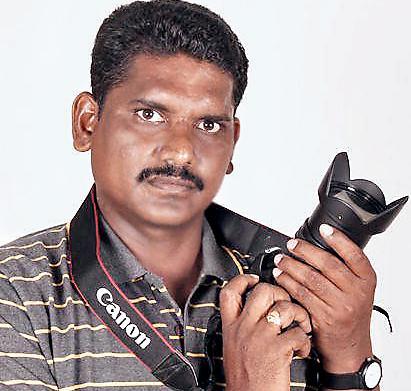
Lensman Ravi Seetaramaiah from Prakasam district who won AICS award
Wins Associate ICS award of US-based Image Colleague Society
A school dropout from a remote Kadavakuduru village, near Chinnaganjam in Prakasam district, Ravi Seetaramaiah has turned challenges into opportunities and matured into a seasoned photographer to win the Associate ICS (AICS) award of the US-based International Society- Image Colleague Society.
The hanging plan for AICS award comprised 12 fascinating pictures, including the ones on the just-concluded Krishna Pushkaram in Vijayawada. The other eye-catching pictures in the plan includes the famous boat race in Alleppey in Kerala and the famous Jallikattu (bull taming event) at Alanganallur, near Madurai in Tamil Nadu to bring to limelight the South India’s unique Dravidian culture.
Turning point
Seetaramaiah had lost hopes when he could not clear X std. in 1995. But the course on photography offered by the Rural Development and Self Employment Training Institute at Vetapalem came as a boon for him, recalls the 40-year-old photographer going down the memory lane.
“I run a photo studio at a remote Sopirala village and specialise in making wedding albums for a living,” adds the photographer, whose skills were honed by, among others, noted photographers K. Sudhakar Reddy from Guntur and Tamma Srinivasa Reddy from Vijayawada.
He has a special interest in taking eye-catching pictures on different themes, including the life style of Chenchu tribals from the Nallamalla forests, fishermen from Voderavu and salt workers from Chinnaganjam in Prakasam district, he told The Hindu here.
“My ultimate goal is to win the Fellowship of the Royal Photographic Society, one of the world’s oldest photographic societies in London,” says the lensman, who does not want to rest on past laurels.
source: http://www.thehindu.com / The Hindu / Home> National> Andhra Pradesh / by Special Correspondent / Ongole – September 26th, 2016
Sharjah women’s cricket team, as part of its exposure trips, is at Andhra Cricket Association women’s academy at Guntur and it will play practice matches with ACA Colts till August 25.
The academy at JKC College premises, which has been adopted by BCCI, has earlier played host to China, Thailand and Asian Cricket Council teams for training stints.
“The team, with 12 members and coaching staff, had arrived on August 17 and they will play T-20 matches along with training sessions. Women’s cricket is gradually picking up in the desert nation and young girls are showing more interest towards the game,” says ACA coach Srinivasa Reddy.
source: http://www.thehindu.com / The Hindu / Home> News> Cities>Vijayawada / by Special Correspondent / Vijayawada – August 21st, 2016
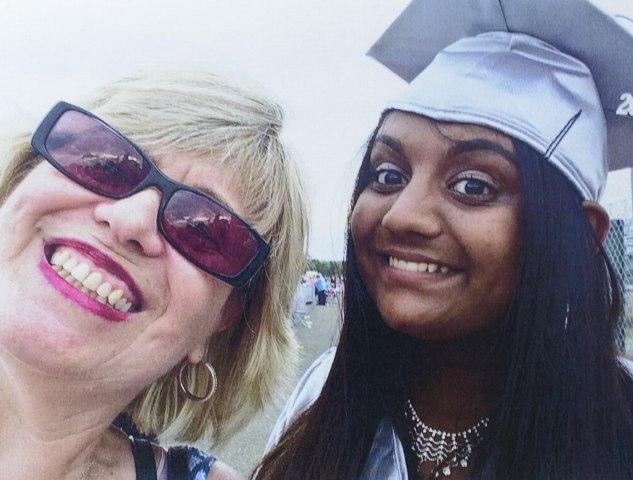
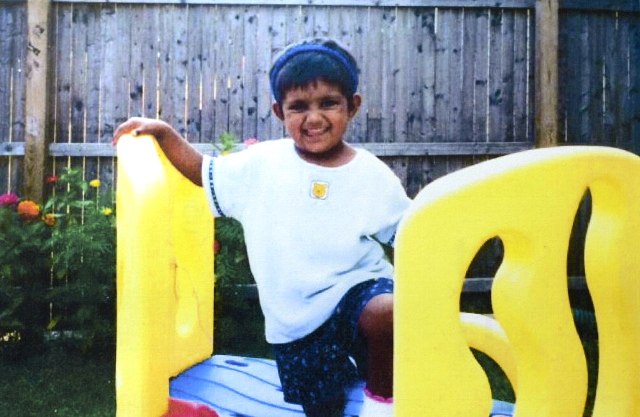
Samantha with her mother, Patricia Tavis. Photo: Special Arrangement
Eighteen years ago, Yasamma and Mariyamma Gedala were left in an orphanage in Kakinada. Yasamma, adopted by an American family, and now named Samantha Mari, has lived in the U.S. since 2000, but she still remembers her baby sister. The author pieces together the quest for reunion
On the 10th of June, 1998, in Rajahmundry, Andhra Pradesh, Nagaraju and Gowri Gedala had a baby girl, whom they named Mariyamma. They were very poor, and could not afford to feed her. On December 5 that year, they took her to Missions to the Nations orphanage in Kakinada. Ten days later, they brought their older daughter, Yasamma, born on October 17, 1996, to the orphanage too. The infant and the toddler settled into their life in the orphanage.
Then, thirteen months later, Yasamma’s life began to change again.
Over on the U.S. east coast, Patricia and Richard Tavis, then stepping into their middle years, had decided to adopt another child. They already had two sons, and each of them had a son from previous marriages. They decided to adopt a girl. And they zeroed in on India because, they were told, India did not require them to travel there in order to adopt; the orphanage would send the child to the U.S. “We have a child with autism and did not want to take the chance of something happening to us like a possible plane crash,” Ms. Tavis says in an e-mail interview.
Ms. Tavis contacted an adoption agency she found in the phone book. “Two days later they got back to me and said there was a three-year-old girl named Yasamma. I agreed to adopt her.”
While the adoption process was going on, the Tavises found out that Yasamma had a younger sister, who was also in the orphanage. They asked if they could adopt her too, but were told she had been adopted by a family in India.
A new beginning
Nine months after the first call, Yasamma arrived in the U.S., at JFK Airport in New York. “When I first came to the U.S., everything was big and scary,” she says in an e-mail. “I did not understand what was happening.” Ms. Tavis says, “When she was in the airport and we met her for the first time, we hugged and people clapped. She looked confused and bewildered after her long plane trip.”
The toddler, whom her adoptive family named Samantha Mari, settled in to her very different new life, with a family that doted on her. “When she first arrived, my mother gave her a doll with blond hair and white face,” Ms. Tavis says. “She promptly coloured her face with a brown marker! Today I don’t think it bothers her that we are a different race. We are her family. As she told one of her friends, ‘They are the only family I’ve got.’”
The Tavis family has never visited India, and after Samantha was adopted, she has never returned either. Ms. Tavis has another connection, more tenuous, to India: she began studying yoga, at a local school; she graduated in 2009, and now teaches gentle, chair and special needs yoga.
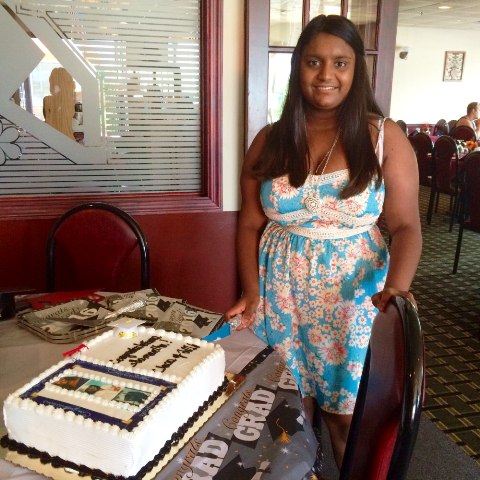
Samantha is now 19, has graduated from high school, has learned to ride horses at a local riding school, and has as full a social life as any American teenager.
Samantha at her graduation party. Photo: Special Arrangement
Shadows of the past
“My daughter still grieves the loss of her birth family,” her mother says, “and I believe this is the reason for the learning and behavioural difficulties she exhibited from the time she arrived in the U.S. It has been a difficult road; she has a learning disability, which of course, complicates matters. She learned English very quickly, though. She does not spell very well. Even though she graduated from high school, she was in special education throughout school. I hope if we find what happened to the sister, she will have some peace of mind.”
Because she was old enough to know what was happening all those years ago, Samantha remembers those days clearly. “I remember my newborn sister and sleeping in a railway car with my parents and her,” she writes. “I remember the railway car. I remember a boy at the orphanage who would bring me toys. He made me feel like a queen! I think he was my first boyfriend! I remember not having shoes and sleeping on mats. We ate rice. I remember Paparao [Papa Rao Yeluchuri, current director of the Mission to the Nations].” Ms. Tavis adds that she has at times also said that she remembers that she cried a lot, that she remembers being in the street, picking up papers, that she remembers being left at the orphanage.
“As soon as she could speak English,” her mother says, “she told me she was ‘very mad at mommy and daddy in India’ because they left her by herself. Truly this experience scarred her deeply even though her parents put her up for adoption to give her a good life. She has asked about the sister from the time she arrived, always wondering what happened to her baby sister. Even though she was young, I believe these memories are so vivid because they were so traumatic. She would like to know what happened to her, be able to talk and write to her and maybe one day meet her.”
This is something Ms. Tavis vowed to herself that she would do something about. But she had no idea how to even begin looking for Mariyamma; also, what if the younger sister’s adoptive parents did not want her to know she was adopted? She decided that she would wait until Mariyamma was a legal adult.
A quest begins
In June, Mariyamma would have turned 18. And Ms. Tavis made a Facebook post. Along with what little she knew of the Gedala family, she wrote, “I am asking my friends and family to share this far and wide so my daughter might know the baby sister she still remembers and longs to see again.”
That post, and another she made on a page she runs for her yoga practice, quickly went viral. In a couple of days, they were shared over 2,000 times, including in India.
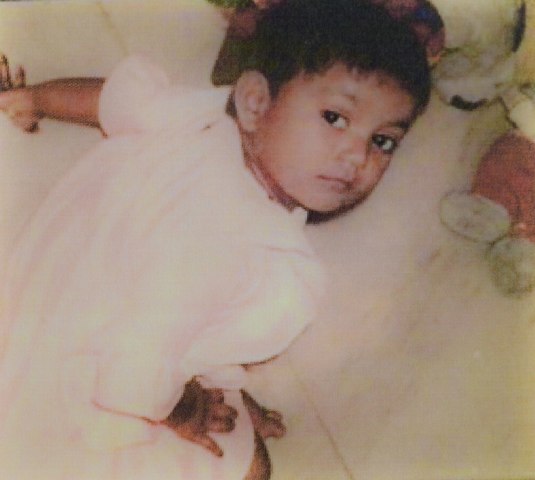
Samantha as a toddler. Photo: Special Arrangement
In an update thanking people for sharing her message, she also addressed the concern about the wishes of Mariyamma’s adoptive parents. “I agree that this is a concern. This is why I waited until her sister was 18. I believe it is a basic human right to know where you come from and who your family is. Because my daughter was old enough to remember her family when she was brought to the orphanage, she has suffered a great deal of heartbreak. I am trying to give her back a little of what she lost.”
Dead-ends
In the days since, her post has been shared 5,327 times on Facebook, aside from numerous shares that did not reflect there because they were made on other social networks. While many reached out to help, the family has not got any leads so far.
The Hindu’s reporters reached out to both Mission to the Nations and the State’s Women and Child Welfare (WCW) department.
Mission to the Nations, an NGO in Kannaiahkapu Nagar, Kakinada, no longer runs an orphanage; they closed theirs some years ago, after an adoption racket surfaced in Andhra Pradesh. The government took over all its records and the organisation now only runs a church and a school. “The adoption was done through the court of law and the communications were made between the embassies of India and the U.S.,” said Papa Rao Yeluchuri, its current director. “Following the adoption, the girl’s parents never visited us in person and we do not have any detail about their whereabouts.” He added that the Supreme Court’s guidelines prohibit the disclosure of the details of biological parents to the adopted child.
In this Yeluchuri seems to be behind the times: there is, in fact, no Supreme Court guideline prohibiting an adoptive child from knowing her biological origins; such knowledge is part of a person’s essential right to know and right to privacy. It is left to the adoptive parents’ discretion to inform their minor child about her origins. There is also no restriction whatsoever on an adult about going in search of her biological parents. The lacuna in law on this aspect was cleared by the Supreme Court in its Laxmikant Pandey versus Union of India AIR 1984 SC 469 judgment. The new Juvenile Justice (Care and Protection of Children) Act of 2015 provides for revamped intra-country and inter-country adoption guidelines. On the rights of siblings, the interest and welfare of the child is considered paramount. There are many laws on guardianship and parental custody, and disputes are decided on a case-to-case basis. The courts are careful to not let the rights of a sibling and the custodial rights of parents cancel each other instead of complementing one other.
Sivanath Yandamoori, chairman of the Child Welfare Committee (CWC), East Godavari district, toldThe Hindu that Yasamma has every right to know about Mariyamma, as the court is clear about retaining the bond between siblings. “This is a rare case,” Yandamoori said, “The CWC can help Yasamma meet her elder sister, provided she comes to India.”
While the Tavises were delighted to hear this, the news brought back an old dilemma.
Photo: Special Arrangement
The family lives a reasonably comfortable life in Howell, New Jersey — “near the famous Jersey Shore,” Ms. Tavis says — but they’re not wealthy. Richard is 62, and recently retired from Pepperidge Farm, where he was a manager. Patricia is 59, and has been running a yoga practice since 2009. An indefinite trip to India without solid leads to follow up on is a prospect that is too expensive for them at their time in life. While their older sons are married and have children, the two younger ones live with them. The younger lad, Christian, 20, balances college and a job at a supermarket. But James, 24, has an autism spectrum disorder. They worry about his future, about who will take care of him when they are gone; he’s also one reason why they don’t like to take air trips. But if they do find Mariyamma, Ms. Tavis says, they will try and help the girls meet. But that prospect is still dim.
Ms. Tavis has also stepped back from her Facebook campaign; the volume of people asking how they could help the family was staggering and touching, but it also brought out the darker side of such Internet interaction: “unwanted attention from men”, as she delicately phrased it, both for herself and Samantha.
The possibility has also come up, as a source (whose name Ms. Tavis does not want to reveal at this time) told her that Mariyamma may have been returned to an orphanage elsewhere and been adopted again. The paper trail is, in all probability, dead. So a documented relationship might be impossible to establish.
Hope lives
But science may be able to help. The least complicated would be a blood test, through which some degree of relatedness could be established. Any decent hospital, and a number of private organisations, would offer more sophisticated methods like genetic testing. A boy, for instance, would inherit his father’s Y chromosome, which is why that method is used to determine paternity.
Then there’s mitochondrial DNA (mDNA), which all humans inherit from their mothers: mDNA undergoes very little mutation over generations, so is considered a very accurate way to determine genealogies. Siblings like Samantha and Mariyamma will share the same mDNA. The tests are simple, but since India’s laws prohibit DNA being exported, Samantha and Mariyamma would need to be tested in labs on different continents.
This is only valuable if — and it’s a very big if — the search does bring forth a young woman who is a likely match. Mariyamma must be found. Which is where you, dear reader, can help. If you have any information for the Tavises, e-mail FindingMariya1@gmail.com or this writer (peter.griffin@thehindu.co.in). Because a story like this really, really needs a happy ending.
With additional reporting from K.N. Murali Shankar and B.V.S. Bhaskar, and inputs from Jacob Koshy and Krishnadas Rajagopal.
source: http://www.thehindu.com / The Hindu / Home> Opinion> Comment / Peter Griffin / August 20th, 2016
An eleven-member United Kingdom paediatric team performed heart surgeries on 19 children in association with the Heart and Brain Institute of the Andhra Hospital Group.
In a meeting organised to thank the U.K. charity called the Healing Little Hearts, Andhra Hospitals managing director P V Ramana Murthy said that this was the second year that the Healing Little Hearts had performed the surgeries free of cost on underprivileged children who were suffering with congenital heart and other cardiac disorders. Complex cardiac operations were performed on 17 children last year. Heart operations were performed on another 15 children in March this year and within six months operations have been done on 19 children this month, he said.
The kids are doing well
All the 19 children are doing well and they would be discharged in a few days, he said. The team members came from hospitals of international repute like the Great Ormond Street Hospital, London, Glenfield Hospitals, Leicester, Royal Liver Pool Children’s Hospital of U.K. and the Children’s Hospital, Brisbane, Australia, he said.
Paediatric interventional cardiologist from Leicester Vikram Kudumula, Paediatric intensive care specialists Marijuana, Julia and Nayan Setty from Liverpool led the team.
source: http://www.thehindu.com / The Hindu / Home> National> Andhra Pradesh / by Special Correspondent / Vijayawada – August 14th, 2016
Heritage lovers want the two World War II bunkers to be placed in Visakha Museum or along Beach Road for tourists and public to learn about their history and importance associated with Vizag. Currently, one of the bunkers lies partially submerged in the sea sand near RK Beach, while the other is in the One Town Area near the port conveyer belt. There’s also a huge concrete bunker on the beach in Jalaripeta region near Kailasagiri, which is practically not feasible to be shifted given its size and mass.
During low tides or beach erosion, the bunkers at times get exposed though most people are unaware of its significance. As per historians, there might be more such historical bunkers between Old Town and Jalaripeta along the beach but not all of them are visible and might be under water. Changes in the coastal landscape may cause some of them to surface in future. The bunkers were constructed for attacking or firing at enemy ships that try to enter the shores.
S Ravi Kanth Reddy, founder-president of Meecons, said, “Recently, I wrote to GVMC commissioner Pravin Kumar requesting him to salvage those two bunkers and make them part of a local museum or at least put them for public display somewhere on Beach oad with some description about their historical significance.”
Elaborating on the bunkers and Vizag’s tryst with the World War II, Captain Dorai Babu of the Indian Navy, who has done research and contributed to certain publications related to the East Coast Naval History during the International Fleet Review (IFR), said, “Not many people are aware that during World War II, a Japanese submarine was sunk around 20 miles off Vizag by an Australian ship. A Japanese aircraft tried to bomb Vizag Port area. The British were anticipating an attack on Vizag and therefore bunkers were built along the coast in the late 1930s and ’40s as a protective and attacking measure.”
“The bunkers are usually 4-5 feet under the ground and 3-4 feet above the ground. They are fortified with stone and can prevent 20 mm bullet attacks to protect guns and crew housed in them,” added Captain Babu.
Historian Edward Paul averred, “These bunkers or pill boxes were used to attack enemy ships trying to enter Vizag shores. The crew would be hidden in the bunkers from where they would shoot. Holes were made on the bunkers for bullets to be fired from them. The bunkers were made of thick solid concrete, which could resist firing attacks. However, these are so heavy and huge that extracting them from the seashores and bringing them to museums or Beach Road would be practically a herculean task requiring modern technology. May be some boards about their utility and historical significance can be placed along the Beach Road. But with increased erosion and the sea encroaching the shores, slowly the bunkers are becoming invisible. In the 1960s, when the sea hadn’t advanced so much, the bunkers would be clearly visible.”
Curator of Visakha Heritage Museum MNA Patrudu said, “It would be definitely a wonderful idea to place the bunkers along with information boards for tourists. May be the museum too can find some space for it if it can be lifted from the seashore. These are very heavy and half of them are submerged in the waters. Lifting and placing them somewhere else would be an extremely difficult task.”
source: http://www.timesofindia.indiatimes.com / The Times of India / News Home> City> Visakhapatnam / Sulogna Mehta / TNN / July 23rd, 2016
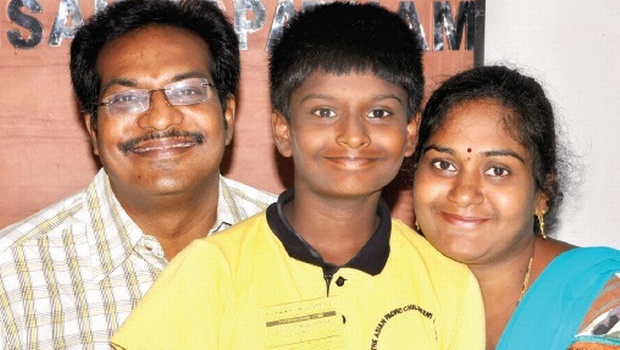
K Dhivijit was among the six children who represented India
Visakhapatnam :
Dhivijit Koppuravuri, a class VII student of Timpany Senior Secondary School brought glory to the city by representing India at the Asian-Pacific Children’s Convention(APCC) held at Fukuoka in Japan. To bring awareness of various cultures and traditions across the world among children, the 28th convention was held from July 10-23. Dhivijit was among the six junior ambassadors selected from India to attend the meet. Dhivijit, who returned recently to the city, was seen beaming with joy as he shared his experiences in Japan.
The programme sponsored by the Government of Japan, in association with the Bridge Club, APCC, invites four to six children of 12 years of age from 40 countries for two weeks to educate the young minds about the Japanese education and culture. Children are selected by Junior Chamber International(JCI) India and are trained for a few days in Nagpur and Mumbai. Applications along with a scrap book that includes the child’s academic performance and other achievements are presented to the JCI, based on which the children are selected.
“For the first four days, 240 of us from 40 countries were together in Marine House in Japan where we all had great time exchanging ideas. We Indian boys secured a bronze medal in a group searching game,” said Dhivijit. The rest of the days were spent at the home of the host families, the orientation of which were given on the last day at Marine house. “I was very excited when I met the family of Shintaro Torii. I was astonished to see the food conveyor belt at the Sushi restaurant where the food was ordered through a touch screen and arrived on our table in a toy train,” said the city boy.
Organised on July 18, the cultural event had 5,000 delegates at Fureai Park, Fukuoka hall, wherein children were given the opportunity to represent their national culture. The festivals of India were showcased through a dance performance which was highly appreciated and was telecast live on YouTube.
Dhivijit holds his own YouTube channel and shares his work for his viewers. “Always being punctual, to maintain cleanliness, being independent and exercising everyday are a few of the values that my son has learnt from Japan and I hope he inculcates the same in him,” said Praveen Kumar, Father of Dhivijit.
source: http://www.newindianexpress.com / The New Indian Express / Home> States> Andhra Pradesh / by Express News Service / July 28th, 2016
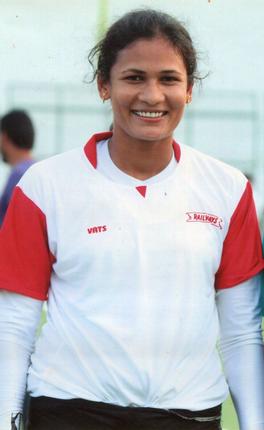
When she chose to wield the hockey stick more than a decade ago, her parents reposed confidence in E. Rajani. Now, they are eager to see her strike gold at Rio as the goalkeeper of the Indian women’s hockey team.
It’s life as usual for Ramanachari and Tulasi even as their daughter Rajani chases glory at Rio. —PHOTO: K.V. POORNACHANDRA KUMAR
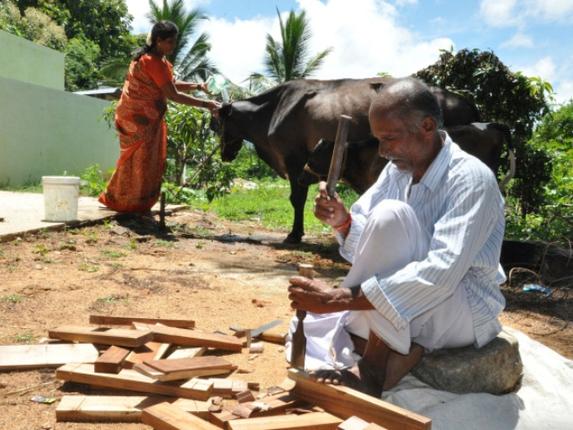
Even after their daughter started making a career in hockey, it’s life as usual for carpenter E. Ramanachari and his wife Tulasi, who grazes cows, in Yanamalavaripalle village of Chittoor district. Ramanachari’s education ended in class five and Tulasi never went to school, but that did not deter them from envisaging a career in sport for their child.
Rajani herself hadn’t any sporting aspirations in primary school, but things changed when she joined class eight at Zilla Parishat High School in Nerabailu.
The tall girl was initially picked for volleyball, but physical education trainer D. Venkat Raju found her agility and endurance suitable for hockey.
He got barren paddy fields levelled. Rajani and her friends walked along the field-bunds for 3km to practice. In fact, this nondescript school has sent 14 students to many national sporting events. And now, Rajani has raised the bar, scaling international heights.
Identifying her potential, Andhra Hockey Association secretary A.P.K. Reddy brought her out of the village to the Hockey Academy sub-centre here and later to the Sports Authority of India (SAI) hostel in Hyderabad, exposing her to international events in New Zealand, Japan, China, Korea, Argentina, Australia, the Netherlands and Malaysia. She also bagged the ‘Best Goalkeeper Award’ at an event in Japan in 2013.
“She last visited us ten months ago and we hope to see her back soon with a gold medal,” says her mother, brimming with confidence.
source: http://www.thehindu.com / The Hindu / Home> Sport / by A.D. Rangarajan / Tirupati – July 27th, 2016