Category Archives: Records, All

Felicitation to Rosaiah at Ongole

A grand felicitation would be held to Tamil Nadu Governor Konijeti Rosaiah here on February 25.

The Congress leaders and various organisations are going to felicitate Mr Rosaiah on that day at Balaji Tirupati Rao Kalyanamanda-pam.

The minister for rural development and Prak-asam district in-charge minister, Mr Dokka Manikya Varaprasad, the minister for municipal administration and urban development, Mr Manugunta Mahidhar Reddy, the Ongole MP, Mr Mag-unta Srinivasulu Red-dy, MLAs and other people’s representatives of the district are going to participate in the felicitation programme.

Mr Srinivasulu Reddy is taking active participation towards coordinating various leaders for the success of the programme.

In a press note issued by the Congress leaders they urged the people to attend the programme in large numbers and make it a grand success.

source: http://www.DeccanChronicle.com / Home> Channels> Cities> Regions> Nellore / by DC Correspondent / Ongole / February 22nd, 2012

Pan-India Innovators feted

Bangalore:

The Entrepreneurship Week India concluded in the city with over five lakh people being engaged in over 5,000 events.

The E Week culminated with an award ceremony where innovative ideas were honoured and recognised.

The week long campaign sought public support for entrepreneurship and ideas to inspire young people to ‘Invent the Future’ through innovation.

Around 80,000 students and 1,200 faculty members from 540 academic institutions participated in the event and exhibited extraordinary initiative and leadership in engaging various segments of the community.

“Challenges faced by micro entrepreneurs and rural women, water scarcity and traffic congestion are some of the issues addressed by E Week,” said K Srikrishna, Executive Director, National Entrepreneurship Network.

The Nilima Rovshen Creativity and Innovation Award was given to Atharva College of Engineering, Mumbai for resourceful design and implementation of the E Week programme.

The special award for the Most Effective Public Awareness Campaign was awarded to Muffakham Jah College of Engineering and Technology, Hyderabad, for taking the E Week campaign to a cross section of society.

The IPS Academy, Indore and Muffakham Jah College of Engineering and Technology, Hyderabad received the E Week@School Award for engaging the highest number of school students.

The National Institute of Engineering (NIE), Mysore, Vivekananda Institute of Technology, Jaipur, Muffakham Jah College of Engineering and Technology, Hyderabad, IPS Academy, Indore, Velammal Engineering College, Chennai and Bangalore’s Jyoti Nivas College received the Championship Awards for their leadership for increasing awareness for entrepreneurship.

source: http://www.ibnlive.in.com / South> Bangalore / Express News Service / The New Indian Express / Bangalore,  posted February 20th, 2012


Nayudamma Award for RS Pawar

Viyayawada:

The Dr. Y Nayudamma Memorial Award for 2011 will be conferred on Rajendra Singh Pawar, chairman of the National Association of Software and Service Companies (NASSCOM) for his contribution to IT industry.

The award will be presented to Pawar at a function at Tenali, the native town of Dr. Nayudamma, on Saturday. He will deliver the 20th Dr. Nayudamma Memorial Lecture on ‘IT for national development’ at the function.

source: http://www.IbnLive.in.com / South> Southern News/ by Express News Service / The New Indian Express / Andhra Pradesh, February 19th, 2012

Global Engagement Fund Awards

The Office of the Provost announces 17 awards from the Global Engagement Fund. This Fund is designed primarily to support projects that collaborate across Schools and disciplines; involve multiple faculty members; engage regions in which Penn has active academic partnerships and collaborative ventures, such as China and India; or represent academic and thematic priorities, such as sustainability or neuroscience.

Proposals were reviewed by a faculty committee according to criteria of scholarly merit and significance for global research, teaching, and service. The 17 awards encompass 11 of Penn’s 12 Schools and involve engagement with at least 15 countries outside the US.

Proposals for the next round of funding are due March 2, 2012. The Call for Proposals can be found here.

The Fall 2011 Global Engagement Fund Awards are:

Student Activities and Courses

  • Michael Knoll (Law), research seminar on contemporary Islamic finance
  • Carol Muller (SAS), expansion of study abroad program in Grahamstown, South Africa
  • Monroe Price (ASC), seminar on methods of monitoring and evaluation in international development

Research Projects and Collaborations

  • Linda Aiken (SON), collaboration with Katholieke Universiteit Leuven on the impact of nursing on patient outcomes in sixteen countries
  • Charles Branas (PSOM), expansion of Penn’s engagement in Guatemala
  • Alison Buttenheim (SON), research on the use of incentives to increase participation in Chagas disease control programs
  • Femida Handy (SP2), research on philanthropy in India
  • Michael Levy (PSOM), collaboration with Universidad Peruana Cayetano Heredia and Peru Ministry of Health on control of Chagas disease in Arequipa, Peru
  • Rahul Mangharam (SEAS), collaboration with NIIT University in India on design and development of new machine-to-machine communication protocols
  • Daniel Raff (Wharton), research on the history of the Beijing housing market, 1644-1948

Conferences

  • Eugenie L. Birch (Design), David Galligan (Vet Med), Mauro Guillen (Wharton), Frederick Scatena (SAS), Marilyn Sommers(SON), Brian Spooner (SAS), Susan Wachter (Wharton), Food Security in a Rapidly Urbanizing World
  • Cherie Kagan (SEAS), Controlling Matter at the Nanoscale
  • Richard Leventhal (SAS), Evaluating the Past, Present, and Future of UNESCO’s Cultural Policy Program

Distinguished Visiting Scholars

  • Daud Ali (SAS), hosting Prof. R.V.S. Sundaram, from the University of Mysore, to teach Indian language and literature
  • James Ferguson (Vet Med), hosting Profs. Yao Junhu and Jun Luo, from Northwest A&F University, and Prof. Y. Ramana Reddy, from the College of Veterinary Science in Hyderabad, to work with faculty in the Center for Animal Health and Productivity on methods of sustainable ruminant production
  • John Jackson (ASC/SAS), hosting Prof. Tudor Parfitt, from the University of London, a leading interdisciplinary scholar of Africana, African, and Jewish Studies
  • Charlie Johnson (SAS), hosting Prof. Yung Woo Park, from Seoul National University, an expert in nano-bio hybrid structures.

source: http://www.upenn.com / University of Pennsylvania / Vol. 58, No. 19 / January 24th, 2012


3 Hyderabad cops to get PM Medal for bravery

Hyderabad, January 24:

Nearly two years after the Park Hospital fire, three policemen including deputy commissioner of police (west zone) Stephen Ravindra, will be presented with the Prime Minister’s Medal for Life Saving for their heroic act in rescuing scores of patients and staff who were trapped in the inferno. Stephen Ravindra, who was Punjagutta police inspector then, M Malla Reddy, currently DSP (CID) after promotion, and constable G Siva Sudhakar Rao were involved in the rescue act. Two other civilians also took part in the heroic act and won accolades.

“At a time when even the fire services personnel were finding it difficult to enter the premises with thick smoke engulfing all the floors, the police officers showed exemplary courage,’ city police commissioner AK Khan said here on Sunday. The policemen entered the second floor of the hospital by scaling the drainage pipe, broke the windowpanes and rescued patients in the Intensive Care Unit (ICU). Some of the patients were not in a condition to move while some others were in anaesthesia but they were nevertheless saved by the policemen. The only casualties were two nurses and a patient who died from suffocation.

“Recognising their act, we have sent a proposal to the Centre and it was accepted. The trio will be presented the medal at the All India Police Duty Meet to be held at Nashik in Maharashtra in February,” Khan said.
3 Hyderabad cops to get PM Medal for bravery

This is probably for the first time that policemen from the city, particularly an IPS officer, got the award. Two other policemen, constables Veeraiah of Prakasam and Shaik Mahmood of Vijayawada were also selected for the award for saving people in other incidents in their respective districts. Mahmood, however, died recently. Stephen Ravindra dedicated his achievement to the city police.

——Agencies

source: http://www.Siasat.com / Tuesday, January 24th, 2012


Revolutionary road

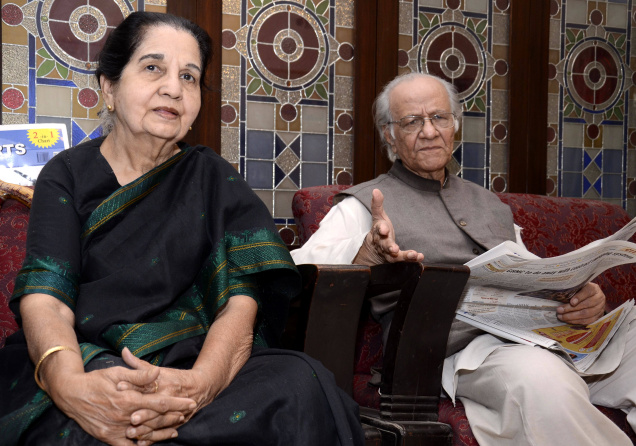
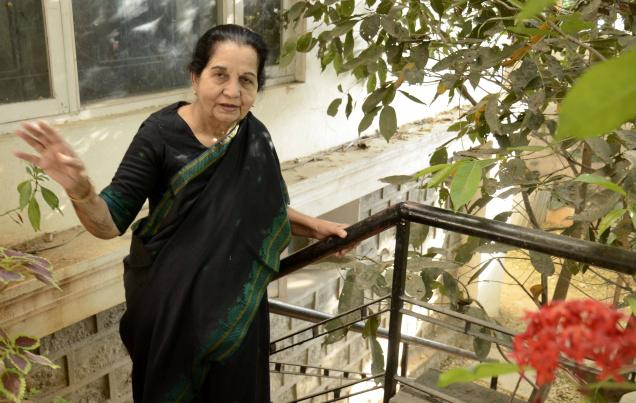
Urdu writer Jeelani Bano Photo: Nagara Gopal

Jeelani Bano with writer husband Anwar Moazzam Photo: Nagara Gopal

The Progressive Writers Movement and a desire to fight against social injustices made her what she is, says Urdu writer Jeelani Bano. Sohini Chakravorty goes back in time with her.

It has the power to arouse patriotic fervour and to evoke love and passion, and it can be our only company in melancholy – Urdu has always been synonymous with revolution, change, love and tehzeeb. It is also a language that is fighting hard for a place in an increasingly homogenised world. One of the beacons of Urdu is Padma Shri awardee, writer and poet Jeelani Bano.

Time has stopped in her tranquil house, where words like courtesy, history and heritage still hold meaning. Originally from Badayun, Uttar Pradesh, her family made Hyderabad their home and it is in this home that she was exposed to the eclectic world of poets, writers, revolutionaries, musicians and artists. Her father, Hairat Badayuni, was also a well-known poet of his time. “We grew up in an environment of mushairas, classical music concerts, sher-o-shayari. Writers from India and Pakistan were constant visitors in our house,” says Jeelani Bano, who started writing when she was just eight years old. Early in life she was exposed to the works of Faiz Ahmed Faiz, Saadat Hasan Manto, Ismat Chugtai, Maqdoom Mohiuddin, Krishan Chander and many other writers from the Progressive Writers Movement.

Even in an ambience of art and culture, there were restrictions and the strict diktats of the purdah system. “My mother was very particular and never allowed me to read Ismat Chughtai’s novels, which I used to hide and read,” the author reminisces. “We were not allowed in the room where poetry recitations and concerts used to go on. Instead, we used to sit in the angan of our house and listen to it from a distance. Later, my brothers used to mimic the writers and poets and entertain us,” she laughs.

In such an environment, her sensibilities of a writer germinated. On a visit to her governess’s village, she got the idea for her first short story, Mom ki Mariyam, about the exploitation faced by the villagers. She then sent her story anonymously to a magazine, which later published it. “People who read the story were outraged and complained to my Abba that how he could allow me to write such a story. I was very scared when he showed my story to Maqdoom Mohiuddin, but he put a hand on my head and said he was very happy that I showed such depth at such a young age. He asked my father not to stop me again,” she says.

Jeelani Bano’s life took a turn when she got married while still studying at Intermediate. It was only after marriage that she completed her masters in Urdu Literature and came out of purdah. She attributes much of her inspiration and success to her husband Anwar Moazzam, a writer and former head of the department of Islamic Studies at Osmania University.

Her works, amounting to over 22 published books including poems, short stories, novels and a screenplay for Shyam Benegal’s film Well Done Abba, have been translated into various Indian and international languages. Her stories have mirrored the social issues and causes of her time.

Whether it is against the plight of the bonded labourers in Paththaron ki Barishor against divisive politics and power wielded by politicians in Raasta Band Hain, she feels that it is the duty of a writer to protest against the evils of society and guide its people in the right direction. She says, “I am aware of things around me and any kind of news becomes an afsana for me. I don’t sit behind closed doors and write on romance and family feuds.”

It is her sense of social awareness that made Jeelani Bano the chairperson for Youth for Action, Principal Advisor, Child and Women Human Rights, International Human Rights Association (India) and chairperson of Asmita, an NGO dealing with women’s rights.

The author feels, however, that writers or the government cannot be blamed for the fading influences of Urdu and other regional languages. “We are responsible for the fading of Urdu language. We are not teaching Urdu to our children. Urdu was never a commercial language when compared to English but to protect the language we need to teach our children at home,” she says.

The writer agrees the language has undergone change over decades with the influences of regional dialects. Like any Hyderabadi, she is passionate about Dakhini Urdu and feels the need to preserve the language for future generations. “The Urdu spoken in Delhi or Lucknow is different from what we speak here in Hyderabad. Influences of Telugu are present in Dakhini Urdu,” she explains. She has over 20 recordings of Dakhini Urdu, which represents the language spoken across various demographics.

“Changes are good and a city is bound to undergo changes with time,” says the writer. “But the common people and people on the street should not pay for it. That is why I became a writer, to speak against the injustices of society.” And she has chronicled the history of Hyderabad right from the days of Nizam in her book Aiwan-e-Ghazal.

In the age of social networks and power of electronic media, she feels that to engage young people it is imperative to narrate stories that are reflective of and relevant to contemporary society. And indeed her voice is completely in sync with the changing tides without putting any of the old tehzeeb on a guillotine.

Yesterday once more

It is not just Jeelani Bano’s captivating stories and feisty views on an ailing society that keep her conversation sparkling. She also shares anecdotes about her close association with some of the finest writers and artists of the day. Paintings by M.F. Hussain, a regular visitor to the house, adorn the walls of her living room. “Ismat aapa used to call me beti and I used to stay with her frequently. More than writing, I think I learnt cooking from her,” says the amused author. Apart from receiving constant encouragement from Rajinder Singh Bedi and Krishan Chander, Jeelani Bano sent her first published book to Faiz Ahmed Faiz when he was just out of prison in Rawalpindi. “Back then it was a tradition to send the first publication to the writers across. When I sent Faiz my book, he replied with a handwritten letter saying he appreciated my work.” Some of her correspondence with other writers appears in her book Door ki Aawaazen.

source: http://www.TheHindu.com / Life & Style> Society / by Sohini Chakravorty / January 19th, 2012

After GM title Babu aims to become world champion

Hyderabad:


Having achieved the Grandmaster title at the age of 19, M R Lalith Babu is now aiming to improve his ranking and be a world chess champion.

Babu, who earned his third GM norm at the Hastings International Chess Congress in London last week, became the 26th Grandmaster from India and fourth from Andhra Pradesh.

Interestingly, the other GMs from the state – Koneru Humpy, P Harikrishna and D Harika — also belong to Vijayawada, the coastal Andhra city.

Crediting both his mother for spotting the talent in him and striving hard to make him the player he is, as well as coach Murali Krishna for sharpening his skills, Babu said, “It was definitely not a cakewalk for me. We need to work hard to be GM. My mother and my coach encouraged me a lot.”

“My goal is to improve my world ranking, to be a super Grandmaster and to prepare for World Championship,” Babu said.

The teenager came into reckoning with a win at the 46th AP State Chess Championship held at Nellore when he was 15. The prodigy also went on to win the National Under-17 Championship at Calicut in 2007.

He subsequently secured the International Master title after winning a silver medal at the Asian Junior Championship in Chennai.

Babu emerged as the strongest player at the Leiden Championship in the Netherlands, overcoming some of the big names like GMs Van den Doel and Savchenko during the tournament.

He got his first GM and final IM norm in 2009 in Spain and the second GM norm at the Chennai Open in 2010.

The journey of Babu getting his Grandmaster title was not easy as it also involved securing funds, Babu`s mother Padma said.

“Though we faced rejections at times for sponsorships, we took it in a positive way. We thought we should work more to be eligible for securing sponsorships. After all, there was no compulsion for someone to sponsor us.

“Lalith Babu had three IM and three GM norms. He never drew with anyone for a draw. Instead of drawing the game, he always wanted to win the game and obtain the norm. It is a matter of pride for me,” she said.

Padma also said that some well-wishers in Vijayawada and the Andhra Cricket Association (ACA) helped her with finances to send Babu for foreign events.

“We cannot relax now. I feel his life actually starts now. I want him to reach the level of Viswanathan Anand. We need to plan his career in a different way. I hope some sponsors or the government would help us. He need to play foreign events now,” she said.

source: http://www.ZeeNews.India.com / Wednesday, January 11th, 2012

Raising bioethical standards

“If anything happens, individual participants should not be left alone to pay for the cost of treating injuries that directly relate to that research.”: Raju Kucherlapati. Photo: Special Arrangement/ The Hindu

Society has a commitment to subjects of clinical studies, says Raju Kucherlapati of Harvard Medical School

Last year archival research by Professor Susan Reverby of Wellesley College revealed that during 1946-48 United States scientists had conducted a series of macabre human experiments on vulnerable Guatemalans. The experiments, now widely acknowledged to be a gross violation of modern-day bioethics standards, saw a U.S. team headed by John Cutler, a U.S. Public Health Service medical officer, clandestinely infect Gatemalan prison and mental hospital inmates with sexually transmitted diseases such as syphilis, gonorrhoea, and chancroid to purportedly test the effectiveness of penicillin.

Following the publication of Professor Reverby’s research, the Obama administration issued an apology to Guatemala and subsequently Mr. Obama constituted a Presidential Commission for the Study of Bioethical Issues to delve into what happened in Guatemala and, equally importantly, what the current status of protections for human subjects of medical research is, and how those protections could be enhanced. The Commssion reported its findings earlier this month, and while it could not identify any risks that a Guatemalan-type operation would be conducted again, it did highlight several areas where protections could be strengthened.

The ideas emerging from the Commission’s report will influence the course of the growing debate around bioethics standards in developing countries such as India, where pharmaceutical companies and other institutions are expanding their clinical trials operations and not all subjects in such human experiments may be able to provide informed consent. In this context a member of President Obama’s high-level commission, eminent Indian-American scientistRaju Kucherlapati, spoke to Narayan Lakshman about the principles that the Commission outlined as comprising a basic framework for protecting participants in human-subjects research.

As the Paul C. Cabot Professor of Genetics and Professor of Medicine at Harvard Medical School, Professor Kucherlapati is not only considered an expert on questions of U.S. bioethics issues but has also played a vital role on the frontier of medical research in the Human Genome Project. Originally from Andhra Pradesh, Professor Kucherlapati received his B.S. and M.A. in Biology from universities in India, and his Ph.D. from the University of Illinois at Urbana. Edited transcript of the interview:

You are a member of President Obama’s Commission for the Study of Bioethical Issues and part of the team that produced this week’s report. Could you put the report in the context of the 1940s Guatemalan human experiments and explain how serious it is that the Commission found gaps in the current state of human subject protections?

As you probably know, the history of how the report came about was that Professor Susan Reverby from Wellesley College published a paper describing some of the events that happened in the late 1940s in Guatemala, which were done by one United States Public Health Service physician John Cutler. When those revelations came out President Barack Obama apologised to the Guatemalan government about the unfortunate events that happened and asked the Presidential Commission to do three things.

First, he wanted to have a full accounting of what happened in Guatemala. Second, he asked the Presidential Commission to consult with the international community and based upon those deliberations he wanted to ask whether we have adequate safeguards to protect human subjects in research studies conducted in the U.S. and abroad with federal support. So those were the charges for the Commission.

The Commission first wrote a report in September called Ethically Impossible, in a task to describe in detail what the Commission had been able to find out about the events that occurred between 1946 and 1948 in Guatemala. Then it also produced a report that came from the international commission that was established by the Chair of the Commission and that is called Research Across Borders. The report that you are referring to, which came out yesterday, was the Commission’s deliberation on aspects of protecting participants in human subject research.

The most worrying finding by the Commission in some ways seemed to be the fact that federal agencies do not even have the capability to track the involvement of human subjects in research conducted on a vast scale, over 55,000 projects worldwide. How do you think such a serious structural flaw could be rectified?

I don’t know if I would characterise it in the way you have. First of all, the Commission felt that to be able to fully assess whether there are any issues it would be important to understand the scope of clinical research studies conducted with federal funds. It sought intervention from various governmental agencies to provide that information. It indeed received that information from all of the agencies from whom it sought information and that information is summarised in the report.

One other thing was that the degree of detail of the information that each of the agencies was able to provide was different. Of course the format of all of the reports data from the different agencies was also somewhat different. That suggested that the public has no easy access to all of the information of federally-funded human-subjects research.

Based upon that the first recommendation that the Commission makes is that each department or agency that supports this sort of research should make publicly available the specific data elements of each programme. That would include what the title of the programme is, who the investigator is, where that study is done and what amount of funding is provided for that.

Although that information is revealing it is not exactly in a single database. But if each of the agencies has that information then somebody within the U.S. government could provide a portal through which all of this information would become available.

But having said that the Commission has not found any specific instances in which there have been any problems with the protection of human subjects in any of the studies that it has conducted.

Do you have any sense of how the Commission’s findings are going to be taken forward and whether they will be translated into actual policy changes by the Obama administration? What comes next?

First of all, this is done at the request of the President and the report has been submitted to the President. The President and his staff would read the report very carefully. Representatives of the Commission will brief the appropriate staff with more details and background as needed.

The second thing that happens when these types of reports are released is that there is a significant amount of public interest in them. There are many public fora where the results are discussed extensively. Whether or not the President and the executive branch would take on all the recommendations or not, that is up to the President to make that decision.

But in many of these things the Commission has recommended that if the executive branch does not adopt these recommendations then at least it [should] provide a reason and a rationale as to why that is the case. We will see how far the recommendations will be accepted by the President.

In the context of the human experiments in Guatemala, which members of the Commission have described as “chillingly egregious” could you comment on the Commission’s view on compensation to the victims and their families? More generally, what are the guiding principles for such compensation in your view?

I think the issues with regard to compensation were not studied in the context of Guatemala and that is under litigation right now, so I do not have anything to say about compensation in the case of the Guatemala studies.

But as I mentioned the report called Research Across Borders, that is the proceedings of the international research panel of the Presidential Commission, discusses the particular issue of compensation. That group felt that the compensation mechanisms in the U.S. and the rest of the world are different, and they recommended that the U.S. think about compensation mechanisms that [are similar to the kinds of mechanisms] used in the rest of the world. That aspect has been studied very carefully by the Commission and discussed in public fora.

Despite all of that, the one clear consensus is, first of all, the idea that all of the individuals who agree to participate in research are making a significant contribution to society as a whole. The Commission felt that despite every kind of effort that one might take to mitigate risk or harm, if anything happens, the individual participants should not be left alone to pay for the cost of treating injuries that directly relate to that research.

But having said that it is not clear whether the systems that we have in the U.S. are inadequate. There is no reason to suggest or evidence to support, except for the international panel’s view, the idea that in the U.S., how individuals are compensated within the system is inadequate.

One of the recommendations that the Commission makes is that the U.S. government should first evaluate whether the systems that we have in place for compensating research-related injuries to participants is adequate or not adequate. If that study reveals that it is not adequate then [the Commission would recommend that the U.S. government] conduct a pilot study [through] the National Institutes of Health – because that is the agency which provides the majority of support for this human-subject related research – to evaluate different types of methodologies and say which might be the most appropriate.

Could you explain whether the Commission’s findings have any implications for human experiments conducted by the private sector, rather than government-funded research? What is the scale of private sector research and is there a risk that the commercial motive heightens the risk of unethical treatment of human subjects?

The President’s charge to the Commission is to look at whether we have adequate protections for research supported by the U.S. government, whether it is in this country or elsewhere. But the Commission felt that many of the ethical principles that are dealt with are not specific to publicly-funded research and that they would apply equally to privately-funded human-subjects research. So the principles apply everywhere.

The second question is what are the kinds of regulations that are currently in place for privately-funded research in the U.S.? Many of them are research efforts that are supported by pharmaceutical companies or biotechnology companies trying to develop drugs for a variety of different conditions.

In this country any private entity that is seeking approval for a new drug or treatment would have to go through the Food and Drug Administration. The FDA has rules. The FDA rules are very similar, if not identical, to the rules established by many other federal agencies which follow a set of rules called the Common Rules, which [in turn] define the criteria and conditions under which human-subjects research can be conducted. In a way anything that goes to the FDA would have to follow guidelines and regulations which are very similar to the ones that the Commission has talked about.

In addition, of course, in the studies that are conducted outside of the U.S. each of the countries has their own rules and regulations and [companies] may have to follow those regulations as well. There have been discussions as to whether some of these privately-funded research efforts do or do not take advantage of research that is done in other countries. The report deals with some of those types of issues. Regarding those aspects the Commission really recommends that any research that is done outside of the U.S. should take into consideration the local interest, that is, whether it would benefit the communities in which the research is conducted. The benefits could be any one of many different things but nevertheless the Commission recommends that those types of things should be taken into consideration carefully.

There are other sorts of issues with regard to how publicly-funded research outside the U.S. should be conducted and we all felt that the same principles apply whether it is supported by public or private funds.

According to the World Health Organisation the clinical trials industry in India was valued at over $1 billion in 2010 and is growing fast. Given this booming industry, there may be some risks for human subjects there. Based on the experience of the United States, including the most recent debate engendered by the Commission, what reforms are necessary in developing countries like India to have a sufficiently robust bioethics framework?

First of all I think that one of the most important things that the report [by the Commission] talks about is that each country should have the appropriate amount of infrastructure and people who are knowledgeable about the protection of human subjects or the ethical aspects of protecting human subjects. [This infrastructure] should either be in place or before such studies are initiated [there should be an expectation] that such infrastructure can be put together. So that’s number one – there has to be a significant number of people who are knowledgeable about these things.

The second, very important thing is that in making decisions about proper research there should be a significant amount of community involvement. When we say “community” the Commission refers to local communities because the needs of the community in which the research is conducted must be very different [across communities]. The studies that are conducted should not harm but should be of benefit to the community. The only way that you would be able to make sure that that is the case is through engagement with that community.

The third aspect is that there have been lots of discussions on the nature of the trials that should be conducted. For example placebos can be used in such studies and obviously one cannot make a generalised statement about whether a particular type of study is appropriate or not appropriate, but those or all decisions that have to be made on a case-by-case basis by informed people that include the local community.

On a different but related note, you have been closely involved in the Human Genome Project. Could you update us on where it stands now and whether its ultimate benefits in terms of new treatments for some diseases are likely to be realised in the near future?

There are dramatic changes occurring in our ability to sequence the human genome. I was part of the human genome mapping and sequencing efforts. When those efforts were completed in 2003 it was estimated that we had spent approximately $2.5-3 billion to sequence a single human genome. This year several companies in the U.S. have begun to offer whole genome sequencing for less than $10,000. So the cost of sequencing has gone down very significantly over the last eight years or so. It is anticipated that this cost would go down even more in the next few years.

Second, in the case of some disorders, especially cancer, it is becoming increasingly clear that when we examine the total genome of cancer tissues we are able to obtain a tremendous amount of information that is helping us define the ideology of cancers. But it is also in many instances providing knowledge on how we might be able to use that information immediately to treat that patient.

So these types of methodologies are already revolutionising the way that we care for patients and I anticipate that in the next five to ten years there is going to be an increase in the utilisation of sequencing technologies to, first, assess individual risk for different disorders, second, to diagnose that disease more accurately, and third, to use that information to help physicians make informed treatment decisions. All of those aspects are beginning to right now revolutionise the way medicine is practiced and that will continue for the next many years.

As an eminent Indian-American and a leading thinker in your field, can you tell us about your background including your connection to India?

I was born in a town in Andhra Pradesh and I went to undergraduate school in India. I left when I was 23 years old and came to the U.S. to do my PhD and I stayed here. I was rather young when I left India so I don’t have intimate knowledge of India but several years ago I was a member of the Scientific Advisory Committee for the Department of Biotechnology of the Government of India. During the time that I served on that committee I had an opportunity to understand about the nature of investments that the government was making in biotechnology and how that is being utilised. I advised the government at that time about new approaches that might benefit the Indian population.

Do you think those investments were of the kind that might make India a global player in this field?

I think that India has made very, very significant strides and clearly they are not behind anybody in terms of the ability to use these types of technologies. For example there is an international consortium to understand cancer and India is a part of that consortium. Each member of the consortium is looking at cancers that are relevant to that particular part of the world’s geography. India is doing studies on cancers that are much more important [to it].

Indian scientists have also been actively involved in understanding genetic factors that are important in human disease and those are again being applied to diseases that are much more important to India. So I think they are indeed part of the international community and they are embracing new technologies and new ideas and incorporating them into the way that is appropriate to practising medicine in India.

source: http://www.The Hindu.com / Opinion> Interview / December 29th, 2011
 

Saina Nehwal creates history in World SuperSeries Finals

Saina Nehwal defeated Denmark’s Tine Baun 21-17, 21-18 yesterday to become the first Indian singles player to reach the finals of the BWF World Superseries Finals.

Saina Nehwal

Earlier, Jwala Gutta and Valiyaveetil Diju had achieved the feat in 2009, where they were defeated by the pair of Christinna Pedersen and Joaquim Nielsen.

This was Nehwal’s fourth consecutive win in the tournament in Liuzhou (China), having topped Group B en route to the elimination stage. She took just 35 minutes in disposing of the World No 5. Nehwal will face stiff competition when she squares off against World No 1 Yihan Wang in the final of the season-ending tournament today.

source: http://www.mid-day.com/ Home> Sports> International / IANS / New Delhi / December 18th, 2011

Guinness record-holder eyes new record

Go-getter: A. Sudhakar Raju attempting a new Guinness record at Anantapur Press Club on Saturday. — photo: R.V.S. Prasad

A. Sudhakar Raju, a Guinness Book record-holder, attempted successfully a new Guinness record in memory and mind games in Anantapur on Saturday.

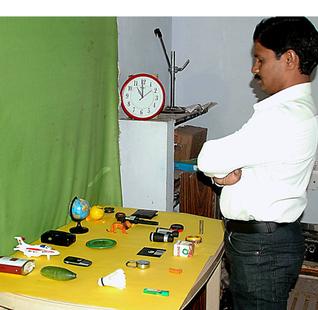
The Anantapur Press Club was witness to the record-breaking feat of Sudhakar Raju, who also works as a senior assistant in the Irrigation Department. He recalled in sequence 22 objects, which he had observed for precisely a minute before recalling them.

Speaking to The Hindu , he said that a similar record was held by another Indian – Krishna Kumar from Shillong – in the category by memorising 20 objects for a minute and recalling them in three minutes and three seconds in a sequence.

Bettering the record, Sudhakar Raju memorised 22 objects for one minute before he recalled all of them in a sequence in just 49 seconds, winning over the previous record by a yawning margin of more than two minutes – setting the bar higher in process.

Speaking of the feat, he said that he had practiced for three hours daily for the last three months before he embarked on this feat and added that no medicines or artificial methods were used to better his memory.

He also informed that the feat was done in the presence of media persons besides, two adjudicators at the Anantapur Press Club. He added that a video-recording of the record breaking feat along with the media reports would be sent to the Guinness World Record Committee.

“The committee would verify the details before adjudicating the feat as a record in about eight weeks of time”, Sudhakar Raju informed.

It may be remembered that Sudhakar Raju had in February this year performed a Guinness record-breaking stunt occupying a place in the Guinness Records Book by typing English alphabets with a space between each of the letters in just 3.52 seconds.

A. Sudhakar Raju recalled 22 objects in a sequence in just 49 seconds

source: http://www.thehindu.com / National> Andhra Pradesh / Staff  Reporter / Anantapur, December 11th, 2011