Category Archives: Records, All

India to launch its first dedicated navigational satellite today


India to launch navigational satellite today

Chennai:

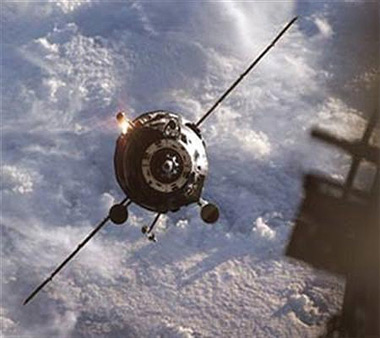
India’s first dedicated navigational satellite – IRNSS-1A with a 10 year mission life, will be launched on Monday by ISRO on board PSLV-C22, from Satish Dhawan Space Centre at nearby Sriharikota.

The PSLV will blast off into the dark skies from Sriharikota, around 80 km from here, tonight around 11.41 pm carrying country’s first navigational satellite the 1,425 kg IRNSS (Indian Regional Navigational Satellite System)-1A.

“We have had late evening and early morning launches. But this is the first time ISRO is launching a rocket around midnight,” the ISRO official said. The official said the launch time has been fixed taking into account the orbit and inclination at which the satellite will be injected into the space. According to him, the weather at Sriharikota is fine and it may not pose any hindrance for the rocket launch.

He said ISRO chairman K. Radhakrishnan is expected to have a brief meeting with the media at the rocket port post-launch which will be around 12.45 am on Tuesday.

Around 20 minutes into the launch, the rocket PSLV-XL will eject the navigational satellite at an altitude of 501 km.

The satellite is intended to provide terrestrial, aerial and marine navigation services and help in disaster and fleet management.

The satellite with a life span of around 10 years is one of the seven satellites constituting the IRNSS space segment — a regional navigational system developed by India designed to provide accurate position information service to users within the country and up to 1,500 km from the nation’s boundary line, ISRO said.
SATELLITE2HF17jul2013

The IRNSS will provide two types of services — standard positioning service and restricted service. The former is provided to all users and the later is an encrypted service for authorised users. ISRO had planned to launch IRNSS-1A last month. But it had to put it off after finding a problem in one of the electro-hydraulic control actuators in the second stage engine. The rocket was fully assembled with the satellite when the problem was detected during checks. The second stage had to be dismantled to replace the actuator which is an assembly of several components. It weighs around 20 kg. Following the Monday launch of the navigational satellite, ISRO is planning to launch its communication satellite G-Sat 14 using a heavier rocket – Geosynchronous Satellite Launch Vehicle (GSLV) – powered by a domestic cryogenic engine sometimes in August this year. Preparatory work for the G-Sat 14 launch is going ahead at the rocket launch pad in Sriharikota in Andhra Pradesh, around 80 km from here. It will be followed by the mission to Mars later this year. The launch of one more remote sensing satellite is also being planned before the end of the year.

JPN/Agencies

source:  http://www.post.jagran.com / Home> India News / July 01st, 2013
Suven secures two more product patents

With the new patents, Suven has a total of six patents from Japan and 12 from USA

Hyderabad-based Suven Life Sciences  Limited (Suven) has secured two product patents, one from Japan and another from the US, corresponding to its new chemical entities (NCEs) for the treatment of  neurodegenerative diseases. The patents are valid through 2028 and 2029.

The granted claims of the patents include the class of selective 5-HT compounds discovered by Suven and are being developed as therapeutic agents that are useful in the treatment of cognitive impairment associated with disorders like Alzheimer’s, attention deficient hyperactivity disorder (ADHD), Huntington’s disease, Parkinson  and  Schizophrenia , the company stated in a release on Friday.

With the new patents, Suven has a total  of six patents from Japan and 12 from the US. These patents are stated to be exclusive intellectual property of Suven and are achieved through the internal discovery research efforts. Products out of these inventions may be out-licensed at various phases of clinical development like at Phase I or Phase II.

“We are very pleased by the grant of these patents to Suven for our pipeline of molecules in CNS (central nervous system) arena that are being developed for cognitive disorders with high unmet medical need with huge market potential globally”  Suven chief executive officer, Venkat Jasti, said.

source: http://www.business-standard.com / Business Standard / Home> Companies> News / by BS Reporter / Hyderabad – June 28th, 2013

Indian Maritime University students sail high with solar-powered trimaran

Visakhapatnam :

Even as the city battles with persistent pollution, students of the Indian Maritime University (IMU) have built a prototype of a solar-powered, single-seater trimaran to make sailing an eco-friendly affair. What’s more, this green trimaran is also highly affordable as it has been built at a cost of just Rs 69,000!

Initial tests indicate that when charged for nearly three hours, this three-metre long and 0.6 metre broad fibre-glass boat, which is powered by a 12V 40AH solar battery weighing 13 kg to feed the four thrusters (two mounted on the main hull and one each on either side of the outriggers), can sail for 70 minutes at a speed of about 8 knots.

A trimaran is a multi-hulled boat that comprises a main hull and two smaller outrigger hulls (floats) which are attached to the main hull with lateral beams. While these are mainly used as sail-driven yachts designed for recreation or racing, there are a few trimaran ferries and warships.

The solar powered trimaran has been designed by IMU’s bachelor of technology students – Soumya Ranjan Subudhi, Avala Venkata Karthik, Asish H Nair and Prathamesh Sakharam Chari – under the guidance of project guide Eswara Arun Kishore. They spent nearly 1000 collective man hours in the last five months to build this boat as part of their final year project in the naval architecture and ocean engineering at IMU Vizag. According to Avala Venkata Karthik, they had built the single-passenger boat from scratch, including the design and construction using fiberglass. “We built the boat keeping lake waters in mind so that it can be ideally used by tourists, but eventually we tested it in the rough conditions of the sea and succeeded. We tested the boat for about half-an-hour on the sea and it performed really well in terms of speed, manoeuvrability and stability,” Karthik explained.

“We got major support from the college, which funded the project. It cost us just around Rs 69,000 to develop the model and thanks to director’s (S C Misra) support we were able to complete the project. He had stressed on the need for developing renewable energy sources models so that we could have a zero-emission boat,” said Prathamesh Sakharam Chari.

Explaining the way the battery works, teammate Soumya Ranjan Subudhi said, “Once the boat is charged and sails in the waters, it can run continuously as the battery keeps getting charged by the solar cells. The pace should ideally be around 2 knots for the battery to get continuously charged.”

On the testing of the boat, Karthik said that Hindustan Shipyard had allowed the students to conduct their checks for an hour or so, ensuring that they measure the ship’s capability even on the sea.

Describing the routine, Asish H Nair said, “We learnt from scratch about boat building as were on a tight budget and had to do a market survey on the type of materials that are economical and as well as carry out the trials. This prototype can be scaled up to bigger boats that can carry up to 6 people.”

IMU Vizag director Prof S C Misra said the brief was to build an eco-friendly boat that does not emit any polluting agents. “We found it to be feasible during the test and are open to assisting any entrepreneurs, who may want to build solar boats,” Misra said.

Initial tests indicate that when charged for nearly three hours, this green boat can sail for 70 minutes at a speed of about 8 knots.

source: http://www.articles.timesofindia.indiatimes.com / The Times of India / Home> City> Visakhapatnam / by Manish, TNN / June 29th, 2013

Young sailor from Hyderabad to represent country in Hungary

Tarun Bhatia: / Photo: Mohammed Yousuf / The Hindu

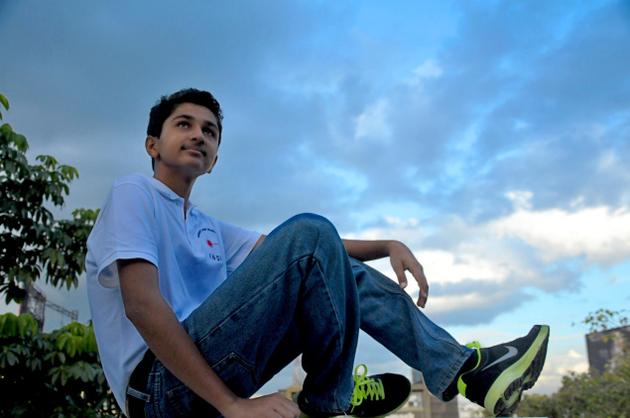
Tarun Bhatia, a 12 standard student of P. Obul Reddy Public School has been selected to represent India in the Laser 4.7 World Sailing Championships 2013 to be held at Lake Balaton Fured in Hungary from July 6 to 13.

The championship is one of the most popular and competitive international sailing meets which usually attracts more than 350 sailors from all over the world. Young Tarun Bhatia began sailing at the tender age of eight years at the Hussainsagar lake inspired by his elder brother and his father Pranav Bhatia, both sailors.

Starting with the Optimist class like many beginners, he has now graduated to sailing the Laser 4.7 Class boats which are a slightly smaller version of the Radial Laser and Standard Laser boats. Tarun has represented India at several championships in the past in the Optimist class.

“The Laser is one of the most popular single-handed boats in the world. It is simple to rig and easy to sail. It also provides very competitive international racing due to the class controls which eliminate differences in hull, sails and equipment. So skill and technique are very important when racing in a Laser,” says Tarun.

Most of the time he practices on his own but sometimes he has been lucky to have as his coach one of India’s most accomplished sailors – Rajesh Choudhary – who himself learned sailing on the waters of the Hussainsagar lake many years ago.

He is a member of the Secunderabad Sailing Club which has produced many champions with the most famous being C.S Pradipak, an Arjuna Award winner.

“Having experienced seniors around me is both an inspiration and a learning experience,” says young Tarun, confident of putting up a good show having already participated in Singapore, Doha and Quingdao (China) international competitions.

source: http://www.thehindu.com / The Hindu / Home> News> Cities> Hyderabad / by Abhijit Sen Gupta / June 29th, 2013

250 million-year-old wood found in Warangal

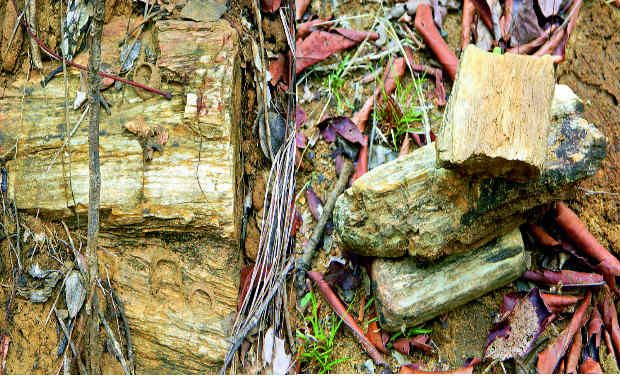
Specimen of wood fossils found in Sarvai Forest beat. The fossils reportedly date back to 20-250 million years.
Warrangal:
The Eturunagaram wildlife sanctuary in Warangal is attracting the attention of geologists, botanists and paleo-botanists, after forest officials discovered the abundant presence of wood fossils dating back to 120-250 million years.
These are fossils in the exact replica of cut wood. They are found dotting the landscape  all over Chityal, Chintaguda, Sarvai North and Sarvai South forest in Eturnagaram wildlife sanctuary, making a strong case for declaration of the area as a ‘geo-heritage site’.
Such is their number that almost all small rocks one comes across in the four ‘Forest Beats’ in Eturunagaram wildlife sanctuary turn out to be wood fossils, which are beautiful works of natural art in themselves.
There have been instances of a part of a large trunk of a tree being found in fossilised form at these places in the past, prompting experts to throng the place in large numbers to carry out research work.
Experts suggest that these wood fossils came about during the formation of Gondwana, a super continent comprising present day India, Antartica, Australia, South America and Africa as one whole.
They changed into fossils through a process of cell-by -cell replacement by silica, leading to its petrification, which is defined as the process of turning plant material into stone by infiltration with water carrying mineral particles without changing its original shape.
According to Dr R. Mallikarjuna Reddy, head of the Geology department, Kakatiya University, the Gondwana period between 120-250 million years ago in geological scale is much older than the Jurassic Age (60-120 million years), the age of the dinosaurs.
“The wood fossils site in Eturunagaram is even older than the one found at Tamil Nadu’s Tiruchirapalli, a declared natural heritage site in India, which dates back to the Cretaceous period (145 -65 million years). Hence, the site needs protection to save it for the next generation,” said Dr Mallikarjuna Reddy.
The fossil wood, found in Eturunagaram is said to belong to Glossopteris species of trees of the genus gymnosperm, which is now extinct.
The discovery of the Glossopteris species of trees in different continents, including India, Asia is said to be an important link to prove the continental drift theory, which otherwise explains the gradual movement and formation of continents around the world.
source: http://www.deccanchronicle.com / Deccan Chronicle / Home> News> Current Affairs / by Prabeer Sikdat / DC / June 26th, 2013

Osmania University docs say ‘rare’ surgery successful

HospitalHF09jul2013

Hyderabad:

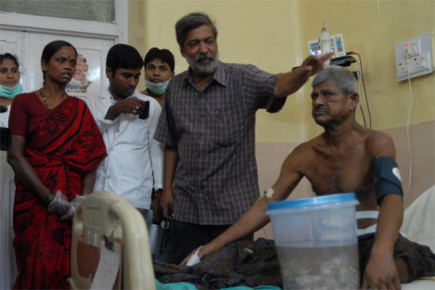
Osmania Hospital successfully conducted a rare surgery on Saturday and saved the life of a 64-year-old man from Anantapur.

Talking about the surgery, Dr Nagender, professor of surgery, said, “The patient, Obulesh, was suffering from hydatid cyst and when he came for a check-up, his right lung, liver and abdomen were completely affected. We at the government hospital could do the surgery, which would cost lakhs in a private hospital, for no cost.”

Obulesh was admitted and treatment began 15 days ago. Others in the team of professors of surgery included Ram Singh and Jevan.

Dr Raghu Ramulu, HOD of anastasia, along with his team, helped in the surgery.

Dr Nagender added, “We want people to know no matter how big and rare the cases are here at government hospitals, we can work on them. Obulesh is fit and fine now. Earlier he had no hopes of getting treatment.”

Obulesh said,”I was not sure of the cure. I had no money to get treatment at any private hospital, due to which I came here from Anantapur. The doctor said I would be okay, after 15 days. I am told that I am okay; the treatment has been successful. I am very happy. “

source: http://www.postnoon.com / PostNoon / Home> City / by Arun Daniel Yellamaty / June 19th, 2013

Scientists bag award

Hyderabad :

B. Venkateswarlu, Director of the Central Research Institute for Dryland Agriculture here has won the Fakhruddin Ali Ahmed Award of the Indian Council of Agricultural Research (ICAR) for the year 2012.

The award is in recognition of the research done by the scientist along with three of his associates — Mohd. Osman, Sreenath Dixit and K.V. Rao for developing and popularising water harvesting technology in tribal areas of the country.

The award will be presented in New Delhi on the occasion of the foundation day of ICAR on July 16, a press release said.

source: http://www.thehindubusinessline.com / Business Line / Home> News> Science / by The Hindu Bureau  /  Hyderabad  – July 02nd, 2013

Here sleeps the earliest urban planner


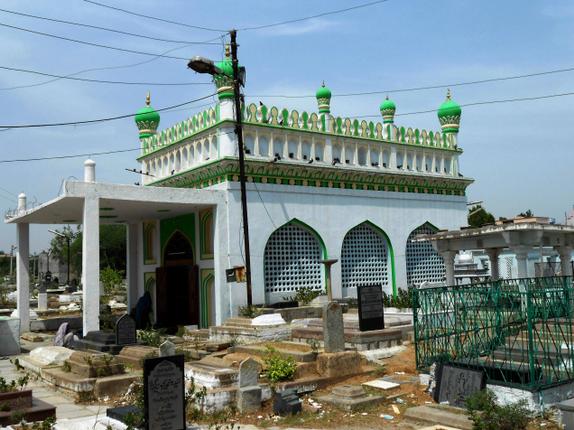
HYDERABAD: ANDHRA PRADESH: 03-06-2013:The tomb of Mir Momin Astarabadi situated at the Mir Momin Ka Daira in old city of Hyderabad. /  --- PHOTO BY: ASIF YAR KHAN / The Hindu
HYDERABAD: ANDHRA PRADESH: 03-06-2013:The tomb of Mir Momin Astarabadi situated at the Mir Momin Ka Daira in old city of Hyderabad. / — PHOTO BY: ASIF YAR KHAN / The Hindu

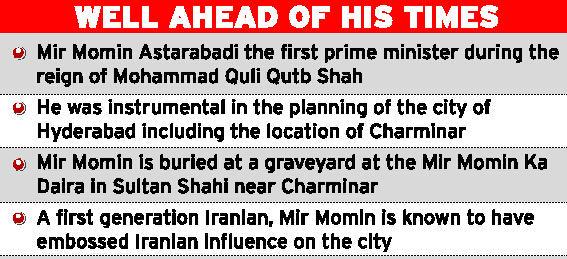
He was the first prime minister during the reign of Mohammad Quli Qutb Shah and was instrumental in the planning of Hyderabad including the location of the magnificent Charminar. But not many know about him or his grave.

Mir Momin Astarabadi now is buried at a graveyard at the Mir Momin Ka Daira in Sultan Shahi, a little ahead of Charminar.

The place gets its name through his tomb. Historians say that Mir Momim himself got the tomb constructed at the place when he was alive.

MirHF03jul2013

Iranian immigrant

A first generation Iranian, he migrated to the Golconda Kingdom in the late 15th century and is known to have embossed Iranian influence on the city. He held a crucial position in the administration and governance.

His tomb was lying in a state of neglect for many years until the Iranian consulate intervened. A fresh coat of plaster was given to the lime structure, and plans were afoot to undertake beautification works.

Work stopped

The work was stopped for some reasons, and now the structure presents a dull look, says Syed Hameed Hussain Jaffery, president, A.P. Shia Youth Conference.

The premises have numerous tombs and mausoleums including that of Mir Abul Qasim, also known as Mir Alam after whom the tank near the zoo park is named. However, the necropolis is now riddled with problems.

Govt alerted

Except for the maintenance of a couple of tombs, many other old structures of the 18 and 19 century are fast losing their sheen. The other day Mr. Jaffery represented the matter to the Wakf Board and other departments demanding that the government take steps to restore the structures at the Mir Momin Ka Daira.

“The historic structures as well as the entire graveyard is in pretty bad shape,” Mr. Jaffery complains. He wants the government to take up immediate restoration work.

source: http://www.thehindu.com / The Hindu / Home> News> Cities> Hyderabad / by Asif Yar Khan / June 18th, 2013

Sunday Shots

MasoodHussainHF02jul2013

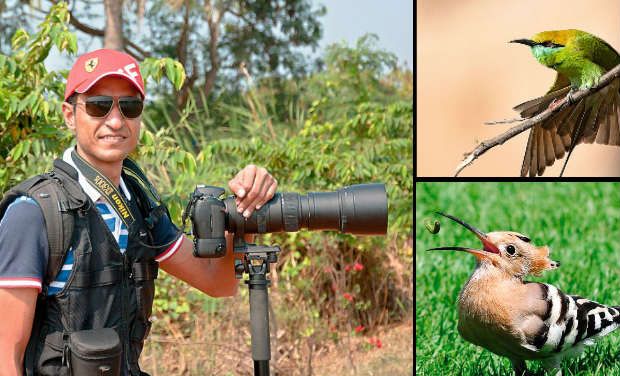
Among the artworks and photographs on display at Waterscapes, an on-going exhibition based on the theme of water, the photographs of Masood Hussain automatically catches the eye.

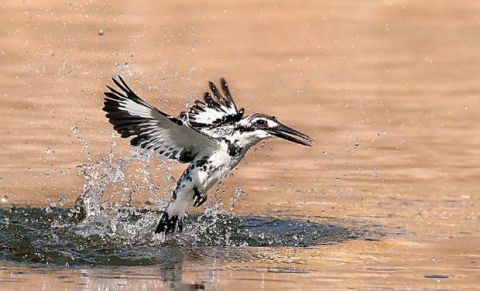
A beautiful shot of a Pied Kingfisher emerging from water after catching its prey and the reflection of a Spot-billed Duck caught in crystal clear water ignites one’s interest to know more about Masood. “The shot of the Pied Kingfisher at the exhibition was the result of three days of waiting at Gir National Park, Gujarat,” says Masood, a full-time businessman and a “Sunday” photographer.

A self-taught photographer, Masood might just be the youngest member of the AP Photographic Society to be awarded the distinction ‘Artist FIAP’ by International Federation of Photographic Art (IFIAP), an organisation comprising more than a million photographers globally.

The distinction is given to photographers whose artistic qualities and techniques  have been acknowledged through participation in international salons under FIAP Patronage.

Masood2HF02jul2013

“Every country has its own photography salon and to apply at IFIAP, a photographer needs 40 such acceptances for different pictures. I have participated in 15 international salons and got acceptance from Canada, UK, USA, Thailand, Serbia, Belgium and France. You need to visit IFIAP’s Website and once they approve of your work, they award you this distinction. I’ll be getting the documentation by next month,” says the wildlife photographer.

As a child, Masood was exposed to wildlife during hunting expeditions organised by his grandfather. And gradually, he decided to do the same, expect this time he was using a camera for the shots. “Though I’ve been interested in wildlife photography, it’s only been two years since I have taken it up. Most of my work is shot at places like Sanjeevaiah Park, Ameenpur Lake etc.,” he says.

He even bagged the top honour in the Birds category at the AP state level photography competition organised during CoP-11 last year. “The thing about animal photography is that birds won’t pose for you. This makes it all the more challenging and one needs a lot of patience,” says Masood, whose works were  featured on the cover of the Smart Photography magazine for the August 2012 issue.

source: http://www.deccanchronicle.com / Deccan Chronicle / Home> Lifestyle> Books-Art / DC / by Anisha Dhiman / July 02nd, 2013

Two girls break into IIT’s top-10 club

For the first time in history, two girls have ranked in the top 10 in the Joint Entrance Exam (JEE) for admission to the prestigious Indian Institutes of Technology (IITs).

Aditi Laddha from Ratlam in Madhya Pradesh ranked sixth, while Leena Madhuri from Tirupati in Andhra Pradesh placed eighth. Both small-town girls want to study computer science.

Pallerla Sai Sandeep Reddy of Andhra Pradesh has topped the IIT JEE 2013 exam, scoring 332 marks out of 360.

While the first two ranks are from the IIT-Madras zone, the next two ranks are from the IIT-Delhi zone. Kartikeya Gupta of Delhi placed fourth becoming the North India topper. “I would choose computer science at IIT-Delhi. Besides reading, I love to play the tabla,” he said.

http://www.hindustantimes.com/Images/Popup/2013/6/22_06_13-pg01c.jpg

The gender swing however continues to be still weighed heavily in favour of boys, with only around 11% of girls being called for counselling, almost similar to that of last year.

The total number of girls in the top 100 this year is four, up by one from last year.

“This is a positive trend. We have two girls in the top 10 this year,” HC Gupta, organising chairman, JEE (Advanced) 2013, said.

“I would like to study computer science at either IIT-Bombay or IIT-Delhi,” Laddha told HT.

Madhuri said she was very happy to see girls performing well.

“I used to study for 12-14 hours,” Madhuri, who scored 97.9% in her boards, said.

Talking to HT, Reddy, who wants to become a robotics engineer, said he was happy to note that two girls have secured a place in the top 10.

While 21,110 candidates qualified  in the exam, 14,336 have actually been  called in for counselling. The filling of courses is scheduled from June 24-30.  The first round of seat allotment is expected to be announced on July 4.

Nearly 1,15,000 candidates appeared for the JEE (Advanced) exam for 16 IITs and the Indian School of Mines, Dhanbad, on June 2.

This year, selection was a two-stage process – IIT (Main) and IIT (Advanced). Aspirants have to be in the top 20 percentile of their boards to finally get admission in an IIT.

source: http://www.hindustantimes.com / Hindustan Times / Home> News / by HT Correspondent, Hindustan Times / New Delhi – June  22nd, 2013