Category Archives: Records, All

Small victories over cancer

With two new simple technologies, testing for cancer within minutes could soon become a reality

 A team of researchers from the  Massachusetts Institute of Technology, or MIT,  has taken a significant step towards developing a method that can help detect cancer within minutes through a simple urine test. Far away in Hyderabad, a startup company has arrived at another uncomplicated and quick technique for diagnosis. It has developed a kit to detect breast cancer through a simple blood test. The finding is crucial, considering that breast cancer is the most common cancer in Indian women, killing one out of every two cancer patients.

The two researches, coming within a span of less than a month, are being watched closely by oncologists in India where cancer has become one of the ten topmost causes of death. The World Cancer Report 2014, published by World Health Organisation’s cancer agency, the International Agency for Research on Cancer, indicates that globally the number of cancer cases will increase by a startling 70 per cent over the next 20 years. Developing countries will be the most hit. Already about 70 per cent of the world’s cancer deaths take place in Africa, Asia, and Central and South America.

Which is why early detection, which can be made possible by the two tests, is critical.

The technology developed by MIT professor and Howard Hughes Medical Institute investigator Sangeeta Bhatia is like the pregnancy paper test. Through a urine sample test, it can reveal within minutes whether a person has cancer or not. Graduate student Andrew D Warren, the lead author of a paper on the technique published in scientific journal Proceedings of the National Academy of Sciences and co-authored by Bhatia, explains how the test works. “The test uses the intravenously injected nanoparticles called ‘synthetic biomarkers’. These nanoparticles are designed to passively hone onto sites of the disease and interact with proteases (the enzyme needed to digest protein). When disease-associated proteases cut pieces off the nanoparticles, the cut pieces (called ‘reporters’) are small enough to filter into the urine, where we can easily detect them with our low-cost paper test.” Higher concentrations of ‘reporters’ in the urine indicates the presence of the disease.

Conventional diagnostic tools for cancer such as colonoscopy or magnetic resonance imaging (MRI) are costly and require highly trained physicians and expensive equipment. The paper test is, in comparison, low cost and doesn’t require expensive equipment or training to use. The researchers who have run the paper test on mice with human-like tumours have found it to be quite accurate. “The test is 90 per cent sensitive (the likelihood that the results will be abnormal in people with the disease) and 80 per cent specific (the likelihood that results will be normal in people without the disease),” says Warren.

The research around the paper strip test, which started in the beginning of 2012, is in the early stage yet and uses mice. “There are still many difficult clinical studies necessary before our test could be used in people,” says Warren. So at this point, while it is impossible to guess the final cost of the test on humans, the researchers are determined to design it so that it is as inexpensive as possible.

As of now, the test focuses on the detection of colorectal cancer. But with slight changes in the synthetic biomarkers, it will be suitable for detecting several other kinds of cancers, the researcher adds.

The blood test for breast cancer, which claimed 70,218 lives in India in 2012, is, meanwhile, expected to be available commercially in five years from now. Developed by Hyderabad-based startup, Fournira Optime Diagnostics, the blood test would be about ten times cheaper than the currently available tests such as mammography, MRI and ultrasound. And its results would be available within an hour.

Early, accurate and affordable diagnoses are the three key factors that this test hopes to cover. A routine breast check, during which a woman might detect a suspicious lump, is what often leads to the first visit to the doctor. But it is often at a later stage that that evident symptom of breast cancer develops. The blood test makes an earlier diagnosis possible. The technology detects the cancerous biomarkers, if they are present in the blood, by lighting them up.

MAGIC BULLETS
Several laboratories in different parts of the world are also engaged in developing molecules that target the cancer cells specifically and in certain cases, serve as an alternative to chemotherapy. The doctors call them ‘magic bullets’. “The ‘magic bullet’ is nothing but target therapy,” says Ullas Batra, consultant, medical oncology, Rajiv Gandhi Cancer Institute and Research Centre. “In 20 to 30 per cent of the cancers, a single gene gets mutated. If we are able to identify and target that gene, then it is very effective.”

So while chemotherapy is like a bomb, which destroys everything around it, the ‘magic bullet’ is like a missile that hits a specific target, he explains. “Every year, two or three molecules are coming up for cancer that we call ‘magic bullets’. Many of these are for lymphoma, lung and liver cancer.”

The ‘magic bullet’ is usually used in Stage IV of the cancer and can be used in place of chemotherapy or in addition to chemotherapy. “In 20 to 25 per cent of lung cancer cases, especially in women and non-smokers, the ‘magic bullet’ is used upfront,” says Batra. Oncologists say it is found to be doubly effective than chemotherapy. It can control the disease with very good quality of life, doctors say.  “If chemotherapy gives the person another eight months to live, the ‘magic bullet’ keeps him going for another two to two-and-a-half years,” says Batra. it requires no hospitalisation and unlike chemotherapy, causes no hair loss or loss of appetite. “It is simply an oral tablet to be taken every day,” says Batra. A month’s dose can cost between Rs 1,800 to Rs 5,000.

CANCER VACCINES
The World Cancer Report points out that the population in developing countries, which have high prevalence of cancers such as those of the cervix, hardly believes in regular screening, such as going in for the pap smear test, for commonly found cancers. And, there is little focus on cancer vaccines — the Human Papilloma Virus (HPV) vaccine.

“Gardasil and Cervarix, the vaccines for cervical cancer , have been around for at least four years,” says Jai Gopal Sharma, head of the preventive oncology department at Rajiv Gandhi Cancer Institute and Research Centre. With time, these are gradually becoming popular. In India, while no data has been published to assess the effectiveness of the vaccines, clinical trials have shown a decrease in the development of HPV associated with some diseases after the vaccine, he adds.

The overall consensus is that while nine to 26 is the ideal and most effective age, “the vaccine can be given to a woman of any age before she attains menopause,” says Sharma. Vineet Talwar, senior consultant, oncology, Rajiv Gandhi Cancer Institute and Research Centre, adds that HPV strains 16 and 18 have been found to be the most prevalent strains that cause the cancer. “When a person is infected with HPV, it takes about 18 to 20 years to develop cervical cancer. And then too, all people do not develop cancer,” adds Talwar.


QUICK FACTS

  • Vaccine: Cervarix from GlaxoSmithKline and Gardasil from Merck & Co
  • Meant for: Cervical cancer
  • Cost: Cervarix, Rs 2,000 per dosage and Gardasil, Rs 2,800 per dosage
  • Dosage: Three doses within six months
  • Age group: 9 to 26 years or till the woman is not sexually active
  • Availability: Easily available in every hospital
Note: Gardasil protects against four HPV types or strains (6, 11, 16, and 18) and Cervarix targets HPV types 16 and 18. Gardasil is more recommended.
_____________________________________________________________________________________
source: http://www.business-standard.com / Business Standard / Home> Beyond Business> Features / by Veenu Sandhu / March 14th, 2014

Nizam’s Erstwhile Relic, Telangana’s Pride?

Nizam’s Lost Glory ?

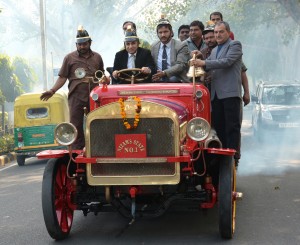
Railway Board Chairman Arunendra Kumar is on the test drive of John MorrisFire Engine, one of the priceless possessions of Indian Railways maintained at the National Rail Museum, before its participation in the 38th Statesman Vintage and Classic Car Rally to be held in New Delhi on 2nd March, 2014.

NizamsVintageHF13mar2014

This vintage FireEngine which was built by the famous Fire engineers M/S John Morris and Sons Ltd., Salfor, Manchester in 1914, completed 100 years of its existence this year (2014), coinciding the formation of Telangana, erstwhile Nizam’s state.

Will  Telangana also fight for its vintage and priceless proud possession, now that the new state is born?

(PIB)

source: http://www.microfinancemonitor.com / MF Monitor / Home / Thursday – March 13th, 2014

170 acres handed over for new port

Nellore :

In an attempt to launch the Dugarajapatnam port works even before election notification is issued, the district administration on Tuesday handed over about 170 acres of land to the Visakhapatnam port authorities.

District collector N Srikanth said that VSP would act as nodal agency to carry out the works at Dugarajapatnam port, which is the state’s second major public sector port on which the Centre is investing nearly Rs.8,000 crore. Although, 5,028 acres have been earmarked for the construction of port near Tupilipalem village near Dugarajapatnam, the district administration handed over only around 170 acres following government instructions.

“This is only the first phase of land transfer. The remaining land would be transferred in a phased manner as we have readied the blueprint for land acquisition,” said Srikanth.

According to sources, local MP Chinta Mohan is working overtime to bring either UPA chairperson Sonia Gandhi or Prime Minister Manmohan Singh to lay the foundation stone for the prestigious project before the first week of March. However, none of them have reportedly confirmed their visit to the state yet. While Sonia Gandhi wanted to visit one of the Telangana districts first, Manmohan Singh will be on a foreign tour in the first week of March.

Chinta Mohan is allegedly working hard to launch the port works before the election notification is issued and is expected to invite Union ministers and other top leaders to lay the foundation in case he fails to get the appointment of Sonia Gandhi and Manmohan Singh.

source: http://www.timesofindia.indiatimes.com / The Times of India / Home> City> Hyderabad / TNN / February 27th, 2014

Hyderabad International Airport Bags ASSOCHAM CSR Excellence Award

The ASSOCHAM CSR Excellence Award was bagged by the infrastructure major GMR Hyderabad International Airports while Ambuja Cement was the first runner-up. The award for the SME segment for the CSR excellence was given away to Indus Health Plus. Other awardees included Chambal Fertilizer and Chemicals, JK Paper, NTPC, ONGC, Punjab National Bank and Tata Motors.

Communication Minister Mr Kapil Sibal gave away ASSOCHAM awards for the 6th Global Corporate Social Responsibilities Summit.

While addressing the summit, Mr. M J Joseph, Additional Secretary, Ministry of Corporate affairs said his ministry would soon notify section 135 of the new company act that will with CSR. These activities will qualify for CSR spend and these are likely to undergo changes in the light of suggestion received from stakeholders.

Quoting a study, ASSOCHAM President Mr Rana Kapoor said, “a minimum of 16,000 Indian companies fall under the ambit of the law and that entails approximately Rs 28,000 Crores of funds that would be pumped into the system. There emerges a huge opportunity for a tripartite partnership amongst the Government, Businesses and NGOs.

Looking at the efficacy in delivery of the last mile by the ‘third sector’ (NGOs), and their inherent capability to connect with communities and execute large projects on ground, a positive push in this sector makes for an excellent combination for accelerated social impact, said Mr. Kapoor.

source: http://www.microfinancemonitor.com / MF Monitor / Home> Stay Connected / Saturday – March 08th, 2014

A brief history of Telangana and Andhra Pradesh

Ratnakar Sadaysula writes about the history of Andhra Pradesh, and how the foundations of the Telangana movement were laid.

TelenganaHF06mar2014

Honestly speaking, it was quite a tough task for me, to write about the formation of Telangana – and the bifurcation of Andhra Pradesh – without being emotionally affected. It was, after all, a place I called home. Tirupati in Rayalaseema was where I was born, Visakhapatnam in Coastal Andhra was where I grew up, studied, and got married, and Hyderabad in Telangana is where I am settled now.

In a sense, I belonged to all three regions. I had relatives from Telangana, from Seema region and of course from Coastal Andhra. But then I never saw them as being from Telangana or Seema or Kosta; for me they were just my relatives, period. It was the same at engineering college. My classmates came from all parts of the state, but we never really saw ourselves as being from Telangana or Seema or Coastal Andhra. Yes, we used to often rib and joke about where we came from, but at end of the day, we were all basically Telugu people.

When the bifurcation finally happened, it was as if a part of me was lost somewhere, a sort of confused identity. Until then, I could tell people I was from Andhra Pradesh. But now, where exactly do I say I am from? Do I belong to Coastal Andhra since Vizag is my hometown? Do I belong to Telangana since I live in Hyderabad? Or am I from Rayalaseema, since I was born in Tirupati?

Of course, apart from the “are you from Seemandhra or Telangana?” question, people also asked me, “Why Telangana state, what was the need for it to be formed?”

It is not easy to cover the entire Telangana-Andhra issue in a single article, as it has multiple dimensions, social, political, economic and historical. So, this is an attempt to explain it to people outside Andhra Pradesh, who wonder what the fuss is all about.

A brief history
The name Telangana is believed to have been derived from the word Trilinga Desa, the ancient name for Andhra Pradesh, so called because it is believed that it was flanked by three ancient Shiva Temples at Srisailam, Kaleswaram and Draksharama. A more historical explanation is that during the reign of the Nizams, the region was called Telugu Angana (where Telugu was spoken) to differentiate it from the Marathi speaking areas of their kingdom.

In historical times, the region was one of the 16 early janapadas, and Kotilingala in Karimnagar district was the main city. The region between the Krishna and the Godavari rivers was under the reign of the Satavahanas for close to 400 years from 230 BC to 220 CE. After a series of dynasties like Vakataka, Vishnu Kundina, Chalukya, Rashtrakuta and the Western Chalukyas, the region experienced a golden age during the Kakatiya Empire. From 1083 to 1203 CE, the Kakatiyas established a huge empire here, that at its peak stretched from the Godavari delta in the east to Raichur (Karnataka) in the west, and from Bastar (now in Chattisgarh) in the north to Srisailam in the south. With their capital at Warangal, the Kakatiyas built outstanding monuments and temples, and were known for their patronage of literature. With the attack by Allaudin Khilji’s general, Malik Kafur, in 1309, and the defeat of Prataparudra at the hands of Mohammad bin Tughlaq’s forces in 1310, the Kakatiya Empire fell into decline.

For some time, the region was under the Delhi Sultanate, and later the Bahmani Sultanate, before Quli Qutub Shah established the Qutub Shahi dynasty with its capital at Golkonda (near Hyderabad). In 1687, Golkonda fell to Aurangzeb after a year-long siege, and a bloody battle.

Qamaruddin Khan was appointed Viceroy of Deccan in 1712, and in 1724, he established his independence, taking the name Asif Jah and also starting the Asif Jahi dynasty. That dynasty was also called the Asif Jahi Nizams after the title Nizam-ul-Mulk (Administrator of the Realm), conferred on Asif Jah earlier. They were more popularly known as the Nizams of Hyderabad, when the city became the capital of the empire in 1769.

When the Nizam had to sign a subsidiary alliance with the British in 1799, he lost control over the state’s defence and external affairs. The Nizam also had to cede the Coastal Andhra and Rayalaseema regions of his kingdom to the British, as he could not pay monetarily for the assistance they rendered in his wars against Tipu Sultan. Coastal and Rayalaseema became part of the British Presidency of Madras under the names Circar and Ceded, while Telangana effectively became part of the princely state of Hyderabad.

For a long time, the Nizam of Hyderabad led a privileged and charmed life. He was one of the world’s richest men of his time, and lived opulently while the ordinary masses suffered in dire poverty and oppression.

During the Nizam’s rule, the rural areas were effectively controlled by what were called the Samsthanams, a group of villages that were in turn ruled by feudal lords known as Doras, mostly hailing from the Reddy and Velama community. These local Doras ran a brutal and oppressive reign, mercilessly extracting taxes from the hapless peasantry, and keeping the Nizam happy with their tribute. The Nizam had little or no control over the Doras, who were the masters of all they surveyed.

It was under such oppressive circumstances that the Telangana Rebellion began, when peasants from the backward castes and the rural poor rose against the Doras and were supported by communist leaders. The communist-led agitation started in 1946 and succeeded in liberating many villages.

Thus, the Telangana revolt, which was basically started to secure a better deal for the peasants, soon became a full-fledged struggle against the Nizam himself.

The Nizam retaliated by unleashing his private army, the Razakars, on the peasants. This army inflicted horrible atrocities on them. Villages were burnt, Hindus and moderate Muslims who did not agree with the Razakars’ extremist ideology were massacred, women were kidnapped and raped. The Razakars were the Nizam’s own storm troopers, attacking both, the peasants as well as those who were in favour of merging the Hyderabad State with the Indian Union.

The last Nizam of Hyderabad, Osman Ali Khan, who wanted to establish an independent Muslim state in India, refused to join the Indian Union despite repeated requests from Jawaharlal Nehru and Sardar Patel. Left with no option, Sardar Patel, sent in the military to annex Hyderabad in September 1948 under Operation Polo. The Nizam’s army was no match for the Indian Army, and in just five days, they were totally routed. The Nizam surrendered to Sardar Patel, and on 17th September, 1948, Operation Polo ended with Hyderabad State acceding to the Indian Union. By 1951, the leftist backed Telangana rebellion too was put down by the Indian Union.

Formation of Andhra Pradesh
At the same time, down south in the then Madras State, another rebellion of sorts was brewing too, albeit of a more peaceful nature. Potti Sreeramulu, a freedom fighter, hailing from Nellore district, led the agitation to carve out a separate state for the Telugu speaking people of that state. The prevailing feeling was that Telugu-speaking people in Madras State would be discriminated against on basis of language, and also not get proper representation in government jobs.

Sreeramulu demanded a state exclusively for the Telugu speaking people of Madras State, who resided mostly in the Circars and Ceded areas. A devout Gandhian, Sreeramulu went on a fast for his demand, and gave it up when Prime Minister Jawaharlal Nehru assured him the matter would be looked into. However with no progress on the issue, Sreeramulu went on fast again from October 1952, and while the Andhra Pradesh Congress Committee disapproved of it, the fast began to gradually catch the public’s attention.

Strikes and demonstrations broke out throughout the Telugu speaking regions, supporting Sreeramulu and demanding a new state. With the government of the day still dilly-dallying over the issue, Sreeramulu continued his fast, and passed away in the early hours of December 16, 1952.

Sreeramulu’s death was the spark needed to light the fire, and the protests became much more strident. Riots broke out in Chennai, there were violent protests from Visakhapatnam to Nellore and Rajahmundry to Guntur, there was police firing in Vijayawada and Anakapalle. Faced with no other option, Nehru announced the formation of a separate state for the Telugu people on December 19, 1952, and the central government appointed the Wanchoo committee to look into the matter. The Andhra State act was passed by Parliament in September, 1953.

The new Andhra state thus came into being on October 1, 1953, comprising seven districts of the Coastal region (Nellore, Srikakulam, Visakhapatnam, East and West Godavari, Guntur, and Krishna) and four districts of the Rayalaseema region (Chittoor, Kadapa, Anantpur and Kurnool). As per the Sribagh Agreement between Coastal Andhra and Rayalaseema, Kurnool became the capital of Andhra State, with Tanguturi Prakasam Pantulu as the first chief minister. However when Prakasam had to resign, after strident opposition from Communist leaders, Bezawada Gopal Reddy, became the next chief minister.

While Kurnool was the capital of Andhra State, it faced major issues due to lack of proper infrastructure. Government officials had to literally camp in tents, and the state government faced such a major crunch of funds, it couldn’t even pay salaries.

The States Reorganization Committee (SRC), which had Fazal Ali, KM Panniker and HN Kunzru among others, recommended the formation of Visalanadhra, which would merge the Telugu speaking areas of the existing Hyderabad State with Andhra State. The recommendation was made on the basis that having Hyderabad as a permanent capital would be more suited for Visalandhra, while also giving access to mineral resources, and the large Godavari-Krishna basin under unified control.

The Committee also noted the apprehensions of the people of Telangana, one of whose main factors was that people from the Coastal Andhra districts would dominate in employment owing to the better educational opportunities they had. Barring Hyderabad, education was not developed well in Telangana, and unlike the Rajahs and zamindars of Coastal Andhra, who set up educational institutions, the Doras in Telangana were more interested in perpetuating their brutal, feudal rule.

One more factor was that while Andhra State suffered from a serious cash crunch, Telangana on the other hand had a surplus, owing to Hyderabad, and of course a higher collection of land revenue. There was fear that unification could see Telangana facing loss in revenue, as it would have to be distributed across the state now.

Gentleman’s Agreement
The SRC had stated that Telangana could not remain a separate state on its own, and that it could unify with the existing Andhra State after the 1961 general elections provided there was a two-third majority backing the proposal if a referendum was to be conducted.

Burgula Ramakrishna Rao, the first chief minister of Hyderabad State, opposed the merger, saying only Leftist parties were supporting it for their own political calculations. He stated that a majority of the people in Telangana had apprehensions over the merger, and the assembly rulings did not accurately reflect the people’s views.

In between there occurred the Mulkhi Agitation in Telangana in 1952, led by students against non-locals taking jobs, with slogans of “Ghair Mulki, go back!”. Finally, on December 3, 1955, when the assembly voted, 147 of the 174 MLAs in Hyderabad voted on the issue of merger. 103 MLAs, including those from the Marathi and Kannada areas of Hyderabad State voted in favor, while 29 opposed, and 16 were neutral. Among those MLAs from Telangana, 59 supported the merger while only 25 voted against it. If one looks at the figures closely, out of the 94 MLAs from Telangana, 36 were Leftists, 40 were from the Congress, and the remaining were from the Socialist party and independents. So the proposal to merge Hyderabad State with Andhra State, had more support from the communists than the Congress rulers.

It was then that the Gentleman’s Agreement was signed between the leaders of Hyderabad State and Andhra State, to address the concerns of the leaders opposed to the merger and which eventually led to the formation of Andhra Pradesh in 1956.

While it is not possible to list out all the features of the Gentleman’s Agreement, here are some of the key issues it covered:
* A Regional Standing Committee for Telangana would be set up, which would look into the issues of the region, consisting of MLAs from there
* Any advice from this Regional Standing Committee, would be accepted by the government and the legislature, and in case of any difference, the Governor would have a say
* The cadre for government jobs and services in Telangana would be reserved for those who satisfied the domicile requirements, which was any person residing in Telangana for the last 12 years
* Students from Telangana would get preference in educational institutions there, even in professional colleges.
* The cabinet would be in a 60-40 ratio, with 60% of ministers from Andhra, and 40% from Telangana. And if the chief minister was from Andhra, the Deputy CM would be from Telangana, and vice versa.

Bezawada Gopal Reddy, the chief minister of Andhra State and Burgula Ramakrishna Rao, chief minister of Hyderabad State, were signatories to this agreement. The others included Neelam Sanjeeva Reddy, Gouthu Latchanna and Alluri Satyanarayana Raju from Andhra and KV Ranga Reddy, M Chenna Reddy and JV Narsing Rao from Telangana region. The agreement finally led to formation of Andhra Pradesh on November 1, 1956.

This article is basically to give a background of the formation of Andhra Pradesh, and of the historical roots of the demand for Telangana. In my next article, I will look into the Telangana and Jai Andhra movements, which broke out in 1969 and 1972 respectively, and how they laid the genesis for the Telangana movement we witnessed later on.

Ratnakar Sadasyula is an IT professional who writes code for a living, and writes during his time off to keep his sanity intact. A movie maniac and a music lover, he is a bibliophile with a love for history, the world around us and the Mahabharat. 

source: http://www.dnaindia.com / DNA / Home> Analysis / by Ratnakar Sadasyula / Agency:DNA / Tuesday – March 04th, 2014

Satya Nadella’s story to inspire youngsters with humble backgrounds

Hyderabad-born Satya Nadella’s elevation as the CEO of Microsoft has not only made Indians, especially Telugus, proud but it will definitely inspire many youngsters with humble backgrounds, industry leaders feel.

An average student of Hyderabad Public School (HPS) here Nadella did not study at IITs or any top management school, which is often perceived as a must to make it to the top bracket.

The Microsoft board Tuesday named the 46-year-old Nadella as its CEO, the global software giant’s third after Bill Gates and Steve Ballmer.

While the families of both Nadella and his wife Anupama have refused to share their thoughts citing privacy, Nadella’s friends, the alumni of HPS and others said they were thrilled at an Indian making it to the top.

“He is very down-to-earth and humble person who never shows off his position or his knowledge of technology,” J.A. Chowdary, founder director of Software Technology Park of India-Hyderabad told IANS.

Chowdary recalled his meetings with Nadella when the latter was at Sun Microsystem Inc. and also after he joined Microsoft in 1992. “He is always a learner of new things from every individual he meets. As he never shows off, people who meet him also freely share their thoughts with him,” said Chowdary.

“I admire his technology vision. With a man like him at the helm, Microsoft will reach greater heights,” he added. Chowdary is also thrilled that like him, Nadella also hails from Anantapur, a drought-prone district in the backward Rayalaseema region of Andhra Pradesh.

He did his BE in electrical and electronics from Manipal Institute of Technology, masters in computer science from the University of Wisconsin-Milwaukee and MBA from the University of Chicago’s Booth School of Business.

“This will encourage to young boys and girls with humble beginnings both educationally and financially. They can come up in life with sheer hard work and dedication,” Harish Chandra Prasad, a leading industrialist told IANS.

Prasad pointed out that Nadella studied at second-rung colleges. “He did not study at Stanford or Harvard. There is general thinking that the elite club comes from these top schools,” said Prasad, past chairman of the Andhra Pradesh chapter of the Confederation of Indian Industry (CII).

He believed Nadella is one more example of Telugus doing well. Padmasree Warrior, the Chief Technology & Strategy Officer (CTO) of Cisco Systems and the former CTO of Motorola, Inc. and Kirthiga Reddy, who heads India operations of Facebook, are from Andhra Pradesh.

Son of Indian Administrative Service (IAS) officer B.N. Yugandar, Nadella studied at HPS, Begumpet between 1978 and 1984. According to school authorities, he was not an out-standing student.

“Nadella has made every Indian, every IT professional, every Hyderabadi and every alumnus of HPS proud,” K. Vishweshwar Reddy, MD, Citadel Research, told IANS.

Vishweshwar Reddy, Nadella’s senior at HPS, said Nadella’s elevation was another example of average students doing well. He said Wipro CEO T.K. Kurien, also an HPS alumnus, was also not a top student.

Other famous HPS alumni include Karan Bilimoria, chairman of Cobra Beer; Prem Watsa, chairman, Fairfax Financial Holdings, Canada; Shailesh Jejurikar, vice president of Procter & Gamble’s North American homecare portfolio and Shantanu Narayen, CEO, Adobe Systems.

Andhra Pradesh Chief Minister N. Kiran Kumar Reddy and Union HRD Minister Pallam Raju also studied at the HPS.

“HPS had some magic ingredient. It was the culture and the interaction with students coming from different backgrounds. There were students from rich, middle-class and poor families and there were students from north India and south India,” said Vishhweshwar Reddy, who earlier headed Wipro HCIT and GE MSIT.

He recalled that HPS had very few toppers. “We had the opportunity to play sports and this helped a lot. This shows that it is not just technical skills and academic skills that take you to top,” he said.

Cricket was a passion for Nadella at HPS. “He was a member of the team. He was more of a batsman,” K. Hariprasad, CEO, Central, Apollo Hospitals told IANS.

A senior to Nadella by two years, Hariprasad was captain of the team. “It was a well-knit school. Somebody who has passed from the HPS and is from Hyderabad becoming CEO of one of the largest corporates of the world is a proud thing,” added Hariprasad.

(Mohammed Shafeeq can be contacted at m.shafeeq@ians.in)

source: http://www.business-standard.com / Business Standard / Home> News-IANS> Diaspora / IANS / Hyderabad – February 05th, 2014

Gondi script gets new lease of life

Hyderabad :

On international mother tongue day, the script of a tribal language, Gunjala Gondi, was released by the University of Hyderabad in collaboration with the Integrated Tribal Development Agency (ITDA). It is the first such adivasi script discovered and printed in the state.

For three years, four linguists from UoH’s Centre for Dalit and Adivasi Studies and Translation worked with the Gondi tribe of Adilabad to dig out their ancient script. The researchers have not only resurrected the dying script, but also released a web font for those who want to use it on the internet of the computer.

The centre has also released a textbook to be taught in 15 schools under ITDA. Interestingly, the new development will not only benefit the people of the tribe in Andhra Pradesh, but also in five other states, including Maharashtra and Chhattisgarh, where the Gondi tribe is thriving.

Tirumala Rao, senior researcher at the centre, said that it was in 2006 that he first found manuscripts of the Gondi language. But the language was written out in Telugu and Marathi scripts. “It was only when I visited Gunjala in Adilabad that I realized that the language had its own script, which only a handful of the elderly pundits in the village knew. I collaborated with other researchers and decided to document the script,” Rao said. Currently, there are only six people from the tribe who know the script of the tribal language. One among them, 76-year-old Kotnak Jangu, said he was worried that the script would get extinct after the elders died as the youngsters had not learnt it. “I have manuscripts which could date back to 150 years. But I thought that these will be of no use as no one would be able to read them,” said Jangu. He expressed happiness that the manuscripts would now be preserved as also the script. The centre is planning to digitally scan and preserve high resolution copies of the manuscripts.

Another researcher, G Manoja from Palamuru University, who is coordinating the Gunjala Gondi Research Centre in Gunjala, said the script is unique as it does not follow the consonant order of other regional languages. “The first consonant in the script is ‘ya’ instead of ‘ka’ as in other languages in the south and north. It should be noted that the tribe not only has a script, but also a rich literature. One of the books, which will soon be translated into Telugu, has a story similar to Milton’s Paradise Lost,” Manoja said.

Vice chancellor Ramakrishna Ramaswamy, who released the book and CD containing the Gondi font, said that big languages often swallow small languages. “But this is a great effort to preserve the small languages,” he said.

source: http://www.timesofindia.indiatimes.com / The Times of India / Home> City> Hyderabad / TNN / February 22nd, 2014

Andhra florist’s son tops Karnataka PG medical entrance

Bangalore :

Takasi Anush Babu smelt sweet success on Friday. As sweet as the scented flowers that his florist father sells in his tiny shop in the coastal Kakinada city of Andhra Pradesh. For Anush had grabbed the first rank in the Comed-Karnataka PGET, results of which were announced on Friday.

It has been a story of sheer hard work and perseverance for Anush who completed his MBBS from KS Hegde Medical Academy, Mangalore. While he was open to take any course with Biology in it after his Class 12, it was his mom’s dream to see him as a doctor that pushed Anush to write the medical entrance – he had to repeat the entrance exams for two years before he bagged a seat.

“Their dream is to see me set up a hospital or a clinic in my hometown. That is my long-term goal now,” Anush told TOI from AP. “I would either take up radiology or general medicine. I would like to take up radiology as it is does not need further specialization. But my parents would love to see me as a general physician,” he said.

The Andhra hegemony continued with students from the neighbouring state filling the top three medical ranks. The topper in the dental stream too is from Andhra Pradesh. Kothapalli Manasa was speechless when TOI informed her about the results. “I am shocked. I was not expecting first rank. I have been preparing for the entrance exam conducted by AP for PG dental courses too,” she said, adding that she aimed to teach rather than practice dentistry.

Manasa, daughter of Ramakrishna Kothapalli, a businessman, says everyday she had devoted around 12 hours to crack the ComedK test. “If I don’t get a seat to pursue PG in oral and maxillofacial surgery at a government college in AP, than I will pursue the same course in Karnataka,” she added.

None of the top ten ranks were bagged by Karnataka students in both dental and medical streams. For medical PG courses 16,856 candidates had applied for the entrance test. Of these, 83% appeared and 7,587 (55%) became eligible for seat selection process. The percentage of candidates becoming eligible for seat selection process is high for PG dental courses. As many as 4,723 candidates had applied for PG dental courses of which 93% wrote the test and 3,711 (85%) were declared eligible for the seats.

Candidates from Andhra Pradesh outperformed in the medical stream by grabbing six ranks of the top ten ranks. Kerala and Maharashtra secured one rank each while Tamil Nadu bagged two. Girls outclassed boys in the dental stream bagging nine of the top 10 ranks while in medical, the boys secured seven ranks.

source: http://www.timesofindia.indiatimes.com / The Times of India / Home> City> Bangalore> Namma Metro / TNN / February 22nd, 2014

L and T Metro Rail MD Gadgil Receives PRCI Award

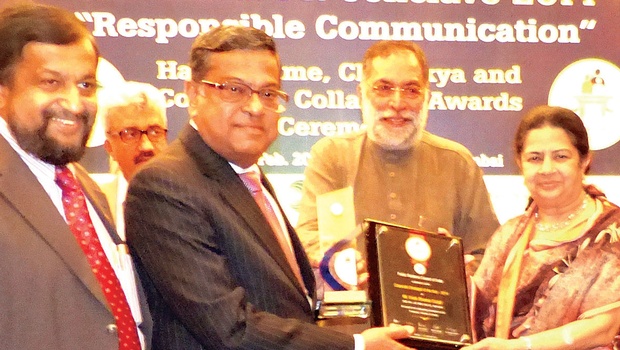
Aditya Birla group director Rajeshree Birla presenting PRCI’s Corporate Strategist of the Year award to L&T Metro Rail (Hyderabad) Limited managing director and chief executive VB Gadgil in Mumbai recently.

VB Gadgil, chief executive and managing director of L&T Metro Rail (Hyderabad) Limited, has been  honoured with Corporate Strategist of the Year Award by the Public Relations Council of India (PRCI).

The award was presented by Rajeshree Birla, director of the Aditya Birla group of industries, and Vithal Kamath, chairman and managing director of Orchid group of hotels, in Mumbai recently.

PRCI gives away this award to those who excel in their own field  and contributed to social justice and made a difference to the nation in the last four years.

The award is also known as Chanakya Award.

On receiving the award, Gadgil said: “It is an honour to receive this award and I appreciate the PRCI for instituting Chanakya Awards to recognise the outstanding contributions made by corporates and individuals and their efforts to promote public relations at various levels.”

source: http://www.newindianexpress.com / The New Indian Express / Home> Cities> Hyderabad / by Express News Service – Hyderabad / February 21st, 2014

Who coined ‘Jai Hind’ ?

Many believe that Subhash Chandra Bose coined the slogan ‘Jai Hind’ but a book on legends and anecdotes of Hyderabad  says it was first used by a man from that city who gave up his engineering studies in Germany to become Netaji’s secretary and interpreter.

In his book “Lengendotes of Hyderabad”, former civil servant Narendra  Luther presents a number of interesting articles, based on documentary evidence, interviews and personal experiences, on the city that is much celebrated for its romantic origin and composite culture.

One interesting titbit is on the origin of the slogan ‘Jai Hind’. According to the author, it was coined by Zain-ul Abideen Hasan, son of a collector from Hyderabad, who went to Germany to study engineering.

During World War II, Netaji had escaped to Germany to canvass support for an armed struggle to liberate India , Luther says.

“He addressed meetings of Indian prisoners of war and other Indians exhorting them to join him in his struggle. Hasan met him and inspired by his patriotism and spirit of sacrifice, he told him that he would join him after finishing his studies.

“Netaji taunted him that if he was worried about small things like these, he could not take up big causes. Stung by that rebuke, Hasan gave up his studies and became Netaji’s secretary and interpreter,” the book, published by Niyogi, says.

Hasan became a major in the INA and participated in the march from Burma (now Myanmar) across the Indian frontier. The army reached Imphal. It was severely handicapped in supplies and armaments and so had to retreat, the author says.

source: http://www.business-standard.com / Business Standard / Home> PTI Stories> National> News / Press Trust of India / New Delhi – February 24th, 2014