Category Archives: Records, All

Musician Gangadharam dead

The first-ever film orchestra conductor in unified Andhra Pradesh, Peddireddi Gangadharam, passed away after a brief illness here on Saturday. He was 79. He is survived by wife, son, and daughter.

Born and brought up at Hasanbada near Draksharama in East Godavari district, Gangadharam learnt Carnatic music from Ch. Sanyasi Rao and harmonium from Akula Narasimha Rao in his childhood. His penchant for film music made him launch Gangadharam Music Party with five members in 1955, which was the first film orchestra in the Telugu States.

Subsequently, he resigned to his government job and turned a full-time orchestra conductor and gave thousands of performances in India and abroad over the years.

Renowned playback singers S.P. Balasubrahmanyam, P.B. Srinivas, V. Ramakrishna, Madhavapeddi Satyam, V. Anand, and Jikki sang for his orchestra many a time.

Last year, he celebrated the diamond jubilee of his orchestra here for three days, in which Mr. Balasubrahmanyam and Kalpana enthralled the audience along with several up-and-coming singers.

source: http://www.thehindu.com / The Hindu / Home> National> Andhra Pradesh / Staff Reporter / Kakinada – March 27th, 2016

P. Susheela enters Guinness World Records

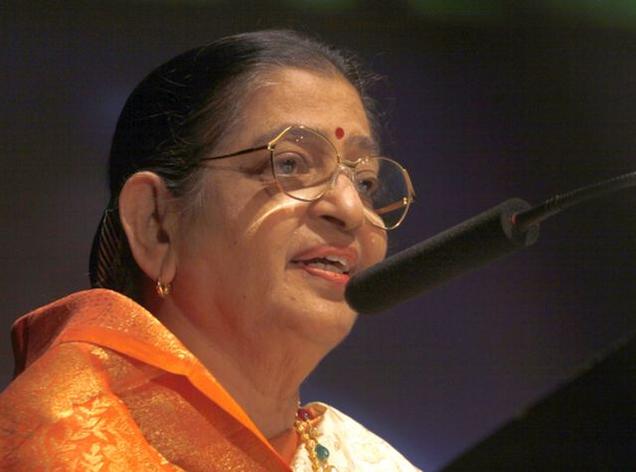
Veteran playback singer P. Susheela. File photo: Thulasi Kakkat / The Hindu

‘The queen of melodies’ has been officially credited by Guinness Book of Records for singing 17, 695 songs in 12 Indian languages.

Renowned playback singer P. Susheela Mohan, who has won many awards and earned accolades in a career spanning five decades, has added two more to her awards cabinet.

She has now been recognised by both the Guinness Book of World Records and Asia Book of Records for singing most number of songs in Indian languages. The usually reticent singer met journalists in Chennai on Tuesday to celebrate her new award.

While Guinness Book of Records has officially credited her for singing 17, 695 songs (solo, duet and chorus backed songs) in twelve Indian languages, Asia Book of Records has recognised her for singing close to 17, 330 songs.

Speaking about the awards, P. Susheela reminded everyone present that the adjudicators had only considered songs she had song from 1960s. “Please remember that I started singing from 1951,” she said.

None of this would have been possible without the work of her fans, who, by setting up psusheela.org, painstakingly catalogued the songs that she has sung over the last few decades and sent it to the adjudicators of the award.

Reflecting on the recognition, the singer said that she views it as an acknowledgement of her hard work. “There is a lot of hard work that has gone behind this achievement. Today, with so many television channels and newspapers, a talented singer can shine through quickly. But when I was singing, it was very slow and I had work my way up , step by step,” she said.

Crediting her husband for her success, she said that her husband, a doctor, was a corner stone in her life. “He fell in love with my voice and sacrificed his life so that I have a great career in playback singing,” she said.

She was candid in her response when asked why she had never considered a career in acting. “I was offered a chance to act by several directors, but I refused saying that I wouldn’t want to act even if I was paid a crore,” she said, adding, “My heart was in music.”

When asked why she is not singing anymore, the singer said that she would love to sing in movies if someone offered a good song. When she was nudged by journalists to sing her favourite song, she ended the press conference by singing Ennai pada sonnal, enna paada thondrum from Pudhiya Paravai, a hit song of 1964.

source: http://www.thehindu.com / The Hindu / Home> Entertainment / by Udhav Naig / Chennai – March 29th, 2016

Advocate files petition in Telugu, enters record books

It is not easy to secure a place in the book of records for expressing one’s love for the mother tongue. But, this advocate has made this possible.

P.N.S. Prakash
P.N.S. Prakash

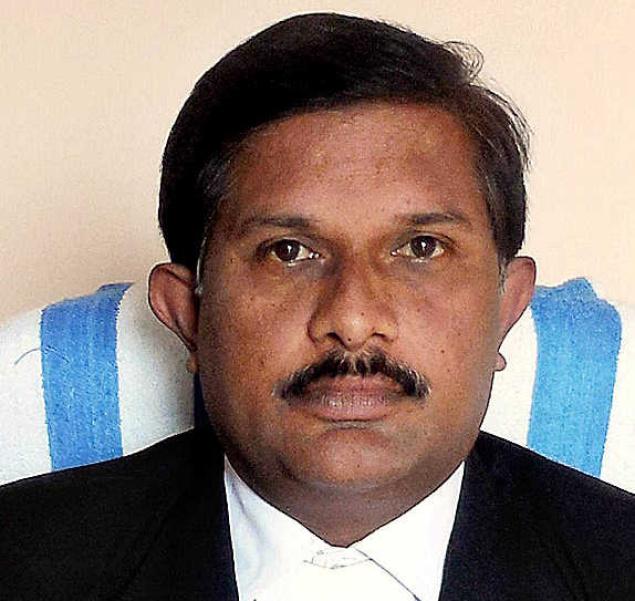
Pidatala Narasimha Surya Prakash, locally known as P.N.S. Prakash, is a practising lawyer in Punganur town, who shot to fame for bringing Telugu into the legal system. He became the first to file a petition in Telugu, when he had filed one in the Principal Junior Civil Judge’s Court, Punganur, in February 2012. The petition pertains to a civil dispute in Kandur village of Somala mandal in Chittoor district, which was accepted by the judge.

All the arguments were made in Telugu and the order copy summoning the respondent was also drafted in Telugu script. “This memorable day has been placed in the Telugu Book of Records,” reads the citation issued last year by Chintapatla Venkatachari, founder president of the Telugu Book of Records.

The achievement was also acknowledged by Book of State Records, as confirmed by its editor Nataraj. His effort was hailed by noted linguists Mandali Buddha Prasad, Yarlagadda Lakshmi Prasad and Vangapandu Prasada Rao.

When the then acting Chief Justice of Andhra Pradesh High Court Justice N.V. Ramana, participating in the World Telugu Conference in Tirupati, had advised the legal fraternity to employ Telugu to a greater extent, Mr. Prakash started filing all petitions in Telugu.

“After my record feat, I have filed 130 cases so far, all of them in Telugu,” he told The Hindu . Sadly, nobody else in the two Telugu States have followed suit in these four years and Prakash is still the lone advocate to have used Telugu script.

Translation

While regional language reigns supreme in the neighbouring Tamil Nadu and Karnataka, it is out of the reckoning here. “For example, the deponent is called ‘Dhruvakartha’ or ‘Vaangmooladaru’ in Telugu, which none uses. It is quite difficult to translate the legal jargon into Telugu but I believe that comprehension improves with continued use,” asserts Mr. Prakash, who uses Sankaranarayana and Padala Rami Reddy dictionaries for translation.

Four years after P.N.S. Prakash’s record, no petition filed in Telugu yet Love for mother tongue P.N.S. Prakash, a lawyer from Punganur, had filed the petition in Telugu in February 2012

All the arguments were made in Telugu and the order copy summoning the respondent was also drafted in Telugu script

So far, he filed 130 cases so far, all of them in Telugu

Nobody else in the two Telugu States have followed suit and Prakash is still the lone advocate to have used Telugu script.

source: http://www.thehindu.com / The Hindu / Home> National> Andhra Pradesh / by A.D. Rangarajan / Tirupati – March 29th, 2016

From a tiled shed to a stunning edifice

 BezwadaRailwaysANDHRA28mar2016

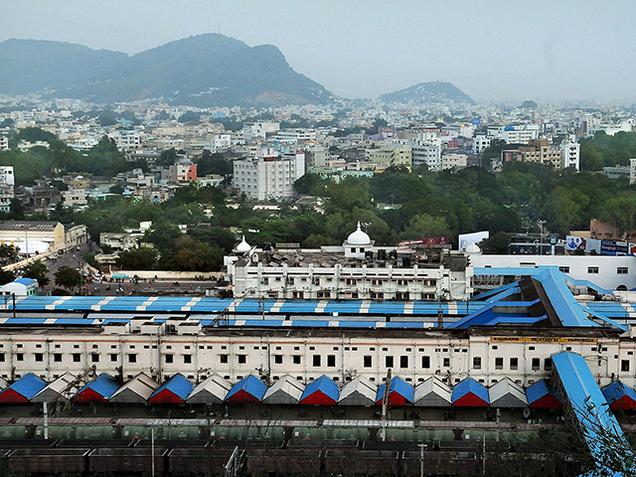
From the days of meter gauge, semaphore signals, manual hand-operated levers, and steam engines, Vijayawada Railway Station has come a long way

Any vintage picture, with black and white shades, is close to the heart, for it acts as a heart-warming reminder of those wonderful days spent in a leisurely and qualitative manner.

This bird’s eye view of the Bezwada Railway Station of the past era captured by the city’s septuagenarian photographer M.A. Mohan Rao, will make the old-timers turn nostalgic.

This picture, taken from Gandhi Hill (erstwhile Orr Hills) of the 50s, portrays the pristine clean-air-no-pollution Bezwada.

“We don’t see the DRM Office and the Railway Institute. We also don’t see any high-rise buildings,” exclaimed a youngster after taking a look at the photograph.

For the geeks (read digital kids), the nondescript small-town station look of today’s ultra modern railway junction is a pointer that nothing remains constant and change is the spice of life.

“The sound of the trains moving on the Krishna bridge was clearly heard when I was sleeping on the terrace in the 40s at Governorpet,” says octogenarian Turlapati Kutumba Rao, recalling his days when the present railway station was just a small shed.

He remembers the Tongas (horse-pulled carts) and rickshaws pulled by humans waiting for the travellers who alighted from the trains hauled by steam engines.

“Those days, the fare between Bezwada and Gudivada was 25 paise.”

Asked G. Phani, a cricket administrator and a city chronicler, after admiring this period picture: “Do you remember the days when we used to lean out of the train window even though coal particles emanating from the steam locomotive chimney caused discomfort?”

This railway station saw several talented natives leaving to the land of fortune — Chennai — in search of glory, and topping the list was Nandamuri Taraka Rama Rao (NTR), Akkineni Nageswara Rao (ANR), Savitri, Waheeda Rehman, Chandra Mohan, and Murali Mohan.

ANR, who was returning from Tenali to Gudivada after performing a playlet, was spotted by Ghantasala Balaramaiah, a film producer, at the Bezwada Railway Station in 1944 for the role of Lord Rama in his film Sri Sita Rama Jananam.

NTR resigned his well-paid sub-registrar job at Bezwada and boarded a train at this very station to try his luck in the tinsel world.

Rest, as the clichéd adage goes, is history.

From the days of meter gauge, semaphore signals, manual hand-operated levers, and steam engines, the Vijayawada Railway Station has come a long way.

Bezwada – the connecting link 

The Bezwada Railway Station came into being in 1888 when the British wanted to extend the incoming traffic of Southern Mahratta Railways (SMR) towards the East.

The station, with two platforms, was operated from a small shed, and later came under Mangalore tiles in the 20s. The late seventies (1978-79) saw the station moving into a huge building.

In 1889, the Nizam Guaranteed State Railways Company (NGSRC), based at Secunderabad, extended its railway connection up to Bezwada owing to the commercial and trading importance of the coastal town.

Southern Mahratta Railways was merged with Madras Railways, and Madras and Southern Mahratta Railways (MSMR) was opened to the public in 1908 with headquarters at Madras. The Bezwada District, spread from Tondiyarpet to Waltair (Now Visakhapatnam), was part of it and the district transportation superintendent was in-charge of it.

Later, MSMR was amalgamated with Southern Railway in 1951, and South Central Railway was formed in 1966 when Hubli and Vijayawada Divisions of Southern Railway and Sholapur and Secunderabad Divisions of Central Railway were carved out and merged into a new zone.

In 1969, Golconda Express was introduced with an average speed of 58 kmph between Vijayawada and Secunderabad.

The train was considered one of the fastest steam hauled trains in the country those days.

Vijayawada is the pivotal point in the Golden Quadrilateral, connecting the South to the North and East of India.

The 80s saw steady growth of the railway station into a major junction under the stewardship of rail managers like M. Raja Rao (Andhra Loyola alumni) and Nandigama-born J.N. Jagannath.

For want of more area for the expanding station, Mr. Raja Rao took a decision to dismantle the traffic colony and created more open space and also railway mini-stadium.

Last Pushkarams (2004) saw the laying of more platforms and shifting of Tarapet goods shed.

The number of trains (both passenger and freight) that pass through Vijayawada in a day stands at 300-plus, and around two lakh passengers commute daily.

Vijayawada station was accorded A1 status in 2008.

True facts

The first Route Relay Inter-locking (RRI) system of SCR was commissioned at Vijayawada station in 1976

Electric loco shed was inaugurated in 1980 with a capacity to maintain over 100 electric locomotives

The station has 10 platforms, 5 entrance gates with booking counters and two escalators

The seventh platform is the longest one

source: http://www.thehindu.com / The Hindu / Home> News> Cities> Vijayawada / by J.R. Shridharan / March 28th, 2016
Pusapati Ananda Gajapathi Raju no more

Visakhapatnam:

Pusapati Ananda gajapathi Raju, the eldest son of the last Rajah of Vizianagaram, PVG Raju, and hereditary trustee of 108 temples, including the Simhachalam Devasthanam and the MANSAS Trust, Pusapati Ananda Gajapathi Raju (65) died of respiratory problems at a hospital here on Saturday. The head of the royal Pusapati clan, Ananda Gajapathi Raju also served as former state health and education minister and was also elected twice to the Lok Sabha from Vizianagaram constituency.

An MA in economics from Columbia University, Ananda also worked as an journalist with a leading national daily from the south. He is the elder brother of Union civil aviation minister P Ashok Gajapathi Raju. He is survived by his wife and two daughters. His body was taken to Bungalow-7 in Vizianagaram soon after he passed away and the last rites were performed at the cremation grounds in Vizianagaram at 4.30 pm by Ashok Gajapathi Raju.

An avid reader and collector of books, Ananda Gajapathi Raju was considered one of the shining stars in AP politics. However, he invested all his efforts into turning MANSAS into a motivated and well-organised institution.

“His presence will be sorely missed by us all. He was a visionary who turned MANSAS into a proactive organisation and somebody who believed in selfless service,” said one of the members of his extended family.

source: http://www.timesofindia.indiatimes.com / The Times of India / News Home> City> Visakhapatnam / TNN / March 27th, 2016

APSRTC Bags 4 National Awards

Vijayawada :

APSRTC bagged four prestigious national awards instituted by ASRTU (Association of State Road Transport Undertakings) for 2014-15 in four different categories.

N Sambasiva Rao, vice-chairman and managing director of APSRTC received the awards from Sanjay Mitra, Union joint secretary for Road Transport and National Highways, in Bengaluru on Tuesday during the 60th anniversary of ASRTU.

APSRTC had bagged the award for a better growth rate in mileage in both rural and urban areas. The distance covered by RTC bus on an average had increased from 320.59 km to 381.19 km. per day.

The other awards were for the lowest operational cost, better KMPL (5.23) and for better secretarial services.

source: http://www.newindianexpress.com / The New Indian Express / Home> States> Andhra Pradesh / by Express News Service / March 23rd, 2016

Orthopaedician wins Dhanvantari medal

He presents a paper on procedure to extend tibia bone in treating hip arthritis during APOSA meet

Guntur-based Post Graduate in Orthopaedics, Harshavardhan Surat has won the coveted Dhanavantari Medal, for an innovation in hip surgery replacing the expensive procedure of hip replacement.

Dr. Harshavardhan won the medal at the recently held state conference of Andhra Pradesh Orthopaedic Surgeons Association for his paper presentation on a procedure to extend the tibia bone in treating hip arthritis. “For those suffering from hip arthritis, the usual procedure is to treat it with ‘Milch Batchelor Osteotomy’ in which there is incision of hip joint resulting in shortening of the leg on which surgery is performed. People opt for expensive hip replacement surgery but by extending the tibia bone the operational cost could be saved,” said Dr. Harshavardhan.

He further said that hip replacement surgery would make it difficult for patients to squat and do other works usually in rural households. By winning the medal, Dr. Harshavardhan has emulated his father and noted Orthopedic surgeon Amaranath Surat, who had the medal in 1984 for his paper on ‘Compartment Syndrome.’

Best Poster Award

A case study by a team of Orthopaedic surgeons S. Amarnath, K.R.V. Karthik and S. Harshvardhan on a rare condition, ‘Total tarsal coalition’ won the award for Best Poster Award in the conference.

source: http://www.thehindu.com / The Hindu / Home> National> Andhra Pradesh / by Staff Reporter / Gunturu – March 11th, 2016

Jodugullapalem a settlement named after twin temples

Visakhapatnam:

Jodugullapalem, a tiny settlement nestled between the Kailasagiri and Seethakonda hills right on the beach, has a vast majority of people belonging to the Vada Balaji community who eke out a living by fishing and building boats. They mainly worship Gangamma Thalli.

The twin shrines of Gangamma Thalli and Koth Ammavaru Thalli were built in 1925 when a group of families migrated from Old Jalaripeta to build a new settlement and named it after the shrines.

S Bhimeswara Rao, the priest of the temple complex, said, “There is also a third shrine that was built to accommodate the Bhulokamatha. The three shrines represent ‘Shakthi’ in a complete and wholesome form. However, this shrine is now in a dilapidated condition.” According to the priest, the temple complex was modernised from 1985 onwards and the Jatara was also revived in the same year. “The Jatara or annual fest was revived after a long hiatus and is held in a grand manner every January,” he added.

Devotees visit the shrine during the Magha Maasa and seek the blessings of the Mother Goddess after taking a holy dip in the sea. There are a number of other shrines in the complex dedicated to the Mother Goddess in various forms. Another unique feature about the temple is that this complex does not have a Brahmin priest.

Rao pointed out, “We have been the priests of this complex right from the beginning. However, we have been trained in the basic scriptures by Brahmin priests who taught us the basic mantras and rituals that need to be conducted. I was trained by a Brahmin scholar from Simhachalam by name Appala Charya, who initiated me into the basic Vedic practices.”

History buff BS Mahesh said, “As the village was populated only by Vada Balajis, the priests had to be drawn from the same community. One must understand that this was quite a common practice in India and many Hindu priests are not actually Brahmins. In the case of Vaishnavaite shrines, the priests are Stana Vaishnavaites.”

Local shrines

1) The complex came into existence in 1925

2) The shrines are tiny and built in a pyramidal style

3) The site is littered with waste thanks to beach goers

source: http://www.timesofindia.indiatimes.com / The Times of India / News Home> City> Visakhapatnam / Venkatesh Bayya / TNN / March 05th, 2016

Buddhist settlement discovered on Seethanagaram hill

Historical remains on Seethanagaram hill.— PHOTO: BY ARRANGEMENT

Archaeologist and CEO of the Cultural Centre of Vijayawada (CEO) E. Nagireddy has discovered a huge Buddhist settlement with traces of stupas, chaityas and viharas on the Seethanagaram hill located on the outskirts of Vijayawada city.

The relics surfaced as part of a survey conducted under the guidance of Mr. Nagireddy.

A rock-cut cistern, once used by the Buddhist monks during the rainy retreat, located next to the recently taken up Ramanuja-Vasudeva temple complex by the Jeeyar Trust provided a clue on the existence of a Buddhist monastery on the right side.

Further probing revealed brick-built viharas datable to 1st century BC to the 2nd century AD. The bricks used in the construction measured 60x28x7 cm. “A rock-cut steps-like path leading to the top of the hillock perhaps helped the monks reach the monastery,” says Mr. Nagireddy.

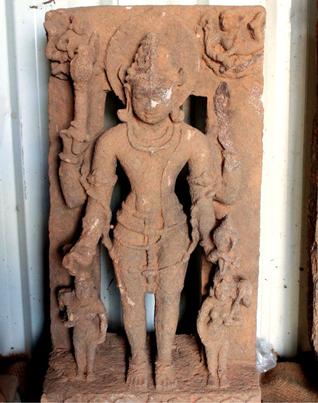
Members of the Trust, while laying a ghat road in the area, also discovered two Vishnu idols carved in khondalite stone and one Govardhana Giridhara idol datable to 6th to 10th century. The idols currently are in the safe custody of the Trust.

Extensive survey planned

Going by the ample possibility of existence of more such Buddhist relics at the site, Mr. Nagireddy has requested the Trust members to safeguard the antiquities that could be exhibited to the public at a later stage.

He said the CCV will take up an extensive survey of the place very soon.

Archaeologists believe that Andhra Pradesh became a Buddhist stronghold due to the active patronisation by the wealthy classes of the Godavari-Krishna delta.

A large number of Buddhist chaityas, viharas and stupas have been unearthed in this State. Some major sites in the area where Buddhist relics have been excavated are Nagarjunakonda, Anupu, Dhulikatta, Aduru, Bhattiprolu and Bavikonda.

source: http://www.thehindu.com / The Hindu / Home> News> Cities> Vijayawada / by P. Sujatha Varma / Vijayawada – March 04th, 2016

Medal-winning constable felicitated

Lakshmi Devi bagged a gold medal and a silver medal in an athletics event in Sri Lanka

Deputy Inspector-General of Kurnool Range B.V. Ramana Kumar on Thursday felicitated a woman head constable Nemmipati Lakshmi Devi who bagged a gold and a silver medal in the international athletics championship held in Sri Lanka.

Ms. Lakshmi Devi, working in the Armed Reserve headquarters in Kurnool, secured gold medal in hammer throw and silver medal in discuss throw held at Diogama Mahindra Rajapakshe sports stadium at Colombo in Sri Lanka in February last week. The DIG felicitated the woman head constable with a shawl and garland and wished that she win more laurels and earn a good name for the police department. Reacting to the felicitation, Ms. Lakshmi Devi said women were excelling in all sectors on par with men and lamented discrimination against women in some aspects.

Gives credit to family

She said she could emerge as an international athlete with the encouragement of her family members.

Additional SP (Administration) T. Chandrasekhar Reddy, Additional SP (Armed Reserve) M.K. Radhakrishna, DSPs D.V. Ramana Murthy, J. Babi Prasad, G. Veeraraghava Reddy, Police Officers Association president T. Narayana and executive members Raghuramudu and Noor Ahmed participated.

source: http://www.thehindu.com / The Hindu / Home> National> Andhra Pradesh/ by Special Correspondent / Kurnool – March 04th, 2016