Category Archives: Records, All

A jewel in the crown

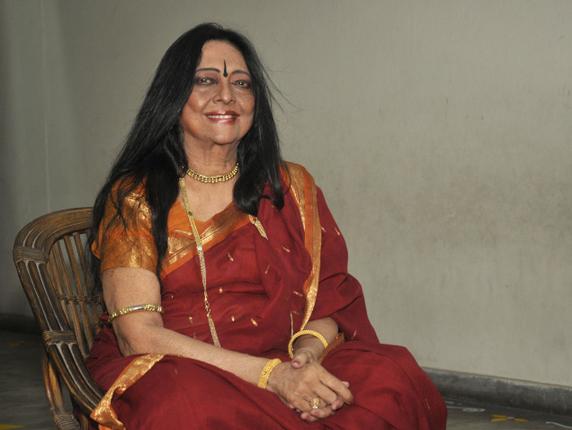
Yamini Krishnamurti Photo V.V. Krishnan

Padma Vibhushan Yamini Krishnamurti says that she is planning a production that speaks through rhythm alone.

In an era that lacks icons there is often enough a marked debate around the conferment of the Padma awards, by which the Government of India recognises the achievements of eminent civilians in any field. But Yamini Krishnamurti is a rare icon in this world. So the great classical dancer being conferred with the Padma Vibhushan, the country’s second highest civilian honour, can hardly give rise to a dissenting opinion.

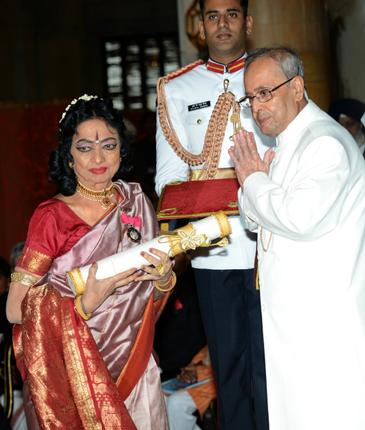
Yamini Krishnamurti receiving the award from President Pranab Mukherjee. Photo Sandeep Saxena

She received the award, announced in January, from the President this week. Yamini exemplifies a person immersed in the practice, development and contemplation of her art. Such immersion leaves scant room for pretence. Art may be described as an imitation or a reflection of life, but at the heart of true replication is an unquenchable, childlike honesty. Thus her joy at being named among the Padma Vibhushan recipients of the country is palpable.

“Bharatastu yashovaham,” she quotes in Sanskrit, “The glory of Bharat (India) is our culture.” The veteran explains, “It was said, when talented people are recognised the country will prosper.”

Talented artists have been many over the decades since independence. What marks out Yamini as a unique performer is that she made each dance form she essayed her personal expression. In the process she gained mastery over Bharatanatyam, Kuchipudi and Odissi. She was considered not merely a brilliant performer of Bharatanatyam, but also largely responsible for putting Kuchipudi on the world map.

Yamini has performed through the decades across the continents. Her combination of dancing energy and mythological richness has won her admirers everywhere. She was a young, fiery dancer in the early decades after independence, when India’s educated elite took pride in rediscovering the country’s indigenous traditions, philosophies and arts.

It was back in 1960 that she performed in Pakistan. The decade also saw her tour Afghanistan and Iran. Why these countries come especially to mind in today’s polluted climate is that the classical arts are often sought to be hemmed into a closed definition circumscribed by fundamentalist views.

On what is the place of classical dance in such a scenario, the maestro emphasises, “The dance has nothing to do with religion. Beauty is the most powerful thing for all human beings. Other things are not essential.” She continues, “This is my religion. When I see a beautiful tree, a beautiful lady, I go gaga! Beauty is the most essential thing.”

It is the opportunity to create and contemplate beauty that makes her particularly happy to teach dance. “I am making a lot of youngsters dance,” she notes, describing the joy of seeing that “a person who doesn’t even know how to walk, walks out beautifully like a swan.”

Apart from the precision of her postures, the heady speed of her compositions and the variety of themes she presented, learning from her gurus and guided by the intellectual inputs of her father Krishnamurti, she is known for her brilliance in grasping the mathematics of rhythm.

Today the unparalleled dancer takes the stage relatively seldom. However, she remains in her cosmos of light and rhythm through classes and workshops.

The nature of a performing career makes it understandable if not palatable that even the greatest of artists are easily ignored once they leave centre stage. Not so for this veteran. “I see this recognition as essential for further creative inspiration of art. So I am very thankful I got this award, and it gives me great pleasure to continue my work,” she says.

If life depends on breathing, says Yamini that is the quintessential rhythm. Thus, on her plans, she says, she looks forward to creating a production that speaks through rhythm alone. “That’s my inspiration,” she says. “I’m waiting for that.”

source: http://www.thehindu.com / The Hindu / Home> Features> Friday Review / Anjana Rajan / March 31st 2016

The Deccan’s ‘precious nine’ shine on like the Kohinoor

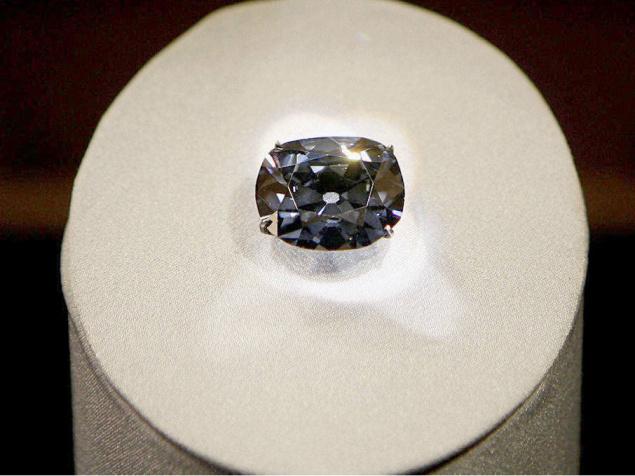
File photo of the 45.52-carat Hope Diamond at the Smithsonian's National Museum of Natural History in Washington. / Reuters
File photo of the 45.52-carat Hope Diamond at the Smithsonian’s National Museum of Natural History in Washington.
/ Reuters

Legendary diamonds mined by the Qutub Shahis are on display in Washington, Paris and Moscow.

It is not just Kohinoor; nine other famous diamonds left the shores of India and these are now displayed in museums in Washington, Moscow, Paris and Istanbul, besides forming a part of the Iranian crown jewels.

The precious nine, all categorised as legendary diamonds and mined by the Qutub Shahis of the Deccan, are the Hope Diamond, Hortensia, Darya-i-Noor, Noor-ul-Ain, Orlov (also called Orlof), Regent, Sancy, Shah Diamond and Spoonmaker’s, says V. Madhavan, who worked as a Professor of Geology in the Kakatiya University.

While the 45.5 carat Hope diamond is currently on display at the Smithsonian in Washington DC, the 190 carat Orlov diamond, a bluish-green gem, is now part of Moscow’s Diamond Treasury.

On the other hand, the 140.6 carat Regent, 55.2 carat Sancy and 20 carat Hortensia are now at the Louvre museum in Paris.

Two pink diamonds, the 182 carat Darya-i-Noor and 60 carat Noor-ul-Ain are part of the Iranian crown jewels while the 88.7 carat Shah Diamond and 86 carat Spoonmaker’s are housed in the Diamond Fund of the Kremlin and Topkapi Palace in Istanbul respectively.

Origins a mystery

Prof. Madhavan, who has studied diamond mining for nearly six decades, says that by all historical accounts, the Kohinoor was mined by the Kakatiyas when Rani Rudrama Devi headed the kingdom, its headquarters in present day Warangal.

Kohinoor’s exact vintage, right from its discovery, continues to be a mystery. However, “There is a general consensus among historians that it was found at Kolluru in the late 13th century in present day Guntur district of Andhra Pradesh,” he said adding that Kolluru was part of the Kakatiya kingdom.

Former Professor of History at the University of Hyderabad, V. Ramakrishna, said the Manual of “Kistna District in the Presidency of Madras”, written by Gordon Mackenzie and published in 1883, also indicated that the Kohinoor was found in Kolluru, then part of Krishna district.

Pages 244-247 refer to diamond mining in the district in general and the Kohinoor in particular. The manual however, says that the gem was mined by Qutub Shahis and not the Kakatiyas.

Another book, A Study of the History and Culture of Andhras, by noted historian K. Satyanarayana and published in 1982, also speaks of the Kohinoor being found in Kolluru.

According to Prof. Madhavan, India was the only producer of diamonds in the world till 1725 AD when they were mined in Brazil. Later in 1870, diamonds were explored in South Africa. Marco Polo, who visited India in the 13th century, talks in his travelogue of an inland kingdom ruled by a queen (Rudrama Devi)… “which produced all the diamonds in the world”.

At the time of its discovery, the Kohinoor was the largest diamond in the world. But no longer. In 1905, workmen at the Premier Mines in South Africa unearthed the 3106 carats (621 grams) Cullinan diamond, which remains the largest so far. It was named after Sir Thomas Cullinan, the founder of Premier Mines.

The original weight of Kohinoor was stated to be 793 carats (158.6 gm). In the 17th Century, emperor Aurangazeb wanted to reduce its size to add to its lustre.

He tasked Horenso Borgia, a Venetian lapidary with the job, but he cut the diamond down to just 186 carats and invited a heavy fine.

At present, the weight of Kohinoor, meaning mountain of light, is 105.6 carats.

source: http://www.thehindu.com / The Hindu / Home> News> Cities> Hyderabad / Prashanth Chintala / Hyderabad – April 23rd, 2016

Inter Topper Felicitated

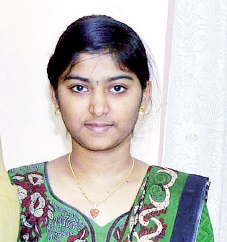
Varanasi Roshini
Varanasi Roshini

Vizianagaram :

Collector MM Naik congratulated the state topper of Intermediate examinations Varanasi Roshini, who scored 992 out of 1,000.

Roshini, a native of Vizianagaram district, met Naik on Thursday.

On the occasion, the collector suggested to her to pursue further studies with an action plan.

Roshini’s parents and principal of Narayana College, where she studied, P Sridhar accompanied her.

source: http://www.newindianexpress.com / The New Indian Express / Home> States> Andhra Pradesh / by Express News Service / April 22nd, 2016

Kohinoor controversy stirs British media

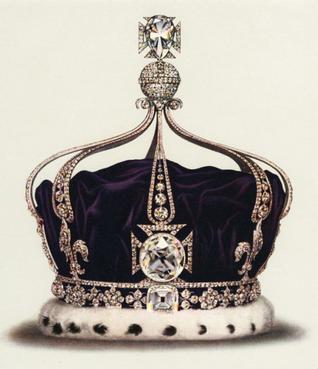
Vintage illustration of the State Crown of Queen Mary, Consort of George V, part of the Crown Jewels of England (chromolithograph), 1919. The crown contains 2,200 diamonds, including the famous Koh-i-Noor, Cullinan III and Cullinan IV gems. / Getty Images

British press pick up Indian Solicitor General’s submission before the SC that the heirs of Maharaja Ranjit Singh gave the gem as “voluntary compensation.”

New claims over the Koh-i-Noor diamond make their periodic appearance in the United Kingdom. Most of them flounder and finally sink as they make their way through the law courts — or indeed the court of public opinion, getting a day or two of media light at best. However, the relinquishment of a claim to the much-contested gem is a different matter and a cause for interest, as we just saw.

The Indian Solicitor General’s submission before the Supreme Court that the heirs of Maharaja Ranjit Singh gave the diamond to the British as “voluntary compensation” for the expenses incurred in the Anglo-Sikh wars was widely picked up by the British press, with the leading British parliamentarian of Indian-origin, Keith Vaz, even issuing a statement in support of the Government of India’s “stand.”

A gem of a debate again

The government’s subsequent clarification dissociating itself from the view of its Solicitor General brings the debate over the 106-carat symbol of British colonialism, which at present glints harshly from the crown once worn by the former Queen Mother, back to where it was.

Questions about ownership, authorship, theft and possession in the context of colonialism and today were raised at a recent exhibition at Tate Britain, Artist and Empire, which brought together a vast and unexpected array of works from collections across Britain.

Says Javed Majeed, a historian at King’s College, “The current Koh-i-Noor diamond controversy [comes] at a point in history when the terms “Indian”, “English” and “British” are in crisis again. In India we have a strong Hindu nationalist government which has re-defined what “Indian” means and thrown secularism into disarray. Claims have also been filed in Pakistan to return the diamond to Punjab there, from where it was gifted or taken [depending on your point of view]. In 2000, even the Taliban in Afghanistan asked the Queen to return the gem because of its brief association with that region at one point in time.”

Brexit and monarchy angst

In an era of economic and political uncertainties — in Britain associated with Brexit and what it portends — “anxieties about the future of the monarchy have intensified, and not surprisingly the focus of this worry is the crown itself as an actual object as well as an institution,” Dr. Majeed argues.

“Moreover, Britain’s imperial past surfaces in obvious and sometimes surreptitious ways in all these current debates, from the question of who owns the diamond to ideas of British power in the world should it leave the EU.”

Legacy control and mistrust

Legacy-control and legacy-mistrust can happen on both sides. A senior curator at a prominent British national collection in London told The Hindu that the authorities of the Victoria Memorial Museum in Kolkata refuse to lend their works from their collections to British museums.

The collection includes works by Johan Zoffany, William Hodges and Thomas and William Daniell. “Britain put in several requests to borrow art but they have all been turned down,” the senior curator, who did not wish to be named, said.

Correction

This story has been corrected for a factual error. Changed “Anglo-Maratha” war into “Anglo-Sikh” war

source: http://www.thehindu.com / The Hindu / Home> International / by Parvathi Menon / London – April 20th, 2016

GI Tag Soon for AP’s Signature Products

Hyderabad :

Andhra Pradesh’s signature mango variety Banginapalli is likely to get GI (geographical indication) status soon along with four other famous varieties of produce, Tella Chakkerakeli banana, Palasa cashew, Duggirala turmeric and Krishnapuram (KP) Onion.

Andhra Pradesh, which has over 22 GI-certified products so far, has sent these five unique horticulture products for GI registration through the National Skill Foundation of India (NSFI), Gurgaon, Haryana.

The government has instructed the horticulture commissioner to take up the GI registration process of these five unique horticulture products of AP, said Chiranjiv Choudhary, ex-officio secretary to the state government on Tuesday.

GI registration is valid for an initial period of 10 years, and can be renewed from time to time. Karnataka, with 32, tops the list of states which have secured the GI tag for their unique products, followed by Tamil Nadu (24), AP (22) and Kerala (20).

A geographical indication is a sign used on products that have a specific geographical origin and possess qualities or reputation that are due to that origin.

Some well-known GI products include Darjeeling tea, Tirupati laddu, Muga silk from Assam, Goa’s Feni, Kashmir’s Pashmina wool, Mysore Agarbatti, Bangalore Blue Grapes, Alleppey Coir and Malabar Pepper.

GI registration gives to the registered proprietor and its authorised users the legal right to the exclusive use of the GI tag and also the right to obtain relief in case of its infringement.

source: http://www.newindianexpress.com / The New Indian Express / Home> States> Andhra Pradesh / by Express News Service / April 13th, 2016

Asian blitz bronze for Supreetha

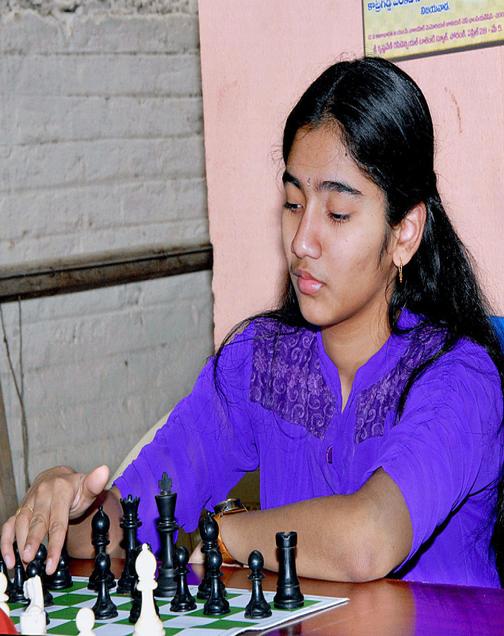
Potluri Supreetha
Potluri Supreetha

The city’s chess fraternity went gaga over the medal winning performance of Women Fide Master (WFM) Potluri Supreetha, who won a bronze medal in the Asian youth blitz (u-18 girls) championship that concluded in Mongolia on Saturday. The Nuzvid–born youngster hauled five points out of seven rounds to win her eighth international medal.

“Playing blitz, along with classic and rapid, increases the speed in a player and helps take quick decisions. Supreetha is playing all three formats – classic, rapid and blitz – to emerge as a overall player,” Mr. Bobba said.

The Class IX student of Viswa Bharathi Vidya Niketan, defeated players like Erdenehulug Batsaikha, Batsaikhna Ganchimeg, U. Uurtsaikh (all Mongolia), V. Toshali, V. Varshini (both India), Yakubbaeva Nilufar (Uzbekistan) and Nguyen Than Thuy Tien (Vietnam) to make it to the podium.

She will play 2 tournaments in May

Supreetha, the 14-year-old trainee of Mustabada Sports and Educational Society, will play two tournaments next month – Asian junior chess championship in New Delhi from May 2 to 12 and a Grandmaster Open tournament at Chicago (U.S.A.) from May 25 to enhance her international rating. Chess is not in the family background of Supreetha and her father takes care of agriculture in Nuzvid. What started off as a hobby went on to become an obsession for the young girl.

source: http://www.thehindu.com / The Hindu> Home> News> Cities> Vijayawada / Special Correspondent / Vijayawada – April 10th, 2016

Making Erra Matti Dibbalu global

Of the many natural assets that Visakhapatnam is blessed with, the most valuable and unique are the Erra Matti Dibbalu (EMDs).

EMDs of Bhimunipatnam were first reported by William King, deputy superintendent of Geological Survey of India in the year 1886.

King called the stretch of 24 miles, between Visakhapatnam and Bhimunipatnam ‘badlands,’ representing great sand banks, in a dry terrain, where sedimentary soils were extensively eroded by wind and water.

Scientists tell us that the EMD illustrate earth’s evolutionary history, including the climatic conditions that once existed at the site. Typically, such terrain has a multilayered colouring, which is both fascinating and attractive. Moreover, there are vestiges of the prehistoric man having lived in the area.

Visakhapatnam’s Red Sand Dunes are invaluable inheritance, that need to be conserved through a conscious effort, both for their scientific as well as aesthetic significance. Conservation and protection of such marvels of nature is vital for the posterity, because once lost they can never be retrieved again.

Citizen/heritage bodies of the city have worked hard to get the Geological Survey of India to recognise the EMDs as a Geo heritage site, which is no mean achievement. We must now go a step further.

Even though when William King reported them in 1886, the entire stretch of 24 miles were marked with coastal red sand mounds, over a period of time most of them have been leveled, except for a small segment, which happens to be the most spectacular part, has survived.

The beauty of the EMDs is such that tourists have been flocking to the place to admire them.

Come Karthika masam, families gather there for kartheeka vanabhojanalu. While it is good that people enjoy the beauty of the sand dunes, unbridled unregulated footfall harmed the sand dunes. Even more harmful would have been the intervention of the department of tourism had it been allowed.

Building a facility centre at the mouth of the seasonal stream that drains through the fragile eco system, a proposal for night tourism using beach buggies and camel rides are some of the spectacularly shortsited projects, which, mercifully were opposed by the heritage activists of the city. If those were allowed, EMDs would have been levelled with a year or two.

EMDs are made up of loosely stacked sand, which is easily disturbed. Any harsh activity like indiscriminate clambering up the sand dunes or using vibration-generating vehicles in their middle will disturb them and hasten the process of deterioration.

Unregulated tourist flow is neither in the interest of the tourists nor of the EMDs. As one goes deeper into the sand formations, the gully formation transforms into a veritable maze, the height of the mounds grows and if one is not careful, it is easy to lose one’s way.

A greater threat to the EMDs is the mindless digging of the dunes for laying a four lane road and building a cement mixing plant right in the middle of the sand dunes, which was brought to light by the ever vigilant public view. The latest threat appears to be a housing society.

Taking advantage of the momentum generated by Visakhapatnam’s ‘smart and clean city’ tags, we must elevate our tourism too to a global level.

We must start working towards getting UNESCO’s recognition for EMDs.

True, it would take a bit of leg work. But the benefits that will accrue make it worthwhile. To achieve that status, all the short sited and unsustainable tourist interventions proposed by the government in the EMDs must be given up forthwith, immediately. The district authorities, the state government and the heritage conservationists must work together and seriously. When the people and their governments come together, the synergy generated makes many things possible. Vizag can take a lead in the matter.

There are the four fundamental features, which are an absolute prerequisite for an area to become a member of a UNESCO Global Park and on the face of it we fulfill all the requirements.

Firstly, the area under consideration must have geological heritage of international value, which is assessed by scientific professionals, and is peer reviewed by an UNESCO Global Geopark Evaluation Team.

Do we fulfill that requirement? Certainly.

Geologists tell us that there are just three such formations in South Asia, of which we have one.

Visakhaptnam is fortunate to have one such stunningly beautiful formation so close to the city.

Earth scientists of the country and particularly of Andhra University have studied EMDs extensively and tell us that EMDs are of national as well as international value.

Scholars have used them as a living laboratory, to explain to the students the evolution of the earth’s crust. Much literature has been written about it.

The second requirement is that an aspiring Geopark must be managed by a body, which is created by a central Act.

This takes political will of the people’s representatives. It is not the first time that such an Act was passed to protect an institution of national importance.

Salarjung Museum was created by a central Act specially passed for that very purpose.

The institution thus entrusted with the task of managing EMDs must involve the local communities and the other stake holders in its management plan. In the case of EMDs the local stake holders would be the villagers of Nerellavalasa and the local fishermen, who have a direct interest in the EMDs.

For, in the year 1970 some 20 families of Nerrellavalasa were given pattas within the sand dunes by the Government of Andhra Pradesh.

The villagers planted cashew trees along the slopes of the dunes, which not only enhanced the beauty of the dunes but also helped in the prevention of soil erosion, as the root systems hold the soil together.

So, the management plan must have a two-pronged strategy of protecting the site along with the interest of those that depend on it.

The tourism interventions of the government so far have been aimed at evicting the pattadars of the EMDs and opening the EMD for the exclusive benefit of the tourists. Such interventions are violative of the United Nations’ principles of heritage conservation.

Equally important is maintaining the sanctity of the dunes and stopping all intrusive activity which disturbs their pristine integrity. The landscape includes the ravines, streams, foliage, gullies, coast line and all the other natural in features in the area, in toto.

No more building of roads in the immediate neighbourhood of the EMDs, no cement processing plants nor a housing colony in the mounds.

Then the third requirement to get UNESCO Global Geopark is a total visibility to the world. This stipulation had to be put in place as at times some geological formations might be controlled by private bodies, which might restrict entry to the public.

EMDs does not have that problem since they are located within a stretch held by the government.

What, needs to be done to make EMDs more visible is to create a dedicated website, print leaflets, publish a detailed map of the area and make available information which is required for international tourists.

Lastly, a UNESCO Global Geopark is not only about cooperation with the local people living in the UNESCO Global Geopark area, but also about cooperating with other UNESCO Global Geoparks through the Global Network. It must work together with the other global partners, across borders.

It is high time the authorities in charge of tourism and the district administration take charge of the conservation of the EMDs seriously, and plan for the overall conservation of the area, once and for all.

Getting the recognition of UNESCO will place the site on the global tourist map and bring international tourists.

At present there are 120 UNESCO Global Geoparks in 33 countries. It would be a proud moment for Vizag, if we can join that network.

(The writer is a heritage and environmental activist. She can be reached at ranisarma2010@gmail.com)

source: http://www.timesofindia.indiatimes.com / The Times of India /News Home> City> Visakhapatnam / by Rani Sarma / April 10th, 2016
Solar boat makes its debut in Andhra Pradesh

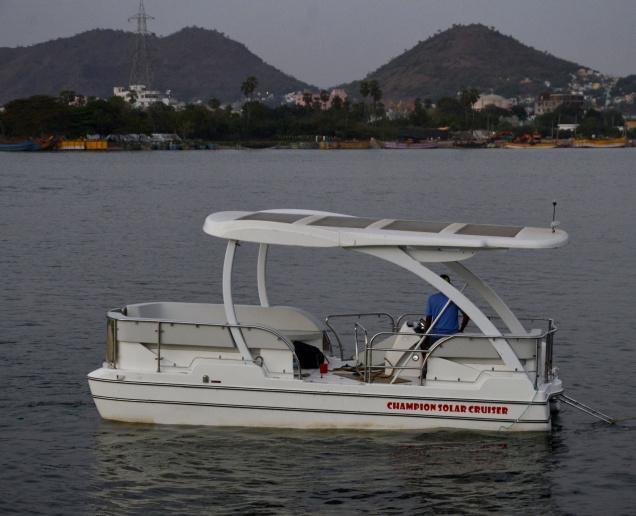
The pontoon shaped solar-powered boat all set to be launched in River Krishna on Ugadi day in Vijayawada. Photo: V. Raju

The 12-seater pontoon-shaped vessel can cruise at a speed of 7 knots.

An eco-friendly solar-powered boat was launched on the pristine waters of River Krishna here on Friday.

There are only a handful of such boats operating on solar power in the country. The 12-seater pontoon-shaped boat can cruise at a speed of 7 knots for an estimated range of over 35 miles.

“We chose to launch the boat in River Krishna on the occasion of Ugadi festival on a trial run. While the boat may not change water travel, it is an effective and attention-grabbing demonstration of the sun’s power. We wanted to include an eco-friendly boat in our fleet of water sports operating in Krishna since Chief Minister N. Chandrababu Naidu is keen on bringing into use green energy,” said Subhakar Rao Surapaneni, CEO and Managing Director of Champions Yacht Club, a Goa-based yachting and boating service company which is launching the new facility.

Imported from China

The solar boat, facilitating clean and efficient cruise, has been imported from China.

Solar-powered boats get their energy from the sun. Using electric motors and storage batteries charged by solar panels fitted to the roof, these boats can significantly reduce or eliminate use of fossil fuels.

“Unlike conventional boats that operate using diesel engines which are fuel-guzzlers causing air and noise pollution and disturbance to the local habitat endangering the ecological balance of the surrounding areas, the solar boats are uniquely suited to transform light energy into movement,” said Sri Ranga Sai, Champion Yacht Club’s Vijayawada unit manager (Operations).

The boat will be rented out on hourly basis for kitty parties and other parties by small groups, says Mr. Sai.

The firs solar boat designed in India was named Surya, a 25-seater, by Kerala-based TeamSustain in 2008. It operated in the backwaters of Kerala ferrying passengers and in 2010, it was included in the Limca Book of Records as Asia’s largest solar-powered passenger boat.

source: http://www.thehindu.com / The Hindu / Home> News>Cities> Vijayawada / by P. Sujatha Varma / April 09th, 2016

City startup wins award

Genius Edulabs bags the award under social impact category

Genius Edulabs, a city-based startup which was incubated at Startup Moksha, Rushikonda, has received an award from Hyderabad Software Exporters Association (HYSEA) for its innovation.

The award was presented by Telangana IT Minister K.T. Rama Rao at a function organised recently at Hyderabad.

Genius Edulabs got the award under social impact category for their innovation — Nano Science Lab — which is a 3ftx3ft modular cabinet with wheels that can store 415 varieties of lab apparatus and chemicals to perform 250 science experiments for the Classes VI to X under CBSE/ICSE/State syllabus.

“A science teacher can walk into the classroom with Nano Science Lab and create lot of excitement among students ,” Startup Moksha CEO Thumati Vasudeva told The Hindu .

source: http://www.thehindu.com / The Hindu / Home> Cities> Visakhapatnam / by Special Correspondent / Visakhapatnam –  April 05th, 2016

On a ‘record’ quest in performing push-ups

For many people, push-up is a way of punishment and for a few it is a noting but a physical exercise. But for Haridasu Ramesh Kumar, a youngster from Chollangi, on the outskirts of Kakinada, push-ups provided the platform to achieve a good number of records.

Ramesh Kumar’s specialisation is in Hindu push-ups, also known as Hanuman push-ups, Judo push-ups or Dive Bomber push-ups, which he learnt from his father Govindaraju in the childhood and practises every day without fail.

Ramesh Kumar got his first national record from the Unique World Records in 2014 for doing 100 Hindu push-ups in two minutes and 19 seconds.

It was the beginning of his quest for records, which made him attend the competitions conducted by different organisations.

Merit certificates

After achieving a good number of merit certificates and awards, including a couple of honours from the Incredible Book of Records, in doing 60 Hindu push-ups in 64 seconds and in doing 102 Hindu push-ups in two minutes and six seconds, he has now shifted his focus towards achieving the Guinness Book of World Records and manifold the daily practice of push-ups.

Physical exercise

“I have started the push-ups for the sake of physical exercise in my childhood. As I grew up, I have found myself closely associated with this form of exercise and decided to achieve something in this field,” says 34-year-old Ramesh Kumar, who finished his masters in science and is preparing for competitive examinations.

“There is no need of playground or equipment to practise Hindu push-ups, as one can do it in the sit-out or in the hall. This exercise keeps us fit both physically and mentally,” he says.

I have started the push-ups for the sake of physical exercise in my childhood. As I grew up, I have found myself closely associated with this form of exercise and decided to achieve something in this field

Haridasu Ramesh Kumar

source: http://www.thehindu.com / The Hindu / Home> National> Andhra Pradesh  / K.N.Murali Sankar / Kakinada – April 06th, 2016