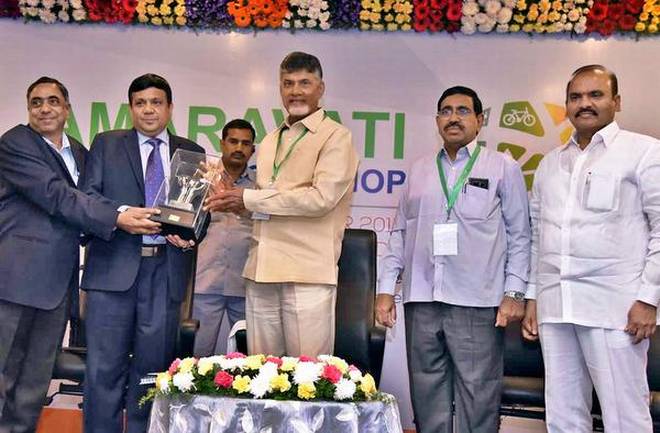
Chief Minister N. Chandrababu Naidu with SECM CEO A. Chandra Sekhar Reddy in Vijayawada on Friday. | Photo Credit: HANDOUT
Chief Minister N. Chandrababu Naidu congratulated the State Energy Conservation Mission (SECM) for winning the National Energy Conservation Award – 2017 in the State Designated Agency category.
He told Principal Secretary (Energy) Ajay Jain and SECM CEO A. Chandra Sekhar Reddy to step up their efforts for expanding the energy conservation and energy efficiency activities that play a crucial role in building a Green Amaravati.
Showing the award at the Amaravati Deep Dive Workshop, Mr. Jain said that it was for the third consecutive year that the SECM won the distinction.
source: http://www.thehindu.com / The Hindu / Home> News> States> Andhra Pradesh / by Staff Reporter / Vijayawada – December 16th, 2017
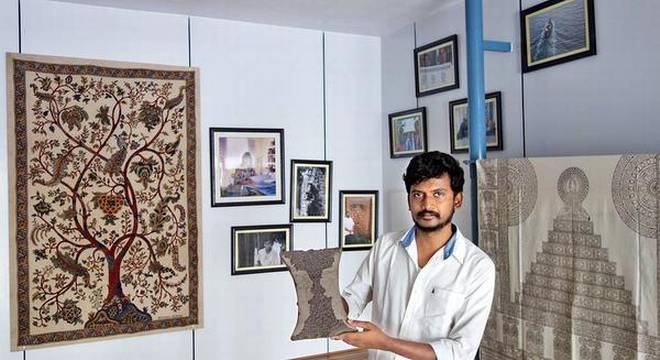
Treasure trove: Pitchuka Varun Kumar at the Kalamkari Museum at Pedana in Krishna district. | Photo Credit: T_APPALANAIDU
Varun Kumar of A.P. showcases the rich but dying art form in all its splendour
In the early 20th Century, the houses of Kalamkari craftsmen in Masulipatam lay silent with piles of unused wooden blocks covered in dust and cobwebs, as observed by Nelly Sethna, a scholar and authority on Kalamkari.
A century later, craftsmen’s houses look much the same, leaving the Indian textile art to die a slow death, owing to flourishing screen printing with chemical dyes which have replaced wooden blocks and natural dyes.
Finding no way to rescue the art form, 24-year-old Pitchuka Varun Kumar, grandson of Pitchuka Veera Subbaiah, has established a museum for Kalamkari art.
Mr. Subbaiah was one of the founders of Machilipatnam Kalamkari in Pedana (1970s) but it is now struggling for survival. Ironically, the art had gone into oblivion in Machilipatnam, from where it originated. In 2013, Machilipatnam Kalamkari got the Geographical Indication Registry tag.
The museum is a treasure trove of Kalamkari art. It has a collection of old wooden blocks with Persian, Dutch (Chintz), Mughal, traditional Indian and Buddhist motifs, fabrics, rare photographs and details of the process of natural dyeing, wooden block making, printing and washing in river Krishna. Tree of Life, a wall-hanger created with 212 wooden blocks by his team of artists, is also displayed at the museum.
“Hailing from a Kalamkari art family, I want our museum to offer a glimpse of the true art form and procedures involved in it to visitors and textile art lovers,” Mr. Kumar told The Hindu.
source: http://www.thehindu.com / The Hindu / Home> News> States> Andhra Pradesh / by T. Appala Naidu / Pedana – December 13th, 2017
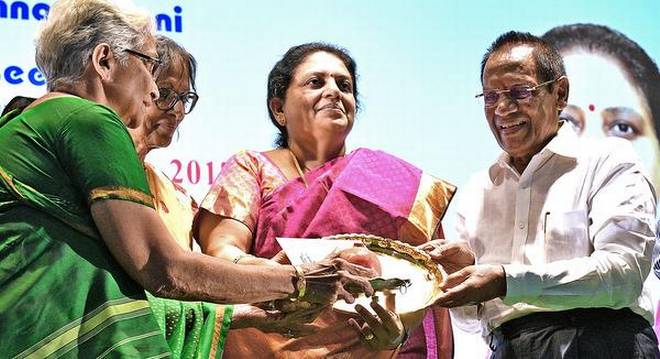
Tessy Thomas receiving the Dr. Pinnamaneni and Smt Seethadevi Foundation Award in Vijayawada on Saturday. | Photo Credit: CH_VIJAYA BHASKAR
Advises students to draw inspiration from Abdul Kalam at a college here
‘Missile Woman of India’ and Director of Advanced Systems Laboratory (ASL) Tessy Thomas was presented the Dr Pinnamaneni and Smt. Seethadevi Foundation award here on Saturday. Foundation Managing Trustee C Nageswara Rao and trust member and daughter of Pinnamaneni Venkateswara Rao after whom the awarded is named, Ch Sudha, presented the award.
The Missile Woman now shares the award with distinguished scientists like A.P.J.Abdul Kalam— who was also her mentor, M.S.Swaminathan and Prof C.N.R. Rao.
Prof V Ramalingaswami and Sribhashyam Appalacharyalu were the first to be conferred the award in 1989. The other eminent persons who received the award include V Kurien, Lata Mangeshkar, S.P.Balasubramanyam, R.K Laxman, K.J.Jesudas, Karan Singh, B.G.Verghese, Ramanand Sagar, Sudha Murty, E.Sreedharan, Zakir Hussain, Y.V.Reddy and Changati Koteswara Rao.
The Gramapragathi Puraskaram was presented to the Swacha Sundara Challapalli Udyamam represented by doctor couple D R K Prasad and Padmavati.
Earlier the Missile woman spoke to the students of the V.R. Siddhartha Engineering College, Kanuru.
She asked the students to ensure a strong hold on the basics of engineering, mathematics and physics to be successful in any area.
Sharing her experiences of working along with former President A.P.J. Abdul Kalam on the missile technologies, she urged the students to take Abdul Kalam as their role model and work hard for the overall growth of the nation.
She stressed on the need to be skilful in the latest technologies such as cloud computing, big data analytics, Internet of Things and cyber security as there were many opportunities across the nation in both public and private sectors.
Space technologies
Students were all charged up after listening to her talk and actively participated in the interaction that primarily centred around missile and space technologies.
President of the Siddhartha Academy N. Venkateswarulu, vice-president C. Nageswara Rao, Principal A.V. Ratna Prasad, CSE HoD V. Srinivasa Rao and heads of other departments M. Suneetha and PVRL Narasimham were present.
source: http://www.thehindu.com / The Hindu / Home> News> States> Andhra Pradesh / by Special Correspondent / Vijayawada – December 16th, 2017
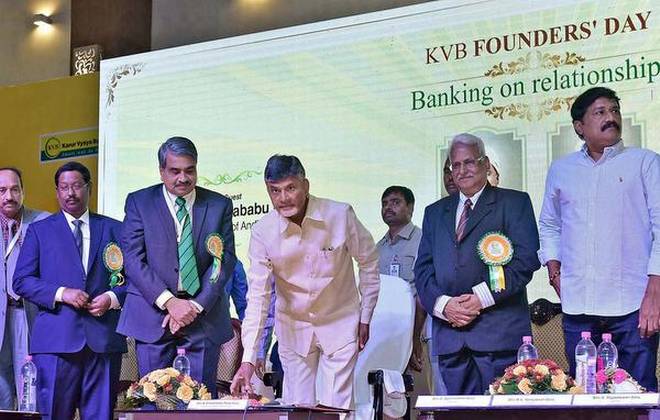
Chief Minister N. Chandrababu Naidu pressing a button to inaugurate the ‘digital village’ at Bandarupalli in Guntur district, during the 101st Founder’s Day celebrations of Karur Vysya Bank (KVB) in Visakhapatnam on Saturday. | Photo Credit: arranged
Takes part in KVB’s 101st Founders’ Day in Vizag
Chief Minister N. Chandrababu Naidu dedicated the first ‘digital village’, facilitated by the Karur Vysya Bank (KVB), at Bandarupalli in Guntur district, remotely from the city, on Saturday.
The Chief Minister participated as the chief guest at the 101st Founders’ Day of the KVB here.
The KVB has adopted Bandarupalli, a remote village without banking facilities, and set up a digital branch there.
Speaking on the occasion, Mr. Naidu said the visionary leadership of its founders in identifying the banking needs of the local community in Karur (Tamil Nadu) and thereby earning the trust of the people has put the Karur Vysya Bank (KVB) on a firm footing.
He called upon the authorities of the KVB as also other banks to shift real-time online systems to provide the best services to the public. While appreciating the bank for contributing ₹1 crore from its CSR fund to Visakhapatnam district, the Chief Minister said other corporates should also contribute to the benefit of the community.
KVB Chairman Swaminathan traced the origin and growth of the bank during the last 100 years. Founded by M.A. Venkatarama Chettiar and Athi Krishna Chettiar with a capital of ₹1 lakh in Karur in 1916, the KVB today emerged as a major bank in the private sector with 760 branches in 18 States and three Union Territories, in addition to over 1,700 ATMs and 500 Cash Deposit Machines (CDMs).
The bank has the second largest customer base in Andhra Pradeshafter TN.
MD and CEO of KVB P.R. Seshadri said the bank was providing free wi-fi facility in Bandarupalli village, facilitating online payments and digital banking and provision of micro ATM s at commercial establishments in the village.
KVB Director Suryanarayana spoke.
Ministers Ganta Srinivasa Rao and Sidda Raghava Rao and Visakhapatnam MP Kambhampati Haribabu were present.
source: http://www.thehindu.com / The Hindu / Home> News> States> Andhra Pradesh / by Special Correspondent / Visakhapatnam – December 16th, 2017
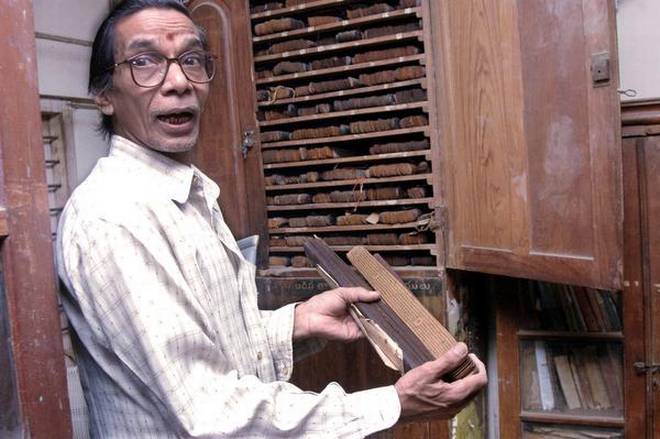
Rare collection: A file photo of a staff member showing the palm leaf manuscripts in the library. | Photo Credit: C.V.SUBRAHMANYAM
Digitalisation drive launched at iconic Gowthami library
As part of protecting and safeguarding old books and manuscripts, the digitalisation of Sri Gowthami Regional Library has just taken off. Foundation was laid for new buildings for renovation and restoration was also done recently.
At present the library has 1.03 lakh books — 71,130 Telugu, 21,974 English, 7,967 Hindi, 372 Urdu , 667 others, 411 palm leaf manuscripts, six copper plates, and 40 unpublished manuscripts.
Of the 40,000 books that have been partially or completely damaged, digitalisation of 30,000 is being taken up with the support of a team of computer operators monitored by the project in charge Aripirala Narayana Rao, former reader in Sri YN College, Narsapur.
Prof. Narayana Rao said that about 30 lakh pages have to be digitalised. Five computers and two high-end scanners brought from Bengaluru each are being used for the purpose.
Akula’s initiative
The project was initiated by city MLA Dr. Akula Satyanarayana and the total cost of the project is ₹10 lakh for the first year. “It will take at least two years to accomplish the task,” said Prof. Narayana Rao. The State Bank of India has sponsored computers, printer and air- conditioners worth ₹4.5 lakh. The books that are being digitalised include Sanskrit Bible, the first published copy of the Britannica Encyclopedia, silver-coated stylus for writing on palm leaves, copper plates and palm leaf manuscripts, and 15,000 rare books.
“Viveka Vardhini magazines which were edited by Kandukuri Veeresalingam Pantulu, Hitha Suchini published in the year 1845 and popular Swami Seva penned by Muddu Narasimha Naidu in 1862 are also being digitalised,” Prof. Narayana Rao said. The Manasu Foundation of Bangalore has acceded to their request to digitalise some valuable books.
Gowthami library is the biggest one in the region after the Thanjavur library in Tamil Nadu. It was set up by Nalam Krishna Rao in 1898 and christened Sri Veeresalingam Panthulu Library. Addanki Satyanarayana Sarma, a noted scholar, started another one — Vasuraya Library.
Following the advice of the elite in the city, the two libraries were merged and named as Gowthami Grandhalayam and registered under the Societies Registration Act, 1920. Vavilala Gopalakrishnaiah and AB Nageswara Rao were instrumental in getting regional status to the library. In 1979, the government took over the library.
source: http://www.thehindu.com / The Hindu / Home> News> States> Andhra Pradesh / by B.V.S. Bhaskar / Rajamahendravarman – December 09th, 2017
Rotary Club of Vijayawada, will confer the lifetime achievement award on K. Viswanath, film director and recipient of Dada Saheb Phalke award, at Sriram Function Hall on December 17, according to M.C. Das, chairman, lifetime achievement award committee.
He said the lifetime achievement was given to people who made a mark for themselves and act as trendsetters in society.
source: http://www.thehindu.com / The Hindu / Home> News> States> Andhra Pradesh / by Special Correspondent / Vijayawada – December 13th, 2017
Satyanarayana representing Krishna district bagged the gold medal in the 55-year-old category for the 110-metre hurdles.
With his outstanding performance, AP Masters Athletics Association has been selected Mendu Satyanarayana for National Championship. (Photo: DC)
Vijayawada:
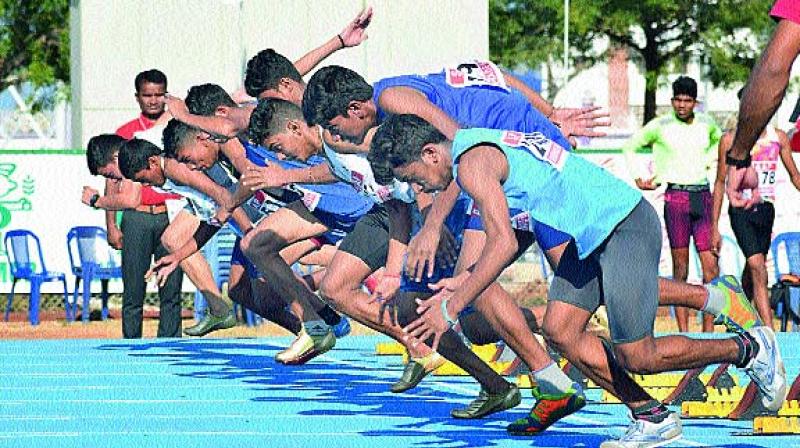
Mendu Satyanarayana, physical director (PD) of Zilla Parishad High School (ZPHS) at Nunna near Vijayawada, recently won two medals at the Andhra Pradesh Masters Athletics Championship held at Bapatla in Guntur district. Satyanarayana representing Krishna district bagged the gold medal in the 55-year-old category for the 110-metre hurdles.
He also won a silver medal in 400-metre hurdles. With his outstanding performance, AP Masters Athletics Association has been selected Mendu Satyanarayana for National Championship. In connection to this, Nunna ZPHS head master V. Bhoopal Reddy and other teachers felicitated Satyanarayana for winning the medals and bringing accolades to the school.
source: http://www.deccanchronicle.com / Deccan Chronicle / Home> Nation> Current Affairs / Deccan Chronicle / December 12th, 2017
He had mastered all the three aspects of sangeetham
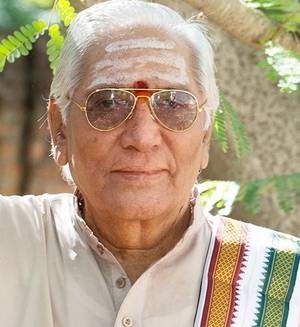
Noted singer and nattuvangam exponent Bhagavatula Seetharama Sharmadied on Sunday. He was 81, and is survived by his wife, two daughters and a son.
The artiste was tuning his shruthi in preparation for an arangetram in Bengaluru, when he was said to have suffered a heart attack.
“He suffered a heart attack and died on his way to hospital. His body would be brought to Chennai and the cremation would be held on Tuesday,” said Deepa Ganesh, one of his disciples.
Born in Kuchipudi in Andhra Pradesh, Seetharama Sharmadeveloped a profound knowledge in all the three aspects of sangeetham — geetam, vadyamand nrityam. Noted carnatic vocalist T.M. Krishna is among his disciples.
He served in Kalakshetra, dedicated himself to the institution and became an integral part of the majority of Rukmini Devi’s Naatya productions.
His first public recognition came from the Dhananjayans Bharatakalanjali, Chennai, way back in the 1970s, and he was awarded the title ‘Sangeetagna’.
Last year, Bharat Kalachar honoured him with a special commemorative and lifetime achievement award. He was also a recipient of the Sangeet Natak Akademi Award for ‘Naatya’.
source: http://www.thehindu.com / The Hindu / Home> News> States> Tamil Nadu / by Special Correspondent / Chennai – December 11th, 2017
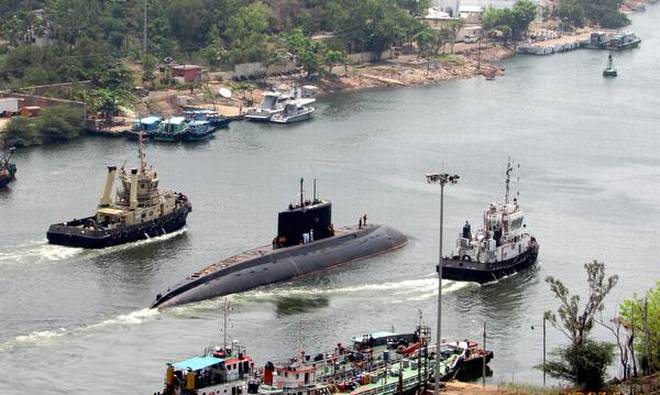
A file photo of INS Sindhukirti, seventh Sindhughosh-class submarine of Indian Navy, being towed in the channel for undertaking sea trials in Visakhapatnam. | Photo Credit: arranged
On December 8, 1967, when Commander K.S. Subramanian read out the commissioning warrant in freezing -15 degree Celsius at Vladivostok, submarine base in Russia then USSR, little did he know that he was heralding a force that would one day be a nuclear force and will complete the nuclear triad for the country. Cdr Subramanian commanded the first submarine of the Indian Navy INS Kalvari.
The submarine arm or the silent arm of the Indian Navy is celebrating its golden jubilee this year, and in the last five decades it has grown from a couple of Foxtrot class submarines to possess the Arihant class nuclear-powered ballistic missile submarines (SSBN) to the state-of-the-art Scorpene-class submarines.
The proposal to form a submarine arm was first envisaged in 1959 and a draft plan to acquire four submarines from UK at a cost of ₹16 crore with a recurring annual cost of ₹ 2 crore was moved. But it did not materialise, and it was again moved in 1962 and the government approved the proposal. A nine- member team led by Captain B.K. Dang was sent to UK to undergo training at HMS Dolphin. But the purchase proposal did not again materialise, as India wanted to buy the Porpoise or Oberon class and the British government offered the old ‘T’ class.
It was only in 1964 that the Soviet government agreed for transfer by purchase for four ‘F’ class or Foxtrot-class submarines.
About 16 officers and over 100 sailors received training at Vladivostok and a beginning was made when Cdr. K.S. Subramanian sailed into the Visakhapatnam harbour, braving 16,000 km of rough sea from Riga to Visakhapatnam, on June 6, 1968.
The submarine arm of the Indian Navy came into operation at Visakhapatnam with the then Chief of Naval Staff Admiral A.K. Chatterjee laying the foundation stone for the submarine base.
The silent arm grew with the induction of four more Foxtrot-class submarines such as INS Khanderi, Karanj and Kursura. All the four constituted the 8th Submarine Squadron and have played a key role during the 1970-71 Indo-Pak war. Today, all have been decommissioned and INS Kursura is transformed into a submarine museum and stands on Visakhapatnam beach.
The first full-fledged submarine base had come into existence in the shape of INS Virbahu on May 19, 1971 at Visakhapatnam.
The force grew with the acquisition of four more Foxtrot-class submarines from the then Soviet Union. INS Vela, Vagir, Vagli and Vaghsheer formed the formidable 9th Squadron with the base at Bombay now Mumbai.
From the Foxtrot class, the navy graduated to procure and produce the German-based HDW 1500 class or also called as the SSKs attack submarines, in mid 1980s. Referred to as the Shishumar class, four of them Shishumar, Shankush, Shalki and Shankul formed the 10th Squadron of the arm, based in Mumbai.
Keeping the tempo up, India negotiated with Russia to procure the Kilo-class or the Sindhughosh-class attack submarines. Equipped with the 3M-54 Klub (SS-N-27) anti-ship cruise missiles with a range of 220 km, for the first time India was on the offensive side of submarine warfare.
While Sindhughosh, Sindhudhvaj, Sindhuraj, Sindhuvir , Sindhuratna and Sindhurakshak (exploded and sank in Mumbai harbour on14 August 2013) were based in Mumbai to form the 12th Squadron. Sindhukesari, Sindhukriti, Sindhuvijay and Sindhurashtra were based in Visakhapatnam to form the 11th Squadron.
Nuclear era
The submarine arm entering the nuclear era began with the leasing of INS Chakra an Akula-class nuclear-powered attack submarine (SSN) from Russia in 1988 and it was based in Visakhapatnam.
Sources in the navy said Chakra was taken on lease to train officers and men with the futuristic idea to build its own nuclear fleet. After the lease of INS Chakra expired, a second Akula Class nuclear submarine INS Chakra II was taken on lease from Russia in 2012.
India built its first nuclear submarine INS Arihant under the Advanced Technology Vessel project at the Ship Building Centre in Visakhapatnam.
INS Arihant the first of the expected five in the Arihant-class is indigenously built with Akula-class technology.
Completing a full 50 years cycle, the Scorpène-class submarine is now being built for the Indian Navy at Mazagon Dock in Mumbai with French design, and they are named after the Kalvari class. The subs will be named after the first batch that served the navy such as Kalvari, Khanderi and Karanj.
President to present colours
As part of the celebrations, President Ram Nath Kovind will be awarding Presidential Colours to the Submarine Arm of the Indian Navy at a Colour Presentation ceremony to be held in Visakhapatnam on December 8.
source: http://www.thehindu.com / The Hindu / Home> News> Visakhapatnam / by Sumit Bhattacharjee / Visakhapatnam – December 07th, 2017
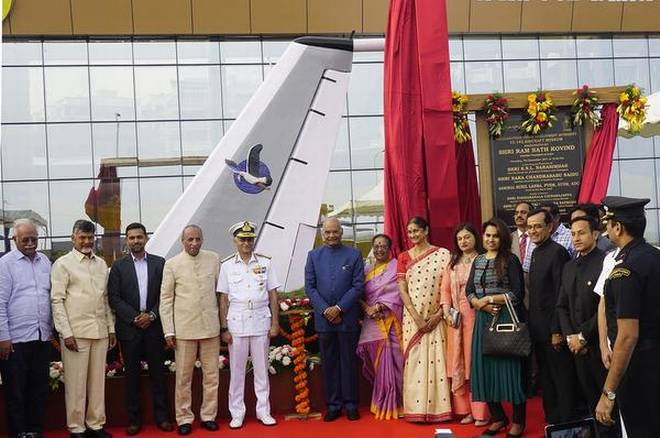
Boost to tourism: President Ram Nath Kovind and other dignitaries after the inauguration of TU-142 Aircraft Museum in Visakhapatnam on Thursday. | Photo Credit: C.V.Subrahmanyam
The attraction in Vizag is the first of its kind with a walk-through for visitors
President Ram Nath Kovind on Thursday inaugurated the TU 142 Aircraft Museum, the first such museum in the country, on the Beach Road here in the presence of Governor E.S.L. Narasimhan and Chief Minister N. Chandrababu Naidu. He later went through the cockpit, machinery, bombs and gunner compartments of the aircraft.
Mr. Naidu presented TU 142 souvenirs and Pedana “kalamkari kanduva” to the President.
Chief Admiral Sunil Lanba, Civil Aviation Minister P. Ashok Gajapathi Raju, Flag Officer Commanding-in-Chief of ENC Karambir Singh, Lok Sabha members K. Haribabu and Muttamsetti Srinivasa Rao, Ministers Ch. Ayyanna Patrudu and N. Chinarajappa, ZP chairperson Lalam Bhavani, Port Trust Chairman M.T. Krishna Babu, Principal Secretary, Tourism, Mukesh Kumar Meena and VUDA Vice-Chairman P. Basanth Kumar, MLAs and MLCs participated.
The museum is the first of its kind with a walk-through for visitors. The Visakhapatnam Urban Development Authority (VUDA) oversaw the execution of the ₹14-crore project comprising the museum complex, TU flight simulator, an audio-visual room and souvenir shop. The project, seen as a major tourist attraction with the Submarine Museum across the road, is funded by the AP Tourism. The VUDA will run the museum, set up on one acre of the Andhra University, in coordination with the Navy and the A.P. Tourism. The decommissioned TU 142 was flown in from the Arakkonam base of the Navy, dismantled, transported and reassembled into the museum.
source: http://www.thehindu.com / The Hindu / Home> News> States> Andhra Pradesh / by Special Correspondent / Visakhapatnam – December 08th, 2017