Category Archives: Nri’s / Pio’s

Leggie finds traction later

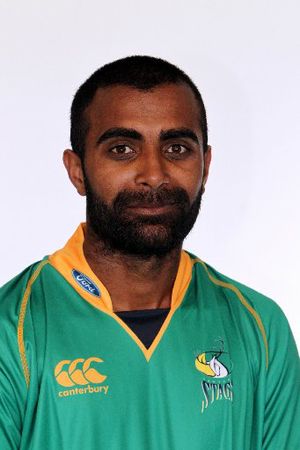
When Tarun Nethula fished his cellphone out of his cricket bag yesterday morning in New Plymouth he realised there was a message waiting for him.

What the Devon Hotel Central Districts Stags player didn’t realise was the top-up card on the phone was running on empty.


“I got into it but, before I could find out what the message was, I realised I’d run out of credit on the phone,” the 28-year-old tweaker said with a laugh yesterday, after he was named in the New Zealand XI to play Zimbabwe in the three-day international match next month.

“I had to ask Hammer [bowling coach and Stags manager] for his phone to make a call to find out what it was all about,” the legspinner said after New Zealand Cricket selection manager Kim Littlejohn failed to contact him with the news of his selection. While his voice didn’t reflect it yesterday, Nethula was quietly delighted to have the opportunity to play at an international level for New Zealand amid talk he is the most likely contender to succeed an ageing Daniel Vettori, of Northern Districts, as the No1 spinner.

Self-effacing at the best of times, the Heretaunga Building Society Cornwall Cricket Club premier player opted to give some flight in his pitch to the tune of the Stags’ team mantra.

“As long as I keep playing well for CD, that’s all. If an opportunity like this comes along then it’s all good.”

He arrived in the Bay in the summer of 2010 at the request of CD coach and fellow Aucklander Alan Hunt to gain more game time because of a glut of Auckland spinners, such as Roneel Hira, Bruce Martin, Jeet Raval and Bhupinder Singh.

Asked what he was doing different this summer that saw him consistently take wickets in the four-day Plunket Shield competition, the Andhra Pradesh-born replied: “Nothing. The only thing different is I’m going to the gym more often to keep myself fit.

“In terms of bowling, I’m a bit more patient and I’ve been working with Shrimpo [former women’s World Cup-winning coach Mike Shrimpton, of Napier] as well as Hammer [Hamilton],” says Nethula, who wants to be adept in all forms of the game.

In his debut season, he had to bide his time with two other spinners, English imports Ian Blackwell and Michael Yardy.

From a long line of academics in the family, Nethula has frozen tertiary education to pursue a cricketing career.

His mother, the late Prameela Nethula, was a professor in gynaecology and obstetrics but died in 1997 when he was 13, so he went back to Hyderabad where his grandparents raised him for a short spell. His father, Sainath Nethula, is a chemical engineer-cum-schoolteacher in Auckland.

source: http://www.hawkesbaytoday.co.nz / by Anendra Singh, Sports Editor / Tuesday, January 17th, 2012

Telugu Association of Greater Boston (TAGB)

ENTPRENEUR MEET – 21ST October, 2011

2011 is an eventful year for Telugu Association of Greater Boston (TAGB). Under the Presidentship of Sri Koteswara Rao Kandukuri, the Executive Committee explored different options to meet the needs of the Greater Boston Telugu Community.
In addition to TAGB cultural presentations which are very popular, TAGB conducted events for Sports, Academics and Charity that were also highly appreciated. This week, TAGB organized an “ENTREPRENEUR MEET” for the first time in its history especially for Telugu community. The objective of this meet is to provide a stage for ambitious and successful entrepreneurs among local Telugu community members to meet, greet and share their entrepreneurial experiences.
In his address to the guests, the TAGB President explained the reasons for organizing the entrepreneur meet. He felt that it was essential for TAGB to play its role in these economic conditions to strengthen this group’s efforts by providing additional information and tools. This meet opens a window for networking among these individuals. Our recent survey found 40+ Telugu Entrepreneurs in Greater Boston area in the fields of IT, BioTech, Marketing, Academics, Entertainment, etc. Many young and experienced professionals and entrepreneurs showed interest and responded to the TAGB invitation. The meet took place on this Friday October 21st evening at the Conference Room of Sri Shirdi Baba Temple, 290 Littleton Road, Chelmsford, MA.
The Board Chairman of TAGB, Sri Paparao Gundavaram in his speech welcomed the attendees and greeted the successful entrepreneurs and young aspirants for their continued success in future years.
Dr. Govinda Rao Bhisetti (Vice Chair of BOT, TAGB) moderated the proceedings of the night.
In the first part of the event, the moderator invited three prominent and successful entrepreneurs to the panel of guest speakers – (1) Sri Subu Kota, Chairman/CEO, The Boston Group, (2) Sri Mohan Nannapaneni, President/CEO, Sigma Systems, Inc. (also Executive Vice President, TANA), and (3) Dr. Balaji Bhyravabhotla, CEO/COO, Xtal Biostructures
The guest speakers shared their valuable experiences in entrepreneurship and encouraged all aspiring entrepreneurs to take the plunge without fear, guided by their heart and high ethical standards. The audience participated enthusiastically in Q&A session following the speeches.
In the second part of the event, all members of the audience were given the opportunity to speak about their companies or their ideas for a new business. About 30 people came forward to share their experience of success and failure.
Though it is the first time for TAGB hosted such type of an event, their enthusiastic participation made it a grand success.
In his Vote of Thanks address, Sri Ramesh Babu Tallam, Secretary of TAGB, thanked the Guest Speakers and all attendees for their interest and valuable contribution in making the event a grand success.
press release www.tagb.org
source: http://www.bheru.com / Bheru Educational Foundation /Home> Local News / October 25th, 2011

4000 Patients Benefited With Free Health Camp in Parkal

Parkal camp was HUGE success and set a new record for one day camp: 4000 patients were treated in a single day. It was a BIG event by any standard…. 4000 patients……. Rs. 12 Lakhs Medicines distributed (3800 prescriptions filled!!)….. 45 doctors…… 40 pharmacists……100 paramedicals…. 150 NSS volunteers….5 security…. 200 guests…….. 500 people lunch……1500 people Pulihora lunch…… Planning—Coordination–Execution….EXCELLENT. Patients were very happy (that’s the key factor)– doctors are happy too. Many said that camp was like a MODEL camp. Thanks to all teams!!.
———-
Warangal (December 24, 2011). A mega general health camp, sponsored and organized by NRI Dr. Samba Reddy, attracted huge crowd of patients from rural villages in Parkal in Warangal District. The out-patient medical camp, which was conducted with help of Lions club Dr. P. Vijayapal Reddy, IMA Warangal doctors, NATA doctors and local doctors, was held on December 24, 2011 at Govt. Junior College premises, from 9 AM to 4 PM.

The camp was inaugurated by Sakku Bhai (Dy Drugs Controller), AVN Reddy (NATA President), Dr. Samba Reddy (sponsor & organizer), Dr. Vijay Chander Reddy (IMA president-elect), Dr. Samba Siva Rao (DM&HO), Lions club and NATA team members.

A record number of over 4000 patients received medical treatments for various conditions. Originally planned for 1000 patients, but there was an overwhelming crowd of rural and poor patients from surrounding 25 villages within the Parkal Mandal headquarters. The organizers accommodated up to 4000 patients!!!

Whooping Rs. 12 Lakhs medicines, arranged by Dr. Samba Reddy, were distributed to an estimated 4000 patients at this camp. “Over 3800 prescriptions were filled at the Camp Pharmacy” said the Chief sponsor & Camp Organizer Dr. Samba Reddy. He is NATA Media Chair & Conference Secretary and took charge of conducting this health camp. Professionally, he is Associate Professor (College of Medicine), Texas A&M University Health Science Center, USA (see Biography).

Over 45 doctors from MGM hospital, Rohini hospital, various private clinics within twin cities of Hanamkonda & Warangal and also Parkal area participated and provided medical services to patients. More than 20 doctors are super-specialty doctors, including Orthopedics, Cardiology, Gastroenterology, Urology, Gynecology, ENT, Ophthalmology, Dermatology, General Surgery, Psychiatry, Dental and Oncology.

Over 400 lab diagnostics were performed including 250 blood tests, 120 HIV screening and 100 malaria screening (courtesy Vijaya diagnostics & District health office).

Camp pharmacy was inaugurated by Smt. Sakkubhai, Deputy Drugs Controller, who was the Guest of Honor for this camp. Medical and orthopedics wings were inaugurated by Dr. Buchi Reddy (Chairman, Rohini hospital) and Dr. Samba Siava Rao (DM&HO, Warangal), respectively.

The leading physician Dr. P. Vijayapal Reddy served as the convener of this camp. Lions Ch. Narasimha Reddy and K. Mallesham did good job as camp chairman and Lions club president, respectively. They coordinated bus transportation to patients from their villages.

Rs. 12 Lakhs Medicines Distributed

The pharmacy list consists of over 400 high quality medicines (from all therapeutic categories), which are supplied by reputed Pharma companies Dr. Reddy’s, Natco, Veritaz Aurabindo, Dynamite, Novostart, Sunrise International, and other companies. The camp organizer Dr. Samba Reddy arranged all medicines for this camp with help from his friends and colleagues.

Lunch provided to 500 people

All patients felt very happy with free treatment and more importantly with FREE medicines. Food (pulihora) and water packets were provided to patients (at least 1000 patients). Lunch was provided to all participating doctors (50), pharmacists (40) guests (50), and paramedical staff (100) as well as NSS volunteers (total over 500 people). Thanks to Dr. Vijayapal Reddy for hosting such nice lunch at guest house in Parkal.

Over 45 Doctors Participated in Health Camp
The following doctors participated/ helped FREE and not taken any consultation Fee.
NATA Doctors USA: Dr. Sanjeeva Reddy – Physician/Gastroenterology (USA); Dr. Swaroopa Reddy – Physician/General (USA).

IMA Warangal Doctors:

Dr. P. Samba Siva Rao – Physician (DM&HO), Dr. P. Vijay Chander Reddy – Orthopedics (MGM) –IMA president-elect, Dr. Ramesh Kumar – ENT (MGM), Dr. Ram Kumar Reddy – Orthopedics (MGM), Dr. Venkateshwarlu – Orthopedics (MGM), Dr. Sreedhar Raju – Psychiatry (Warangal), Dr. Narender Reddy – General (Hyderabad), Dr. Rajendra Prasad Reddy – Gynecology (Narsampet), Dr. Ragotham Reddy (Physician) – IMA secretary, Dr. Ashok Reddy (Pediatrics), Dr. Sheshu Madhav (Pediatrics) – IMA president, Dr. Buchi Reddy, Physician, Dr. Babu Rao, Physician, Dr. Narasimha Reddy, Physician, Dr. Surender Reddy, Urologist (MGM), Dr. Dilip Kumar, Dr. Manoj Kumar, Dr. Prasad, Dr. Hanmantha Rao, Dr. Praveen, Ophthalmologist, Dr. Sudheer (Orthopedics), Dr. Anwar (IMA treasurer), Dr. M. Ramana Reddy – Ex.DM&HO (Warangal), Dr. D. Sai Chander – PG/Pediatrics, Dr. Naveen Kumar, Dr. Sudhakar Reddy, Dr. Suhakar (surgery), Dr. Mohan Rao (RMO), Dr. Chandra Sekhar (MGM), Dr. Mallikarjun (Eye), Dr. Gopi. Plus 10 medical officers from DM&HO office on camp duty.

Parkal Doctors:

Dr. P. Vijayapal Reddy – Physician, Dr. Rajeshwer Prasad – Physician, Dr. Lalitha, DGO, Dr. Sanjeevaiah (Civil hospital), Dr. Samuel, Dr. Sarojana, Dr. Rama Devi, Dr. Venkata Laxmi, Dr. Rajani Kanth, Dr. Satyanarayana, Dr. Satyanarayana Reddy, Dr. Vidyasagar Reddy, Dr. Kashaiah – Physician/Pediatrics, Dr. Naveen, Dr. Sridhar, Dr. Raja Reddy . Plus 5 other local doctors.

Medical conference bags were provided to all participating doctors. NATA mementos were distributed to them.

Over 40 Pharmacists Dispensed Medications at the Camp

The pharmacist’s team consists of over 40 pharmacists. Medication dispensing was done under the supervision of Chief pharmacists Dr. Samba Reddy, Dr. Arutla Srinivas, Dr. Raghuram Reddy, D. Narender, Dr. Aruna Devi, Dr. Sakkhu Bhai, Dr. Gopi Reddy, Mr. Ramdan, Dr. Raghunandan, and junior pharmacists from Kakatiya University pharmacy colleges and pharmacy executives from Hyderabad. Over 3800 prescriptions were filled in a single day, a record number in camp pharmacy.

Over 100 Paramedical Staff provided patient services

Five types of paramedical staff (total 100) comprising Nurses, health assistants, PHC health workers, ANM students provided patient care services at the camp. About 50 people are from District medical office and 50 are students from local health Education College.

Over 150 NSS Volunteers provided patient coordination services

Four units of NSS volunteers (total 150 students) from GDC and other colleges within the Kakatiya University area have provided volunteer services with patient coordination at the camp site. This task was headed by 10 program officers and one NSS national coordinator Dr. Suresh Lal. Camp certificates are awarded to all volunteers and paramedical staff.

A total of 150 small mementos (by NATA), 50 big plaques, 300 appreciation certificates, 50 doctors bags, and 1500 medicine bags were distributed at the camp.

NATA Team members as Guests

The following NATA seva day team members participated in the camp: AVN Reddy, Dr. Swaroopa Reddy, Dr. Sanjeeva Reddy, Bala Indurti, Jithender Reddy, Harinath Medi and Anil Jyothi.

CHARITY EVENT FOR POOR PATIENTS

This camp is meant to help local poor patients from Parkal and nearby villages, said Dr. Samba Reddy. He is doing this with a service motto to his native village Cherlapally and other surrounding villages. It is a big motivation, so that other NRI and NGOs may come forward to do many such charitable events in rural areas in Warangal, said Dr. Samba Reddy, who lost his Mother recently due to illness.

He thanked all teams for making this camp a grand success for the benefit of poor and rural patients in Parkal area.

We got more medicines stored at Lions Club for future health camps, said Dr. Samba Reddy.

————
OVERALL… It was a BIG event by any standard..for 1 DAY CAMP….. 4000 patients….. Rs. 12 Lakhs Medicines ……. 45 doctors….. 40 pharmacists……100 paramedicals…. 150 NSS volunteers…… 100 guests…… 500 people full lunch……1500 Pulihora lunch.

Despite such MEGA camp with big numbers …. camp organization was smooth without much glitches.

This is due to 1-month plan, meticulous design and execution of camp in a very professional manner.

source: http://www.nataus.org / North America Telugu Association / December 24th, 2011


Meeting at Indian Embassy by NATS

North America Telugu Society (NATS) NATS conducts a very Successful meeting between Trivalley University Students and US immigration officials at the Indian Embassy in Washington, DC

NATS President Mr. Ravi Madala, Immigration Attorney Ms. Sheela Murthy along with around 65 TVU Victims met the SEVP (Student Exchange Visitor Program) Director Mr. Louis M Farrell, Assistant Director Ms. K Kennedy and two other ICE (Immigration and Customs enforcement) Special Agents, in the Indian Embassy today, to discuss and resolve issues caused by the closure of the university.

This meeting was arranged by the Indian Embassy, after NATS intervening in this issue and conducting a meeting with Indian Ambassador on March 28, 2011, in which Mr. Rajagopal Lagadapati, MP from India and NATS Officials urged the Ambassador to help the students in this issue.

In addition, NATS organized a protest infront of the Whitehouse on March 29, 2011, where over 100 students gathered with placards and chanted slogans to bring these issues to President Obama’s attention. As a result US officaials are now starting to take these matters seriously and NATS hopes to have a claer resolution on this matter in the next two to three weeks

During the April 15, 2011 meeting NATS representatives submitted a memorandum with six specific  action items to the SEVP Director.

1. US officials should not issue anymore NTA’s (Notice to Appear) related Trivalley issue. ICE should withdraw all  outstanding NTA’s.

2. Return the bond money immediately.

3. Issue a policy statement declaring, students to be in status for 180 days, from the university closure date January 18, 2011.  Provide copies of the statement to USCIS, CBP (Customs and Border Petrol) and State Department

4. Return the fee money held by ICE to students, advise banks / credit card companies to return the fee to students.

5. Release all detainees immediately.

6. No more detentions of students; communicate the same to all customs & border petrol and USCIS officers across the country.

Attorney Ms. Sheela Murthy volunteered to help the affected students and asked all the students to write their case to her so that she could do the best from her end to help the case.

The US Officials were very positive in their demeanor and listened very patiently to the concerns of all students who attended the meeting. US officials conveyed they will work on a feasible solution to end this crisis immediately.

NATS is currently working on having a dialogue between Prme Minister Manmohan Singh and the President Obama. NATS will be meeting President’s office and get this issue reloved in the next few weeks.

source: http://www.GreaterAndhra.com / Home> Articles> Special Articles / April 16th, 2011


Call to protect Telugu language

The three-day Prapancha Telugu Mahotsavam (Wor-ld Telugu meet) began at Ongole on Thursday.

The three-day Prapancha Telugu Mahotsavam (Wor-ld Telugu meet) began at Ongole on Thursday.

Union minister for textiles and handlooms Ms Panabaka Lakshmi lamented during the inaugural meet that Telugu people were adopting English as their native language and shunning their mother tongue. Ms Lakshmi asked parents to teach Telugu to their children and speak the sweet language at home.

President of the AP Hindi Academy, Mr Yarlagadda Lakshmiprasad lamented that no one protested the negligence of the state Governor for his absence in the Potti Sriramulu Telugu University convocation last year. He alleged that the government was not interested to protect Telugu as it had not appointed a chairman for the Adhikhara Bhasha Sangham.

Ongole MP, Mr Magunta Srinivasulu Reddy and Rajya Sabha member Mr J.D. Seelam said they would take the issue of the Governor to the notice of the government and assured action for protection of Telugu.

Telugu Association of North America president Mr Thotakura Prasad and Ramky Foundation Europe coordinator Mr B. Ramanaidu sought government cooperation to protect Telugu in foreign countries.

Leaders of several Telugu organisations expressed fear that Telugu would disappear by 2020 and demanded action by the government to save the language. They demanded making Telugu the second official language of India by the Union government.

Earlier, Mr Srinivasulu Reddy inaugurated the Telugu Jyothi rally which toured the town with cultural troupes.

Telugu people from all over the country and other nations participated in the meet.

source: http://www.DeccanChronicle.com / Home> Channels> Cities> Region> Nellore / by DC Correspondent, Nellore / January 06th, 2012


Raising bioethical standards

“If anything happens, individual participants should not be left alone to pay for the cost of treating injuries that directly relate to that research.”: Raju Kucherlapati. Photo: Special Arrangement/ The Hindu

Society has a commitment to subjects of clinical studies, says Raju Kucherlapati of Harvard Medical School

Last year archival research by Professor Susan Reverby of Wellesley College revealed that during 1946-48 United States scientists had conducted a series of macabre human experiments on vulnerable Guatemalans. The experiments, now widely acknowledged to be a gross violation of modern-day bioethics standards, saw a U.S. team headed by John Cutler, a U.S. Public Health Service medical officer, clandestinely infect Gatemalan prison and mental hospital inmates with sexually transmitted diseases such as syphilis, gonorrhoea, and chancroid to purportedly test the effectiveness of penicillin.

Following the publication of Professor Reverby’s research, the Obama administration issued an apology to Guatemala and subsequently Mr. Obama constituted a Presidential Commission for the Study of Bioethical Issues to delve into what happened in Guatemala and, equally importantly, what the current status of protections for human subjects of medical research is, and how those protections could be enhanced. The Commssion reported its findings earlier this month, and while it could not identify any risks that a Guatemalan-type operation would be conducted again, it did highlight several areas where protections could be strengthened.

The ideas emerging from the Commission’s report will influence the course of the growing debate around bioethics standards in developing countries such as India, where pharmaceutical companies and other institutions are expanding their clinical trials operations and not all subjects in such human experiments may be able to provide informed consent. In this context a member of President Obama’s high-level commission, eminent Indian-American scientistRaju Kucherlapati, spoke to Narayan Lakshman about the principles that the Commission outlined as comprising a basic framework for protecting participants in human-subjects research.

As the Paul C. Cabot Professor of Genetics and Professor of Medicine at Harvard Medical School, Professor Kucherlapati is not only considered an expert on questions of U.S. bioethics issues but has also played a vital role on the frontier of medical research in the Human Genome Project. Originally from Andhra Pradesh, Professor Kucherlapati received his B.S. and M.A. in Biology from universities in India, and his Ph.D. from the University of Illinois at Urbana. Edited transcript of the interview:

You are a member of President Obama’s Commission for the Study of Bioethical Issues and part of the team that produced this week’s report. Could you put the report in the context of the 1940s Guatemalan human experiments and explain how serious it is that the Commission found gaps in the current state of human subject protections?

As you probably know, the history of how the report came about was that Professor Susan Reverby from Wellesley College published a paper describing some of the events that happened in the late 1940s in Guatemala, which were done by one United States Public Health Service physician John Cutler. When those revelations came out President Barack Obama apologised to the Guatemalan government about the unfortunate events that happened and asked the Presidential Commission to do three things.

First, he wanted to have a full accounting of what happened in Guatemala. Second, he asked the Presidential Commission to consult with the international community and based upon those deliberations he wanted to ask whether we have adequate safeguards to protect human subjects in research studies conducted in the U.S. and abroad with federal support. So those were the charges for the Commission.

The Commission first wrote a report in September called Ethically Impossible, in a task to describe in detail what the Commission had been able to find out about the events that occurred between 1946 and 1948 in Guatemala. Then it also produced a report that came from the international commission that was established by the Chair of the Commission and that is called Research Across Borders. The report that you are referring to, which came out yesterday, was the Commission’s deliberation on aspects of protecting participants in human subject research.

The most worrying finding by the Commission in some ways seemed to be the fact that federal agencies do not even have the capability to track the involvement of human subjects in research conducted on a vast scale, over 55,000 projects worldwide. How do you think such a serious structural flaw could be rectified?

I don’t know if I would characterise it in the way you have. First of all, the Commission felt that to be able to fully assess whether there are any issues it would be important to understand the scope of clinical research studies conducted with federal funds. It sought intervention from various governmental agencies to provide that information. It indeed received that information from all of the agencies from whom it sought information and that information is summarised in the report.

One other thing was that the degree of detail of the information that each of the agencies was able to provide was different. Of course the format of all of the reports data from the different agencies was also somewhat different. That suggested that the public has no easy access to all of the information of federally-funded human-subjects research.

Based upon that the first recommendation that the Commission makes is that each department or agency that supports this sort of research should make publicly available the specific data elements of each programme. That would include what the title of the programme is, who the investigator is, where that study is done and what amount of funding is provided for that.

Although that information is revealing it is not exactly in a single database. But if each of the agencies has that information then somebody within the U.S. government could provide a portal through which all of this information would become available.

But having said that the Commission has not found any specific instances in which there have been any problems with the protection of human subjects in any of the studies that it has conducted.

Do you have any sense of how the Commission’s findings are going to be taken forward and whether they will be translated into actual policy changes by the Obama administration? What comes next?

First of all, this is done at the request of the President and the report has been submitted to the President. The President and his staff would read the report very carefully. Representatives of the Commission will brief the appropriate staff with more details and background as needed.

The second thing that happens when these types of reports are released is that there is a significant amount of public interest in them. There are many public fora where the results are discussed extensively. Whether or not the President and the executive branch would take on all the recommendations or not, that is up to the President to make that decision.

But in many of these things the Commission has recommended that if the executive branch does not adopt these recommendations then at least it [should] provide a reason and a rationale as to why that is the case. We will see how far the recommendations will be accepted by the President.

In the context of the human experiments in Guatemala, which members of the Commission have described as “chillingly egregious” could you comment on the Commission’s view on compensation to the victims and their families? More generally, what are the guiding principles for such compensation in your view?

I think the issues with regard to compensation were not studied in the context of Guatemala and that is under litigation right now, so I do not have anything to say about compensation in the case of the Guatemala studies.

But as I mentioned the report called Research Across Borders, that is the proceedings of the international research panel of the Presidential Commission, discusses the particular issue of compensation. That group felt that the compensation mechanisms in the U.S. and the rest of the world are different, and they recommended that the U.S. think about compensation mechanisms that [are similar to the kinds of mechanisms] used in the rest of the world. That aspect has been studied very carefully by the Commission and discussed in public fora.

Despite all of that, the one clear consensus is, first of all, the idea that all of the individuals who agree to participate in research are making a significant contribution to society as a whole. The Commission felt that despite every kind of effort that one might take to mitigate risk or harm, if anything happens, the individual participants should not be left alone to pay for the cost of treating injuries that directly relate to that research.

But having said that it is not clear whether the systems that we have in the U.S. are inadequate. There is no reason to suggest or evidence to support, except for the international panel’s view, the idea that in the U.S., how individuals are compensated within the system is inadequate.

One of the recommendations that the Commission makes is that the U.S. government should first evaluate whether the systems that we have in place for compensating research-related injuries to participants is adequate or not adequate. If that study reveals that it is not adequate then [the Commission would recommend that the U.S. government] conduct a pilot study [through] the National Institutes of Health – because that is the agency which provides the majority of support for this human-subject related research – to evaluate different types of methodologies and say which might be the most appropriate.

Could you explain whether the Commission’s findings have any implications for human experiments conducted by the private sector, rather than government-funded research? What is the scale of private sector research and is there a risk that the commercial motive heightens the risk of unethical treatment of human subjects?

The President’s charge to the Commission is to look at whether we have adequate protections for research supported by the U.S. government, whether it is in this country or elsewhere. But the Commission felt that many of the ethical principles that are dealt with are not specific to publicly-funded research and that they would apply equally to privately-funded human-subjects research. So the principles apply everywhere.

The second question is what are the kinds of regulations that are currently in place for privately-funded research in the U.S.? Many of them are research efforts that are supported by pharmaceutical companies or biotechnology companies trying to develop drugs for a variety of different conditions.

In this country any private entity that is seeking approval for a new drug or treatment would have to go through the Food and Drug Administration. The FDA has rules. The FDA rules are very similar, if not identical, to the rules established by many other federal agencies which follow a set of rules called the Common Rules, which [in turn] define the criteria and conditions under which human-subjects research can be conducted. In a way anything that goes to the FDA would have to follow guidelines and regulations which are very similar to the ones that the Commission has talked about.

In addition, of course, in the studies that are conducted outside of the U.S. each of the countries has their own rules and regulations and [companies] may have to follow those regulations as well. There have been discussions as to whether some of these privately-funded research efforts do or do not take advantage of research that is done in other countries. The report deals with some of those types of issues. Regarding those aspects the Commission really recommends that any research that is done outside of the U.S. should take into consideration the local interest, that is, whether it would benefit the communities in which the research is conducted. The benefits could be any one of many different things but nevertheless the Commission recommends that those types of things should be taken into consideration carefully.

There are other sorts of issues with regard to how publicly-funded research outside the U.S. should be conducted and we all felt that the same principles apply whether it is supported by public or private funds.

According to the World Health Organisation the clinical trials industry in India was valued at over $1 billion in 2010 and is growing fast. Given this booming industry, there may be some risks for human subjects there. Based on the experience of the United States, including the most recent debate engendered by the Commission, what reforms are necessary in developing countries like India to have a sufficiently robust bioethics framework?

First of all I think that one of the most important things that the report [by the Commission] talks about is that each country should have the appropriate amount of infrastructure and people who are knowledgeable about the protection of human subjects or the ethical aspects of protecting human subjects. [This infrastructure] should either be in place or before such studies are initiated [there should be an expectation] that such infrastructure can be put together. So that’s number one – there has to be a significant number of people who are knowledgeable about these things.

The second, very important thing is that in making decisions about proper research there should be a significant amount of community involvement. When we say “community” the Commission refers to local communities because the needs of the community in which the research is conducted must be very different [across communities]. The studies that are conducted should not harm but should be of benefit to the community. The only way that you would be able to make sure that that is the case is through engagement with that community.

The third aspect is that there have been lots of discussions on the nature of the trials that should be conducted. For example placebos can be used in such studies and obviously one cannot make a generalised statement about whether a particular type of study is appropriate or not appropriate, but those or all decisions that have to be made on a case-by-case basis by informed people that include the local community.

On a different but related note, you have been closely involved in the Human Genome Project. Could you update us on where it stands now and whether its ultimate benefits in terms of new treatments for some diseases are likely to be realised in the near future?

There are dramatic changes occurring in our ability to sequence the human genome. I was part of the human genome mapping and sequencing efforts. When those efforts were completed in 2003 it was estimated that we had spent approximately $2.5-3 billion to sequence a single human genome. This year several companies in the U.S. have begun to offer whole genome sequencing for less than $10,000. So the cost of sequencing has gone down very significantly over the last eight years or so. It is anticipated that this cost would go down even more in the next few years.

Second, in the case of some disorders, especially cancer, it is becoming increasingly clear that when we examine the total genome of cancer tissues we are able to obtain a tremendous amount of information that is helping us define the ideology of cancers. But it is also in many instances providing knowledge on how we might be able to use that information immediately to treat that patient.

So these types of methodologies are already revolutionising the way that we care for patients and I anticipate that in the next five to ten years there is going to be an increase in the utilisation of sequencing technologies to, first, assess individual risk for different disorders, second, to diagnose that disease more accurately, and third, to use that information to help physicians make informed treatment decisions. All of those aspects are beginning to right now revolutionise the way medicine is practiced and that will continue for the next many years.

As an eminent Indian-American and a leading thinker in your field, can you tell us about your background including your connection to India?

I was born in a town in Andhra Pradesh and I went to undergraduate school in India. I left when I was 23 years old and came to the U.S. to do my PhD and I stayed here. I was rather young when I left India so I don’t have intimate knowledge of India but several years ago I was a member of the Scientific Advisory Committee for the Department of Biotechnology of the Government of India. During the time that I served on that committee I had an opportunity to understand about the nature of investments that the government was making in biotechnology and how that is being utilised. I advised the government at that time about new approaches that might benefit the Indian population.

Do you think those investments were of the kind that might make India a global player in this field?

I think that India has made very, very significant strides and clearly they are not behind anybody in terms of the ability to use these types of technologies. For example there is an international consortium to understand cancer and India is a part of that consortium. Each member of the consortium is looking at cancers that are relevant to that particular part of the world’s geography. India is doing studies on cancers that are much more important [to it].

Indian scientists have also been actively involved in understanding genetic factors that are important in human disease and those are again being applied to diseases that are much more important to India. So I think they are indeed part of the international community and they are embracing new technologies and new ideas and incorporating them into the way that is appropriate to practising medicine in India.

source: http://www.The Hindu.com / Opinion> Interview / December 29th, 2011
 

Sydney Test to be special for Hyderabadis

India left-arm spinner Pragyan Ojha, Dr. G. K. Harinath, CEO of Cricket New South Wales, V V S Laxman and Indian team manager Shivlal Yadav met at the Sydney Cricket Ground on Monday.   The Hindu.

Sydney keeps its date with history when the India-Australia second Test that starts on Tuesday happens to be the 100th Test at this hallowed venue ‘Down Under’. And, Hyderabadis too have something to rejoice for being part of this piece of great moment in Test cricket.

Dr. G. K. Harinath, CEO of Cricket New South Wales, is a Hyderabadi who settled long ago in Australia and is now also a Board member. “I am proud to be part of this historic moment. There is so much in the air every time the SCG hosts an international match,” he says in an exclusive chat with The Hindu from Sydney, on the eve of the 100th Test match.

Then there is the Hyderabad’s star batsman V. V. S. Laxman, whose romance with SCG is now part of cricketing folklore thanks to his memorable hundreds on previous tours.

In fact, Dr. Harinath met the three Hyderabadis at the SCG this morning – Laxman, Indian team manager Shivlal Yadav and left-arm spinner Pragyan Ojha. “It was a very touching encounter. It is always great to meet someone from our own city who heads Cricket NSW and is also a Board member of Cricket Australia. Honestly, I felt really proud when we met him,” says Shivlal.

Dr. Harinath also reveals that Laxman’s father Dr. V. Shantharam happened to be his classmate and thereby he has a special relationship with the elegant Indian batsman’s family.

“V. V. S. is immensely popular in Sydney. What impresses me the most is that he is a gentleman besides being a world-class player. People like him contribute a lot to the promotion of cricket across the globe,” the NSW Chief Executive Officer commented.

“Sydney has a seating capacity of 50,000 and it is a picturesque venue with the backdrop of Harbour Bridge and the famous Opera House apparently being the USP of this wonderful stadium. It has a fantastic tradition of always sporting wickets and people love to come to an iconic ground which also has world-class facilities,” he explained.

“The most memorable moment for me is to be conferred the Life Membership of Cricket New South Wales considering that only 120 were privileged to get it so far in its 150-year history,” a proud Dr. Harinath pointed out.

Even as the focus will be on Sachin Tendulkar looking for the elusive 100th century in international cricket, Hyderabadis too will be “eagerly awaiting that great moment and be part of history”.

“I sincerely hope that the great Indian maestro (Sachin) will score his 100th century here. As an Australian of Indian Origin and as the Chairman of CNSW, it adds extra dimension to my life and at the end I would like to see this as a contest between two great teams. India with its passion and millions of supporters and the Aussies with a never-say-die attitude,” he concludes.

source: http://www.TheHindu.com / News> Cities> Hyderabad / by  V. V. Subrahmanyam / Hyderabad, January 03rd, 2012

Remit2India gives NRIs and their families in Hyderabad a reason to celebrate

Hyderabad:

Remit2India, that serves over a million NRIs worldwide with its online money transfer service, recently gave 800 of its NRI families and friends in Hyderabad a true royal treatment.

Aptly timed with the festive season when NRIs visit their families back home, the NRI Family Day was organized as part of an ongoing celebration of Remit2India completing 10 years of service. This event follows the success of other similar events held around the country this year.

The Park Hyderabad played host to the evening that witnessed breathtaking live performances, music, games and entertainment which enthralled the audiences. The event presented a variety of treats ranging from entertainment to sumptuous food.

There were interactive fun sessions with the host; engagement stalls like tattoo, tarot card, photo corner, kids zone, health & wellness zone and plenty of freebies tallied the entire checklist of a fun filled day anyone could have asked for.

Speaking on this occasion, Mr. Avijit Nanda- President, TimesofMoney said, “We are delighted with the overwhelming response we have received for the Remit2India NRI Family Day in Hyderabad. This event allowed us to thank our customers and their families and we hope to continue taking this across to more cities throughout India.”

Key partners for the event included DCB Bank, LIC,  Renault Hyderabad, S&S Green Projects Pvt. Ltd., Aditya Housing & Infrastructure Development Corporation Pvt. Ltd., Yashoda Hospital, VLCC and Clear Vision.

source: http://www.economictimes.indiatimes.com / Home>  News>  NRI>  Forex and Remittance  / December 22nd, 2011

US doctors to lead 2 Satya Sai bodies

Anantapur:

The Sir Satya Sai Central Trust on Monday appointed two persons as chairmen of the two international foundations run by it.

Michael Goldstein, an ardent devotee of Satya Sai Baba, will take charge as chairman of the Sri Satya Sai World Foundation, an official press release from the Sri Satya Sai Central Trust said. Goldstein, who received his doctorate in medicine from George Washington University, has been a practising physician for over 30 years and former medical director at a tertiary hospital in Southern California. He was selected as chairman on November 23, 2011 on the occasion of Baba’s birth anniversary.

Similarly, Narendranath Reddy was elected chairman of the Prashanti Council. Narendranath Reddy, graduate from SV Medical College, Tirupati, received his training in internal medicine at the New Jersey College of Medicine and Dentistry and did his sub-specialization in Endocrinology and Metabolism at Mount Sinai School of Medicine, New York. He has been a practising internist-endocrinologist in Southern California for over 30 years.

Satya Sai Trust spokesperson Anantharaman told TOI that the world foundation takes care of all of the trust’s publications outside India and ensures that they adhere to the local laws and also ensure that the publications do not deviate from the message of Satya Sai Baba. The Prashanti Council takes care of all international seva activities outside India including educational and welfare-oriented programmes. Both these organizations operate in 135 countries and the place of operation of the two chairmen will function as the headquarters of these two international bodies, he said.

source: http://www.timesofindia.indiatimes.com / Home> City> Hyderabad / TNN / December 20th, 2011


Umarani, Clifford honoured with Pravasi Mithra awards

HYDERABAD :

Indian social workers Umarani Padmanabhan from Dubai and Clifford Correia from Bahrain were felicitated and conferred with the “Pravasi Mithra” awards at a function held here on Sunday to mark the ‘International Migrants Day’ with special emphasis on awareness for Gulf migrants.

The progamme, organised by the National Domestic Workers Movement (NDWM-AP) and Migrants Rights Council (MRC), was attended by government officials, representatives of NGOs involved in migrant rights and families of Gulf migrants.

Speaking on the occasion, Umarani Padmanabhan hailed the UAE government officials for their cooperation in solving the problems of Indian workers in the country. “With the help of the Indian Embassy in Abu Dhabi & the Indian Consulate in Dubai, we have been able to help several poor migrants,” she said.

Echoing similar sentiments, Correia said: “We have been able to provide assistance to needy migrants from India with the help of the Indian Embassy in Bahrain. We have also provided free tickets to needy Indian migrants through the Indian Community Welfare Committee.”

Dasari Sreenivasulu, Principal Secretary, Labour and Employment Department, Government of Andhra Pradesh, who was the chief guest, released a book titled Pre-Departure Information Manual for Intending Emigrants published by Migrant Forum in Asia (MFA). He also handed over the ‘Pravasi Mithra’ awards to Umarani and Correia.

Addressing the gathering, Sreenivasulu assured the families of migrants that he would use his good offices in resolving issues of their kith and kin who were stranded in various countries of the Gulf region. “I have visited labour accommodations in the Gulf countries to interact with the migrants from Andhra Pradesh lodged there.”

Stating that he would strive to release as many of them as possible under amnesty, he said he would ensure that good education for children of migrants, particularly those who are in jails. “I will help in placing them in various residential schools of the state,” he said, and urged prospective migrants to take advantage of various governmental initiatives such as ‘Overseas Employers Conference’ organised by the state government earlier this year.

He said the meeting was the first of its kind in the country for those keen who were keen on working abroad. “It would be in the interest of intending migrants to go though the ‘Overseas Manpower Company of Andhra Pradesh’ (OMCAP) rather than approaching private agents for jobs abroad,” he observed.

Migrants Rights Council President P Narayana Swamy demanded of the Federal Government to appoint sufficient staff in Indian Missions abroad to look after labour problems. He also demanded that a National Commission for Migrant Labour be set up.

Marizen Santosa, MFA representative from Philippines, Binu Arickal, Dan Church representative from New Delhi, M Bheem Reddy, Vice-President, Migrants Rights Council and Sister Lissy Joseph of NDWM also participated in the function.

news@khaleejtimes.com

source: http://www.khaleejtimes.com / Online> International / by P S Jayaram / December 20th, 2011