Category Archives: Nature

ANU botany professor pens a treatise on flora of Guntur

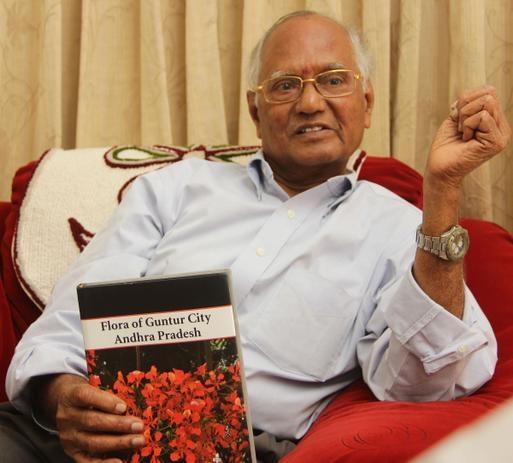
Senior Professor of Botony P. R. Mohana Rao shares excerpts from his book ``Flora of Guntur City Andhra Pradesh," in Guntur. Photo: T. Vijaya Kumar
Senior Professor of Botony P. R. Mohana Rao shares excerpts from his book “Flora of Guntur City Andhra Pradesh,” in Guntur. Photo: T. Vijaya Kumar

A former professor of Botany from Acharya Nagarjuna University has brought out an exhaustive treatise on the wealth of flora in Guntur City. The book, “Flora of Guntur City Andhra Pradesh,’’ a brain child of P.R. Mohana Rao, Professor Emeritus and former HoD, Department of Botony, Acharya Nagarjuna University, is considered the only available and authentic work throwing light on the numerous species of plants and trees in the city.

Dr. Rao was assisted by Assistant Professor of Botony, ANU, S.K. Khasim and former research student Bibi Aasiya, who are the co-authors of the book published by Bishen Singh Mahendra Pal Singh from Dehra Dun.

Dr. Rao had a rich global experience working in University of Cambridge, Delhi University, Himachal Pradesh University before settling at the ANU. He founded the Bio Technology Centre and started M.Sc (Biotechnology) course.

His association with the renowned systematic Botanist Professor late Olov Hedberg at Uppasala University, Sweden, during 1982-83 inspired him to take up the seminal work.

“The book has up-to-date information on flora which will help students, naturalists, tourists and town planners in identifying plants,’’ Professor Rammohana Rao told The Hindu on Tuesday.

The book listed 431 flowering plants, shrubs and trees belonging to 76 families of angiosperms. The families were arranged systematically following Bentham and Hooker System of Classification. The authors besides giving current nomenclature to families, genera and species, also gave original citation and a brief description of species, local names, flowering and dispersal mechanisms. A city map is also incorporated in the book.

It was late Rev.Dr.Uhl, former principal of Lutheran Mission College, Guntur who attempted a book on Flora of Guntur in 1930 but it could not be considered a complete work as Dr.Uhl had not followed any system of classification.

Dr. Rao’s work is based on three years of intensive research during 1990-1993. Leading a team consisting of Dr. Khasim, Aasiya and other students, Dr. Rao began an arduous task of collection of plants from fields, road margins, railway tracks, parks, gardens etc. Field observations included studying habit, habitat, time of flowering and fruiting.

Dr. Rao had also penned a note on the selection of plants for road margins, public parks useful to town planners. Some of the recommended trees included, Adansonia digitata (Baobab tree), Albizia lebbeck and Delonix regia (Gold Mohur) for gardens and parks etc.

“Most of the roads in the city are devoid of tree cover. Unfortunately, the city is lacking in public parks and green spaces. With the town gaining importance due to proximity to capital region, town planners could take a cue from the book on tree planting,’’ Dr. Rao added.

source: http://www.thehindu.com / The Hindu / Home> News> Cities> Vijayawada / by P. Samuel Jonathan / Guntur – February 24th, 2015

Oasis of enchanting beauty

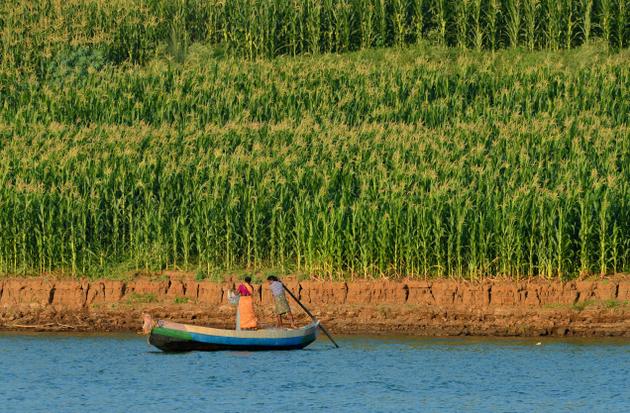
Fishermen casting their nets in the river; Tourist boat approaching the shore. Photo: K.R. Deepak

Papikondalu (Papi Hills) takes travellers through a canopy of greens covered by tropical and deciduous rain forests

Silence whispers through the Eastern Ghats of Papikondalu (Papi Hills) as the boat wobbles along the riverbed. An oasis of enchanting beauty and tranquillity, Papikondalu takes travellers through a canopy of greens covered by tropical and deciduous rain forests. Here, one can forget all their worries and just sink in the peaceful arms of nature.

Running through Khammam, East Godavari and West Godavari districts, Papikondalu can be reached via the river way through Rajahmundry. Boats dock every day on the banks of the Godavari to ferry tourists to the Papi Hills.

Navigating through the meandering river trails, through which the Godavari penetrates to find its way to the east after several twists and turns, one can spot colonies of migratory birds perched on the banks of the river. For tourists and birders, the best time to visit the place is between November and March. Here, it is the locals who double up as guides providing excellent information about the place, its significance and the flora and fauna. The locals and tribal communities have a way of life – simple, sorted and a rhythmic pattern. When there, do taste their local cuisine like bamboo chicken or a special fish curry with a flavour unique to the local communities living there.

Fisherman fishing on waters. Photo: K.R. Deepak

While there are many private tour operators, last year Andhra Pradesh Tourism Development Corporation (APTDC) started a new package with the Vizag – Papikondalu road-cum-river cruise that would take the tourists through a quick tour of the picturesque hills and temples along the river. The places covered include Gandipochamma temple, Devipatnam, Papikondalu, and Perantalapalli temple.

During the monsoons, high water levels submerge half of the Papi Hills which makes it inaccessible for tourists.

A photographer’s delight, the place today faces the threat of submersion once the irrigation project Polavaram is implemented. Locals and tour operators fear that once the dam is ready, Papikondalu may be reduced to a beautiful memory.

The best way to reach Papikondalu is to get to Rajahmundry and hire boat to reach the Papi Hills. There are AC and non-AC boats and the boat ride can take anywhere between four to six hours.

Tribals in their traditional gear regaling tourists in the backdrop of the picturesque Papikondalu Hills. Photo: K.R. Deepak

For stay options, you can explore the tented accommodations which the locals give on hire to tourists. Tents are available on the flat bed of sand as well as on the elevated hilly side overlooking the river. While the stay arrangements are basic, the beauty of the place surrounded by Eastern Ghats and the pristine tribal life are sure to caress away the fatigue of the busy urban life.

source: http://www.thehindu.com / The Hindu / Home> Features> MetroPlus / by Nivedita Ganguly /January 30th, 2015

NEIGHBOURHOOD WATCH : A landmark structure

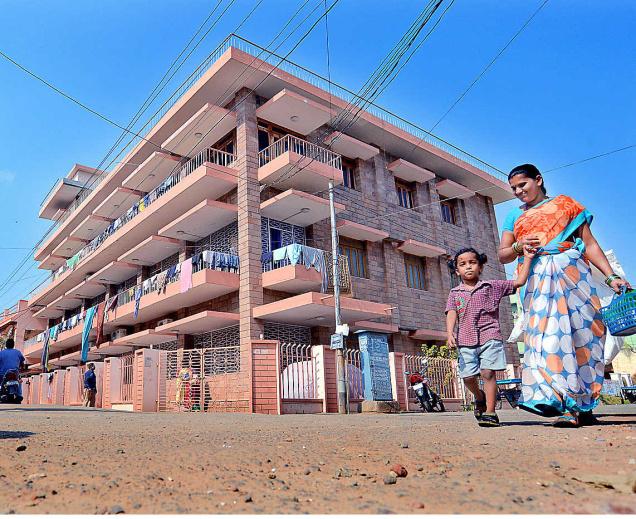
The famous ‘chekkudurayi’ building at Akkayyapalem in Visakhapatnam.— PHOTO: K.R. DEEPAK

One of the famous landmarks of Nandagiri Nagar in Akkayyapalem is ‘chekkudurayi’ building. The first-of-its-kind stone-studded façade was built in 1978 by Boddeti Appa Rao (I), a former railway employee and trade union leader.

The attractive building has now turned into a group house where 16 families reside.

With its impressive architecture, the building, located adjacent to the Saibaba temple in the colony, exudes a pristine charm.

“A lot of hard work had gone into the construction of the structure. From picking up similar stones to interior designing, care was taken in every aspect of the construction,” says B.S. Kanta, daughter of Mr. Appa Rao.

When cyclone Hudhud had ravaged the city on October 12, the residents of ‘chekkudurayi’ building say that they did not face any inconvenience.

“Quality construction techniques helped us stay intact in our homes. All we had to do was to shut the doors and windows and stay indoors for the entire day,” say the residents.

Besides its rustic appeal, what appears to be unique about the building is its maintenance-free feature.

“The building looks as new as it was three decades ago. It is one big advantage of the stone structure. Apart from feeling absolutely secured during calamities, the stone structure is hassle-free and gets cleaned every time it rains,” adds Ms. Kanta.

Initially, the ‘chekkudurayi’ building had only one floor, apart from the ground floor. In 2007, another floor was added where a total of 16 families live together.

source: http://www.thehindu.com / The Hindu / Home> News> Cities> Visakhapatnam / by Rani Devalla / Visakhapatnam – January 14th, 2014

Andhra Pradesh to get Rs 475 crore from World Bank arm for rural project

Hyderabad :

An arm of the World Bank  will lend Rs 475 crore ($75 million) to the Andhra Pradesh Government for implementing a rural growth project.

The fund from International Development Association (IDA) will be used for implementing the Rural Inclusive Growth Project (RIGP), aimed at enhancing agricultural incomes of small/marginal farmers and ensuring increased access to services related to health, nutrition, sanitation and social entitlements, a senior official said today.

(The project would help the…)

RIGP will target small and marginal farmers in 5,000 villages in the state. Chief Minister N Chandrababu Naidu recently discussed the project with a team of officials from the World Bank.

It will focus on increasing economic opportunities for small and marginal farmers, especially from Scheduled Castes and Scheduled Tribes, and develop a network of social enterprises for food, nutrition and sanitation, he said.

The project would help the State government in creating an enabling policy framework across sectors through the seven missions it has established.

A targeted 2.5 lakh small and marginal farmers would be supported under the RIGP to increase their incomes by at least 50 per cent by enhancing productivity and improving their access to markets, the official said.

Investments would be made to improve access to services in the areas of health, nutrition, water and sanitation to boost human development by increasing coverage and effectiveness of social safety net programmes, he said.

About five lakh households, particularly those belonging to SCs and STs, would benefit from this.

“Community-led approach will be followed under RIGP to improve access to water and sanitation services in the targeted villages adopting.

“Saturation mode will be adopted so as to cover all households and rural institutions like schools, anganwadis (childcare centres) and health centres and help them achieve open defecation-free status,” the official added.

source: http://www.articles.economictimes.indiatimes.com / The Economic Times / Home> Collections> Farmers / PTI / December 26th, 2014

Andhra Pradesh farmer’s methods draw CM’s, scientists’ attention

 “I have now taken up rearing of Bengal sheep and goats — there are 50 of them and they could fetch nearly `25,000 per head, if looked after well,” Prasad said. Prasad’s contributions have been so important that he has received accolades from Andhra Pradesh Chief Minister N. Chandrababu Naidu and even from top scientists.

“I have now taken up rearing of Bengal sheep and goats — there are 50 of them and they could fetch nearly `25,000 per head, if looked after well,” Prasad said. Prasad’s contributions have been so important that he has received accolades from Andhra Pradesh Chief Minister N. Chandrababu Naidu and even from top scientists.

Vijayawada: 

The story of 53-year-old Uppala Prasad, a farmer from Ghantasalapalem in Ghantasala mandal of Krishna district, is probably the best rags-to-riches story you will ever hear from the region. When most farmers are giving up agriculture due to mounting losses, Prasad’s journey from a mere two acres of land and two buffaloes in 1982 to farming in nearly 200 acres (10 his own and rest leased), and a herd of 300 high-quality buffaloes and cows, is remarkable

“It took innovative methods of farming and organising the sale of farm produce to get here. I have my own shop in Hyderabad and I also have an online presence,” said Prasad.Also, Prasad uses 100 acres of his land for organic farming with zero pesticide. He follows cutting-edge methods and uses advanced seeds, not only for paddy and pulses but also for raw materials used in cattle brazing. His big dairy, that produces nearly 800 liters of milk every day, has inspired others to start similar ventures.
“I have now taken up rearing of Bengal sheep and goats — there are 50 of them and they could fetch nearly `25,000 per head, if looked after well,” Prasad said. Prasad’s contributions have been so important that he has received accolades from Andhra Pradesh Chief Minister N. Chandrababu Naidu and even from top scientists.

source: http://www.deccanchronicle.com / Deccan Chronicle / Home> Nation> Current Affairs / by A. Ravi Kumar / December 28th, 2014

AP’s Kashmir to get facelift by winter-2015!

Visakhapatnam  :

Lambasingi, often touted as the Kashmir of Andhra Pradesh, will be developed as a tourist spot in the upcoming year as the Andhra Pradesh Tourism Development Corporation (APTDC) in association with Union ministry of tourism has come forward to develop tourism projects at a cost of Rs 9 crore in the hamlet. The serene hamlet located in Chintapalli mandal of Visakhapatnam Agency sees temperatures go down as low as zero and sub-zero conditions during December-January every year.

As part of the facelift planned for Lambasingi, a resort will come up in an area of six acres at a cost of Rs 5 crore, and a botanical garden in an area of 37 acres at a cost of Rs 4 crore is also on the list. The APTDC recently sent a detailed project report (DPR) of the projects to the Centre, which has assured to financially support the corporation. The state government, on its part, has supported the project by converting the forest and tribal land and transferring it to the Tourism department to be used only for tourism development purpose.

The village, situated at a height of 1,000 metres above the mean sea level, with cold weather conditions (zero degree Celsius in winter and below 10 degree Celsius entire year), is an ideal spot for tourists. G Bheemasankara Rao, general manager for Visakhapatnam division of the APTDC, said the corporation took the decision of developing the area as a tourism spot because of the existing climatic conditions and tourist influx. The area is also famous for coffee and pepper plantations which are being cultivated since the British regime in the country. Coffee grown here is exported to other countries, including the USA, said a senior official from the Coffee Board of India.

“There is hardly any hut at Lambasingi, but are coming up very fast because of the scenic beauty of the place particularly in winter. So we decided to set up the two projects at a cost of Rs 9 crore. The state government has already given 43 acres of the tribal land to the tourism department. We are waiting for the centre’s fund which we may get in two months. Once the funds are released we will start ground works of the projects, which may be completed by next winter,” Bheemasankara Rao told TOI.

Apart from Lambasingi, the corporation has also selected two hot spots in Paderu, headquarters of the Integrated Tribal Development Agency (ITDA) of Visakhapatnam district, for tourism projects at a cost of Rs 8 crore. The corporation identified a five acres piece of land in Paderu for developing a butterfly park at a cost of Rs 3 crore, and establishing a resort in an area of six acres at a cost of Rs 5 crore in the same area. In addition to that, the corporation has also identified a beach spot at Revupolavaram near Nakkapalli to develop a resort along the beach at a cost of Rs 5 crore.

source: http://www.timesofindia.indiatimes.com / The Times of India / Home> City> Visakhapatnam / TNN / December 30th, 2014

AP Tourism to host New Year celebrations

Puligundu hillock in Chittoor district all set to attract New Year revelers / The Hindu

Chennai :

Andhra Pradesh Tourism Development Corporation has planned a host of entertainment shows at Horsley Hills, Puligundu and Kuppam easily accessible from here, to celebrate the new year on December 31.

“We have been organising events on New Year’s eve every year at Horsley Hills. This year Puligundu near Chittor and Kuppam abutting Krishnagiri in Tamil Nadu are additions,” APTDC Divisional Manager RV Suresh Kumar Reddy told reporters here today.

A picturesque view of the Horsley Hills on a foggy dawn. - Photo: K V Poornachandra Kumar / The Hindu
A picturesque view of the Horsley Hills on a foggy dawn. – Photo: K V Poornachandra Kumar / The Hindu

From Chennai, Horsley Hills is 270 km, Puligundu near Chitoor 155 km, and Kuppam 290 km, he added.

“A significant chunk of our clientele happens to be from Chennai and other parts of Tamil Nadu.”

Interactive game shows for couples, children, entertainment programmes, including dance, mimicry, magic shows have been planned.

“Film and Television celebrities have also been roped in,” he said.

source: http://www.thehindubusinessline.com / Business Line / Home> News> Travel / PTI / Chennai – December 25th, 2014

AP launches project Ongole Bull

Hyderabad:

The Andhra Pradesh government is rolling out a project to boost production of Sahiwal and Ongole bulls breed at a cost of Rs 6.52 crore with the Central assistance.

The project, which consists of Embryo Transfer Technology (ETT), will give a fillip to the growth of indigenous ‘Sahiwal cow’ and Ongole bull population in the State.  The Sahiwal or `Montgomery’ is largely bred in Montgomery, Punjab region of Pakistan. The Sahiwal are widely bred in India, Australia and Kenya.

The project has been taken up with the Central assistance of Rs 6.52 crore and the first phase of the programme has been taken up at the Frozen Semen Bull Station, Banavasi village, in Yemmiganur mandal of Kurnool district and the Progeny Testing Unit in Chittoor district.

According to a senior official in the Animal Husbandry Department, the department was tasked to identify the Sahiwal bull, a cross breed with Jersey cow, that was identified in Chittoor and a few other districts.  The project spread over a three-year period and is intended to identify 160 best bulls of Sahiwal-Jersey breeds.

source: http://www.thehansindia.com / The Hans India / Home / by VRC Phaniharan / December 25th, 2014

Andhra Techie desilts Nellore canal

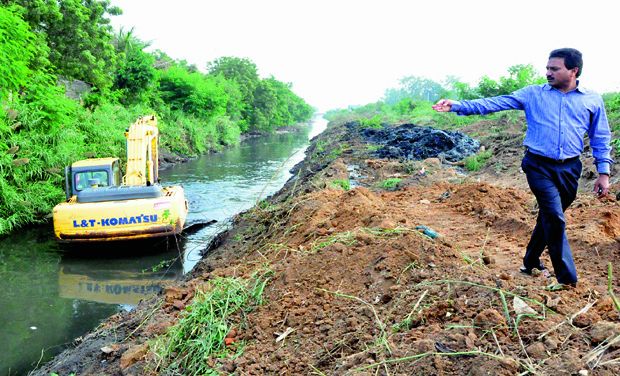
Chandrasekhar Reddy inspecting desilting work at Muthukuru Road in Nellore. — DC

Nellore:

Moved by the plight of farmers whose standing crops are withering away due to heavy silt, including garbage, deposited at the mouth of Krishnapatnam canal, software professional Pothireddy Chandrasekhar Reddy hired earth-moving machines with his own money to take up the desilting operation. His move has ensured the free flow of water in the area.

As many as 12,000 acres of agricultural land located in TP Gudur and Muthukuru mandals are dependent on the canal for irrigation.

The canal is a  branch canal to the Surveypalli channel and it starts from Ramalingapuram centre in Nellore.

The water flow had almost dried up on the stretch from its starting point to Narayana General Hospital in Muthukuru road due to plastic materials and garbage dumped in it by people living along the canal.

Though the irrigation department had prepared estimations for desilting works, the proposal was stalled for want of sanction from the government.

Mr Reddy volunteered to carry out the work after farmers of his village apprised him of the situation when he visited them a couple of days back.

Mr Reddy is a native of Pidathapoluru village in Muthukuru mandal of SPSR Nellore district, and resides in Hyderabad. He worked for over 10 years in the United States as a software engineer and was  the CEO of a company called Navayuga Infotech.

“Telugu Desam senior leader Somireddy Chandramohan Reddy gave a green signal to my proposal when I brought the issue to his notice. Being a native of this area, I feel it is my responsibility,” Mr Reddy said when contacted.

A farmer, Venku Reddy of Pidatapoluru, said the desilting exercise will cost more than `5 lakh.

source: http://www.deccanchronicle.com / Deccan Chronicle / Home> Nation> Current Affairs / DC / by Pathri Rajasekhar / November 28th, 2014

Sericulture awaits a big boost in Chittoor

A malbari plantation near V. Kota in Chittoor district. File Photo. / The Hindu

District administration to provide all facilities to farmers under one roof

Sericulture in Chittoor district is expected to get a boost, with the district administration deciding to provide all facilities to farmers under one roof.

District Collector Siddarth Jain has directed the sericulture wing to submit a report by December 15 on the feasibility of either the full waiver of property tax or bringing it down to the maximum level for silkworm rearing sheds in the district, with Madanapalle, Palamaner and Kuppam forming the core belt. The collective efforts of farmers and officials are expected to transform a stagnant rural economy into a dynamic and buoyant industrial economy.

Officials brought to the notice of the Collector that municipalities were imposing property tax on rearing sheds up to Rs. 5,000 a unit, which farmers have opposed. The Palamaner area contributes more than 800 metric tonnes of silk annually, thanks to the presence of over a hundred rearing sheds.

Similarly, Kuppam and Madanapalle zones, too, make substantial contributions to silk production. In spite of steps taken by the government to bolster silk production, the rural industry still depends on Karnataka for the final output, resulting in huge expenditure at the domestic front.

Considering the fact that 70 per cent of malbari plantation in the State is spread across Rayalaseema, with Chittoor contributing a significant share, the district administration aims at strengthening the existing reeling units at Palamaner, with more subsidies on buildings and rearing sheds, involving youth in the industry, apart from conducting periodical awareness campaigns for the benefit of entrepreneurs.

BETTER DAYS ARE HERE

*District Collector has sought a report from the sericulture wing on the feasibility of waiving property tax for rearing sheds

*The combined efforts of farmers and officials are expected to transform a stagnant rural economy into an industrial one

*Palamaner area contributes around 800 metric tonnes of silk annually, and govt. is considering strengthening units there

*The rural silk industry still depends on Karnataka for the final output, resulting in huge expenditure at the domestic front

HOW PALAMANER GETS A BOOST?

*More subsidies on buildings and rearing sheds

*Involving youth in sericulture

*Conducting awareness campaigns for entrepreneurs

source: http://www.thehindu.com / The Hindu / Home> News> National> Andhra Pradesh / by K. Umashanker / Chittoor – November 26th, 2014