Category Archives: Nature

Success for Silver Pompano in Andhra Pradesh

INDIA – The first crop of the highly valued Silver Pompano fish cultivated in Krishna district, in the state of Andhra Pradesh, for the first time is ready for harvest.

The marine fish, locally known as Chanduva Para, which is being cultivated in two acres of brackish water in Nagayalanka mandal, survived without any retardation in growth despite the recent bad weather.  The Hindu  reports that this is the first marine fish being cultivated in brackish waters in Krishna district.

Scientists from the Central Marine Fisheries Research Institute (CMFRI), Chennai, provided the Silver Pompano seed to the Nagayalanka-based farmer, T. Raghu Sekhar, in July. The tenant farmer sowed the seed in his two-acre pond at Peda Kammavaripalem in Nagayalanka mandal.

Good growth

“Of the total 6,000 seeds released into the pond, not a single fish died and growth is expected to reach the maximum of 400 gm to 420 gm by the time of the first harvest due in March,” Mr Sekhar told  The Hindu .

By the fourth month the fish grew to the size of a palm and also turned white. They were able to tolerate the vagaries of weather, Mr Sekhar said. There is great demand for the Silver Pompano, a marine fish, in the domestic market all along the coast in Andhra Pradesh. But there was a drastic fall in the catch of the variety of fish in the ocean. The fishermen were not sure when and in which weather conditions they could catch this variety of fish in the ocean, Mr Sekhar said.

Lucrative price

The cultivation of these fish was, however, tricky because the salinity of the water should be maintained between five and 40 PPT (parts per thousand) for the fish to thrive and grow.

“Domestic market prices are very lucrative for Silver Pompano, fetching Rs 200 a kg. At times when the cultivation of tiger prawn and high risk Vannamei shrimp are driving the farmer into losses frequently, shifting to cultivation of marine fish species is being seen as a viable and lucrative option,” added Mr Sekhar

source : http://www.thefishsite.com/ The Fish Site / Home> News> India / by The Fish Site News Desk / December 17th, 2013

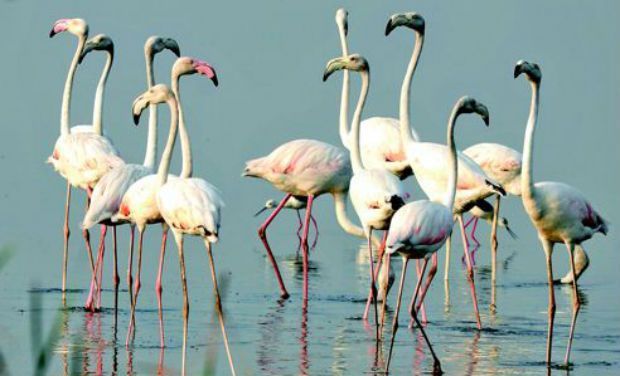
Flamingo fest at Sullurpeta from January 8

FlamingoHF27dec2013

Nellore: 

District administration is planning to hold the unique three-day event Flamingo Festival at Sullurpeta from January 8th next year.

The administration has been organising the festival every year to mark the arrival of thousands of migratory birds, especially flamingos, to Nelapattu Birds sanctuary, widely known as their winter home.

Bird watchers and tourists throng the Sanctuary and Pulicat lake to watch flamingos hunt fish during the daytime.

The festival was planned about a decade ago to attract tourists to the sanctuary from the state and neighbouring states.

District collector N. Srikant has asked the officials to prepare an action plan to hold the festival on January 8, 9 and 10 next year during a meeting held at the Kalyana Mandapam in Chengalamma temple at Sullurpeta on Wednesday.

He directed the officials to make necessary arrangements to provide accommodation for the tourists and asked them not to repeat the mistakes committed in making arrangements earlier.

Srikant said that stalls of various government departments and cultural prorgammes would be arranged at the junior college ground at Sullurpeta during the festival.

Seminars on bio-diversity, birds and protection of Pulicat lake would also be conducted.

Boat ride will be arranged for the visitors at Bheemulavaripalem in Tada mandal.

The collector inspected the junior college ground along with ZP CEO Jitendra, DWMA project director Gowthami, tourism officer Nagabhushana, Nayudupeta RDO M.V. Ramana and Gudur DSP Chowdeswari Devi.

source: http://www.deccanchronicle.com / Deccan Chronicle / Home> News> Current Affairs / DC / December 19th, 2013

Nursery for Plant Scions in Hyderabad

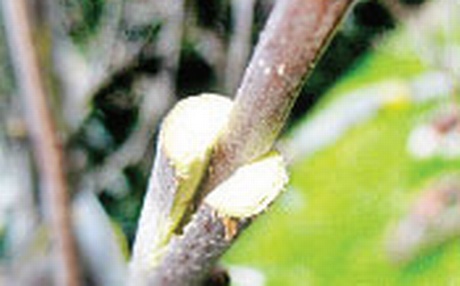
plantHF24dec2013

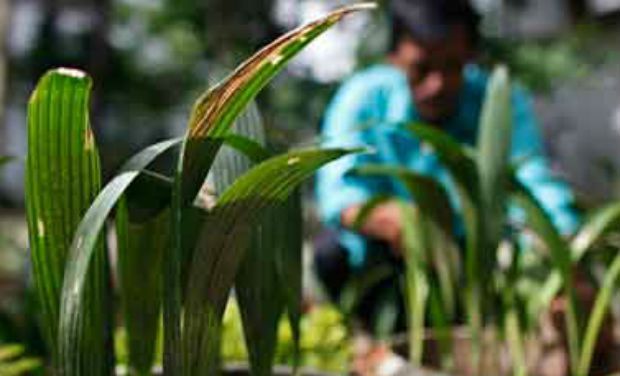
As many as two new Scion Bank Nurseries producing high yielding grafts of different varieties of fruit plants and others are being planned at Moinabad on the city outskirts by the Hyderabad Metropolitan Development Authority (HMDA) shortly.

The two new scion bank nurseries have been proposed at Peddmangalaram village in about 50 acres land and Kanakamaidi village in Moinabad mandal of Rangareddy in about 100 acres of land at a cost of `20 crore each.

These two villages fall under the GOMs 111. For the developing the nurseries, HMDA has requested the State Government to transfer the above said lands to them from the Revenue Department so that they can take up the works. The HMDA which already established a scion bank nursery at Tellapur is developing high yielding grafts of different varieties of mango, amla, pomegranate, sapota, seethaphal, jamun, acid lime and tamarind, according to HMDA officials.

The grafts are established through approach, bud and veneer grafting techniques. The scientific management of scion bank yields from 50,000 to 75,000 grafted seedlings per annum.

Presently, the HMDA is making attempts for environment upgradation of Hyderabad metropolitan area by developing and supplying various types of nursery seedlings for multiple urban uses like ornamental plants, shade bearing plants, fruit bearing plants, fodder and fuel needs of the urban and peri urban population.   As many as 10 central nurseries are maintained by the Urban Forestry Wing all around HMA area at Mental Hospital Campus in Erragadda, Airforce Station Land at Hakeempet, Pedda Cheruvu in Nacharam, Bomrukdowla at Rajendranagar, Vanasthalipuram, Yapral, Cherlapalli, Shamshabad, Tellapur and Kapra etc.

In the scion nursery, just a stump, which already has an established healthy root system, is grafted with a cutting or a bud from another plant. In some cases, such as grapes and other fruit-bearing plants, cuttings are used for rootstocks, the roots being established in nursery conditions before planting them out.

The plant part grafted onto the rootstock is usually called the scion. The rootstock is selected for its interaction with the soil, providing the roots and the stem to support the new plant, obtaining the necessary soil water and minerals. After a few weeks, tissues of two parts will have grown together, eventually forming a single plant.

The use of rootstocks is commonly associated with fruit-bearing plants and trees, but is the only way to mass propagate many other types of plants that do not breed true from seed.

source: http://www.newindianexpress.com / The New Indian Express / Home> Cities> Hyderabad / by S. Bachan Jeet Singh – Hyderabad / December 13th, 2013

Hyderabad to host 3-day global meet on millets

Mumbai :

A global meet on millets for expert consultations on their promotion for health and nutrition security will be held in Hyderabad during December 18-20.

Organised jointly by the Indian Council of Agriculture Research, Directorate of Sorghum Research and Society for Millet Research, the three-day global meet will bring together experts from India and abroad (Africa, Australia, China, and the US).

Topics

They will discuss a range of topics including global millet scenario, genetic improvement, role of private sector in millet consumption, innovations in processing, supply chain management, nutrition and health implications as also government policies and programmes.

Scientists, nutritionists, industry professionals, entrepreneurs, policymakers and other stakeholders are participating.

Following the success of Green Revolution and emphasis on fine cereals rice and wheat, in recent decades, there has been a gradual reduction in consumption of millets such as sorghum, pearl millet, finger millet, foxtail millet, kodo millet, proso millet and barnyard millet, as staple food in the semi-arid regions.

Given the current health and nutritional challenge facing a large number of people, especially the poor, the global meet will attempt to once again evolve strategies to mainstream millets in the daily food of people.

source: http://www.thehindubusinessline.com / Business Line / Home> Industry> Agri-Biz / by The Hindu Bureau / Mumbai – December 09th, 2013

Researchers claim development of diabetic-friendly rice varieties

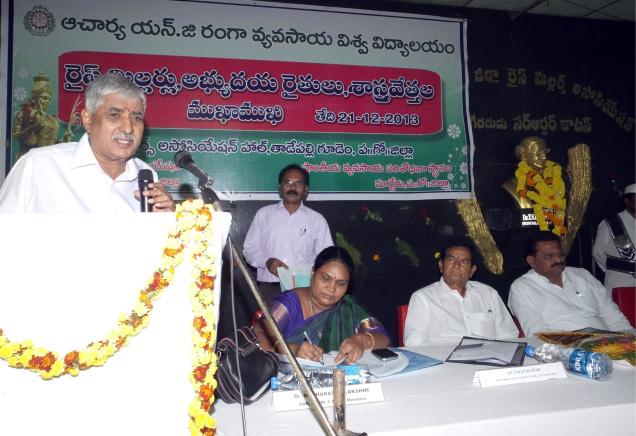
Vice-Chancellor of Acharya N.G. Ranga Agriculture University A. Padma Raju addressing farmers and rice millers in Tadepalligudem in West Godavari district on Saturday. / Photo A.V.G .Prasad / The Hindu

Acharya N.G. Ranga Agriculture University takes up research on developing the new varieties

Acharya N.G. Ranga Agriculture University has taken up research on development of diabetic-friendly rice varieties in collaboration with private industries, University Vice-Chancellor Alluri Padma Raju disclosed here on Saturday.

Mr. Raju was speaking to The Hindu on the sidelines of a meeting of rice millers, peasant representatives and agricultural scientists conducted by the Agricultural Research Station (ARS) at Maruteru for popularising new paddy varieties.

“Scientists are on the job of building glycemic indices (GIs) with the data on how much carbohydrates in each existing rice variety raises a person’s blood glucose levels after consuming the particular variety,” he said. As of now, 40 rice varieties were available with the researchers and 14 of them were found to be having anti-diabetic properties. Of them, BPT-5204, popularly known as Samba Masuri, was found to be more friendlier to diabetics, Mr. Raju explained.

The research strategies involved collection of anti-diabetic genes from different varieties and introduced them in the select varieties by way of selective breeding through the marker identification method.

Diabetes was fast spreading and people even below 30 years were falling prey to the disease, of late. The breakthrough, if achieved in the on-going research, would be a boon for the people prone to diabetics caused by food habits, among others, in a country where rice consumption accounted for more than 80 per cent, he hoped.

The Samba Masuri was identified as an ideal variety for projection as more diabetic friendly given its ‘admirable’ strains such as easy to cook and preservation without becoming stale for a long time after cooking and non-sticky in nature, Mr. Raju said.

The V-C informed that the gale-resistant paddy varieties, need of the hour in the cyclone-prone Godavari delta region, were likely to be released in April next, facilitating sowing for the next kharif. The research had been in progress for the last 4-5 years and it was currently under trial in different stages, he added. If these new breeds hit the markets, the paddy growers would be relieved of the miseries caused by the predominant variety of Swarna in view of its susceptibility to lodging at times of cyclones, he said.

source: http://www.thehindu.com / The Hindu / Home> News> National> Andhra Pradesh / by  G Nagarajan / Tadepalligudem (West Godavari Dist.), December 22nd, 2013

Vakalapudi gearing up for ‘beach festival’

First round of the festival was a grand success, says District collector Neetu Prasad / The Hindu

Collector holds review meet on the three-day celebrations

East Godavari district administration is making arrangements for the celebration of three-day ‘beach festival’ at Vakalapudi beach for the second consecutive year from January 10.

Addressing a review meeting with the officials of various departments here on Wednesday, Collector Neetu Prasad said that the State government allocated Rs.12 lakh for the last festival, while the sponsors had come out with another Rs. 40 lakh. She said that efforts were on to get more funds from the government for this year event as the first round of beach festival was a grand success.

Recalling the traffic congestion on the Beach Road during the last festival, the Collector asked the police to identify alternative routes to avoid traffic jams.

Different committees were appointed to ensure peaceful conduct of the festival and the convener of each committee was directly answerable to the Collector. Similarly, a sponsors’ meet would be conducted in which the hoteliers and tour operators would be invited. Ms. Neetu asked the officials to arrange a photo exhibition that would depict the places of importance in the district.

She also suggested arrangement of stalls in the exhibition by the government departments.

Cultural performances would be arranged on all the three days for providing entertainment to the audience, she said.

source: http://www.thehindu.com / The Hindu /Home> News> National> Andhra Pradesh / by Staff Reporter / Kakinada – December 12th, 2013

Women shine in green business


Picture for representational purpose only.

Hyderabad:

Planning to become a woman entrepreneur? Young women from the state are setting up new businesses and are doing pretty well for themselves.

Several women entrepreneurs came together at the three-day international conference on ‘Green Enterprises and Green Industrial Parks’ organised by ALEAP. The international conference brought women entrepreneurs, sponsors and government officials on a common platform.

Present at the conference was Anusha Barrela, 23. She is the founder and president of three different firms — Bio Conservation Foundation, Saatyaki Foundation and Siaa Enterprises. “The Bio Conservation Foundation aims at rehabilitating endangered flora and fauna. We are currently working on saving the Olive Ridley sea turtle.

In our hatcheries along the east coast of the Bay of Bengal, we store turtle eggs and nourish the hatchlings, which are then released into the sea with the help of the forest department,” she explained. Elephants and sparrows are on the list too.

She is also the founder of Apple Tree (Saatyaki Foundation), a pre-primary school that brings an international curriculum for pre-primary education to South India. Siaa Enterprises deals with publishing children’s books.

Aishwarya, 26, who had a stall at the show, started Tint and Tones, her textile business, about six months ago. The firm deals in organic, hand-woven textiles. A graduate of the Parsons’ School of Design, New York, Aishwarya says, “We work with weavers to develop different kinds of fabrics.”

Speaking about business parks for women entrepreneurs, Rajat Kumar, the commissioner of industries, said, “APIIC is identifying land for these parks. Currently, three such parks at Visakhapatnam, Kadapa and Nellore are being developed by ALEAP. Others will begin soon.”

source: http://www.deccanchronicle.com / Deccan Chronicle / Home> Current Affairs / DC / Kruthi Gonwar / July 19th, 2013

Gir cow milk to reach Krishna District soon

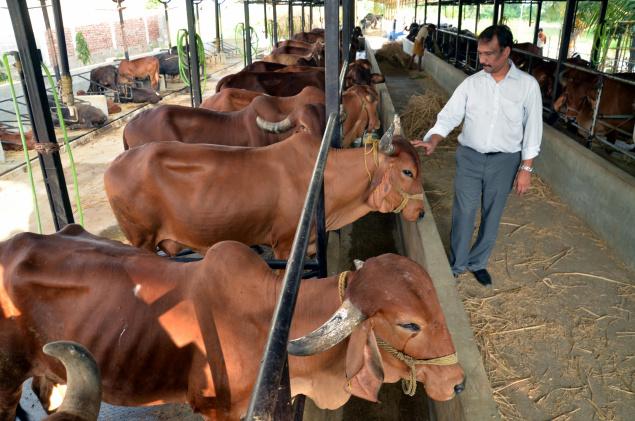
G. Sudarshana Rao at his farm with Gir breed cows at Veerankilakulu in Krishna district./ Photo:V. Raju / The Hindu

‘Gir cow fed with a special feed can produce milk that has medicinal values’

Milk from Gir breed of cows that originally inhabited the Gir Forest in Saurashtra region of Gujarat, are here in Krishna District, thanks to the entrepreneur-turned-medico G. Sudarsana Rao, who has set up a dairy at Veerankilakulu village in Vuyyuru mandal.

In an exclusive chat with The Hindu, he said that the Gir breed of cows give milk that contains conjugated lineolic acid, which has been proved to be an anti-cancer compound.

The claim that Gir cow milk not only prevents but controls diabetes is not yet settled. As per ongoing research by Sai Butcha Rao, a research associate at International Livestock Research Institute, ICRISAT, Patancheru, if the Gir cow is fed with a special feed it could produce milk that has medicinal values to stimulate the pancreas to produce insulin and thereby control diabetes.

According to him, the mention of this breed was made in the Vedas and the Brazilians had taken thousands of cows of this breed to their country centuries ago from Gujarat.

Today, the breed is called Girolando in Brazil, he said. The breed is on the verge of extinction in its native country, he claims. “Today, there are about 15,000 of these cows left in Gujarat. And to save the breed the Gujarat Government has embarked on an ambitious breeding project at a cost of Rs.1,400 crore,” he added.

Dr. Sudarsana Rao said that the Gir cow milk was lighter compared to others, has high concentration of calcium, proteins and vitamins D and C and is sweet and tasteful.

To begin with, he has imported about 34 animals and aims to have a stock of 400 in a year. Terming the milk as ‘organic milk’ under the brand Ayush Organic Product, he said: “No milk is organic, but it becomes organic based on the organic feed that is fed to the cattle.”

No chemical used

The farm has a hydroponic machine that produces tailor-made green organic fodder. The imported machine can generate fodder from seeds such as barley or horseshoe gram in a controlled environment. For every 1.25 kg. of seed we can get green and highly nutrient organic fodder up to 8 to 10 kg. and the facility can be easily expanded depending on the requirement, he observed.

Dr Rao also pointed out that no chemical is used in the processing. “The milk that is extracted goes directly to the chilling machine and is chilled at 2 degrees and immediately packed and transported in insulated boxes, where the temperature is maintained at 3 degree Celsius,” he said.

According to him, the yield of the native breed is much less compared to the Holstein Friesian (HF) breed. Initially, the milk will be marketed in half and one-litre packets in Hyderabad and later sold at other major cities such as Vijayawada and Guntur through select outlets. The farm will be inaugurated by Animal Husbandry Director D. Venkateswarulu on Wednesday.

source: http://www.thehindu.com / The Hindu / Home> News> Cities> Vijayawada / by Sumit Bharracharjee / Vuyyuru – November 13th, 2013

Payakapuram tank to have a new look

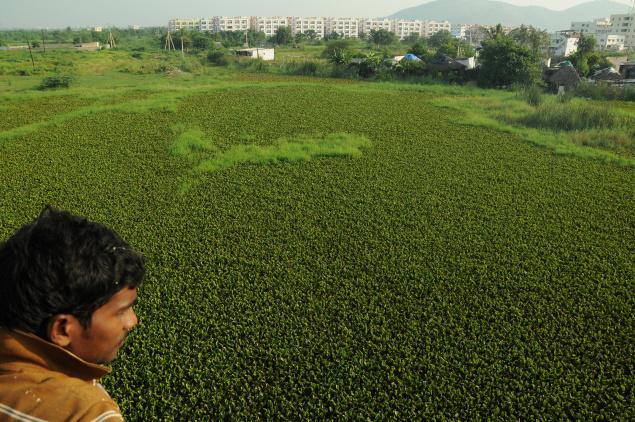
A man looks at Payakapuram tank which is totally covered with water haycinth, in Vijayawada. / Photo: Ch. Vijaya Bhaskar / The Hindu

The encroachment of Payakapuram tank and dumping of garbage in it will be a thing of the past. Very soon the tank will have a new look with the Vijayawada Guntur Tenali Mangalagiri Urban Development Authority (VGTMUDA) chalking out ambitious plans to revive it.

The authority has estimated that it will cost Rs.12.30 crore to restore the tank and turn it into a recreation zone or tourist spot. The Tourism Department will foot the bill.

The tank has water spread over an area of 8.05 acre, but, with no steps being taken to preserve the water body, the people used to fling trash into the tank.

Even the VMC used it as dumping ground for sometime. The tank has now become a breeding ground for mosquitoes and poses a health hazard.

The UDA, as part of rejuvenation plans, will de-silt the tank and remove garbage dumped into it.

An island will be developed in the middle of tank. The island proposal is made with an idea that it would attract migratory birds. The trees that are suitable for nesting would be planted on the island. Pathways, compound wall, benches, boating facility, development of greenery, construction of approach road were some of the other works proposed in the project.

Approach road

The 80-ft approach road, which is part of Zonal Development Plan, will connect the Inner Ring Road and Vambay Colony road.

The basic objective is to develop a lung space in the city, preserve water body and protect the site from encroachments, officials say.

The Payakapuram Tank is perhaps like an Oasis in the city. Owing to poor management and maintenance, the water body is totally covered with water hyacinth giving an impression as if a green carpet was laid there.

“Despite vigil and necessary measures, the tank continues to be plagued by encroachments and we thought of rejuvenating it. The UDA has been asked to prepare a project report for it and develop it. The funds will be met from budget of the Tourism Department,” says Vijayawada (Central) MLA Malladi Vishnu, who made the proposal.

source: http://www.thehindu.com / The Hindu / Home> News> Cities> Vijayawada / by G.V.R. Subba Rao / Vijayawada – November 07th, 2013

Pedana Kalamkari made of natural colours gets GI tag

Pedana is a small town just 13 km from Machilipatnam, the Krishna district headquarters in coastal Andhra Pradesh. This small place has  carved a niche for itself with its own style– Kalamkari textile materials. 
PedanaHF20nov2013

Over 1,000 artisan families survive on making vegetable dyes, blocks and printing of 25 distinctive Kalamkari textiles, including bedsheets, lungis, kerchiefs, curta­ins, Punjabi suits and sarees.

The Machilipatnam Kalamkari craft, made at Pedana, evolved with patronage of the Mughals and in the later years, the Golconda sultanate. “The word Kalamkari means, drawing with a pen. But our style is different from that of the Srikalahasti style or Pen Kalamkari,” says K Sudhakar, a second generation producer and trader of Kalamkari textiles in Pedana.

In Srikalahasti style, a pen is used for free hand drawing and then filled with colours. Deities and scenes taken from the great Hindu epics–Ramayana and Maha­bharata–and the mythological classics, particularly the “Dasavataras”, are drawn on fabrics by hand. They employ the same method even for making paraphernalia used in temple festivals in southern India.

Artistes in Pedana use vegetable dyes and colours as they are pure and organic and have absolutely no side effects on users or the environment. Vegetable dyed fabri­cs and other items are more beautiful, popu­lar and costlier than the regular products available in the market today. The reason is that it takes longer time and great effort to prepare vegetable dyes.

All vegetable colours are made using minerals, leaves, flowers and bark of different trees. For instance, distinctive red colour, a kind of trade mark for Kalamkari, is derived from a solution of alum and tamarind seed powder. Tamarind seed powder is boiled till it mixes well with water and then it is left to cool down to the normal temperature. The solution is then filtered using a muslin cloth. Alum works as the colour fixer for the solution.

Iron ore is used to make the black dye. The ore is powdered and boiled to make a solution. Process of cooling and filtering is involved while making all vegetable dyes. When the dye is ready, it is directly applied onto the pattern with a wooden block.
“For 20 kg of iron we use 15 kg of jaggery and 25 litre of water,” a worker at the Siva Aditya Handloom Textiles at the Brahma colony of Pedana says.

Similarly, violet colour is made out of natural indigo crystals. They are powdered and boiled to make a solution, yellow from turmeric and harad are used to make
yellow, mustard, lemon yellow and other tints and shades of yellow.

Along with buffalo milk, myrobalan is also used in Kalamkari. Myrobalan rem­oves the odd smell of buffalo milk. The myrobolan can easily fix the dye or colour of the textile while treating the fabric. Alum is used in making natural dyes and also while treating the fabric. Alum ens­u­res the stability of the colour in Kalamkari fabric.

The cotton fabric, made in powerloom with a certain weft and warf, comes mostly from Tamil Nadu and Maharashtra. All the 12 production units in Pedana buy cloth in huge quantities and distribute to workers who either take it up on a piece basis or work on weekly wages under a producer.

The wooden blocks are made as per the design given by the owner. “Generally the design made on paper is copied on the wooden blocks. Carving is done with improvised instruments made out of car valves, fan bearings and foundry equipment. I prefer rosewood as it is hard. Teakwood blocks wear off very fast. Also, carving needs special skills and pati­e­nce,” says Madhusudan. After the printing is done with the help of these blocks, colours are put carefully. Later, the cloth is dipped in water for a while to help colours to get properly absorbed in the fabric.

From now onwards, the production of Machilipatnam Kalamkari is geographically limited to Pedana town and neighbouring villages of Machilipatnam, Pol­av­aram and Kappaladoddi in Guduru man­dal of Krishna district.

In August, the Machilipatnam style of art was registered in the Geographical Indications Registry (GIR) of the Government of India under the Geographical Identification of Goods (Registration and Protection) Act, 1999.

Members of Vegetable Dye Hand Block Kalamkari Printers’ Welfare Association, Pedana, have received the registration certificate from the GIR, Chennai.  In the GI Registration, this art form has, however, been recognised as “Machilipatnam Kalam­kari”. “The registration will enable us to initiate legal action against those who copy the art or design in any form. It also restricts the production of fabrics with Kalamkari art in the areas falling out of the registered geographical area,” says  Welfare Association executive member B Anand Prasad.

The ingredients used in the preparation of colours, stages of applying the dye and designs on fabrics were also submitted to the GIR authorities for the conservation of the art as well as easy identification of violators anywhere. Nevertheless, the geographical identification was limited for a few areas of production – such as textiles and textile goods, bedsheets and table covers, clothing, carpets, rugs, linoleum and other materials for covering existing floors and embroidery.

The welfare association now has the right to seek legal action against those copying the art form of the registered products. On the one hand, efforts are being made by the Indian Council of Agricultural Research to produce new colours meant for Machilipatnam Kala­mkari and,  on the other, a special training programme on applying new colours was completed recently.

source: http://www.deccanherald.com / Deccan Herald / Home> Special Features / DHNS / Machilipatnam, JBS Umanadh – November 10th, 2013