Category Archives: Nature

Anantapur, Andhra Pradesh new fruit bowl

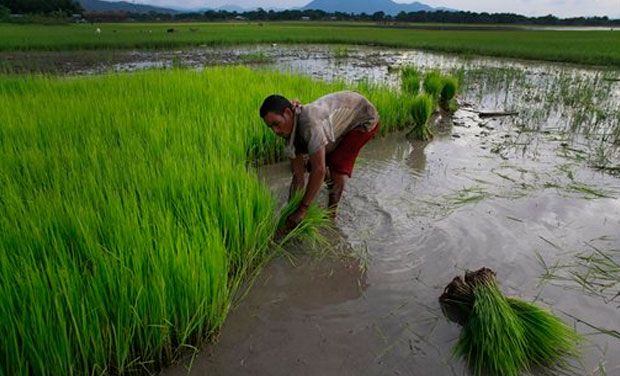
Picture used for representational purpose. (Photo: DC)

Anantapur:

Despite severe drought and failure of the groundnut crop, Anantapur district has emerged as the fruit bowl of Andhra Pradesh, becoming the biggest producer of varieties of fruits and vegetables, with a turnover of more than Rs 3,500 crore. Failure of monsoons, erratic and scanty rainfall in the district, where groundnut is cultivated in 10 lakh hectares, has resulted in crop loss. Yet, Anantapur, following the success stories of Israel in horticulture, is now producing sweet orange, sapota, pomegranate, mango, banana, papaya, guava, melon and vegetables. It has flourished with the launch of National Horticulture Mission (NHM) in 2005-06 and rejuvenation of old orchards though micro irrigation project.

Tati Reddy of Taticherla village, popularly  known as ‘Bush Reddy’ after he met American President George W. Bush on his visit to India, produces papaya and other fruits on a large scale with help of drip irrigation. The total area covered under horticulture in the district now stands at 1.12 lakh hectares as against 82,937 in 2008-09 including the coverage of non-traditional horticulture crops and fruits, flowers and grapes on 5,184 hectares. Presently, sweet orange is grown in 50,000 hectares, banana on  12,200 hectares, mango in 8,000 hectares and papaya in 4,500 hectares in the district.

Assistant director of horticulture K. Ramana said it was possible only due to the high receptivity of farmers to fight drought.

“There is high potential to develop horticulture orchards in another 40,000 hectares in the next few years because the government’s top priority is zero-drought in the district,” he observed. At least 11.0 lakh metric tonnes of various varieties of fruits were produced in 2009-10, increasing tremendously in 2013-14, from  6.70 lakh metric tonnes until 2004-05. Farmers of Anantapur have spread their produce across the country and abroad. While a papaya fruit costs just Rs 10 in local market, it costs nearly Rs 60 in Delhi. Kadirampalle farmers in Kundurpi mandal travel by air to New Delhi to sell their produce in the market instead of selling it locally. Farmers K. Venugopal Reddy and K. Shiva Reddy say they send their produce by road transport to Delhi to get attractive prices. Civil supplies minister Paritala Sunitha, APCC president N. Raghuveera Reddy may be busy politicians but are deeply involved in horticulture. Anantapur marketing general manager Srikanth Reddy said an average of 50 lorries of sweet orange is sold at Anantapur market. “Traders from all parts of the country come here to buy sweet orange,” he said.

source: http://www.deccanchronicle.com / Deccan Chronicle / Home> Nation> Current Affairs / by DC Correspondent / September 09th, 2014
GVMC to run Sivaji Park in PPP mode

Visakhapatnam :

Greater Visakhapatnam Municipal Corporation (GVMC) has mooted a proposal to hand over the Sivaji Park at Sivajipalem and MVP Road to a private company on a public private partnership (PPP) venture. On Saturday, two companies expressed interest in maintaining the park through open tenders.

Confirming this, GVMC commissioner MV Satyanarayana said that one of the companies was keen to offer Rs 20 lakh to the GVMC per annum in accordance to run the park spread over 16.52 acres. However, it would take some time to take a final decision on handing over the running of the park to a private party.

source: http://www.timesofindia.indiatimes.com / The Times of India / TNN / September 07th, 2014

Catching one of the fastest fish 40-km off Krishna!

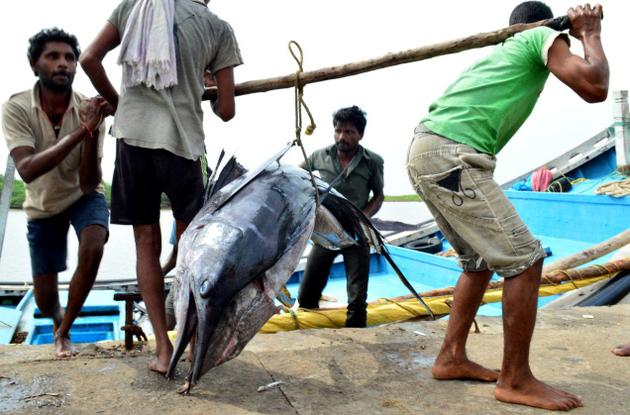
Fishermen carrying Indo-Pacific fish at Gilakaladindi harbour in Krishna district to export to Cochin. Photo: T Appala Naidu / The Hindu

The fishermen venturing into Bay of Bengal near Gullalamoda lighthouse in Krishna district have witnessed a good catch of Indo-Pacific sailfish (Istiophorus platypterus), one of the fastest fish in the ocean.

The boatmen using gill net have sighted the fish, known as Nemali Konem among the marine fish exporters’ fraternity, in batches near the location where mostly they spot dolphins; off the 30-40 km coast from the lighthouse area. A group of fishermen, which went on four-day fishing on mechanised boat to catch tuna, has caught at least four Indo-Pacific sailfish, which have been immediately exported to Cochin on Sunday from Gilakaladindi harbour.

It appeared in dark blue colour on top and each weighted at least one-hundred kilogrammes. “We have seen batches of Indo-Pacific fish sailing on the blue waters. We hope this is the season to catch them,” said fishermen M. Jagga Rao and N. Durga Rao of Gilakaladindi village. It was learnt that the Indo-Pacific fish is one of the fastest sailing fish in the ocean as its top speed has been clocked at 109 km an hour.

On the left side of the body, it has a pectoral fin in dark sea blue colour that is visible while it is swimming and the fin designs resembles a peacock feather. “Since the fish feed on ‘tuna’ it was caught in our net meant for tuna,” Myla Kameswara Rao, one of the fishermen of the group told The Hindu.

source: http://www.thehindu.com / The Hindu / Home> News> Cities> Vijayawada / by T. Appala Naidu / Machilipatnam – August 20th, 2014

CM’s Proposal on Integrated Botanical Garden Hailed

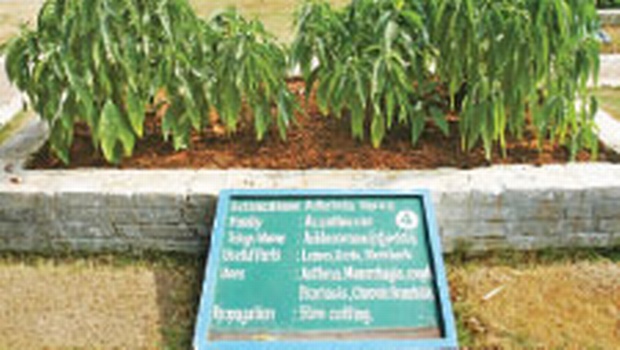
Plants with medicinal properties, such as the one above, being grown at the Sanjeevini Park at the NTPC township in Visakhapatnam | EXPRESS PHOTO

Visakhapatnam :

Chief minister Nara Chandrababu Naidu’s new proposal to set up an integrated botanical garden (IBG) in Araku Valley in the district has drawn good response. Experts on Ayurveda medicine and pharmaceutical sectors lauded the state government’s initiative and expressed confidence that the IBG would generate good revenue and employment opportunities.

Chandrababu Naidu, during his two-day visit recently, directed Visakhapatnam collector N Yuvaraj to study and plan to set up the IBG at Araku in association with the Ayurvedic Board. There are a large number of medicinal plants, shrubs, barks, roots and creepers in and around North Andhra region, especially in the agency and forest pockets.

Some of the Ayurveda medicine manufacturing companies pay the tribals and deploy their staff to collect some rare medicinal plants and leaves from the agency areas. The Andhra University  pharmaceutical department, on its own, had conducted a study on the medicinal plants and their history in North Andhra region, and found that a large number of tribals still use Ayurvedic medicines, prepared by themselves, for curing several diseases.

“There are a huge number of medicinal plants in the region. There are plants which have commercial value. For example there is ‘Bixa Orrellana’ from which a powder ‘Bixin’ compound is prepared. The compound is used in the textile industry for colour combinations. The chief minister’s proposal is a very good idea,” said S Ganapathy, former professor of Andhra University and current principal of GITAM Institute of Pharmacy.

Meanwhile, during the past one decade, the usage of Ayurvedic medicines has increased. Ayurvedic medical shops have also registered good sales.

“Ayurveda is seeing a rise not only in health-related medicines, but also in beauty parlour products, dental care and hair fall etc., Special medicines for alcoholic addiction are also manufactured from several medicinal plants and herbs. The Araku and Paderu dense forest areas are the best places to set up an integrated botanical garden. The IBG should be set up with an aim to promote academic research and commercial sales of the products,” K Yamuna, an Ayurvedic doctor and owner of an Ayurvedic medicine shop, opined.

An integrated medicinal plant is a welcome move by the government and there is good scope for developing the existing botanical garden at Araku as the nearby areas are suitable for cultivation of medicinal plants, Prof Ganapathy said.

source: http://www.newindianexpress.com / The New Indina Express / Home> States> Andhra Pradesh / by VKL Gayatri / August 12th, 2014

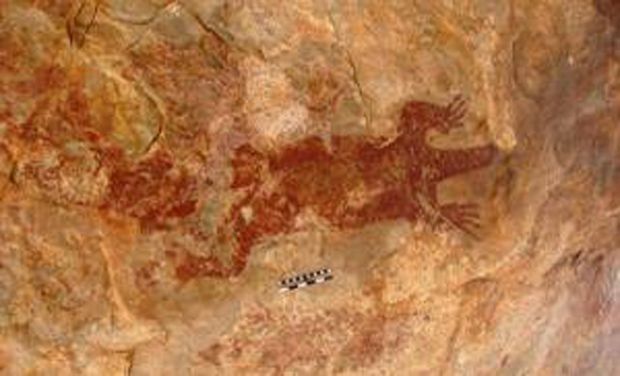
Rock shelters at Chintakunta get national stature

Ancient art on a wall of the Chintakuta rock shelter in Kadapa.

Hyderabad:

The Union government has declared megalithic painted Rock shelters at Chintakunta Village in Kadapa in AP as the monument of national importance.

Chintakunta site belongs to the period of 8,000 BC-1,500 BC. It has 200 rock art paintings including figures of wild animals, geometric designs and human figures.

Rock shelters at Chintakunta are among the 19 sites in the country being taken up  by the Archaeological Survey of India for conservation, preservation and maintenance on priority basis.

The site was explored and analysed by Dr Erwin Neumayer of Austria, Dr N. Chandramouli of Pondicherry Central University and P.C. Venkatasubbaiah, Dravidian University, Kuppam.

source: http://www.deccanchronicle.com / Deccan Chronicle / Home> Nation> Current Affairs / DC Correspondent / August 12th, 2014

Vizag’s Scenic Erra Matti Dibbalu Now Declared a Geo-heritage Site

ErraMattiANDHRA25jul2014

Visakhapatnam :

The Geological survey of India has declared the Port City’s famous ‘Erra Matti Dibbalu’ (Red sand dunes), situated between Visakhapatnam and Bheemunipatnam, as one of the geo-heritage sites in the country, D Rajasekhar Reddy, advisor of Geo-heritage cell of the Indian National Trust for Art and Cultural Heritage (INTACH), revealed here Wednesday.

With the picturesque place being one of the major tourist attractions in the area and a popular picnic spot, it is now going to be protected and preserved as a heritage site.

Speaking to mediamen, Rajasekhar said that the Erra Matti Dibbalu being official ly recognised by the GSI as a geological spot will increase the significance of the site globally.

He also said that conservationists can push the government for the protection of the site to bring unlawful activities and other mass events to an end. Rajasekhar felt that there is a need for a special ministry to ensure better progress in recognising more geo-heritage sites in the country.

GSI has recognised just 30 sites so far of which three are from the state. The Erra Matti Dibbalu site in Visakhapatnam are a rare scientific paleo coastal red sand dunes, which contain mesolithic and neolithic materials in it, a first in the country.

How geo-heritage site tag helps

Places identified as Geo-heritage sites are natural features on the Earth that hold significant cultural or scenic value. Geo-heritage or conservation involves the identification and preservation of such areas.

GSI would take over Erra Matti Dibbalu and take maeasures for its conservation.

Central funding would be sought for the maintenance and preservation of Geo-heritage sites.

source: http://www.newindianexpress.com / The New Indian Express / Home> States> Andhra Pradesh / by Express News Service / July 24th, 2014

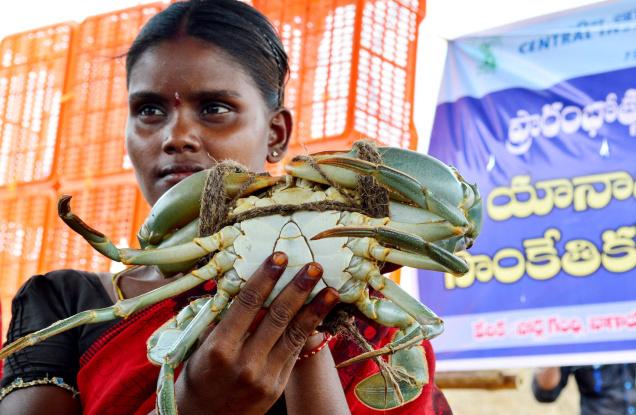
Yanadis sensitised on crab fattening technology

A Yanadi tribal woman displays a mangroove crab during a demonstration on crab fattening technology organised by the Central Institute of Brakishwater Aquaculture at Sorlagondi in Krishna district. - Photo: T. APPALA NAIDU
A Yanadi tribal woman displays a mangroove crab during a demonstration on crab fattening technology organised by the Central Institute of Brakishwater Aquaculture at Sorlagondi in Krishna district. – Photo: T. APPALA NAIDU

Under the ST sub-plan, the CIBA takes up a pilot project to provide technology support to tribal families in Sorlagondi

A team of scientists of the Central Institute of Brakishwater Aquaculture (CIBA), Chennai, on Saturday introduced the ‘crab fattening technology’ through floating cages to the Yanadi tribal families to help the latter grow Mangrove Crab (Sylla serrata) in Sorlagondi Reserve Forest area in Krishna District.

As a part of the ST Sub-Plan, the CIBA has taken up a pilot project to provide the technology support to the selected ten Yanadi tribal families in Sorlagondi village. The project will be expand it to the other eligible beneficiaries in the State, later. As a part of the programme, scientists– K. Ambasankar, J. Syam Dayal, C.P. Balasubramanyam and M. Kailasan–demonstrated the use of cages to Yanadi tribal families who are engaged in hunting of the crab in the estuary. The scientists also provided them 1,000 seed of Asian Seabass that would be cultivated in the ponds in the tribal area.

“Crab fattening technology helps the hunters raise young and soft crabs until they grow to a certain hardness at which it would fetch remunerative price in the market. However, barely two to three weeks are required for a soft crab to become hard one,” Mr. Bala Subrahmanyam told The Hindu.

According to experts, crab is being sold at Rs. 1,200 a kg in the India’s biggest crab market Chindradripet in Chennai. From Chennai, it is being exported to South East Asian countries. “The CIBA aims at promising better livelihood option to tribal families by moulding them into entrepreneurs,” said the scientists.

New technology

Yanadi tribal families of Sorlagondi Reserve Forest hunt mangrove crab in estuary, backwaters and brackish water, largely in mangrove forests. They completely rely on local market in Nagayalanka. The CIBA scientists also began a detailed study on the catch of the crab in a bid to estimate its population roughly before introducing next stages of technology in crab fattening.

source: http://www.thehindu.com / The Hindu / Home> News> Cities> Vijayawada / by T. Appala Naidu / Sorlagondi (Krishna) – July 21st, 2014

Cage fish farming at sea catching up in coastal AP

Visakhapatnam :

At a time when fish stocks are declining globally due to various factors like climatic change and pollution, cage farming of fish on sea, an aquaculture technique, has thrown up an encouraging alternative that yields 10 times the fish catch as compared to fish reared in ponds or wild harvest in the sea.

This technique has also been taken up to great success in Vizag and other coastal districts of AP on an experimental basis by scientists of the Visakhapatnam Regional Centre of the Central Marine Fisheries Research Institute (CMFRI).

In Krishna district (Nagailanka) and Narsapuram (West Godavari), cage farming has been taken up in collaboration with fishermen, while in Vizag the cages in the sea along RK Beach are controlled by the CMFRI. There are six cages in Krishna, 10 in West Godavari and eight in Vizag district of AP. Plans are afoot to double the number of cages in Vizag soon given the good prospects, said CMFRI scientists.

Though open sea cage culture technology is a relatively recent activity in India, it is prevalent in other Asian countries. While lobster, Asian seabass, mullets, Cobia and Pearl Spot have been successfully harvested by CMFRI in various coastal waters in India, at present the Vizag centre of CMFRI is maintaining brood stocks of Orange Spotted Grouper, Indian Pompano, Snappers and Golden Trevally in cages that have all shown good growth and maturation, said scientists.

Under this procedure, fish rearing is done in an enclosed area in a natural aquatic environment where the water continuously flows and debris doesn’t accumulate, which is why there is no pollution or ammonia deposition as in the case of stagnant and low density water ponds. The young ones of fish and other aquatic species are kept, fed and grown to marketable size in these cages, which are of six metre diameter and made of high density polyethylene.

“Cage farming is in an infancy stage now, but the prospects for commercial exploitation are so good that we are planning to double the number of cages soon as well as expand to other neighbouring areas. At the end of the culture period, which ranges from six to eight months, three to five tonnes of fish are produced just from one cage,” said Subhadeep Ghosh, senior scientist and scientist-in-charge at CMFRI.

The biggest advantage of cage farming, according to Prof K Sujatha, chairperson, board of studies, department of marine living resources at AU, is that despite being a fish culture technique there is no need to change the waters as sea water continuously flows through the cages, there is some natural food easily available for the fish to feed on and there’s no need to put up any time or space-consuming infrastructure except the cages.

However, she pointed out that not all areas are suitable for cage farming. “There needs to be optimum depth of at least 10 metres from the shore, the sea should be more or less calm without high waves and currents where the cages are located. The salinity, pH, ammonia, nitrate should be all within permissible limits,” she explained.

source: http://www.timesofindia.indiatimes.com / The Times of India / Home> City> Visakhapatnam / TNN / July 17th, 2014

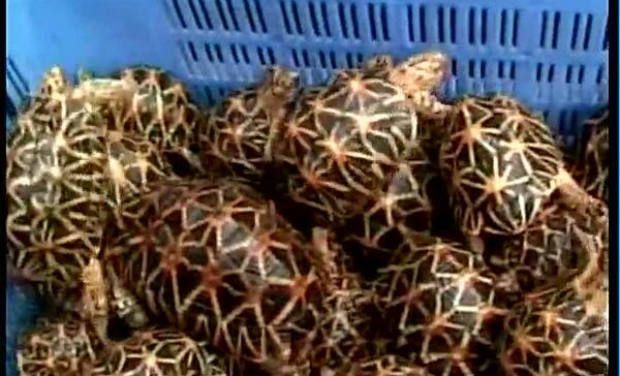
Record number of star tortoise bred

Star tortoise
Star tortoise

Srikakulam:

 A record number of star tortoises have been produced in captive breeding at Srikurmam temple nesting site in a span of two weeks. In total 55 star tortoises hatchlings were produced in one enclosure which is a world record. Earlier. In 1990 a total of 50 hatchlings were produced at the Gladis zoo park in the US, said Green mercy and NGO representative and temple officials.

Devotees believe that Lord Maha Vishnu is in the form of a start tortoise in his second avatar as Kurmanadhudu which is attracting peoples’ attention symbolically. The news of the record hatching has attracted the attention of the devotees who are queuing up at the conservation site.

source: http://www.deccanchronicle.com / Deccan Chronicle / Home> Nation> Current Affairs / DC Correspondent / July 20th, 2014

Now, a cow university for Guntur

Guntur :

After IIT, IIM and AIIMS, Andhra Pradesh is going to be feathered with a rare project.

A first-of-its-kind university dedicated to conserving cows is coming up in Guntur.

International Society for Krishna Consciousness (Iskcon) has planned to set up a cow university near Kondaveedu where it is constructing a prestigious Krishna temple. The very idea behind the setting up of a cow university is to protect aging cows while providing employment to illiterate village youth.

“This is for the first time in the world that a university to teach how to earn while conserving disappearing cows is being set up,” Iskcon representative Ravindra Krishna told TOI.

He said that they would be launching a gosala (shelter for cows) costing Rs1 crore at Kondaveedu on July 13 and works for setting up the university would begin soon.

“Cow is a wonderful gift given by God to the humankind. It would keep helping us earn till its death,” he explained.

He also said that they would teach how to make medicines and other value addition products even from cowdung and the urine of an aged cow, adding that a youth could make at least Rs 30,000 per month if he could acquire 20 old cows which were being sent to slaughterhouses.

He said that Guntur district was chosen for the project because farmers here were using high quantities of pesticides causing severe damage to the health of humankind. He said that such pesticides could be replaced with bio-pests made of cow products.

Iskcon South India chief, Satyagopinath Das said that Puri Jagannath Rathyatra would be conducted in Guntur from Iskcon temple to Sri Venkateswara Vignana Mandiram on July 14.

source: http://www.timesofindia.indiatimes.com / The Times of India / Home> City> Hyderabad / by M N Samdani, TNN / July 12th, 2014