Category Archives: Nature

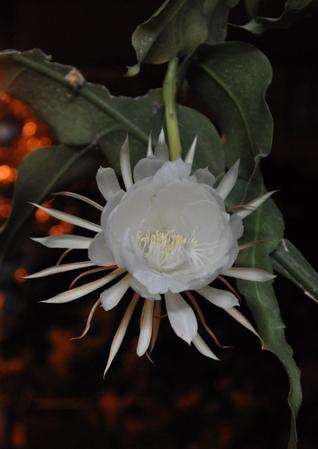
‘Brahma Kamalam’ in full bloom

Brahma Kamalam flower in full bloom at a residence in Varadaraja Nagar in Tirupati. Photo: K.V. Poornachandra Kumar / The Hindu

‘Brahma Kamalam’ made a surprising appearance in the Bonsai garden of Lakshmi Bharathi, a resident of Varadaraja Nagar in Tirupati on Saturday night.

The blossoming of the flower is a rare event, given the fact that it is believed to be endemic to the Himalayan region. However, it is nothing new to Ms. Bharathi, a member of the Bonsai Club, as the flower did bloom in her courtyard on October 10, 2007.

The sapling was given much earlier to her by a priest at Kedarnath temple during her Himalayan yatra. The flower did not bloom for several years in spite of her best efforts to nurture it, make her lose hope. “But one day in 2007, it was suddenly in full bloom. After that, it blossomed only now,” Ms. Bharathi told The Hindu. The snow white flower has a sweet fragrance and is known to grow only in the pure water and pristine environment at the Himalayas. “We pour water purified through Reverse Osmosis technology to this plant,” she added. The rare flower is drawing neighbours and strangers alike to her courtyard.

source: http://www.thehindu.com / The Hindu / Home> News> National> Andhra Pradesh / by A. D. Rangarajan / Tirupati – October 13th, 2014

Fishing activity resumes at Masula coast

Barely hours after Hudhud made landfall close to Visakhapatnam, fishing operations resumed in parts of Krishna district on Monday. The fishing activity along the coast of Andhra Pradesh has come to a standstill since the weathermen alerted about the storm.

Spared by the Hudhud without any damage to crops or fishing materials, fishermen in few locations including Nagayalanka on Monday returned to the sea, via backwaters of Krishna near the latter’s confluence point.

However, the Gilakaladindi harbour authorities have announced warning number three on Monday, suspending fishing activity.

Speaking to The Hindu, Gilakaladindi fishermen said that they were gearing up for fishing from Tuesday. “Hudhud had no impact on Krishna district including the strategic coastline. We have no reports of damage of standing paddy fields or fishing material,” Hudhud In-charge of Machilipatnam coast A. Varaprasada Rao told The Hindu. However, a field level team was roped in by the government to stay in the villages to register any damage claimed by the local communities.

source: http://www.thehindu.com / The Hindu / Home> News>Cities> Vijayawada / by Staff Reporter / Gilakaladindi (Krishna) / October 13th, 2014

Get ready for a taste of Vizag apples!

Forget apples from Jammu & Kashmir and Himachal Pradesh, soon apples from Visakhapatnam district could give them a run for their money. Hilly areas of the district are emerging as a fertile ground for cultivation of apples, which have hitherto been restricted to orchards in the chilly climes of J&K, Uttarakhand, HP and Arunachal Pradesh.

The first seeds of apple cultivation were sown by chance by Bobbili Rambabu, a tribal from the Visakhapatnam Agency area, four years ago when he tossed a few apple seeds in the backyard of his house at Lambasingi, where temperatures are known to dip below 0 degree Celsius during winter. The trees have now borne fruit, alerting researchers to the possibility of growing this delicious fruit in Visakha Agency.

Dr. N Venugopala Rao, assistant director, Regional Agriculture Research Station (RARS) at Chintapalli, said apples generally grow in the Himalayan belt because of cold temperatures, which is why places such as Lambasingi in Chintapalli mandal are also ideal for apple cultivation. He said a team of scientists from the Hyderabad-based Centre for Cellular and Molecular Biology (CCMB) visited Lambasingi in December last year to study the feasibility of growing apples. As part of the study, they planted 100 apple saplings, shipped in from the Himalayas, over nearly one acre on the RARS premises.

Another RARS scientist, Dr. B Uma Maheswara Rao, said select varieties of apples from Shimla have been planted on an experimental basis. “While the apple trees planted by tribal Rambabu have already yielded positive results, the plants cultivated at RARS are just 10 months old. We will start studying the potential when they reach three years of age,” Rao said.

According to him, mandals like Chintapalli, Pedabayalu, G Madugula and even the tourist hotspot of Araku are suitable for apple cultivation as they are all located at high altitudes and the temperature is always below 15 degree Celsius. “After studying the apples growing on Rambabu’s tree, we feel that Vizag is suitable for apple plantation. Tribal pockets that are already cultivating coffee and pepper are viable for apple trees too because of the favourable climatic conditions. At present, coffee is being cultivated in nearly 1.5 lakh acres in the tribal pockets. If the state government pays special attention, Vizag can emerge as a fertile ground for cultivating unique commercial crops like apples,” Rao added.

A horticulture department officer, who refused to be named, said if apple cultivation takes off in a big way in the district, they might think of including apples in the list of local crops, which also includes the globally renowned Araku coffee.

While G Prabhakara Rao, assistant director (horticulture), said the department would put its weight behind the endeavour once the RARS scientists issue a no-objection certificate for apple cultivation in the district, R Lakshmanudu, joint director, agriculture marketing, said they would provide marketing support for Vizag apples.

Meanwhile, tribal farmer Biddika Kamsu said that instead of proposing projects like the Tribal University for the Agency area, the government should focus on allocating funds for growing unique plants. “Visakha Agency is one of the biggest agencies in the state and is most viable for plants like pepper, coffee, pineapple, strawberry, turmeric, rajma, broccoli, ginger and carrot,” Kamsu said.

Apples in your backyard

* Apple cultivation started by chance by Bobbili Rambabu, a tribal farmer from Lambasingi in Chintapalli mandal of Vizag Agency area, four years ago when he tossed apple seeds in his backyard. The trees have now borne fruit

* Scientists from CCMB visited Lambasingi in December last year to study the feasibility of growing apples. They planted 100 saplings shipped in from the Himalayas

* Officials say mandals like Chintapalli, Pedabayalu, G Madugula and even Araku are suitable for apple cultivation as they are all located at high altitudes, with temperature always below 15 degree Celsius

source: http://www.timesofindia.indiatimes.com / The Times of India / Home> City> Hyderabad / TNN / October 09th, 2014
Farmers keen to practice Israeli farming methods

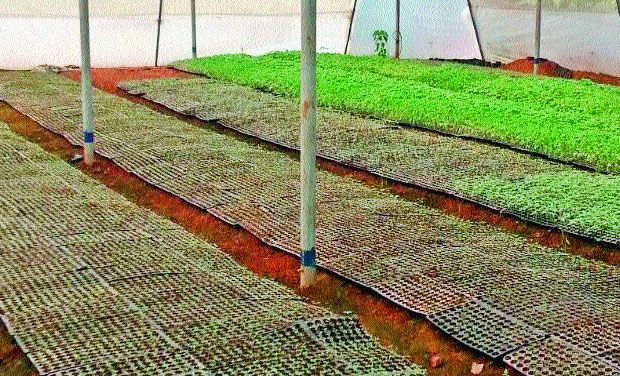
Nurseries at Guntur-Vijayawada national highway near Tadepalli mandal in Guntur district. (Photo: DC)

Vijayawada: 

A few farmers in Guntur district are slowly adopting the Israeli farming techniques to grow hybrid saplings, seeds and crops. The Israeli farming technique, which is gaining popularity among farmers helps to increase the productivity using less space as well as less water when compared to that of traditional farming, which is largely followed by farmers.

The techniques can be used to produce anything from seeds to final products like vegetables and fruits.

Kallam Narendra Reddy, a 51-year-old farmer in Penu-maka village of Tadepalli mandal in Guntur district, started to use Israeli farming methods putting aside his two decades experience in traditional farming.
Mr Reddy grows saplings and seeds for variety of vegetables and flowers including cauliflower, papaya, plantain, brinjal, drum sticks, cabbage, tomato and others in his 2-acre land.
“With an initial investment of `12 lakh, I started to grow saplings in the one-and-a-half acre land in two different methods. While one is under nets another is under special poly house,” said Mr Narendra.
Many of my colleagues ventured to start farming in this method but stepped back as there is no support from the government, he added.
Best advantages of growing hybrid crops in trays under the specially designed houses is that productivity could not be affected by the climate and can be grown in any season of the year.
Meanwhile, the state government has no plans to encourage such farmers and provide facilities for them. Farmers have appealed to the government authorities to provide raw materials and export facilities so that more number of farmers can adopt the Israeli technique.
“Though it is one-time investment we have to spend some lakhs to start it. If the government recognizes this method and encourage farmers we can produce more number of crops,” said Mr K. Aadi Narayana, a farmer in Yerabalem village near Magalagiri.
source: http://www.deccanchronicle.com / Deccan Chronicle / Home> Nation> Current Affairs / DC Correspondent / October 07th, 2014

Port City Farmer’s ‘Amrutam’ Variety Set to Rule Mango World

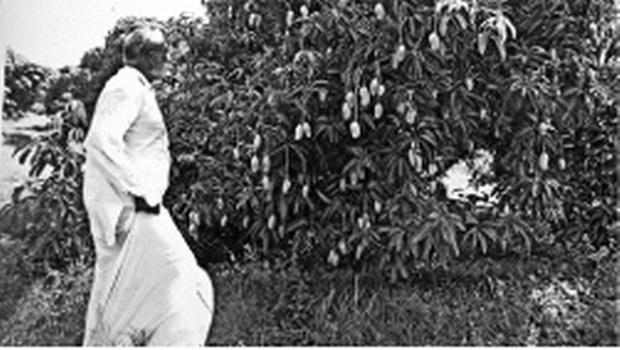
Kongara Ramesh at his mango orchard at Tarluwada village in Visakhapatnam district | Express Photo

Visakhapatnam :

Amrutham Ice Fruit Mango, a new variety of the king of fruits, developed by a scientist Kongara Ramesh, is entering the international markets including the United Arab Emirates, the US and several other countries. This is the first mango created by a farmer using cross-pollination technique and can be frozen and eaten in all seasons. The uniqueness of the new mango variety is that it can be eaten like an ice fruit by peeling off its skin.

The new variety was developed three years ago after a 12-year experimentation by Ramesh. In the last three years, he planted the saplings extensively to estimate its yields. Now, Ramesh is taking care of 50,000 saplings at his own nursery at Tarluwada village in Anandapuram, just 28 km away from Visakhapatnam city.

Ramesh developed the variety by cross pollination between Amrapali and Chinnarasalu mango varieties, which are very sweet and can be frozen at sub-zero temperatures.

The Amrutham Ice Fruit Mango has been selected for the world horticulture show to be held at Germany in February, 2015. “It will be the first step to market Amrutham globally. I’m sure this will bring huge foreign currency to the country,” a proud Ramesh says.

Mass Cultivation

After the great success of Amrutham, Ramesh is wasting no time for mass cultivation of the fruit. Making use of all the 100 trees he raised initially, he had developed a nursery of about 50,000 saplings aged between six months and two-and-half years. As many as 600 trees can be raised in an acre and they will bear fruit in about three to four years. The yield of the fruit is 15 tonnes per acre. Except for using organic manure in the first year, the trees need no special care.

Assured Yield

Amrutham starts flowering from November. If the flowers are damaged in November, the cyclone season, it starts flowering in December and January with an assured yield of 90 per cent. Ramesh has also developed another variety called ‘Swagatham’. The speciality of the fruit is its aroma. One fruit of Swagatham’s aroma pervades the entire house. The variety was developed by cross-pollination between Imam Pasand and Chinna Rasalu.

Export Potential

Ramesh has plans to export the Amrutham Ice Fruit Mango to several countries. A large number of Telugu NRIs and foreigners are making enquiries about the fruit. However, surprisingly, neither the state government nor the Union Ministry of Commerce and Industry visited the place to take further steps for bulk cultivation.

The Man Behind the Magic Fruits

A Guntur-based farmer and homoeo doctor settled in Visakhapatnam about 15 years ago, Ramesh started his own research at a 40-acre land owned by a private company. Having great interest in the mango crop and its varieties, Ramesh developed his ideas by cross-pollinating Andhra’s most popular mango Nuziveedu Chinnarasalu with North India’s famous variety Amrapali. He displayed it at the All India Horticulture Exhibition held in New Delhi last year, where a large number of foreigners tasted it and lauded it. Ramesh also sold the fruit in Vizag market. Agriculture and Processed Food Products Export Development Authority witnessed the variety and congratulated Ramesh, who is set to market the fruit on a large-scale from the next season.

source: http://www.newindianexpress.com / The New Indian Express / Home> States> Andhra Pradesh / by VKL Gayatri / September 24th, 2014

City gets Andhra’s first snake saver society

Visakhapatnam :

For the first time in Andhra Pradesh, a Snake Saver Society (SSS) has been formed exclusively for protecting snakes and generating public awareness. With widespread misconception and fear resulting in many snakes getting killed, some snake lovers got together to set up the society and a snake rescue habitat, which was launched at Gajuwaka on Monday. The society will also impart training to those interested in catching snakes and releasing them into the safety of forests.

Certified snake-catcher from Andhra and SSS president Rokkam Kiran Kumar, said, “The aim is to generate awareness about snakes and train people in snake catching. We will be collaborating with the forest department and GVMC in this regard. We already have 16 members, who will visit schools, industries, residential colonies and surrounding villages to educate people.”

According to experts, only four of the snake varieties found in Vizag and the surrounding Eastern Ghats are poisonous — viper, cobra, krait and branded krait. The rest are non-venomous but end up getting killed when they venture into residential areas.

“Snakes are an important part of the environment. They they kill rats and prevent them from destroying crops,” said Kiran, who has saved 17,000 snakes in the past decade. SSS secretary Nageshwar Rao said 10 people are being trained to catch snakes in the city. “If you spot snakes, don’t kill them. Call the snake helpline: 9849140500,” Rao said.

source: http://www.timesofindia.indiatimes.com / The Times of India / Home> City> Visakhapatnam / TNN / September 16th, 2014

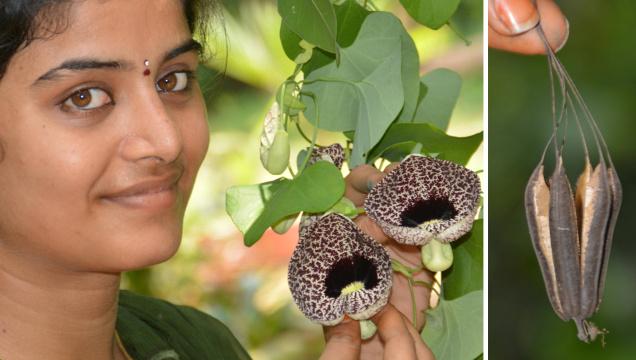
Calico flower

Amateur naturalist and student of B.Sc Botany Pavani holds a Calico flower, a native flower of Brazil, that bloomed at the Biodiversity Park at the RCD Hospital compound in Visakhapatnam. Photo: C.V. Subrahmanyam / The Hindu

Amateur naturalist and student of B.Sc Botany Pavani holds a Calico flower, a native flower of Brazil, that bloomed at the Biodiversity Park at the RCD Hospital compound in Visakhapatnam. Photo: C.V. Subrahmanyam

source: http://www.thehindu.com / The Hindu / Home> News> Cities> Visakhapatnam / September 15th, 2014

Woman comes up with out of the box farming techniques

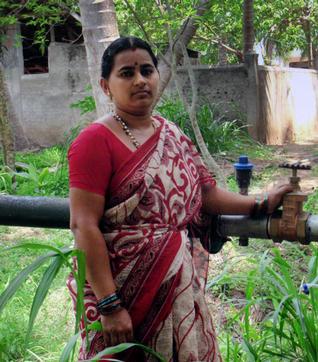
Woman farmer G Mythili at her farm in Ambajipet mandal of East Godavari. PHOTO: By Arrangment / The Hindu

Garimella Mythili Subrahmanyam, a woman from a traditional Brahmin family, is making strides in the field of farming by using innovation to the fullest. Ms. Mythili, a native of Kotivari Agrharam in Amabjipet mandal of East Godavari district in Andhra Pradesh, completed her graduation and entered farming as a result of adverse circumstances. She has also completed her diploma in computer education.

Having cultivated coconut in about 2 acres of land in the village, Ms. Mythili started thinking of out-of-box ways to improve yield and revenue. As a first step, she bought a cow which met the requirement of her family for milk and curd, thereby reducing cost.

As the cow used to give only two litres of milk per day, she replaced it with another that gave better yield. At present, she has four cows and three calves.

While increasing the number of cattle, she simultaneously focused on gobar bio-gas plant, which has reduced the cost of purchasing cooking gas. She was also instrumental in encouraging more than 80 farmers to install bio-gas plants in their backyards. “I was presented an award for using cow urine to produce bio-gas. We made an arrangement in our backyard whereby the cow urine directly flows into a tank,” she told The Hindu.

Ms. Mythili has also received the International Society of Extension Education Award in the past.

She was here at International Crops Research Institute for Semi Arid Tropics (ICRISAT) to receive an award from Director General William Dar for her innovative practices in farming.

Ms. Mythili is cultivating four varieties of grass in her coconut farm, a rare practice. She also supplies grass seeds to farmers who approach her and explains how they can cultivate it in the fields.

“I love cows as they serve humanity better than many animals. We can continue farming depending on cows rather than on pesticides and fertilizers,” she says.

source: http://www.thehindu.com / The Hindu / Home> News> Cities> Hyderabad / by R. Avadhani / Patancheru (Medak District) – September 16th, 2014

History literally comes back to life

The government has sent enough feelers that the Vijayawada, Guntur, Tenali and Mangalagiri (VGTM) region on the banks of the Krishna will be a suitable location for capital. / The Hindu

Banks of Krishna river back in news after 2,300 years. Later, the separatist Telugu movement by the legendary Potti Sriramulu and Tenguturi Prakasam Pantulu led to the first Andhra state on linguistic basis with Kurnool as capital in 1953.

Call it coincidence or design, river Krishna is back to some historical significance. Andhras built Amaravati, on its banks, as capital city way back in 3 Century BC and now with the report on Sivaramakrishnan Committee on capital is out, the government has sent enough feelers that the Vijayawada, Guntur, Tenali and Mangalagiri (VGTM) region will be a suitable location for capital.

Incidentally, VGTM, if decided, probably happens to be the 13 capital location of Andhras who had their first capital here centuries ago. Andhras were never at peace as far as the capital city is concerned. As per known history referred in the ancient Sanskrit Indian text Aitareya Brahmana (800 BC), the journey of the Telugu speaking people that began with Assaka Maha-Janapada settlement between Godavari and Manjeera rivers in southern India served as the first capital of Andhras.

The capital was then shifted to Dharanikota (present Amaravati) during 2 century BC to 2 century AD under Satavahana rulers who ruled most of the country from here. It was then shifted by Ikshvaku dynasty to Vijayapuri (Nagarjunakonda) on the banks of Krishna in the same century. The capital was again shifted to Kanchipuram in Tamil Nadu during Pallava rule from 4 to 6 century. Later, it was Kodur, Kapotapuram, Vengi and Vinukonda which served as capital cities during the rule of Bhihatpalayanas, Anandagotrikas, Salankayanas and Vishnukundins.

The seventh capital took shape at Warangal during the rule of Kakatiya and Chola dynasties for a robust 600 years. Then was the golden era of Srikrishnadevaraya’s Vijayanagara empire with Hampi in Karnataka as capital during which period Telugu was regarded as the best of the languages in the country. However, the capital for Andhras was torn between Hampi and Golconda/ Hyderabad followed by Madras Presidency under the British till Independence.

Later, the separatist Telugu movement by the legendary Potti Sriramulu and Tenguturi Prakasam Pantulu led to the first Andhra state on linguistic basis with Kurnool as capital in 1953. Later, the same was merged with Hyderabad after the Nizam dynasty gave in to the Indian government in 1956. While Hyderabad remained as the capital city of Telangana post division of the Andhra Pradesh in February, 2014, the rest of the region which retains the original name is scouting for the capital city.

However, historians opine that selection of VGTM for capital is more of the political convenience than a historical significance. “Historically Andhras or Telugu people had many capitals under several dynasties. The region near Amaravati is just a political decision and no historical perspective to it,” said Professor of History V. Ramakrishna of Hyderabad Central University.

source: http://www.thehindu.com / The Hindu / Home> News National> Andhra Pradesh / by Appaji Reddem / Vijayawada – September 03rd, 2014

Welcome initiative by Rotary for women

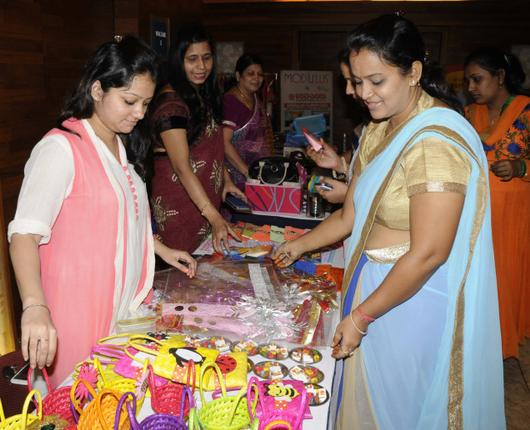
Women browsing through handcrafted wares at 'Tambola Mela' organised by Rotary Club Visakhapatnam Central to raise funds for setting up of low cost sanitary napkins unit at Four Points Hotel on Monday in Visakhapatnam. Photo: C.V. Subrahmanyam / The Hindu
Women browsing through handcrafted wares at ‘Tambola Mela’ organised by Rotary Club Visakhapatnam Central to raise funds for setting up of low cost sanitary napkins unit at Four Points Hotel on Monday in Visakhapatnam. Photo: C.V. Subrahmanyam / The Hindu

The club to set up a low-cost sanitary napkin machine in the city. RCVC has drawn up an inclusive programme to involve as many women as possible and take forward the message of menstrual hygiene to rural girls and women, housemaids, vendors, ‘dhobis’ and all those who belong to less-privileged sections of society.

There is a lot of stigma attached to menstrual hygiene and women often prefer hushing it up for a variety of reasons. Brining it out of the closet and reaching out to scores of women, particularly the rural women, Rotary Club Visakhapatnam Central (RCVC) has decided to set up a low-cost sanitary napkin machine for the first time in the city under its ‘Mother and Child Project’.

The unit will be sourced from Coimbatore in a couple of months as the club members approached founder of Jayaashree Industries A. Muruganantham, the man behind the campaign for affordable sanitary napkins, for the equipment who gave an instant nod to the proposal.

RCVC has drawn up an inclusive programme to involve as many women as possible and take forward the message of menstrual hygiene to rural girls and women, housemaids, vendors, ‘dhobis’ and all those who belong to less-privileged sections of society.

According to a recent study, more than 60 per cent of women in rural areas cannot afford sanitary napkins. As a result, most of them resort to other ways which are unhygienic. “This is leading to increased incidence of reproductive diseases, gynaecology related problems, cervical cancer and maternal mortality among women. To address the issue and provide a better option, we are empowering the members of Sampoorna – rehabilitation centre for the physically-challenged — with the vocational training programme of manufacturing sanitary pads,” RCVC president Sonia Gupta.

Training

Trainers from Jayaashree Industries, Coimbatore, would be arriving in the city shortly to train the team.

With the total project cost of making 1,500 napkins per day amounting to Rs.5 lakh a year, the club members have decided to shoulder the responsibility of marketing and financing and make sure the product is accessible to the masses. “The project aims at educating the women of lower-strata, facilitating skill development programme and providing quality sanitary napkins at Rs.2 per piece,” says Althaf Babjan, secretary of the club.

source: http://www.thehindu.com / The Hindu / Home> News> Cities> Visakhapatnam / by Rani Devalla / Visakhapatnam – September 09th, 2014