Category Archives: Inspiration /Positive News and Features

Vaatsalya Hospital, Ongole Conducted Free Urology Camp On 28th February 2012

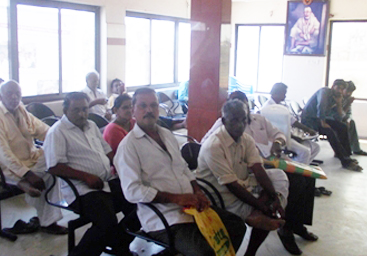
Dr. K Noel John examining a patient during the camp

A total of 40 people attended the camp

Vaatsalya Hospital, Ongole conducted free urology camp on february 28th 2012. This camp was highly successful and well received by Ongole citizens with 40 people registering. Dr. K Noel John, Consultant Urologist – Vaatsalya Hospital, Ongole examined all the 40 patients who were attended the camp.

Vaatsalya also provided free urine routine test and gave 50% discount on abdomen ultrasound scanning to all the attendees.

source: http://www.Vaatsalya.com / Wednesday, February 29th, 2012

Cancer Awareness Program

Bala Vedhika, Kakinada has conducted a Cancer awareness program here on Saturday at Recharlapeta Municipal Corporation School in Kakinada.

Speaking on this, School Head Master, Mr. V.Lakshmi Narayana explained about the causes & symptoms for this dangerous disease. He stated that total 76 Lakhs people per year are being effected by Cancer disease in the country. He said that it can be prevented in the starting stage, so every one should be aware about the symptoms to identify the disease.

Mr. N.Balarama Krishna, Mr. T.Ratna Shekar, Mr. Rabbani, Sridevi, Karuna and others participated in the program.

source: http://www.inkakinada.com / February 05th, 2012

Mahesh Babu is 5th most desirable man in India

New Delhi, Feb 6 (TruthDive):

Mahesh Babu has been voted as the 5th Most Desirable Man in India in a nationwide poll conducted by Times of India. Keep going Mahesh!

Mahesh Babu was the only Star from Tollywood who found the place in this National list which is majorly populated by Bollywood and Kollywood Stars.

India’s well reputed Times Network has conducted an opinion poll in India to find the Times Fabulous 50 Most Desirable Men & 50 Most Desirable Women of 2010.

This list will be decided based on the most desired, beautiful, sexy, successful and popular personalities in India through Online voting to set the DQ (Desirability Quotient) which ended on December 31 on which nearly 3 Lakhs people voted for their Fab.

Mahesh Babu was one among the three Telugu actors who were short-listed among the Top 50 list. The other two were Rana Daggubati and Siddharth.

Mahesh Babu is on a new high post two blockbusters – Dookudu and Businessman. Moreover, his brand value has increased manifold over the past couple of years. Now with him being ranked among the most popular actors in the country, it is yet another proof of his charismatic appeal and massive fan following. He has scaled the ladder from 12th position last year to fifth spot this year. Great going Mahesh!

With seeing a good improvement in the most desirable man status, the prince of Tollywood has set a new goal and has begun.

Well, it is heard that Mahesh’s next target is to bag the National Award. Apparently, he has seen enough with the likes of ‘Pokiri’ and ‘Businessman’. While the commercial string of flicks still continues, reports say Mahesh wants to get into the league of performers and prove his mettle as an actor.

Indian skipper Mahendra Singh Dhoni is next to Mahesh Babu in the placing.

New entrant Daggupati Rana of Tollywood is in the 20th place,

source: http://www.TruthDive.com / Entertainment> Exclusive> News / by Kanchana Devi / February 06th, 2012


Global Engagement Fund Awards

The Office of the Provost announces 17 awards from the Global Engagement Fund. This Fund is designed primarily to support projects that collaborate across Schools and disciplines; involve multiple faculty members; engage regions in which Penn has active academic partnerships and collaborative ventures, such as China and India; or represent academic and thematic priorities, such as sustainability or neuroscience.

Proposals were reviewed by a faculty committee according to criteria of scholarly merit and significance for global research, teaching, and service. The 17 awards encompass 11 of Penn’s 12 Schools and involve engagement with at least 15 countries outside the US.

Proposals for the next round of funding are due March 2, 2012. The Call for Proposals can be found here.

The Fall 2011 Global Engagement Fund Awards are:

Student Activities and Courses

  • Michael Knoll (Law), research seminar on contemporary Islamic finance
  • Carol Muller (SAS), expansion of study abroad program in Grahamstown, South Africa
  • Monroe Price (ASC), seminar on methods of monitoring and evaluation in international development

Research Projects and Collaborations

  • Linda Aiken (SON), collaboration with Katholieke Universiteit Leuven on the impact of nursing on patient outcomes in sixteen countries
  • Charles Branas (PSOM), expansion of Penn’s engagement in Guatemala
  • Alison Buttenheim (SON), research on the use of incentives to increase participation in Chagas disease control programs
  • Femida Handy (SP2), research on philanthropy in India
  • Michael Levy (PSOM), collaboration with Universidad Peruana Cayetano Heredia and Peru Ministry of Health on control of Chagas disease in Arequipa, Peru
  • Rahul Mangharam (SEAS), collaboration with NIIT University in India on design and development of new machine-to-machine communication protocols
  • Daniel Raff (Wharton), research on the history of the Beijing housing market, 1644-1948

Conferences

  • Eugenie L. Birch (Design), David Galligan (Vet Med), Mauro Guillen (Wharton), Frederick Scatena (SAS), Marilyn Sommers(SON), Brian Spooner (SAS), Susan Wachter (Wharton), Food Security in a Rapidly Urbanizing World
  • Cherie Kagan (SEAS), Controlling Matter at the Nanoscale
  • Richard Leventhal (SAS), Evaluating the Past, Present, and Future of UNESCO’s Cultural Policy Program

Distinguished Visiting Scholars

  • Daud Ali (SAS), hosting Prof. R.V.S. Sundaram, from the University of Mysore, to teach Indian language and literature
  • James Ferguson (Vet Med), hosting Profs. Yao Junhu and Jun Luo, from Northwest A&F University, and Prof. Y. Ramana Reddy, from the College of Veterinary Science in Hyderabad, to work with faculty in the Center for Animal Health and Productivity on methods of sustainable ruminant production
  • John Jackson (ASC/SAS), hosting Prof. Tudor Parfitt, from the University of London, a leading interdisciplinary scholar of Africana, African, and Jewish Studies
  • Charlie Johnson (SAS), hosting Prof. Yung Woo Park, from Seoul National University, an expert in nano-bio hybrid structures.

source: http://www.upenn.com / University of Pennsylvania / Vol. 58, No. 19 / January 24th, 2012


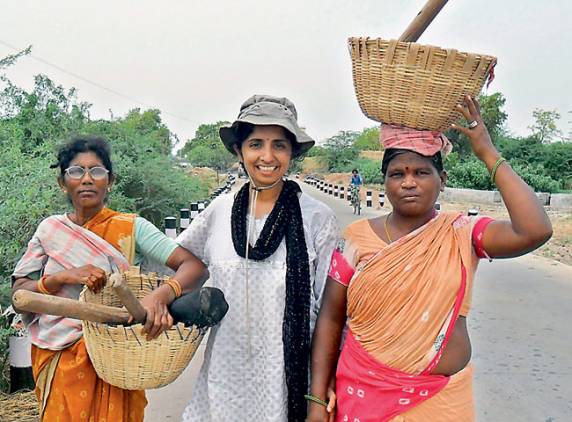
Puttaparthi girl from Oz gets sponsorship for water project

Saideepa Kumar grew up in the little town of Puttaparthi in the Anantapur district in the Rayalaseema region of the state, where water is very scarce. Ten years later, studying for a Master’s in water management in Australia, Ms Kumar has decided to do her research in the same region, where farmers face a constant water crisis. She gave up her career in IT to follow her heart and apply the knowledge gained in Australia to help farmers in her home district.

“After having worked in the IT sector, I quit my job and enrolled for a Master’s course in water management and undertook my research project in India,” she says, adding that her research study is a joint venture between the International Water Management Institute (IWMI) in Hyderabad and the University of Melbourne.

Ms Kumar’ research has been funded by the Australian Prime Minister’s Australia Asia Award. Australia has also witnessed severe drought-like conditions in the past one decade which led them to develop innovative ways to manage scarce water resources. “The study suggest solutions for efficient water use of canal system to address both drought and water logging situations by uniform distribution of water,” said an official.

The study focuses on the Srisailam Right Branch Canal (SRBC) commissioned in 2004 to provide canal water to drought-prone areas around Nandyal in the Rayalaseema region, which has scanty rain and over-exploitation of ground water. Though the canal system initially helped farmers, it also threw up new problems, as the study shows.

source: http://www.DeccanChronicle.com / Home> Channels> Cities> Hyderabad / DC / January 23rd, 2012


3 Hyderabad cops to get PM Medal for bravery

Hyderabad, January 24:

Nearly two years after the Park Hospital fire, three policemen including deputy commissioner of police (west zone) Stephen Ravindra, will be presented with the Prime Minister’s Medal for Life Saving for their heroic act in rescuing scores of patients and staff who were trapped in the inferno. Stephen Ravindra, who was Punjagutta police inspector then, M Malla Reddy, currently DSP (CID) after promotion, and constable G Siva Sudhakar Rao were involved in the rescue act. Two other civilians also took part in the heroic act and won accolades.

“At a time when even the fire services personnel were finding it difficult to enter the premises with thick smoke engulfing all the floors, the police officers showed exemplary courage,’ city police commissioner AK Khan said here on Sunday. The policemen entered the second floor of the hospital by scaling the drainage pipe, broke the windowpanes and rescued patients in the Intensive Care Unit (ICU). Some of the patients were not in a condition to move while some others were in anaesthesia but they were nevertheless saved by the policemen. The only casualties were two nurses and a patient who died from suffocation.

“Recognising their act, we have sent a proposal to the Centre and it was accepted. The trio will be presented the medal at the All India Police Duty Meet to be held at Nashik in Maharashtra in February,” Khan said.
3 Hyderabad cops to get PM Medal for bravery

This is probably for the first time that policemen from the city, particularly an IPS officer, got the award. Two other policemen, constables Veeraiah of Prakasam and Shaik Mahmood of Vijayawada were also selected for the award for saving people in other incidents in their respective districts. Mahmood, however, died recently. Stephen Ravindra dedicated his achievement to the city police.

——Agencies

source: http://www.Siasat.com / Tuesday, January 24th, 2012


4000 Patients Benefited With Free Health Camp in Parkal

Parkal camp was HUGE success and set a new record for one day camp: 4000 patients were treated in a single day. It was a BIG event by any standard…. 4000 patients……. Rs. 12 Lakhs Medicines distributed (3800 prescriptions filled!!)….. 45 doctors…… 40 pharmacists……100 paramedicals…. 150 NSS volunteers….5 security…. 200 guests…….. 500 people lunch……1500 people Pulihora lunch…… Planning—Coordination–Execution….EXCELLENT. Patients were very happy (that’s the key factor)– doctors are happy too. Many said that camp was like a MODEL camp. Thanks to all teams!!.
———-
Warangal (December 24, 2011). A mega general health camp, sponsored and organized by NRI Dr. Samba Reddy, attracted huge crowd of patients from rural villages in Parkal in Warangal District. The out-patient medical camp, which was conducted with help of Lions club Dr. P. Vijayapal Reddy, IMA Warangal doctors, NATA doctors and local doctors, was held on December 24, 2011 at Govt. Junior College premises, from 9 AM to 4 PM.

The camp was inaugurated by Sakku Bhai (Dy Drugs Controller), AVN Reddy (NATA President), Dr. Samba Reddy (sponsor & organizer), Dr. Vijay Chander Reddy (IMA president-elect), Dr. Samba Siva Rao (DM&HO), Lions club and NATA team members.

A record number of over 4000 patients received medical treatments for various conditions. Originally planned for 1000 patients, but there was an overwhelming crowd of rural and poor patients from surrounding 25 villages within the Parkal Mandal headquarters. The organizers accommodated up to 4000 patients!!!

Whooping Rs. 12 Lakhs medicines, arranged by Dr. Samba Reddy, were distributed to an estimated 4000 patients at this camp. “Over 3800 prescriptions were filled at the Camp Pharmacy” said the Chief sponsor & Camp Organizer Dr. Samba Reddy. He is NATA Media Chair & Conference Secretary and took charge of conducting this health camp. Professionally, he is Associate Professor (College of Medicine), Texas A&M University Health Science Center, USA (see Biography).

Over 45 doctors from MGM hospital, Rohini hospital, various private clinics within twin cities of Hanamkonda & Warangal and also Parkal area participated and provided medical services to patients. More than 20 doctors are super-specialty doctors, including Orthopedics, Cardiology, Gastroenterology, Urology, Gynecology, ENT, Ophthalmology, Dermatology, General Surgery, Psychiatry, Dental and Oncology.

Over 400 lab diagnostics were performed including 250 blood tests, 120 HIV screening and 100 malaria screening (courtesy Vijaya diagnostics & District health office).

Camp pharmacy was inaugurated by Smt. Sakkubhai, Deputy Drugs Controller, who was the Guest of Honor for this camp. Medical and orthopedics wings were inaugurated by Dr. Buchi Reddy (Chairman, Rohini hospital) and Dr. Samba Siava Rao (DM&HO, Warangal), respectively.

The leading physician Dr. P. Vijayapal Reddy served as the convener of this camp. Lions Ch. Narasimha Reddy and K. Mallesham did good job as camp chairman and Lions club president, respectively. They coordinated bus transportation to patients from their villages.

Rs. 12 Lakhs Medicines Distributed

The pharmacy list consists of over 400 high quality medicines (from all therapeutic categories), which are supplied by reputed Pharma companies Dr. Reddy’s, Natco, Veritaz Aurabindo, Dynamite, Novostart, Sunrise International, and other companies. The camp organizer Dr. Samba Reddy arranged all medicines for this camp with help from his friends and colleagues.

Lunch provided to 500 people

All patients felt very happy with free treatment and more importantly with FREE medicines. Food (pulihora) and water packets were provided to patients (at least 1000 patients). Lunch was provided to all participating doctors (50), pharmacists (40) guests (50), and paramedical staff (100) as well as NSS volunteers (total over 500 people). Thanks to Dr. Vijayapal Reddy for hosting such nice lunch at guest house in Parkal.

Over 45 Doctors Participated in Health Camp
The following doctors participated/ helped FREE and not taken any consultation Fee.
NATA Doctors USA: Dr. Sanjeeva Reddy – Physician/Gastroenterology (USA); Dr. Swaroopa Reddy – Physician/General (USA).

IMA Warangal Doctors:

Dr. P. Samba Siva Rao – Physician (DM&HO), Dr. P. Vijay Chander Reddy – Orthopedics (MGM) –IMA president-elect, Dr. Ramesh Kumar – ENT (MGM), Dr. Ram Kumar Reddy – Orthopedics (MGM), Dr. Venkateshwarlu – Orthopedics (MGM), Dr. Sreedhar Raju – Psychiatry (Warangal), Dr. Narender Reddy – General (Hyderabad), Dr. Rajendra Prasad Reddy – Gynecology (Narsampet), Dr. Ragotham Reddy (Physician) – IMA secretary, Dr. Ashok Reddy (Pediatrics), Dr. Sheshu Madhav (Pediatrics) – IMA president, Dr. Buchi Reddy, Physician, Dr. Babu Rao, Physician, Dr. Narasimha Reddy, Physician, Dr. Surender Reddy, Urologist (MGM), Dr. Dilip Kumar, Dr. Manoj Kumar, Dr. Prasad, Dr. Hanmantha Rao, Dr. Praveen, Ophthalmologist, Dr. Sudheer (Orthopedics), Dr. Anwar (IMA treasurer), Dr. M. Ramana Reddy – Ex.DM&HO (Warangal), Dr. D. Sai Chander – PG/Pediatrics, Dr. Naveen Kumar, Dr. Sudhakar Reddy, Dr. Suhakar (surgery), Dr. Mohan Rao (RMO), Dr. Chandra Sekhar (MGM), Dr. Mallikarjun (Eye), Dr. Gopi. Plus 10 medical officers from DM&HO office on camp duty.

Parkal Doctors:

Dr. P. Vijayapal Reddy – Physician, Dr. Rajeshwer Prasad – Physician, Dr. Lalitha, DGO, Dr. Sanjeevaiah (Civil hospital), Dr. Samuel, Dr. Sarojana, Dr. Rama Devi, Dr. Venkata Laxmi, Dr. Rajani Kanth, Dr. Satyanarayana, Dr. Satyanarayana Reddy, Dr. Vidyasagar Reddy, Dr. Kashaiah – Physician/Pediatrics, Dr. Naveen, Dr. Sridhar, Dr. Raja Reddy . Plus 5 other local doctors.

Medical conference bags were provided to all participating doctors. NATA mementos were distributed to them.

Over 40 Pharmacists Dispensed Medications at the Camp

The pharmacist’s team consists of over 40 pharmacists. Medication dispensing was done under the supervision of Chief pharmacists Dr. Samba Reddy, Dr. Arutla Srinivas, Dr. Raghuram Reddy, D. Narender, Dr. Aruna Devi, Dr. Sakkhu Bhai, Dr. Gopi Reddy, Mr. Ramdan, Dr. Raghunandan, and junior pharmacists from Kakatiya University pharmacy colleges and pharmacy executives from Hyderabad. Over 3800 prescriptions were filled in a single day, a record number in camp pharmacy.

Over 100 Paramedical Staff provided patient services

Five types of paramedical staff (total 100) comprising Nurses, health assistants, PHC health workers, ANM students provided patient care services at the camp. About 50 people are from District medical office and 50 are students from local health Education College.

Over 150 NSS Volunteers provided patient coordination services

Four units of NSS volunteers (total 150 students) from GDC and other colleges within the Kakatiya University area have provided volunteer services with patient coordination at the camp site. This task was headed by 10 program officers and one NSS national coordinator Dr. Suresh Lal. Camp certificates are awarded to all volunteers and paramedical staff.

A total of 150 small mementos (by NATA), 50 big plaques, 300 appreciation certificates, 50 doctors bags, and 1500 medicine bags were distributed at the camp.

NATA Team members as Guests

The following NATA seva day team members participated in the camp: AVN Reddy, Dr. Swaroopa Reddy, Dr. Sanjeeva Reddy, Bala Indurti, Jithender Reddy, Harinath Medi and Anil Jyothi.

CHARITY EVENT FOR POOR PATIENTS

This camp is meant to help local poor patients from Parkal and nearby villages, said Dr. Samba Reddy. He is doing this with a service motto to his native village Cherlapally and other surrounding villages. It is a big motivation, so that other NRI and NGOs may come forward to do many such charitable events in rural areas in Warangal, said Dr. Samba Reddy, who lost his Mother recently due to illness.

He thanked all teams for making this camp a grand success for the benefit of poor and rural patients in Parkal area.

We got more medicines stored at Lions Club for future health camps, said Dr. Samba Reddy.

————
OVERALL… It was a BIG event by any standard..for 1 DAY CAMP….. 4000 patients….. Rs. 12 Lakhs Medicines ……. 45 doctors….. 40 pharmacists……100 paramedicals…. 150 NSS volunteers…… 100 guests…… 500 people full lunch……1500 Pulihora lunch.

Despite such MEGA camp with big numbers …. camp organization was smooth without much glitches.

This is due to 1-month plan, meticulous design and execution of camp in a very professional manner.

source: http://www.nataus.org / North America Telugu Association / December 24th, 2011


Raising bioethical standards

“If anything happens, individual participants should not be left alone to pay for the cost of treating injuries that directly relate to that research.”: Raju Kucherlapati. Photo: Special Arrangement/ The Hindu

Society has a commitment to subjects of clinical studies, says Raju Kucherlapati of Harvard Medical School

Last year archival research by Professor Susan Reverby of Wellesley College revealed that during 1946-48 United States scientists had conducted a series of macabre human experiments on vulnerable Guatemalans. The experiments, now widely acknowledged to be a gross violation of modern-day bioethics standards, saw a U.S. team headed by John Cutler, a U.S. Public Health Service medical officer, clandestinely infect Gatemalan prison and mental hospital inmates with sexually transmitted diseases such as syphilis, gonorrhoea, and chancroid to purportedly test the effectiveness of penicillin.

Following the publication of Professor Reverby’s research, the Obama administration issued an apology to Guatemala and subsequently Mr. Obama constituted a Presidential Commission for the Study of Bioethical Issues to delve into what happened in Guatemala and, equally importantly, what the current status of protections for human subjects of medical research is, and how those protections could be enhanced. The Commssion reported its findings earlier this month, and while it could not identify any risks that a Guatemalan-type operation would be conducted again, it did highlight several areas where protections could be strengthened.

The ideas emerging from the Commission’s report will influence the course of the growing debate around bioethics standards in developing countries such as India, where pharmaceutical companies and other institutions are expanding their clinical trials operations and not all subjects in such human experiments may be able to provide informed consent. In this context a member of President Obama’s high-level commission, eminent Indian-American scientistRaju Kucherlapati, spoke to Narayan Lakshman about the principles that the Commission outlined as comprising a basic framework for protecting participants in human-subjects research.

As the Paul C. Cabot Professor of Genetics and Professor of Medicine at Harvard Medical School, Professor Kucherlapati is not only considered an expert on questions of U.S. bioethics issues but has also played a vital role on the frontier of medical research in the Human Genome Project. Originally from Andhra Pradesh, Professor Kucherlapati received his B.S. and M.A. in Biology from universities in India, and his Ph.D. from the University of Illinois at Urbana. Edited transcript of the interview:

You are a member of President Obama’s Commission for the Study of Bioethical Issues and part of the team that produced this week’s report. Could you put the report in the context of the 1940s Guatemalan human experiments and explain how serious it is that the Commission found gaps in the current state of human subject protections?

As you probably know, the history of how the report came about was that Professor Susan Reverby from Wellesley College published a paper describing some of the events that happened in the late 1940s in Guatemala, which were done by one United States Public Health Service physician John Cutler. When those revelations came out President Barack Obama apologised to the Guatemalan government about the unfortunate events that happened and asked the Presidential Commission to do three things.

First, he wanted to have a full accounting of what happened in Guatemala. Second, he asked the Presidential Commission to consult with the international community and based upon those deliberations he wanted to ask whether we have adequate safeguards to protect human subjects in research studies conducted in the U.S. and abroad with federal support. So those were the charges for the Commission.

The Commission first wrote a report in September called Ethically Impossible, in a task to describe in detail what the Commission had been able to find out about the events that occurred between 1946 and 1948 in Guatemala. Then it also produced a report that came from the international commission that was established by the Chair of the Commission and that is called Research Across Borders. The report that you are referring to, which came out yesterday, was the Commission’s deliberation on aspects of protecting participants in human subject research.

The most worrying finding by the Commission in some ways seemed to be the fact that federal agencies do not even have the capability to track the involvement of human subjects in research conducted on a vast scale, over 55,000 projects worldwide. How do you think such a serious structural flaw could be rectified?

I don’t know if I would characterise it in the way you have. First of all, the Commission felt that to be able to fully assess whether there are any issues it would be important to understand the scope of clinical research studies conducted with federal funds. It sought intervention from various governmental agencies to provide that information. It indeed received that information from all of the agencies from whom it sought information and that information is summarised in the report.

One other thing was that the degree of detail of the information that each of the agencies was able to provide was different. Of course the format of all of the reports data from the different agencies was also somewhat different. That suggested that the public has no easy access to all of the information of federally-funded human-subjects research.

Based upon that the first recommendation that the Commission makes is that each department or agency that supports this sort of research should make publicly available the specific data elements of each programme. That would include what the title of the programme is, who the investigator is, where that study is done and what amount of funding is provided for that.

Although that information is revealing it is not exactly in a single database. But if each of the agencies has that information then somebody within the U.S. government could provide a portal through which all of this information would become available.

But having said that the Commission has not found any specific instances in which there have been any problems with the protection of human subjects in any of the studies that it has conducted.

Do you have any sense of how the Commission’s findings are going to be taken forward and whether they will be translated into actual policy changes by the Obama administration? What comes next?

First of all, this is done at the request of the President and the report has been submitted to the President. The President and his staff would read the report very carefully. Representatives of the Commission will brief the appropriate staff with more details and background as needed.

The second thing that happens when these types of reports are released is that there is a significant amount of public interest in them. There are many public fora where the results are discussed extensively. Whether or not the President and the executive branch would take on all the recommendations or not, that is up to the President to make that decision.

But in many of these things the Commission has recommended that if the executive branch does not adopt these recommendations then at least it [should] provide a reason and a rationale as to why that is the case. We will see how far the recommendations will be accepted by the President.

In the context of the human experiments in Guatemala, which members of the Commission have described as “chillingly egregious” could you comment on the Commission’s view on compensation to the victims and their families? More generally, what are the guiding principles for such compensation in your view?

I think the issues with regard to compensation were not studied in the context of Guatemala and that is under litigation right now, so I do not have anything to say about compensation in the case of the Guatemala studies.

But as I mentioned the report called Research Across Borders, that is the proceedings of the international research panel of the Presidential Commission, discusses the particular issue of compensation. That group felt that the compensation mechanisms in the U.S. and the rest of the world are different, and they recommended that the U.S. think about compensation mechanisms that [are similar to the kinds of mechanisms] used in the rest of the world. That aspect has been studied very carefully by the Commission and discussed in public fora.

Despite all of that, the one clear consensus is, first of all, the idea that all of the individuals who agree to participate in research are making a significant contribution to society as a whole. The Commission felt that despite every kind of effort that one might take to mitigate risk or harm, if anything happens, the individual participants should not be left alone to pay for the cost of treating injuries that directly relate to that research.

But having said that it is not clear whether the systems that we have in the U.S. are inadequate. There is no reason to suggest or evidence to support, except for the international panel’s view, the idea that in the U.S., how individuals are compensated within the system is inadequate.

One of the recommendations that the Commission makes is that the U.S. government should first evaluate whether the systems that we have in place for compensating research-related injuries to participants is adequate or not adequate. If that study reveals that it is not adequate then [the Commission would recommend that the U.S. government] conduct a pilot study [through] the National Institutes of Health – because that is the agency which provides the majority of support for this human-subject related research – to evaluate different types of methodologies and say which might be the most appropriate.

Could you explain whether the Commission’s findings have any implications for human experiments conducted by the private sector, rather than government-funded research? What is the scale of private sector research and is there a risk that the commercial motive heightens the risk of unethical treatment of human subjects?

The President’s charge to the Commission is to look at whether we have adequate protections for research supported by the U.S. government, whether it is in this country or elsewhere. But the Commission felt that many of the ethical principles that are dealt with are not specific to publicly-funded research and that they would apply equally to privately-funded human-subjects research. So the principles apply everywhere.

The second question is what are the kinds of regulations that are currently in place for privately-funded research in the U.S.? Many of them are research efforts that are supported by pharmaceutical companies or biotechnology companies trying to develop drugs for a variety of different conditions.

In this country any private entity that is seeking approval for a new drug or treatment would have to go through the Food and Drug Administration. The FDA has rules. The FDA rules are very similar, if not identical, to the rules established by many other federal agencies which follow a set of rules called the Common Rules, which [in turn] define the criteria and conditions under which human-subjects research can be conducted. In a way anything that goes to the FDA would have to follow guidelines and regulations which are very similar to the ones that the Commission has talked about.

In addition, of course, in the studies that are conducted outside of the U.S. each of the countries has their own rules and regulations and [companies] may have to follow those regulations as well. There have been discussions as to whether some of these privately-funded research efforts do or do not take advantage of research that is done in other countries. The report deals with some of those types of issues. Regarding those aspects the Commission really recommends that any research that is done outside of the U.S. should take into consideration the local interest, that is, whether it would benefit the communities in which the research is conducted. The benefits could be any one of many different things but nevertheless the Commission recommends that those types of things should be taken into consideration carefully.

There are other sorts of issues with regard to how publicly-funded research outside the U.S. should be conducted and we all felt that the same principles apply whether it is supported by public or private funds.

According to the World Health Organisation the clinical trials industry in India was valued at over $1 billion in 2010 and is growing fast. Given this booming industry, there may be some risks for human subjects there. Based on the experience of the United States, including the most recent debate engendered by the Commission, what reforms are necessary in developing countries like India to have a sufficiently robust bioethics framework?

First of all I think that one of the most important things that the report [by the Commission] talks about is that each country should have the appropriate amount of infrastructure and people who are knowledgeable about the protection of human subjects or the ethical aspects of protecting human subjects. [This infrastructure] should either be in place or before such studies are initiated [there should be an expectation] that such infrastructure can be put together. So that’s number one – there has to be a significant number of people who are knowledgeable about these things.

The second, very important thing is that in making decisions about proper research there should be a significant amount of community involvement. When we say “community” the Commission refers to local communities because the needs of the community in which the research is conducted must be very different [across communities]. The studies that are conducted should not harm but should be of benefit to the community. The only way that you would be able to make sure that that is the case is through engagement with that community.

The third aspect is that there have been lots of discussions on the nature of the trials that should be conducted. For example placebos can be used in such studies and obviously one cannot make a generalised statement about whether a particular type of study is appropriate or not appropriate, but those or all decisions that have to be made on a case-by-case basis by informed people that include the local community.

On a different but related note, you have been closely involved in the Human Genome Project. Could you update us on where it stands now and whether its ultimate benefits in terms of new treatments for some diseases are likely to be realised in the near future?

There are dramatic changes occurring in our ability to sequence the human genome. I was part of the human genome mapping and sequencing efforts. When those efforts were completed in 2003 it was estimated that we had spent approximately $2.5-3 billion to sequence a single human genome. This year several companies in the U.S. have begun to offer whole genome sequencing for less than $10,000. So the cost of sequencing has gone down very significantly over the last eight years or so. It is anticipated that this cost would go down even more in the next few years.

Second, in the case of some disorders, especially cancer, it is becoming increasingly clear that when we examine the total genome of cancer tissues we are able to obtain a tremendous amount of information that is helping us define the ideology of cancers. But it is also in many instances providing knowledge on how we might be able to use that information immediately to treat that patient.

So these types of methodologies are already revolutionising the way that we care for patients and I anticipate that in the next five to ten years there is going to be an increase in the utilisation of sequencing technologies to, first, assess individual risk for different disorders, second, to diagnose that disease more accurately, and third, to use that information to help physicians make informed treatment decisions. All of those aspects are beginning to right now revolutionise the way medicine is practiced and that will continue for the next many years.

As an eminent Indian-American and a leading thinker in your field, can you tell us about your background including your connection to India?

I was born in a town in Andhra Pradesh and I went to undergraduate school in India. I left when I was 23 years old and came to the U.S. to do my PhD and I stayed here. I was rather young when I left India so I don’t have intimate knowledge of India but several years ago I was a member of the Scientific Advisory Committee for the Department of Biotechnology of the Government of India. During the time that I served on that committee I had an opportunity to understand about the nature of investments that the government was making in biotechnology and how that is being utilised. I advised the government at that time about new approaches that might benefit the Indian population.

Do you think those investments were of the kind that might make India a global player in this field?

I think that India has made very, very significant strides and clearly they are not behind anybody in terms of the ability to use these types of technologies. For example there is an international consortium to understand cancer and India is a part of that consortium. Each member of the consortium is looking at cancers that are relevant to that particular part of the world’s geography. India is doing studies on cancers that are much more important [to it].

Indian scientists have also been actively involved in understanding genetic factors that are important in human disease and those are again being applied to diseases that are much more important to India. So I think they are indeed part of the international community and they are embracing new technologies and new ideas and incorporating them into the way that is appropriate to practising medicine in India.

source: http://www.The Hindu.com / Opinion> Interview / December 29th, 2011
 

Rickshawpuller’s son in IIIT after legal battle

Rajahmundry:

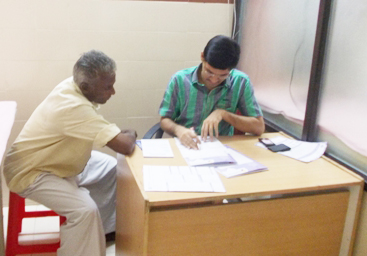
A rickshawpuller’s son secured admission to the prestigious IIIT at Nuzivid in Krishna district, thanks to the High Court’s direction.

Though Korumilli Prasad, a student of Esther Axene Government Aided Residential High School at Konthamur, secured 548 marks in the SSC examinations and despite belonging to a Scheduled Caste, he could not get a seat on account of a government order which discriminated against aided schools.

Undaunted, he decided to fight a legal battle to get justice and his due. Lending him all support was the correspondent of his school. IIITs came into existence during the rule of YS Rajasekhara Reddy at Idupulapaya in Kadapa district, Nuzivid in Krishna district and Basara in Adilabad district. Students who obtained high marks in the Tenth Class public examinations and irrespective of caste and creed had been given admissions. But in 2011, the state government issued a GO, giving 24 bonus marks to the Tenth Class students of government schools, panchayat schools and zilla parishad schools, ignoring those of governmentaided schools in the state.

Because of this GO, Prasad, who studied at a governmentaided high school could not get a seat at IIIT though he obtained 548 marks. The school correspondent, K Prabhakar Rao, filed a writ petition in the High Court on September 2 seeking justice to the student of his school and complained to the court about the discrimination the government was showing among students of government, aided, panchayat and zilla parishad schools in the matter of award of bonus marks.

The court stayed IIIT admissions for three months and issued interim directions later, allowing the government to complete admissions and also to admit Korumilli Prasad into the IIIT immediately. Complying with the order, IIIT vicechancellor admitted Prasad the institution at Nuzivid on December 3.

source: http://www.expressbuzz.com / Home> States> Andhra Pradesh / Express News Service / January 02nd, 2012


Karimnagar Collector, SP have lunch with Dalits

School assistant suspended for allegedly encouraging untouchability


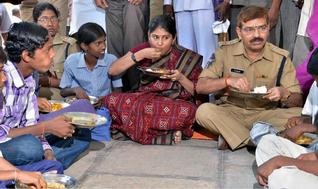
Setting an example:Collector Smita Sabharwal and SP V. Ravinder having lunch prepared by Dalits along with students at ZPHS Sundaragiri village in Karimnagar district on Friday.— Photo: Thakur Ajay Pal Singh

It was a welcome surprise for students of Zilla Parishad High school in Sundaragiri village of Chigurumamidi mandal on Friday as they had community lunch along with top officials of the district.

Collector Smita Sabharwal, Superintendent of Police V. Ravinder, Karimnagar RDO Hymavathi, Huzurabad DSP Nagalaxmi, DEO Purnanda Rao and others set an example by eating the midday meals prepared by the Dalits at the school.

Warning the officials of serious action if anyone encouraged untouchability, the Collector ordered suspension of Hindi school assistant Satyanarayana for allegedly encouraging untouchability among the students and forcing them to shun meals prepared by the Dalits due to differences with the school headmistress.

She also found fault with headmistress Vasantha for not informing higher authorities about the issue.

She said that the sensitive issue came to the administration’s notice through a report published in The Hindu on December 16.

The Collector visited the village on Friday and interacted with the students. Later, she inquired with the headmistress Vasantha about why the students were refusing to eat the meals and inspected the records.

Ms. Sabharwal and Mr. Ravinder picked up plates, had the food served by Dalit women and sat along with the school students to eat the lunch comprising potato curry and sambar.

Surprise checks

The Collector said that the food quality was good and nutritious and noted that over 200 students were eating midday meals against the school’s total strength of 260.

She said the RDOs and DSPs had been instructed to visit the schools regularly to check the practice of untouchability in the educational institutions.

source: http://www.TheHindu.com / News> National / by Staff Reporter / Karimnagar, December 24th, 2011