Category Archives: Inspiration /Positive News and Features

Visakhapatnam doctors treat complex pregnancy

Visakhapatnam :

In a high-risk gynaec case, a 22-year-old asthmatic woman, suffering from several medical complexities associated with pregnancy, including severe swelling (edema), abnormally low platelet count and very high BP or severe pre-eclampsia along with HELLP syndrome, successfully gave birth to twins at a hospital in the city. HELLP syndrome is an obstetric condition marked by rupture of red blood cells, low platelet count and higher liver enzymes. B Bhagyalaxmi from Vizianagaram came to Manipal Hospital in mid-March with severe swelling all over her body and high BP of 150/100. “Blood spots were visible all over her body under her skin. She was 37 weeks pregnant with twins and on further diagnosis, her platelet count was found to be 30,000, Platelet count of less than 50,000 is considered abnormally low.She was diagnosed with very high BP and HELLP syndrome,” said Dr M Radhika, who treated her.

According to doctors, scans showed that while the head of one baby was in the down position, that of its twin was in the below the hip position, necessitating an immediate lower section caesarean as it was a high risk pregnancy with a 50% mortality rate.

“As part of precautions during surgery, Bhagyalaxmi was administered an adequate amount of platelets to prevent excessive bleeding during surgery. Her BP was controlled with adequate medication. The surgery had to be done immediately and efficiently so as to keep the mother under as minimum risk as possible. The surgery was completed in 35 minutes and healthy twins were delivered,” Dr Radhika explained, adding that after a few weeks of follow-up treatment, the mother was finally declared out of danger.

According to Dr Radhika, such an acute emergency situation can be averted if after completion of 34 weeks of pregnancy the baby’s maturity status is assessed and precautionary measures taken. “When one is carrying twins and has high BP and asthma complications, it’s important to plan an elective surgery,” she added.

source: http://www.timesofindia.indiatimes.com / The Times of  India / Home> City> Visakhapatnam / TNN / May 09th, 2014
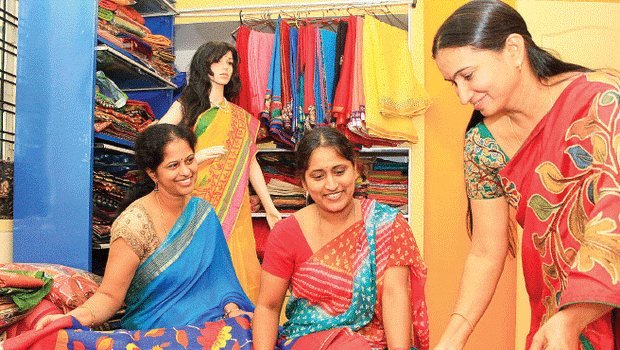
Wife, mother, home-maker, businesswoman

Sunitha Rao (below) sells a collection of custom designed sarees and dress materials to her friends and and extended customer base sitting right at home. She represents a growing a number of home makers who have found financial viability and independence through their enterprising business | Neeraj Murali

Hyderabad :

Sunitha Y invested in an apparel business after quitting her job as a soft skill trainer. It seemed like the better option considering that she had to take care of her children and also have a source of income. Now, though it’s only been five months, it sure is fetching her quite the reward.

“I have a flair for good clothes and eye for good fabric. I used to be the one who selected clothes for my friends and others around. So I decided to try this out,” she says of her business plunge.

Apart from looking at it as a source of income, she also felt that she needed a meaningful avocation. She has a circle of friends and the word is fast spreading. Her clientele mostly includes middle and upper-middle class people who buy sarees and dress materials that she sources from a few weavers in bulk.

Housewives like Sunitha Y, who have chosen alternative ways to source income have been exploring such business ideas. Eventually, the venture doesn’t get limited to just financial independence, but becomes a way to grow in many aspects — in confidence, in creativity and in personality.

Another housewife began a similar kind of business, six years ago. But the clothes she stocks were different. “I source from the local markets here and I have dress materials, sarees, kurtis and leggings. People who buy from me are generally college students, house wives and working women,” she informs. She clearly has a taste for good clothes as most of her clients come back for more of her unique picks. Her customer list is more that 200.

When the options for shopping are aplenty – from designer wear to handlooms, one might wonder what pushes these clients to come back to the friendly housewife.

These homegrown entrepreneurs says its the option of paying on an instalment basis.

“For someone, a silk saree worth `15,000 may seem like a lot. But I give them the option to pay the amount over eight months. That way, the customer is satisfied and not stretched thin,” says Sunitha Rao, another such entrepreneur who has varied collection of sarees and dress materials that are sourced from Banaras and Calcutta. A relatively old hand in the business, she started the venture in 2002 and still has customers from then.

“They like the way I play with colours. My knowledge of what colour looks good in what material helps customers choose well,” she shares. She also customises designs to the likes of people. “That is my USP,” she adds.

Having designed for film actors in the movies Happy Days and Godavari, her creations are liked by as many as 300 or more people whom she recalls are her regular customers. “There were some financial differences and hence I stopped designing or sourcing for films,” she says of her brief movie sojourn.

Given the rather domestic setting of their businesses, for all these women, word-of-mouth has been the reason for expansion.

Some did take the initiative to also go to schools and offices to build their customer base, while for others, their husband’s circle worked just as well. Like for Sunitha Rao. She also uses the power of the internet these days.

“I send pictures of new stock and designs to customers, mostly in the USA, through Facebook and WhatsApp. They ask for customisations and then the merchandise is shipped off,” she says. Payments are also done online to simplify matters.

As for Sunitha Y, she is still in the process of developing her circle. Selling on an instalment basis is something she thinks could be a lucrative option in the long run.

At the end, these enterprises are a win-win for both the entrepreneurs and customers. Relatively cheaper, economic payment modules and customisation options make these housewives the matriarch of the house in more ways than one, and their business module looks like it has a long way to go.

source: http://www.newindianexpress.com / The New Indian Express / Home> Cities> Hyderabad / by Rajitha  S / May 16th, 2014

Man with the Midas touch

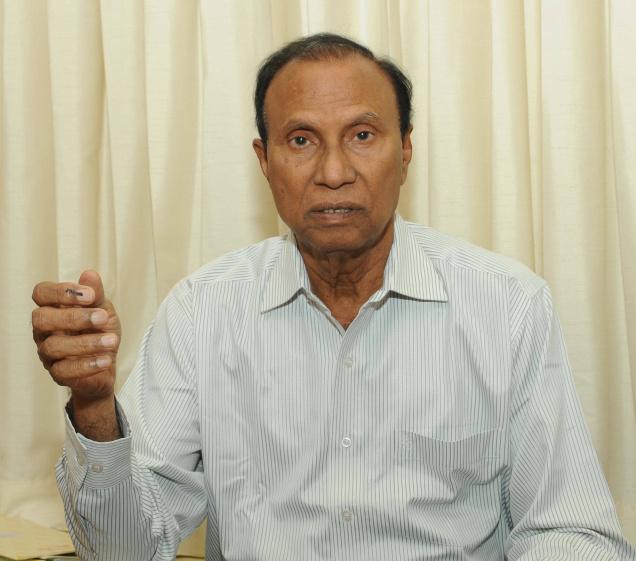
M. Rajaiah
M. Rajaiah

Mallineni Rajaiah , who came to Vijayawada with a good luck charm his mother gave him, is now the chairman and MD of Vijay Agro Products Pvt. Ltd. and Taj Gateway Hotel with an annual turnover of Rs. 200 crore

Leaving behind his village Amanacharla in Nellore district, he came to the ‘City of Victory’ in 1968 as an ordinary employee of a private solvent extraction company.

All he had was a Rs.2-coin clasped tightly in his fist, a good luck charm his mother gave him while seeing him off, an abundance of hope and of course, a steely grit to make it big in life.

Meet Mallineni Rajaiah, a prominent industrialist who is credited with placing Vijayawada a notch higher by bringing into the city the landmark Taj Group of hotels –Hotel Taj Gateway. Today, the businesses he is involved in fetch him an annual turnover of Rs. 200 crore. Mr. Rajaiah is the Chairman and Managing Director of Vijay Agro Products Pvt. Ltd. at Enikepadu and Taj Gateway Hotel.

In 1973, he set up his own enterprise. “I burnt my fingers but it did not deter me from making a fresh attempt two years later”.

In 1980, he started a solvent extraction unit and after three years, he launched the agro company. He then gradually diversified his business into pisciculture, cold storage and hospitality sector.

In 2007, the much-awaited Gateway Hotel came into operation. “I bought a site in the heart of the city and wanted to build a landmark structure here. Many friends and well-wishers warned me. But I followed my gut instinct and went ahead and here we are,” he says, letting out a winning smile.

“We are far ahead of others. This is only the beginning,” he says dropping broad hints that he has many more major projects up his sleeve.

Known for being vocal about perennial apathy of the successive governments towards Seemandhra region, Mr. Rajaiah says he is not against the State division. “I resent the manner in which we have been thrown out like an abandoned child. There are several unanswered questions causing a great deal of unrest among people in this region,” he says.

It is a misconception that there is no land available in Krishna district, he argues, informing that there are more than 27,000 acres of forest, temple and government land in East Krishna which can be put to good use.

Mr. Rajaiah foresees a bright future. “We are efficient, hard-working and good entrepreneurs. There is no dearth of aptitude but we need to bring back our youth who are away for want of good jobs,” he says.

source: http://www.thehindu.com / The Hindu / Home> News> Cities> Vijayawada / by P. Sujatha Varma / May 11th, 2014

From Pastapur to Senegal, widening the network of millets

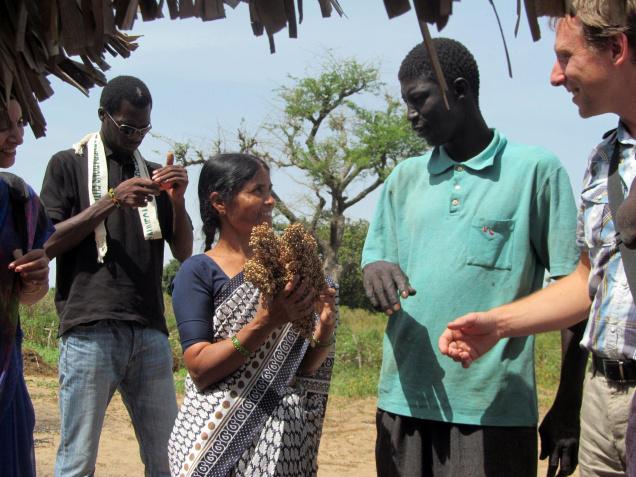
Chinna Narsamma, a member of the DDS, exchanging millet seeds with a delegate from Senegal at Pastapur in Medak district on Tuesday./ Photo: Mohd. Arif / The Hindu

Medak-based DDS, with 10 African nations, strives for Afro-Indian Millet Alliance

The Deccan Development Society (DDS), which is working on various crop improvement programmes, has succeeded in forging alliance with several African nations for research and development of millet cultivation.

The DDS, headquartered at Pastapur in Medak district, along with 10 African nations, is actively participating for the realisation of the Afro-Indian Millet Alliance which has been under planning stage since February last year.

Food security

“Many West African nations are getting ready to pursue agricultural models designed by the DDS that encapsulate ecological farming, biodiversity, food and nutritional security, along with ecological security.

The Millet Network of India (MINI), of which the DDS is the national convenor, has foregrounded the various cultivation aspects of millets including biodiversity, ecology and farmers’ self-reliance,” said DDS Director P.V. Sateesh.

Overseas alliance

Speaking to the media at Pastapur on Tuesday, Mr. Sateesh said that last week the DDS was invited to attend to the West African Regional Assembly of the COPAGEN, a network present in nine West African countries– Senegal, Burkina Faso, Togo, Cote D’Ivore, Mali, Benin, Niger, Guinea, Guinea Bissau–, is engaged with millions of West African farmers.

“We are very happy to see that the research on Bt Cotton pursued by the DDS in Adilabad, Nalgonda and Warangal is being followed to find out the impact of Bt cotton in Burkina Faso, a West African country. Following in the footsteps of the DDS, the farmers there have formed community research groups and are regularly monitoring and colleting data on the cultivation aspects of Bt cotton,” he said.

A DDS team comprising Narsamma, a peasant farmer; Ms. Jayasri Cherukuri, Coordinator of the MINI and P.V. Satheesh, Director of the DDS, made a detailed presentation on the work done by the network here on Tuesday.

Meanwhile, the DDS and the COPAGEN are also planning to organise farmer exchange programmes between the Africa and India, with a special focus on the women farmers in both the countries.

source: http://www.thehindu.com / The Hindu / Home> News> National> Andhra Pradesh / by Staff Reporter / Sangareddy – November 22nd, 2013

A tribal farmer raises 40 varieties of biodiversity plantation

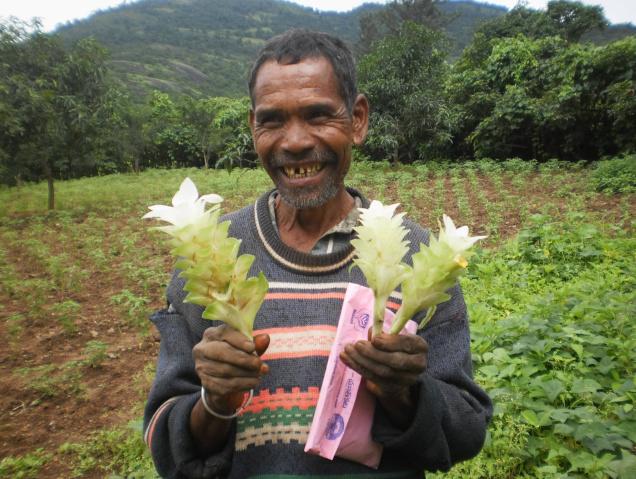
Tribal farmer Killo Dombu and his land cultivated under NABARD's 'Maa Thota' scheme at Anthriguda hamlet in Ananthagiri mandal in Visakhapatnam district. / Special Arrangement / The Hindu
Tribal farmer Killo Dombu and his land cultivated under NABARD’s ‘Maa Thota’ scheme at Anthriguda hamlet in Ananthagiri mandal in Visakhapatnam district. / Special Arrangement / The Hindu

Killo Dombu of Anthriguda village in Dumbriguda mandal is proud of his achievements. Almost every plant is productive on his one-acre plot which yields cash crops. The innovative methods of cultivation adopted by him are a big draw today.

He is growing 40 varieties of horticulture plants, using bio-pesticides and adopting totally organic methods of cultivation. The crops being raised by him include vegetables, fruit plantations, forestry species, creeper vegetables, floriculture, tubers, oilseeds and medicinal plants. He has a bio-mass based manure pit in one corner of his plot. He also has cattle which give milk, cow dung and the stuff required for producing organic manure.

Dombu advocates growing multiple crops instead of mono-crop. His plantations include 40 plants each of mango, chiku, acid lime, red sanders, teak, bamboo, fish tail palm, jack, jamun, custard apple, guava and Bahumia. Creeper varieties are pumpkin, beans, bottlegourd and ridgegourd. His plantation is fenced with trees such as euphorbia, agave and jetropha. Vegetables including brinjal, green pepper, chilli, pepper, rajma and cabbage are being grown as inter-crops along with medicinal plants.

P. Viswanatham, chairman of Vikasa, an NGO working to propagate organic farming among tribal farmers, told The Hindu that Dombu had been a source of inspiration to other ‘Maa Thota’ farmers. Dombu says that he is earning Rs.50,000 per year on the crop yield. Besides, the millet crops cultivated in his land take care of daily bread of his family members. A beaming Dombu shares his success story with his co-farmers and asks them to adopt his methods of farming. His wife, daughter and son-in-law together work in his ‘Maa Thota’ supported by NABARD. Not many visitors understand what he tries to communicate in chaste Odisha but the smile on his face and his green garden speak volumes for his achievement.

source: http://www.thehindu.com / The Hindu / Home> News> Cities> Visakhapatnam / by Ravi P. Benjamin / Visakhapatnam – October 12th, 2012

Just 11 and raring to be a Hindi ‘pundit’

Sridharani, a 7 class student of the AP Paper Mills Model High School, has passed ‘Praveena Uttarardh’ examination with distinction

At 11, she has passed the Hindi examination ‘Praveena Uttarardh’ conducted by the Dakshina Bharata Hindi Prachara Sabha with distinction, creating a record in the coastal Andhra region.

Apart from being a bright student, Sridharani, a 7 class student of the AP Paper Mills Model High School, is also active in extra-curricular activities. She nurtures the ambition to become a teacher some day.

The young girl appeared for the Pradhamika examination at the age of eight and within three years, she became the youngest student to complete the Praveen Uttaradh by scoring 72 per cent, the highest among the group in Rajahmundry. Before achieving this feat, she has crossed eight other levels which included Pradhamika, Madhyama, Rashtra, Praveshika, Vishardha Puruvardh, Vishardha Uttarardh and Praveena Uttaradh.

Over two decades ago, sending children to learn typewriting and Hindi coaching classes was very common in this locality. Hindi classes conducted by the Dakshin Bharat Hindi Prachara Sabha were a big hit in summer vacations. But with the advent of technology, computer coaching took precedence pushing to the background the other two activities.

Sridharani comes from an economically poor family and her father is bed-ridden. Her mother works as a domestic maid to make both ends meet while the little girl tries to help her mother in domestic chores whenever the time permits.

“I am eager to write the Pandit exam but my Hindi teacher told me that I’ll have to wait until I complete 18 years. I was told that a student of my age completed medicine in one of the States in our country, then why can’t I appear for the Pandit exam now?,” Sridharani wonders.

“It is for the Dakshin Bharata Hindi Prachara Sabha, the State government and academicians to take a stand and guide Sridharani accordingly,” says Seema Nallani, General Manager, Corporate Social Responsibility, International Paper, which owns the APPM.

source: http://www.thehindu.com / The Hindu / Home> News> National> Andhra Pradesh / by Special Correspondent / Rajahmundry – April 29th, 2014

Shobha Nagi Reddy’s eyes donated

Bhuma Nagi Reddy, along with his elder daughter Akhila, mourns the loss of his wife Shobha Nagi Reddy (Photo: DC)

Hyderabad:

Shobha Nagi Reddy, the 46-year-old official spokesperson of the YSRC, was returning from Nandyal after attending a political rally with party leader Y.S. Sharmila. She was given first aid treatment in a private hospital and then rushed to Hyderabad early on Thursday morning. She was in the Intensive Care Unit of Care Hospital for more than four hours before doctors declared her dead at 11.05 am.

“We are sad to inform that Shobha Nagi Reddy, who was brought to Care Hospital on April 24 following a major road accident, is no more,” a medical bulletin issued by Care Hospital said.

The MLA’s vehicle, a Mitsubishi Outlander, was moving at high speed, and the driver lost control when he tried to slow down to evade the paddy husk.

“We suspect that the driver could not see the husk heap from a reasonable distance. When he applied the brakes suddenly, the tyres slipped and the vehicle toppled over several times to the road side farm land. The MLA’s head hit the roof of the car and she was then thrown down,” said Kurnool superintendent of police K. Raghuram Reddy.

The SP said that Shobha was not wearing a seat belt though she was sitting in the front seat. He added that the injuries of the two gunmen sitting in the back, and the driver, were less serious comparatively.

Passers-by informed emergency services and the police about the accident. The victims were shifted to a private hospital in Nandyal, and later to Care Hospital in Hyderabad at around 7 am on Thursday.

In keeping with her wishes, Shobha’s eyes were donated to the Sarojini Devi Eye Hospital in the city. Her body was taken to Kurnool on Thursday afternoon. Sources said that her last rites will be performed at Allagadda on Friday.

Kurnool police said that a case has been registered against the car’s driver following a complaint received from one of the MLA’s gunmen. “We have booked a case against the driver under IPC Section 304 A for causing death due to negligence,” said the Kurnool SP.

Shobha Nagi Reddy is survived by her husband former Nandyal MP Bhuma Nagi Reddy, two daughters and a son.

source: http://www.deccanchronicle.com / Deccan Chronicle / Home> Nation> Current Affairs / by DC Correspondent / April 25th, 2014

She Cabs to increase fleet for techies

The concept is inspired by SheTaxi, a women-owned-and-driven cab service by Gender Park, a Kerala govt initiative

She Cabs , a cab service for women with a female driver bureau started by Hyderabad-based voluntary organisation Andhra Pradesh Balala Hakkula Sangham (APBHS), is gearing up to add 25 cars to its existing fleet  of two by August this year, according to general secretary Vijaya Reddy.

“We have been seeing significant traction in demand. While TCS has asked for 40 vehicles to ferry their employees, Google, too, wanted an equal number of cabs. Providing such fleet is quite easy but getting women chauffeurs in large numbers is difficult,” she says.

She Cabs, a not-for-profit initiative aimed at providing safe travel for women besides nurturing entrepreneurship among them, recently started She Free Driving School to train and empower women with underprivileged backgrounds.

“At present, 25 women, including from Prajwala, a Hyderabad-based anti-trafficking organisation, are undergoing training. Our idea is make them own cars by providing subsidies and through easy financing options, and allow them to run those vehicles under the She Cabs brand,” Reddy adds.

Inspired by She Taxi, a women-owned-and-driven cab service by Gender Park, a Kerala government initiative, APBHS started She Cabs in February 2014. She Cabs are loaded with security features like GPS, an SOS button to connect to the police in cases of emergency and pepper spray cans.

“With the increasing number of cases of violence against women heightening the concerns around their security, it’s important to extend safe and secure journey of women commuters,” she says, adding She Cabs has been gaining wide acceptance not just among techies but also from homemakers.

source: http://www.business-standard.com / Business Standard / Home> Current Affairs> News> ET Cetera / by K Rajani Kanth / Hyderabad – April 27th, 2014

Daughter fulfils father’s last wish


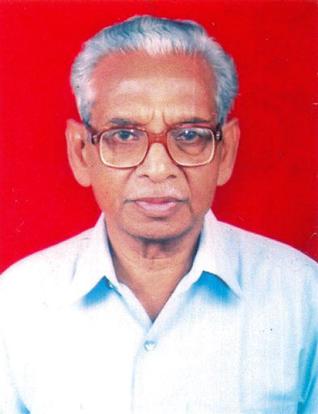
P.M. Rao, whose body was donated to Osmania Medical College. / The Hindu

Donates his body to the anatomy department of OMC. The family of late Madhava Rao was pleasantly surprised by the feedback from students of the medical college.

A father’s last wish, of being useful even after death, was fulfilled by his daughter. K. Sandhya Gupta, who donated his body to the anatomy department of Osmania Medical College.

A retired employee of Indian Bureau of Mines (IBM), Parepalli Madhava Rao, who passed away recently, had planned ahead. “He was very clear that his eyes and body should be donated to a medical institution. He used to say that there is no point in burning the body after so many years of feeding it. That’s why we went all out to fulfil his wish,” his daughter, Ms. Gupta, recalls.

The family of late Madhava Rao was pleasantly surprised by the feedback from students of the medical college. “For the past six to eight months, the anatomy department students were working and reworking on the same cadaver. The practicals of researchers and students were held up as there was no cadaver. They welcomed us with open arms and appreciated our efforts,” she says.

Interest in research was huge for Rao, who has translated Russian books into English in subjects that include botany, zoology, agriculture, fuels and mining for Indian publishing houses. “By the age of 80, he had already translated 80 technical books and hundreds of scientific articles from Russian to English,” she adds.

source: http://www.thehindu.com / The Hindu / Home> News> Cities> Hyderabad / by Staff Reporter / Hyderabad – April 15th, 2014

RTC does it again

Chittoor depot provides water cans in buses for commuters. Some of the Express and long route buses are already providing water during journey.

The Chittoor Depot-II of the APSRTC, which had hit the headlines for its humanitarian gesture of providing water cans in all its depot buses last year, is going to do it again this summer.

It all happened mid-summer last year when a passenger begged for water while breathing his last due to sunstroke in an RTC bus in Karimnagar . This tragic episode moved the Chittoor Depot-II manager, P. Gajalakshmi, who initiated immediate steps to arrange water cans in all the buses of the depot.

Starting with a few buses initially, the official quickly mustered the support of business and public groups in Chittoor, who came forward to sponsor the water cans in the buses. Soon, all the buses carried mineral water cans, much to the relief of passengers, particularly the aged and children on long distance journeys. The exercise continued till the summer ended. Ms. Gajalakshmi’s Samaritan gesture inspired many of her colleagues in the corporation elsewhere in the State, and they all followed suit.

Speaking to The Hindu, Ms Gajalakshmi said that this year, water cans would be made available in all the 103 buses of the depot. Some of the Express and long route buses are already providing water during journey . “A business establishment has come forward to sponsor the cans. However, we are having a mineral water plant in our depot, which has a 12,000 litre capacity tank. All the crew on the buses have been instructed to provide the water cans without fail,” she said.

source: http://www.thehindu.com / The Hindu / Home> News> National> Andhra Pradesh / by Staff Reporter / Chittoor – April 03rd, 2014